


Kentish Plover
Charadrius alexandrinus
By the Birdfact teamChecked by Nathan Cope
On this page13 sections
How to recognise it
What do Kentish Plovers look like?
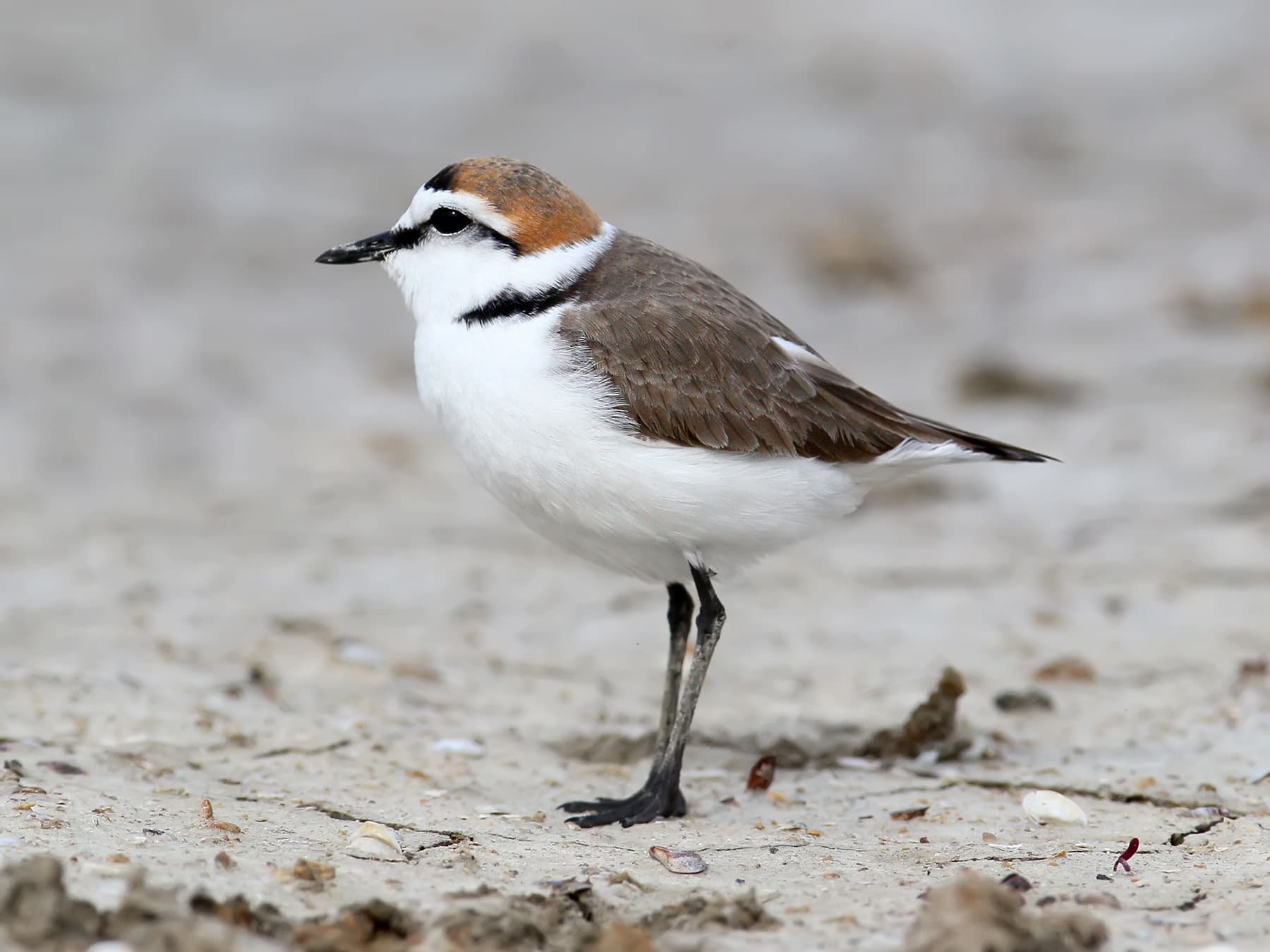
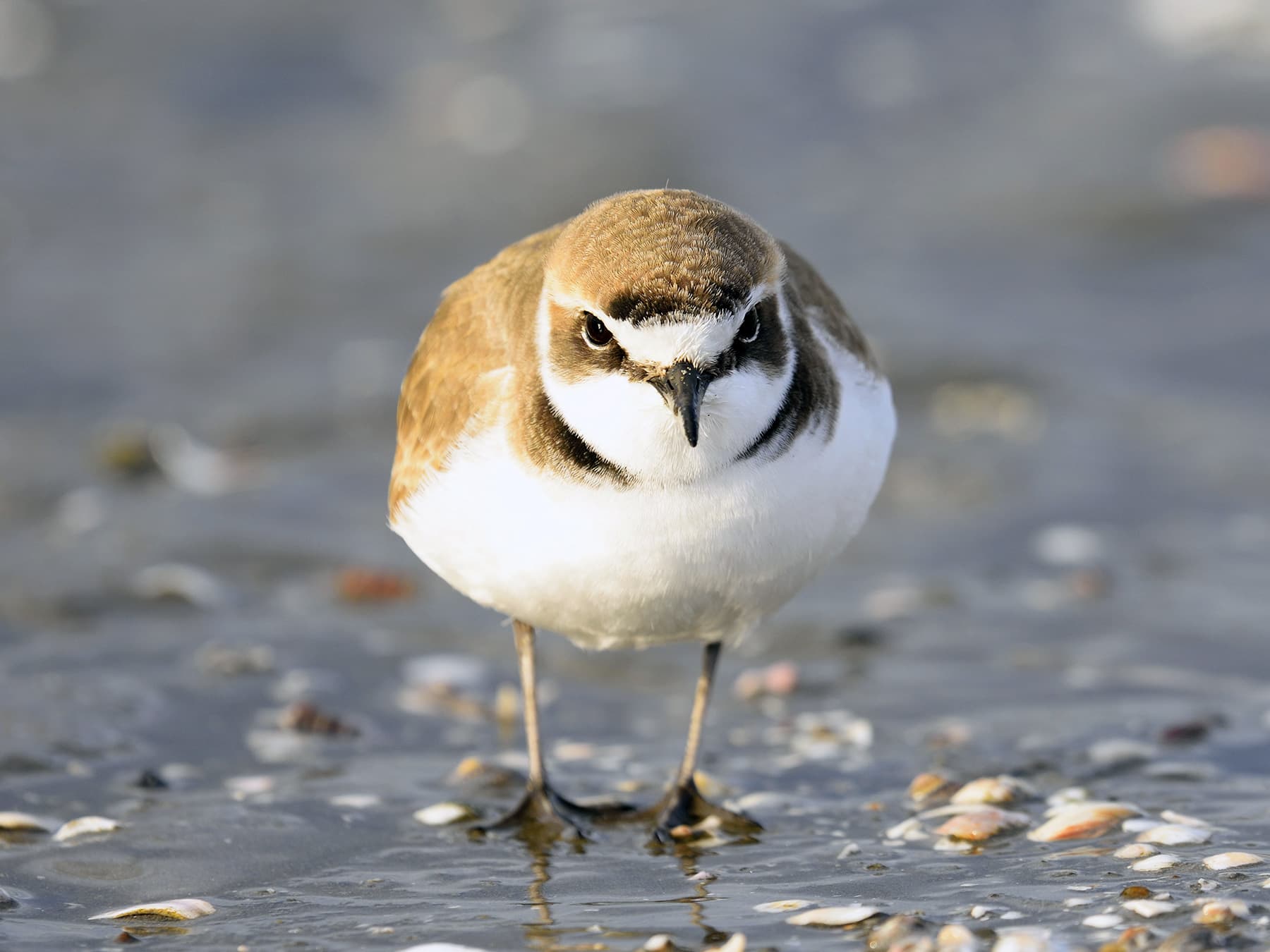
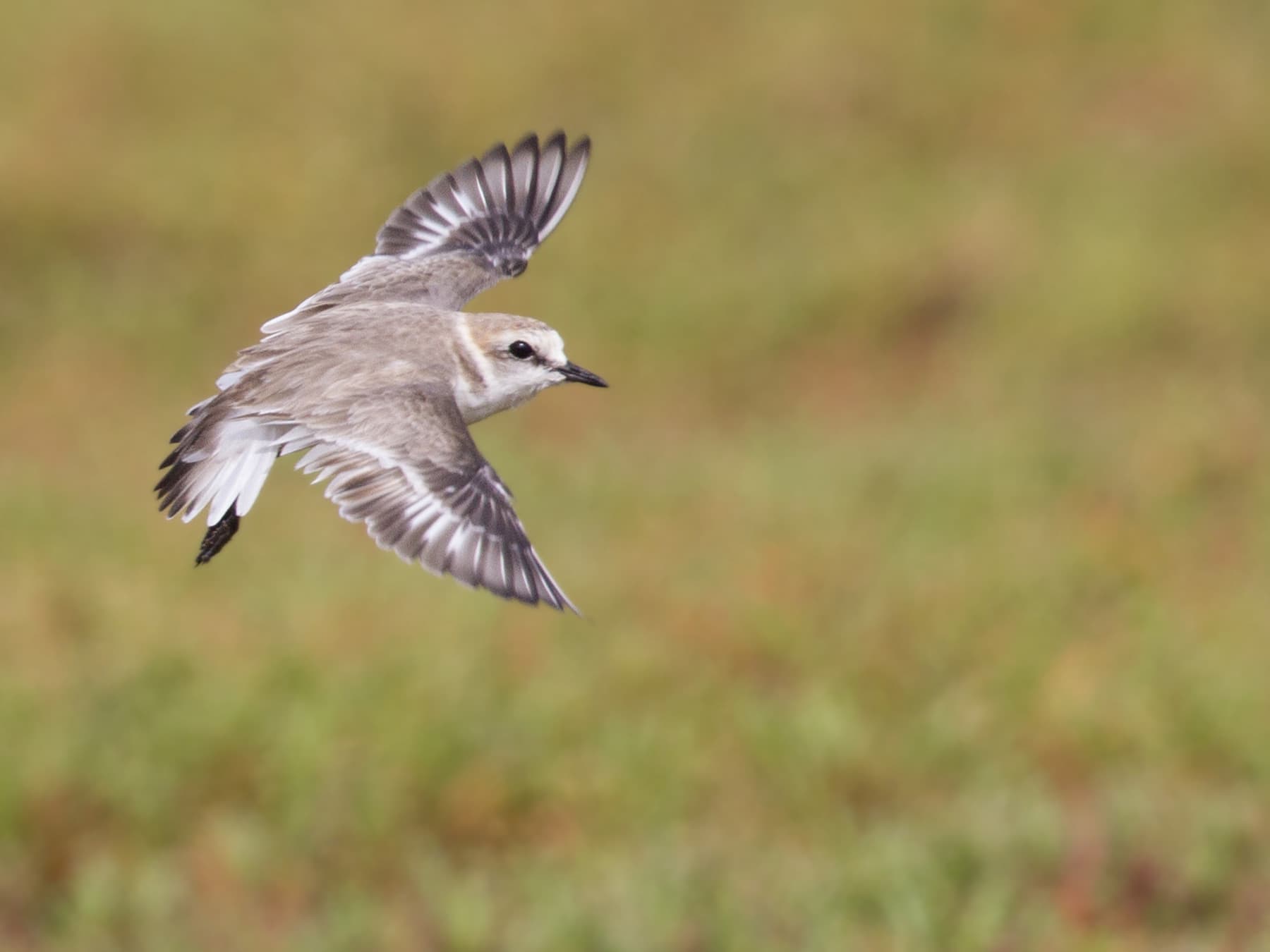
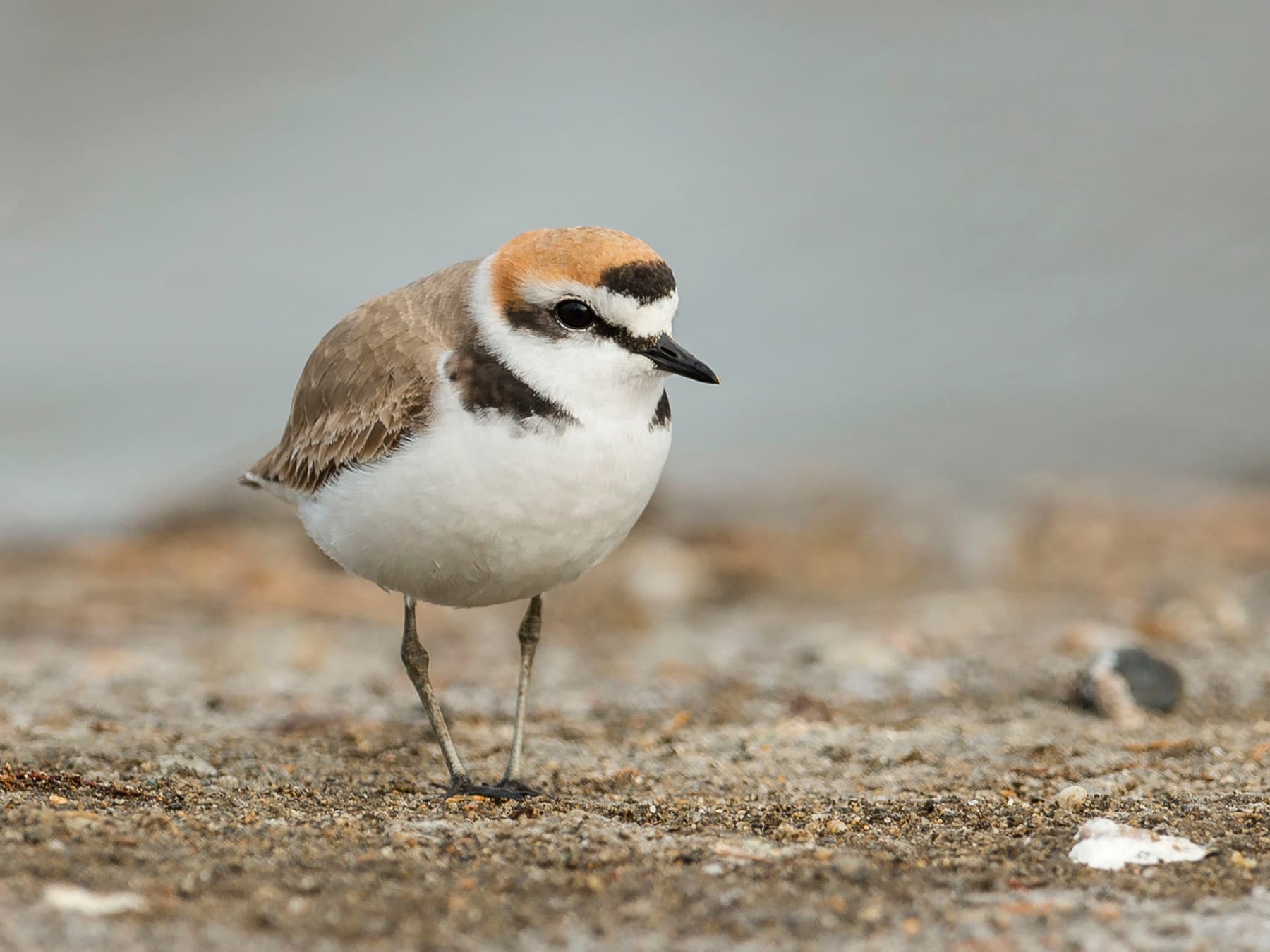
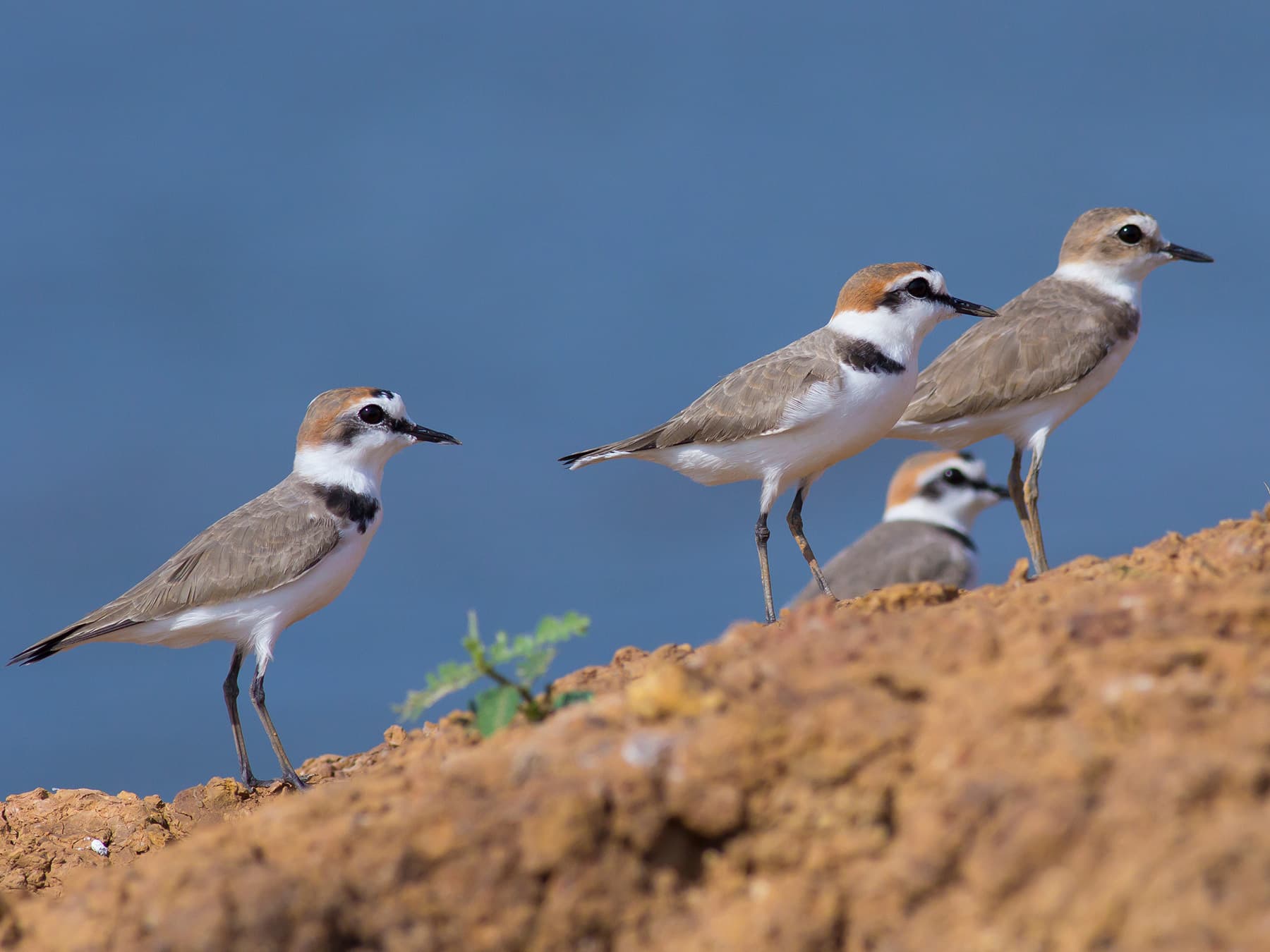
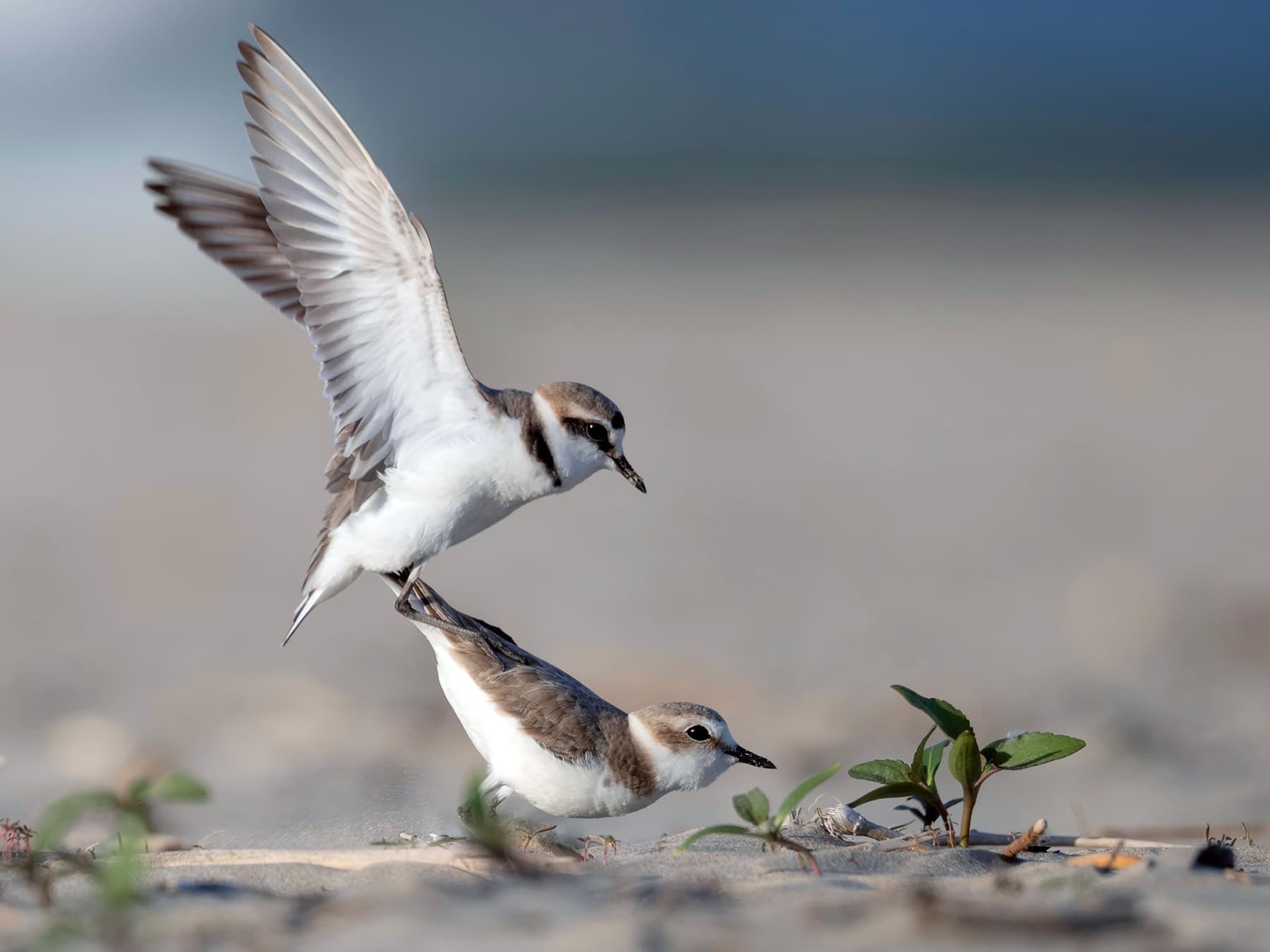
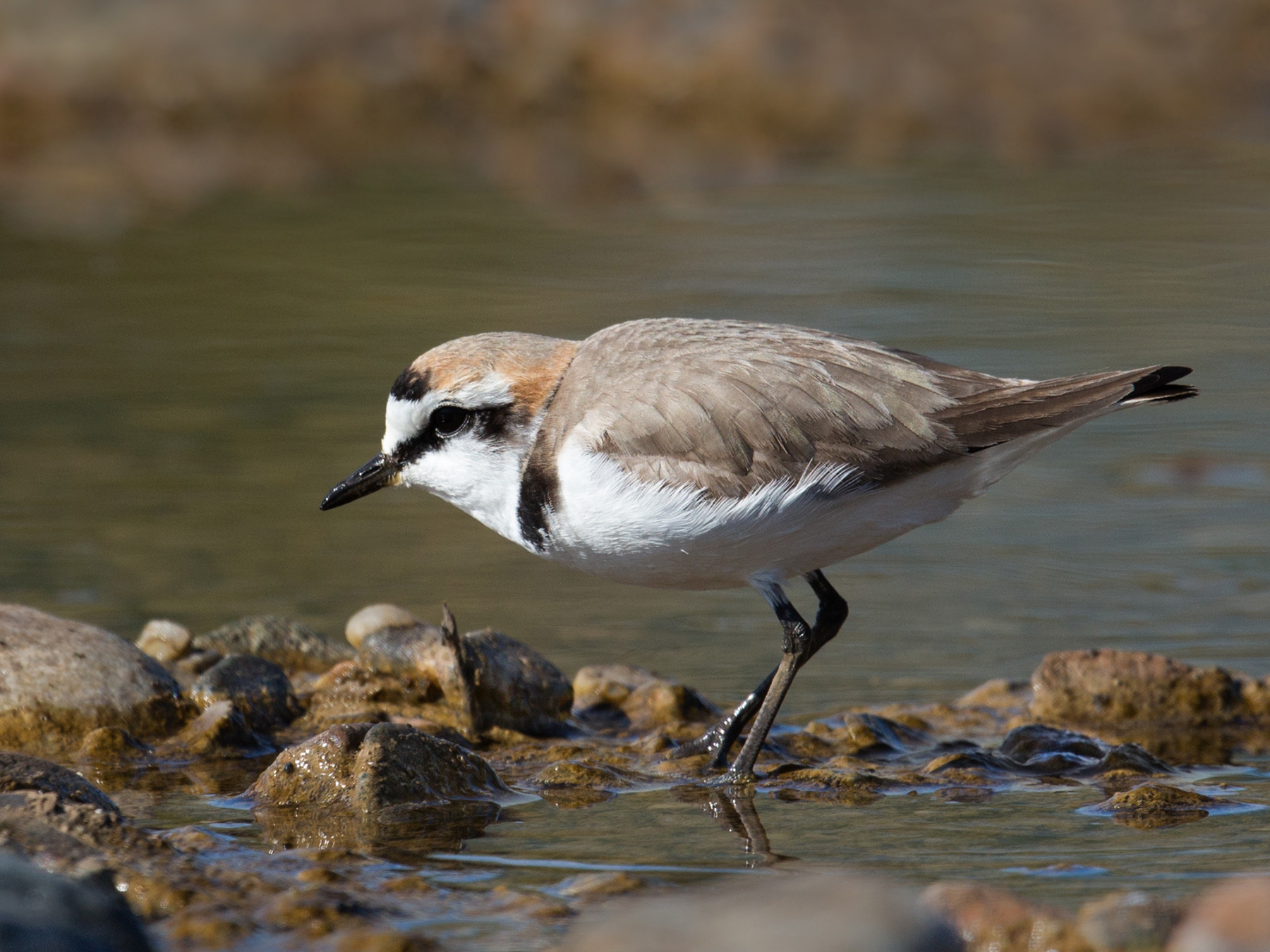
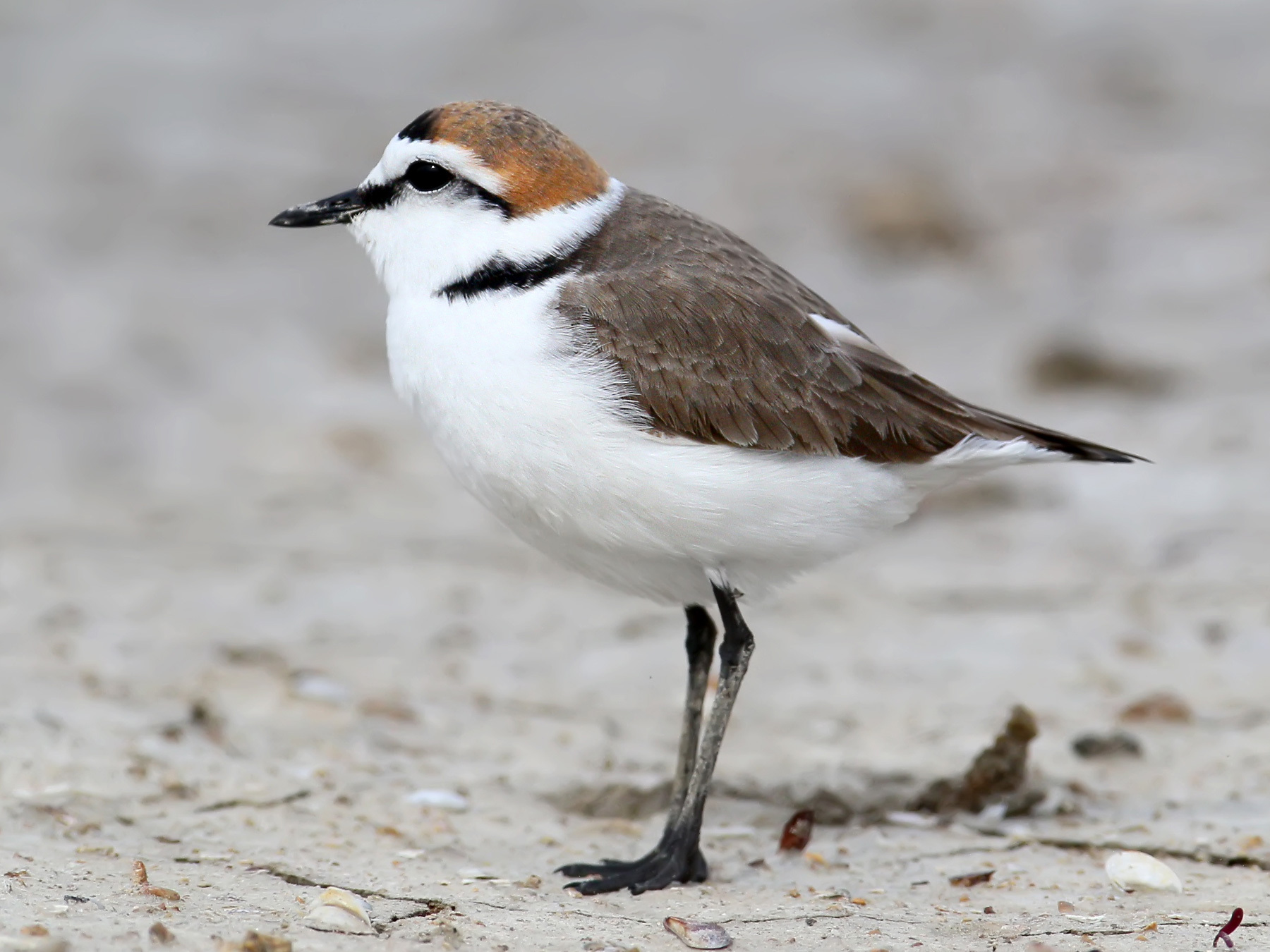
Kentish plovers are small pale shorebirds, with sandy-rufous upper parts, a chestnut crown and a white collar. Their chin, breast, belly, flanks and underparts are pure white, while their legs, bill and eyes are dark. In breeding plumage, males have a black forecrown, and a black line alongside the eye, and a broken black breast band, from each side. In non-breeding males, the deep black fades to a duller sandy brown.
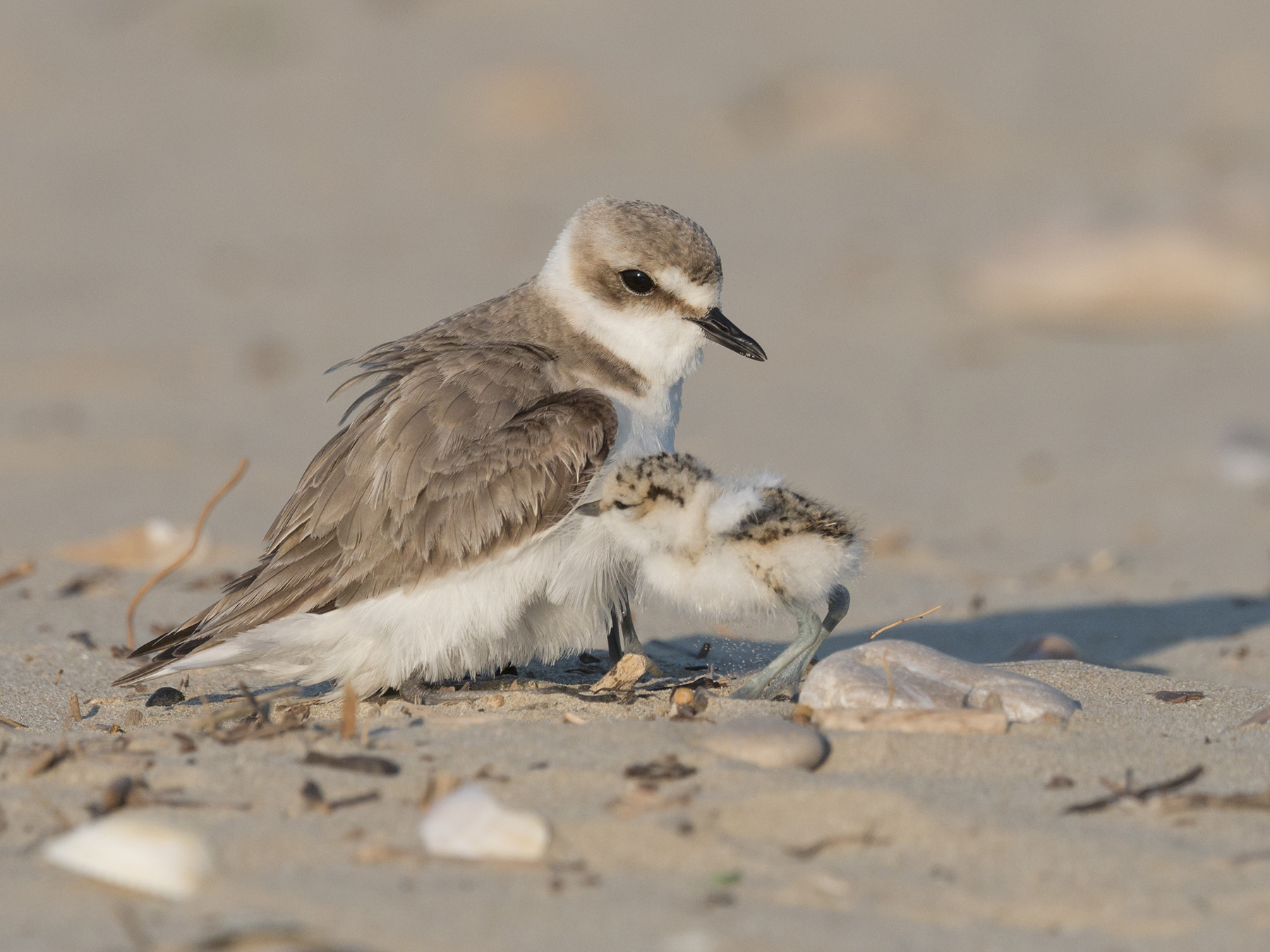
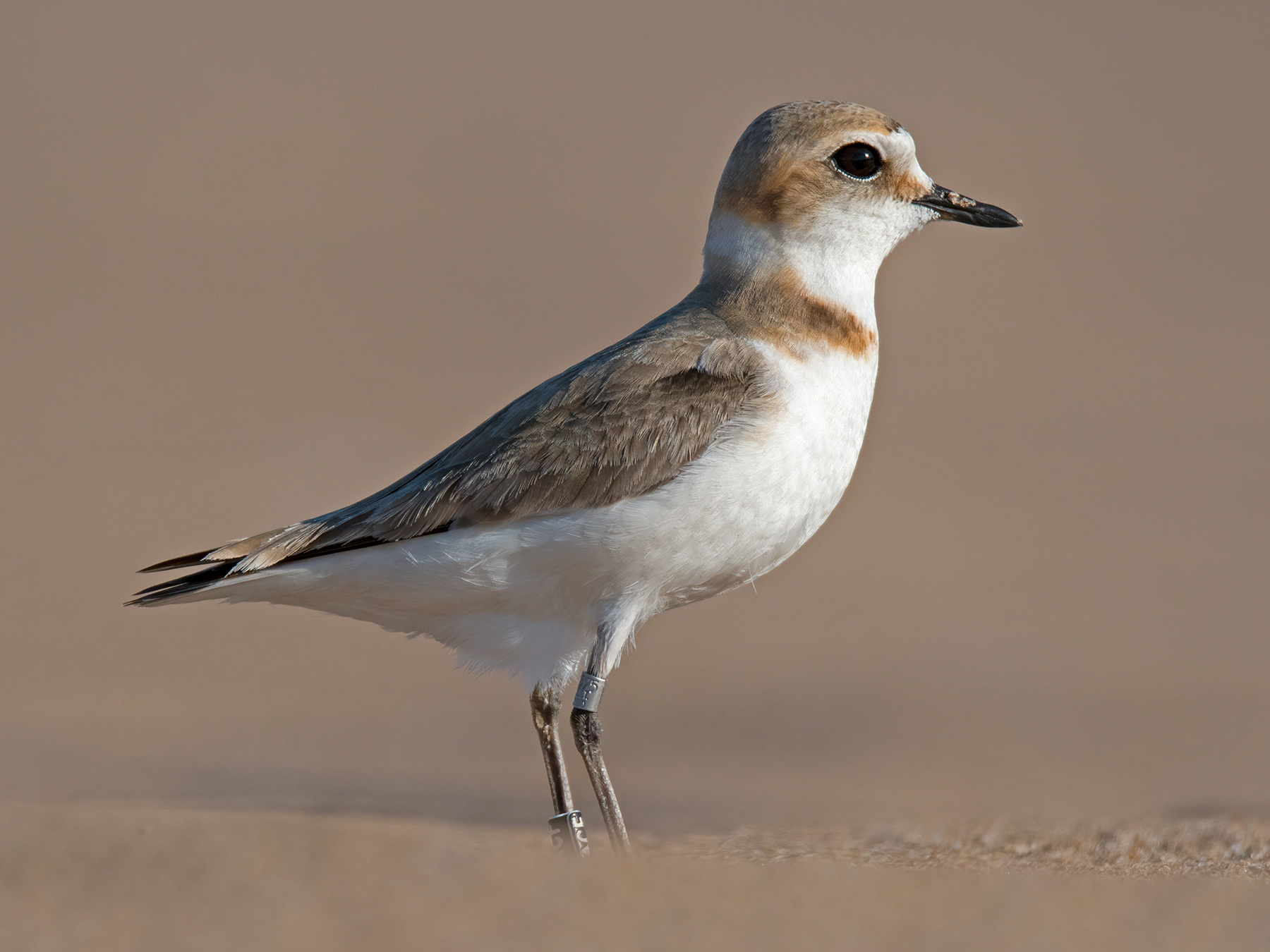
Females have similar markings to males but are darker brown rather than sandy in colour. In most, the black forecrown and broken breast band of adult males is absent, although in exceptional cases may still be visible.
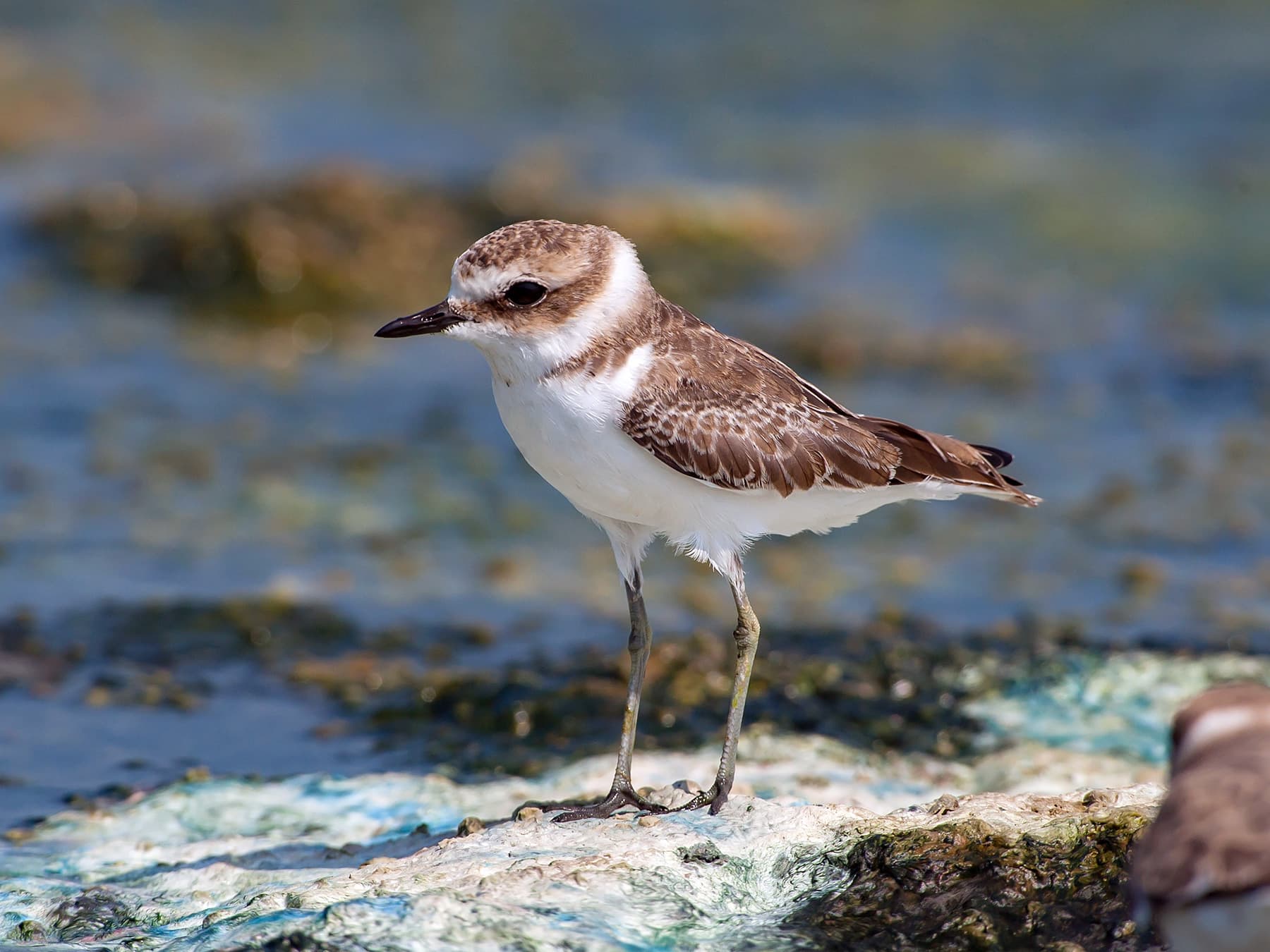
Juvenile Kentish plovers are alike in colouring to adult females, but have buff fringes to their dull brown upperparts and paler legs.
How big are Kentish Plovers?
One of the smaller members of the plovers, dotterel and lapwing family of shorebirds, Kentish plovers are smaller than common starlings but larger than robins. Males and females are the same size.
- Length: 15 cm to 17·5 cm (5.9 in to 6.9 in)
- Weight: 32 g to 56 g (1.1 oz to 2 oz)
- Wingspan: 42 cm to 45 cm (16.5 in to 17.7 in)
Its size
Adults- Length
- 15–17 cm
- Wingspan
- 42–45 cm
- Weight
- 35–50 g
Its song and calls
What sound does a Kentish Plover make?
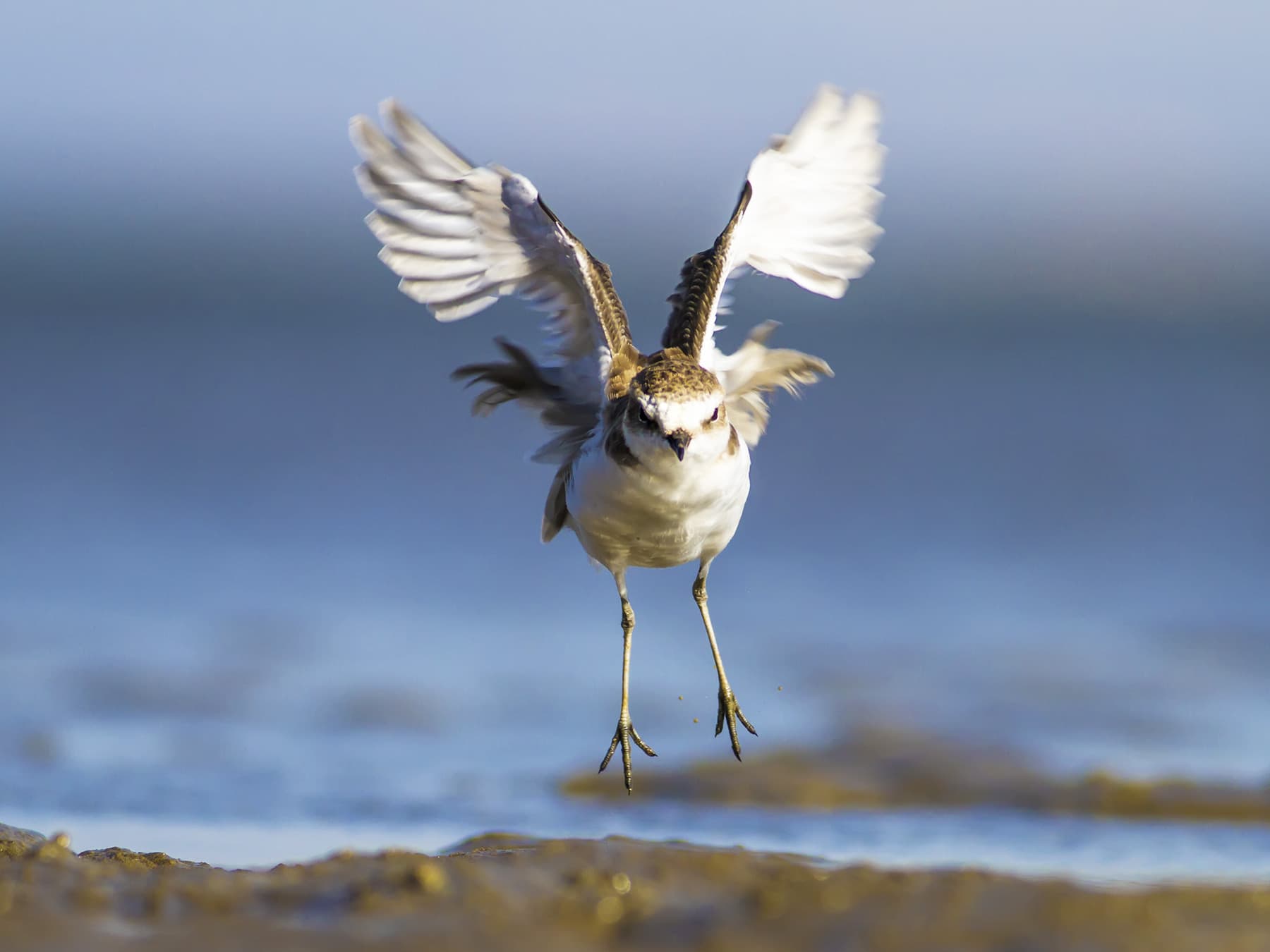
A relatively silent species, the gravelly chattering call and burred whistles of Kentish plovers may be heard on beaches in the breeding season.
- Song0:00 / 0:03
Recorded in Normandie, France · May 2023
- Call0:00 / 0:28
Recorded in Normandie, France · July 2023
When and where to see it
OctoberArriving
Most recorded in October
- 1. Somersetunder 0.1%
- 2. Merseysideunder 0.1%
- 3. Dorsetunder 0.1%
- 4. Norfolkunder 0.1%
Each dot is a county, state or province: the bigger and darker, the larger the bird’s share of that place’s bird records that month. Grey dots: no regular records. The ringed point is the centre of the bird’s records this month; the arrow shows how it moved since last month, and the dashed loop its path through the year. “Arrivals” colours places where it becomes regular this month (orange) or is in its last regular month (grey). GBIF eBird Observation Dataset, 2019–2024. Map data: Natural Earth, US Census Bureau; place centres © OpenStreetMap contributors.
In your area
See when the Kentish Plover is recorded in your county, state or province.
How often the Kentish Plover turns up in the UK through the year, from birdwatchers' records.
United Kingdom
Winter visitor · regularly Aug–May · most records in April
Show as a table
| Month | United Kingdom |
|---|---|
| January | 0.002% (regular) |
| February | 0.002% (regular) |
| March | <0.001% (regular) |
| April | 0.002% (regular) |
| May | 0.001% (regular) |
| June | <0.001% |
| July | <0.001% |
| August | <0.001% (regular) |
| September | <0.001% (regular) |
| October | <0.001% (regular) |
| November | 0.001% (regular) |
| December | 0.001% (regular) |
Recorded regularly in
Worldwide: recorded regularly in 85 countries
Countries where it was recorded in at least 3 of the 6 years 2019–2024. Linked countries have their own bird list.
Europe (24)
Africa (14)
Asia (45)
- Armenia
- Azerbaijan
- Bahrain
- Bangladesh
- Bhutan
- Brunei
- Cambodia
- China
- Cyprus
- Georgia
- Hong Kong SAR China
- India
- Indonesia
- Iran
- Iraq
- Israel
- Japan
- Jordan
- Kazakhstan
- Kuwait
- Kyrgyzstan
- Laos
- Lebanon
- Macao SAR China
- Malaysia
- Maldives
- Mongolia
- Myanmar (Burma)
- Nepal
- Oman
- Pakistan
- Palestinian Territories
- Philippines
- Qatar
- Saudi Arabia
- Singapore
- South Korea
- Sri Lanka
- Taiwan
- Thailand
- Turkey
- United Arab Emirates
- Uzbekistan
- Vietnam
- Yemen
Oceania (2)
- Australia
- Palau
Data: EOD – eBird Observation Dataset (Cornell Lab of Ornithology), accessed via GBIF.org, CC BY 4.0. Records from 2019–2024, aggregated and filtered by Birdfact. How these lists are made
What is the habitat of a Kentish Plover?
Kentish plovers favour mainly coastal locations and are most commonly spotted on sandy beaches, dry mudflats, and salt ponds, usually near water. Occasionally individuals or small groups may travel further inland to feed, for example on the shores of gravel pits and reservoirs.
What is the range of a Kentish Plover?
The distribution range of Kentish plovers covers a wide and diverse area, with the species native to large areas of coastal west and north Africa, western and southern Europe, the Arabian peninsula, and into India and Pakistan, and eastern China, Japan and Korea.
Breeding populations arrive in eastern Europe and Central Asia in spring, and return to winter territories in southern Europe and North Africa each autumn.
Where do Kentish Plovers live?
European population estimates for Kentish plovers are between 43,000 and 70,000, which equates to around 15 percent of the global population. The western Mediterranean and eastern Atlantic coasts welcome large influxes outside of the breeding season, and up to 49,000 birds breed around the Black Sea and eastern Mediterranean Sea.
How rare are Kentish Plover?
Within the UK, Kentish plovers are now an exceedingly rare visitor, with only around 96 sightings reported in the decade from 2010 to 2020. Outside of the UK, the species’ global population is estimated at up to 500,000, although numbers are particularly difficult to assess due to the wide cross-continental distribution range.
Where can you see Kentish Plovers in the UK?
Kentish plovers are no longer regularly sighted in the UK. Previously a relatively uncommon breeding bird across the south of England, with concentrations focused on the coastal reserve at Dungeness until the 1930s, the last nesting pair was recorded in the country at Gibraltar Point, Lincolnshire in 1979.
Migration
Do Kentish Plovers migrate?
Depending on location, Kentish plovers may either be migratory or resident all year round.
The breeding population of north-west Europe generally moves to south-eastern Europe for winters, having temporarily dispersed to the Wadden Sea off the north coast of Germany to moult. Some may join migration flocks to north-western Africa, although little data is available.
Kentish plovers that breed in coastal west Africa, parts of southern Europe and around the Arabian peninsula are resident in their territories all year round
Are Kentish Plovers native to the UK?
Kentish plovers are no longer native to the UK, with the most recent breeding records dating from 1979. The species is now considered a rare passage visitor, with just 13 Kentish plovers spotted in Britain in 2016.
Tips for seeing it
- Look for Kentish Plovers on sandy beaches, salt pans, and coastal lagoons
- Observe their distinctive running and stopping behaviour while foraging
- Listen for their soft, whistling 'piu' call
- Use binoculars to spot the black markings on breeding males
- Be cautious not to disturb nesting areas, as their nests are well-camouflaged on the ground
What it eats
What do Kentish Plovers eat?
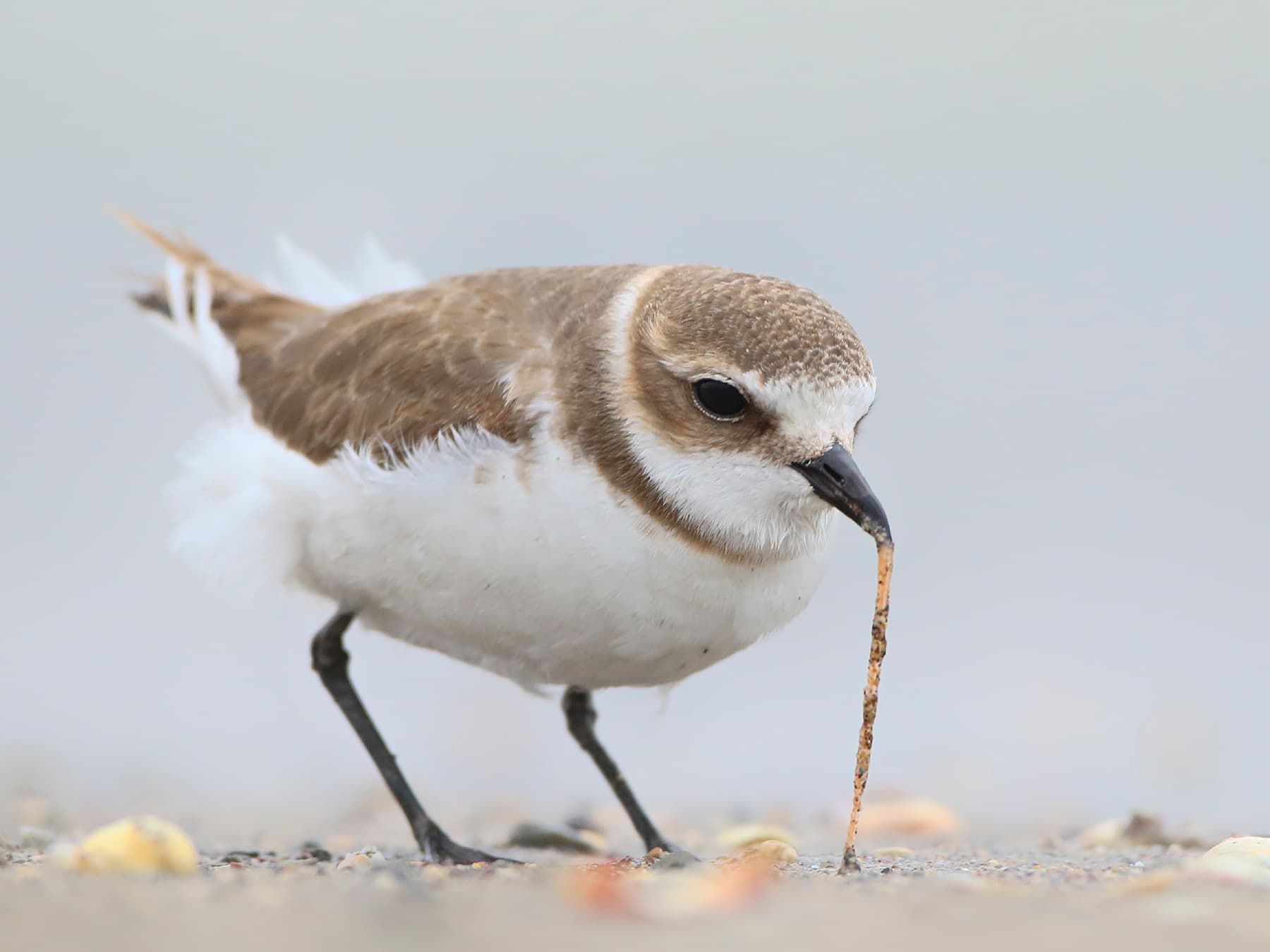
The diet of Kentish plovers is typical of shoreline birds: insects and their larvae, spiders, crustaceans, small molluscs and sand worms. They also occasionally eat eel grass and seaweed.
What do Kentish Plover chicks eat?
Kentish plover chicks are able to feed themselves from their earliest days, and are led to foraging grounds away from the nest site almost immediately and do not return.
Nesting and breeding
Where do Kentish Plovers nest?
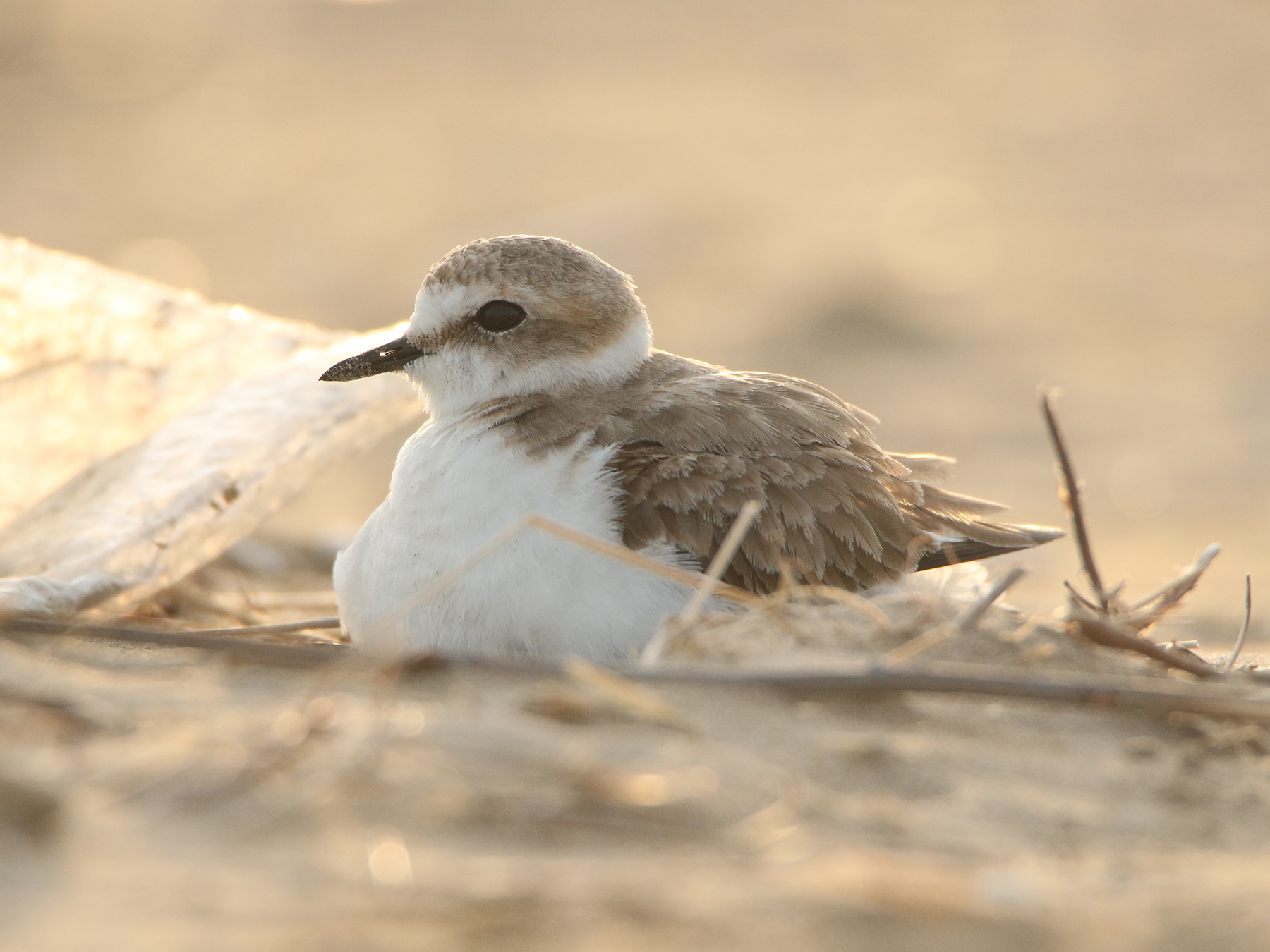
Typical nest sites of Kentish plovers are located on bare expanses of the shore, close to water. They prefer spots with sparse vegetation, forming a shallow depression directly on the shore of a beach.
This is then lined with small pebbles and fragments of shells and small twigs. Sand may be used to partially cover eggs if the nest is ever left unattended.
When do Kentish Plovers nest?
Between two and four eggs – usually three – are laid between mid-April and May by Kentish plovers breeding in north-western Europe.
In north-west Africa, the breeding season is between March and June, while Kentish plovers breeding further south in Africa, from Cape Verde to Ethiopia, Somalia and Eritrea, eggs are laid between January and July.
What do Kentish Plover eggs look like?
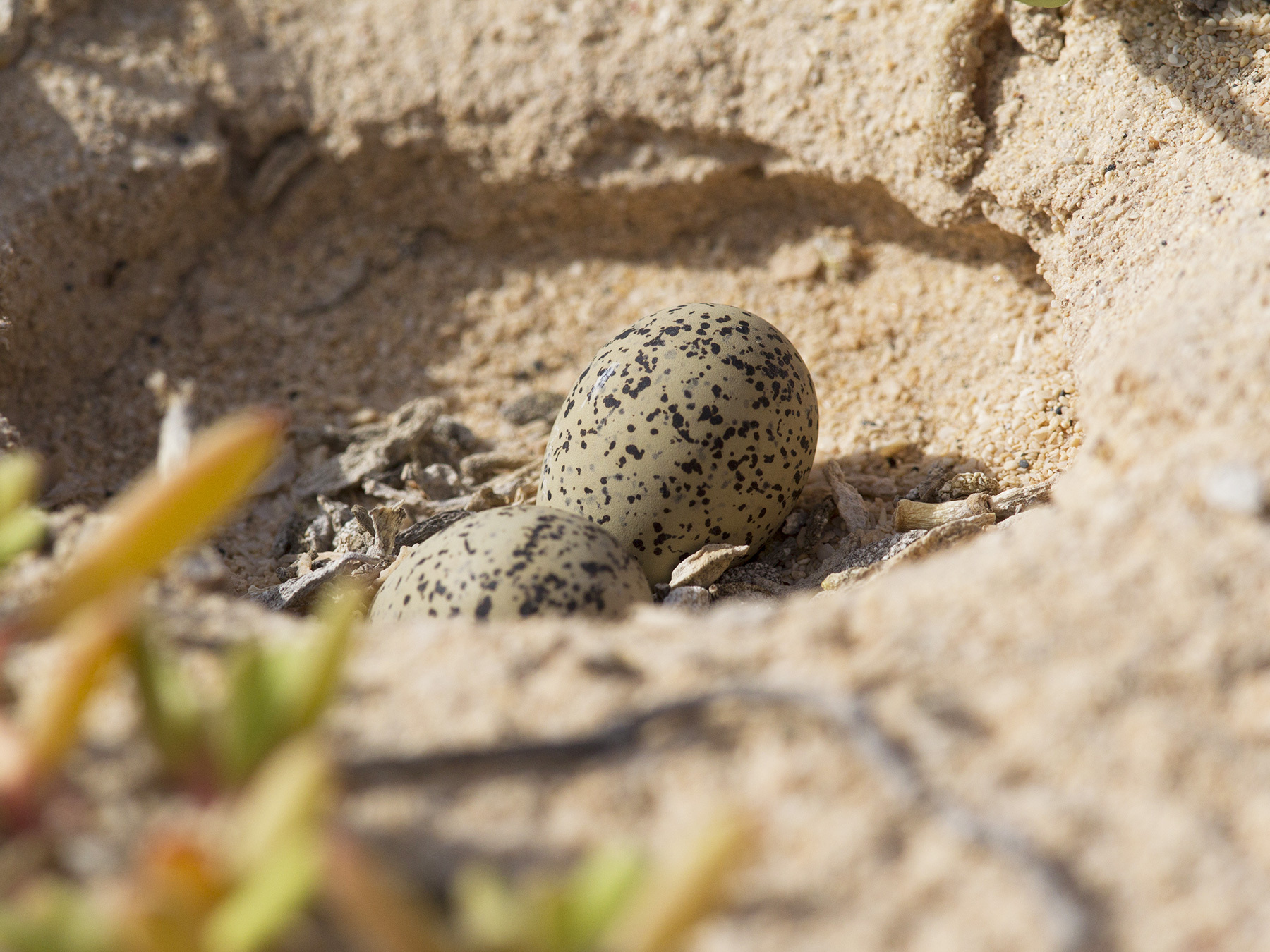
Kentish plovers’ eggs can be various shades from buff to stone and streaked with black markings, which allows them to be well camouflaged against their shoreline nesting landscapes.
On average, eggs measure 33 mm by 24 mm (1.3 in by 0.9 in) and are incubated for between 23 and 29 days. The female undertakes daytime incubation, while males take over the task at night.
Do Kentish Plovers mate for life?
Kentish plovers usually hatch one brood together before going their separate ways. It’s common for either the male or female to desert the brood after hatching, and chicks to be raised by one parent, while the other may seek a new mate and attempt a further brood.
However, it’s not unheard of for pairs to remain together or to reunite in subsequent seasons.
Behaviour
Are Kentish Plovers aggressive?
Although territorial and protective over nest sites during the breeding season, Kentish plovers are happy to share foraging grounds with other shorebirds as well as their fellow species in loose groups all year round, although aggressive encounters do occur.
Lifespan and predators
How long do Kentish Plovers live?
Ringing records show that a Kentish plover reached the age of almost 18 years, with males typically living longer than females. Breeding occurs for the first time at one year of age.
What are the predators of Kentish Plovers?
Gulls, skuas and gull-billed terns are common predators of Kentish plovers’ nests and young.
Breeding success is relatively low, due to their vulnerability as a ground-nesting species: Kentish plover nests are reported to have only an 18 to 56 percent success rate in Portugal.
As a precautionary measure against predation, Kentish plovers have been observed to nest alongside noisy and easily flushed species such as northern lapwings and collared pratincoles, taking advantage of the early warning system their distress calls at intruders provide.
Are Kentish Plovers protected?
The Wildlife and Countryside Act, 1981 offers protection to Kentish plovers that visit the UK. Under the legislation, it is illegal to knowingly kill, harm or capture a Kentish plover.
Are Kentish Plovers endangered?
In the UK, Kentish plovers have already been lost as a breeding species, and sightings of passage birds are increasingly uncommon. Downward trends in the global population are also reported, with breeding territories becoming more fragmented. However, globally, Kentish plovers continue to be rated as a species of least concern.
Conservation
While globally listed as Least Concern, Kentish Plover populations are declining in parts of Europe due to habitat loss and disturbance.
Conservation efforts focus on protecting breeding sites, managing coastal habitats, and raising awareness among beachgoers to minimise disturbance during nesting season.
More photos
7 photos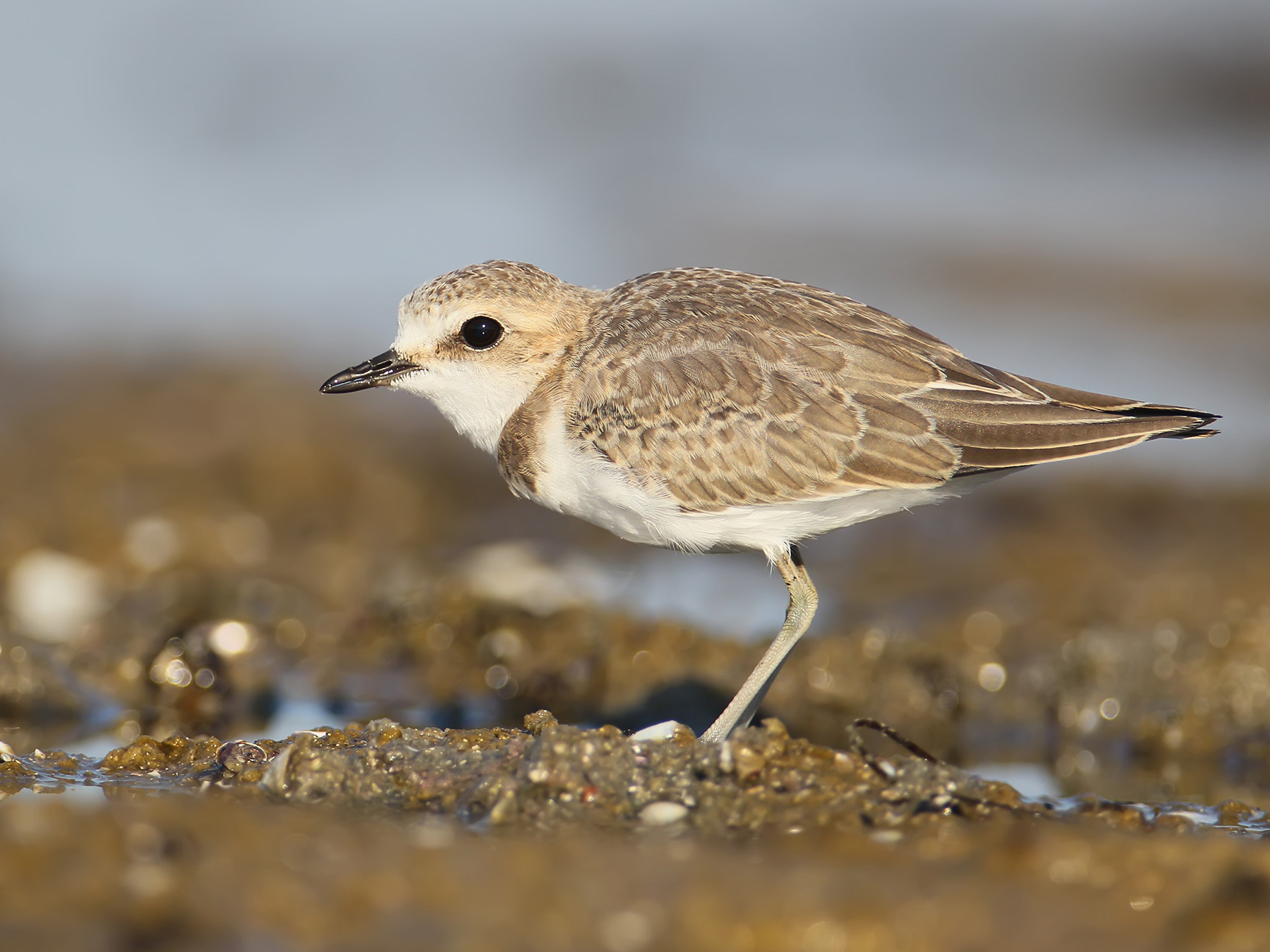
Quick facts
- Length
- 15–17 cm
- Wingspan
- 42–45 cm
- Weight
- 35–50 g
- Lifespan
- 8–10 years
- Family
- Plovers & Lapwings
- Migration
- Partial migrant
- Global status (IUCN)
- Least Concern
- World population
- 100,000 - 499,999 mature individuals
- Population trend
- Decreasing
- Scientific name
- Charadrius alexandrinus
Questions
1Why is it called the Kentish Plover?
Kentish plovers used to be widespread in the English county of Kent, particularly at Dungeness, until the 1930s.
Sources
3- 1BirdLife International. 2019. Charadrius alexandrinus (amended version of 2016 assessment). The IUCN Red List of Threatened Species 2019: e.T22727487A155485165. Source (opens in a new tab)
- 2Wetlands International (2006)
- 3BirdLife International. 2019. Charadrius alexandrinus (amended version of 2016 assessment). The IUCN Red List of Threatened Species 2019: e.T22727487A155485165. Source (opens in a new tab)

Checked by
Nathan Cope, founder and editor
Nathan founded Birdfact and leads its writers and contributors in the UK, the US and Canada. He has watched and studied birds for more than ten years, and checks every article and species guide before it’s published.