


Kakapo
Owl Parrot · Strigops habroptilus
By the Birdfact teamChecked by Nathan Cope
On this page11 sections
How to recognise it
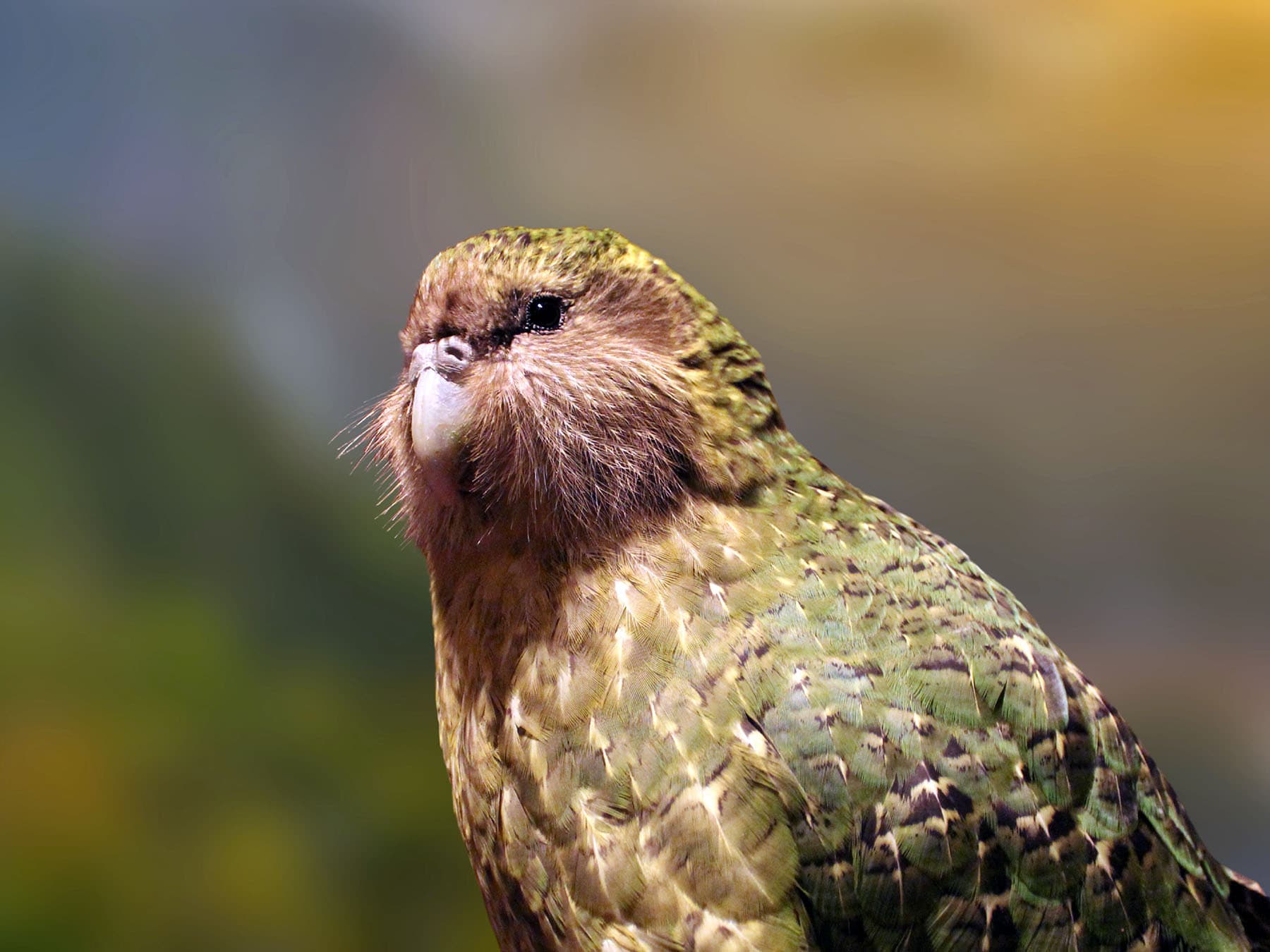
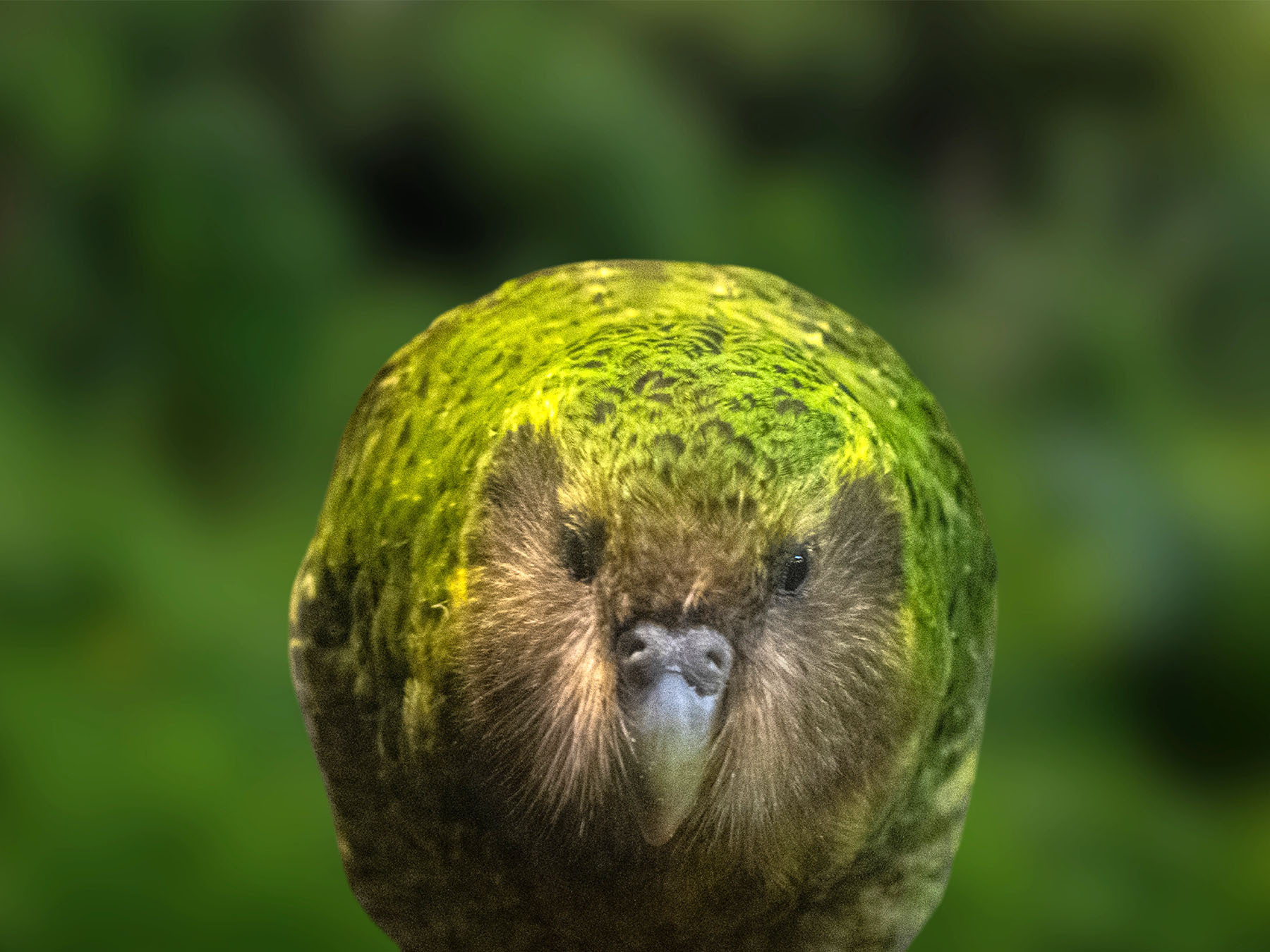
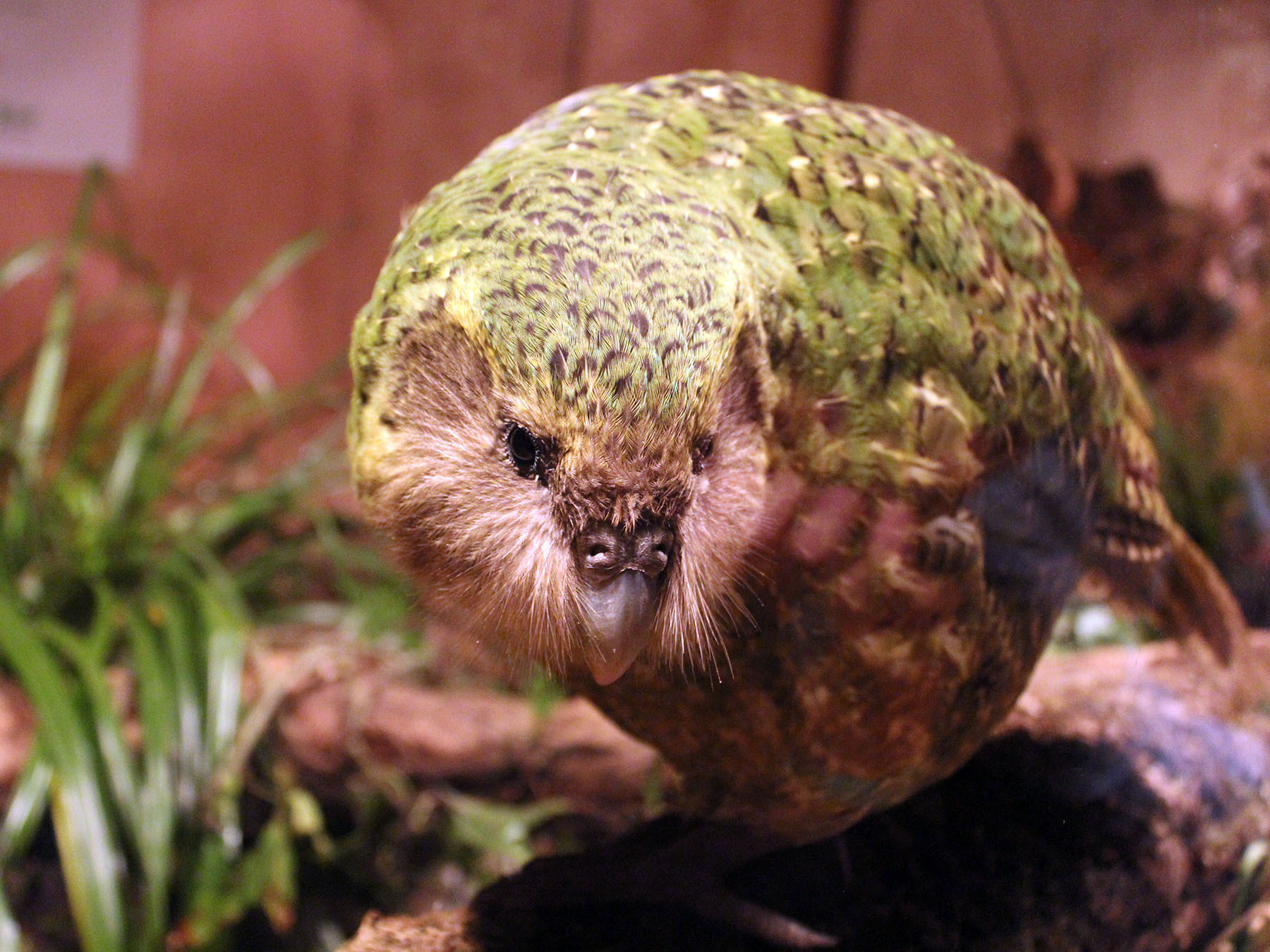
The kakapo is a large, flightless parrot with a distinctive owl-like face. Its plumage is primarily moss-green, mottled with yellow and brown, providing excellent camouflage in its forest habitat. The bird has a large, curved grey beak and strong, scaly grey feet.
Males are significantly larger than females, weighing up to 4 kg compared to females' maximum of about 1.5 kg. Both sexes have similar plumage, but males may appear slightly brighter in colouration.
Its size
Adults- Length
- 58–64 cm
- Wingspan
- 76–86 cm
- Weight
- 1300–4000 g
Its song and calls
Kakapos have a range of vocalisations. The most distinctive is the male's low-frequency 'boom' used during breeding displays, which can travel up to 5 km. They also produce a loud 'skraark' call and various softer clicks, grunts, and squeaks for communication.
When and where to see it
The Kakapo is not recorded regularly in the UK, Ireland, the United States or Canada.
Worldwide: recorded regularly in 1 country
Countries where it was recorded in at least 3 of the 6 years 2019–2024. Linked countries have their own bird list.
Oceania (1)
Data: EOD – eBird Observation Dataset (Cornell Lab of Ornithology), accessed via GBIF.org, CC BY 4.0. Records from 2019–2024, aggregated and filtered by Birdfact. How these lists are made
Tips for seeing it
- Visit Codfish Island or Little Barrier Island with special permission
- Look for signs of feeding, such as chewed plant material or droppings
- Listen for their distinctive 'skraark' call or booming during the breeding season
- Be patient and quiet, as kakapos are shy and nocturnal
What it eats
Kakapos are herbivores with a diverse diet including seeds, fruits, pollen, and plant material. They have a unique digestive system that allows them to extract maximum nutrients from fibrous plants. During breeding seasons, they rely heavily on the fruit of the rimu tree.
Nesting and breeding
Kakapos have an unusual breeding system called lek breeding. Males gather in specific areas and compete for female attention through elaborate displays and booming calls. This typically occurs every 2-4 years when rimu trees produce abundant fruit.
Females nest on the ground, often in natural cavities or under dense vegetation. They lay 1-4 eggs, which are white and about 43 mm long. Nests are simple scrapes lined with plant material.
Incubation lasts about 30 days, with the female solely responsible. Chicks fledge at about 10-12 weeks but may stay with their mother for several months, reaching maturity at 4-6 years old.
Behaviour
Kakapos are nocturnal and solitary, spending their days hidden in vegetation. They are excellent climbers, using their strong legs and beaks to move through trees.
Despite being flightless, kakapos can use their wings to 'parachute' from heights, allowing them to glide short distances.
Conservation
Only about 200 individuals (116 mature) remain of the critically endangered kakapo.
Intensive conservation efforts, including predator-free island sanctuaries, artificial incubation, and supplementary feeding, are crucial for the species' survival. Each bird is individually named and monitored.
More photos
3 photos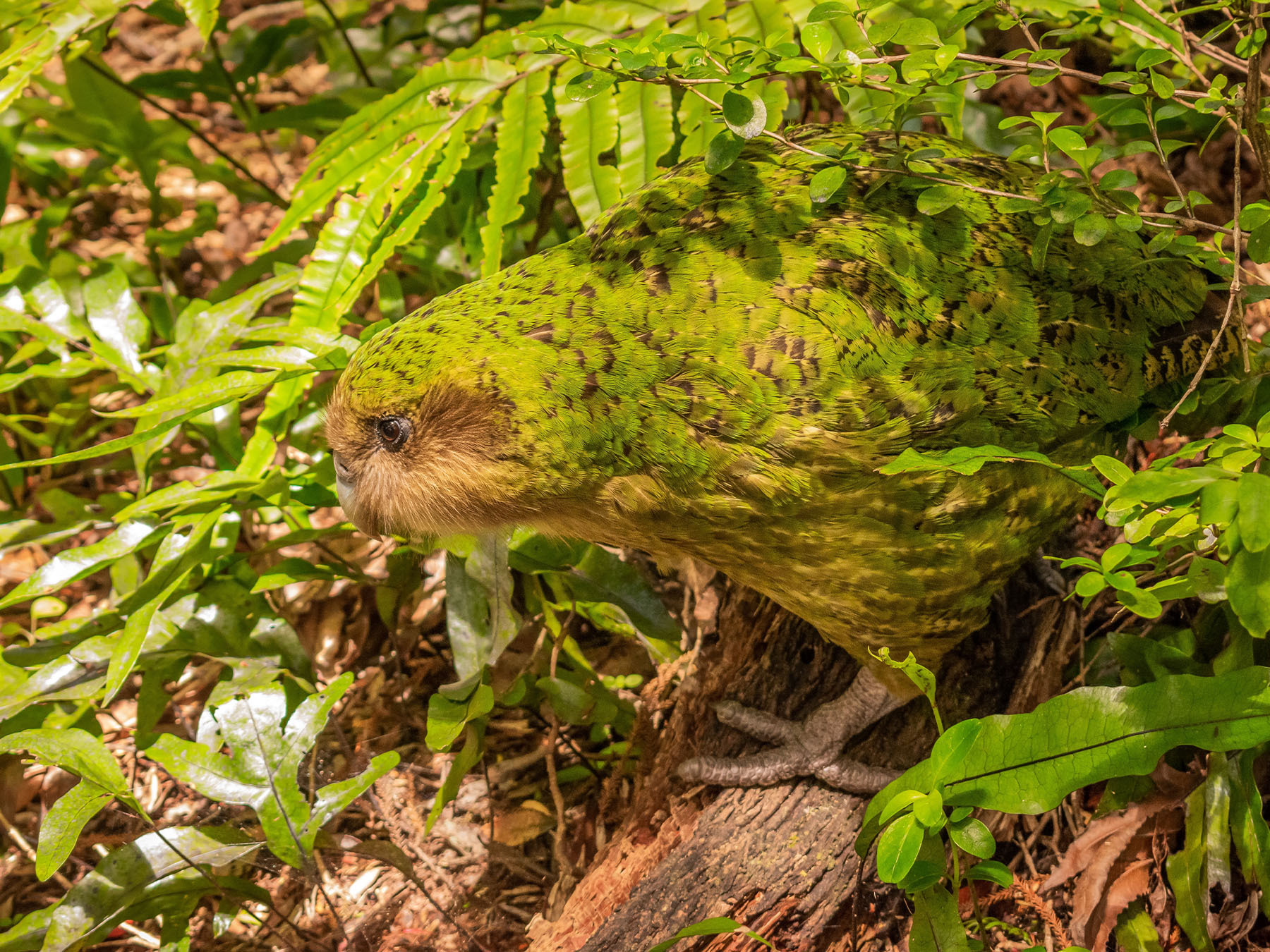
Quick facts
- Length
- 58–64 cm
- Wingspan
- 76–86 cm
- Weight
- 1300–4000 g
- Lifespan
- 40–80 years
- Family
- New Zealand Parrots
- Migration
- Resident
- Global status (IUCN)
- Critically Endangered
- World population
- 116 mature individuals
- Population trend
- Population slowly increasing due to intensive conservation efforts
- Also called
- Owl Parrot
- Scientific name
- Strigops habroptilus
Sources
3- 1BirdLife International. 2018. Strigops habroptilus. The IUCN Red List of Threatened Species 2018: e.T22685245A129751169. Source (opens in a new tab)
- 2Department of Conservation (2018)
- 3Department of Conservation (2017)

Checked by
Nathan Cope, founder and editor
Nathan founded Birdfact and leads its writers and contributors in the UK, the US and Canada. He has watched and studied birds for more than ten years, and checks every article and species guide before it’s published.