


Indian Robin
Indian Black Robin, Saxicoloides fulicatus · Copsychus fulicatus
By the Birdfact teamChecked by Nathan Cope
On this page11 sections
How to recognise it
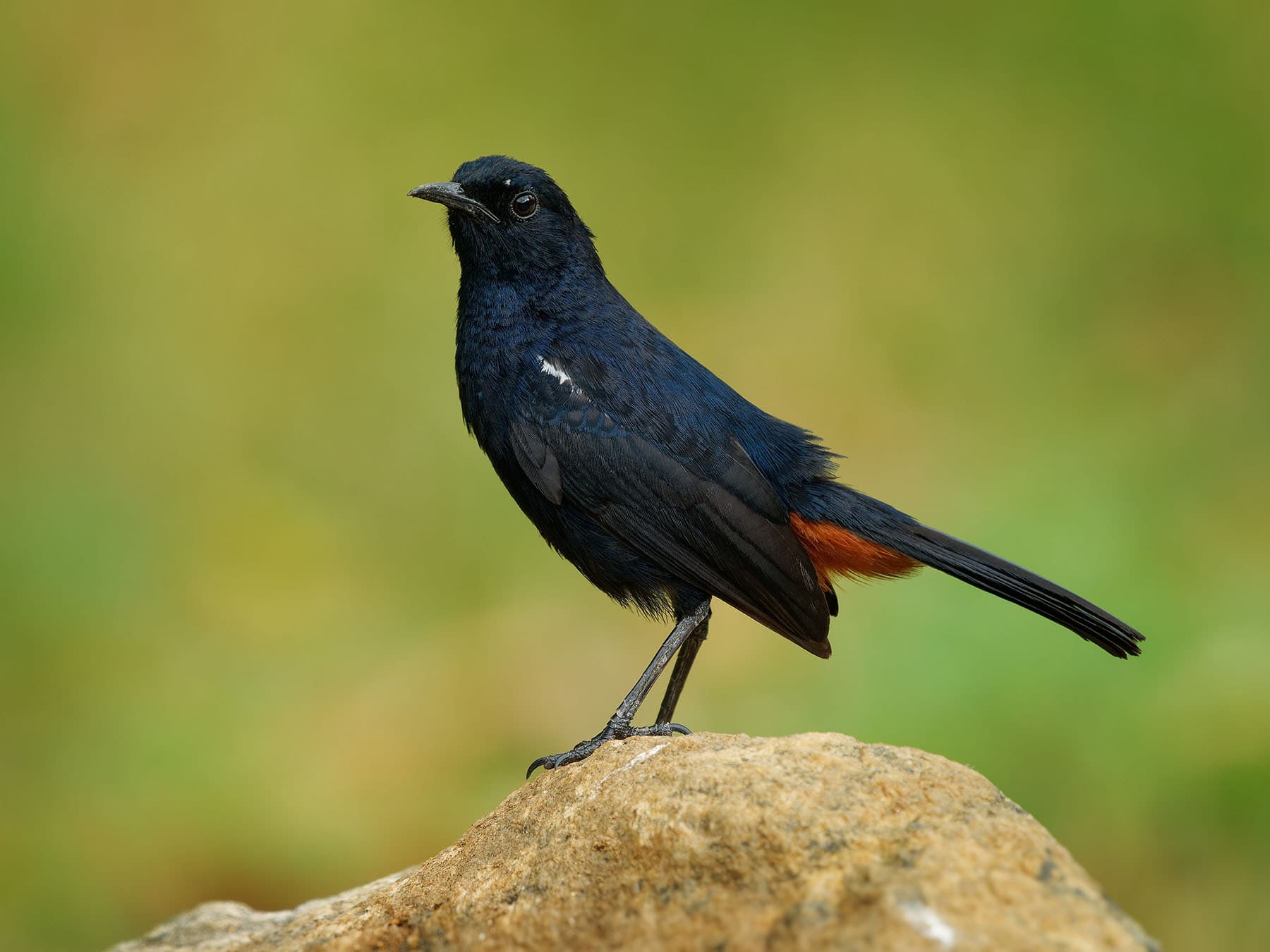
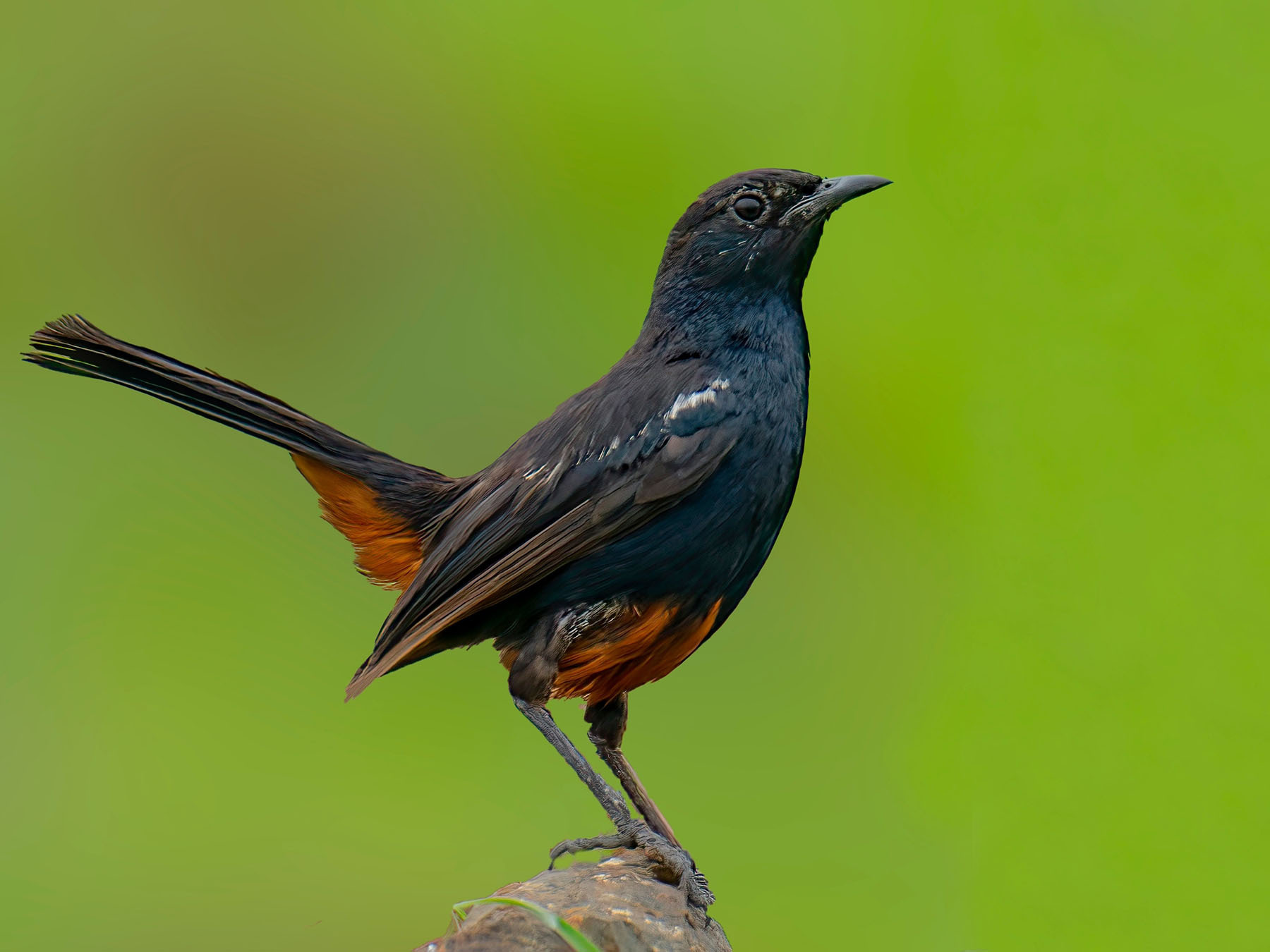
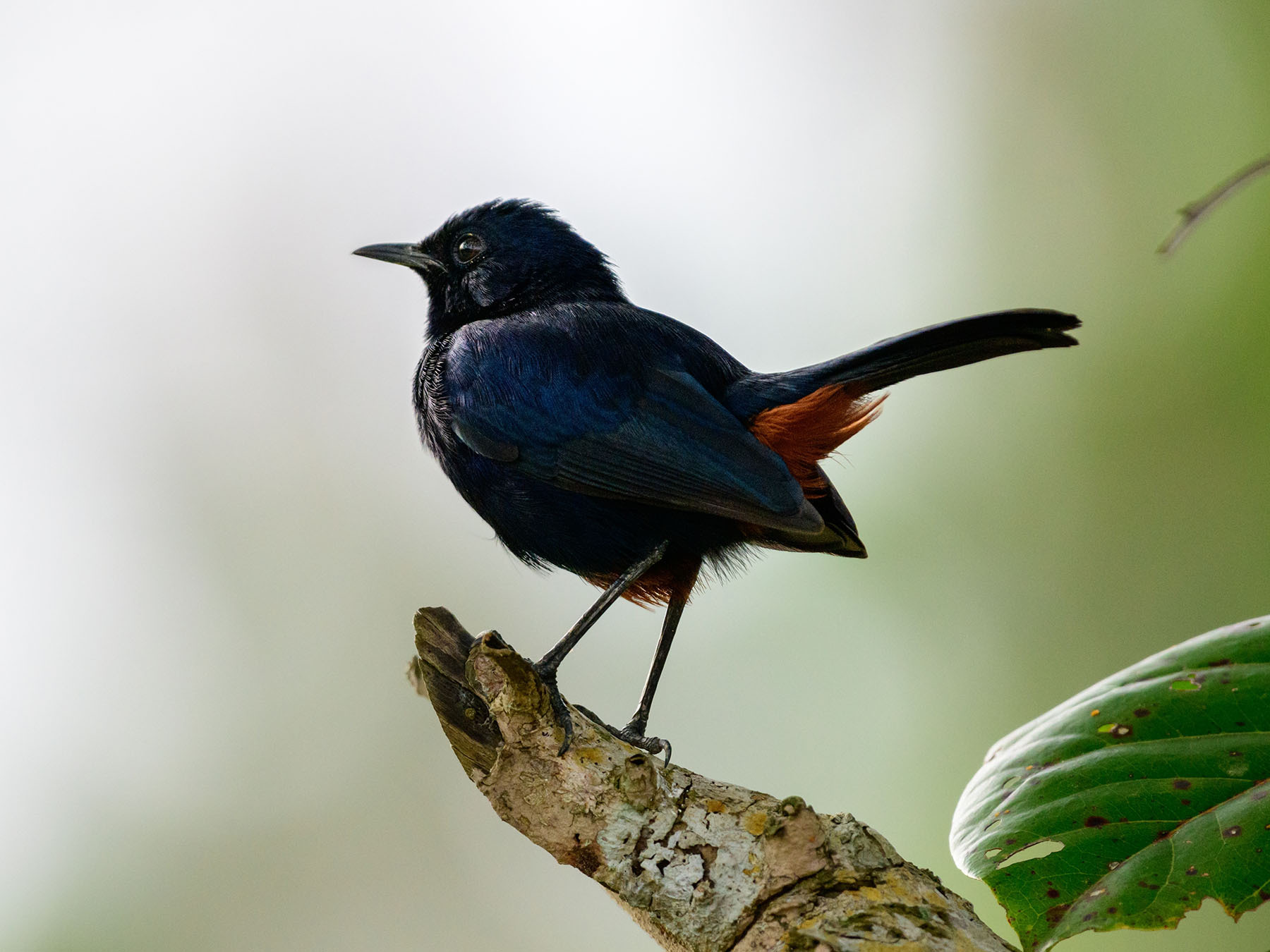
The Indian Robin is a small, striking bird with distinct sexual dimorphism. Males are predominantly glossy black with a rich chestnut patch on the belly and under the tail (vent). They have a prominent white shoulder patch that contrasts sharply with their dark plumage.
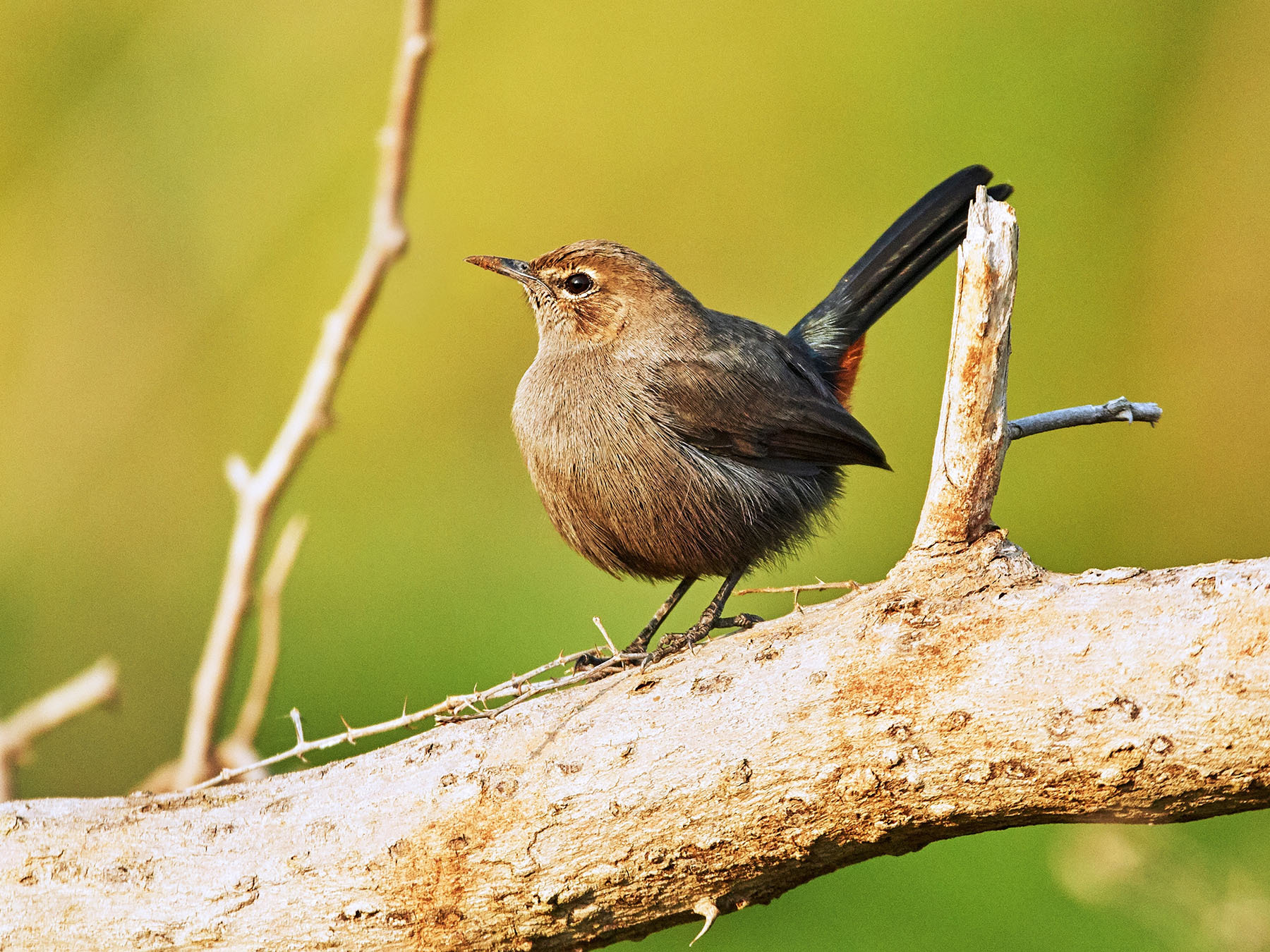
Females are more subdued in colouration, with an overall brownish-grey plumage and darker ear-coverts. Both sexes have long black legs, a slender black bill, and a characteristic habit of holding their long tails upright.
Its size
Adults- Length
- 15–17 cm
- Wingspan
- 20–22 cm
- Weight
- 17–20 g
Its song and calls
Indian Robins are known for their melodious and varied songs. Their calls include a series of sweet, whistling notes often described as 'chee-wee-wee' or 'pretty-pretty-pretty'.
Males are particularly vocal during the breeding season, singing from prominent perches to defend territory and attract mates.
- Call0:00 / 1:12
When and where to see it
The Indian Robin is not recorded regularly in the UK, Ireland, the United States or Canada.
Worldwide: recorded regularly in 4 countries
Countries where it was recorded in at least 3 of the 6 years 2019–2024. Linked countries have their own bird list.
Data: EOD – eBird Observation Dataset (Cornell Lab of Ornithology), accessed via GBIF.org, CC BY 4.0. Records from 2019–2024, aggregated and filtered by Birdfact. How these lists are made
Tips for seeing it
- Look for Indian Robins in open, scrubby habitats and gardens
- Listen for their melodious song, especially during early mornings
- Observe their distinctive tail-cocking behaviour
- Watch for their quick, darting movements on the ground
What it eats
Indian Robins are primarily insectivorous, feeding on a variety of small invertebrates. They hunt by hopping on the ground, picking up insects, spiders, and small worms.
Occasionally, they supplement their diet with berries and small fruits, especially during the dry season when insects may be scarce.
Nesting and breeding
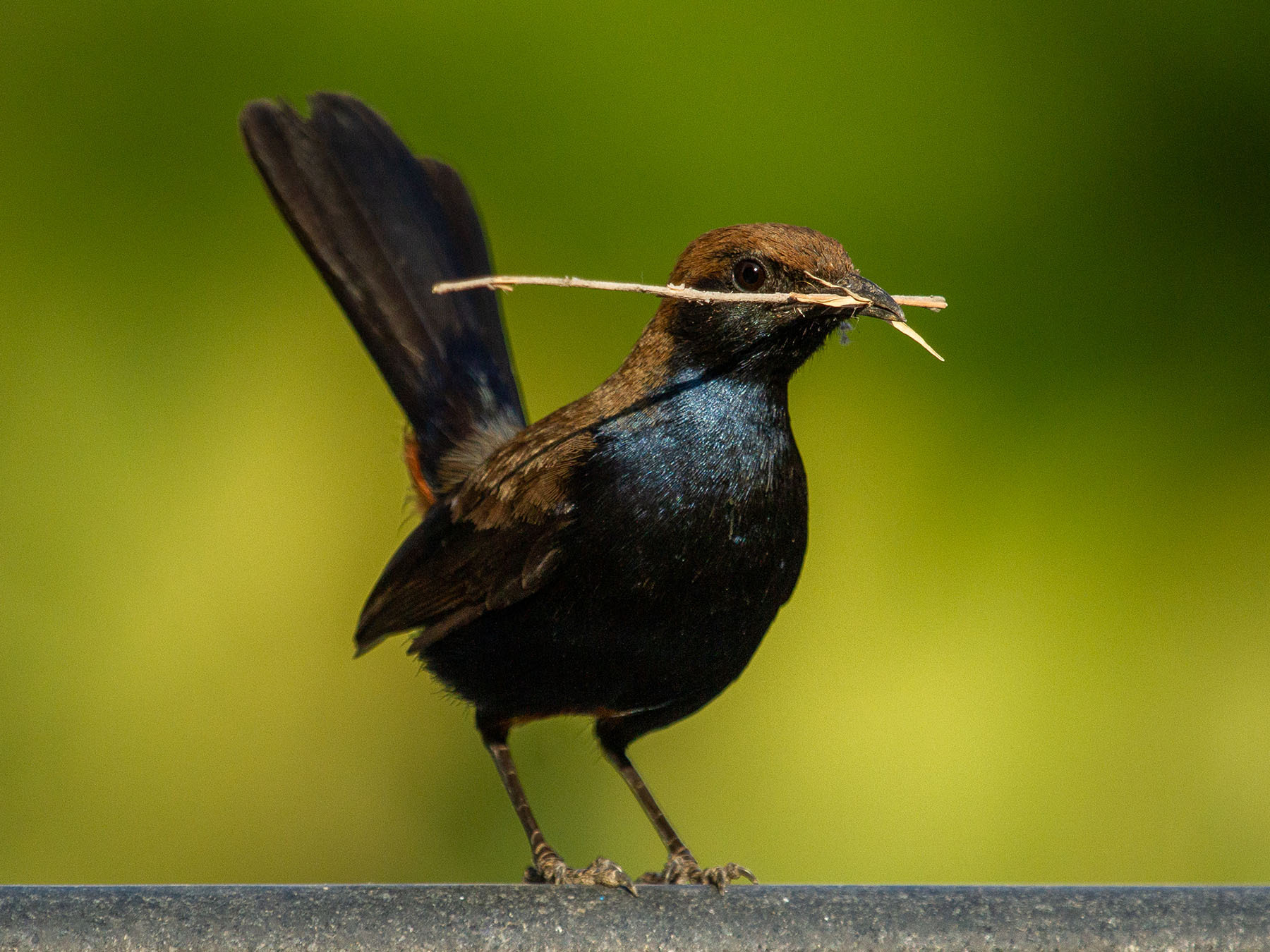
The breeding season for Indian Robins typically lasts from March to August, which coincides with the monsoon season in much of their range. Males perform elaborate courtship displays, including singing and offering food to females.
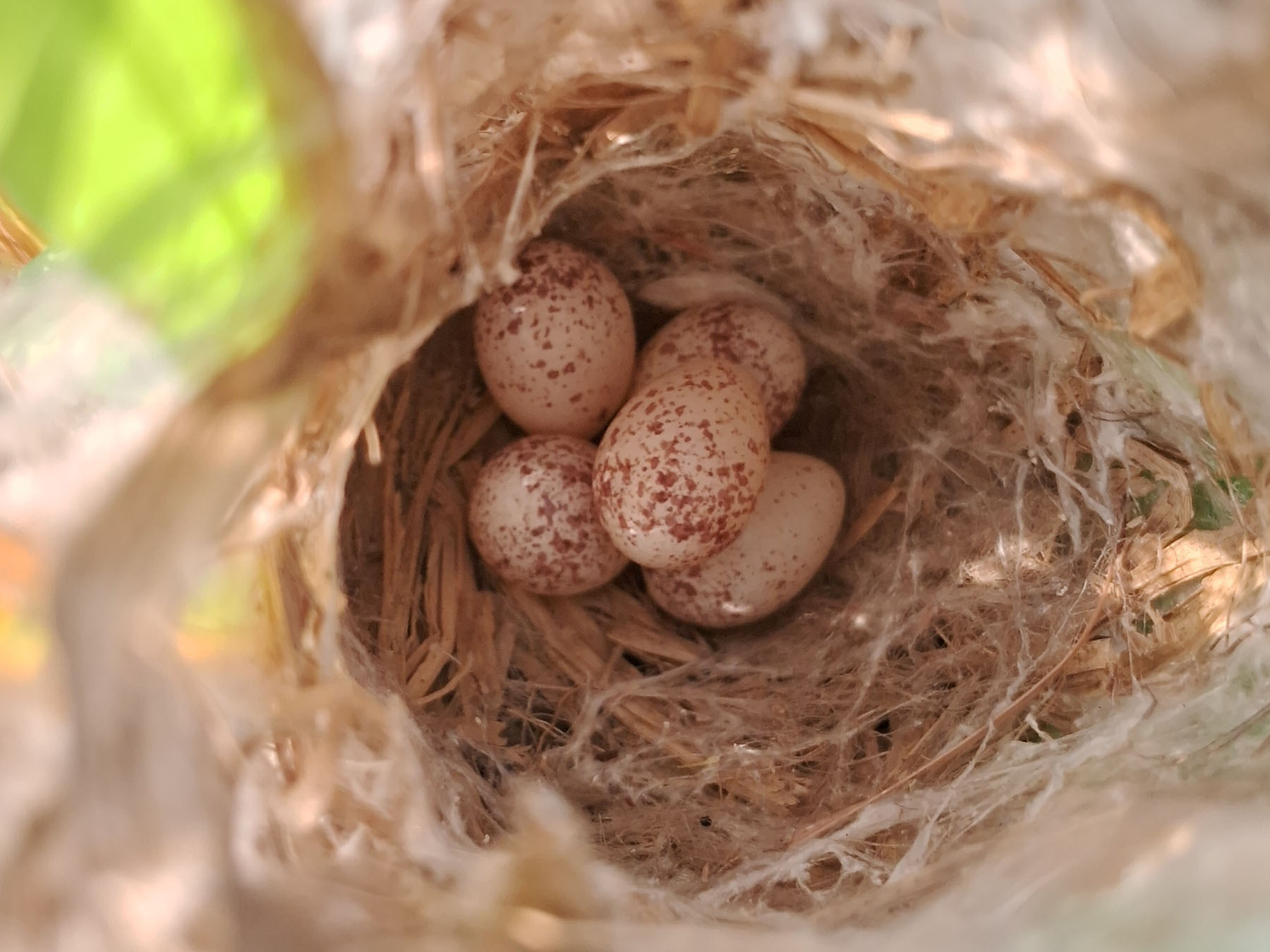
Nests are usually built in holes in walls, tree cavities, or dense bushes. The cup-shaped nest is constructed with grass, roots, and leaves lined with softer materials. Females lay 2-3 pinkish-white to creamy-white eggs with brown speckles.
Both parents participate in incubation, which lasts about 12-13 days. The chicks fledge after approximately two weeks but remain dependent on their parents for several more weeks.
Behaviour
Indian Robins are known for their lively, confident behaviour. They frequently bob their tails up and down while perched and hop actively on the ground in search of prey.
These birds are often seen in pairs or small family groups, displaying territorial behaviour during the breeding season.
Conservation
The Indian Robin is currently listed as Least Concern by the IUCN due to its large range and stable population. However, like many birds, it faces threats from habitat loss and urbanisation.
Conservation efforts focus on preserving its natural habitats and promoting bird-friendly urban gardening practices.
More photos
6 photos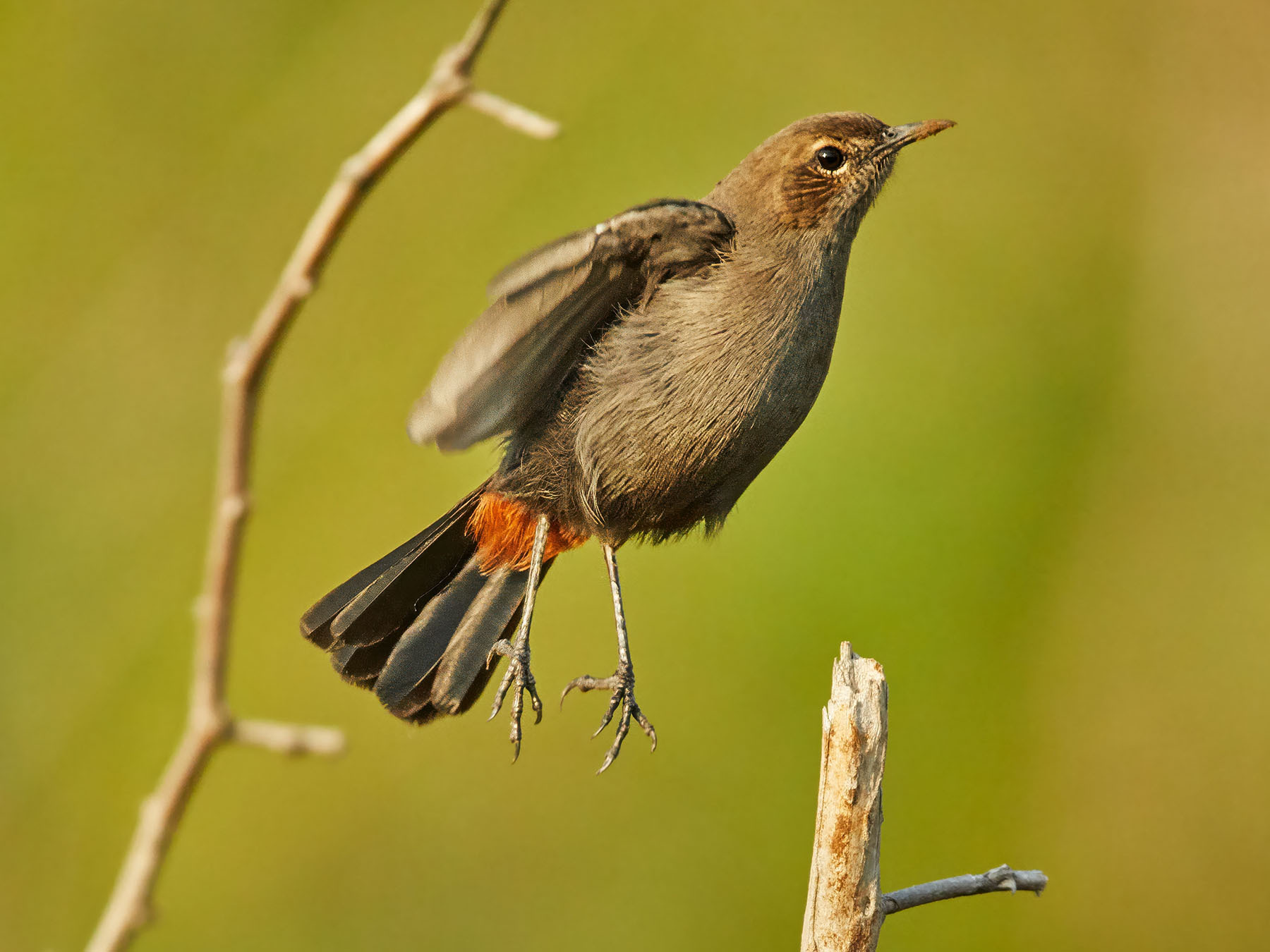
Quick facts
- Length
- 15–17 cm
- Wingspan
- 20–22 cm
- Weight
- 17–20 g
- Family
- Old World Flycatchers
- Migration
- Resident
- Global status (IUCN)
- Least Concern
- World population
- Not quantified, but common throughout range
- Population trend
- Stable
- Also called
- Indian Black Robin, Saxicoloides fulicatus
- Scientific name
- Copsychus fulicatus
Sources
3- 1BirdLife International. 2018. Saxicoloides fulicatus. The IUCN Red List of Threatened Species 2018: e.T22710023A132083944. Source (opens in a new tab)
- 2BirdLife International. 2018. Saxicoloides fulicatus. The IUCN Red List of Threatened Species 2018: e.T22710023A132083944. Source (opens in a new tab)
- 3del Hoyo et al. (2005)

Checked by
Nathan Cope, founder and editor
Nathan founded Birdfact and leads its writers and contributors in the UK, the US and Canada. He has watched and studied birds for more than ten years, and checks every article and species guide before it’s published.