


Hyacinth Macaw
Blue Macaw · Anodorhynchus hyacinthinus
By the Birdfact teamChecked by Nathan Cope
On this page11 sections
How to recognise it
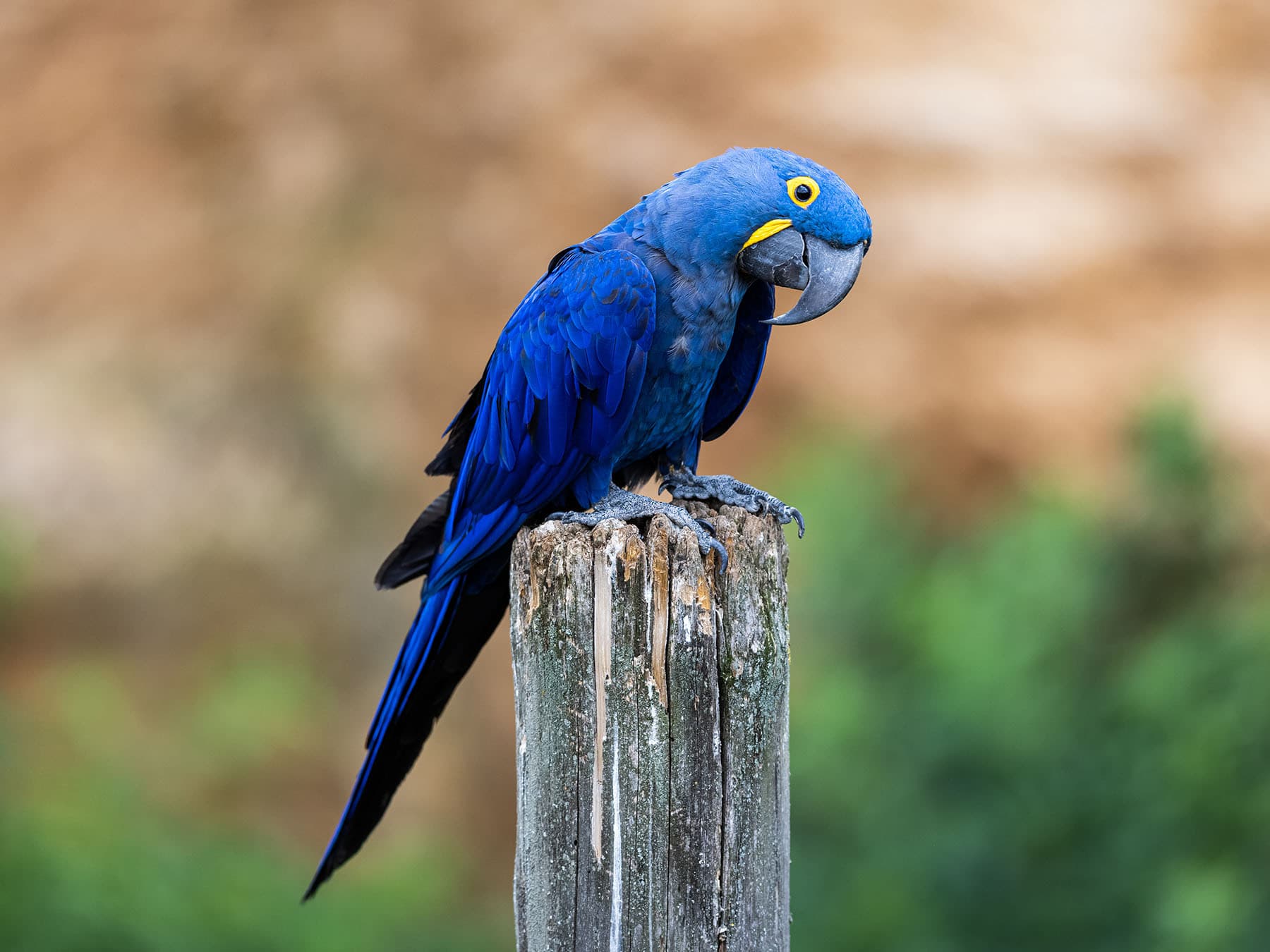
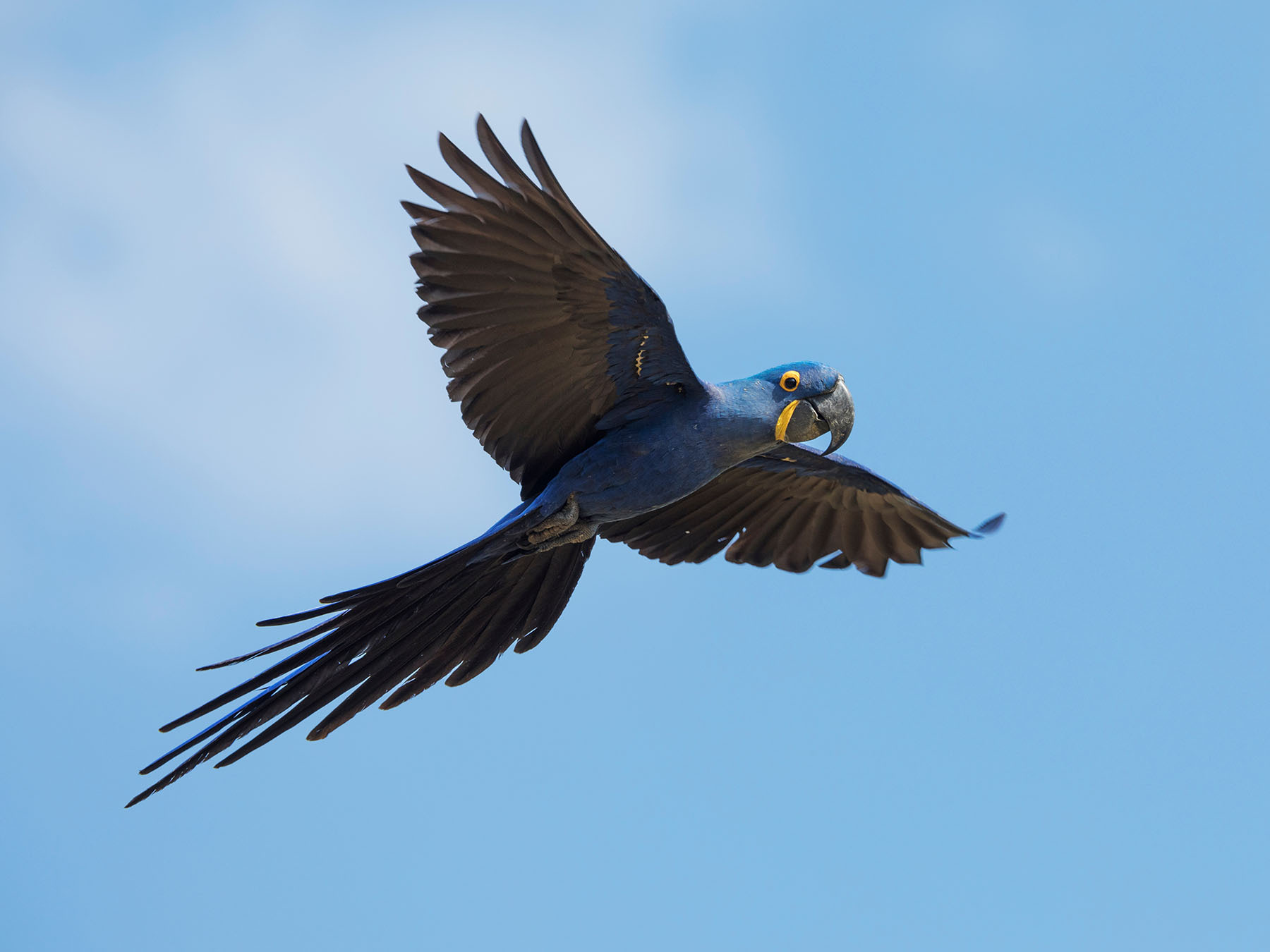
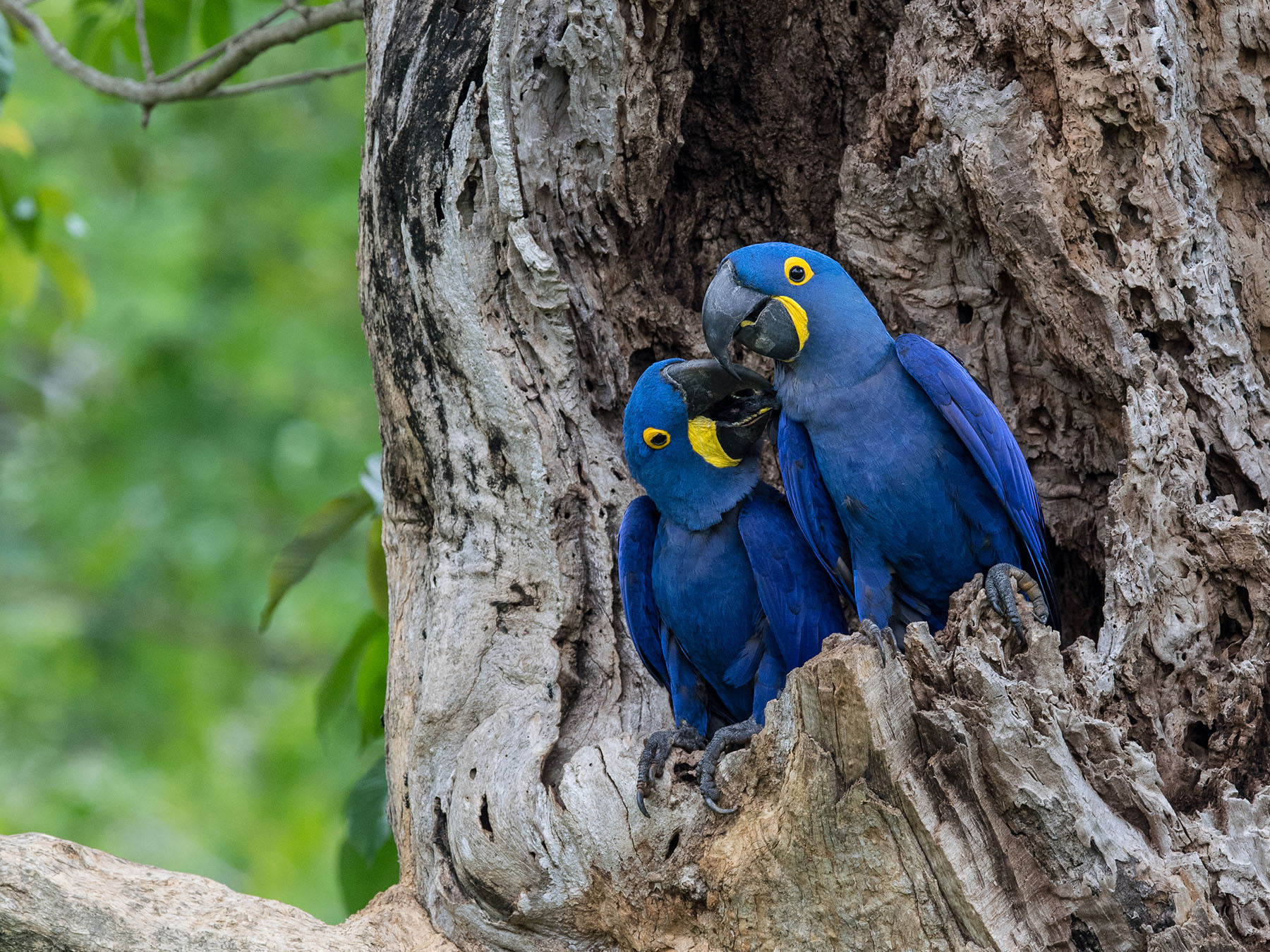
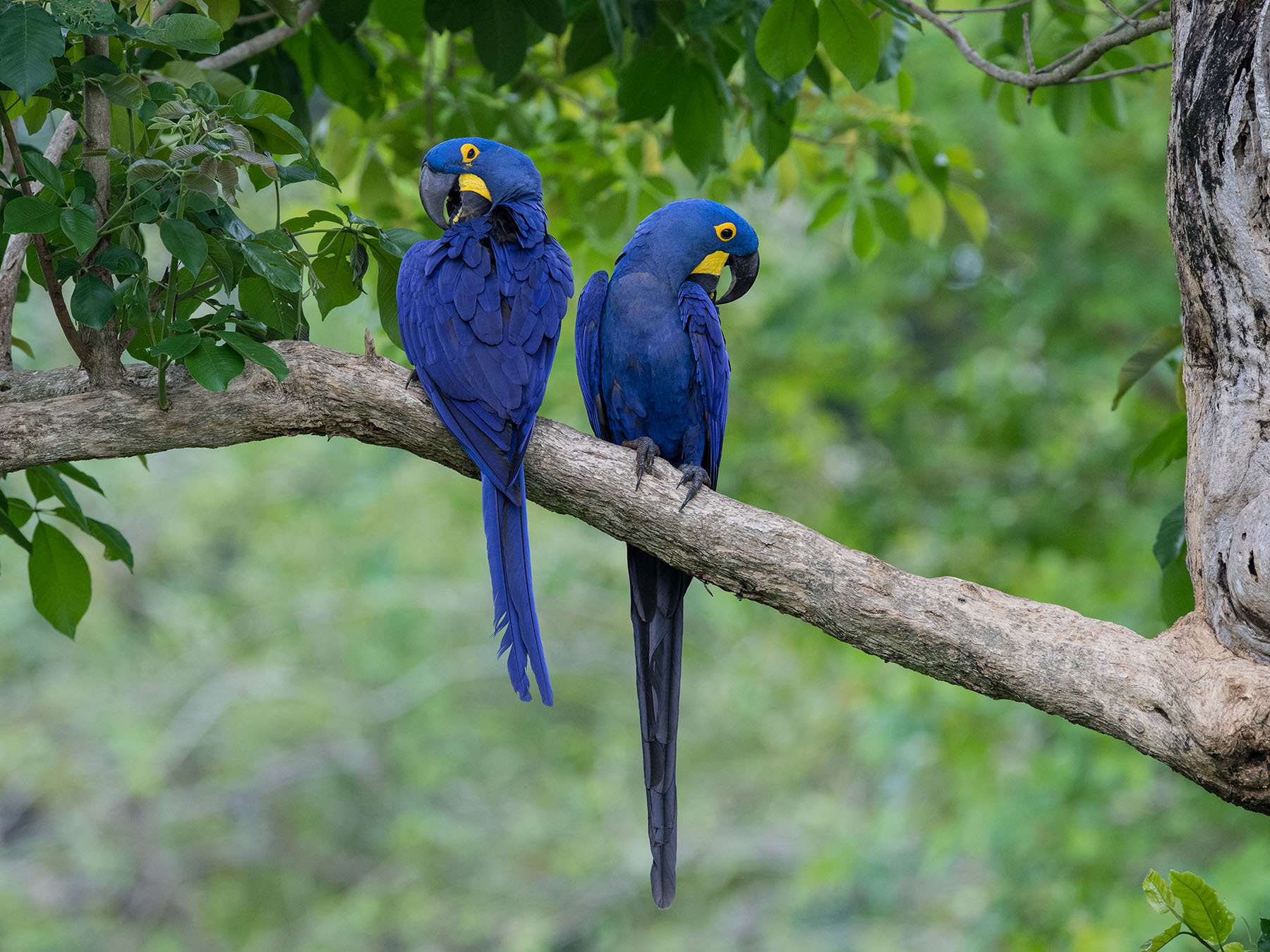
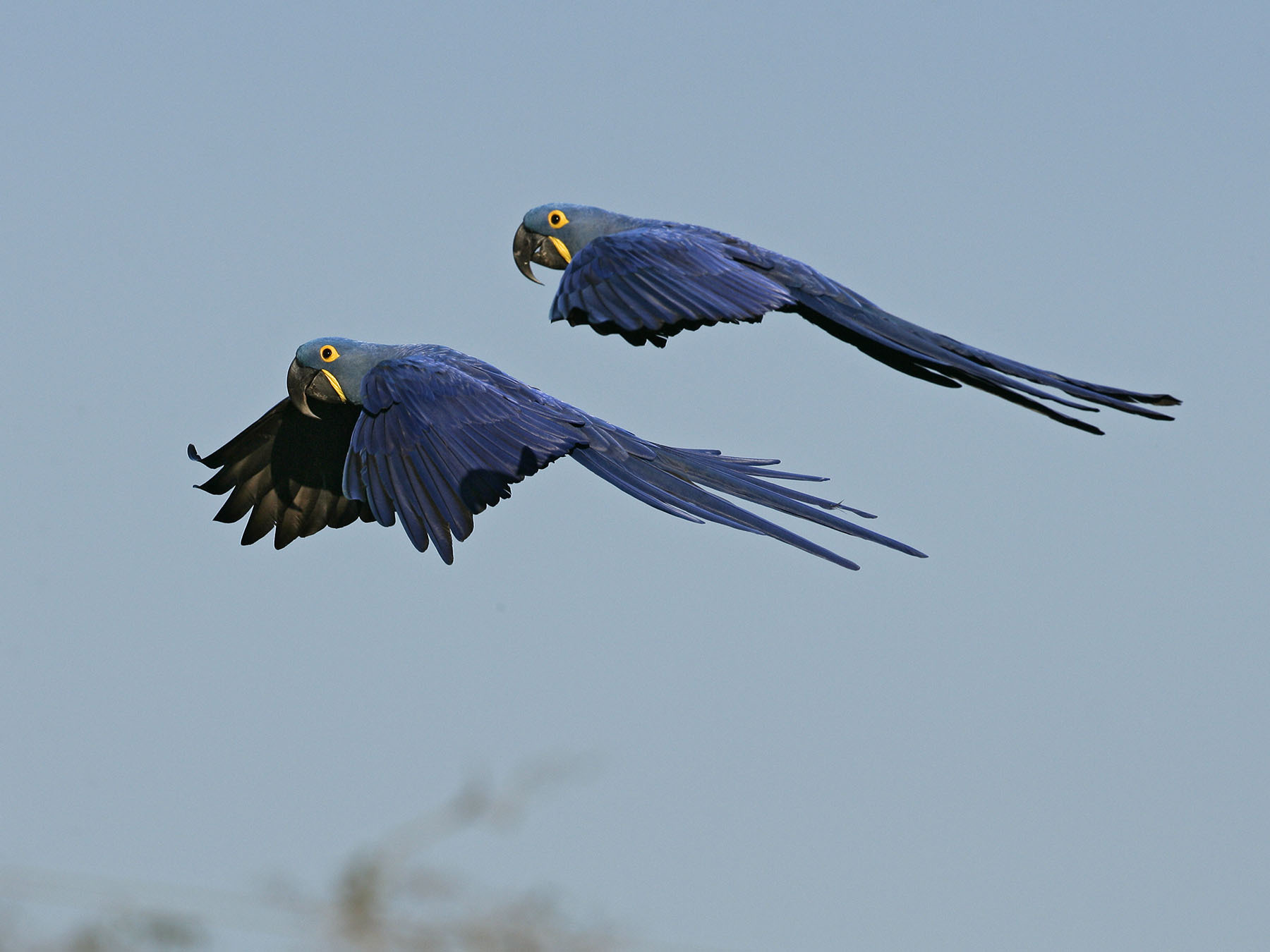
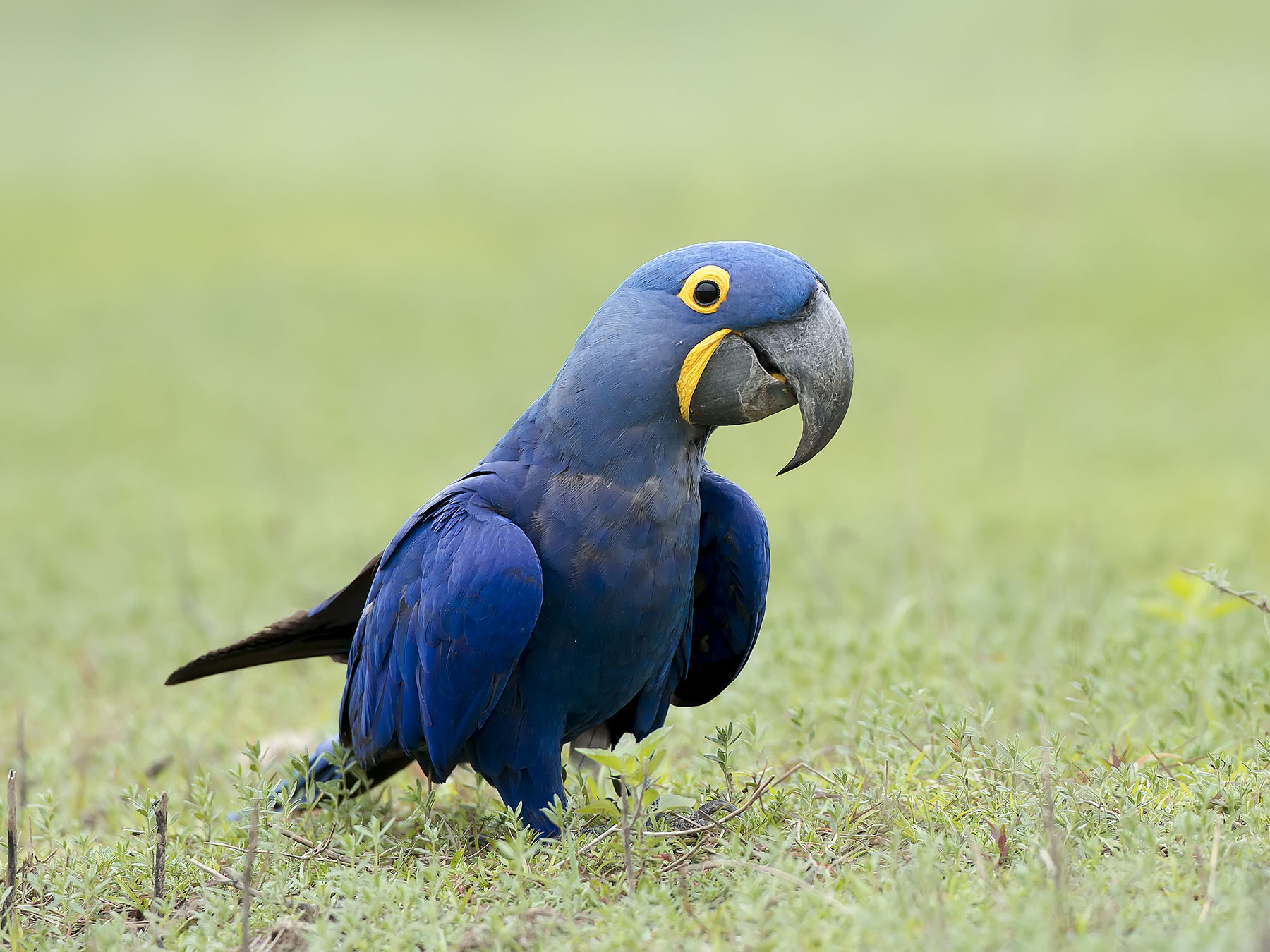
The Hyacinth Macaw is the largest flying parrot species, boasting a striking cobalt blue plumage that covers most of its body. Its massive black beak and long tail are distinctive features, while a bright yellow eye ring and patch at the base of the lower mandible provide striking contrast.
Both males and females share identical colouration, making visual sex determination challenging. Juveniles resemble adults but have shorter tails and paler yellow facial patches.
Its size
Adults- Length
- 95–100 cm
- Wingspan
- 120–140 cm
- Weight
- 1200–1700 g
Its song and calls
Hyacinth Macaws have loud, resonant vocalisations that can be heard over long distances. Their calls include deep, guttural 'ahrr-ahrr' sounds and high-pitched screeches.
They also produce softer, more melodious notes when communicating with mates or offspring. Their vocalisations play a crucial role in maintaining social bonds within groups.
When and where to see it
The Hyacinth Macaw is not recorded regularly in the UK, Ireland, the United States or Canada.
United States: recorded in 2 of the 6 years. Too few years to count as a regular visitor.
Worldwide: recorded regularly in 3 countries
Countries where it was recorded in at least 3 of the 6 years 2019–2024. Linked countries have their own bird list.
South America (3)
- Bolivia
- Brazil
- Paraguay
Data: EOD – eBird Observation Dataset (Cornell Lab of Ornithology), accessed via GBIF.org, CC BY 4.0. Records from 2019–2024, aggregated and filtered by Birdfact. How these lists are made
Tips for seeing it
- Look for Hyacinth Macaws in open areas with palm trees, their preferred habitat.
- Listen for their loud, distinctive calls, which can be heard from a distance.
- Observe them in the early morning or late afternoon when they are most active.
- Visit protected areas in the Pantanal region of Brazil for the best chances of spotting these birds.
What it eats
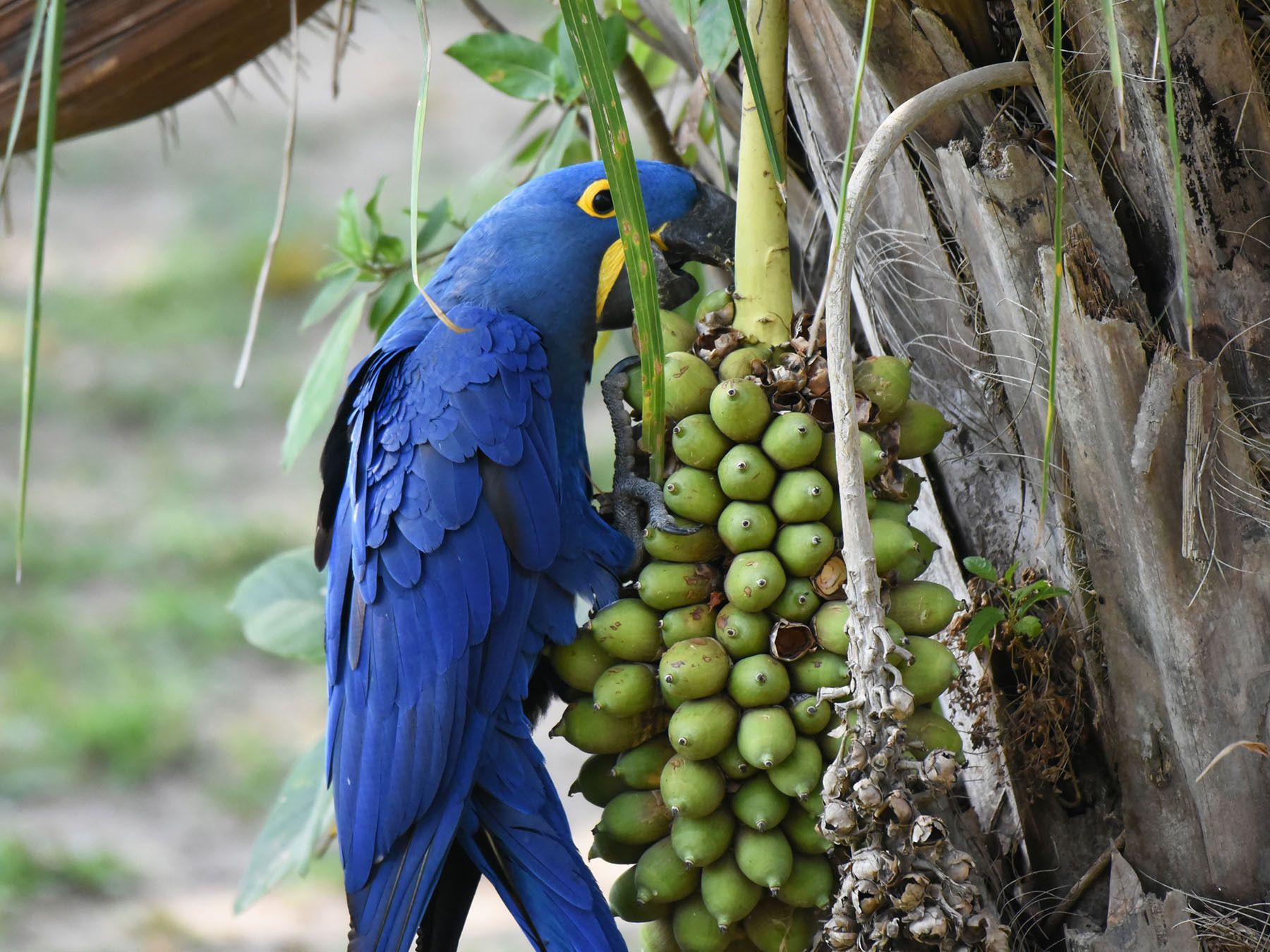
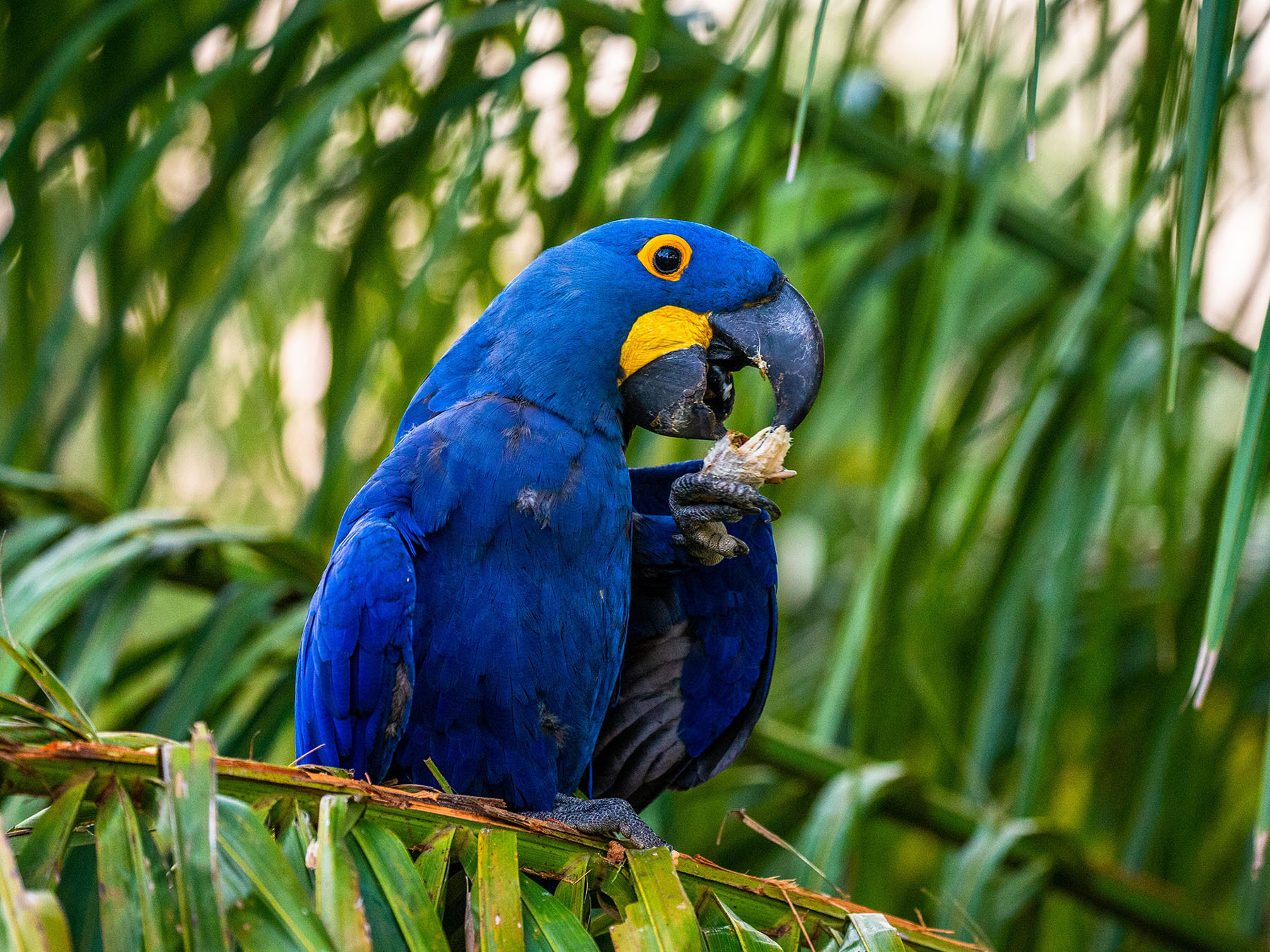
Hyacinth Macaws primarily feed on the nuts of native palms, particularly those of the acuri and bocaiuva palms. Their powerful beaks are specially adapted to crack these hard nuts.
They also consume fruits, seeds, and occasionally tree bark. Their diet is closely tied to the availability of specific palm species in their habitat.
Nesting and breeding
Hyacinth Macaws form monogamous pairs that often mate for life. The breeding season typically occurs from July to December, coinciding with the dry season in their native range.
These macaws nest in large tree cavities, often in manduvi trees. They do not build nests but may modify existing cavities. Females usually lay two eggs, though often only one chick survives.
The incubation period lasts about 28 days, with both parents sharing duties. Chicks remain in the nest for about 13 weeks before fledging, and parents continue to care for them for several months afterwards.
Behaviour
Hyacinth Macaws are highly social, often seen in pairs or small family groups. They are known for their playful nature, using their strong beaks and dexterous feet to manipulate objects and forage.
These intelligent birds are capable of using tools, such as wedging nuts against branches to crack them open more easily.
Conservation
Hyacinth Macaws face threats from habitat loss and illegal trapping for the pet trade.
Conservation efforts focus on habitat protection, nest box programs, and community-based initiatives to reduce poaching. Their population has stabilised in some areas due to these efforts, but continued protection is crucial for their survival.
More photos
8 photos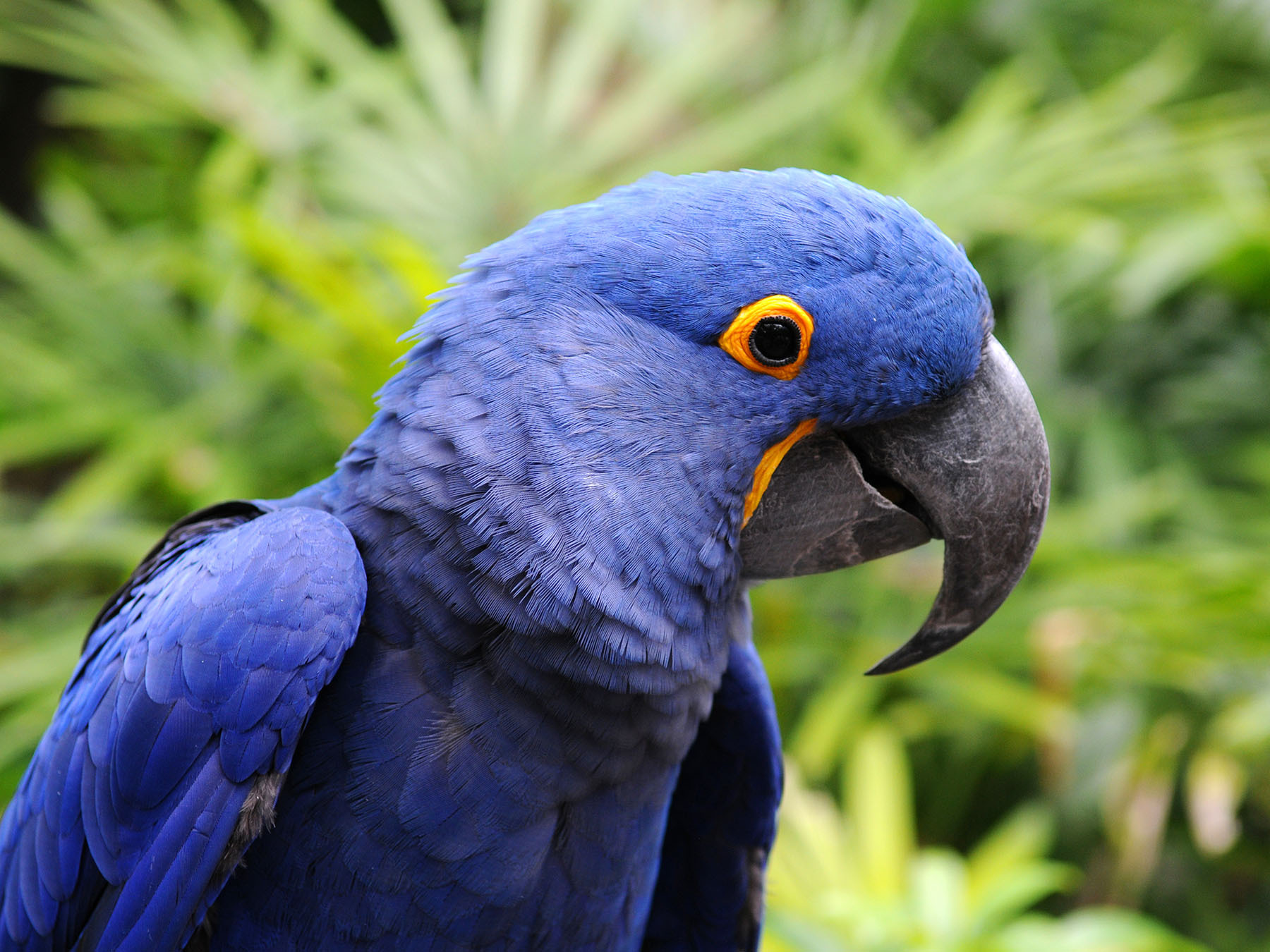
Quick facts
- Length
- 95–100 cm
- Wingspan
- 120–140 cm
- Weight
- 1200–1700 g
- Lifespan
- 30–50 years
- Family
- Parrots
- Migration
- Resident
- Global status (IUCN)
- Vulnerable
- World population
- 4,300 mature individuals
- Population trend
- Decreasing
- Also called
- Blue Macaw
- Scientific name
- Anodorhynchus hyacinthinus
Sources
3- 1BirdLife International. 2016. Anodorhynchus hyacinthinus. The IUCN Red List of Threatened Species 2016: e.T22685516A93077457. Source (opens in a new tab)
- 2BirdLife International. 2016. Anodorhynchus hyacinthinus. The IUCN Red List of Threatened Species 2016: e.T22685516A93077457. Source (opens in a new tab)
- 3BirdLife International. 2016. Anodorhynchus hyacinthinus. The IUCN Red List of Threatened Species 2016: e.T22685516A93077457. Source (opens in a new tab)

Checked by
Nathan Cope, founder and editor
Nathan founded Birdfact and leads its writers and contributors in the UK, the US and Canada. He has watched and studied birds for more than ten years, and checks every article and species guide before it’s published.