


Hooded Wheatear
Oenanthe monacha
By the Birdfact teamChecked by Nathan Cope
On this page11 sections
How to recognise it
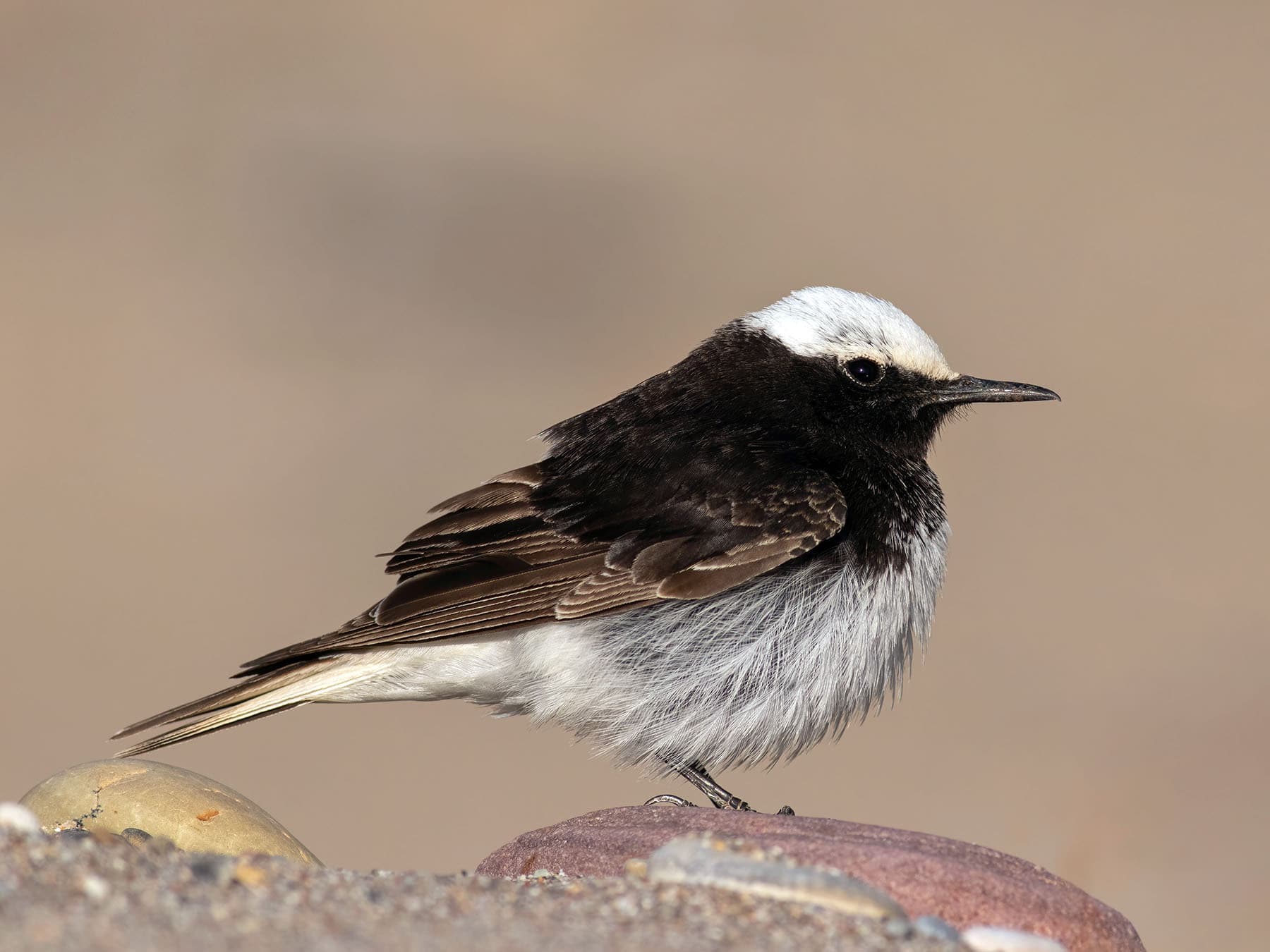
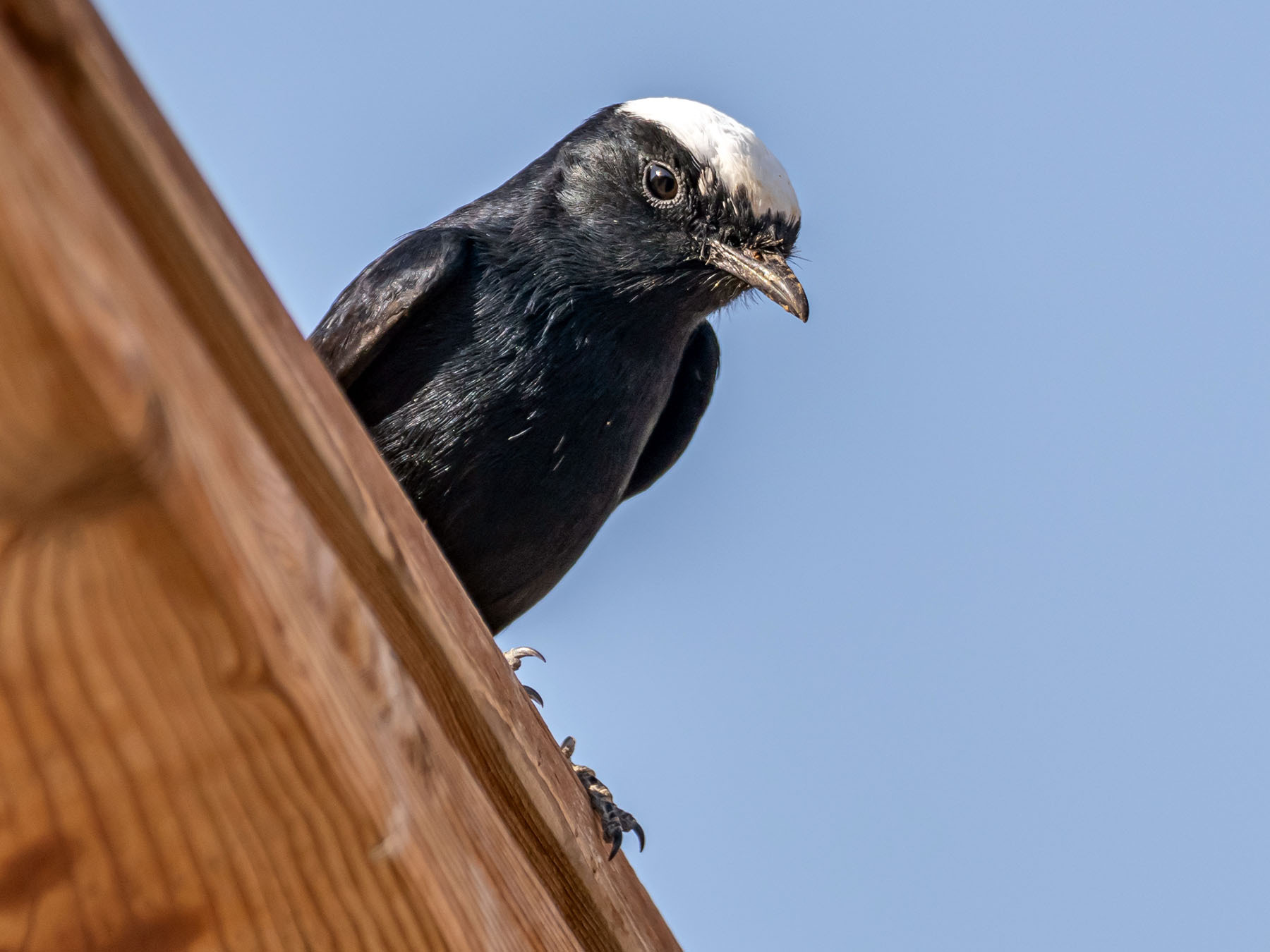
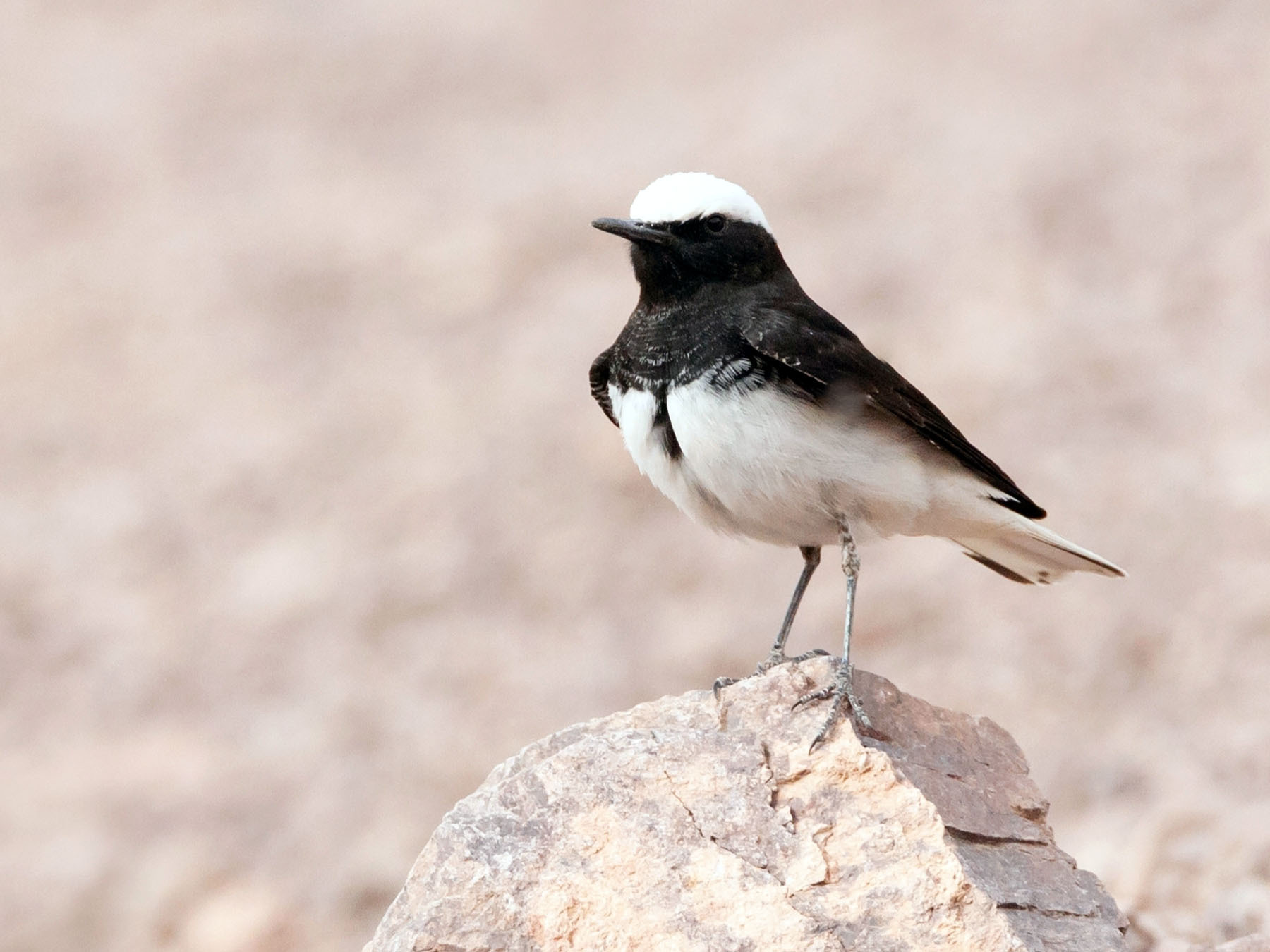
The Hooded Wheatear is a striking bird with distinctive markings. Males have a black body with a prominent white crown stripe extending through the eye to the nape. This contrasts with their white lower back, tail edges, and underparts. Their tail centre feathers are black with subtle dark markings near the tip.
Females are more subtly coloured, with pale sandy-brown plumage, mid-grey wings, and rusty-brown tones on their lower back and tail. Both sexes have black legs and beaks. Young birds look similar to females but have buff spots above and dark scaling below.
Its size
Adults- Length
- 16–18 cm
- Wingspan
- 28–32 cm
- Weight
- 18–23 g
Its song and calls
The Hooded Wheatear's song is a melodious, warbling whistle, often delivered from a prominent perch or during display flights.
Their call is a sharp, metallic 'chack' or 'tick'. During the breeding season, males become particularly vocal, singing to establish territories and attract mates.
When and where to see it
The Hooded Wheatear is not recorded regularly in the UK, Ireland, the United States or Canada.
Worldwide: recorded regularly in 9 countries
Countries where it was recorded in at least 3 of the 6 years 2019–2024. Linked countries have their own bird list.
Data: EOD – eBird Observation Dataset (Cornell Lab of Ornithology), accessed via GBIF.org, CC BY 4.0. Records from 2019–2024, aggregated and filtered by Birdfact. How these lists are made
Tips for seeing it
- Look for Hooded Wheatears in rocky desert areas and mountain slopes
- Watch for their distinctive black and white plumage (males) or brown and grey colouration (females)
- Observe their habit of perching on prominent rocks or bushes
- Listen for their melodious whistling calls, especially during the breeding season
What it eats
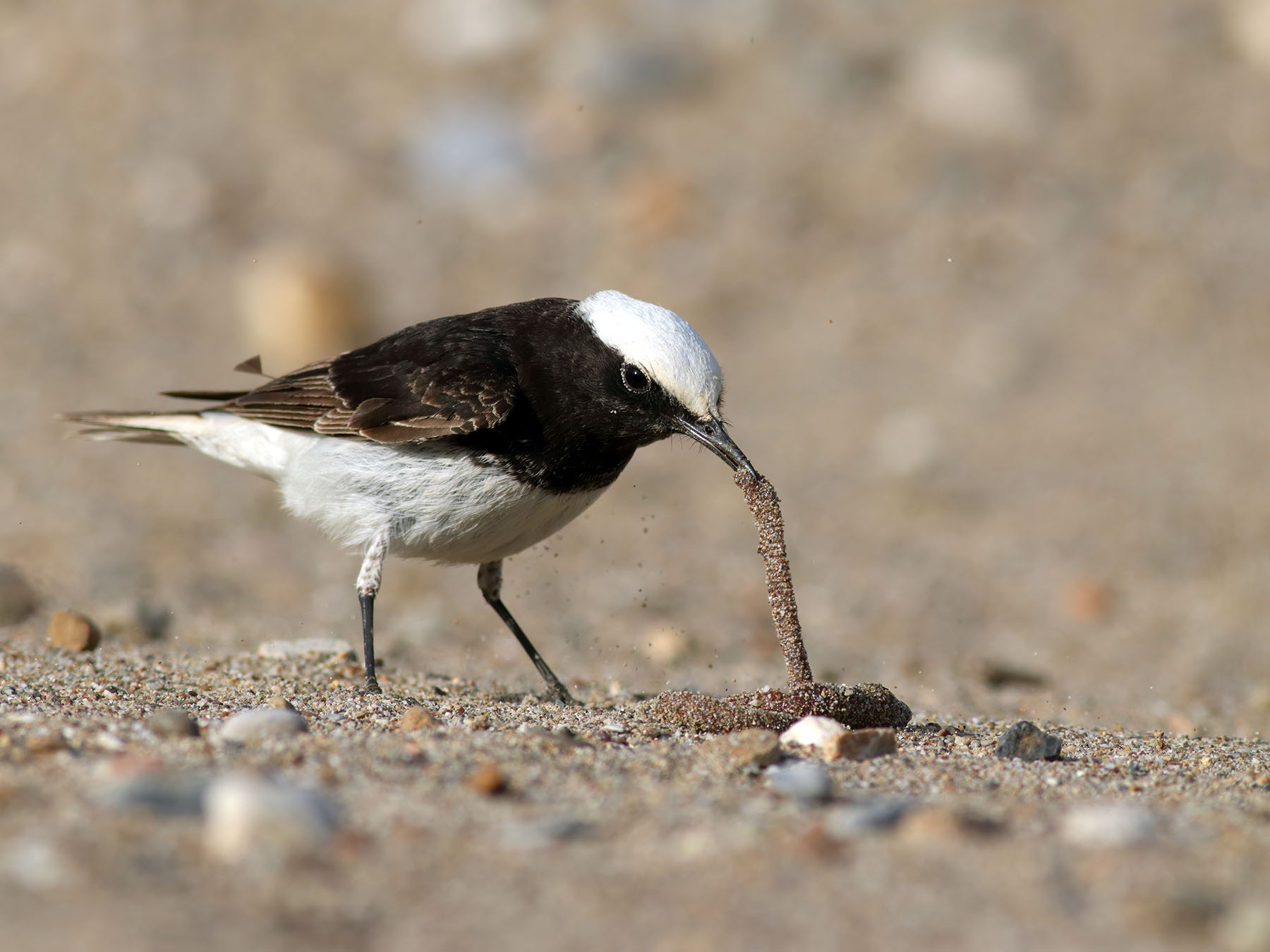
Hooded Wheatears primarily feed on insects, including beetles, ants, and flying insects. They employ a 'sit-and-wait' hunting strategy, swooping down from perches to catch prey on the ground or in mid-air.
During autumn, they may supplement their diet with small berries.
Nesting and breeding
Breeding season for Hooded Wheatears typically occurs from March to June. Males perform aerial displays to attract females, including song flights and wing-fluttering displays.
Nests are built in rock crevices, holes in cliffs, or sometimes in abandoned burrows. The female constructs a cup-shaped nest using grass, roots, and animal hair, often lining it with softer materials.
The female lays 3-5 pale blue eggs with reddish-brown spots. Incubation lasts about 13-14 days, primarily by the female. Both parents feed the chicks, which fledge after approximately 14-16 days.
Behaviour
Hooded Wheatears are often seen perched prominently on rocks or low bushes, from where they scan for prey. They are agile flyers, frequently engaging in short, swift flights to catch insects mid-air.
These birds are generally solitary or found in pairs, maintaining territories year-round in some areas.
Conservation
The Hooded Wheatear is currently listed as Least Concern by the IUCN. However, like many desert species, it faces threats from habitat degradation due to overgrazing and climate change.
Conservation efforts focus on protecting its arid habitat and monitoring population trends.
More photos
4 photos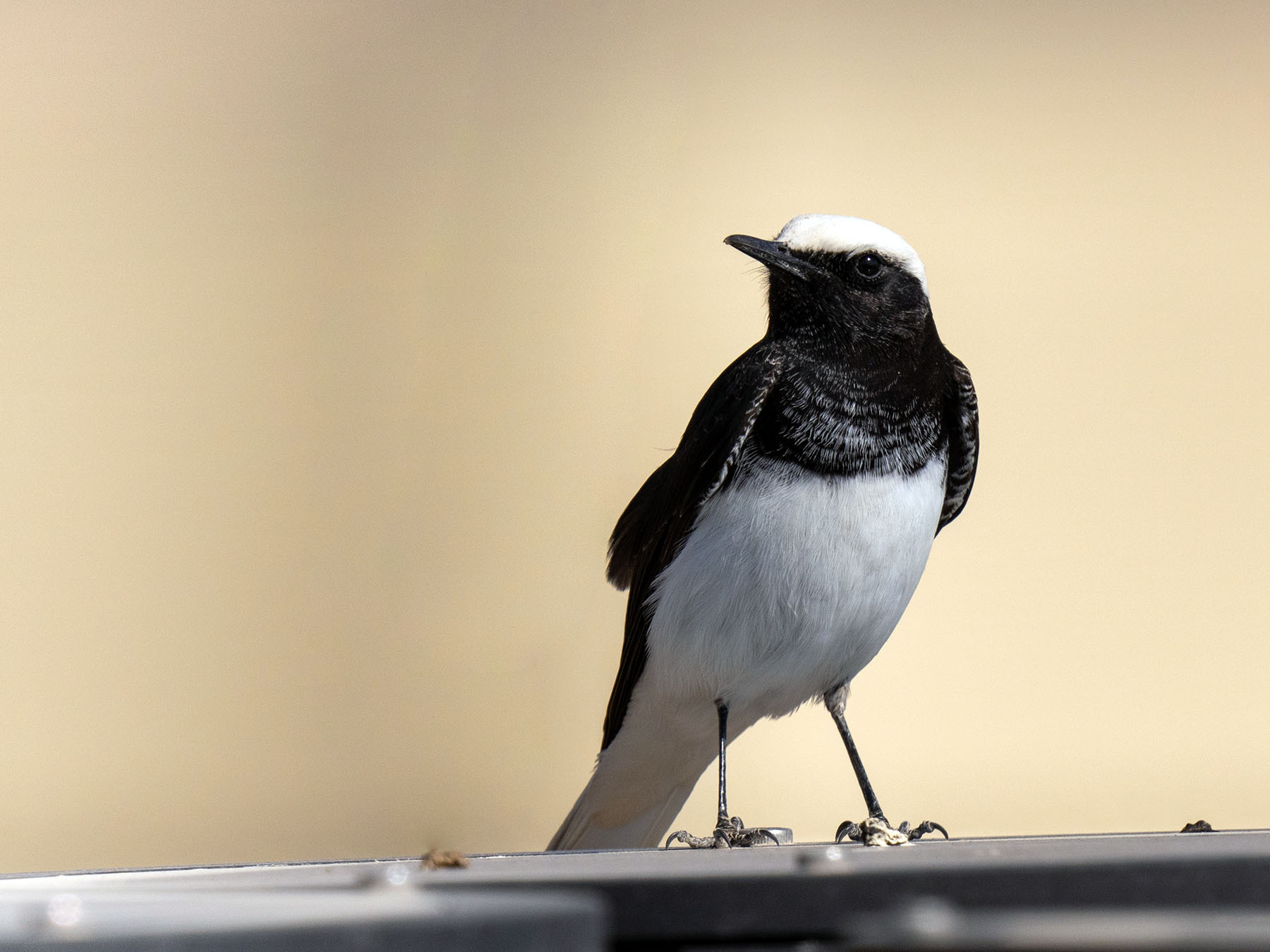
Quick facts
- Length
- 16–18 cm
- Wingspan
- 28–32 cm
- Weight
- 18–23 g
- Lifespan
- 2 years
- Family
- Old World Flycatchers
- Migration
- Partial migrant
- Global status (IUCN)
- Least Concern
- World population
- Not quantified
- Population trend
- Stable
- Scientific name
- Oenanthe monacha
Sources
2- 1BirdLife International. 2019. Oenanthe monacha (amended version of 2018 assessment). The IUCN Red List of Threatened Species 2019: e.T22710244A155518940. Source (opens in a new tab)
- 2BirdLife International. 2019. Oenanthe monacha (amended version of 2018 assessment). The IUCN Red List of Threatened Species 2019: e.T22710244A155518940. Source (opens in a new tab)

Checked by
Nathan Cope, founder and editor
Nathan founded Birdfact and leads its writers and contributors in the UK, the US and Canada. He has watched and studied birds for more than ten years, and checks every article and species guide before it’s published.