


Grey Parrot
African Grey Parrot, Congo Grey Parrot · Psittacus erithacus
By the Birdfact teamChecked by Nathan Cope
On this page12 sections
How to recognise it
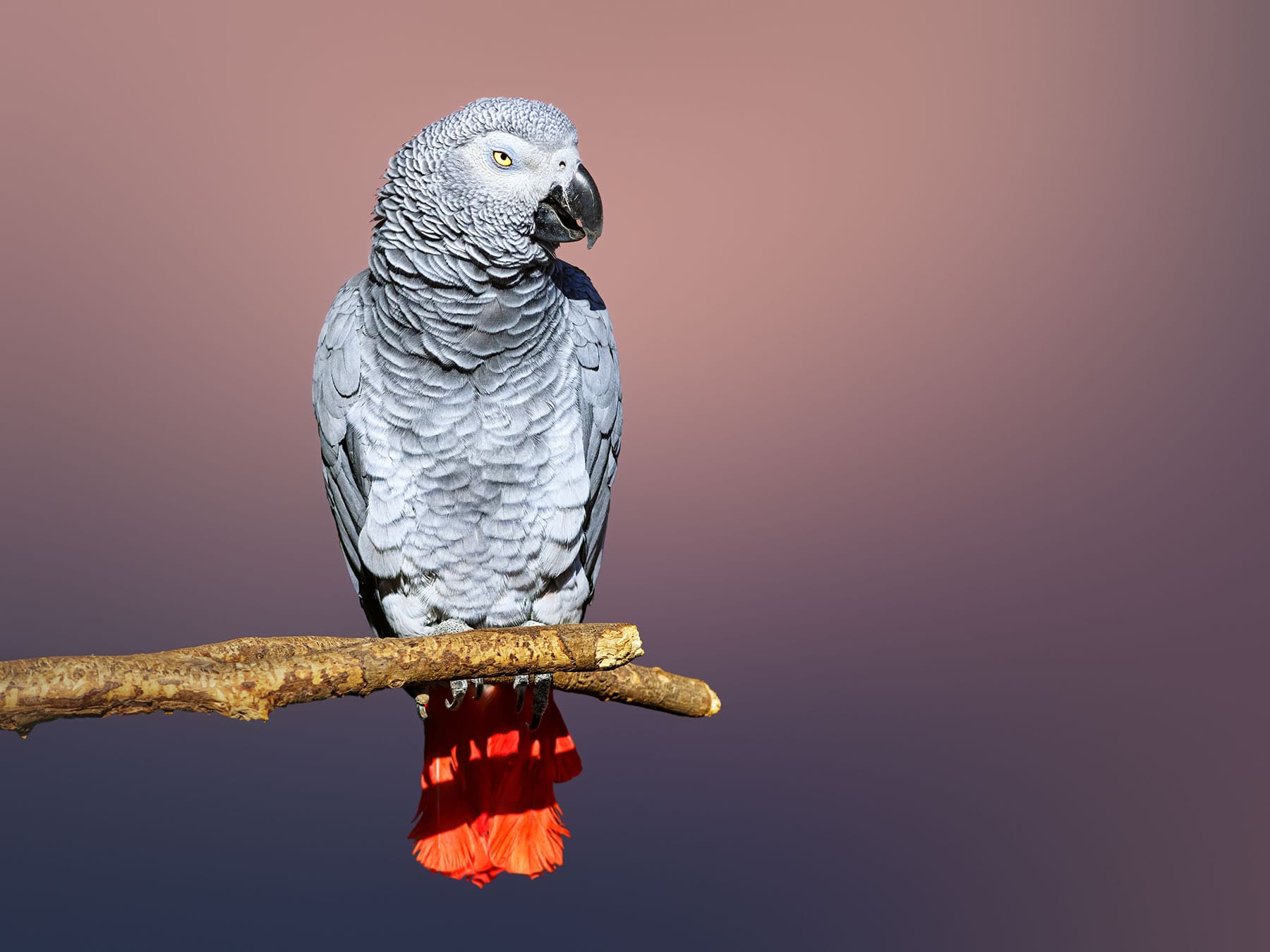
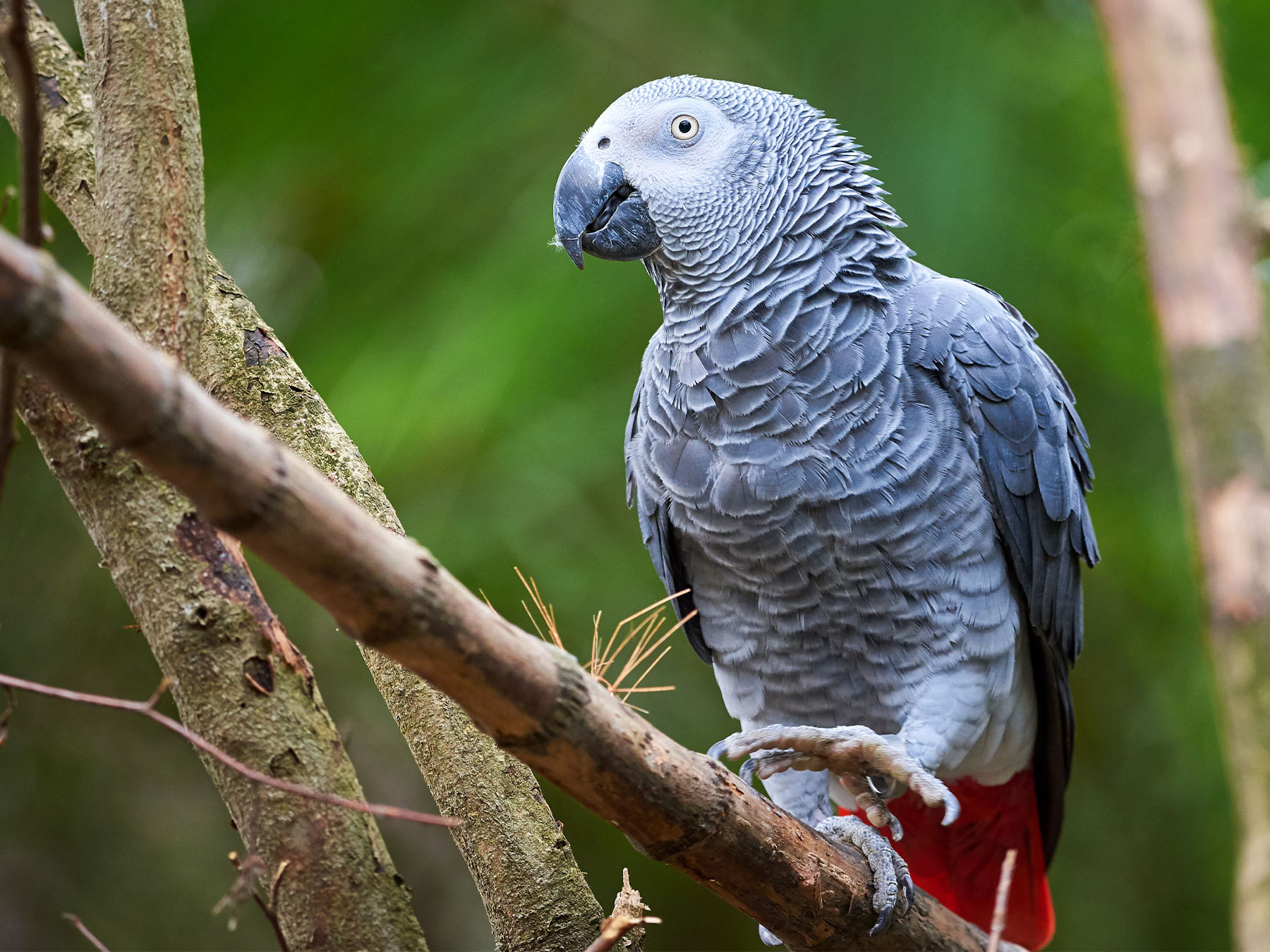
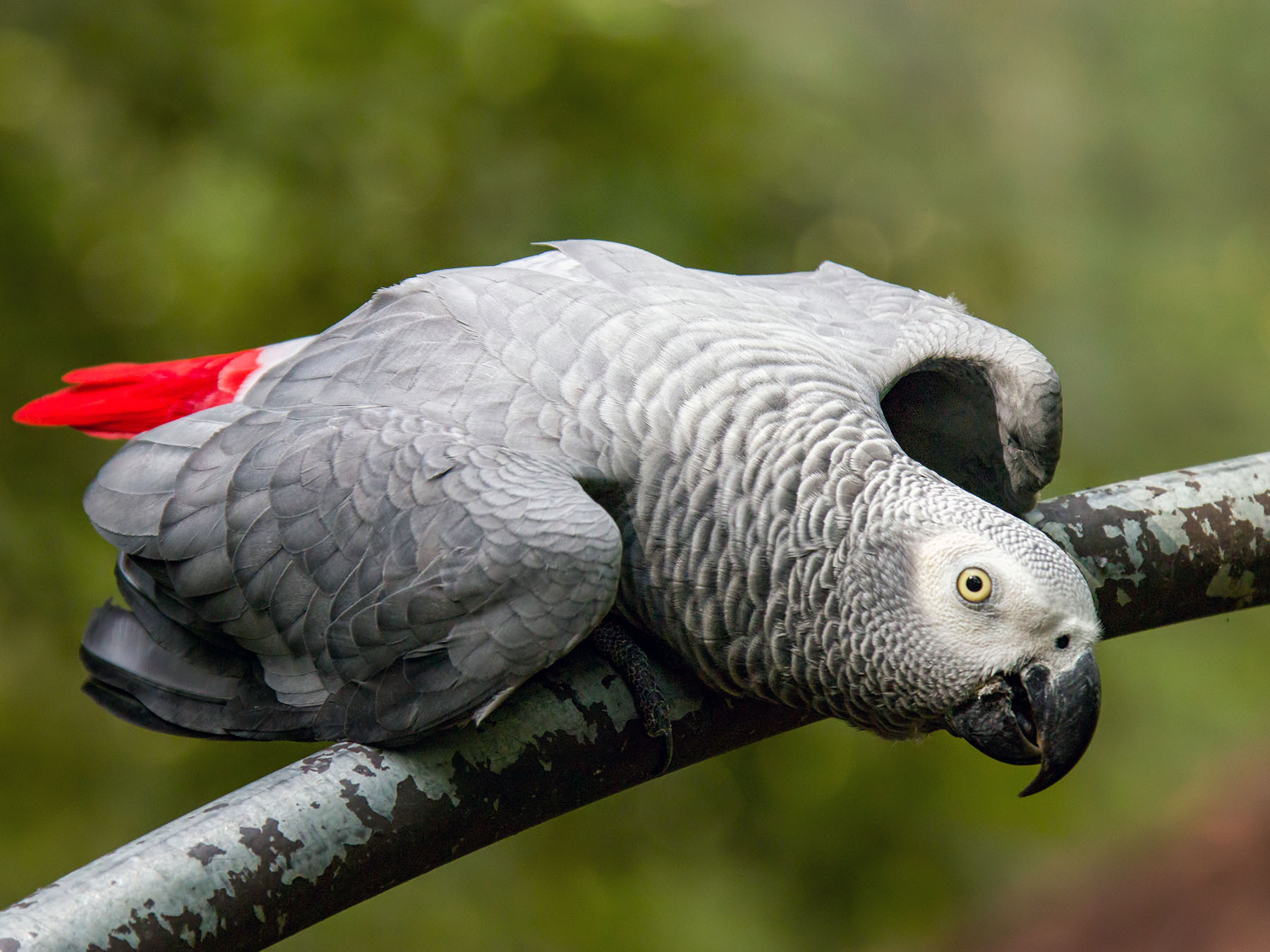
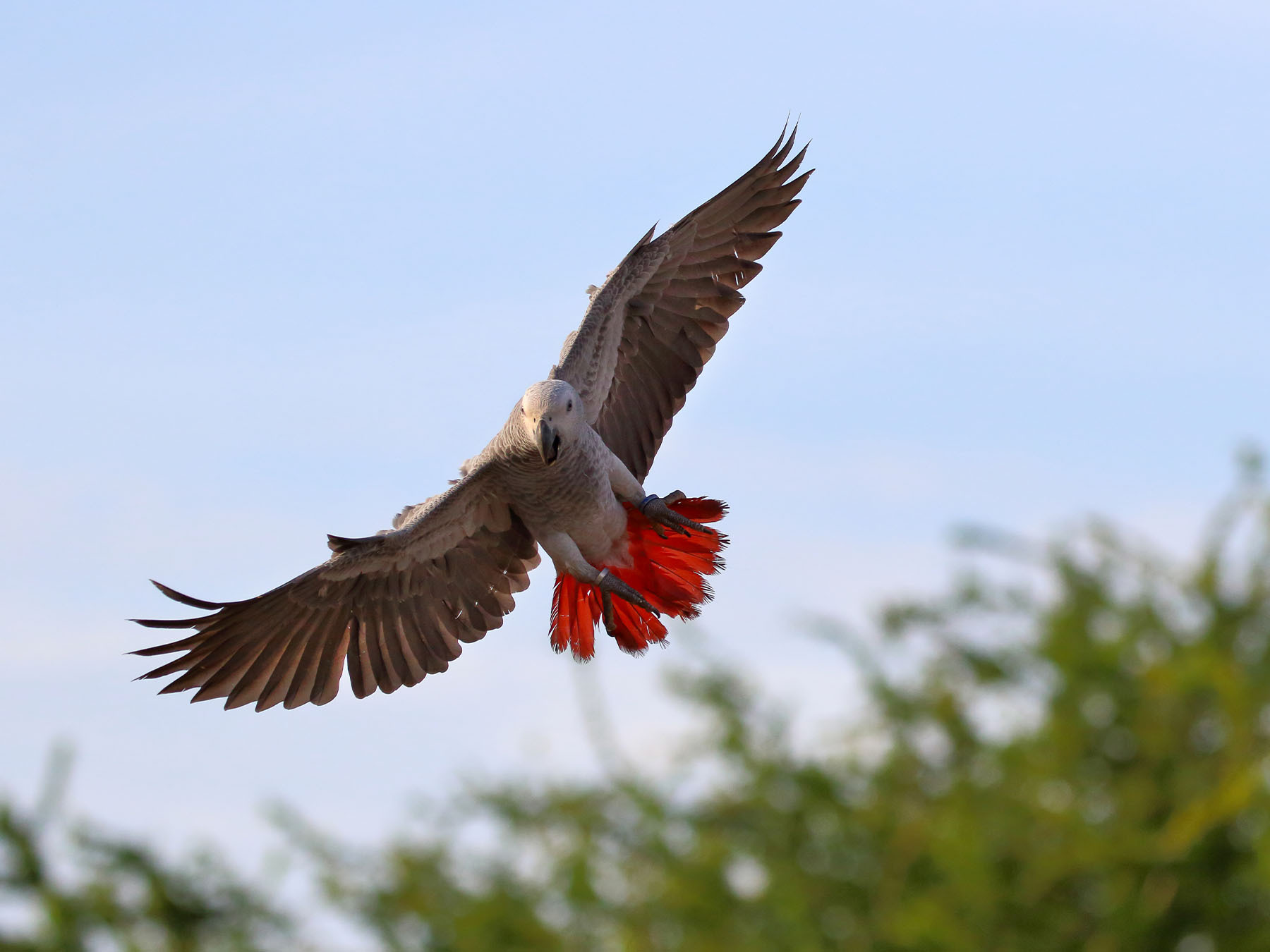
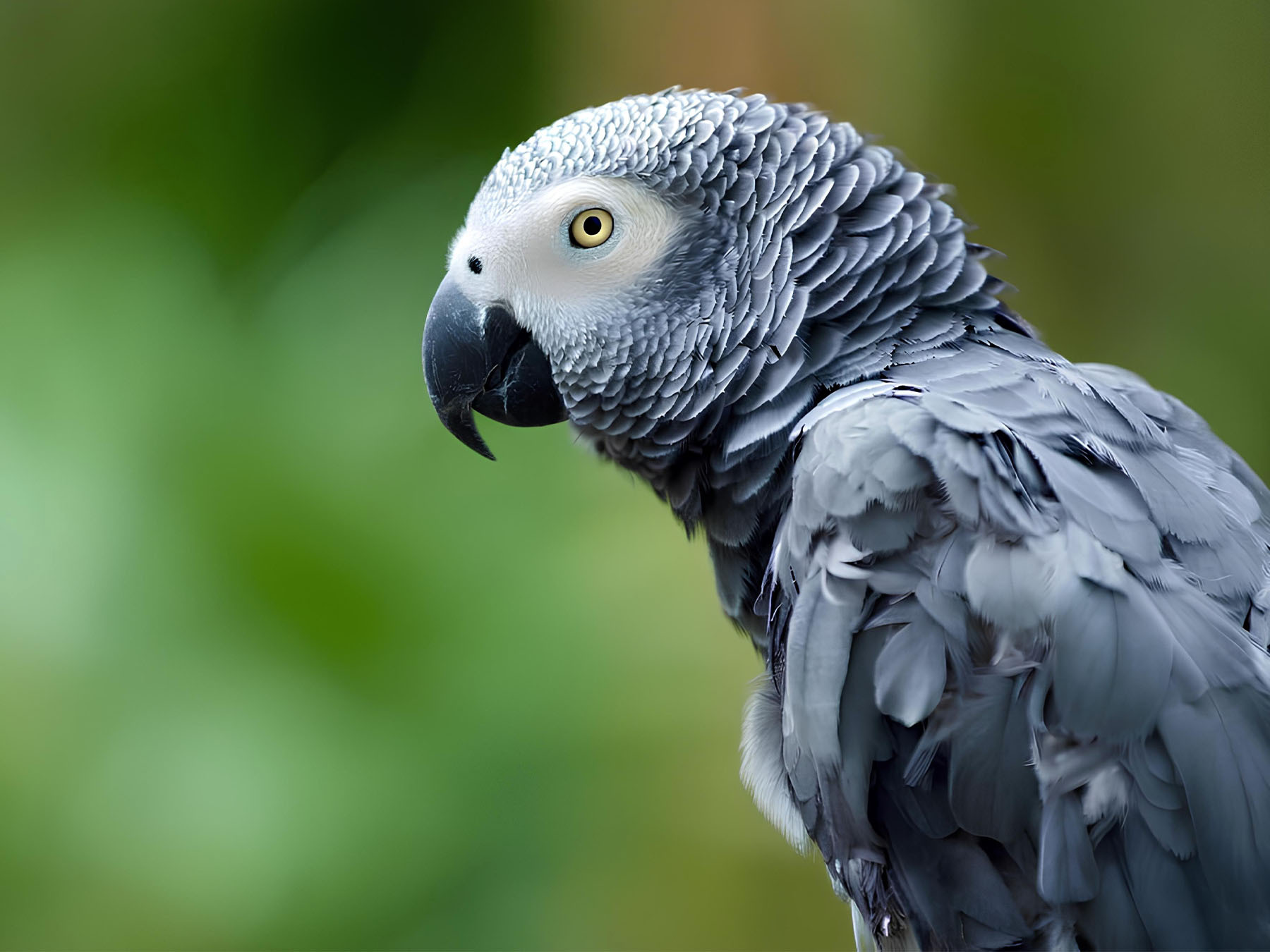
The Grey Parrot is predominantly ash-grey, with striking red tail feathers that provide a vibrant contrast. Its plumage has a subtle scalloped pattern created by lighter grey feather edges. The bird has a large, curved black beak and intelligent-looking dark eyes surrounded by a bare white facial area.
Both males and females share identical plumage, making visual sex determination challenging. Juveniles resemble adults but have darker irises and less vibrant tail coloration, which develops fully as they mature.
Its size
Adults- Length
- 33–40 cm
- Wingspan
- 46–52 cm
- Weight
- 400–490 g
Its song and calls
Grey Parrots are known for their exceptional vocal abilities. Their natural calls include a variety of squawks, whistles, and mimicked sounds. They produce a distinctive 'kee-ow' contact call and various low-pitched growls and chirps. In captivity, they're renowned for their ability to mimic human speech and environmental sounds with remarkable clarity.
- Recording0:00 / 1:38
When and where to see it
The Grey Parrot is not recorded regularly in the UK, Ireland, the United States or Canada.
United States: recorded in 2 of the 6 years. Too few years to count as a regular visitor.
Worldwide: recorded regularly in 14 countries
Countries where it was recorded in at least 3 of the 6 years 2019–2024. Linked countries have their own bird list.
Data: EOD – eBird Observation Dataset (Cornell Lab of Ornithology), accessed via GBIF.org, CC BY 4.0. Records from 2019–2024, aggregated and filtered by Birdfact. How these lists are made
Tips for seeing it
- Listen for their distinctive squawks and whistles in rainforest canopies
- Look for flashes of red tail feathers during flight
- Observe fruiting trees, where they often feed in small groups
- Visit wildlife reserves in Central and West Africa for the best chances of spotting them
What it eats
Grey Parrots are primarily frugivorous, favoring palm nuts, papaya, and figs. They also consume seeds, leaves, and occasionally insects. Their strong beaks allow them to crack open hard nuts and seeds, and they often forage in the upper canopy of rainforests.
Nesting and breeding
Grey Parrots form monogamous pairs and breed once annually. The breeding season varies across their range but often coincides with the dry season. They nest in tree cavities, typically 10-30 meters above ground.
Females lay 2-4 white eggs, which both parents incubate for about 30 days. The eggs are oval-shaped and measure approximately 40 x 30 mm.
Chicks fledge after about 80 days but may remain with their parents for several months afterwards, learning essential survival skills.
Behaviour
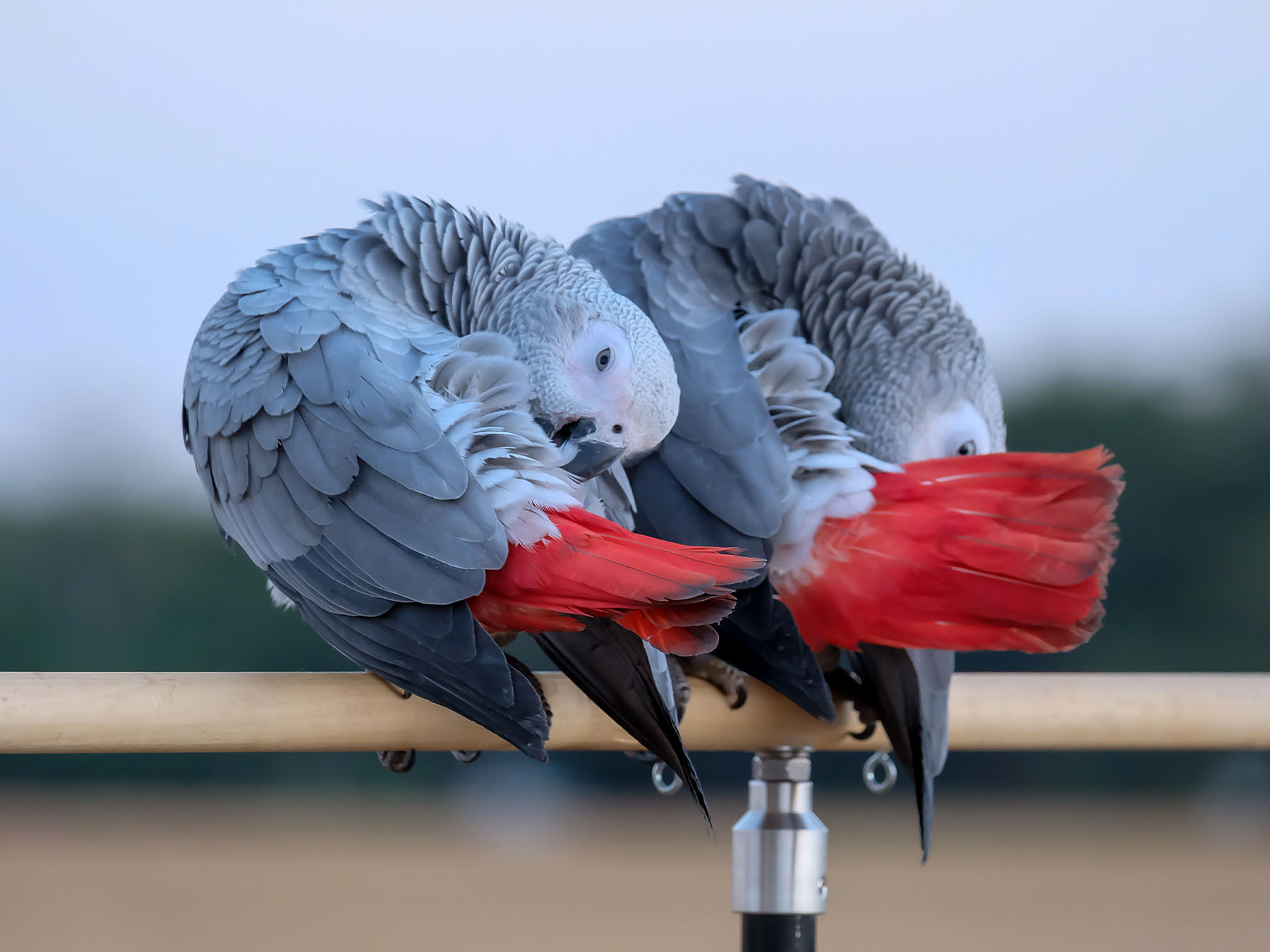
Grey Parrots are highly social, often seen in pairs or small flocks. They exhibit remarkable intelligence, demonstrating problem-solving skills and tool use in the wild.
These birds are excellent flyers, capable of swift, direct flight between feeding and roosting sites, often covering considerable distances.
Conservation
Grey Parrots face severe threats due to habitat loss and the illegal pet trade. Their population has declined dramatically, leading to their classification as Endangered.
Conservation efforts focus on habitat protection, stricter trade regulations, and captive breeding programs to support wild populations.
More photos
6 photos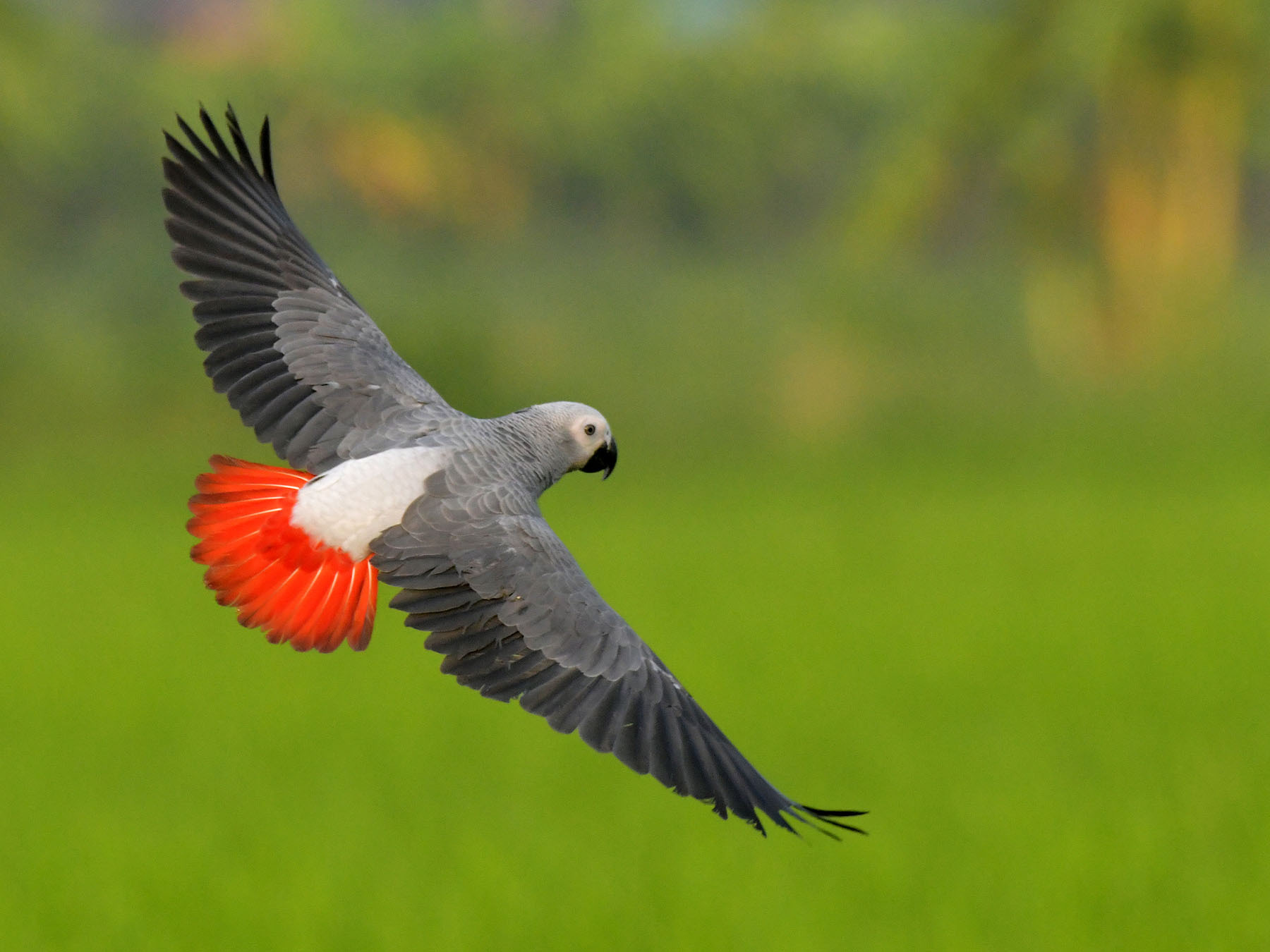
Grey Parrot guides
1 guidesQuick facts
- Length
- 33–40 cm
- Wingspan
- 46–52 cm
- Weight
- 400–490 g
- Lifespan
- 40–50 years
- Family
- Parrots
- Migration
- Resident
- Global status (IUCN)
- Endangered
- World population
- 560,000 - 12,700,000 individuals
- Population trend
- Population declining due to habitat loss and capture for pet trade
- Also called
- African Grey Parrot, Congo Grey Parrot
- Scientific name
- Psittacus erithacus
Sources
3- 1BirdLife International. 2021. Psittacus erithacus. The IUCN Red List of Threatened Species 2021: e.T22724813A154428817. Source (opens in a new tab)
- 2BirdLife International. 2021. Psittacus erithacus. The IUCN Red List of Threatened Species 2021: e.T22724813A154428817. Source (opens in a new tab)
- 3African Grey Parrot Psittacus erithacus Case Study - McGowan, Phillip (2008) Source (opens in a new tab)

Checked by
Nathan Cope, founder and editor
Nathan founded Birdfact and leads its writers and contributors in the UK, the US and Canada. He has watched and studied birds for more than ten years, and checks every article and species guide before it’s published.