


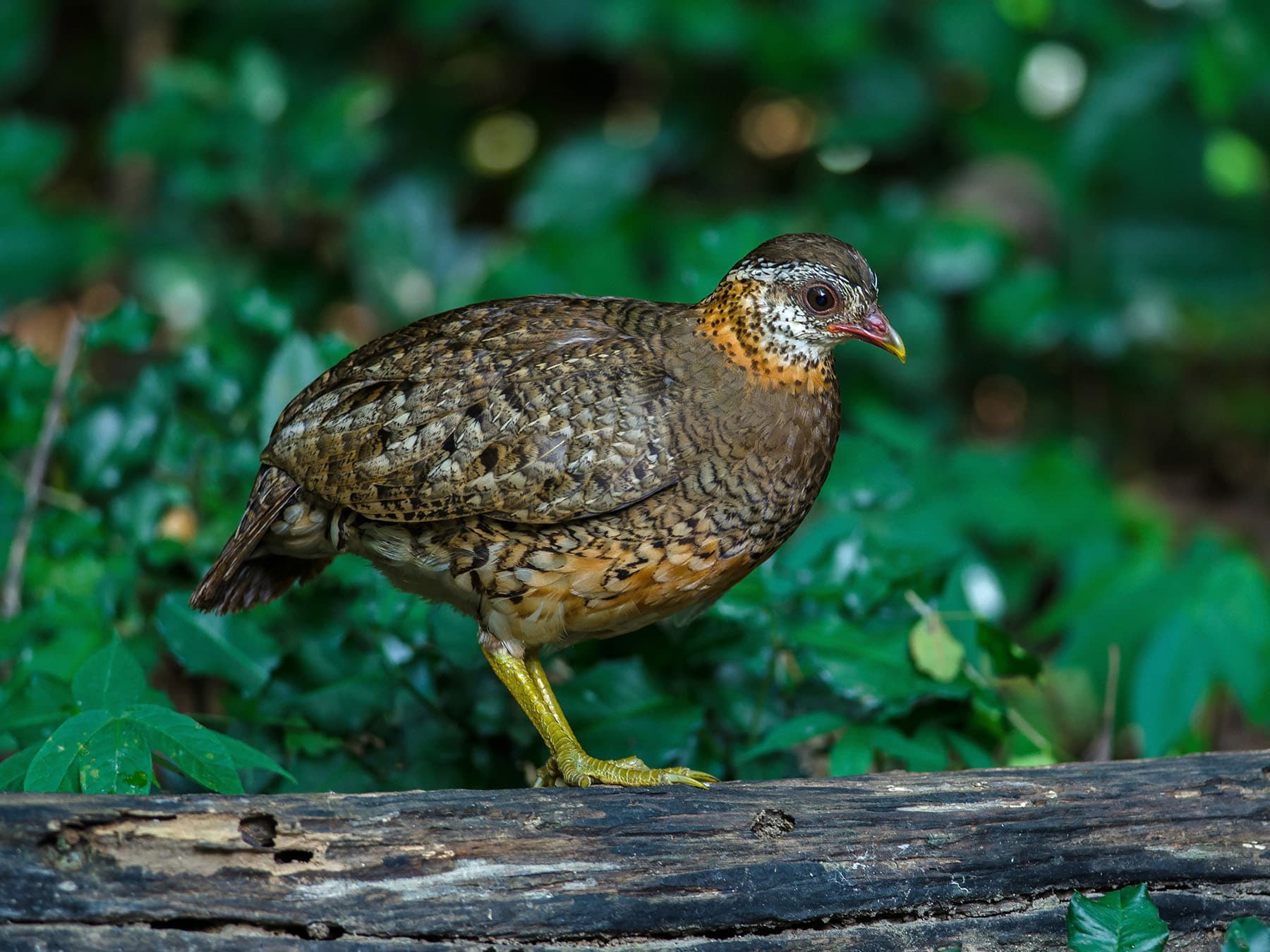
Green-legged Partridge
Scaly-breasted Partridge, Green-legged hill-partridge · Tropicoperdix chloropus
By the Birdfact teamChecked by Nathan Cope
On this page11 sections
How to recognise it
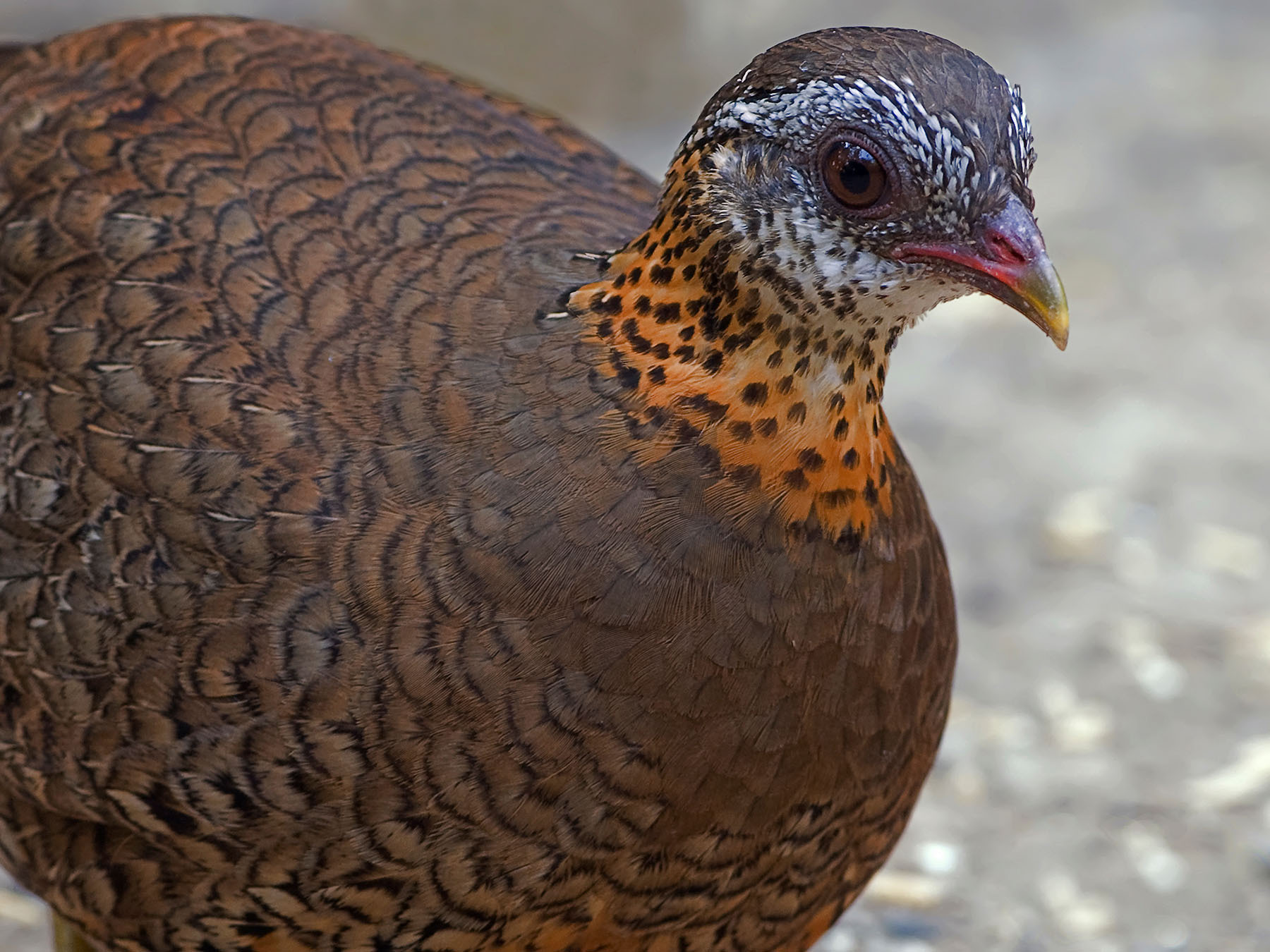
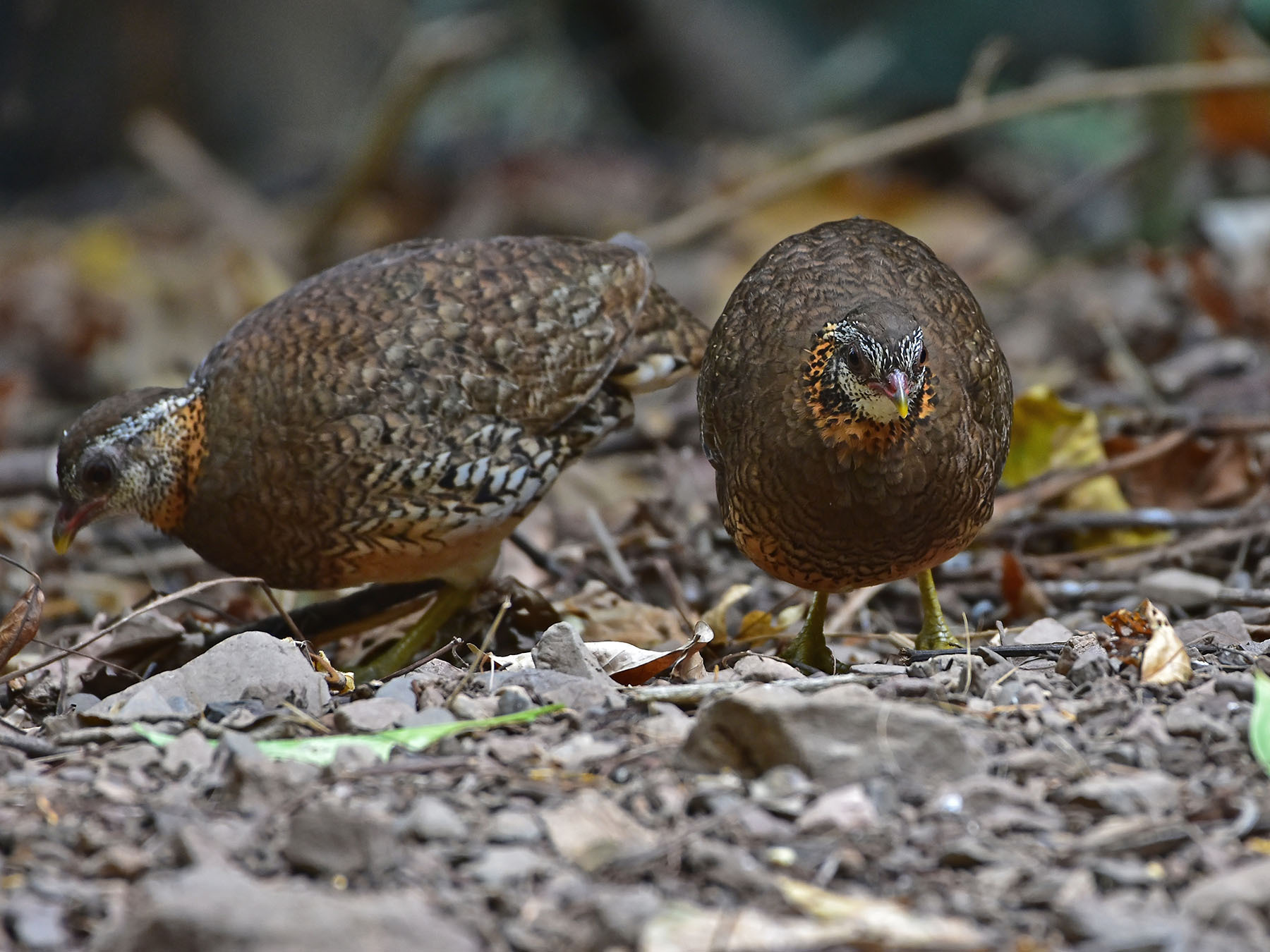
The Green-legged Partridge is a medium-sized ground bird with distinctive brown and buff plumage. Its upperparts are rich brown, while the underparts are buff with black scalloping, creating a scaly appearance. The head features a rufous crown and white throat.
Both sexes look similar, with no significant seasonal plumage changes. Juveniles resemble adults but have less defined scalloping on their underparts and duller overall colouration.
Its size
Adults- Length
- 28–30 cm
- Wingspan
- 40–45 cm
- Weight
- 250–350 g
Its song and calls
The Green-legged Partridge has a distinctive call, often described as a loud, repeated 'ko-wah' or 'ko-whee-oh'. This call is frequently heard at dawn and dusk, especially during the breeding season.
When alarmed, they may emit a sharp, staccato 'kuk-kuk-kuk' sound.
When and where to see it
The Green-legged Partridge is not recorded regularly in the UK, Ireland, the United States or Canada.
Worldwide: recorded regularly in 5 countries
Countries where it was recorded in at least 3 of the 6 years 2019–2024. Linked countries have their own bird list.
Data: EOD – eBird Observation Dataset (Cornell Lab of Ornithology), accessed via GBIF.org, CC BY 4.0. Records from 2019–2024, aggregated and filtered by Birdfact. How these lists are made
Tips for seeing it
- Look for these birds in the early morning or late afternoon when they are most active.
- Listen for their distinctive call, which can help locate them in dense vegetation.
- Search for signs of scratching on the forest floor, indicating recent foraging activity.
- Use binoculars to spot their green legs, a key identifying feature.
What it eats
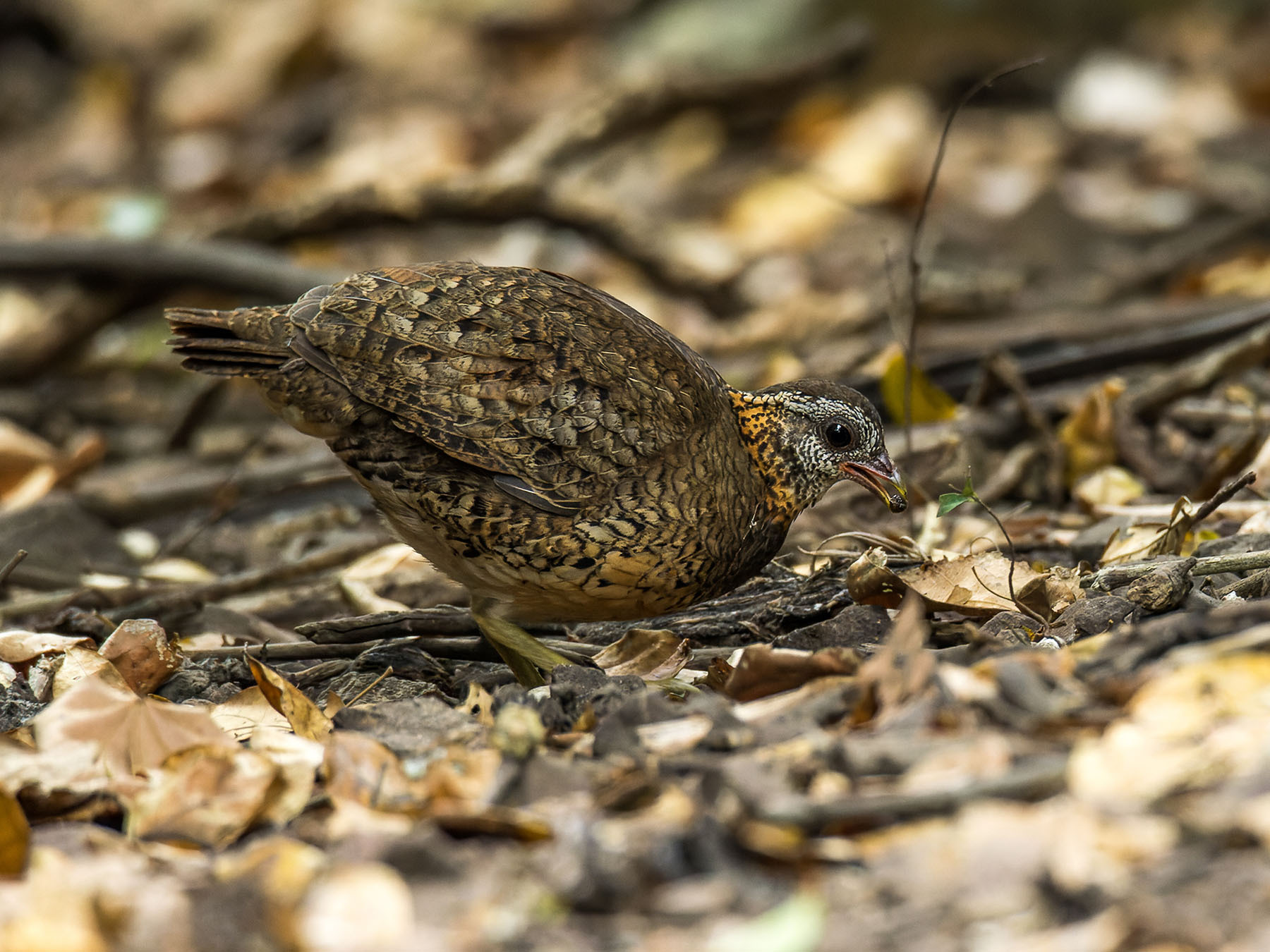
The Green-legged Partridge primarily feeds on seeds, berries, and small invertebrates found on the forest floor.
They use their strong feet and bills to scratch and dig in leaf litter, uncovering hidden food items. Occasionally, they may consume small reptiles or amphibians.
Nesting and breeding
Breeding season for Green-legged Partridges typically occurs from March to August. Males perform courtship displays, including wing-flapping and calling, to attract females.
Nests are simple scrapes on the ground, often hidden under dense vegetation or at the base of trees. Females lay 4-8 cream-coloured eggs per clutch.
Incubation lasts about 18-20 days, primarily carried out by the female. Chicks are precocial, leaving the nest shortly after hatching, and are cared for by both parents until they fledge at around 2-3 weeks old.
Behaviour
Green-legged Partridges are typically found in small coveys of 5-10 individuals, foraging on the forest floor.
They are secretive birds, often running rather than flying when disturbed. During the breeding season, pairs become territorial and separate from the covey.
Conservation
While the Green-legged Partridge is currently listed as Least Concern, habitat loss due to deforestation in its range is a growing threat. Conservation efforts focus on protecting and maintaining suitable forest habitats in Southeast Asia.
More photos
4 photos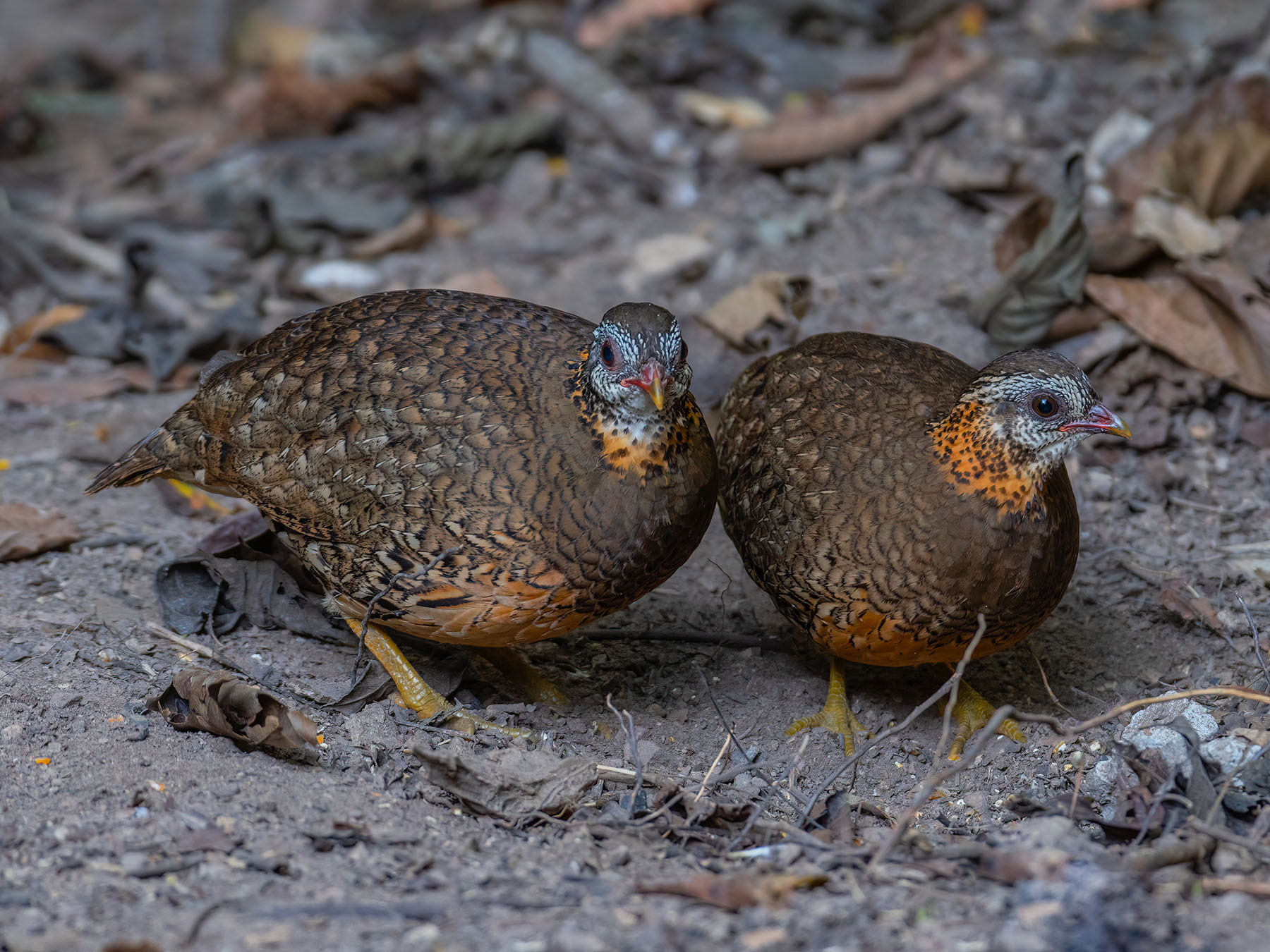
Quick facts
- Length
- 28–30 cm
- Wingspan
- 40–45 cm
- Weight
- 250–350 g
- Lifespan
- 5–8 years
- Family
- Pheasants & Grouse
- Migration
- Resident
- Global status (IUCN)
- Least Concern
- World population
- Not quantified
- Population trend
- Decreasing
- Also called
- Scaly-breasted Partridge, Green-legged hill-partridge
- Scientific name
- Tropicoperdix chloropus
Sources
2- 1BirdLife International. 2021. Tropicoperdix chloropus. The IUCN Red List of Threatened Species 2021: e.T22731882A198955126. Source (opens in a new tab)
- 2BirdLife International. 2021. Tropicoperdix chloropus. The IUCN Red List of Threatened Species 2021: e.T22731882A198955126. Source (opens in a new tab)

Checked by
Nathan Cope, founder and editor
Nathan founded Birdfact and leads its writers and contributors in the UK, the US and Canada. He has watched and studied birds for more than ten years, and checks every article and species guide before it’s published.