


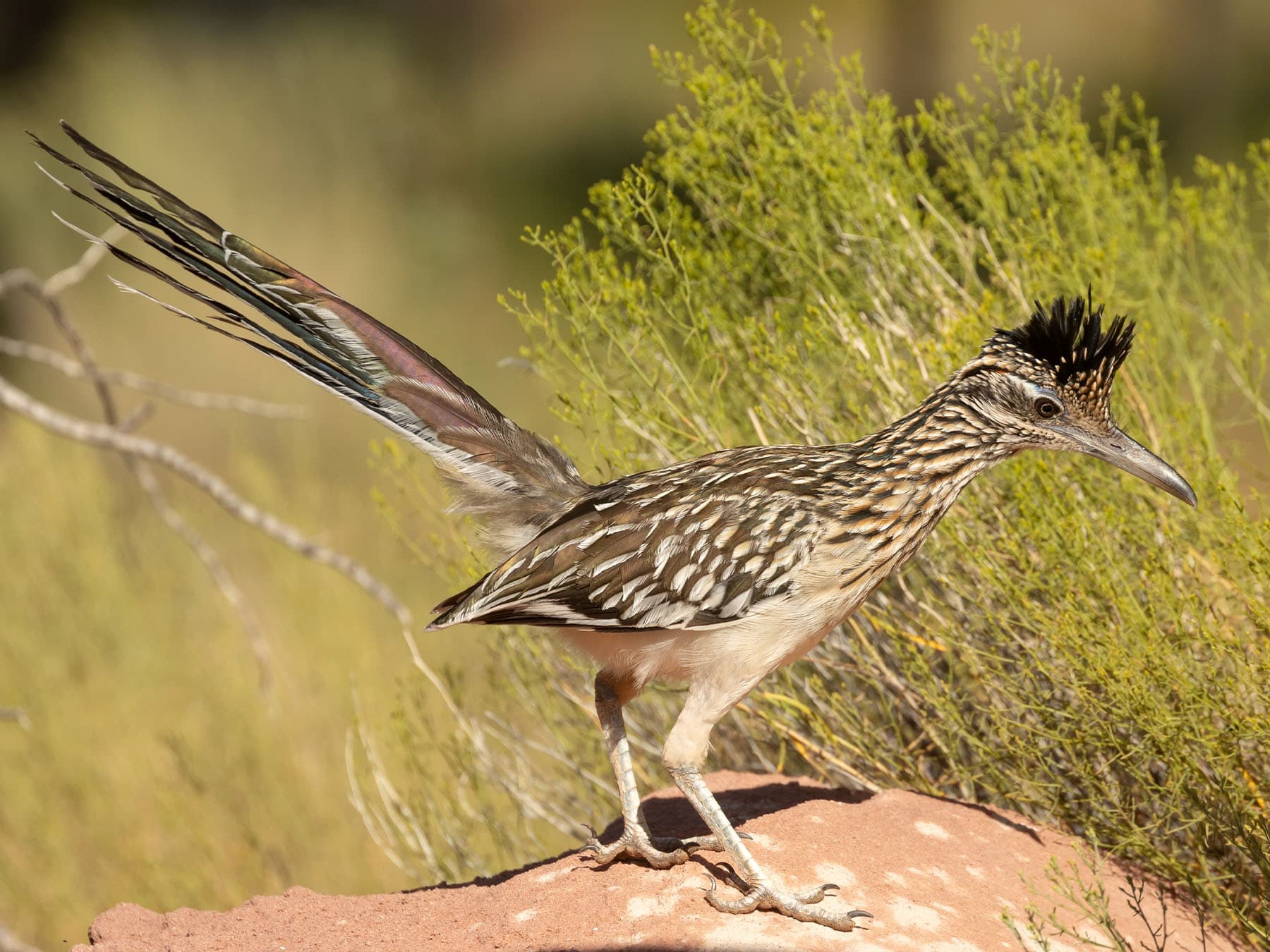
Greater Roadrunner
Chaparral Cock, Ground Cuckoo, Snake Killer · Geococcyx californianus
By the Birdfact teamChecked by Nathan Cope
On this page12 sections
How to recognise it
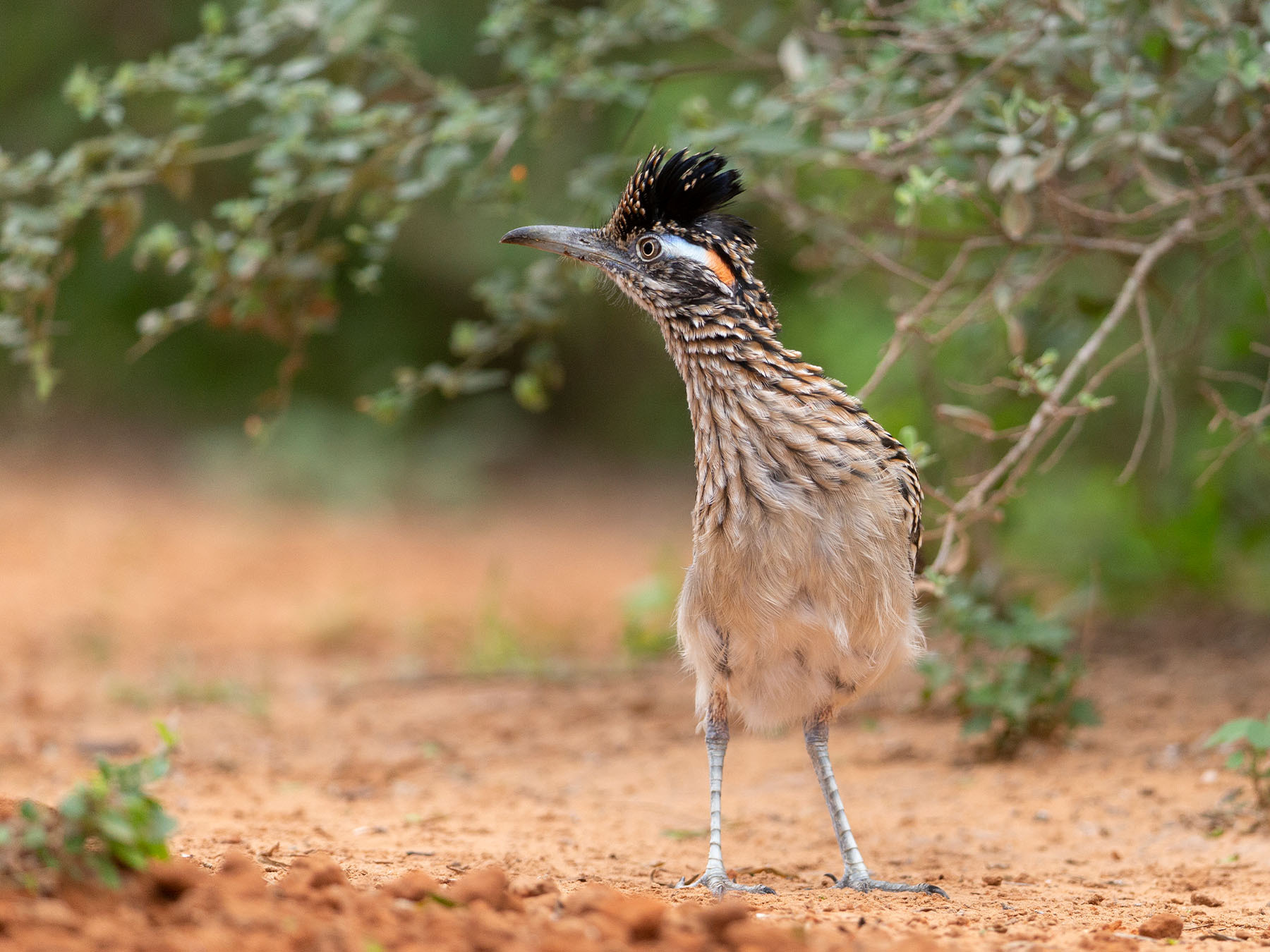
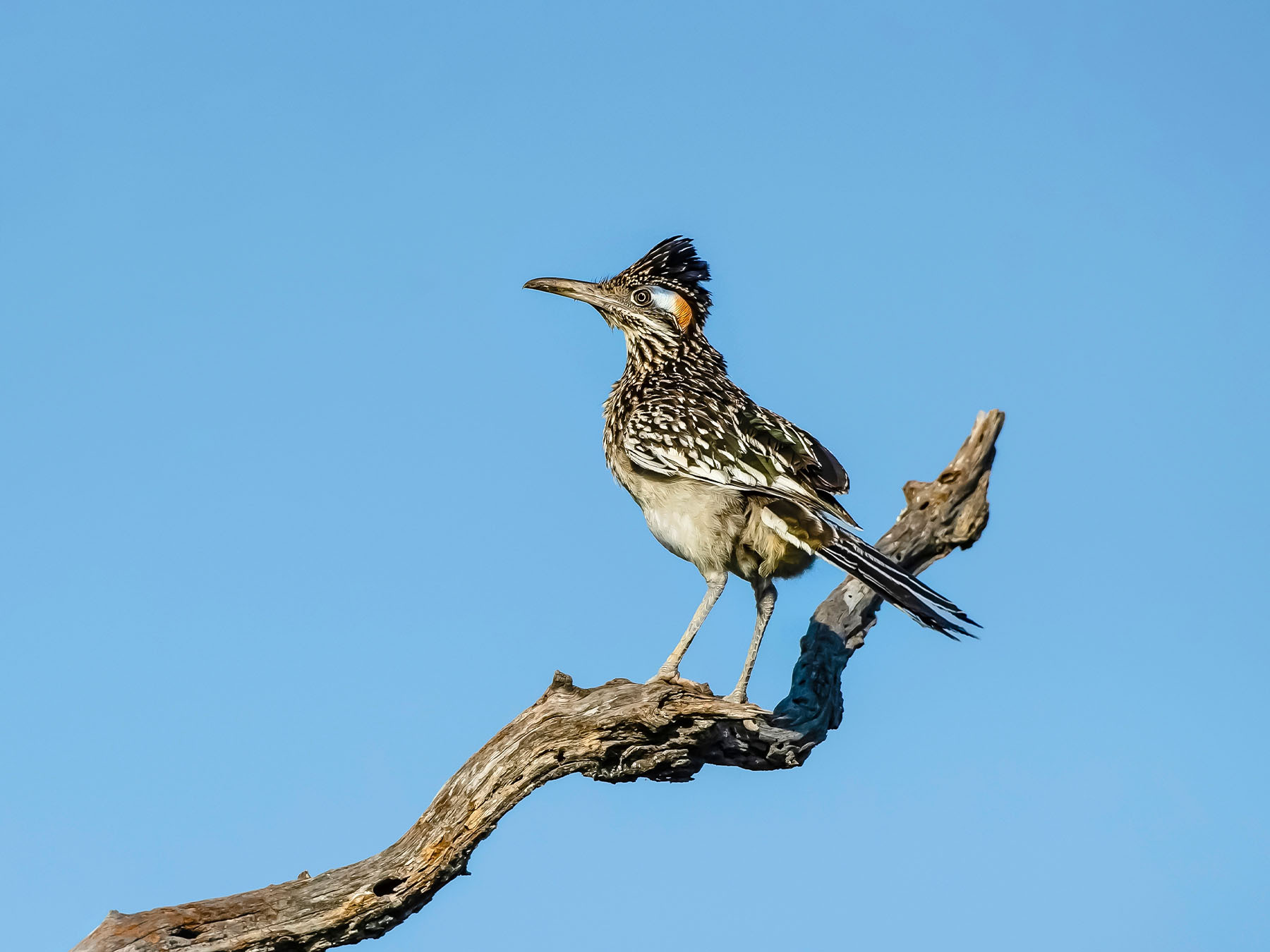
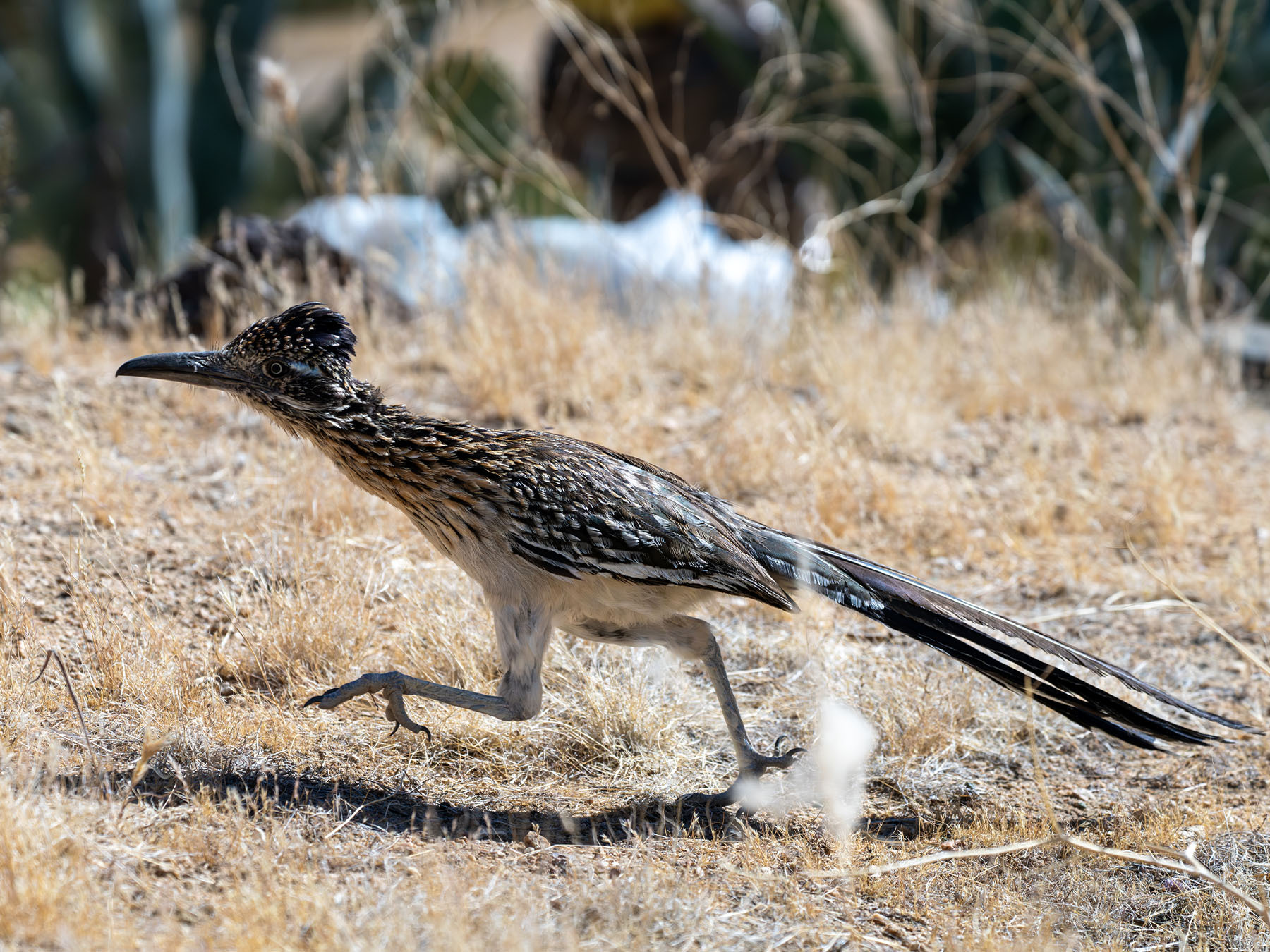
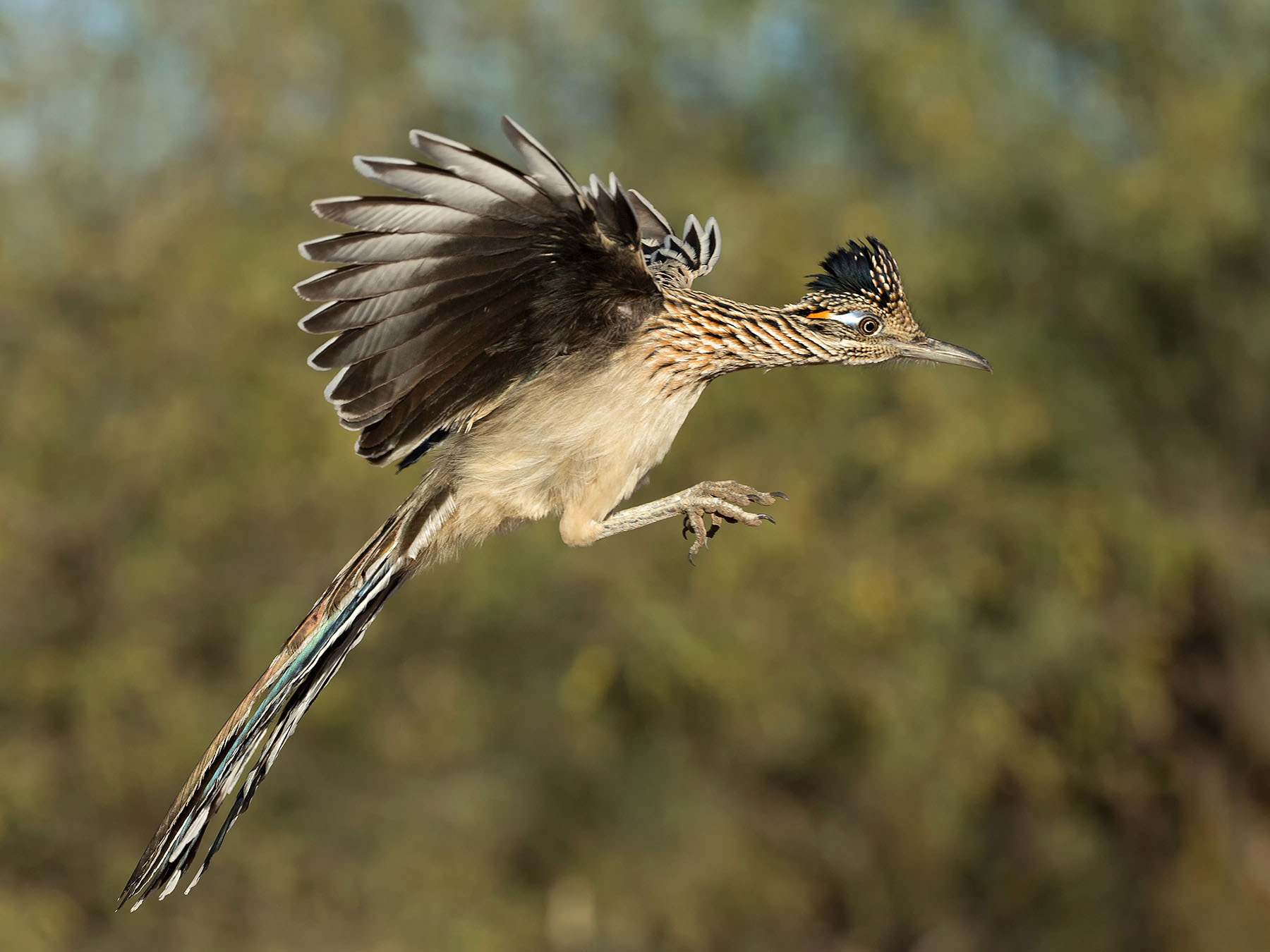
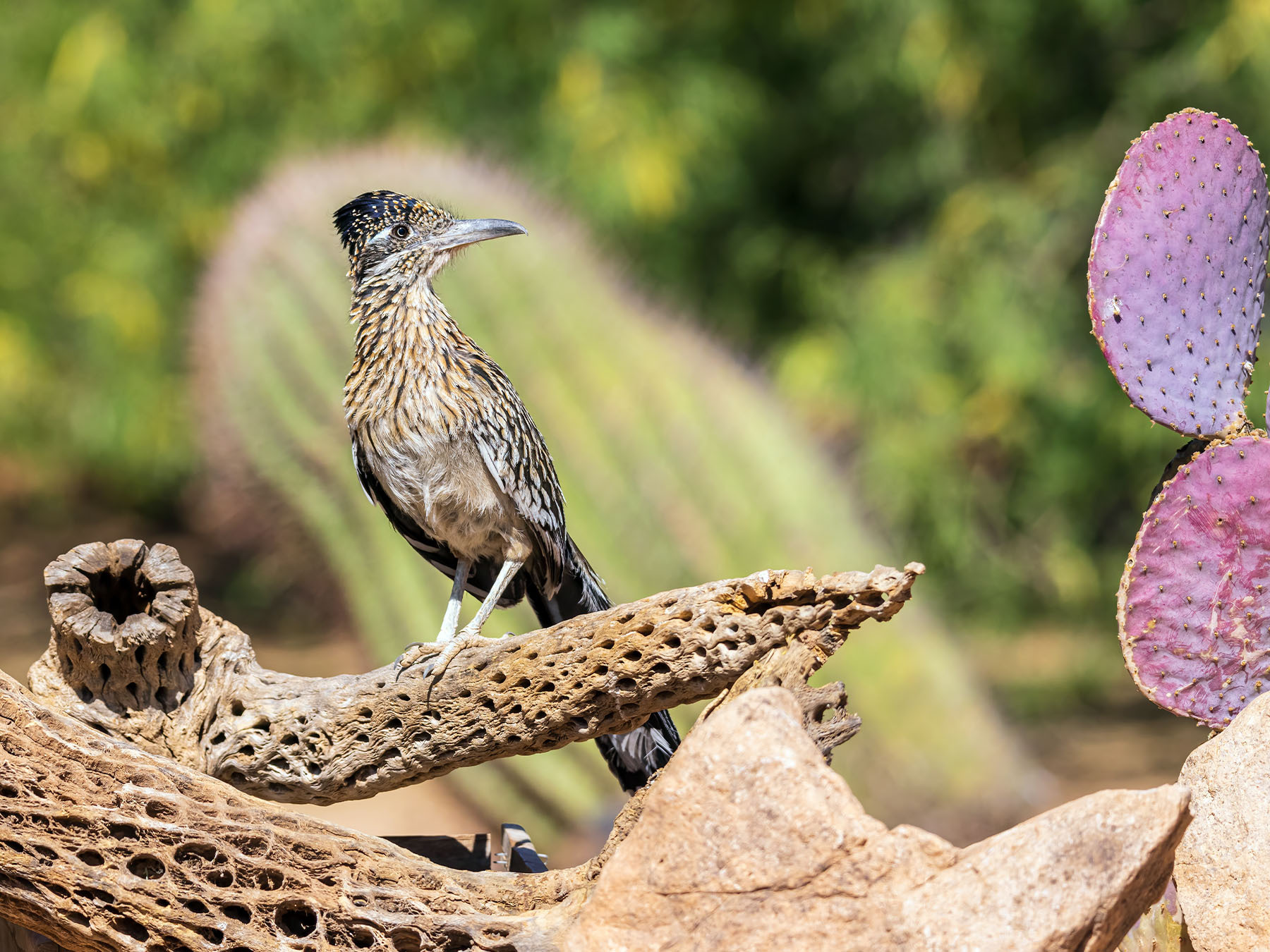
The Greater Roadrunner is a large, slender, ground-dwelling bird with a distinctive shaggy crest. Its plumage is primarily olive-brown to grayish, glossed with bronze, with streaking on the upperparts and a lighter grayish or buff underside. The bird's long tail has white tips and is often held at a characteristic angle.
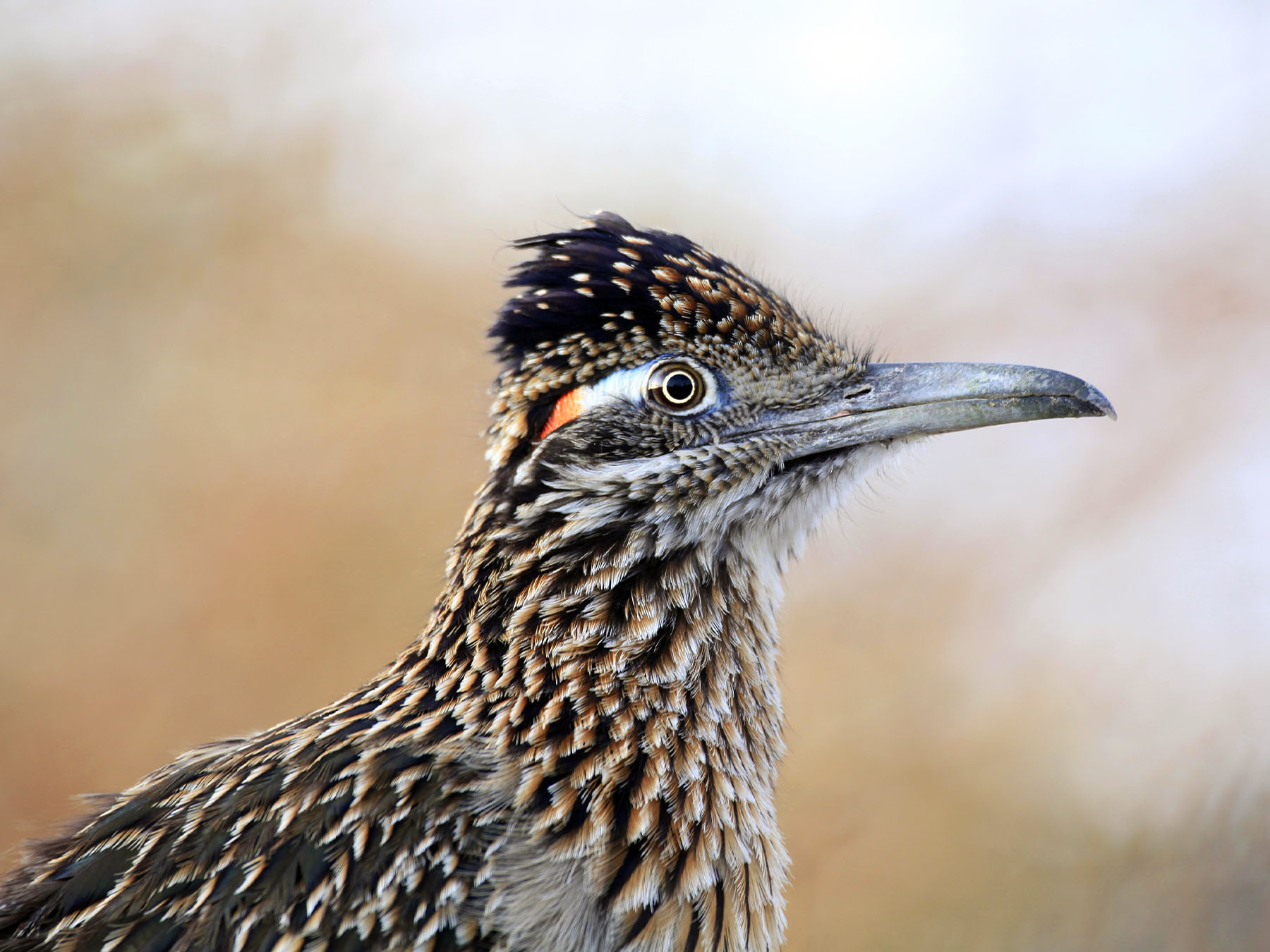
Both sexes look similar, though females are slightly smaller. Adults have dark blue skin around the eyes and orange patches behind them, typically hidden from view. Juveniles resemble adults but have duller plumage without the bronze sheen of adult birds.
Its size
Adults- Length
- 52–54 cm
- Wingspan
- 43–61 cm
- Weight
- 290–320 g
Its song and calls
The Greater Roadrunner's vocalizations are distinct and varied. Their most common call is a series of 6-8 low, descending coos, sounding like 'coo-coo-coo-coo-coo-coo'.
When alarmed, they may produce a rapid chattering or rattling sound. During courtship, males often make a whirring or cooing noise, sometimes accompanied by a soft clacking of the bill.
When and where to see it
OctoberHere all year
Most recorded in October
- 1. New Mexico0.62%
- 2. Nevada0.60%
- 3. Arizona0.57%
- 4. Texas0.15%
- 5. Utah0.11%
Each dot is a county, state or province: the bigger and darker, the larger the bird’s share of that place’s bird records that month. Grey dots: no regular records. The ringed point is the centre of the bird’s records this month; the arrow shows how it moved since last month, and the dashed loop its path through the year. “Arrivals” colours places where it becomes regular this month (orange) or is in its last regular month (grey). GBIF eBird Observation Dataset, 2019–2024. Map data: Natural Earth, US Census Bureau; place centres © OpenStreetMap contributors.
In your area
See when the Greater Roadrunner is recorded in your county, state or province.
How often the Greater Roadrunner turns up in the United States through the year, from birdwatchers' records.
United States
Resident · all year · most records in August
Show as a table
| Month | United States |
|---|---|
| January | 0.049% (regular) |
| February | 0.055% (regular) |
| March | 0.053% (regular) |
| April | 0.043% (regular) |
| May | 0.028% (regular) |
| June | 0.034% (regular) |
| July | 0.046% (regular) |
| August | 0.063% (regular) |
| September | 0.042% (regular) |
| October | 0.042% (regular) |
| November | 0.053% (regular) |
| December | 0.049% (regular) |
Worldwide: recorded regularly in 2 countries
Countries where it was recorded in at least 3 of the 6 years 2019–2024. Linked countries have their own bird list.
North America (2)
Data: EOD – eBird Observation Dataset (Cornell Lab of Ornithology), accessed via GBIF.org, CC BY 4.0. Records from 2019–2024, aggregated and filtered by Birdfact. How these lists are made
Tips for seeing it
- Look for roadrunners in open, arid habitats with scattered vegetation.
- Listen for their distinctive 'coo-coo-coo' call, which descends in pitch.
- Watch for their quick movements on the ground, often near roadsides.
- Observe early mornings or late afternoons when they're most active.
- In the southwestern United States, check desert scrub and chaparral areas.
What it eats
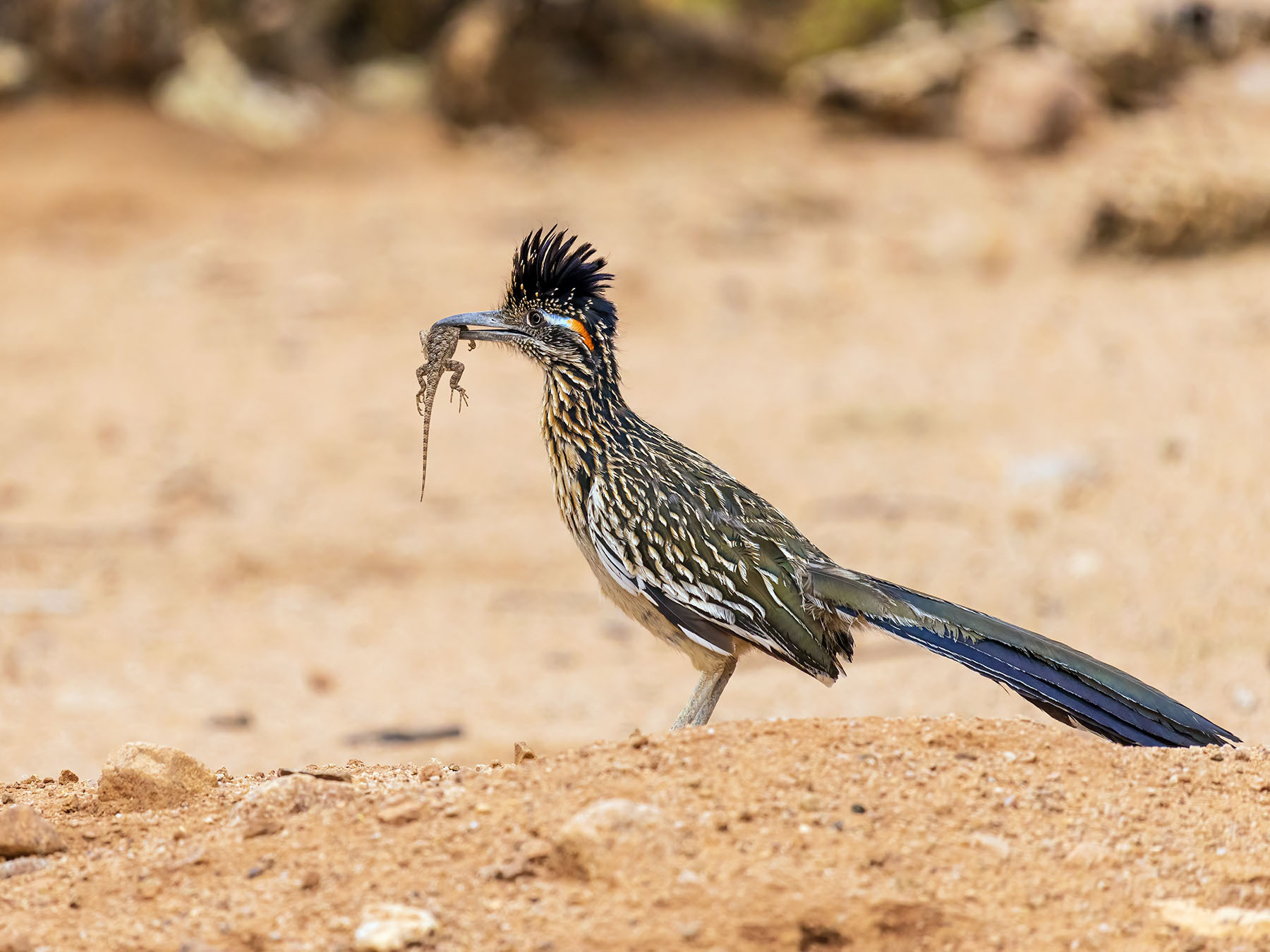
Greater Roadrunners are omnivorous, with a diet primarily consisting of insects, small reptiles, and rodents. They are known to consume venomous prey like scorpions and small rattlesnakes, using their speed and agility to catch and kill these animals.
During lean times, they supplement their diet with fruits, seeds, and occasionally carrion.
Nesting and breeding
Greater Roadrunners typically breed between March and October, with peak activity in spring and early summer. Pairs engage in elaborate courtship rituals, including food offerings and chases. They are monogamous and often mate for life.
Nests are built in low trees, cacti, or dense shrubs, usually 1-3 meters above ground. Both sexes contribute to constructing a platform of sticks lined with softer materials. The female lays 2-6 white or pale yellow eggs, often with brown spots.
Incubation lasts about 20 days, and both parents share duties. Chicks fledge after 18-21 days but may remain with their parents for several weeks, learning to hunt and forage.
Behaviour
Greater Roadrunners are known for their remarkable ground speed, capable of running at up to 40 km/h (25 mph). However, they usually run at speeds of around 20 mph (32 km/h). They are opportunistic predators, often seen darting across roads or open areas in pursuit of prey.
These birds are generally solitary but form monogamous pairs during the breeding season. They engage in elaborate courtship displays, including offering food to potential mates.
Conservation
While the Greater Roadrunner is currently listed as Least Concern, habitat loss due to urbanization and intensive agriculture poses a threat in some areas. Climate change may also impact their distribution and prey availability.
Conservation efforts focus on preserving suitable arid and semi-arid habitats across their range.
More photos
9 photos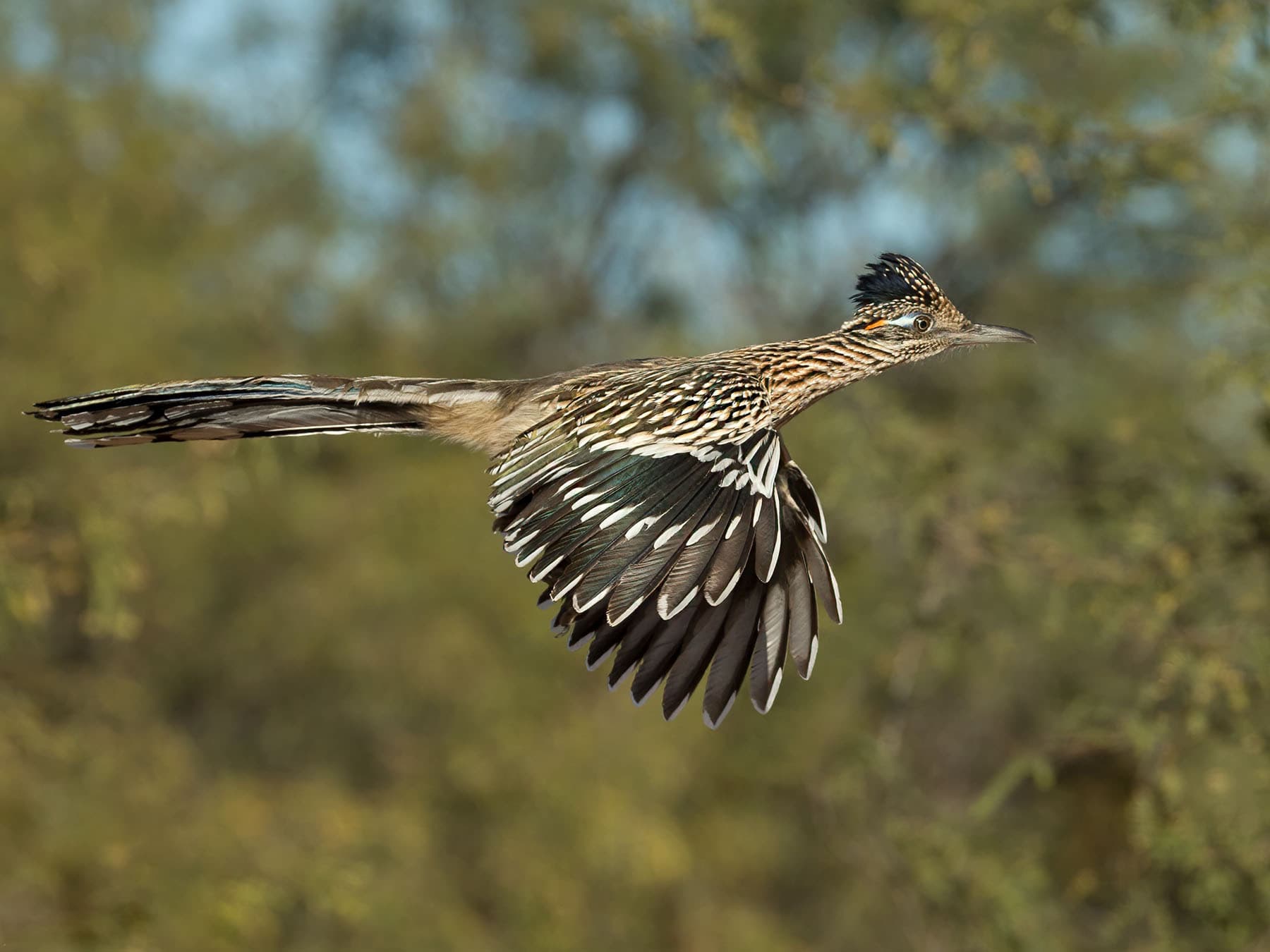 Greater Roadrunner in-flight
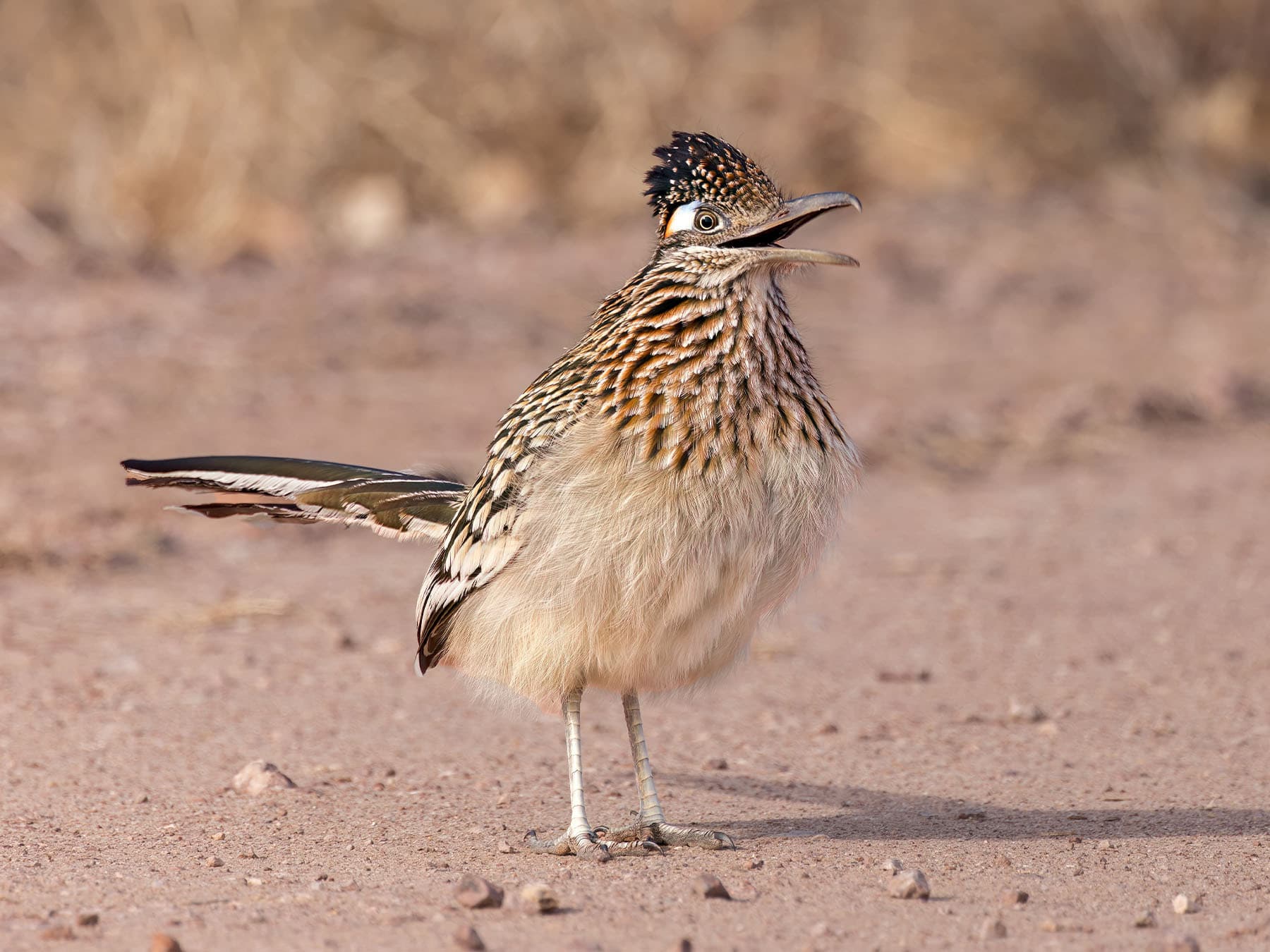 Greater Roadrunner calling out
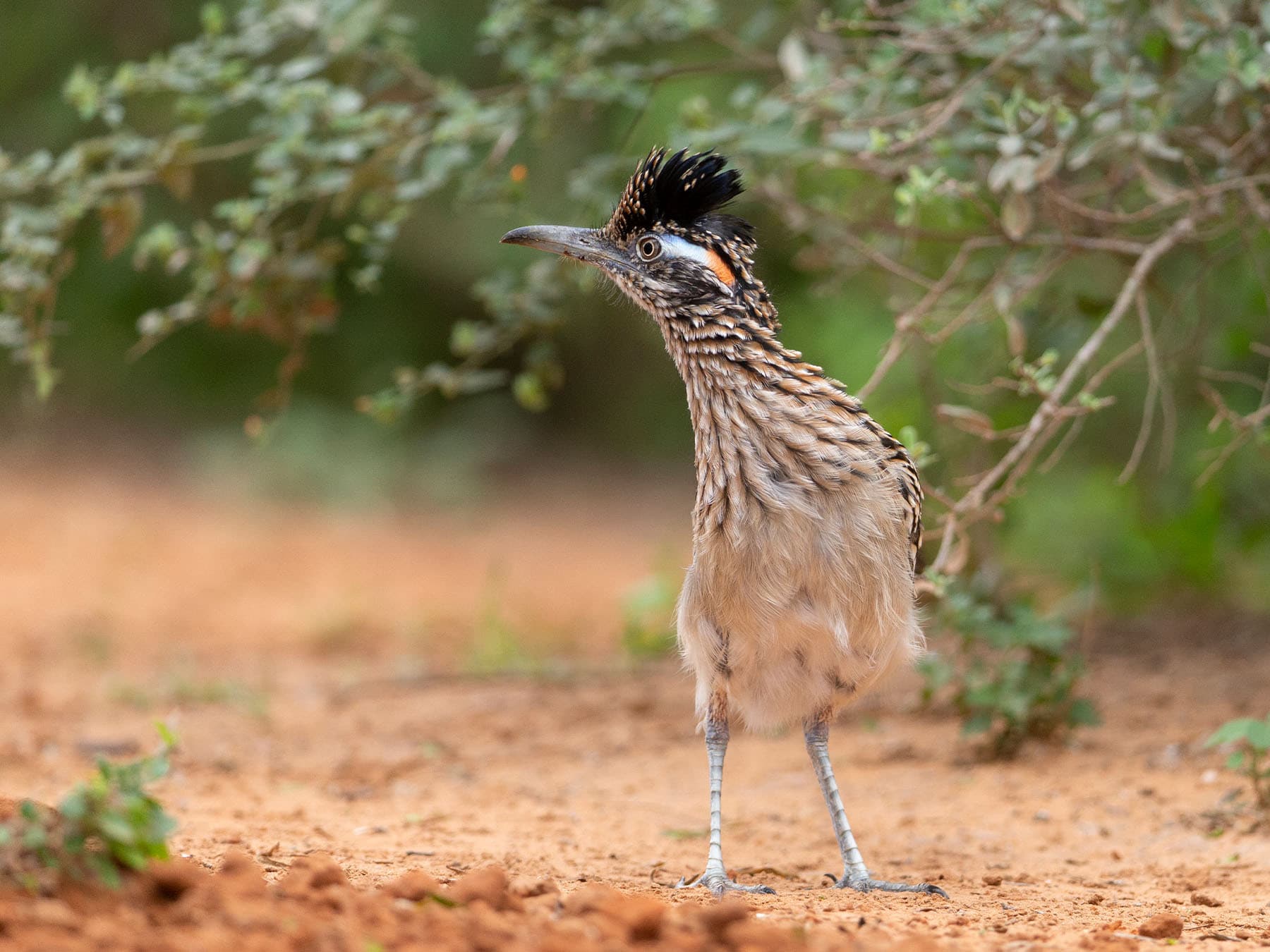 Greater Roadrunner in scrubland habitat
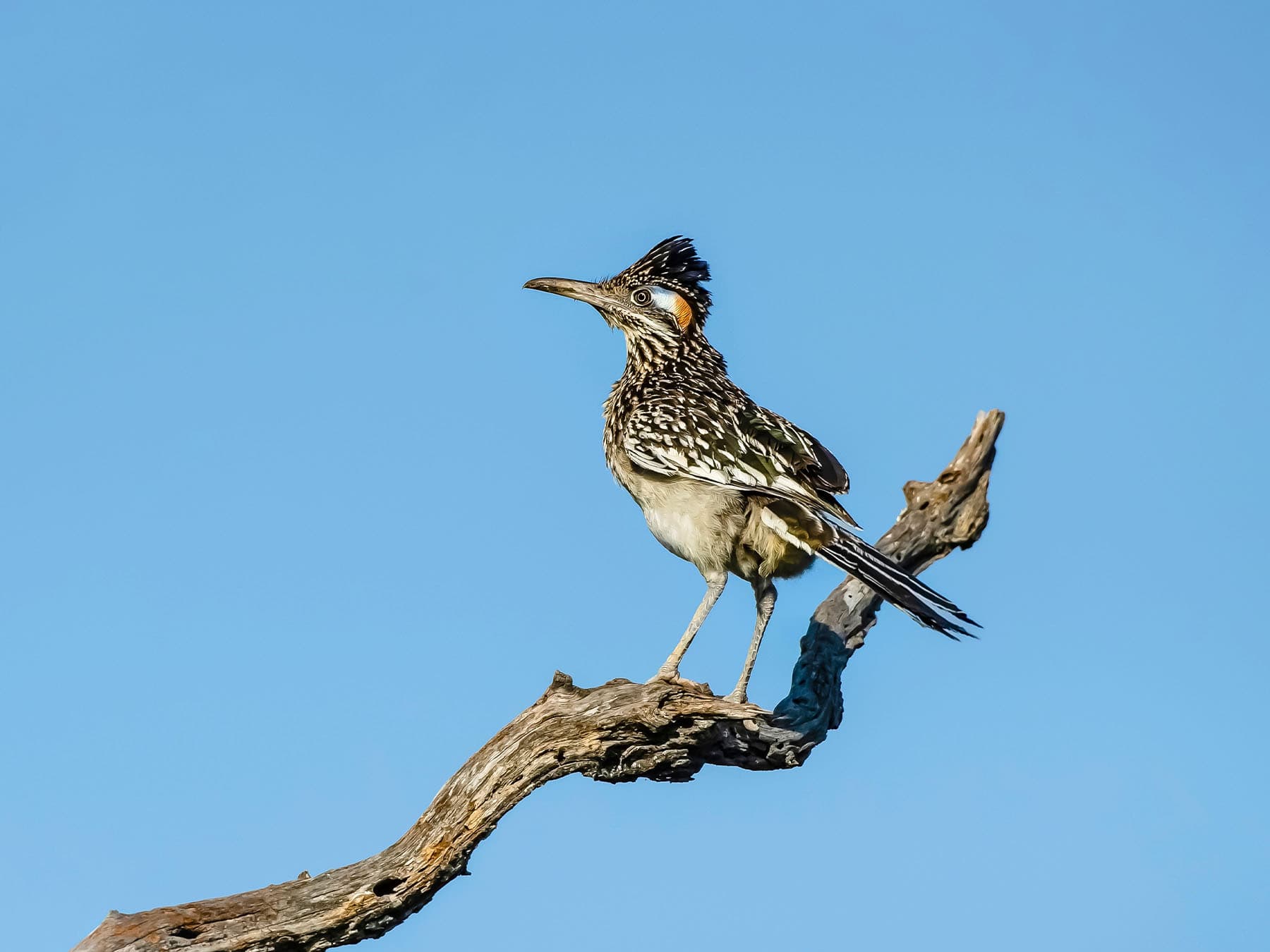 Greater Roadrunner perching on a dead branch
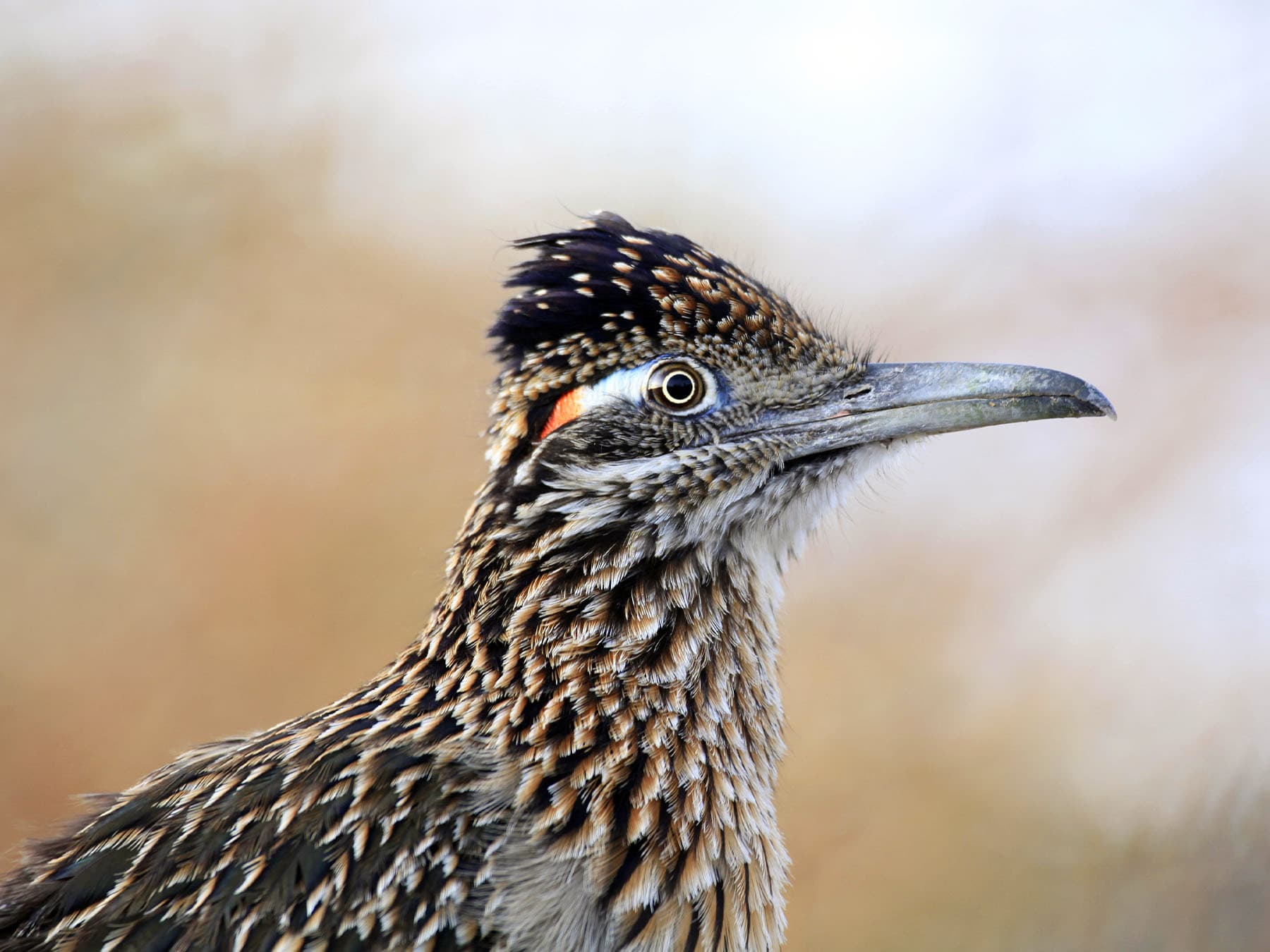 Portrait of a Greater Roadrunner
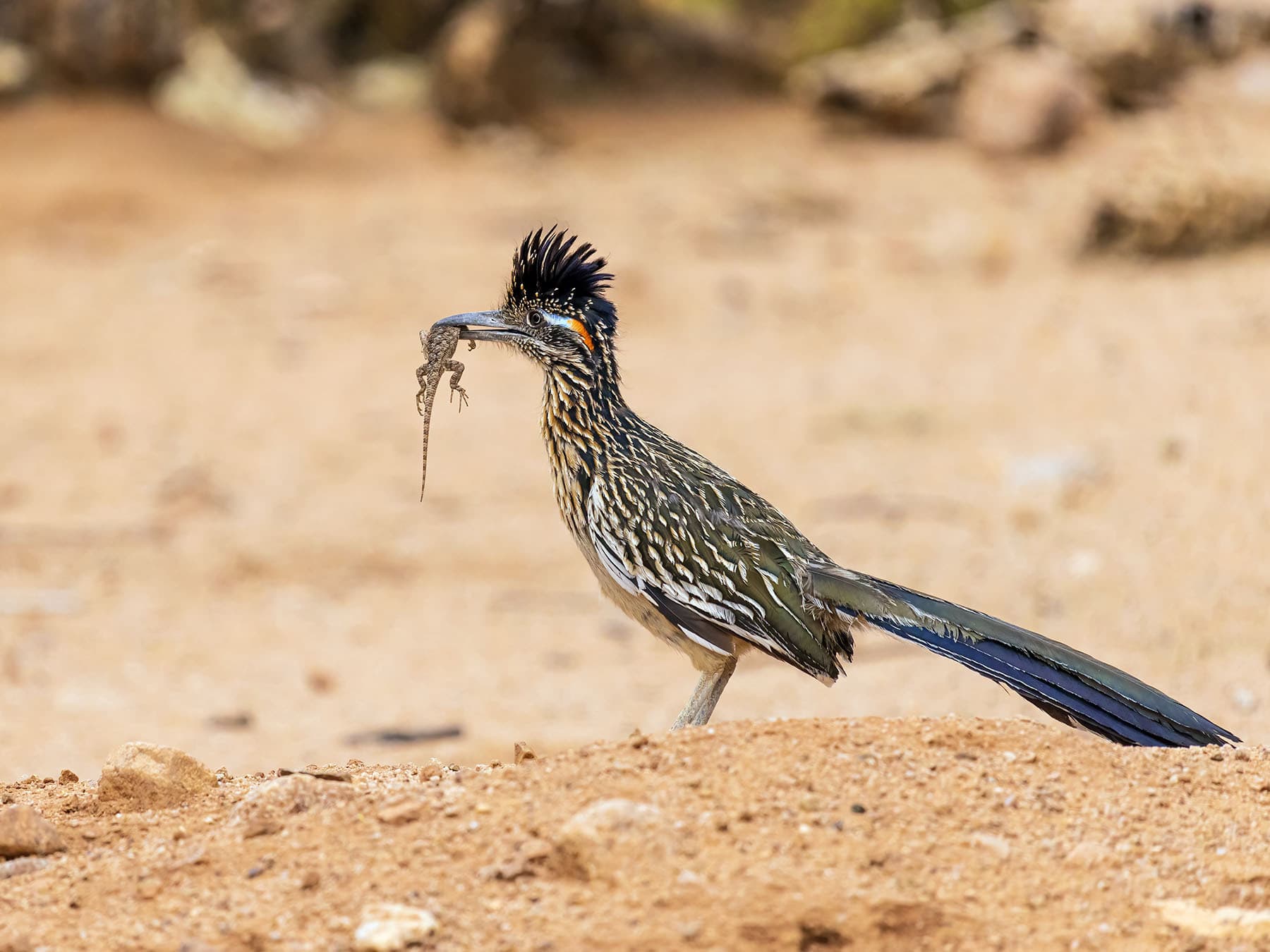 Greater Roadrunner with prey in its beak
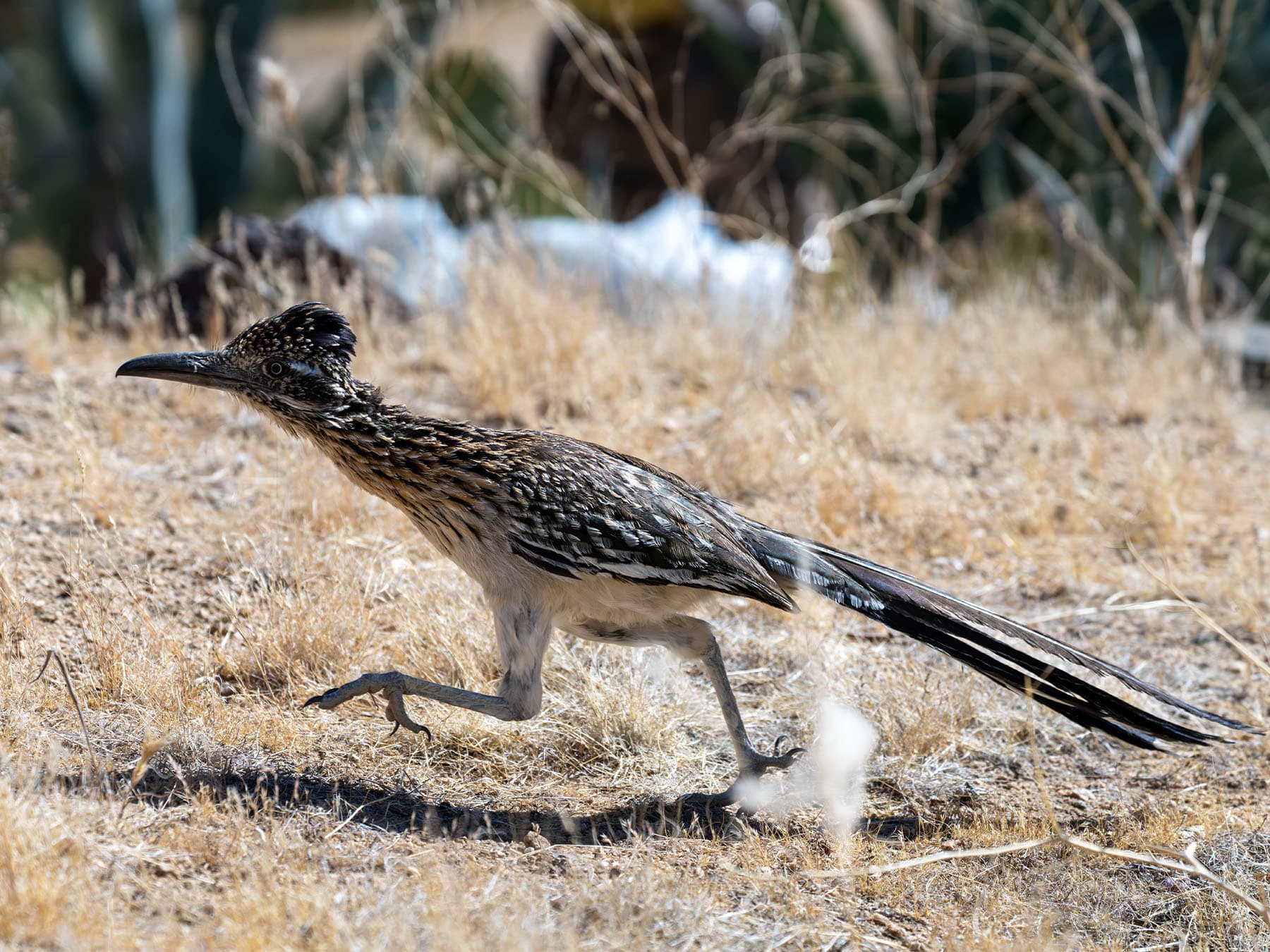 Greater Roadrunner running through grassland
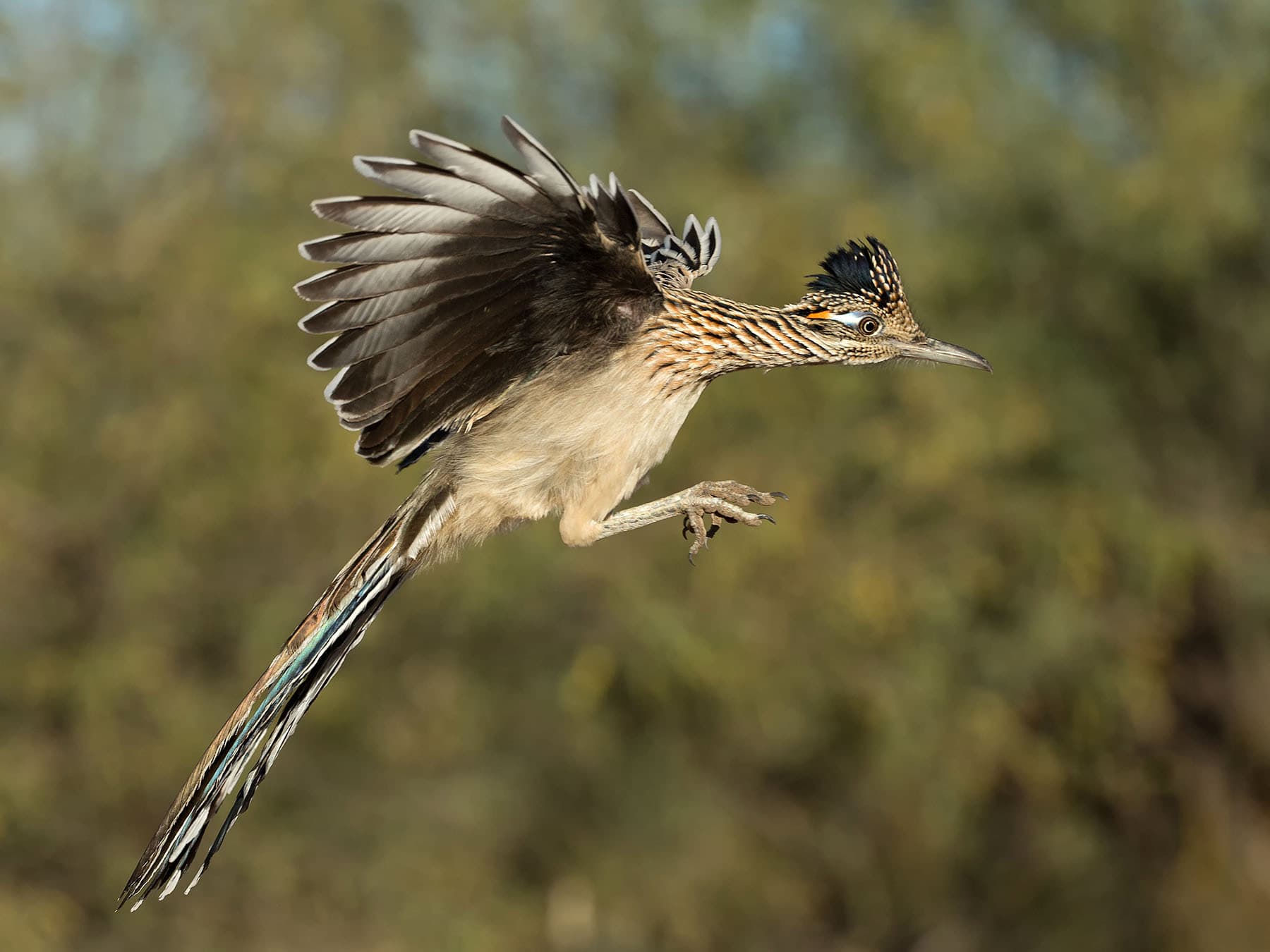 Greater Roadrunner in-flight
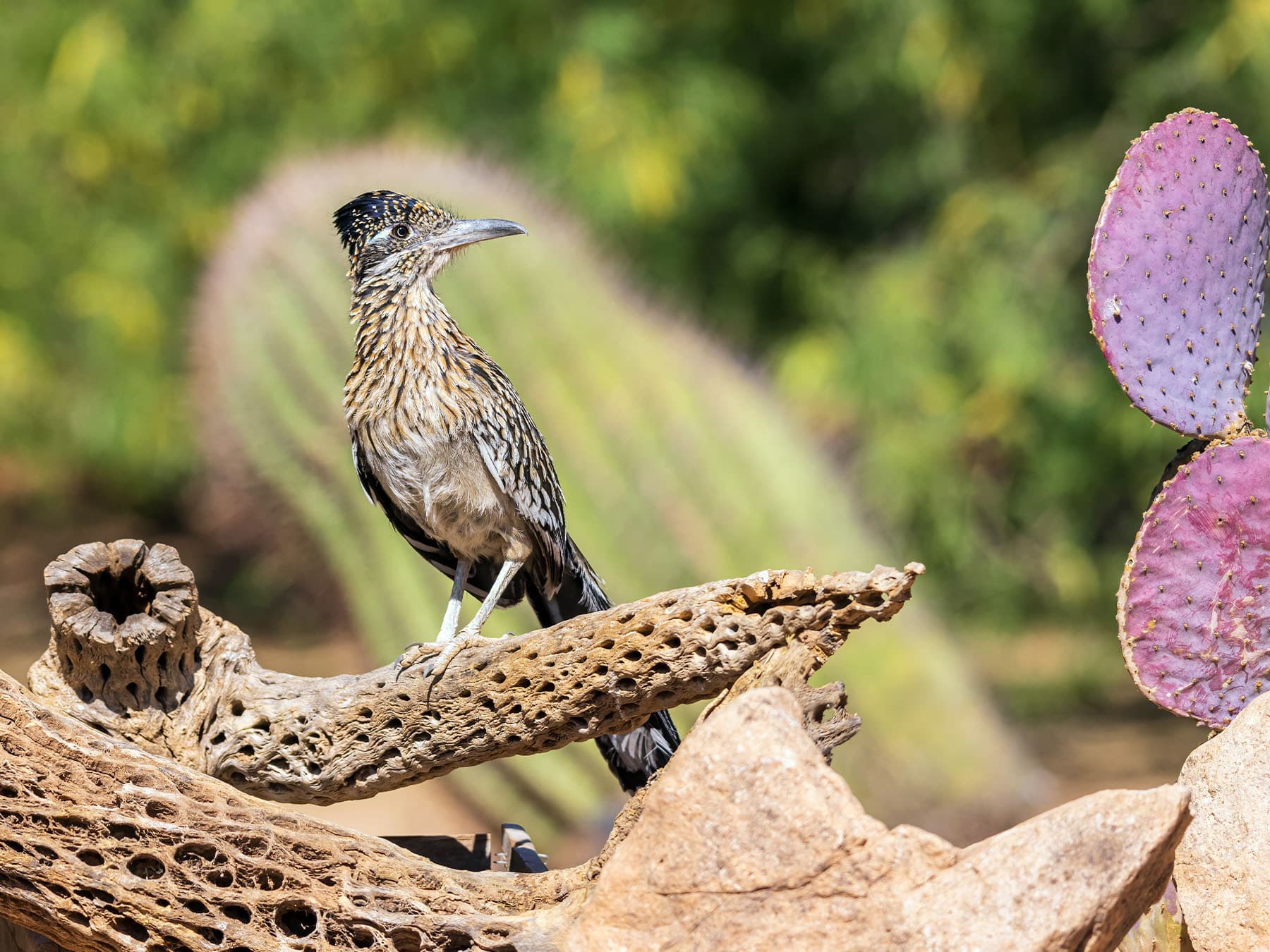 Greater Roadrunner perching in natural habitat
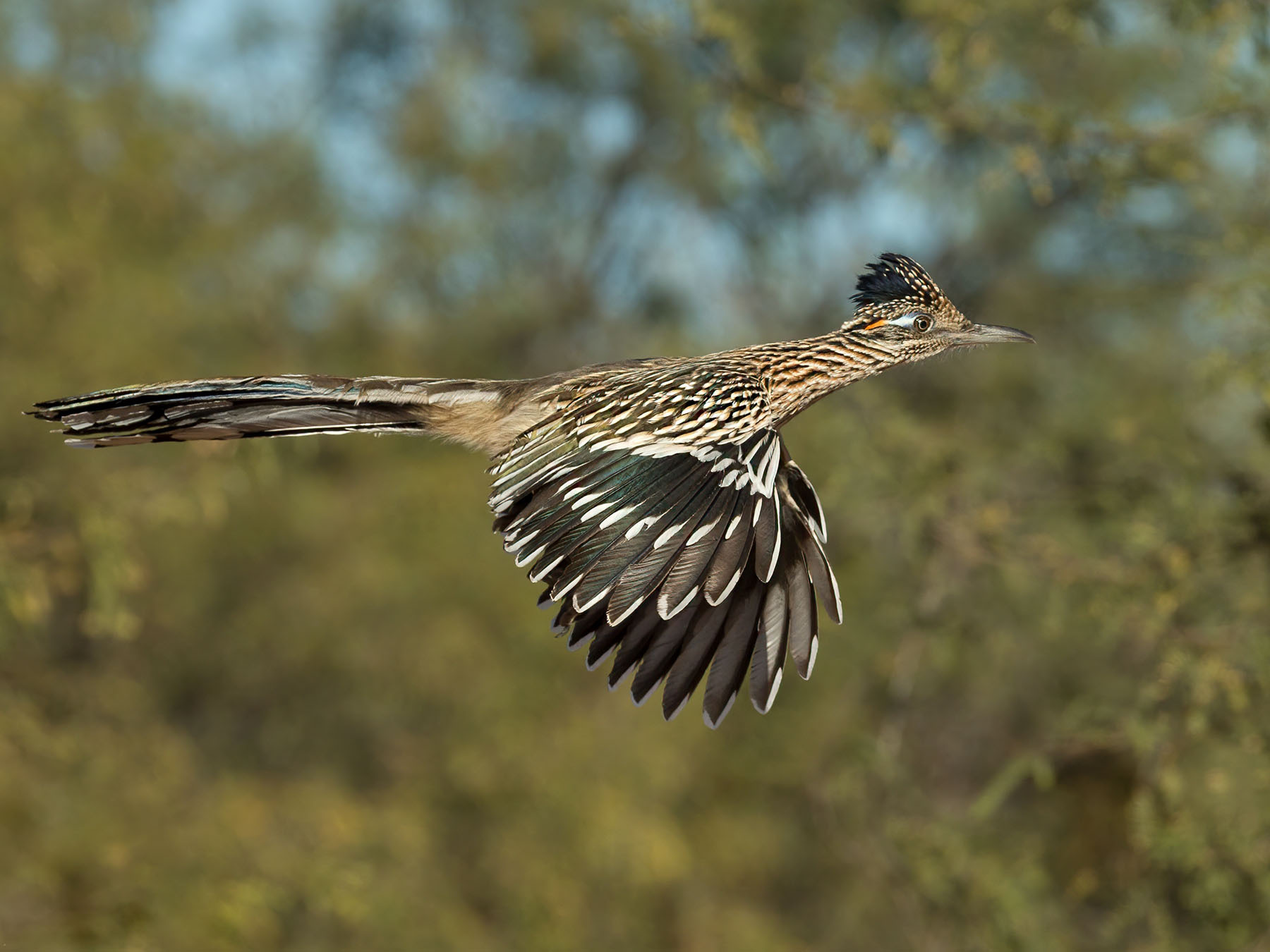
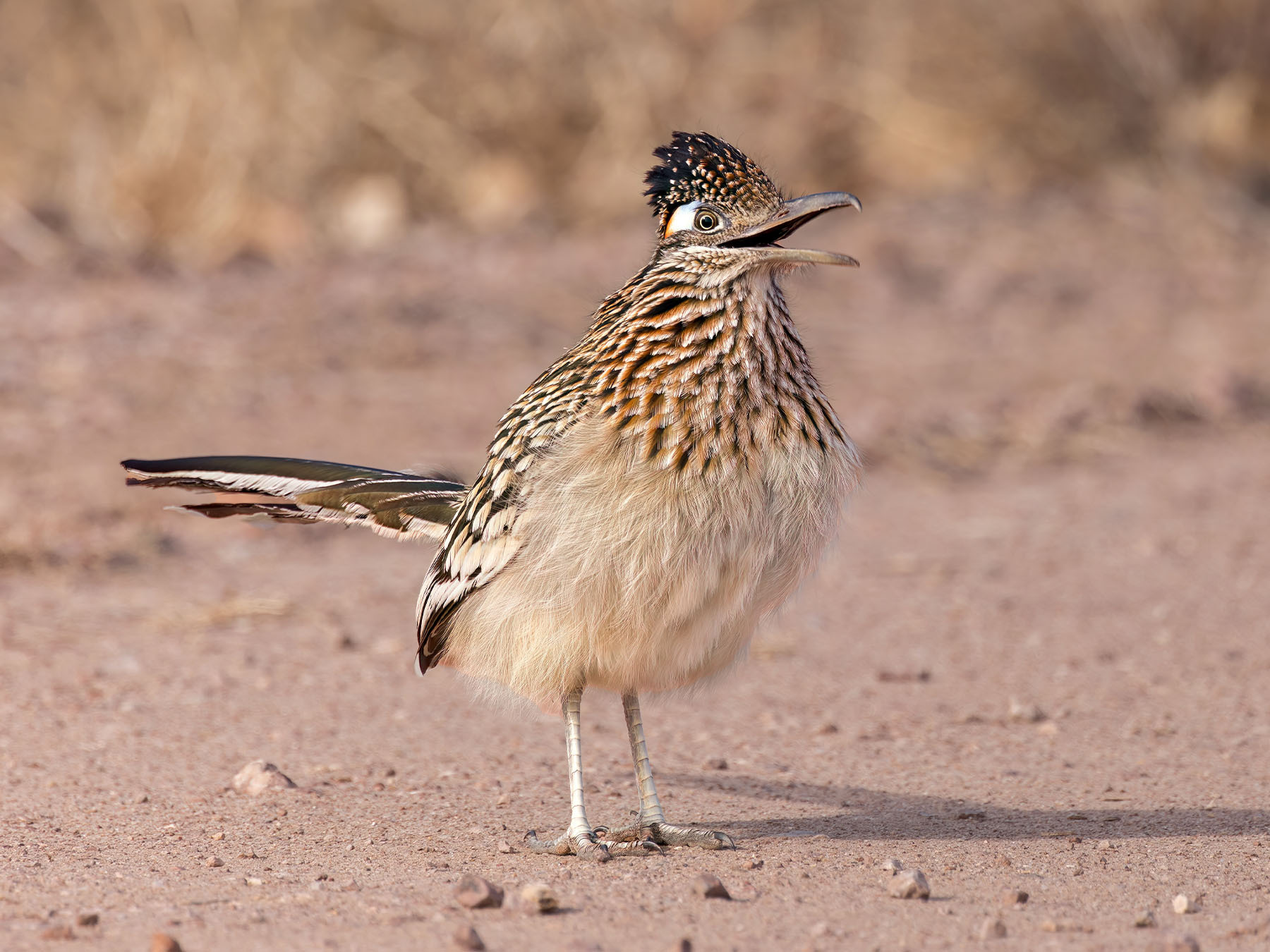
Greater Roadrunner guides
2 guidesQuick facts
- Length
- 52–54 cm
- Wingspan
- 43–61 cm
- Weight
- 290–320 g
- Lifespan
- 7–8 years · oldest recorded 9 years
- Family
- Cuckoos
- Migration
- Resident
- Global status (IUCN)
- Least Concern
- World population
- 1,400,000 mature individuals
- Population trend
- Increasing
- Also called
- Chaparral Cock, Ground Cuckoo, Snake Killer
- Scientific name
- Geococcyx californianus
Sources
4- 1BirdLife International. 2022. Geococcyx californianus. The IUCN Red List of Threatened Species 2022: e.T22684458A152321922. Source (opens in a new tab)
- 2Partners in Flight (2022)
- 3Partners in Flight (2022) Source (opens in a new tab)
- 4(Captive Bird) Smith, M. H. (1979e). Breeding the Roadrunner, Geococcyx californianus, at Columbia Zoo. International Zoo Yearbook 21:119-121.

Checked by
Nathan Cope, founder and editor
Nathan founded Birdfact and leads its writers and contributors in the UK, the US and Canada. He has watched and studied birds for more than ten years, and checks every article and species guide before it’s published.