
Great Shearwater
Greater Shearwater · Ardenna gravis
By the Birdfact teamChecked by Nathan Cope
On this page12 sections
How to recognise it
What do Great Shearwaters look like?
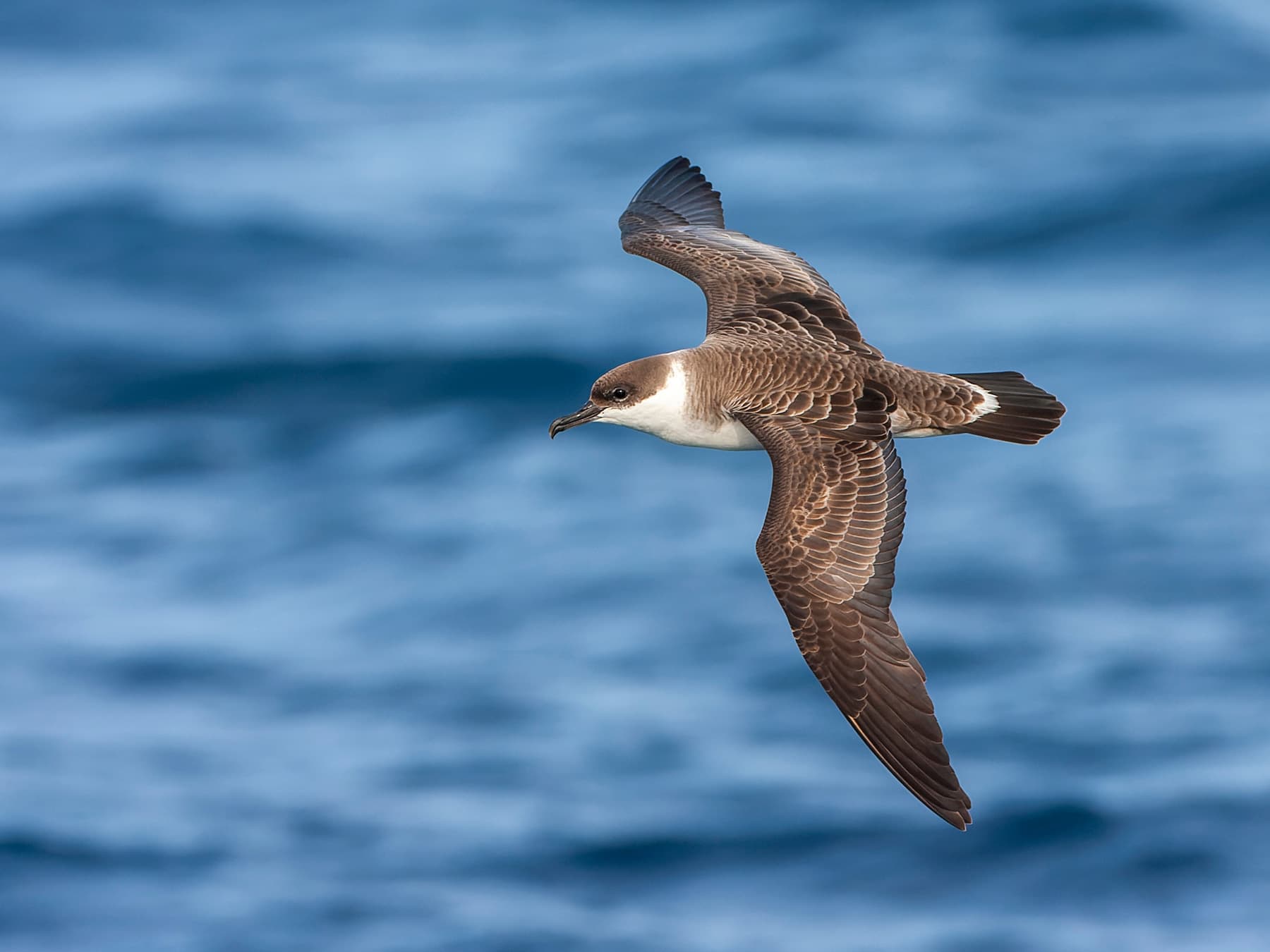
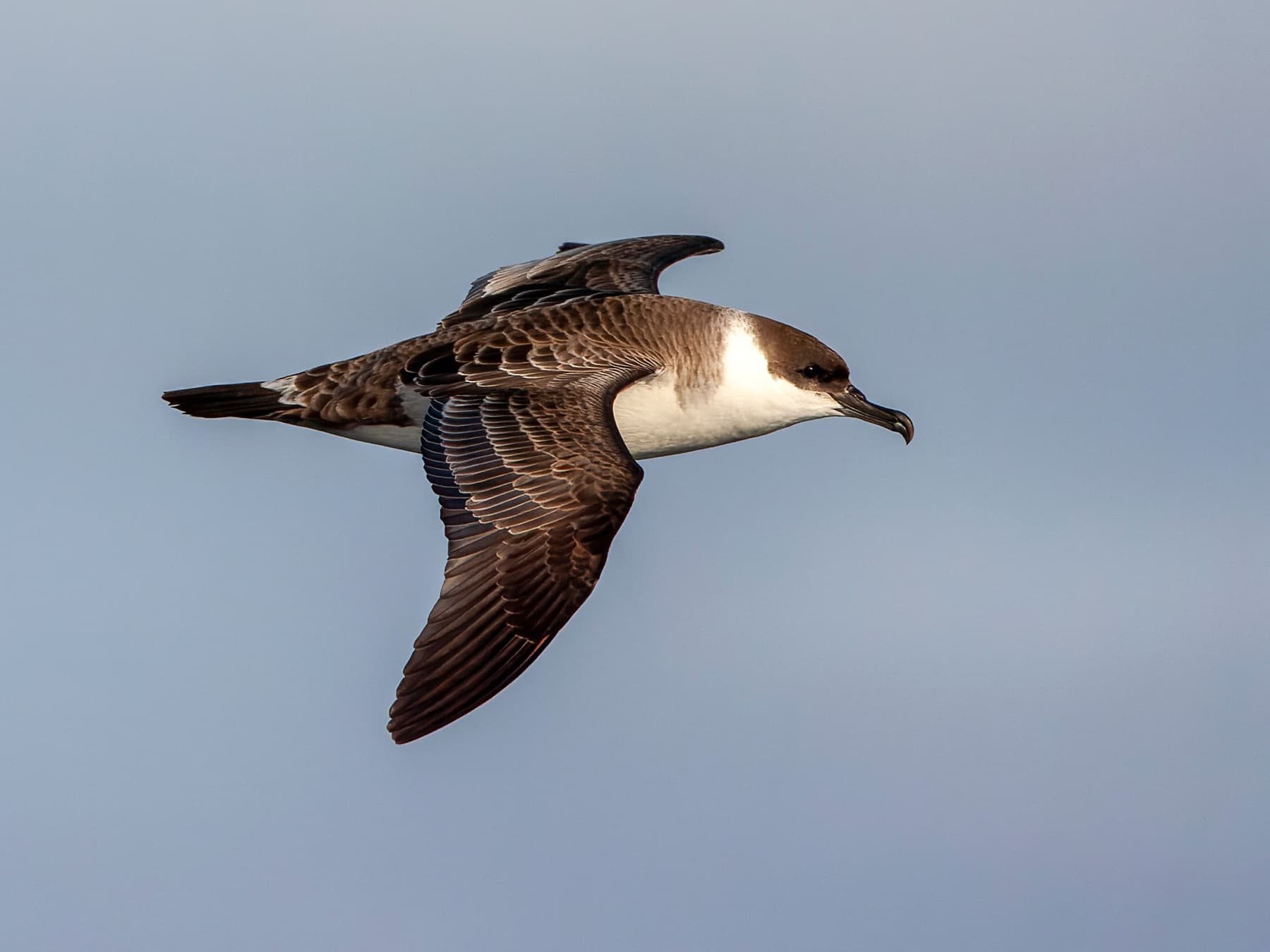
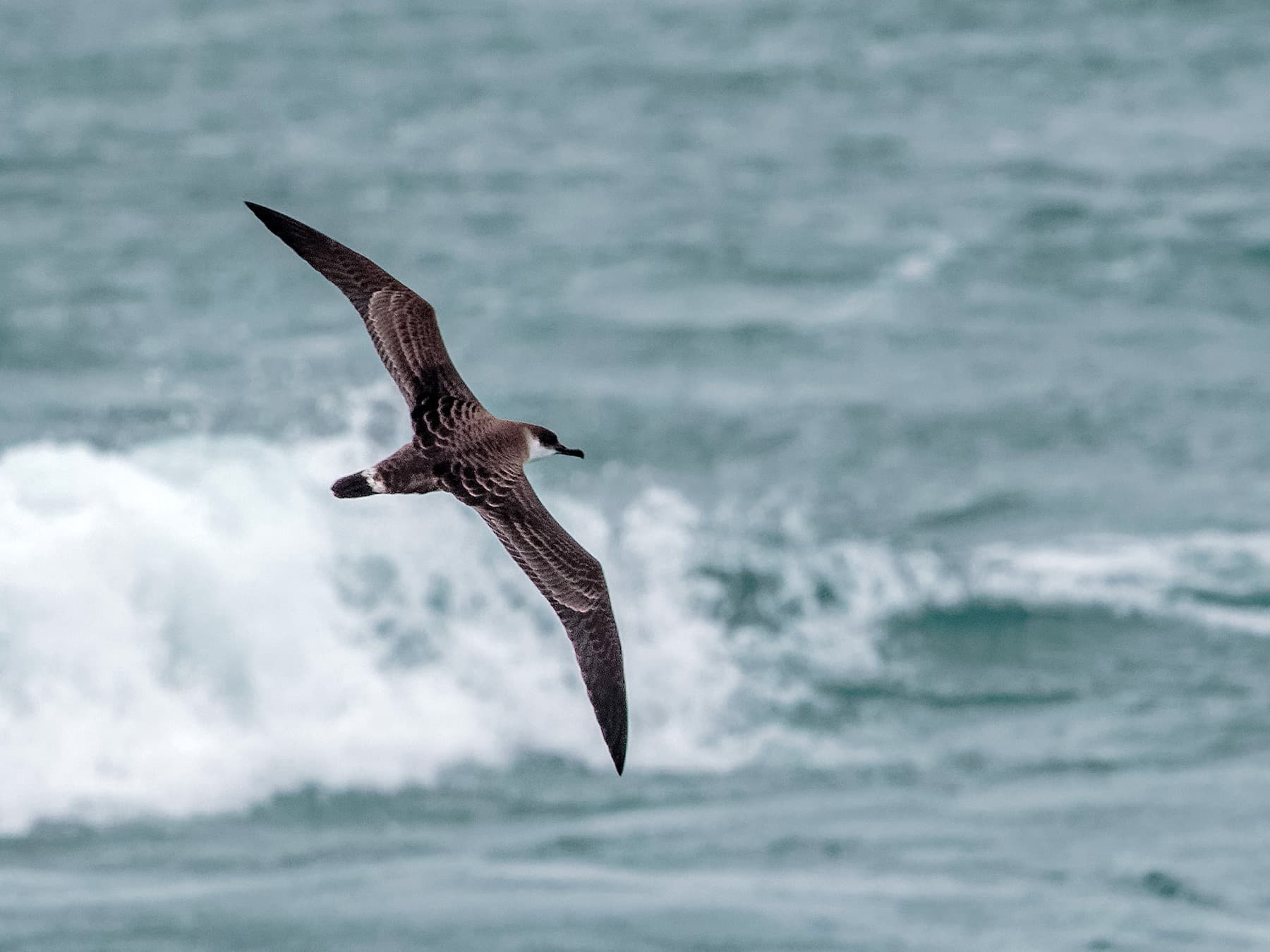
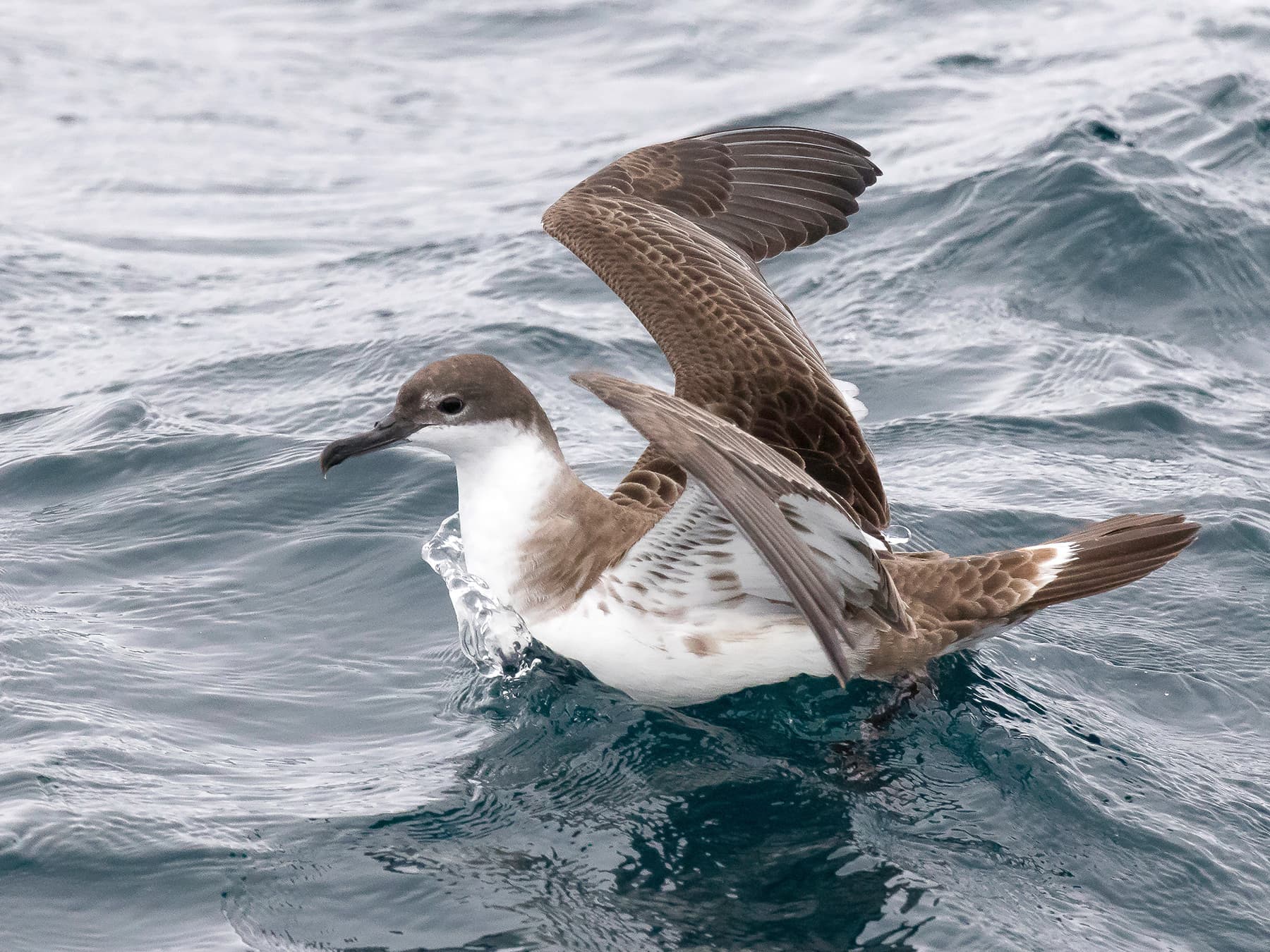
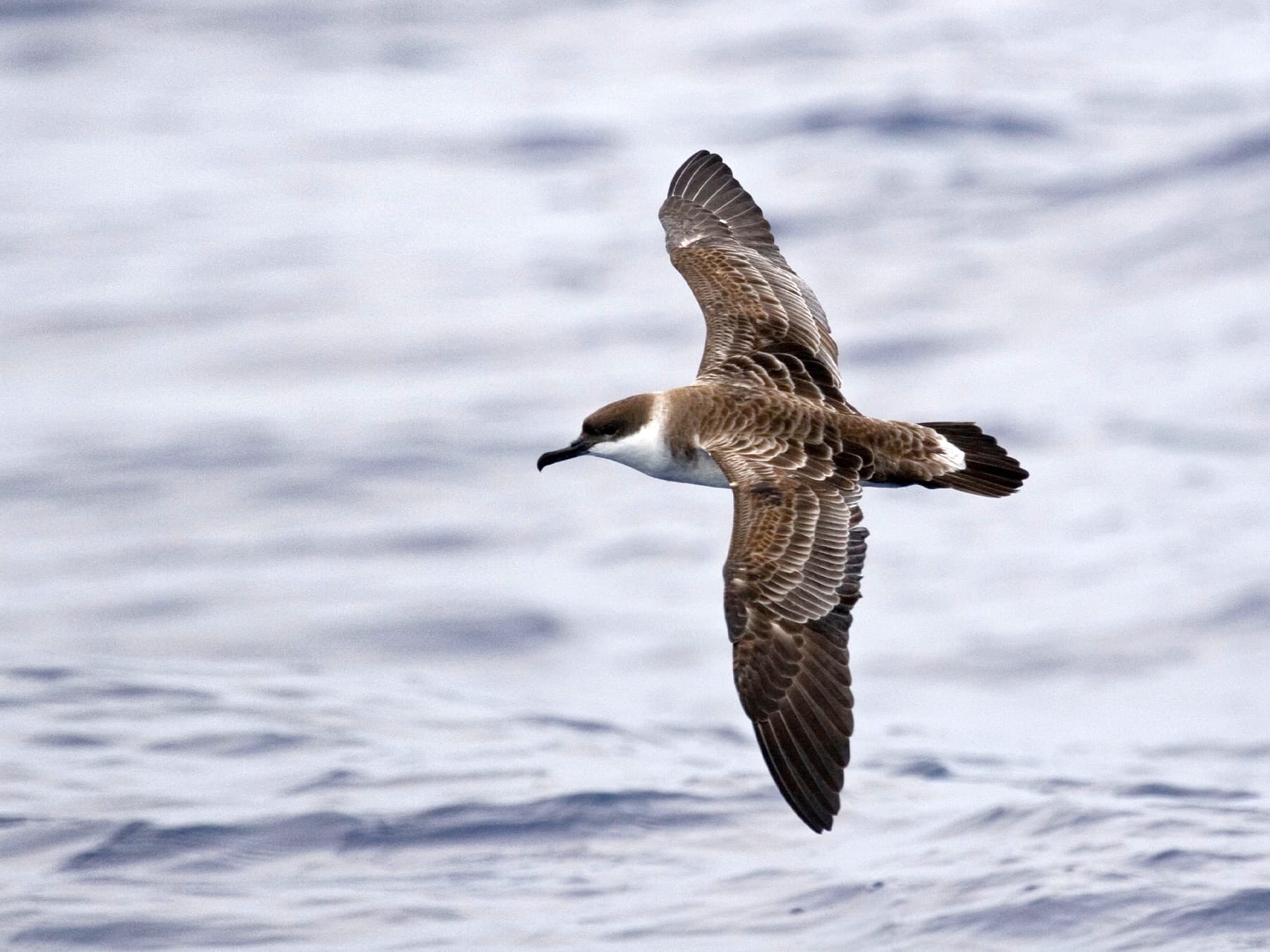
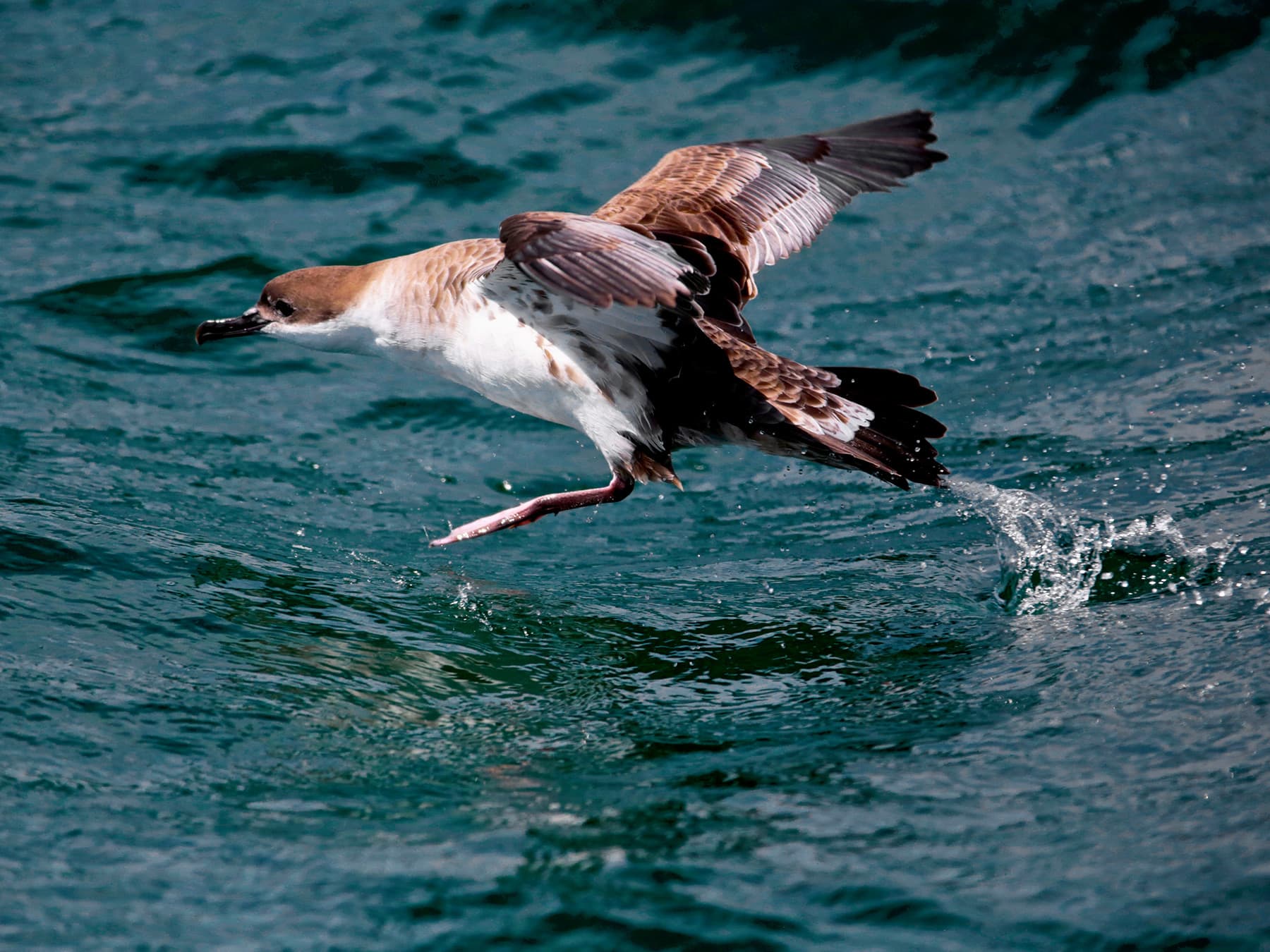
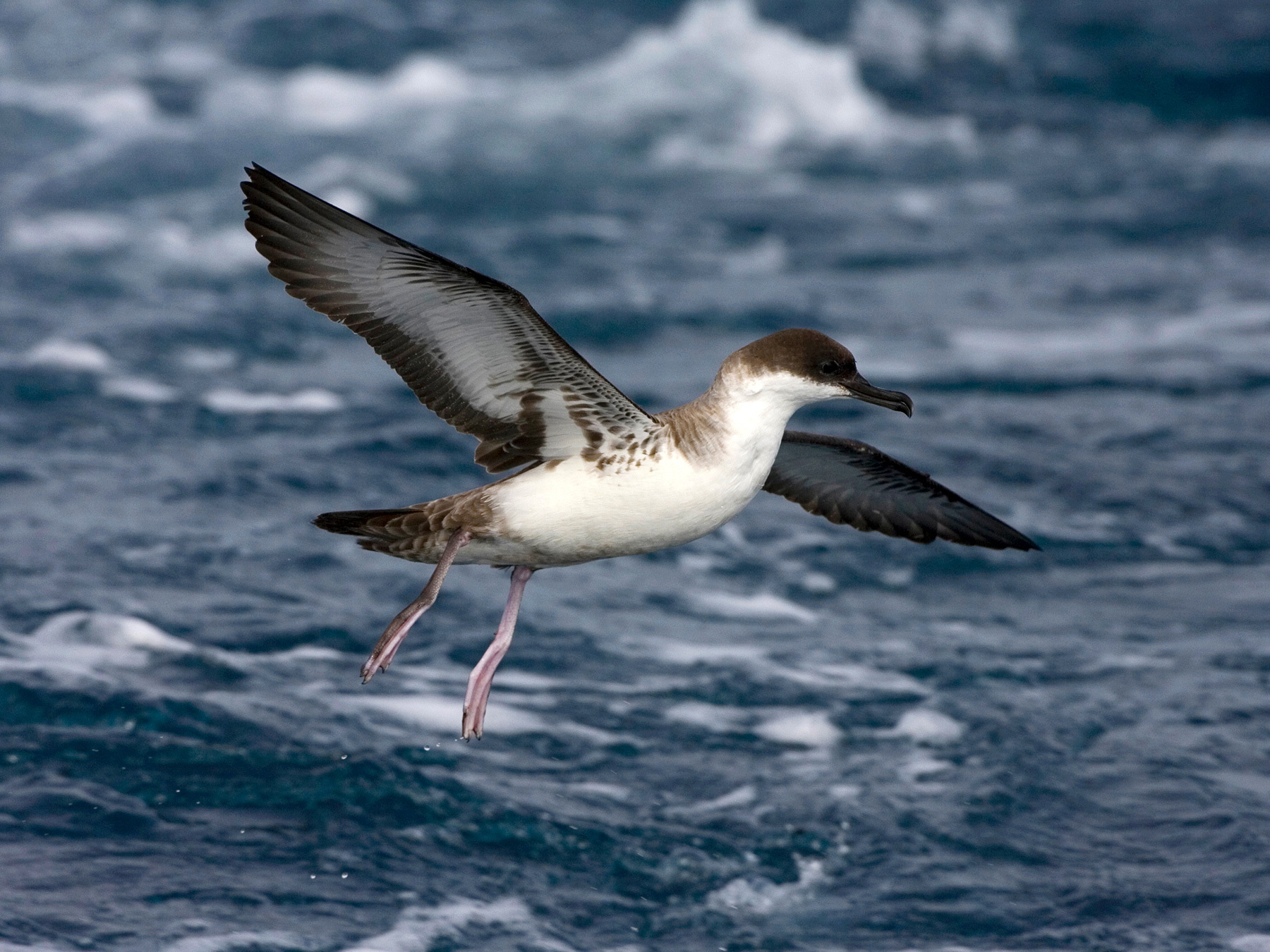
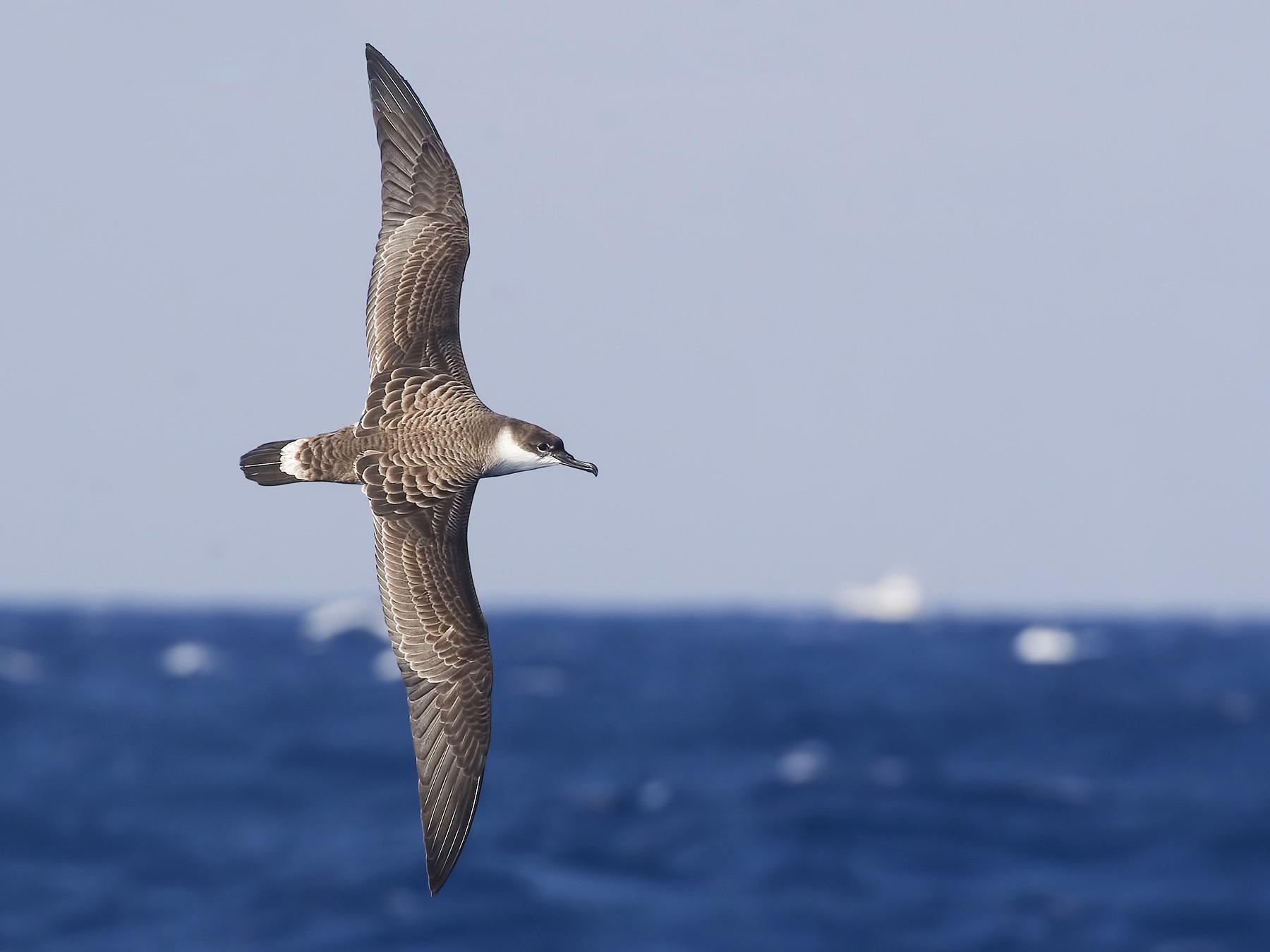
Great shearwaters are large seabirds, with rather nondescript sooty-brown and white plumage. Their underparts are white, with a darker brown belly patch, and their wing feathers are brown, fringed with paler edges, which gives a scaled appearance. The underwings are white, with a dark rear edge, and the tail is darker than the rest of the upper body with a white horseshoe-shaped patch.
Great shearwaters have a sooty brown face and crown. A white neck ring, sometimes incomplete, leads into a white throat and breast. The bill is gray and hooked, and the legs and feet are pinkish.
Females and males share the same coloring, although the sexes can usually be told apart when alongside males as they are slightly smaller.
On fledging, juvenile great shearwaters are fairly similar to adults, although as their plumage is fresh, coloring is more vibrant and less washed out than an adult bird’s worn plumage. In younger birds, the white collar may also be absent.
How big are Great Shearwaters?
The second part of the great shearwater’s scientific name, ‘gravis’, means heavy or weighty, reflecting the large size of this seabird species. Females are slightly smaller and lighter in weight than males.
- Length: 43 cm to 51 cm (17 in to 20 in)
- Wingspan: 100 cm to 118 cm (39 in to 46 in)
- Weight: 715 g to 950 g (1.6 lb to 2.1 lb)
Its size
Adults- Length
- 43–51 cm
- Wingspan
- 100–118 cm
- Weight
- 715–950 g
Its song and calls
What sound does a Great Shearwater make?
At sea, a nasal squawking or braying call is heard when foraging over the ocean waters. At breeding colonies, a repetitive and vigorous call can be heard by great shearwaters on the ground.
When and where to see it
OctoberIn season
Most recorded in October
- 1. Sligo0.68%
- 2. Cork0.28%
- 3. Cornwall0.21%
- 4. Waterford0.17%
- 5. Clareunder 0.1%
Each dot is a county, state or province: the bigger and darker, the larger the bird’s share of that place’s bird records that month. Grey dots: no regular records. The ringed point is the centre of the bird’s records this month; the arrow shows how it moved since last month, and the dashed loop its path through the year. “Arrivals” colours places where it becomes regular this month (orange) or is in its last regular month (grey). GBIF eBird Observation Dataset, 2019–2024. Map data: Natural Earth, US Census Bureau; place centres © OpenStreetMap contributors.
In your area
See when the Great Shearwater is recorded in your county, state or province.
How often the Great Shearwater turns up in the UK, Ireland, the United States and Canada through the year, from birdwatchers' records.
United Kingdom
Passage migrant · regularly Jul–Nov · most records in August
Ireland
Passage migrant · regularly Jul–Oct · most records in August
United States
Passage migrant · regularly Jun–Nov · most records in August
Canada
Passage migrant · regularly Jun–Sep · most records in August
Show as a table
| Month | United Kingdom | Ireland | United States | Canada |
|---|---|---|---|---|
| January | – | – | <0.001% | – |
| February | – | – | <0.001% | – |
| March | – | – | – | – |
| April | – | – | <0.001% | – |
| May | <0.001% | – | 0.001% | <0.001% |
| June | <0.001% | – | 0.008% (regular) | 0.002% (regular) |
| July | 0.005% (regular) | 0.027% (regular) | 0.011% (regular) | 0.021% (regular) |
| August | 0.033% (regular) | 0.18% (regular) | 0.033% (regular) | 0.039% (regular) |
| September | 0.012% (regular) | 0.066% (regular) | 0.013% (regular) | 0.018% (regular) |
| October | 0.013% (regular) | 0.057% (regular) | 0.004% (regular) | 0.002% |
| November | 0.003% (regular) | 0.005% | 0.004% (regular) | 0.001% |
| December | – | – | <0.001% | <0.001% |
Recorded regularly in
Worldwide: recorded regularly in 25 countries
Countries where it was recorded in at least 3 of the 6 years 2019–2024. Linked countries have their own bird list.
Africa (4)
- Cape Verde
- Senegal
- South Africa
- St Helena
North America (9)
Antarctica (1)
- South Georgia & South Sandwich Islands
Data: EOD – eBird Observation Dataset (Cornell Lab of Ornithology), accessed via GBIF.org, CC BY 4.0. Records from 2019–2024, aggregated and filtered by Birdfact. How these lists are made
What is the habitat of a Great Shearwater?
Great shearwaters are pelagic birds that forage in cool offshore waters, and breed in burrows dug into the earth on sloped terrain, particularly in grassland landscapes with tussocks and in woodlands. Their four island breeding colonies in the South Atlantic are characterized by inhospitable craggy cliffs and undisturbed low-level vegetation.
What is the range of a Great Shearwater?
Great shearwaters only breed at four known sites in the South Atlantic Ocean, three in the Tristan de Cunha archipelago, and the fourth in the Falkland Islands. Once breeding is complete, birds embark on a north-western migration spending several months at sea in the North Atlantic Ocean, around the coasts of Canada, the United States, the Caribbean, and north-west Europe and West Africa.
Where do Great Shearwaters live?
Great shearwaters breed at three main sites in the South Atlantic: Nightingale Island, the Inaccessible Islands, and Gough Island, in Tristan da Cunha, and Kidney Island in the Falkland Islands (Islas Malvinas). Of these, there are 2 to 3 million pairs that breed on Nightingale, 2 million pairs on the Inaccessible Islands, and between 600,000 and 3 million pairs on Gough Island. Kidney Island’s population is far lower, with only between 50 and 100 pairs recorded.
How rare are Great Shearwaters?
Great shearwaters have a large and stable population of around 15 million individuals. However, due to their limited breeding sites and their preference for open sea habitats during the non-breeding season, sightings are rare.
Where can you see Great Shearwaters in the US?
Sightings of great shearwaters are reported along the Atlantic coast of the United States during their post-breeding migrations, as they move northwards from their breeding grounds off South America. Rarely seen inland, except when blown off course during a hurricane, great shearwaters are usually only seen far out at sea, regularly spotted following fishing trawlers and feeding on discarded fish offal.
Where can you see Great Shearwaters in the UK?
Great shearwaters are only ever seen way offshore of the British Isles, with sightings concentrated along the south-western coast of England and north and west coasts of Scotland. The best time of year for a chance sighting is between July and late September as they begin their return migration to their South Atlantic breeding grounds.
Migration
Do Great Shearwaters migrate?
Once breeding is complete, great shearwaters leave their colonies and follow the Gulf Stream north, spending April to September wandering throughout the Atlantic Ocean.
These migrations take them as far north as the coasts of Canada and Greenland, before crossing the Atlantic to Norway, Iceland, and the British Isles before they return to their breeding grounds in late September, following the coast of Africa on their return leg.
Why do Great Shearwaters migrate?
Great shearwaters travel between the South Atlantic Ocean in the southern hemisphere’s summer and the North Atlantic Ocean’s nutrient-rich waters once summer arrives in the northern hemisphere, benefiting from an abundant supply of fish all year round. Once their breeding grounds start to become too inhospitable to survive in, the movement towards the north and richer foraging grounds begin.
Tips for seeing it
- Look for Great Shearwaters from coastal headlands during autumn migration
- Join pelagic birding trips for the best chance of sightings
- Watch for their distinctive gliding flight low over the waves
- Observe them in groups around fishing boats or areas of high marine activity
What it eats
What do Great Shearwaters eat?
Squid, octopuses and crustaceans are the main elements of a great shearwater’s diet during the breeding season, whereas once they set off on their post-breeding expeditions, fish (mackerel and capelin) and fish offal are also important. Great shearwaters usually catch their prey by plunge-diving at least 2 m (6.6 ft) beneath the surface of the water.
What do Great Shearwater chicks eat?
Adult great shearwaters regurgitate partly digested fish and squid into the bills of their young. One particular issue for this species is the ingestion of plastic in adult birds which is then fed to chicks.
Nesting and breeding
Where do Great Shearwaters nest?
Nest burrows are excavated by male and female great shearwaters and can reach up to 1 m (3.3 ft) in length. If no suitable sites for burrows are present, cracks and crevices between boulders and large rocks or open grassy sites may be used as an alternative.
When do Great Shearwaters nest?
Great shearwaters arrive back on breeding grounds from September onwards, and breeding begins with mating in October. Laying peaks in mid-November, followed by an incubation period of 53 to 57 days. Incubation is shared between both parents.
What do Great Shearwater eggs look like?
Great shearwaters lay one single plain white egg, which measures 78 mm by 49 mm (3 in by 1.9 in).
Do Great Shearwaters mate for life?
Monogamous and long-term pair bonds are formed between great shearwaters, with pairs raising one brood each season. It’s unknown whether pairs remain together through the nonbreeding season or if they go their separate ways and reunite on their breeding grounds each year.
Behaviour
Are Great Shearwaters aggressive?
Great shearwaters are colonial breeders, but do show territorial behavior around the entrance to their nest burrows, and will challenge intruders that approach too closely. Flocks of great shearwaters forage and migrate together.
Lifespan and predators
How long do Great Shearwaters live?
Great shearwaters are among the longest-lived bird species, and although the average lifespan is unknown, the oldest individual has been recorded at 55 years of age. Age at first breeding is also unknown, but for similar species such as sooty shearwaters, maturity isn’t reached until around 5 years of age.
What are the predators of Great Shearwaters?
Great shearwaters’ habitats are largely predator-free, meaning they can continue with nesting activities in daylight, rather than being confined to hours of darkness. As a large species, they are not pursued by great skuas, one of the region’s chief predatory avians.
Are Great Shearwaters protected?
Great shearwaters are protected by Canada’s Migratory Birds Convention Act of 1994, the United States Migratory Bird Treaty Act of 1918, and the UK’s Wildlife and Countryside Act, 1981. These legislations make it illegal to kill, injure, capture, or trade a great shearwater.
Are Great Shearwaters endangered?
Great shearwaters have a stable population and are considered a species of least concern worldwide, and rated with Green status on the British Birds of Conservation Concern list.
Threats include being caught as by-catch by the fishing industry in South America and ingestion of plastics at sea. Several thousand adult birds and up to 50,000 juvenile birds are harvested each year from the Nightingale Island colony.
Conservation
While currently listed as Least Concern, Great Shearwaters face threats from marine pollution, particularly plastic ingestion. Climate change impacts on ocean productivity and nesting sites are potential long-term concerns. Conservation efforts focus on protecting breeding colonies and reducing marine debris.
More photos
3 photos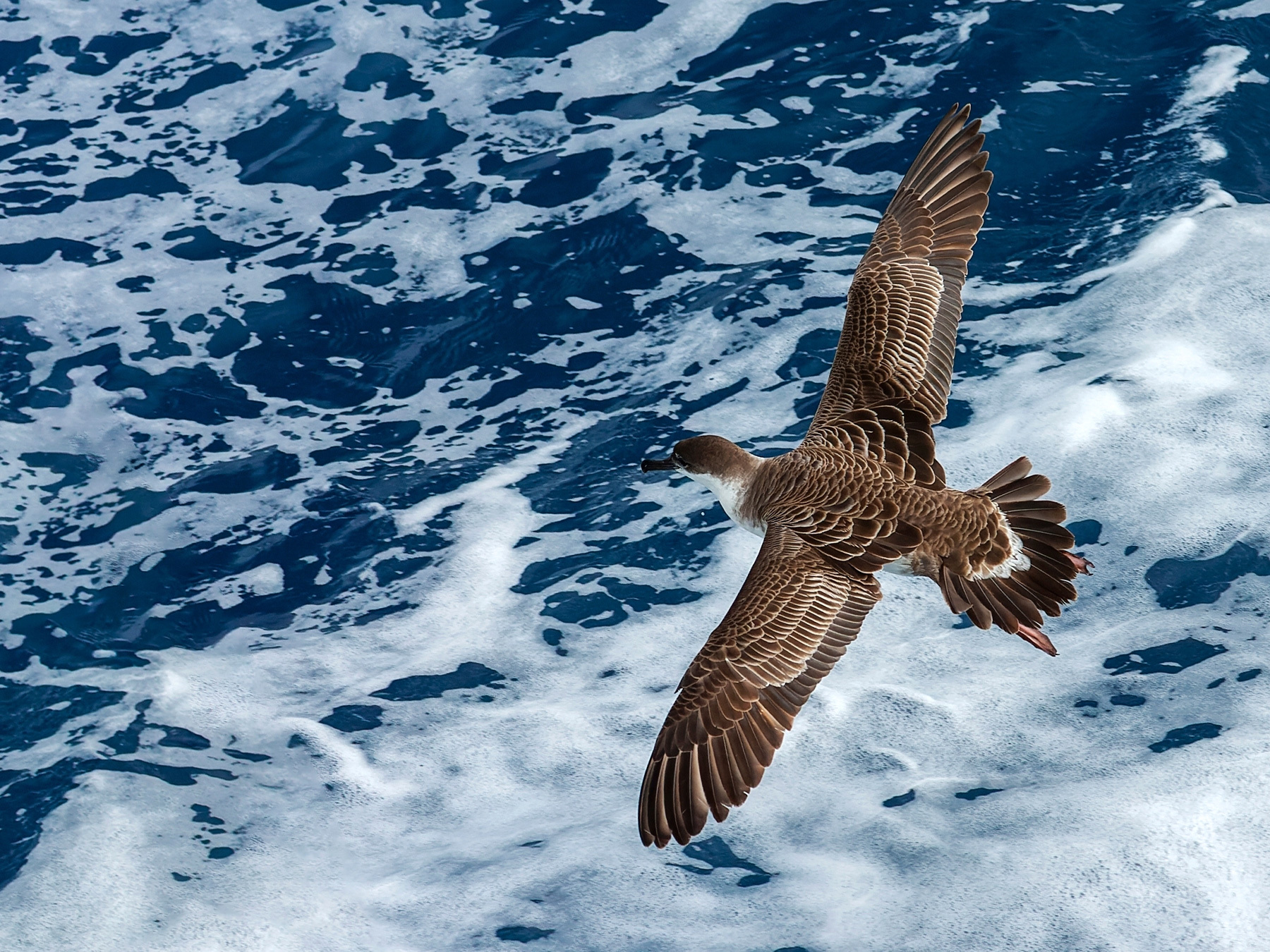
Quick facts
- Length
- 43–51 cm
- Wingspan
- 100–118 cm
- Weight
- 715–950 g
- Lifespan
- 15–20 years
- Family
- Petrels & Shearwaters
- Migration
- Long-distance Migrant
- Global status (IUCN)
- Least Concern
- World population
- 10,000,000 mature individuals
- Population trend
- Stable
- Also called
- Greater Shearwater
- Scientific name
- Ardenna gravis
Sources
3- 1BirdLife International. 2021. Ardenna gravis. The IUCN Red List of Threatened Species 2021: e.T22698201A168963992. Source (opens in a new tab)
- 2BirdLife International. 2021. Ardenna gravis. The IUCN Red List of Threatened Species 2021: e.T22698201A168963992. Source (opens in a new tab)
- 3Brooke, M. Albatrosses and Petrels Across the World. Oxford University Press, Oxford, UK. (2004)

Checked by
Nathan Cope, founder and editor
Nathan founded Birdfact and leads its writers and contributors in the UK, the US and Canada. He has watched and studied birds for more than ten years, and checks every article and species guide before it’s published.