


Great Grey Shrike
Butcher Bird · Lanius excubitor
By the Birdfact teamChecked by Nathan Cope
On this page13 sections
How to recognise it
What do Great Grey Shrikes look like?
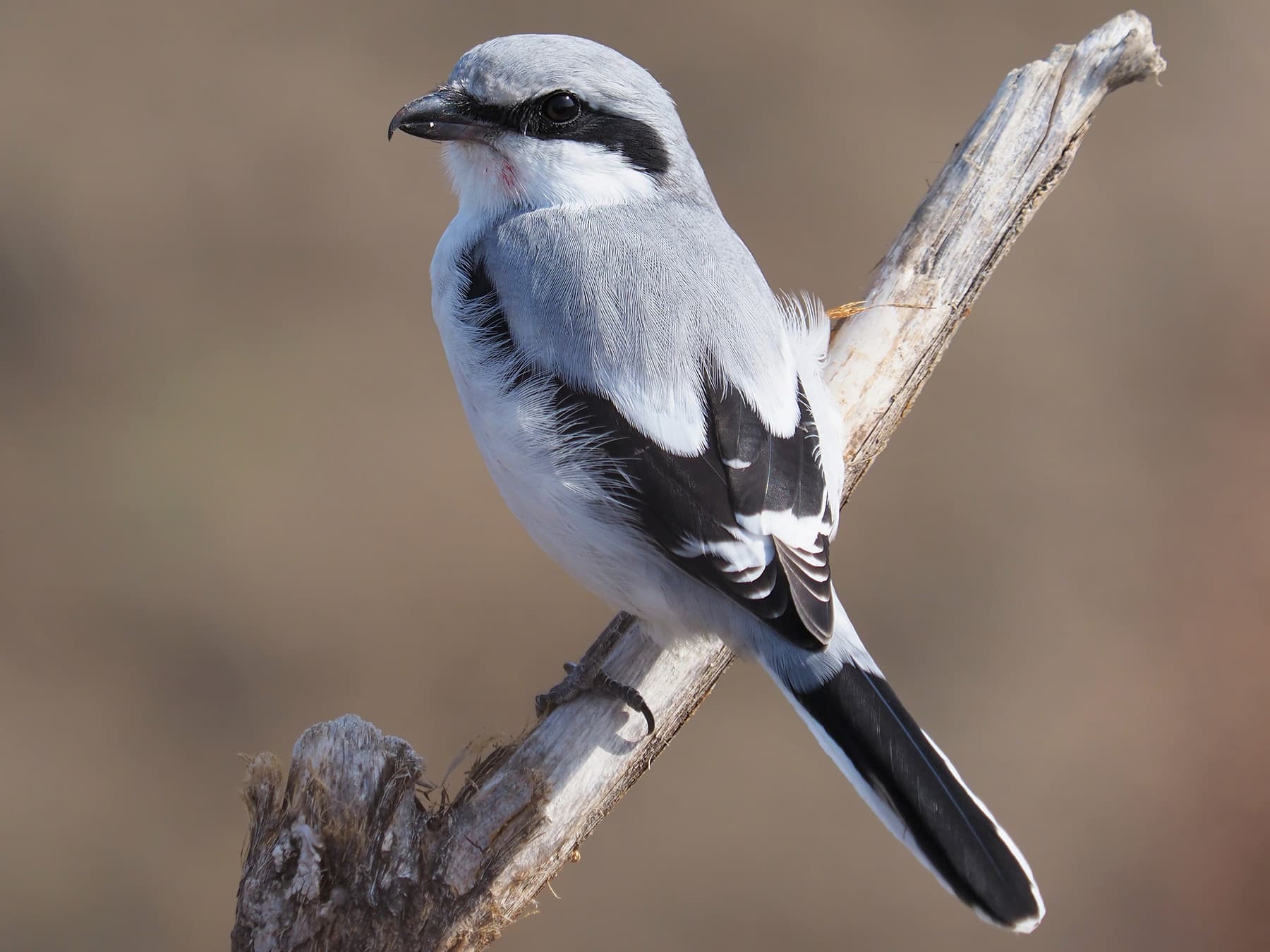
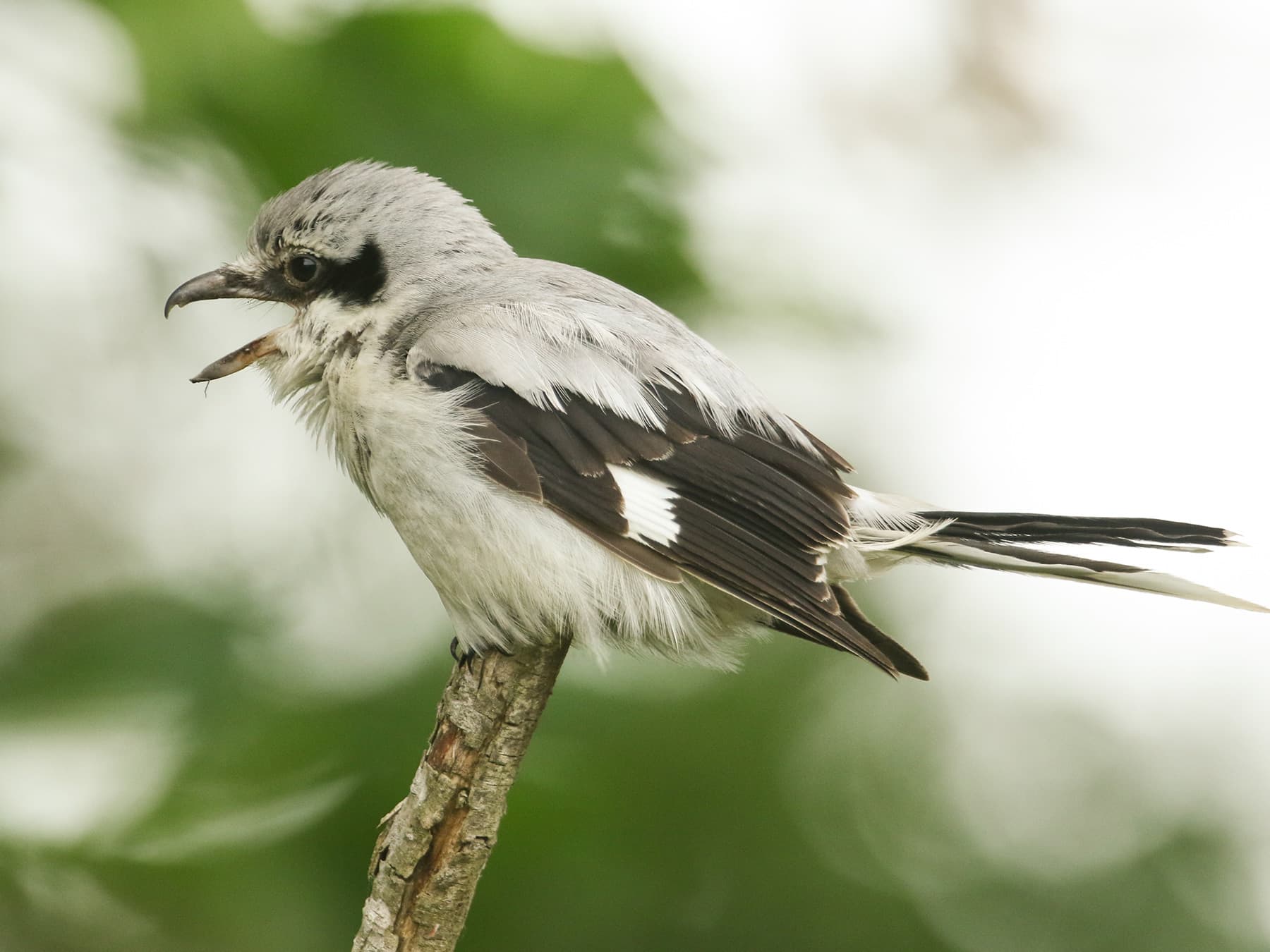
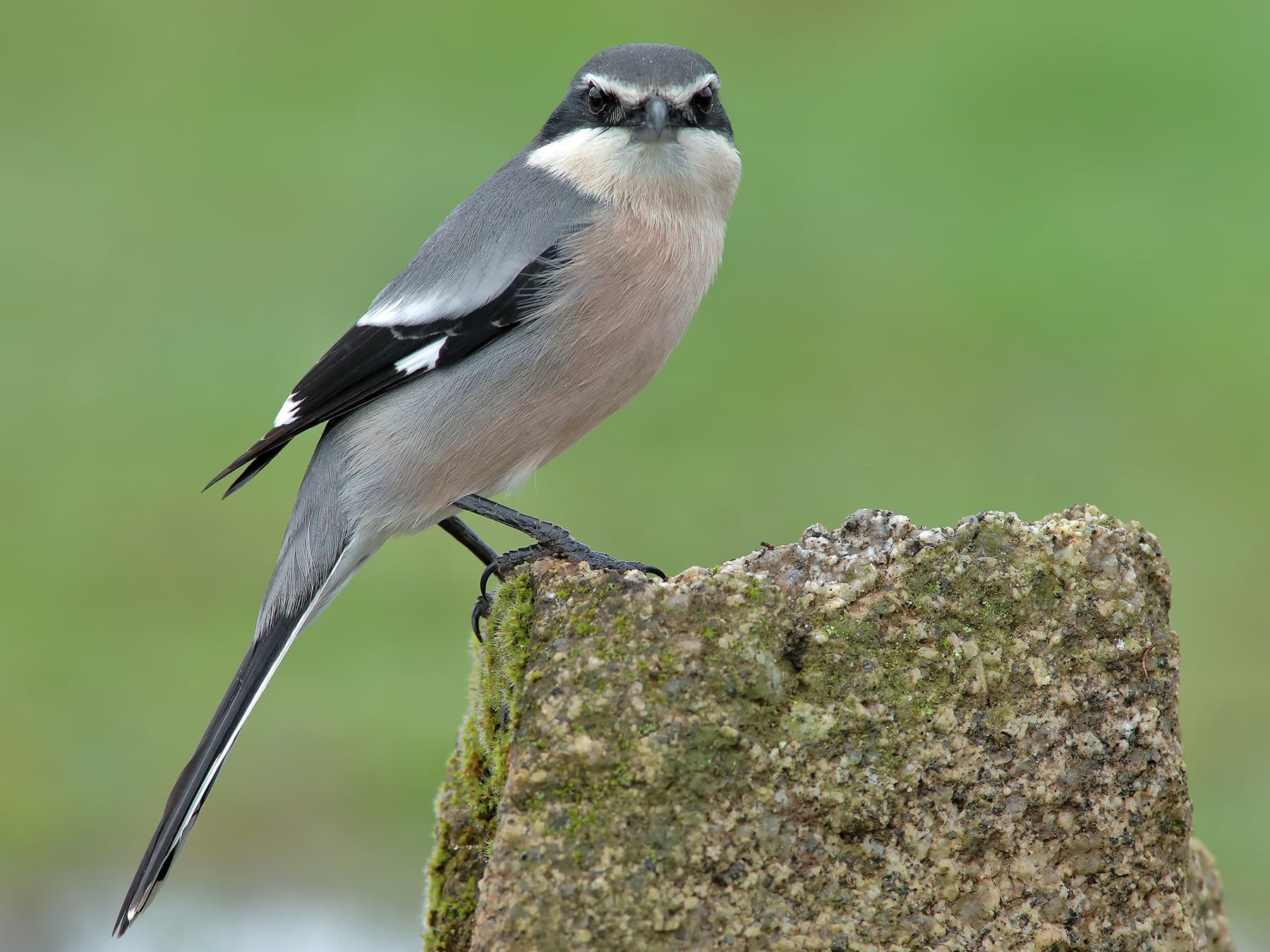
The light grey, black and white plumage of a male great grey shrike is distinctive and not easily confused with other similar-sized songbird species.
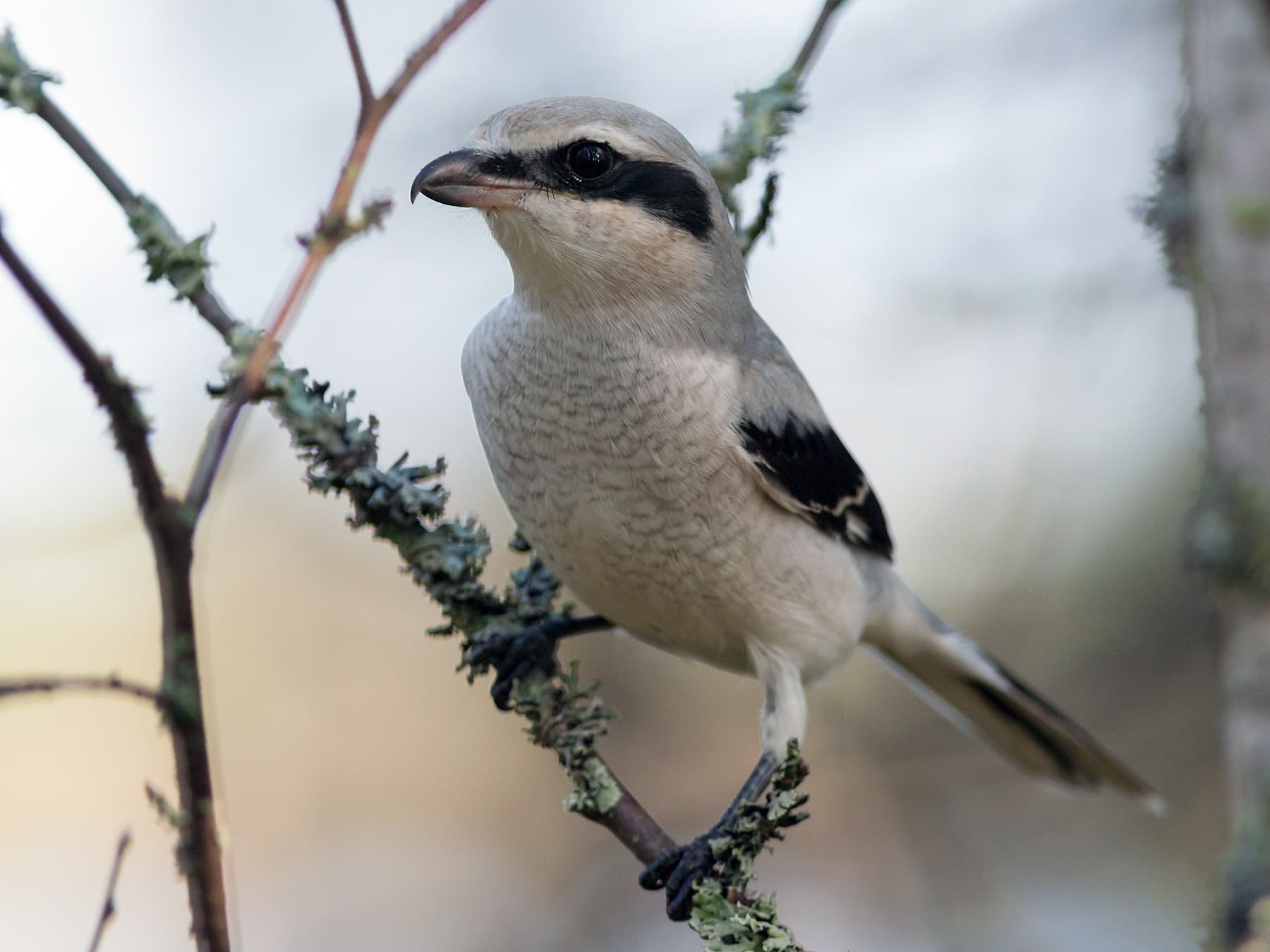
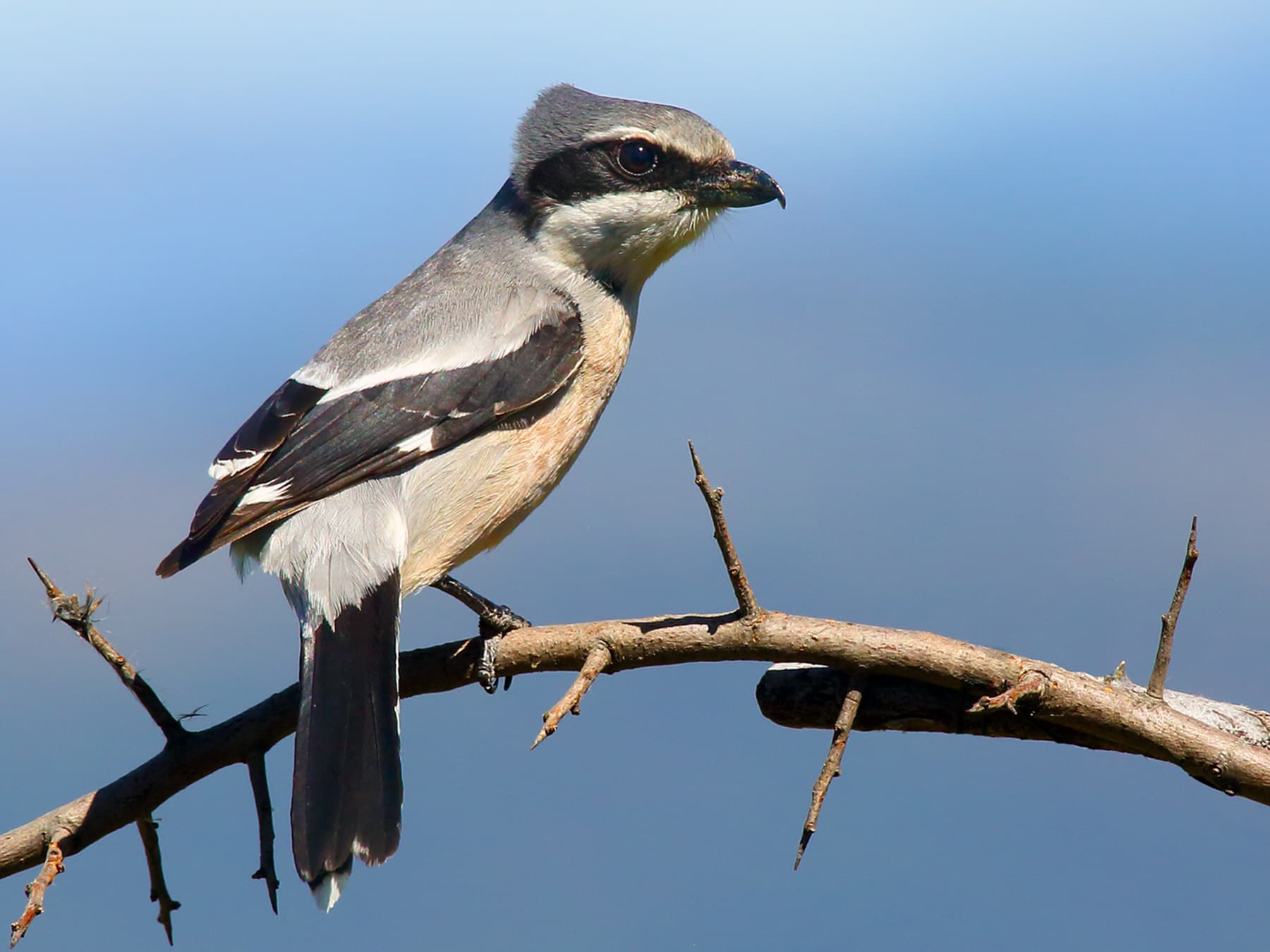
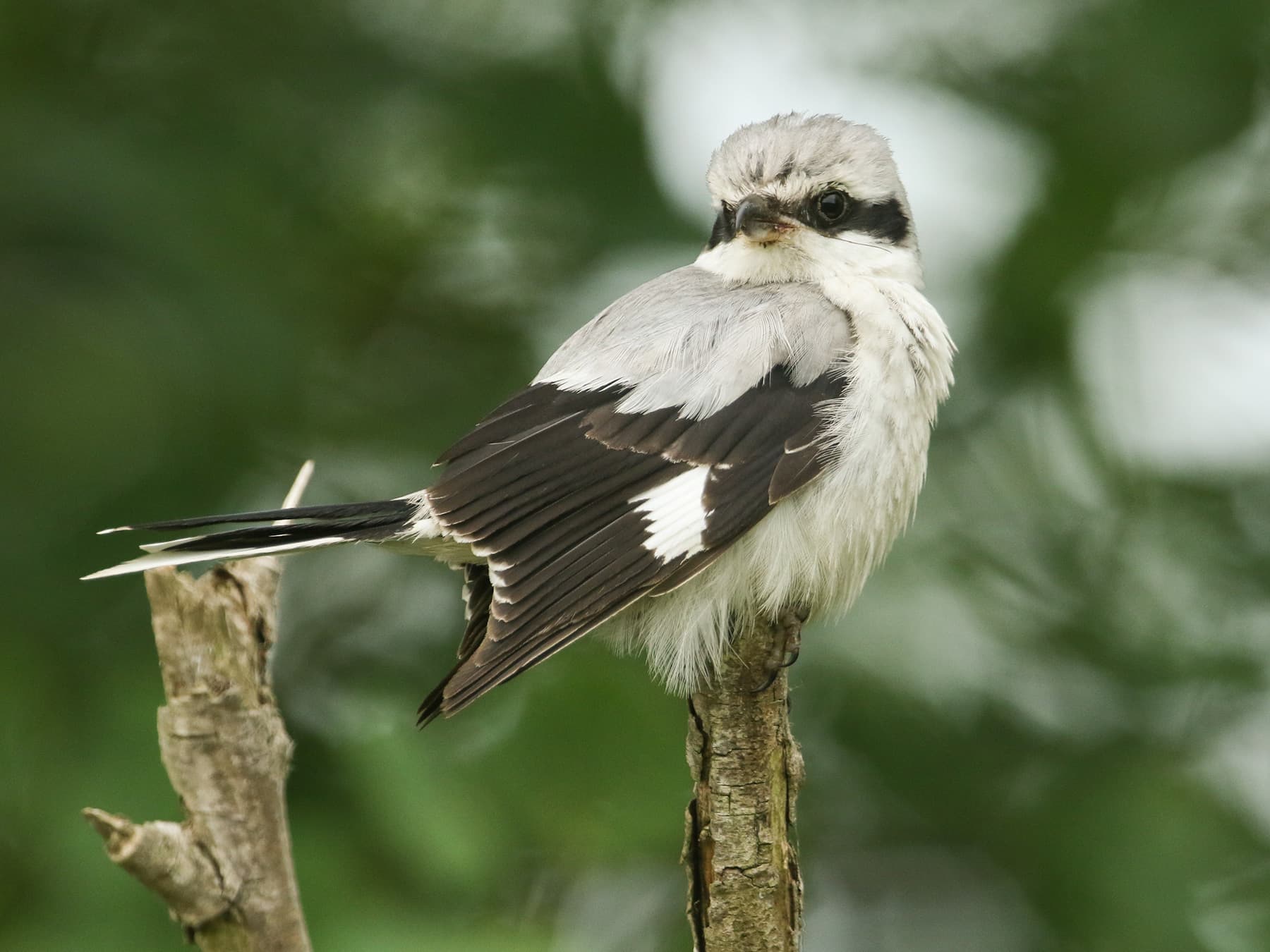
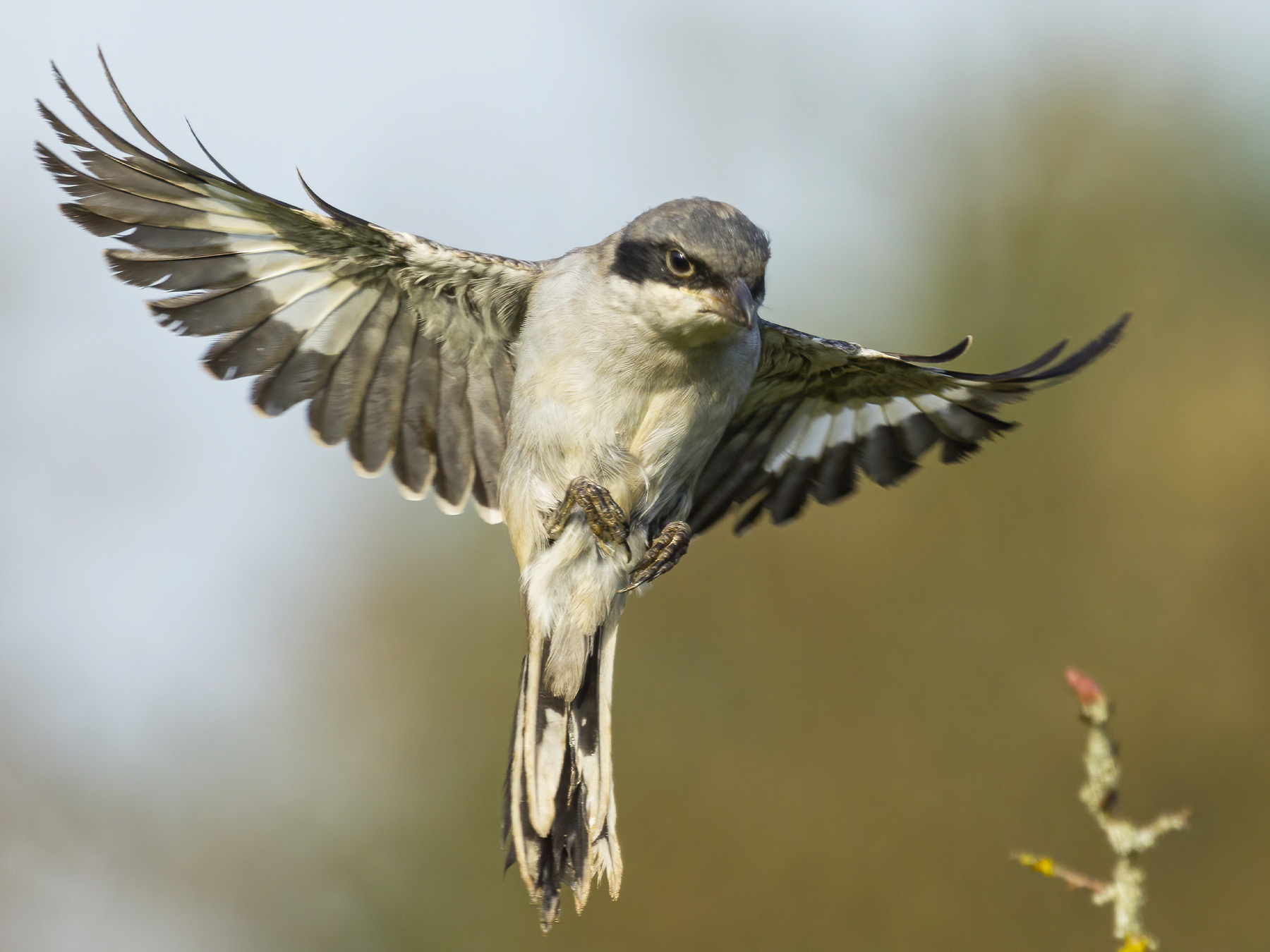
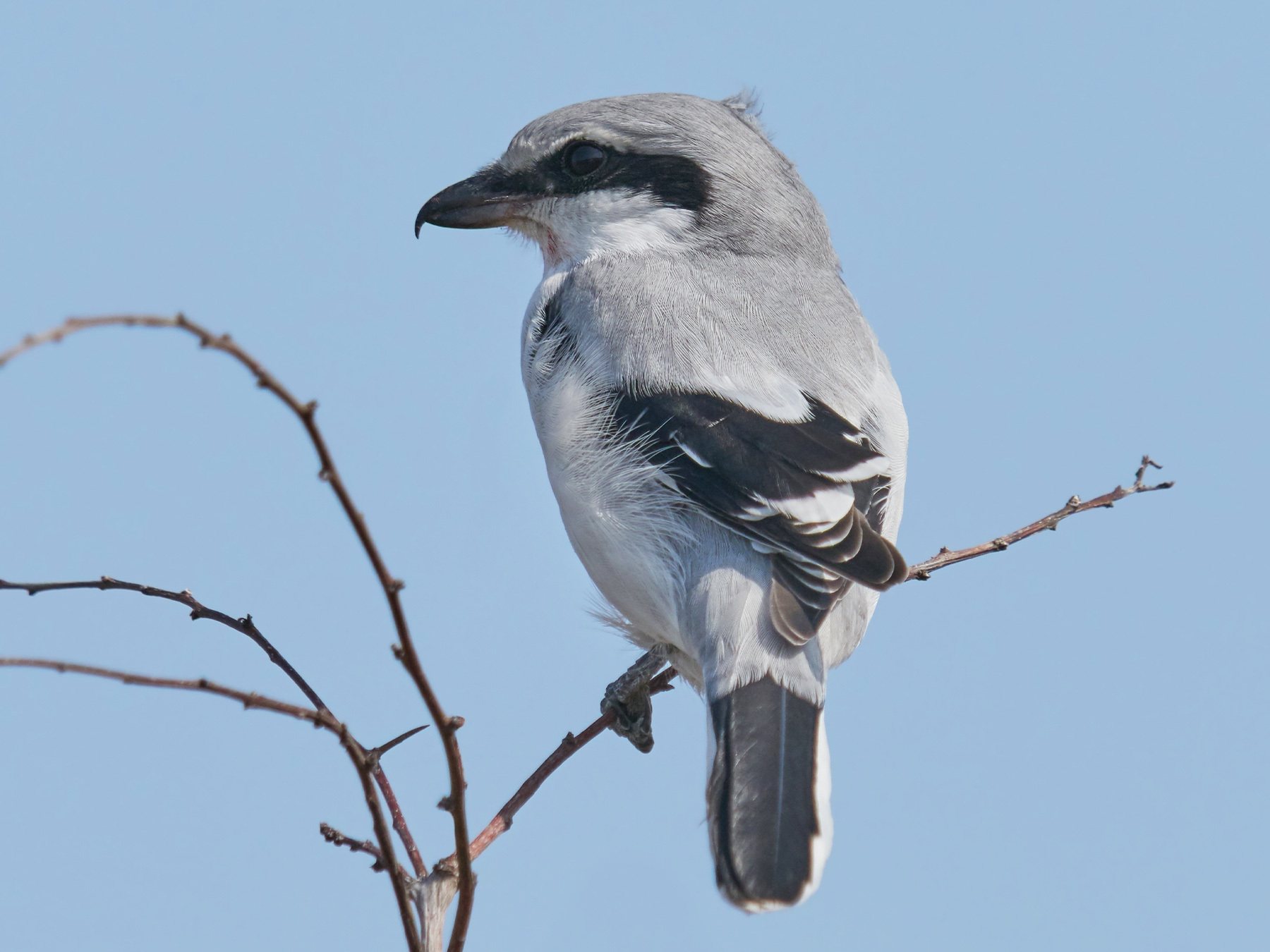
The great grey shrike has pearl grey upper parts, from the crown through the nape and upper back and rump. Their cheeks, chin, and a narrow eyebrow stripe are white, and their throat, breast, belly and underparts are also white.
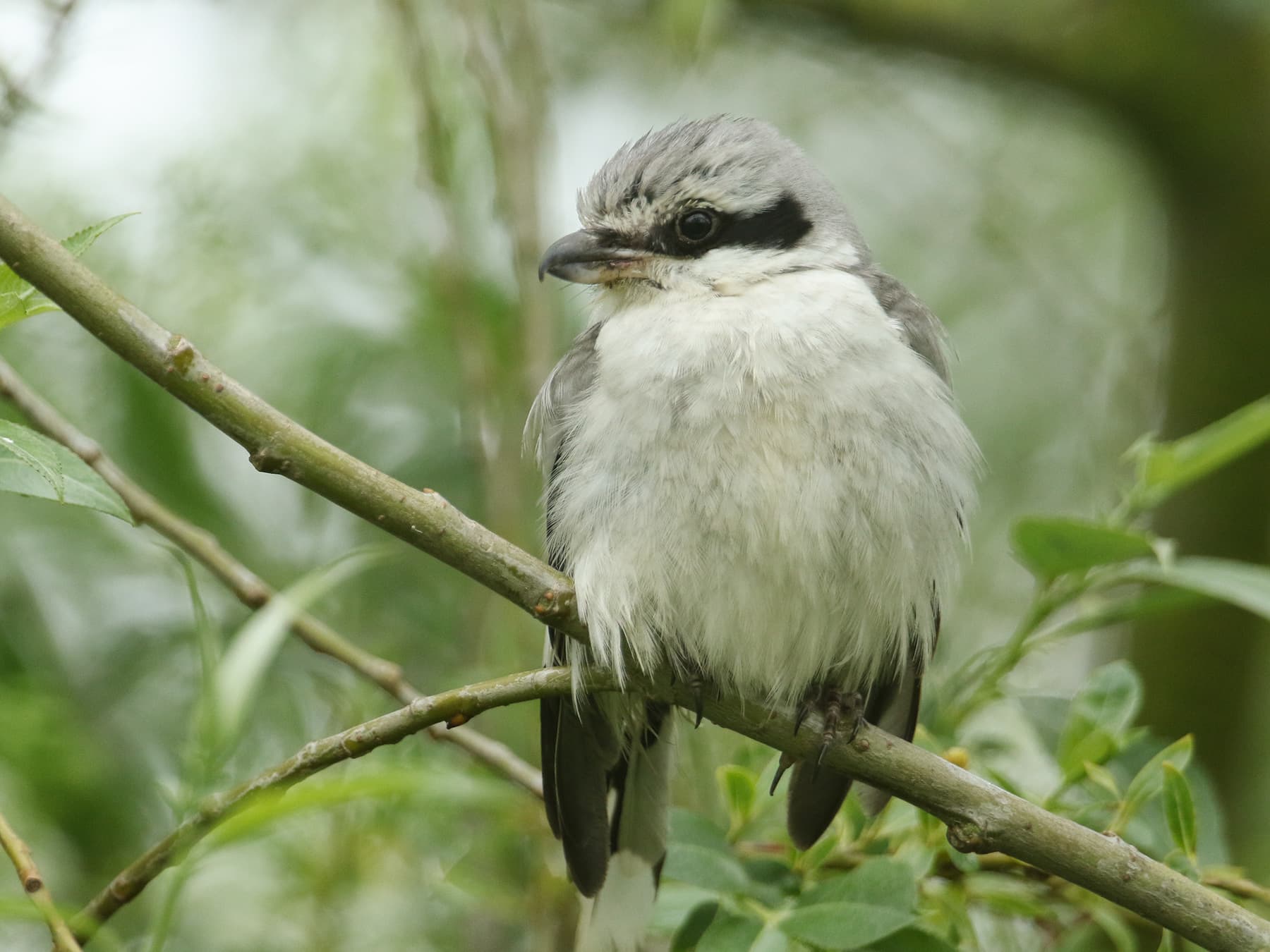
An identifying facial feature is the black mask that extends from their beak past their eyes to their ear coverts. Another important feature is the strong hooked black bill, crossed at the tip of the upper and lower mandible.
Great grey shrikes have black wings, marked with small white tufts, and their tails and rump are also black. Their legs and feet are black.
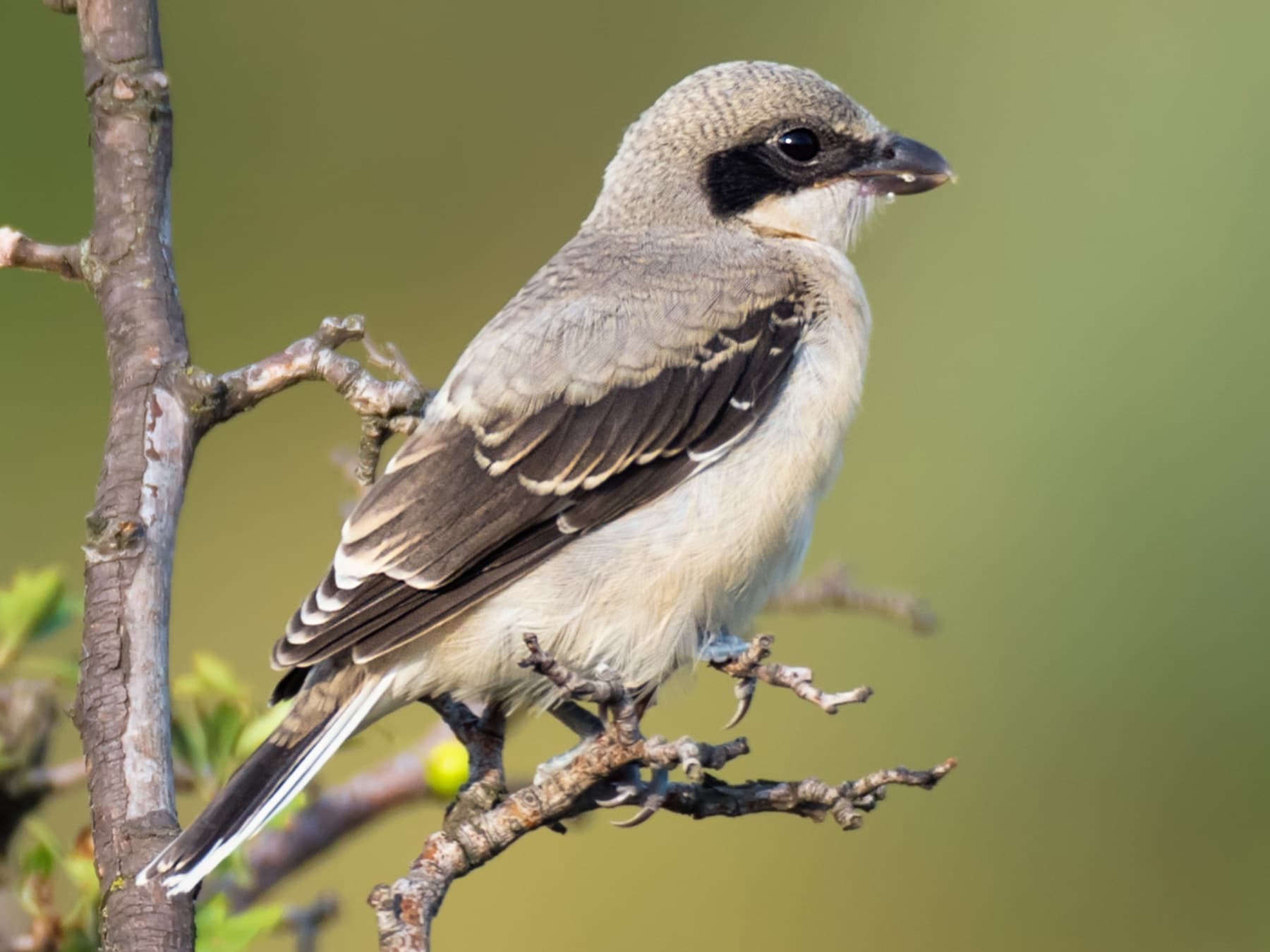
Female great grey shrikes have the same markings as males, and from a distance may be indistinguishable, but on closer inspection, females have a slightly brownish wash.
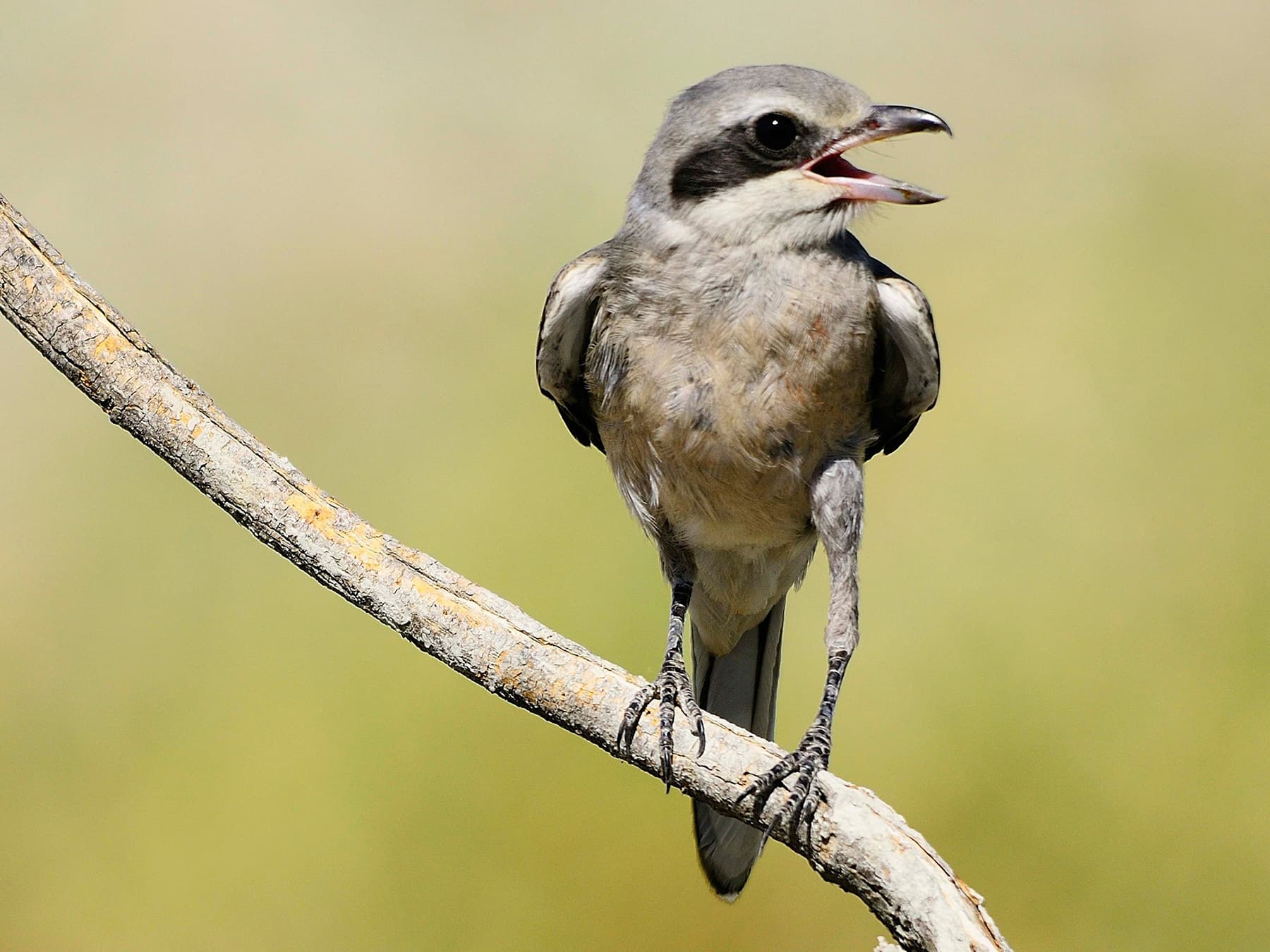
Young great grey shrikes resemble females, but are more of a uniform grey-brown all over, with a brown eye mask and faint dark brown barring on the nape and upper parts until they achieve their full mature plumage in the first spring after hatching.
How big are Great Grey Shrikes?
Great grey shrikes are the largest member of the shrike family native to Europe. Males have slightly longer wings and tails than females, but there’s no difference between the sexes in weight.
- Length: 22 cm to 26 cm (8.7 in to 10.2 in)
- Wingspan: 30 cm to 36 cm (11.8 in to 14.2 in)
- Weight: 48 g to 81 g (1.7 oz to 2.9 oz)
Its size
Adults- Length
- 22–26 cm
- Wingspan
- 30–36 cm
- Weight
- 60–70 g
Its song and calls
What sound does a Great Grey Shrike make?
Male and female great grey shrikes can be heard singing all year round, with a repertoire of calls for different purposes (alarm calls, courtship calls, contact calls, and calls to attract prey) as well as different levels of threat.
On detection of smaller intruders, they use warbling phrases and whistles as warning calls. To warn of larger intruders, great grey shrikes make a piercing shrill, punctuated with raspy whistles. When birds of prey are nearby, great grey shrikes can be heard making a loud, sharp warning whistle.
- Song0:00 / 0:37
Recorded in Jura, Switzerland · November 2025
- Call0:00 / 0:32
Recorded in Bern, Switzerland · October 2020
When and where to see it
OctoberIn season
Most recorded in October
- 1. Stirlingunder 0.1%
- 2. Orkney Islandsunder 0.1%
- 3. Shetland Islandsunder 0.1%
- 4. East Riding of Yorkshireunder 0.1%
- 5. Suffolkunder 0.1%
Each dot is a county, state or province: the bigger and darker, the larger the bird’s share of that place’s bird records that month. Grey dots: no regular records. The ringed point is the centre of the bird’s records this month; the arrow shows how it moved since last month, and the dashed loop its path through the year. “Arrivals” colours places where it becomes regular this month (orange) or is in its last regular month (grey). GBIF eBird Observation Dataset, 2019–2024. Map data: Natural Earth, US Census Bureau; place centres © OpenStreetMap contributors.
In your area
See when the Great Grey Shrike is recorded in your county, state or province.
How often the Great Grey Shrike turns up in the UK through the year, from birdwatchers' records.
United Kingdom
Winter visitor · regularly Sep–Apr · most records in March
Show as a table
| Month | United Kingdom |
|---|---|
| January | 0.008% (regular) |
| February | 0.008% (regular) |
| March | 0.013% (regular) |
| April | 0.002% (regular) |
| May | <0.001% |
| June | <0.001% |
| July | <0.001% |
| August | <0.001% |
| September | 0.002% (regular) |
| October | 0.009% (regular) |
| November | 0.009% (regular) |
| December | 0.004% (regular) |
Recorded regularly in
Worldwide: recorded regularly in 69 countries
Countries where it was recorded in at least 3 of the 6 years 2019–2024. Linked countries have their own bird list.
Europe (35)
Asia (22)
- Azerbaijan
- Bahrain
- China
- Georgia
- India
- Iran
- Iraq
- Israel
- Jordan
- Kazakhstan
- Kuwait
- Kyrgyzstan
- Mongolia
- Oman
- Pakistan
- Palestinian Territories
- Qatar
- Saudi Arabia
- Tajikistan
- Turkey
- United Arab Emirates
- Uzbekistan
Data: EOD – eBird Observation Dataset (Cornell Lab of Ornithology), accessed via GBIF.org, CC BY 4.0. Records from 2019–2024, aggregated and filtered by Birdfact. How these lists are made
What is the habitat of a Great Grey Shrike?
Great grey shrikes breed in areas of open plains, interspersed with high trees that offer good vantage points for potential prey in the surrounding fields. Isolated trees or low-density plantations, in the middle of open country, with little or no ground-level vegetation are common choices.
During winter, heathlands, forest clearings, farmland, and scrub offer good foraging grounds, and thorny bushes are also vital, serving as ‘larder spikes’ for storing prey.
What is the range of a Great Grey Shrike?
The breeding range of great grey shrikes extends from northern Norway in the west, across northern Sweden and Finland, and across Russia to the Urals in the east.
These populations move to wintering grounds in Britain, southern Scandinavia, western and southern France eastwards across southern Europe to Turkey.
Across central Europe, from France through Germany and Poland, the Baltic states, and into Belarus, Ukraine, and south-eastern Russia, populations of great grey shrikes are non-migratory, remaining in their breeding territories all year round.
In North Africa, populations of great grey shrikes are generally sedentary, with their range extending from the Mediterranean coast of Algeria, through Morocco and Mauritania, eastwards across Mali to Chad and Sudan.
In the Middle East, the species is found in Yemen and Saudi Arabia and spreads eastwards through Iran and Pakistan into India.
Where do Great Grey Shrikes live?
Up to 330,000 great grey shrikes breed in northern Europe, in Norway, Sweden, Finland, and Russia.
A further 13,000 pairs breed in central and eastern Europe with another 3,400 pairs in France. In the Middle East, one particular stronghold is the island of Socotra in Yemen, where there are up to 26,000 resident individuals.
How rare are Great Grey Shrikes?
There are no available figures for the global population of great grey shrikes, although the numbers in Russia and northern Fennoscandia are estimated to be upwards of 330,000 breeding pairs.
In the UK, great grey shrikes are regular winter visitors but are considered scarce and relatively hard to track down, with under 100 individuals spending the entire winter in Britain, and 125 more spotted in migration passage.
Where can you see Great Grey Shrikes in the UK?
Great grey shrikes are regular but uncommon winter visitors to the UK, with sightings reported each autumn from September onwards as migratory birds that have bred in Russia and Scandinavia move southwards in search of food sources to see them through the winter.
Arrivals begin on the east coast but spread further inland and along the southern coast.
Migration
Do Great Grey Shrikes migrate?
Great grey shrikes are partial migrants, with populations breeding in the far north of Europe and Russia leaving for warmer southern regions each autumn.
Across a strip of central Europe, great grey shrikes are permanent residents, breeding and wintering in the same territories, while to the south, they arrive in autumn and depart for the north again the following spring.
Populations of great grey shrikes in North Africa are resident all year round, with further non-migratory populations in South Asia and in the Middle East.
Are Great Grey Shrikes native to the UK?
Great grey shrikes are rare winter visitors to the UK, with less than 100 arriving each autumn and departing for Scandinavian breeding grounds by April. Individual birds may also be seen in migration passage but no great grey shrikes are resident all year round.
Tips for seeing it
- Look for them perched on exposed branches or poles in open areas
- Listen for their harsh, chattering calls
- Observe their hunting behaviour, including impaling prey on thorns
- In the UK, watch for them in winter months in heathland and farmland areas
What it eats
What do Great Grey Shrikes eat?
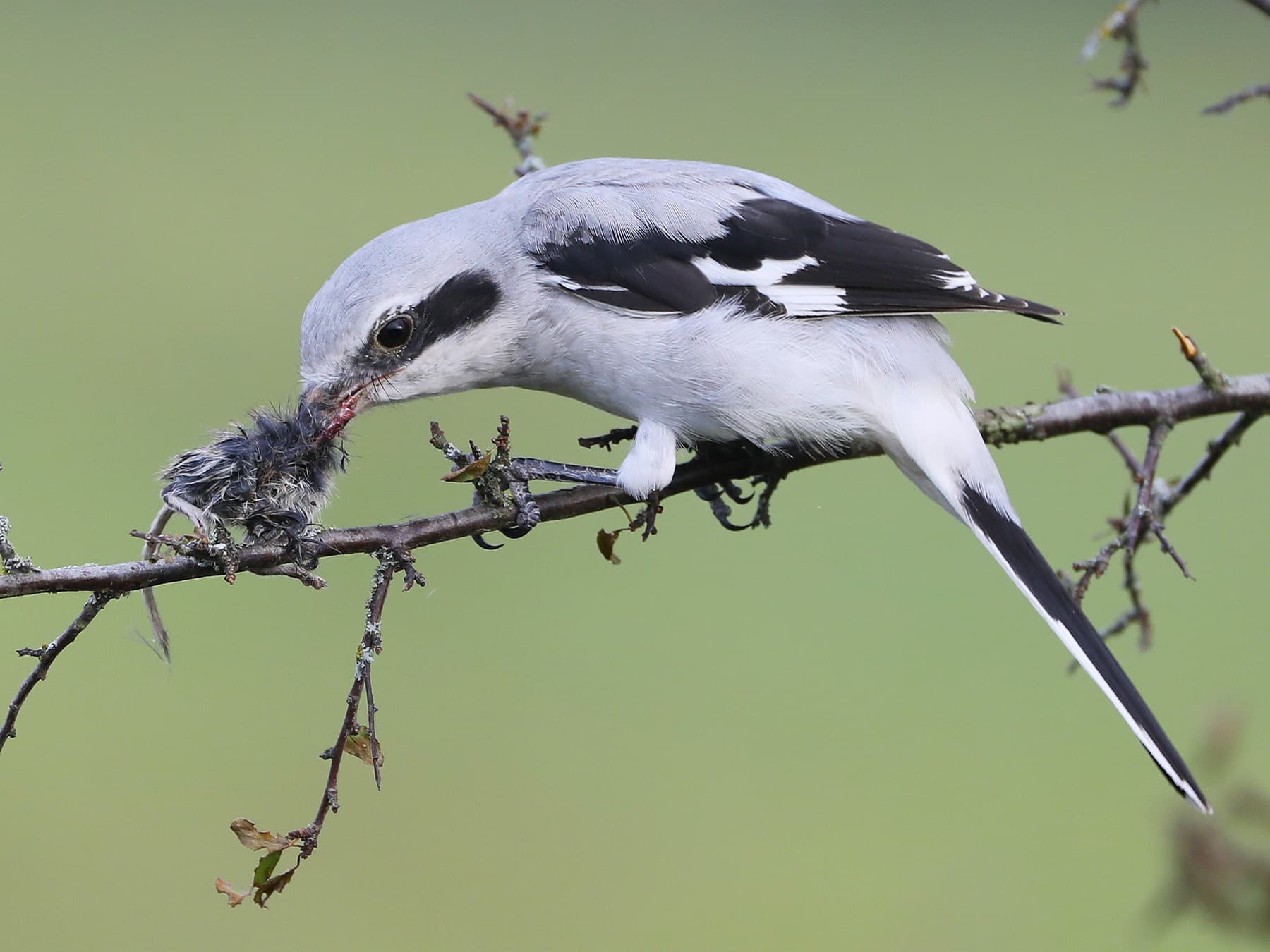
Great grey shrikes are opportunistic hunters, with mammals, birds, reptiles, amphibians, insects, and other large invertebrates forming their diet. Voles make up the largest element of their diet, with shrews, lizards, and small birds also important.
Potential prey is observed from lookout posts, such as high branches, telegraph wires, and fences before the ambush plunge is made to seize the prey. Frequently, prey items are carried in the great grey shrike’s bill or feet to a ‘larder’ where it is impaled on a thorny spike and revisited a short while later.
They are also skilled at removing the outer skin or feathers of a reptile or bird, meaning they are able to eat a wider range of prey than many other species, by removing any toxic or poisonous spines or spikes. Pellets containing undigested parts, such as bones and hair, are later ejected.
What do Great Grey Shrike chicks eat?
While in the nest, great grey shrike chicks are fed by parents on ripped-up prey items that are usually stored in a ‘larder’ on a nearby thorn. Prey, usually small rodents, is ripped into manageable chunks and placed in the bills of the nestlings.
Nesting and breeding
Where do Great Grey Shrikes nest?
Nests are usually built in forked branches in pine or poplar trees, up to 16 m (50 ft) high. Occasionally lower level nest locations may also be chosen, in dense thorny shrubbery only around 20 cm off the ground.
Pairs build compact nest structures together, with most of the nesting material gathered by the male. A platform of twigs, roots, grasses, moss, string, and even scraps of fabric is used as a base, with an inner cup lined with grass, rootlets, lichens, fur and feathers.
When do Great Grey Shrikes nest?
May is the peak laying month for great grey shrikes, with second broods (if attempted) usually complete by August. Incubation lasts for 16 to 21 days, and nestlings are ready to fledge after 2 to 3 weeks.
What do Great Grey Shrike eggs look like?
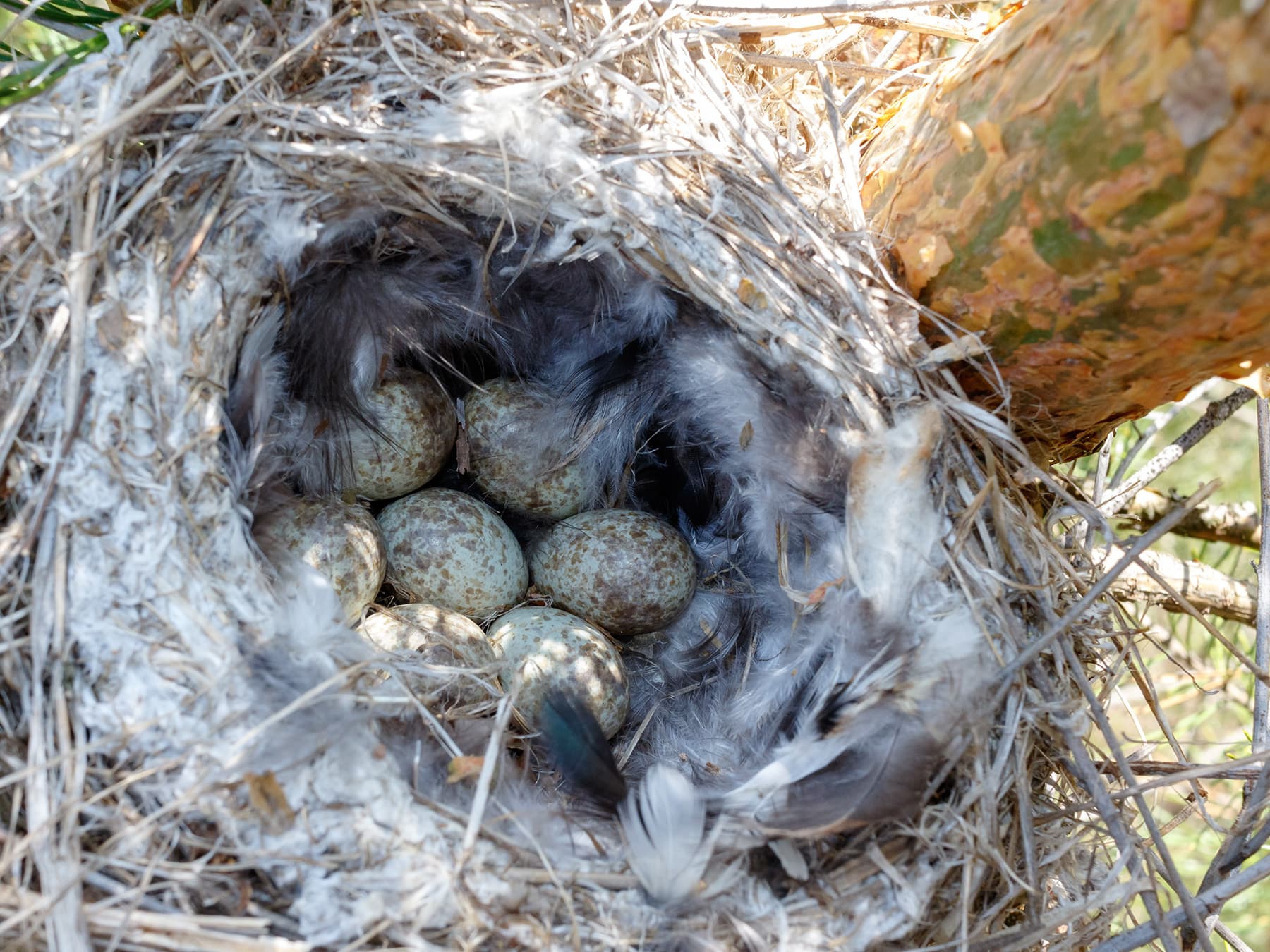
Eggs laid by great grey shrikes are blue or grey, heavily marked with yellow, reddish-brown, or purple-grey blotches. A typical clutch contains 3 to 9 eggs, which measure 26 mm by 20 mm (1 in by 0.8 in).
Incubation lasts for between 16 and 21 days and is completed by the female alone, who is brought food to the nest by her mate.
Do Great Grey Shrikes mate for life?
Great grey shrikes form strong pair bonds at the outset of the breeding season, raising one or more broods together. When winter arrives, pairs disperse and new mates are usually chosen in subsequent years.
Behaviour
Are Great Grey Shrikes aggressive?
Great grey shrikes have a reputation as being bloodthirsty butchers, hunting for rodents with pinpoint accuracy and with no mercy shown to any prey either before or after capture.
Other bird species recognise them as potential predators and mobbing behaviour is commonly observed in an attempt to divert the threat and save themselves.
Great grey shrikes are fiercely territorial and in winter, it’s highly likely that any sightings will be of lone birds, as they tend to be solitary and do not readily associate with other birds. Aggressive body movements including head bobbing and rapid twisting and a shrill, sharp whistle are all signs associated with threat or distress.
Lifespan and predators
How long do Great Grey Shrikes live?
The average lifespan of a great grey shrike is around four years, although records show an individual bird documented to have reached the age of 12. Breeding occurs for the first time at one year of age.
What are the predators of Great Grey Shrikes?
Little owls are one of the chief predators of great grey shrikes, preying on both adult birds and fledglings. Birds of prey, including hawks and eagles are also common predators of juvenile great grey shrikes, while corvids and mink are known to raid nests and take eggs and hatchlings.
Are Great Grey Shrikes protected?
Great grey shrikes are listed under the Wildlife and Countryside Act, of 1981, and are protected against being knowingly killed, injured, or taken into captivity.
Are Great Grey Shrikes endangered?
Across their wider range, great grey shrikes are considered a species of least concern, while in certain parts of Europe, clear declines in numbers have been noted. Habitat loss caused by increased agricultural land use has contributed to significant population decreases in parts of Belgium and France since the 1990s.
Conservation
While listed as Least Concern globally, Great Grey Shrike populations are declining in parts of Europe due to habitat loss.
Conservation efforts focus on maintaining suitable open habitats with scattered trees and bushes, crucial for their hunting and nesting needs.
More photos
3 photos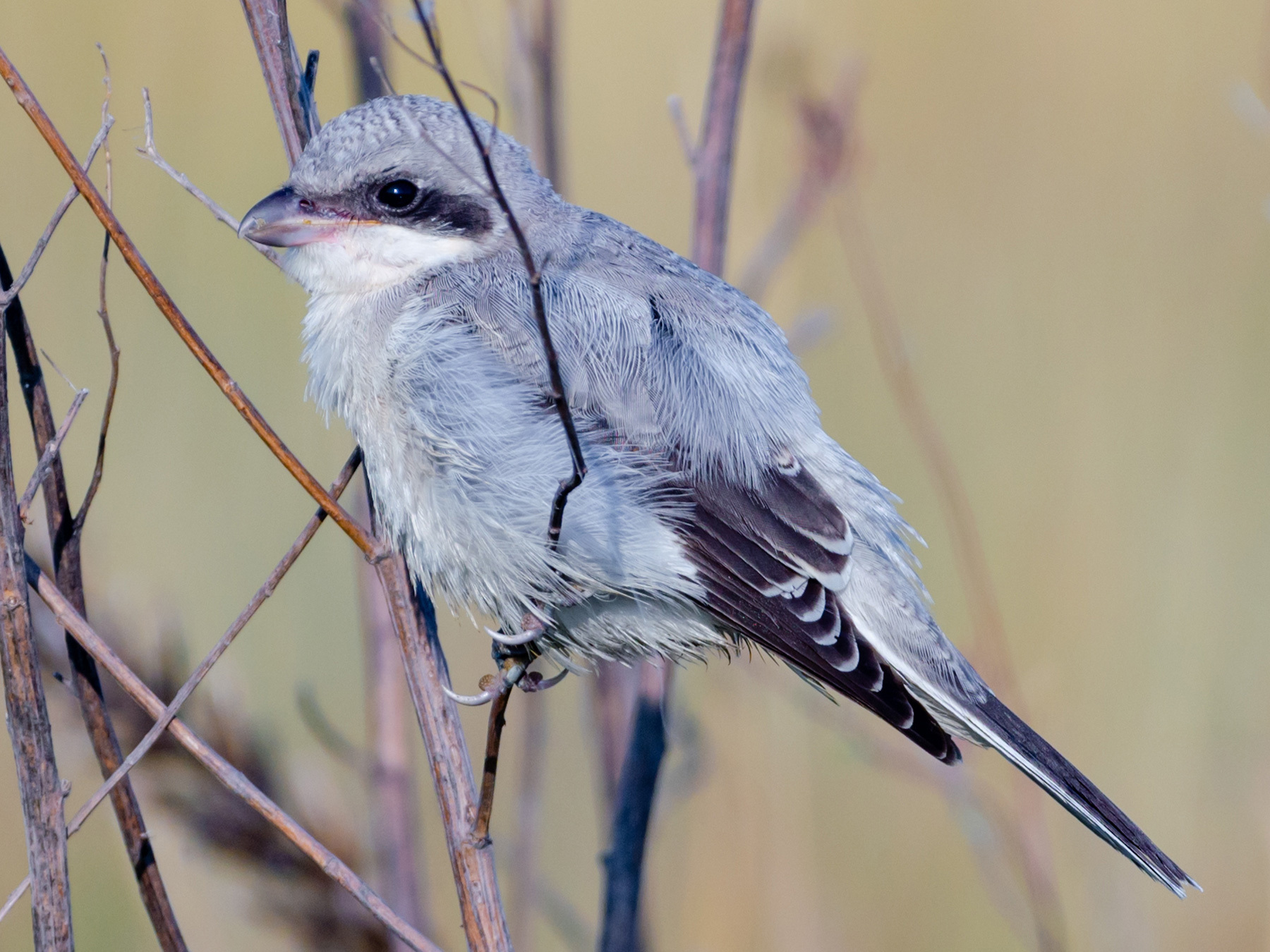
Quick facts
- Length
- 22–26 cm
- Wingspan
- 30–36 cm
- Weight
- 60–70 g
- Lifespan
- 3–5 years
- Family
- Shrikes
- Migration
- Partial migrant
- Global status (IUCN)
- Least Concern
- World population
- Unknown
- Population trend
- Decreasing
- Also called
- Butcher Bird
- Scientific name
- Lanius excubitor
Questions
1Is a great grey shrike a bird of prey?
Rather than being classed as a bird of prey, a great grey shrike can be termed a predatory songbird, using their precision hunting and butchering skills to capture and prepare prey before eating it.
Sources
2- 1BirdLife International. 2019. Lanius excubitor (amended version of 2017 assessment). The IUCN Red List of Threatened Species 2019: e.T103718932A155573860. Source (opens in a new tab)
- 2Yosef and International Shrike Working Group (2016)

Checked by
Nathan Cope, founder and editor
Nathan founded Birdfact and leads its writers and contributors in the UK, the US and Canada. He has watched and studied birds for more than ten years, and checks every article and species guide before it’s published.