
Great Curassow
Mexican Curassow · Crax rubra
By the Birdfact teamChecked by Nathan Cope
On this page10 sections
How to recognise it
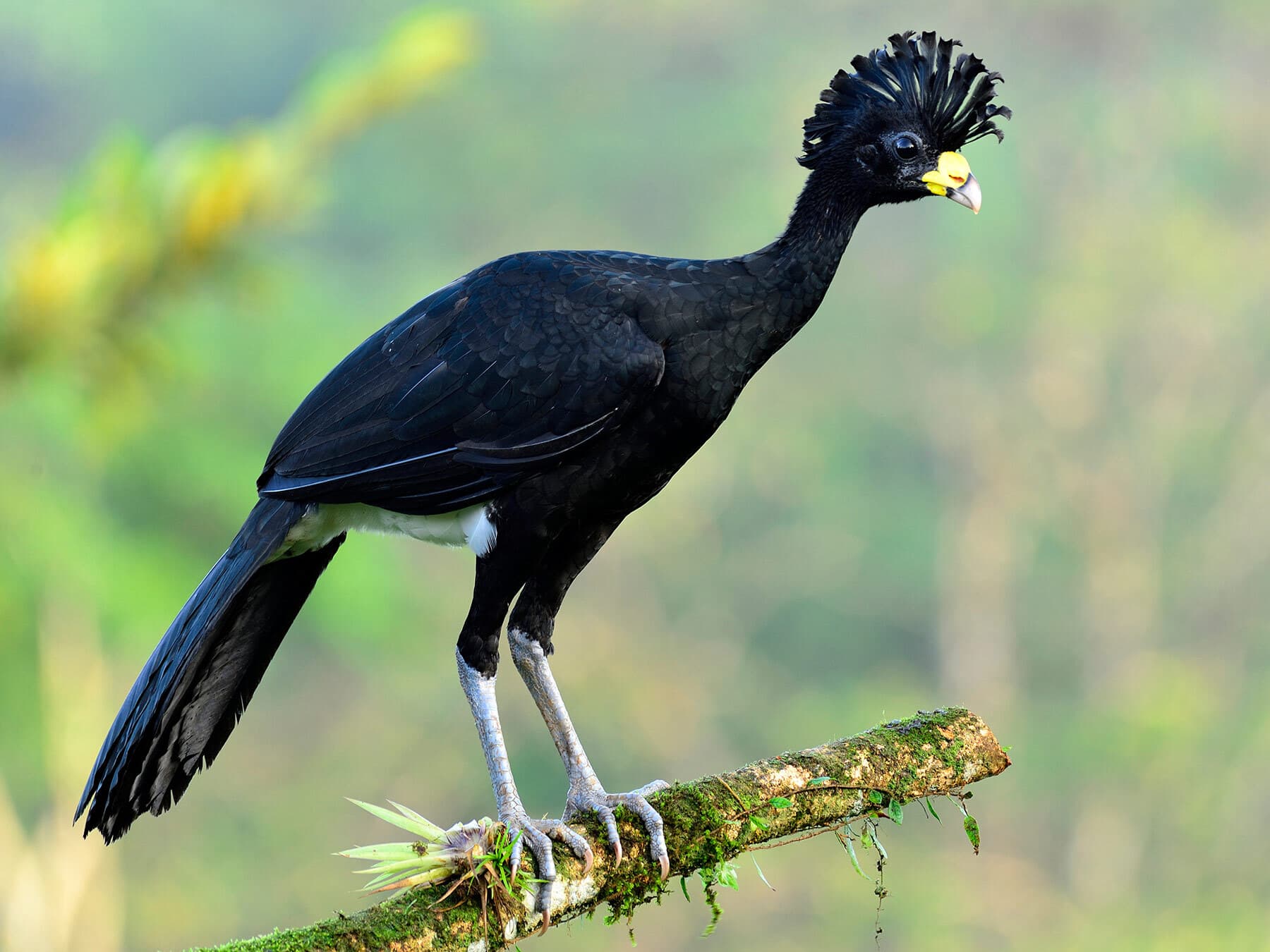
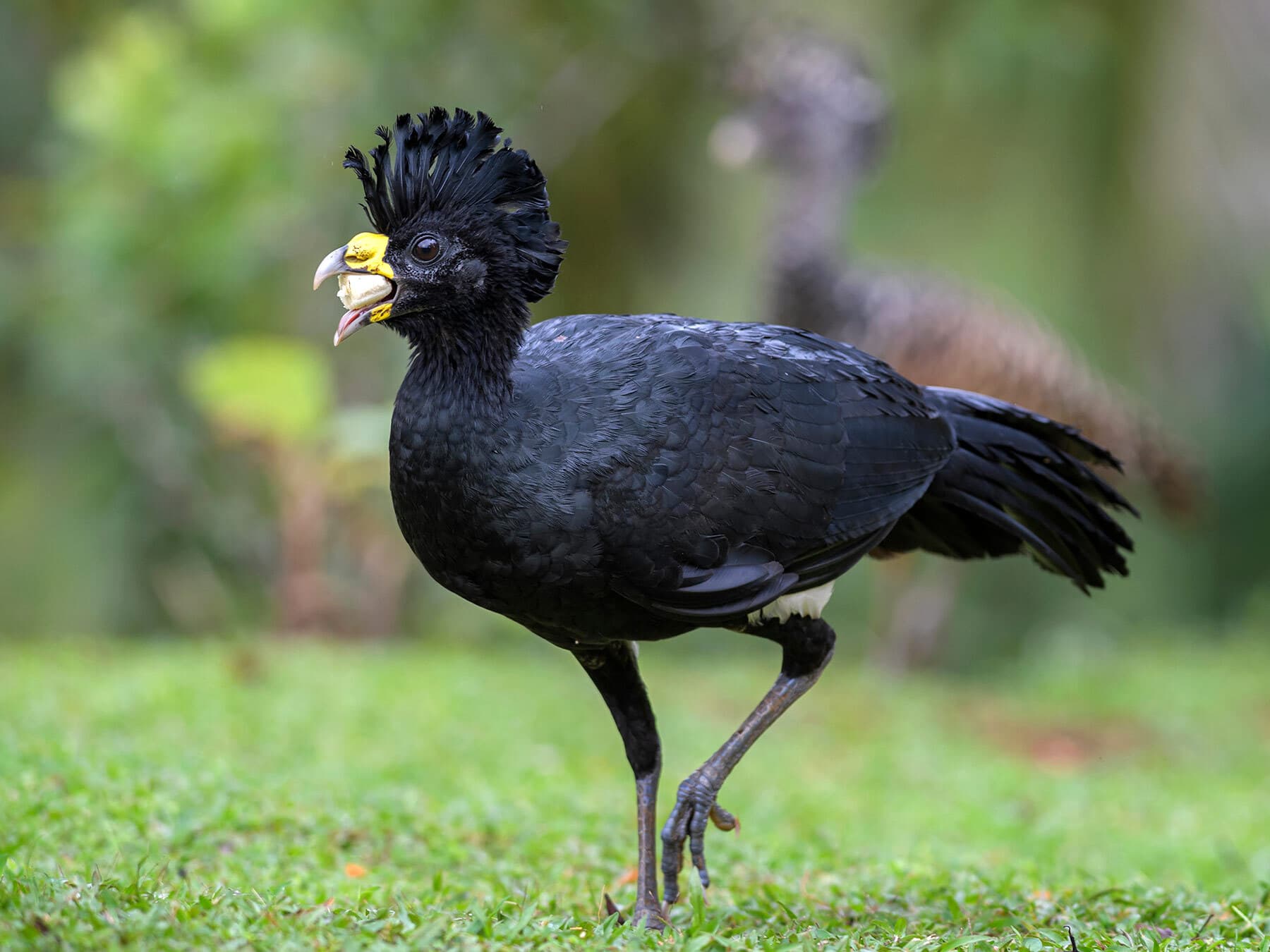
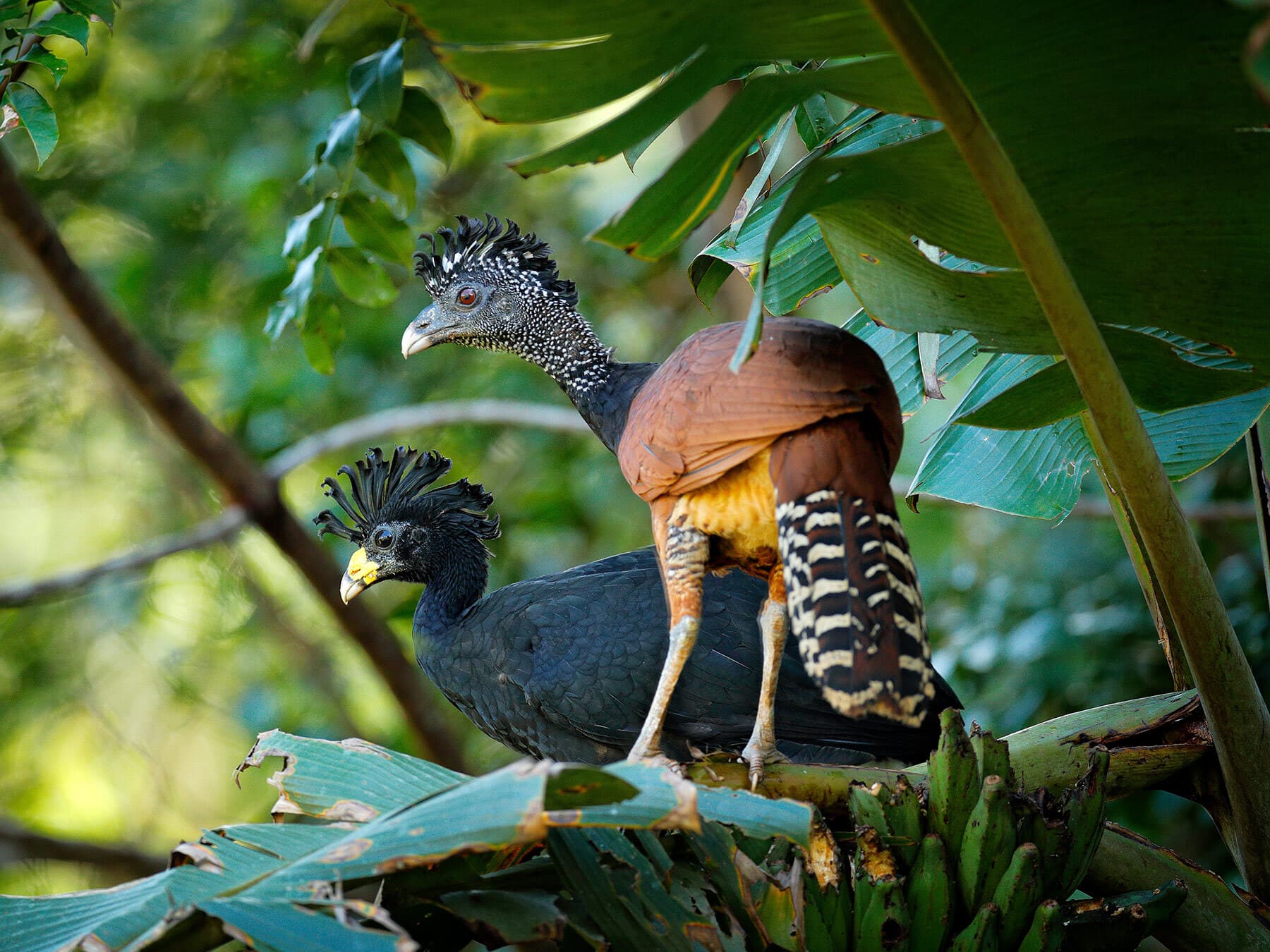
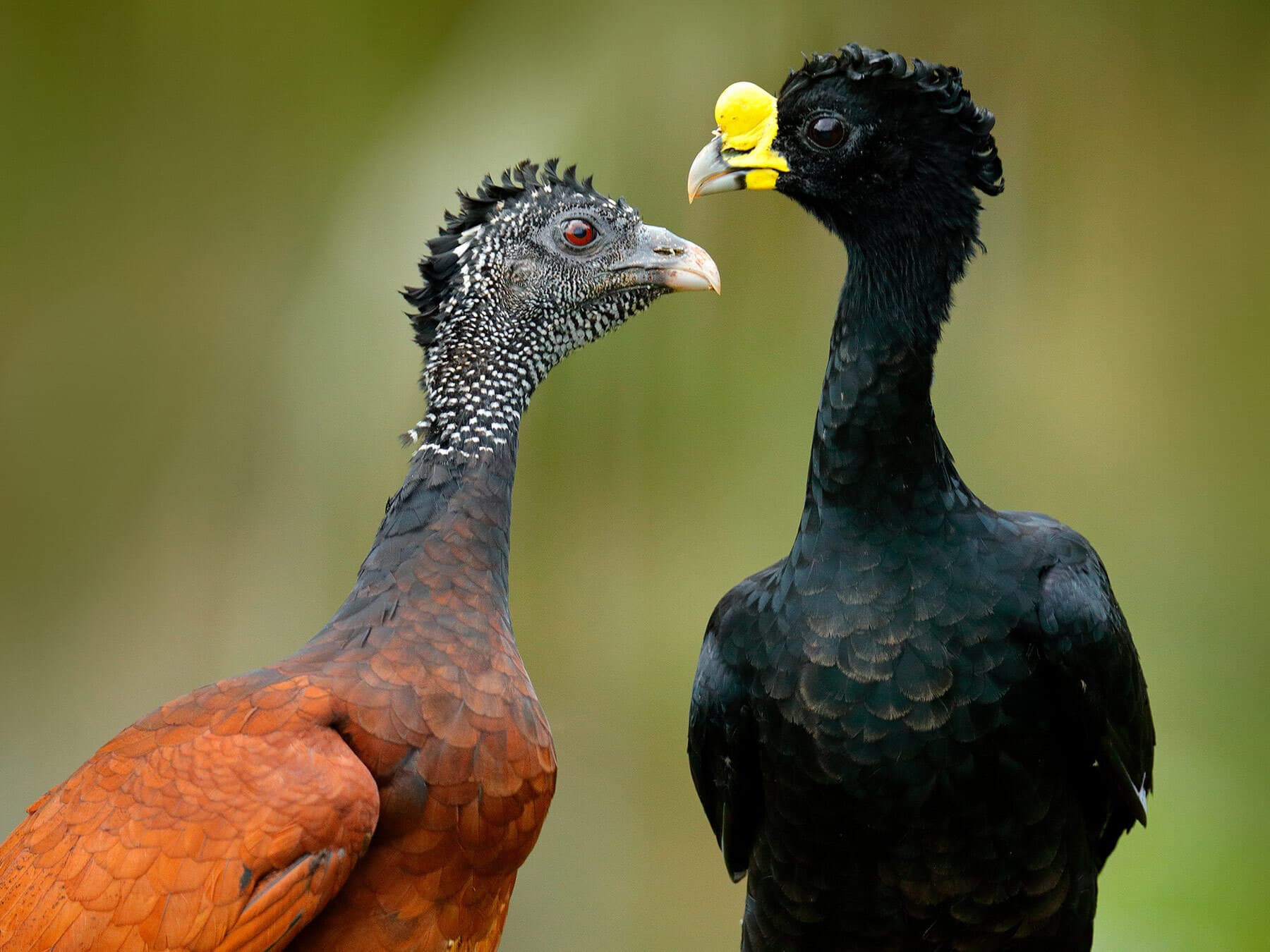
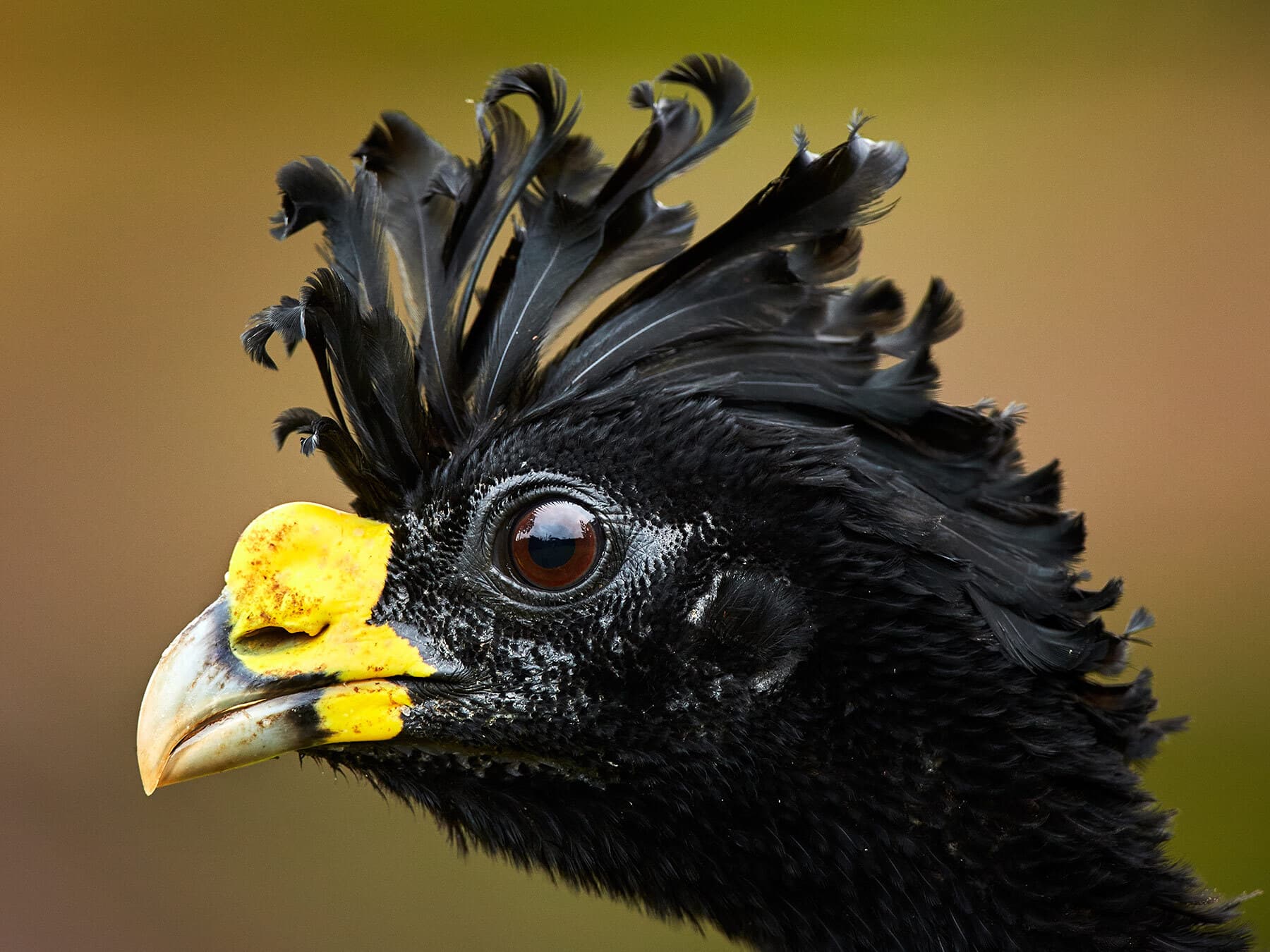
The Great Curassow is a large, ground-dwelling bird with striking sexual dimorphism. Males are predominantly black with a distinctive yellow knob on their bill and a curly crest of feathers on their head. They have a white belly and undertail coverts.
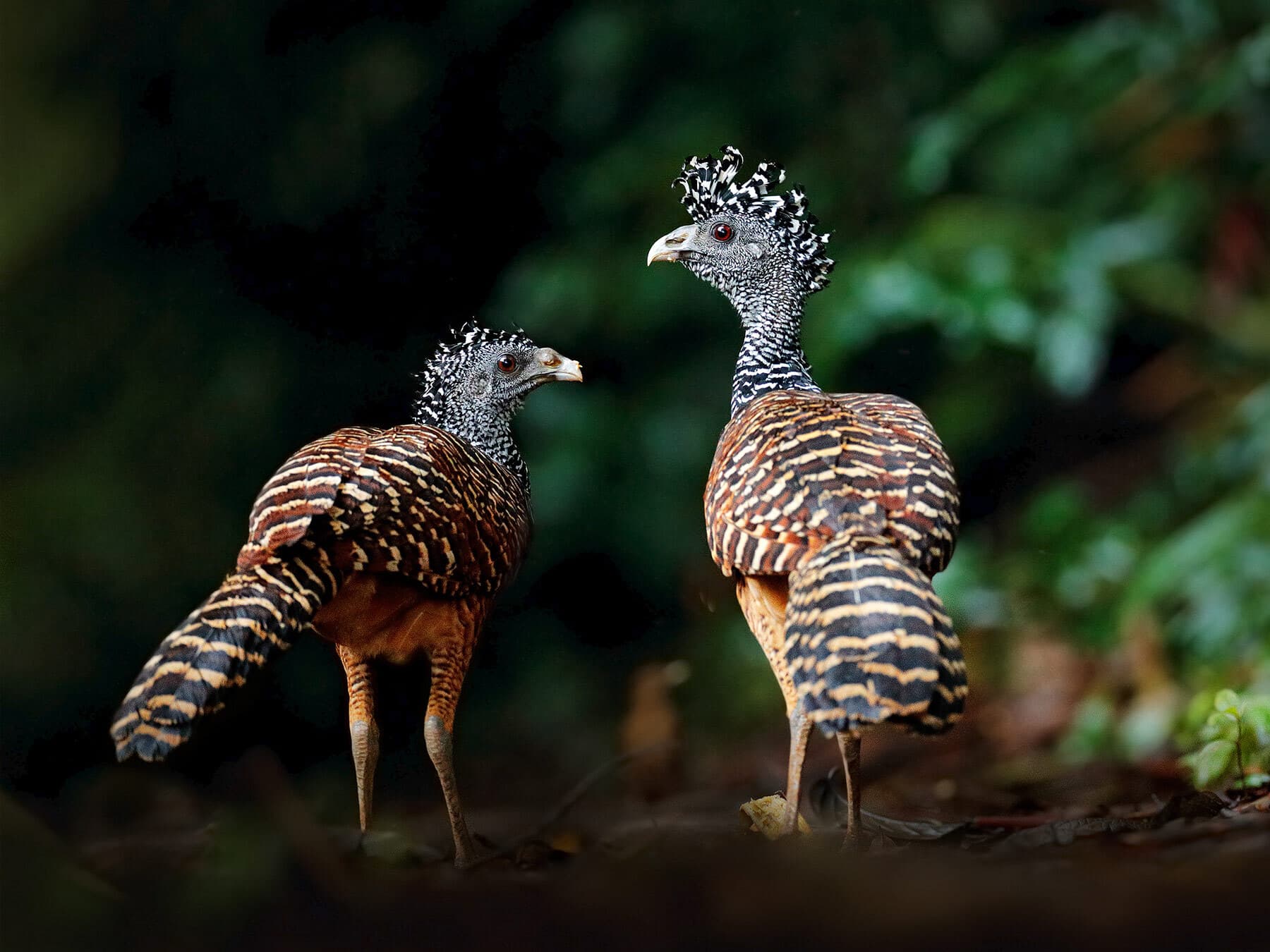
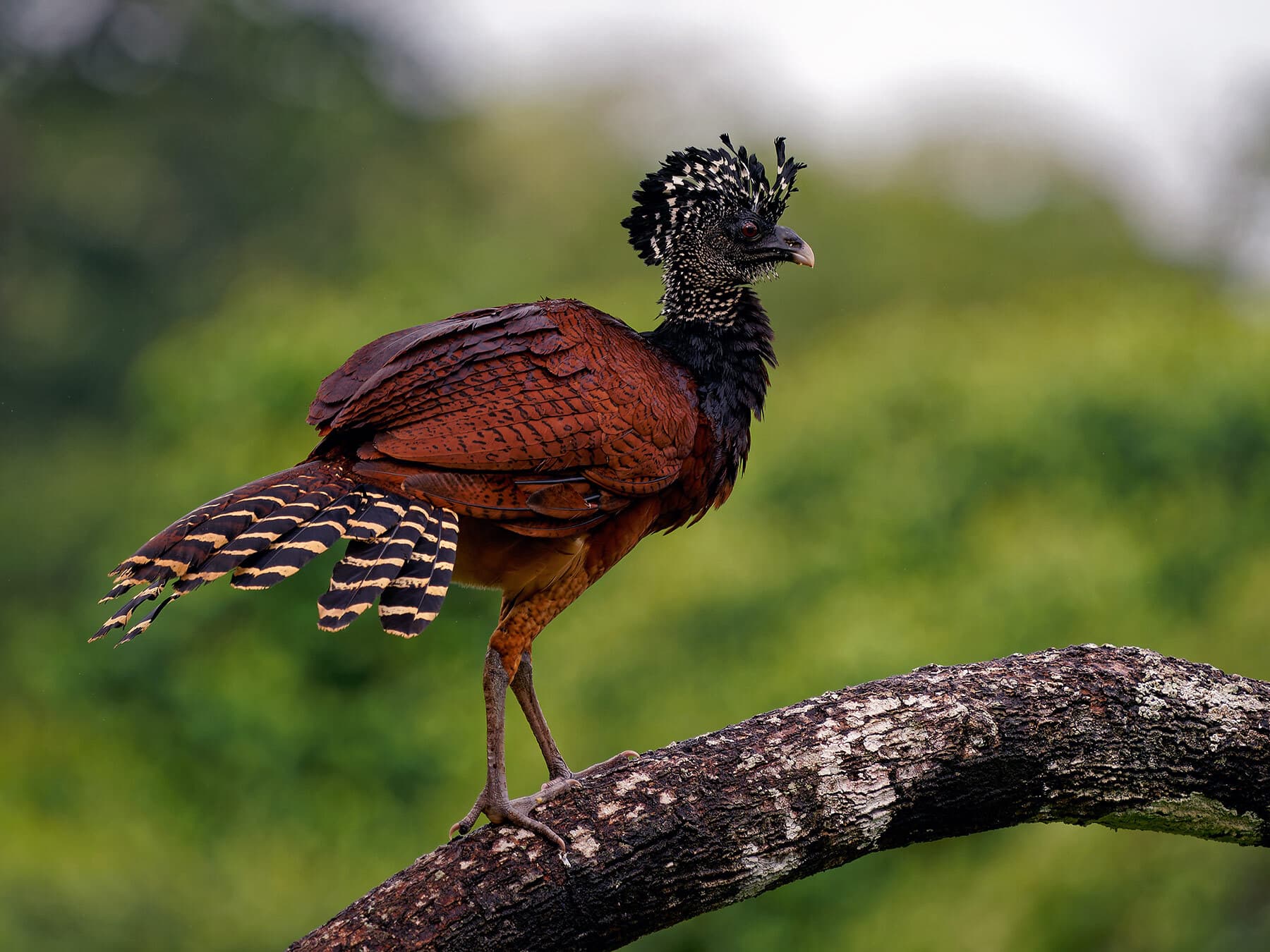
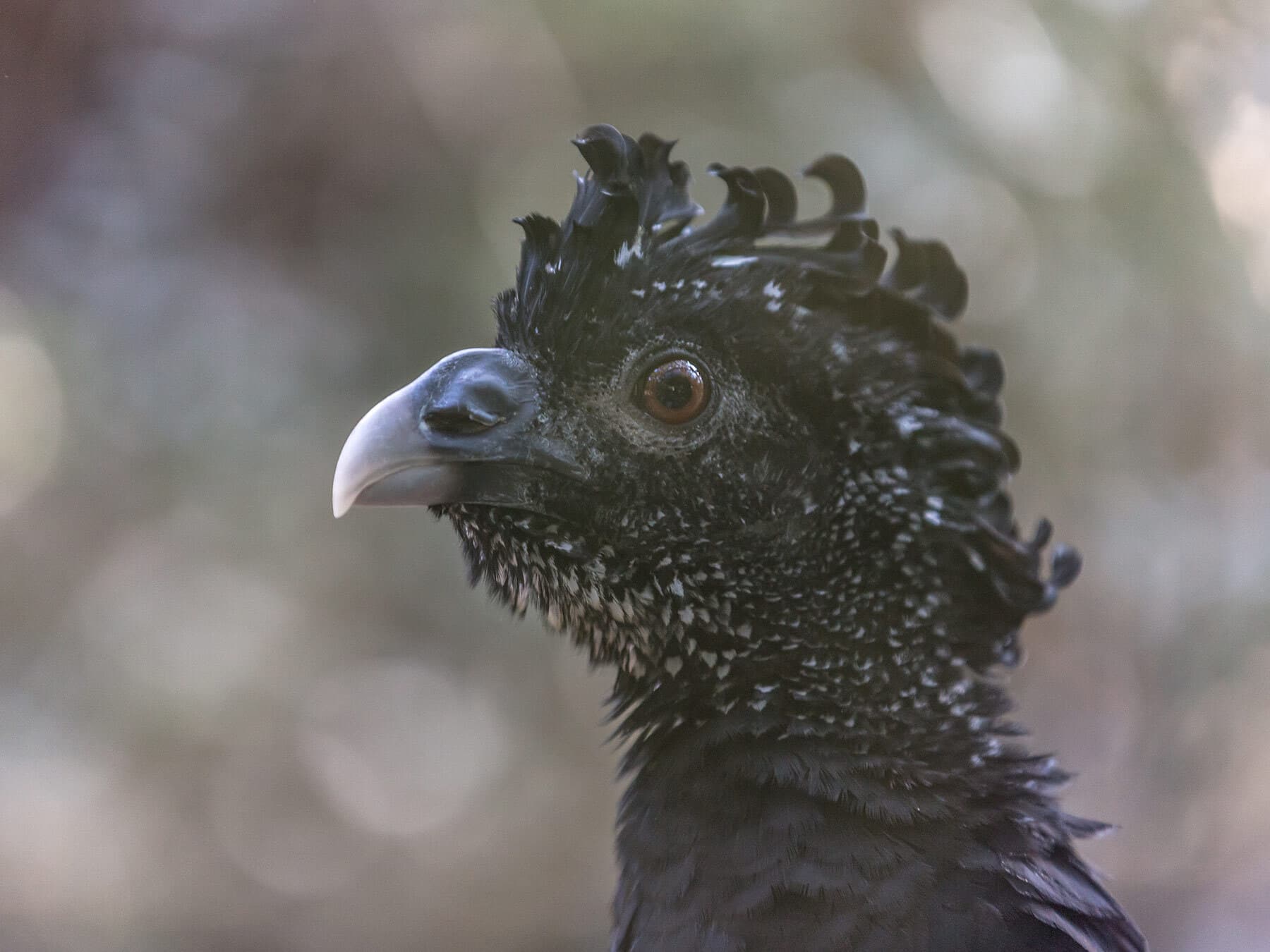
Females exhibit two colour morphs: barred and rufous. Barred females have black and white striped bodies, while rufous females are reddish-brown. Both female types have black-and-white crests and lack the yellow bill knob.
Juvenile males initially resemble the darker-coloured female but soon change to the black of the adult male. They do not, however, feature the yellow knob on the bill of the adult. Juvenile females have similar morphs to adult females.
Its size
Adults- Length
- 84–92 cm
- Wingspan
- 100–120 cm
- Weight
- 3000–4800 g
Its song and calls
The alarm call is a loud, short, high pitched whistle whilst the song, sung by the male only, is a deeper booming ‘woo – hoo – hoo’. Additional vocalisations are similar to other members of the cracid family and consist of a medium pitched extended whistling sound.
When and where to see it
The Great Curassow is not recorded regularly in the UK, Ireland, the United States or Canada.
Worldwide: recorded regularly in 9 countries
Countries where it was recorded in at least 3 of the 6 years 2019–2024. Linked countries have their own bird list.
Data: EOD – eBird Observation Dataset (Cornell Lab of Ornithology), accessed via GBIF.org, CC BY 4.0. Records from 2019–2024, aggregated and filtered by Birdfact. How these lists are made
There are two sub-species of the great curassow. Spending much of their life foraging and walking on the forest floor, the preferred habitats of the nominate sub-species, Crax rubra rubra, are the lowland rainforests of Central America from Southern Mexico down to Western Ecuador. The second sub-species is Crax rubra griscomi, which is smaller in size compared to the nominate and is only found on the largely undeveloped Mexican island of Cozumel in the Caribbean.
Signs and Spotting tips
No other bird looks quite like the adult male great curassow. Within their own habitat they are difficult to find being relatively shy and if startled by an intruder are more likely to run off into the forest as opposed to taking flight. Spending most the day walking and foraging on the forest floor they roost and nest in trees. With the inherent dangers of disappearing natural habitats, the chances of coming face to face with a great curassow in the wild are diminishing although limited populations can be found in the sanctuary of protected areas and national parks. Despite being a shy bird they are also gregarious and often socialise in small groups.
What it eats
The adult male is predominantly black with some males having a more midnight blue hue across the body. The head has a black forward curling crest and the belly and vent are white. The main identification feature of the male is a large prominent yellow circular shaped protrusion located at the base of the upper mandible, level with the bird’s eye. Whilst the bill itself is pinkish grey from its tip to the nostrils, from the nostrils backwards towards the bird’s face both the upper and lower mandible are also coloured bright yellow. The bill is hooked with the tip of the upper mandible covering the tip of the lower. The irides are a dark brown and legs a light grey in colour. Adult females are smaller than their male counterpart and unlike the male, they are polymorphic in that they are found in three different colour morphs, although like the male they all have prominent forward curling crests. In one morph the female is a rufous brown with extensive buff coloured barring patternation across the body, wings and tail. Other morphs are predominantly very dark brown or reddish brown in colour with tail barring and black and white striped crest and upper tail feathers. Juvenile males initially resemble the darker coloured female but soon change to the black of the adult male. They do not however feature the yellow knob on the bill of the adult. Juvenile females have similar morphs to adult females.
What does a Great Curassow eat?
The diet of the great curassow consists in the main of fallen tree fruits, berries and seeds foraged from the ground or those picked from bushes and low hanging branches. Leaves, insects including beetles, spiders and even small vertebrates are also consumed.
How long do Great Curassows live for?
The life expectancy of the great curassow in the wild is between ten to fifteen years although captive birds often survive longer with one recorded as having attained the age of twenty four.
Can a Great Curassow fly?
Great curassows are capable of flying but only for a short fluttering flight, to get them out of danger and into nearby trees for example. They simply aren't able to sustain a prolonged flight. When they are threatened, they will generally choose to run off instead of taking flight.
Nesting and breeding
The breeding season differs dependent upon location but generally falls within the months of February through to June. Often the male will construct a small simple nest from twigs and leaves in the fork of a tree and by displaying to the female will attempt to coax her for a mate. Alternatively, once the birds have paired off they will construct a nest together into which the female lays two white eggs. The female alone incubates the eggs for up to thirty three days. Hatchlings are precocial, that is to say they are developed and can fend for themselves from almost the day that they hatch. Great curassows are known to have successfully bred with black curassows and blue-billed curassows in the past, producing fertile hybrids although this is believed to have occurred in captivity.
Behaviour
Great Curassows are primarily terrestrial, spending much of their time foraging on the forest floor. They move with a slow, deliberate gait, scratching the ground for food.
These birds are typically found in pairs or small family groups and are known for their cautious nature. They often freeze or flee when disturbed.
Conservation
The Great Curassow is classified as Vulnerable due to habitat loss and hunting pressure. Conservation efforts focus on protecting remaining rainforest habitats and implementing sustainable hunting practices in areas where the species occurs. Captive breeding programs also contribute to conservation efforts.
Quick facts
- Length
- 84–92 cm
- Wingspan
- 100–120 cm
- Weight
- 3000–4800 g
- Lifespan
- 20–24 years
- Family
- Guans & Curassows
- Migration
- Resident
- Global status (IUCN)
- Vulnerable
- World population
- 50,000 mature individuals
- Population trend
- Decreasing
- Also called
- Mexican Curassow
- Scientific name
- Crax rubra
Sources
3- 1BirdLife International. 2020. Crax rubra. The IUCN Red List of Threatened Species 2020: e.T22678521A178001922. Source (opens in a new tab)
- 2Tracewski et al. (2016)
- 3BirdLife International. 2020. Crax rubra. The IUCN Red List of Threatened Species 2020: e.T22678521A178001922. Source (opens in a new tab)

Checked by
Nathan Cope, founder and editor
Nathan founded Birdfact and leads its writers and contributors in the UK, the US and Canada. He has watched and studied birds for more than ten years, and checks every article and species guide before it’s published.