


Golden Tanager
Tangara aurulenta
By the Birdfact teamChecked by Nathan Cope
On this page11 sections
How to recognise it
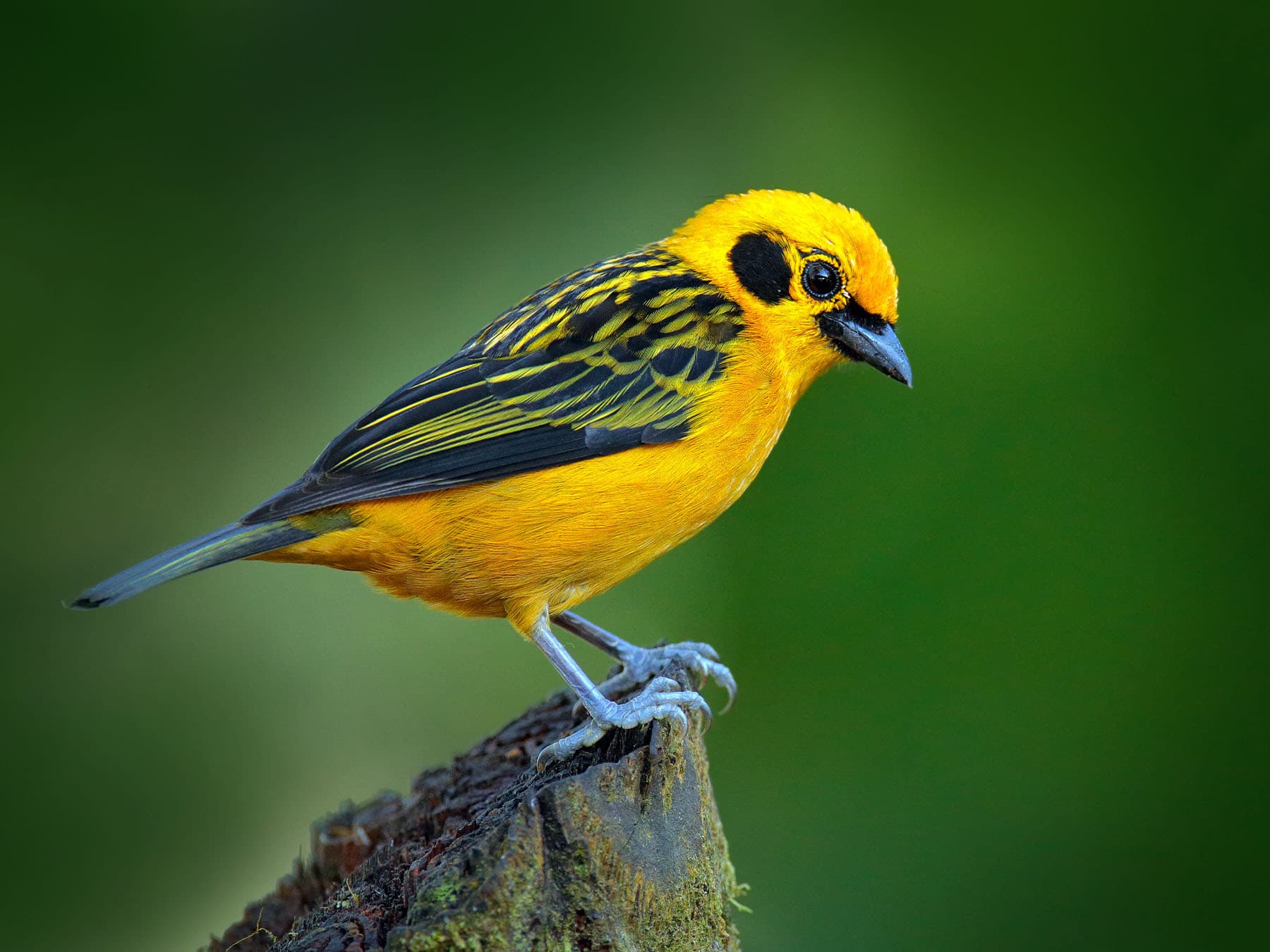
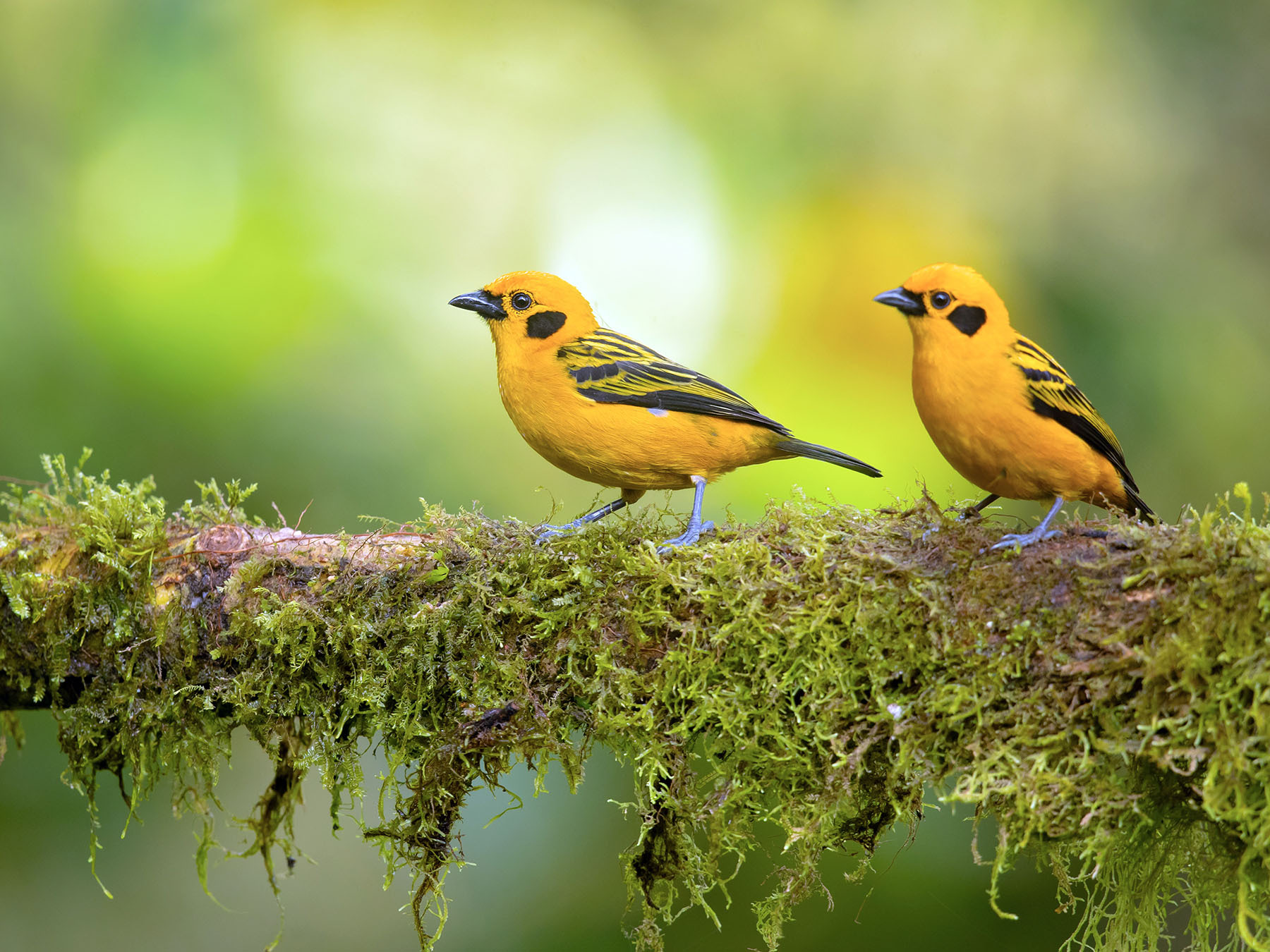
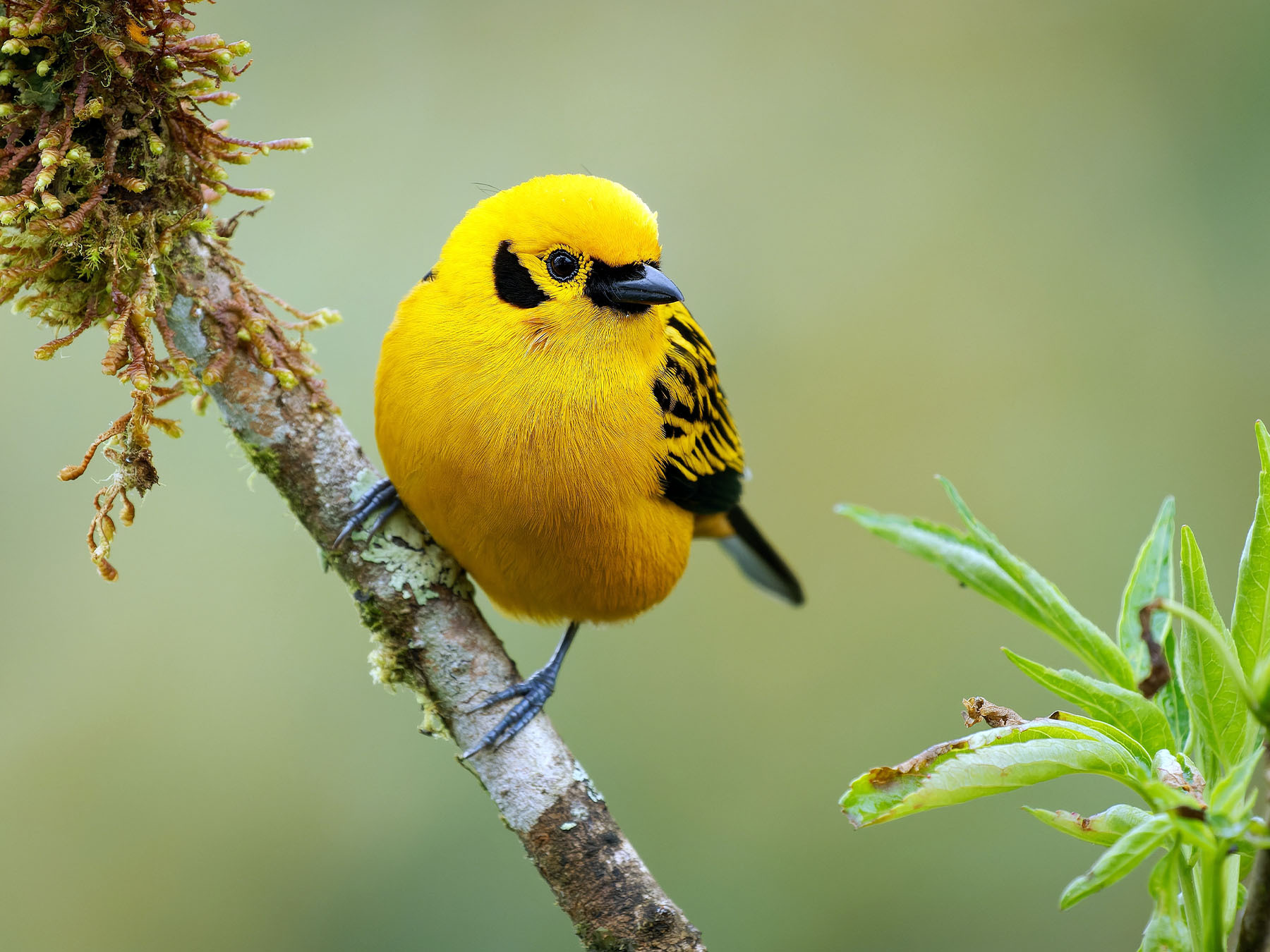
The Golden Tanager is a vibrant, small bird with a striking golden-yellow body and black wings. Its head features a distinctive black patch on the side of the head, under the eye, which contrasts sharply with the bright plumage.
Both sexes share similar colouration, with subtle blue-green tints on the wings and back. Juveniles display a duller version of the adult plumage, gradually developing full colouration as they mature. Some of the subspecies may show more brown below.
Its size
Adults- Length
- 13–14 cm
- Wingspan
- 20–22 cm
- Weight
- 18–22 g
Its song and calls
Golden Tanagers have a high-pitched, thin call often described as a sharp 'tseet' or 'tsit'. Their song is a series of these high notes strung together in rapid succession, creating a quick, tinkling melody.
During foraging, they may also produce soft, chattering sounds among group members.
- Call0:00 / 0:27
Recorded in Napo: Cord, Ecuador · October 1992
When and where to see it
The Golden Tanager is not recorded regularly in the UK, Ireland, the United States or Canada.
Worldwide: recorded regularly in 5 countries
Countries where it was recorded in at least 3 of the 6 years 2019–2024. Linked countries have their own bird list.
South America (5)
- Bolivia
- Colombia
- Ecuador
- Peru
- Venezuela
Data: EOD – eBird Observation Dataset (Cornell Lab of Ornithology), accessed via GBIF.org, CC BY 4.0. Records from 2019–2024, aggregated and filtered by Birdfact. How these lists are made
Tips for seeing it
- Look for Golden Tanagers in the mid to upper levels of montane forests
- Listen for their high-pitched, thin calls to locate them in dense foliage
- Watch for their quick, acrobatic movements as they forage in small groups
- Observe fruiting trees, where they often gather to feed
What it eats
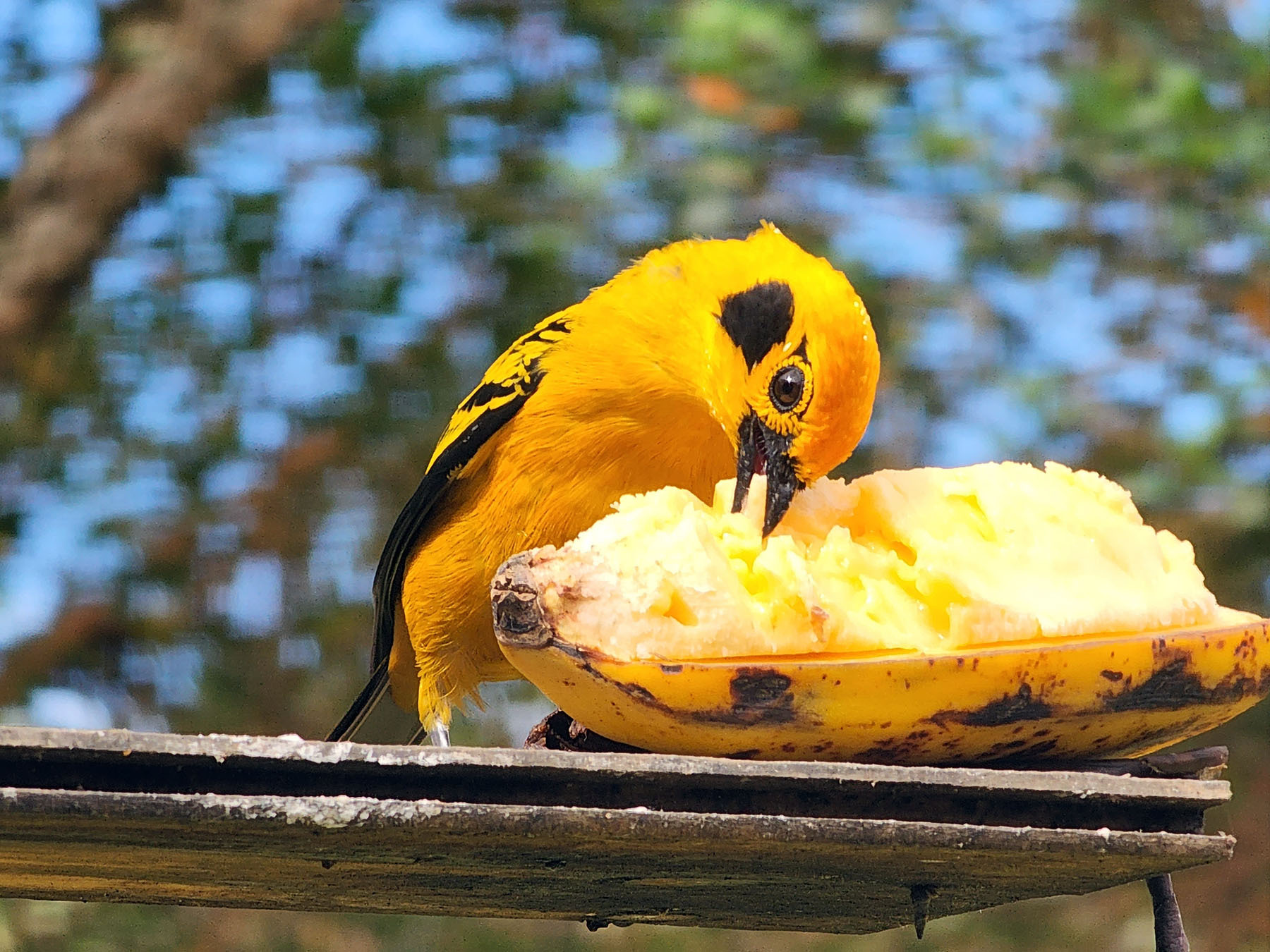
Golden Tanagers primarily feed on small fruits and berries, supplementing their diet with insects and spiders.
They forage actively in the canopy, often hanging upside down to reach fruits at the ends of branches. These birds play a crucial role in seed dispersal within their forest habitats.
Nesting and breeding
Breeding season for Golden Tanagers typically occurs between March and June, coinciding with the end of the rainy season. Pairs form monogamous bonds and work together to build their nests.
Nests are cup-shaped structures made of moss, lichen, and fine plant fibres, usually placed in the fork of a tree branch high in the canopy. Females lay 2-3 pale blue eggs with brown speckles.
Incubation lasts about 13-14 days, with both parents sharing duties. Nestlings fledge after approximately 15-16 days but remain dependent on their parents for several weeks.
Behaviour
Golden Tanagers are highly social, often seen in small flocks or mixed-species groups. They move quickly through the canopy, hopping from branch to branch while foraging.
These birds are known for their agile flight patterns, darting between trees with remarkable speed and precision.
Conservation
While currently listed as Least Concern, Golden Tanagers face threats from habitat loss due to deforestation in their range.
Conservation efforts focus on protecting montane forest ecosystems and establishing protected areas to maintain stable populations.
More photos
4 photos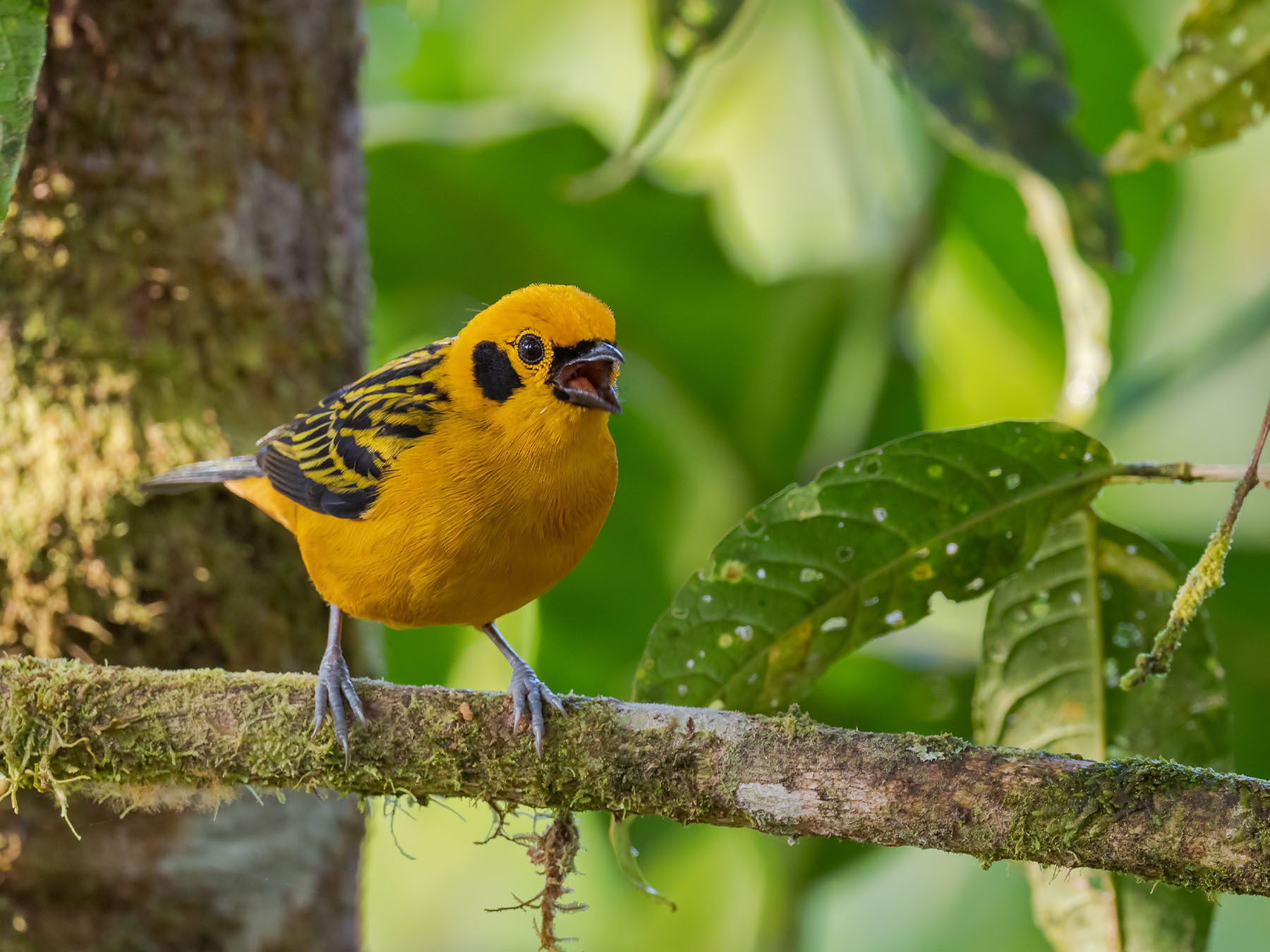
Quick facts
- Length
- 13–14 cm
- Wingspan
- 20–22 cm
- Weight
- 18–22 g
- Lifespan
- 3–5 years · oldest recorded 7.2 years
- Family
- Tanagers
- Migration
- Resident
- Global status (IUCN)
- Least Concern
- World population
- Not quantified, but 'fairly common'
- Population trend
- Decreasing
- Scientific name
- Tangara aurulenta
Sources
4- 1BirdLife International. 2024. Tangara aurulenta. The IUCN Red List of Threatened Species 2024: e.T103849300A264357336. Source (opens in a new tab)
- 2BirdLife International. 2024. Tangara aurulenta. The IUCN Red List of Threatened Species 2024: e.T103849300A264357336. Source (opens in a new tab)
- 3Stotz et al. (1996)
- 4Searchable Ornithological Research Archive, University of New Mexico University Libraries Source (opens in a new tab)

Checked by
Nathan Cope, founder and editor
Nathan founded Birdfact and leads its writers and contributors in the UK, the US and Canada. He has watched and studied birds for more than ten years, and checks every article and species guide before it’s published.