


Golden-fronted Woodpecker
Golden-fronted Flicker · Melanerpes aurifrons
By the Birdfact teamChecked by Nathan Cope
On this page13 sections
How to recognise it
What do Golden-fronted Woodpeckers look like?
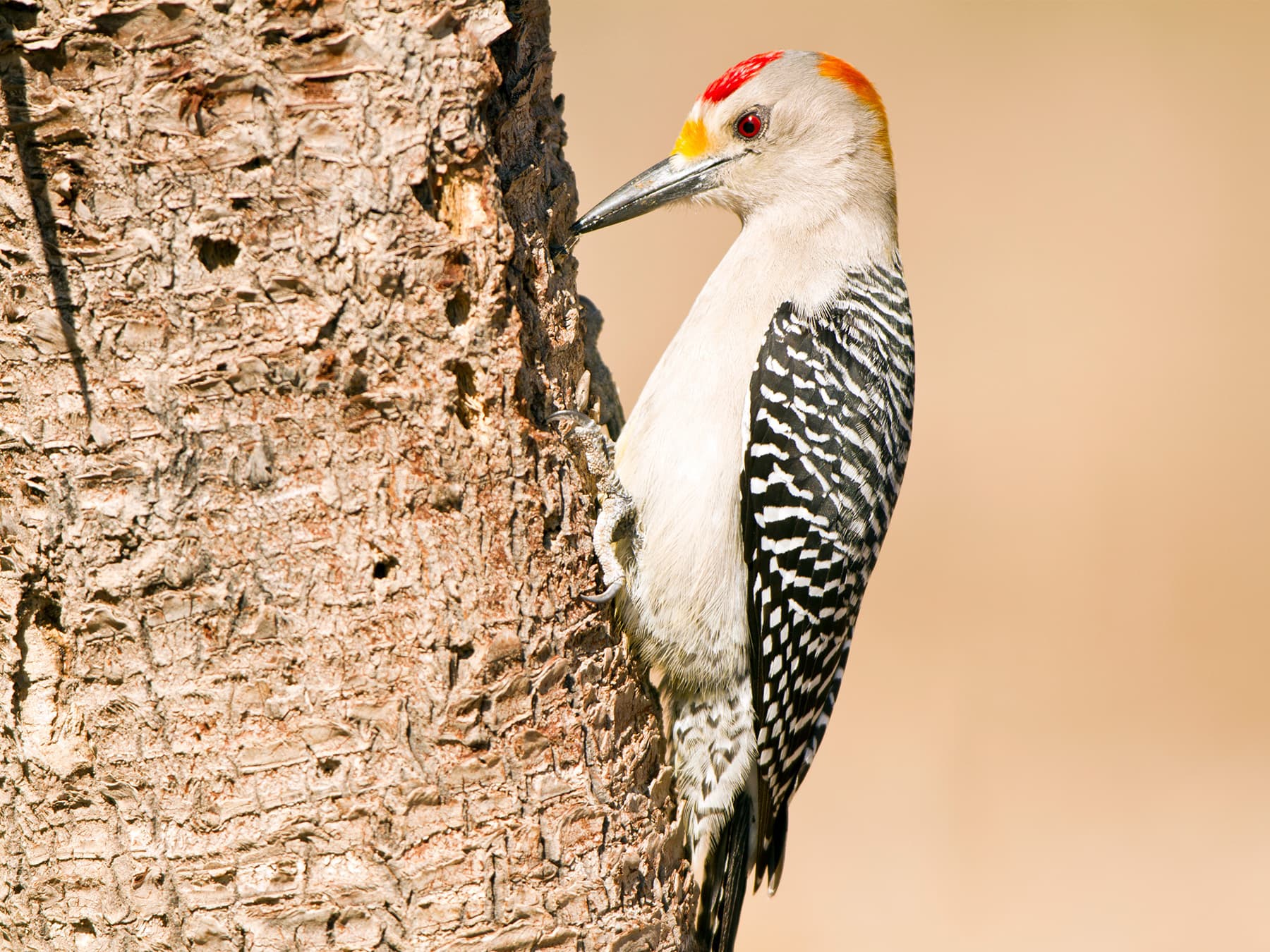
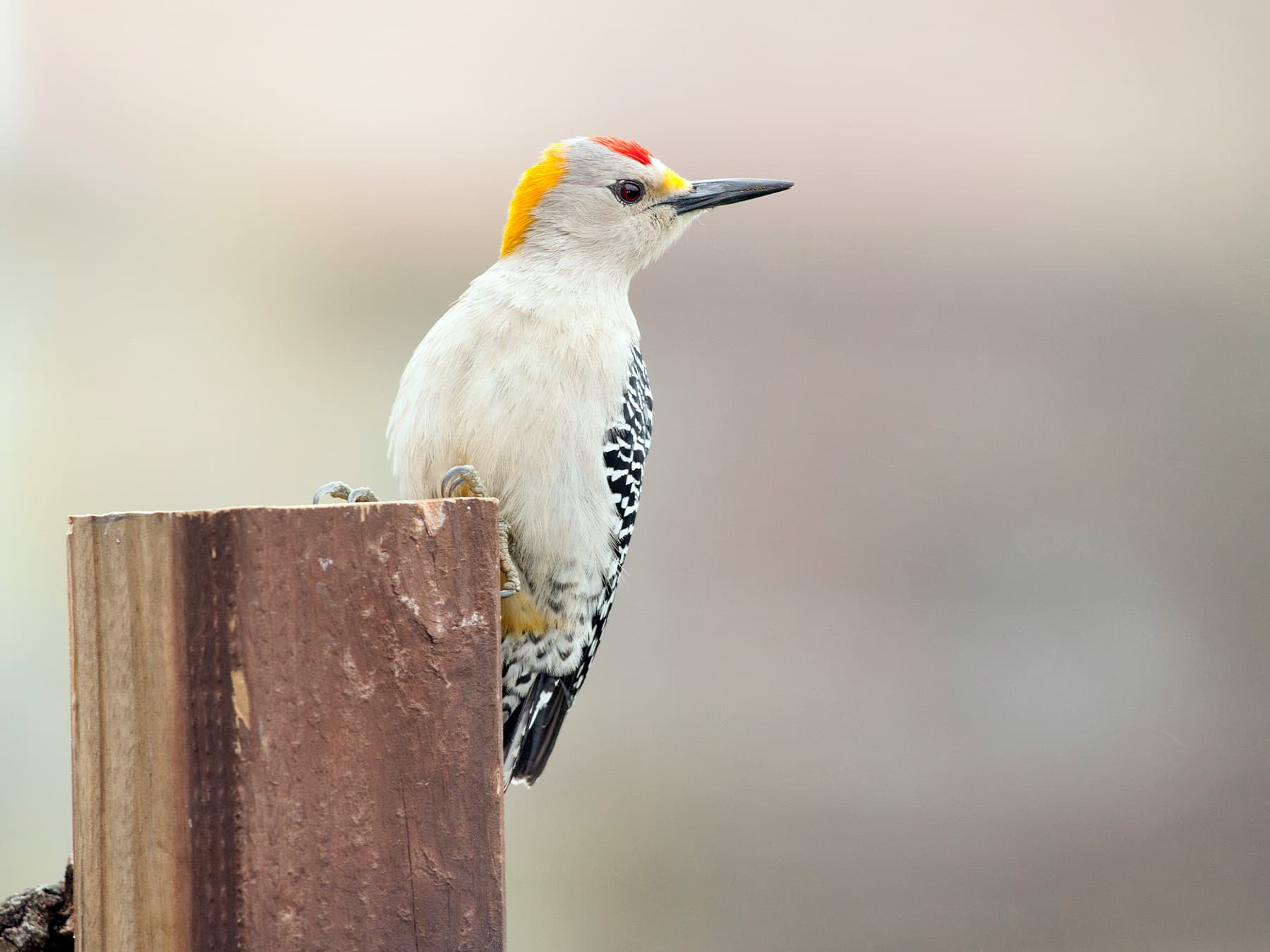
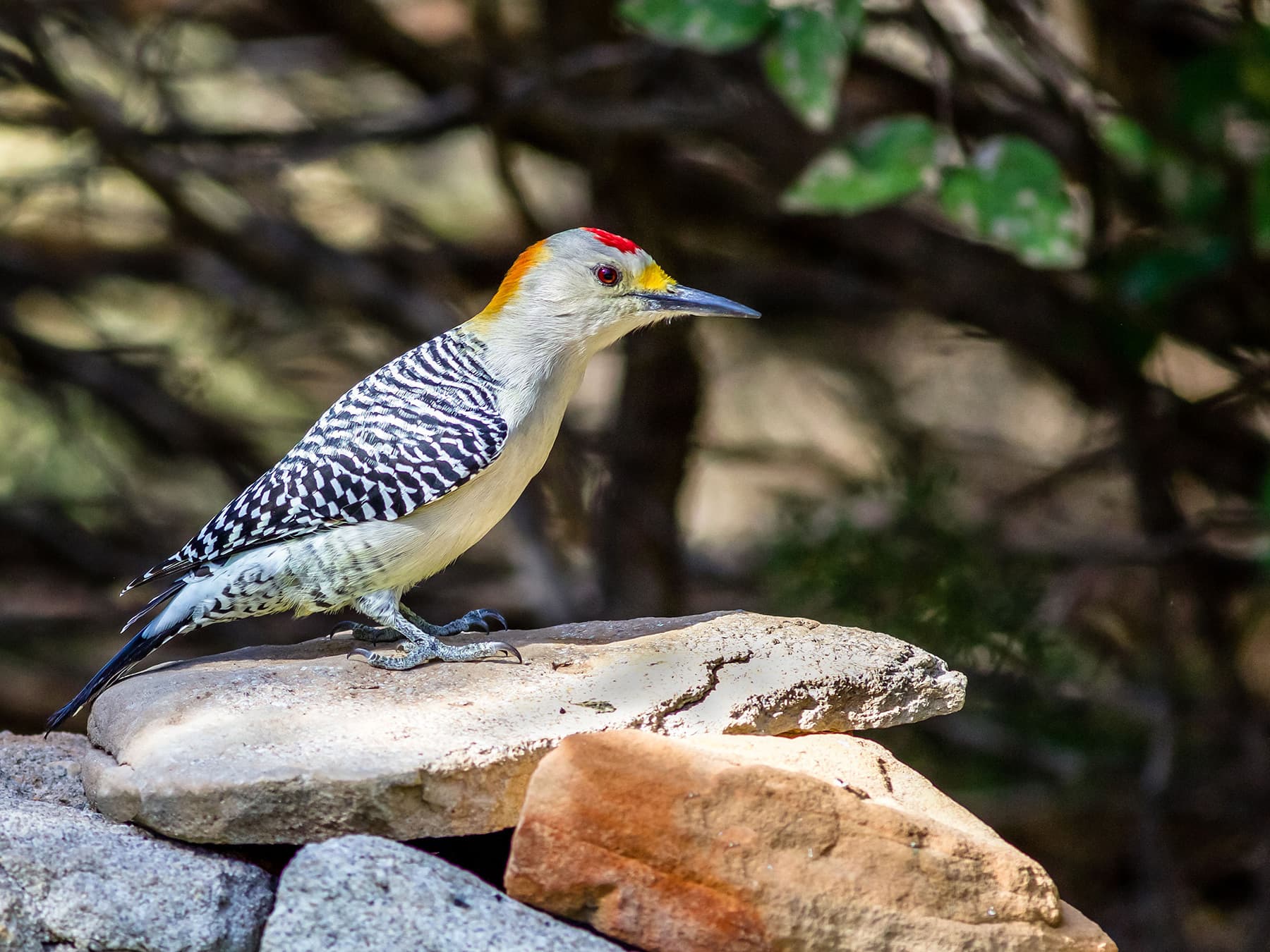
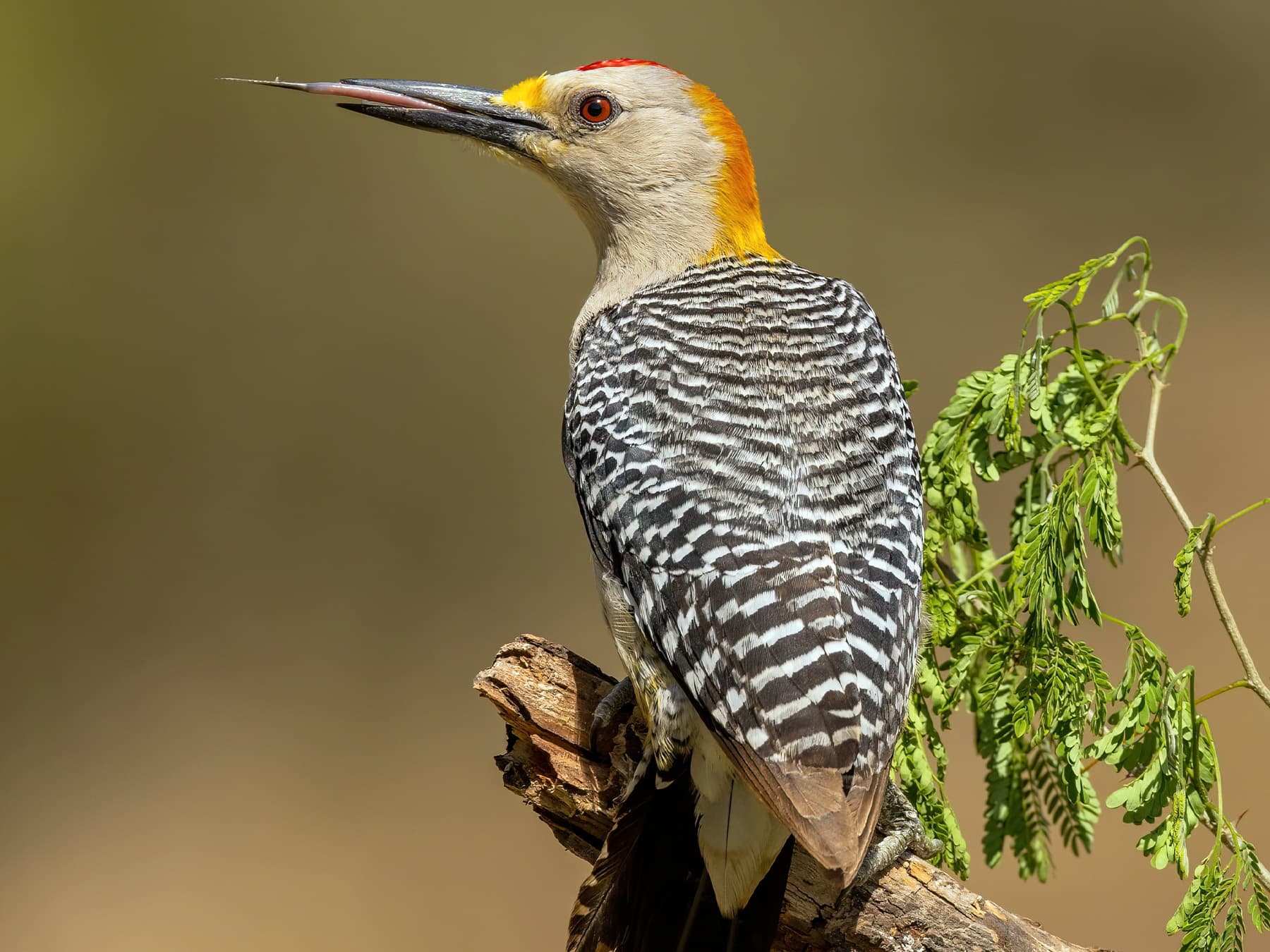
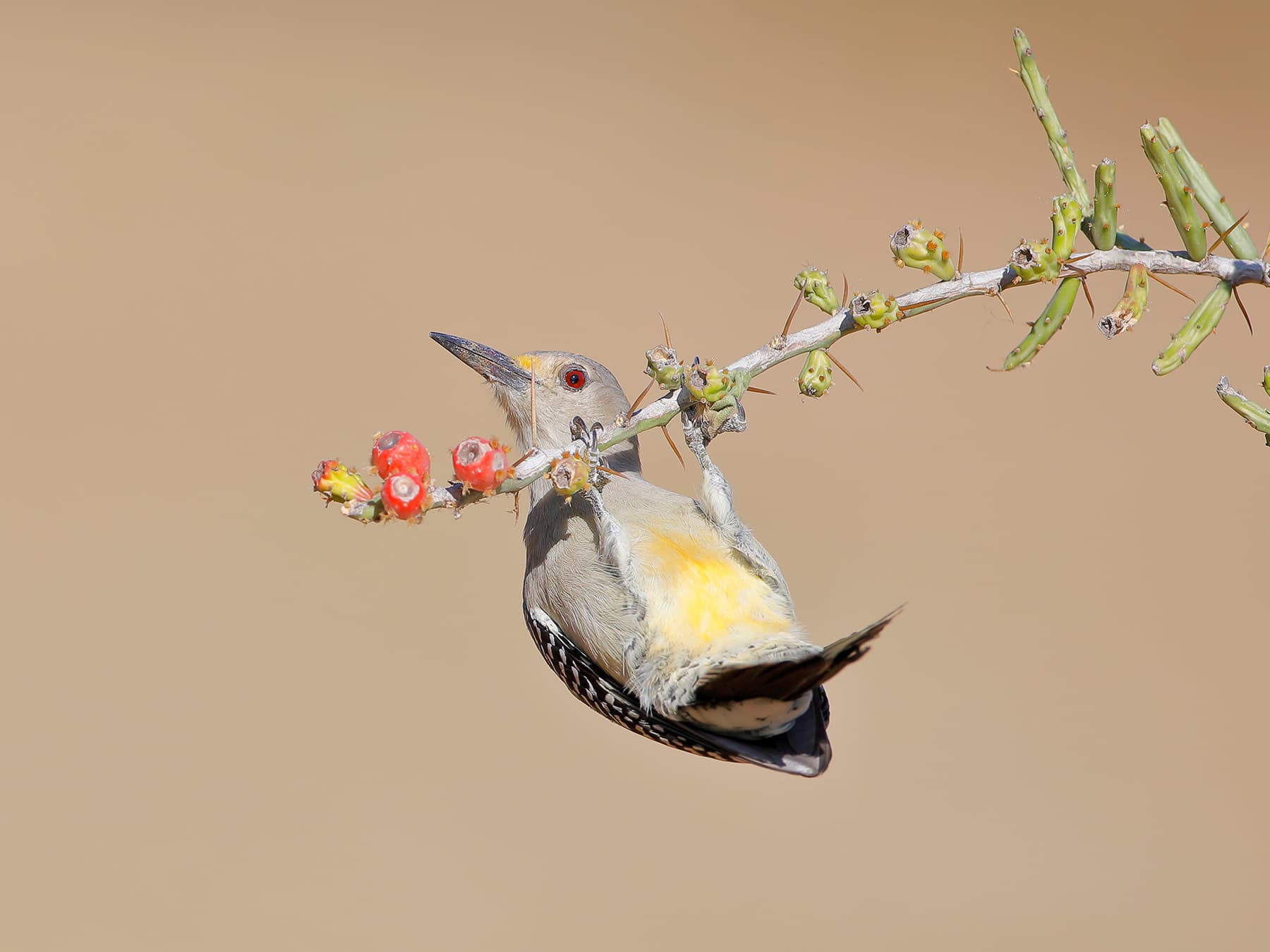
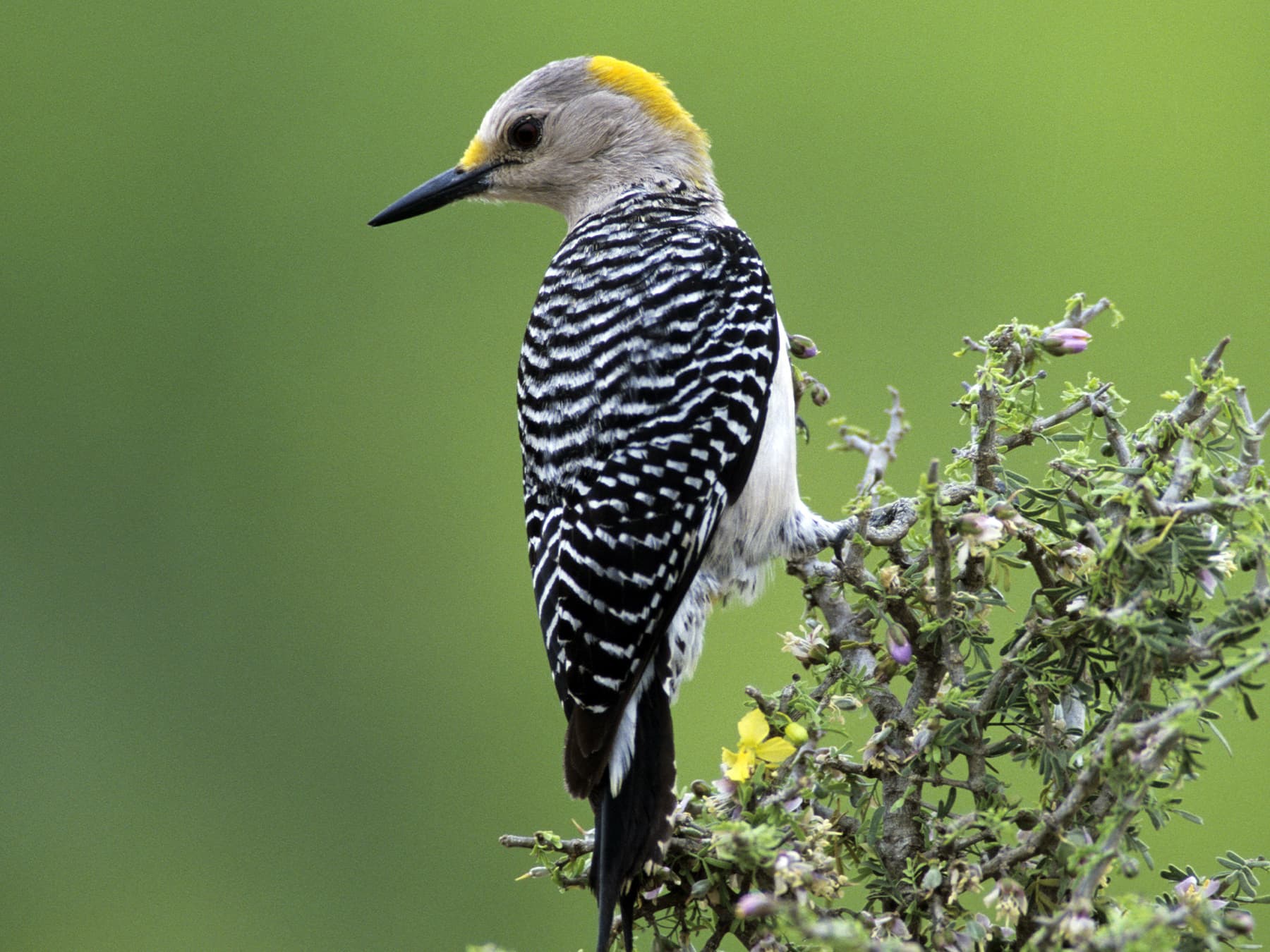
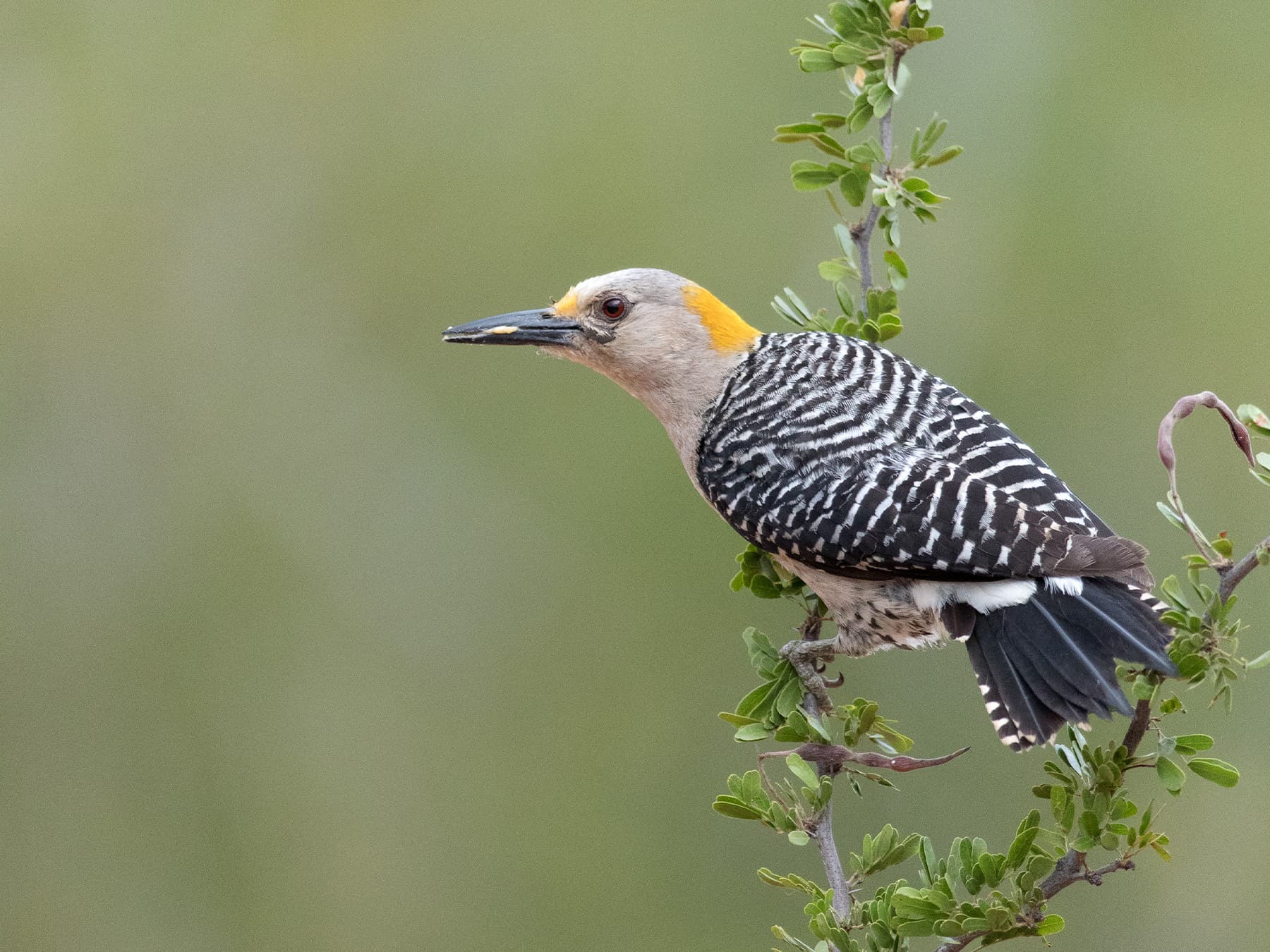
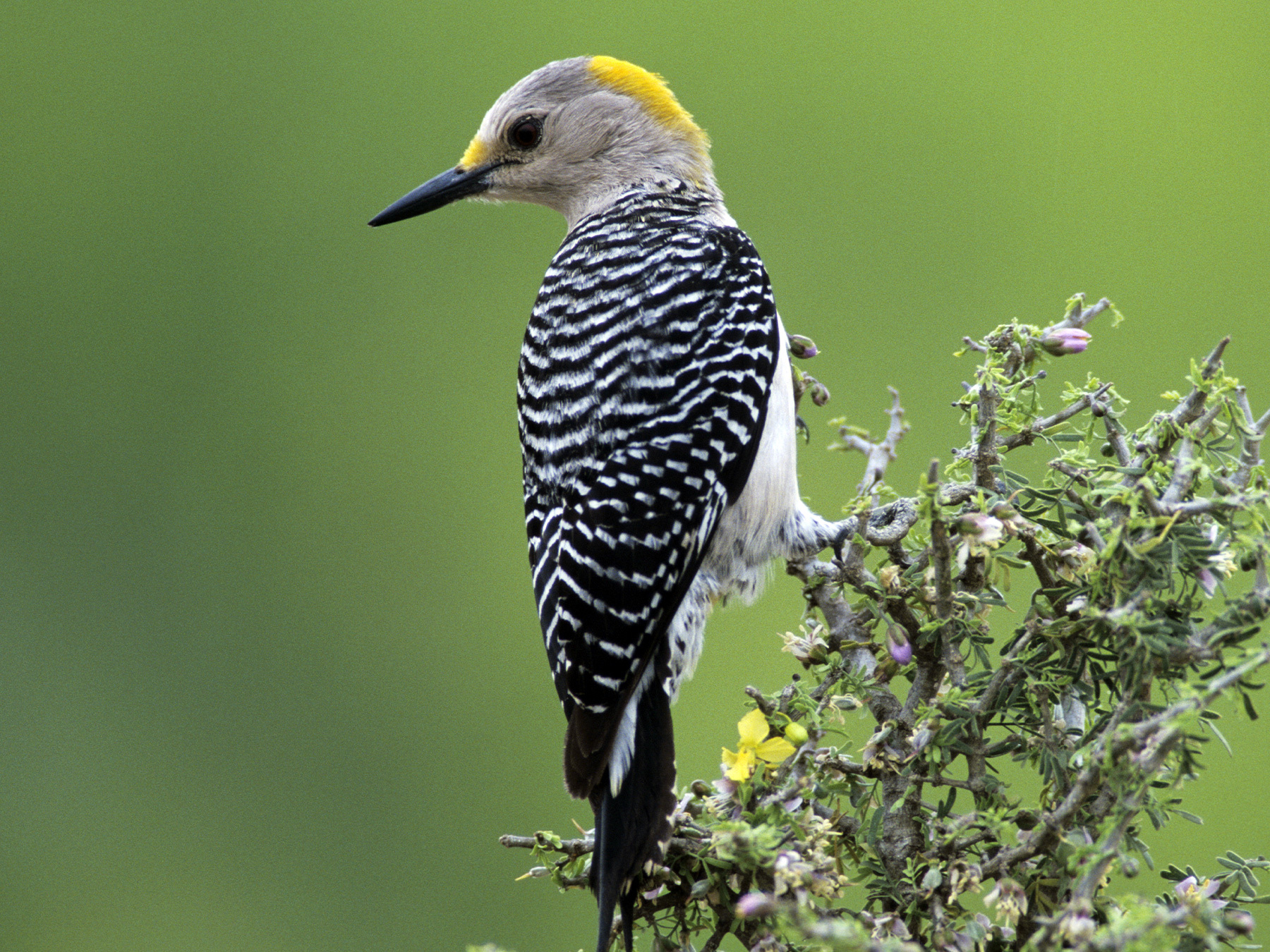
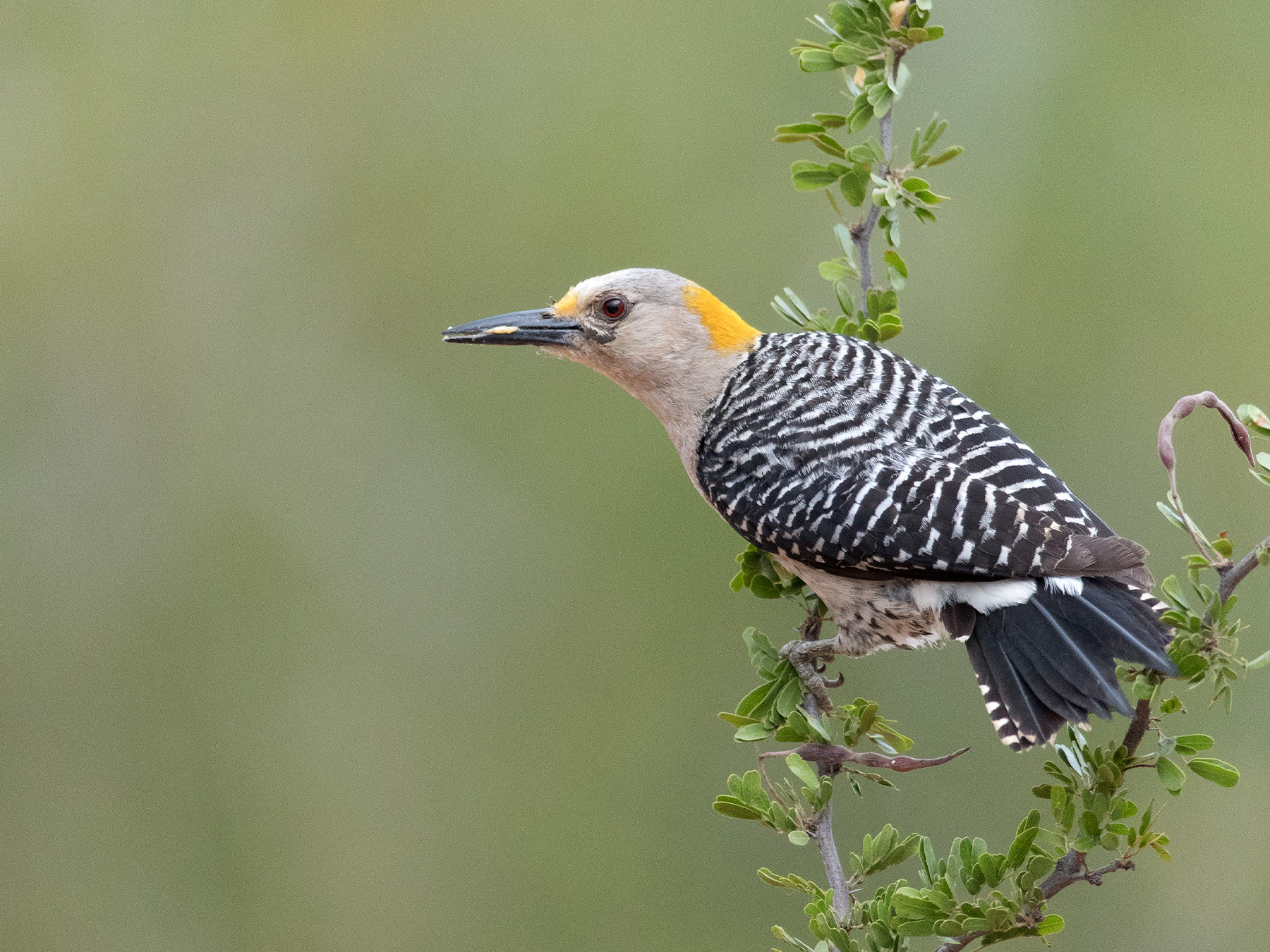
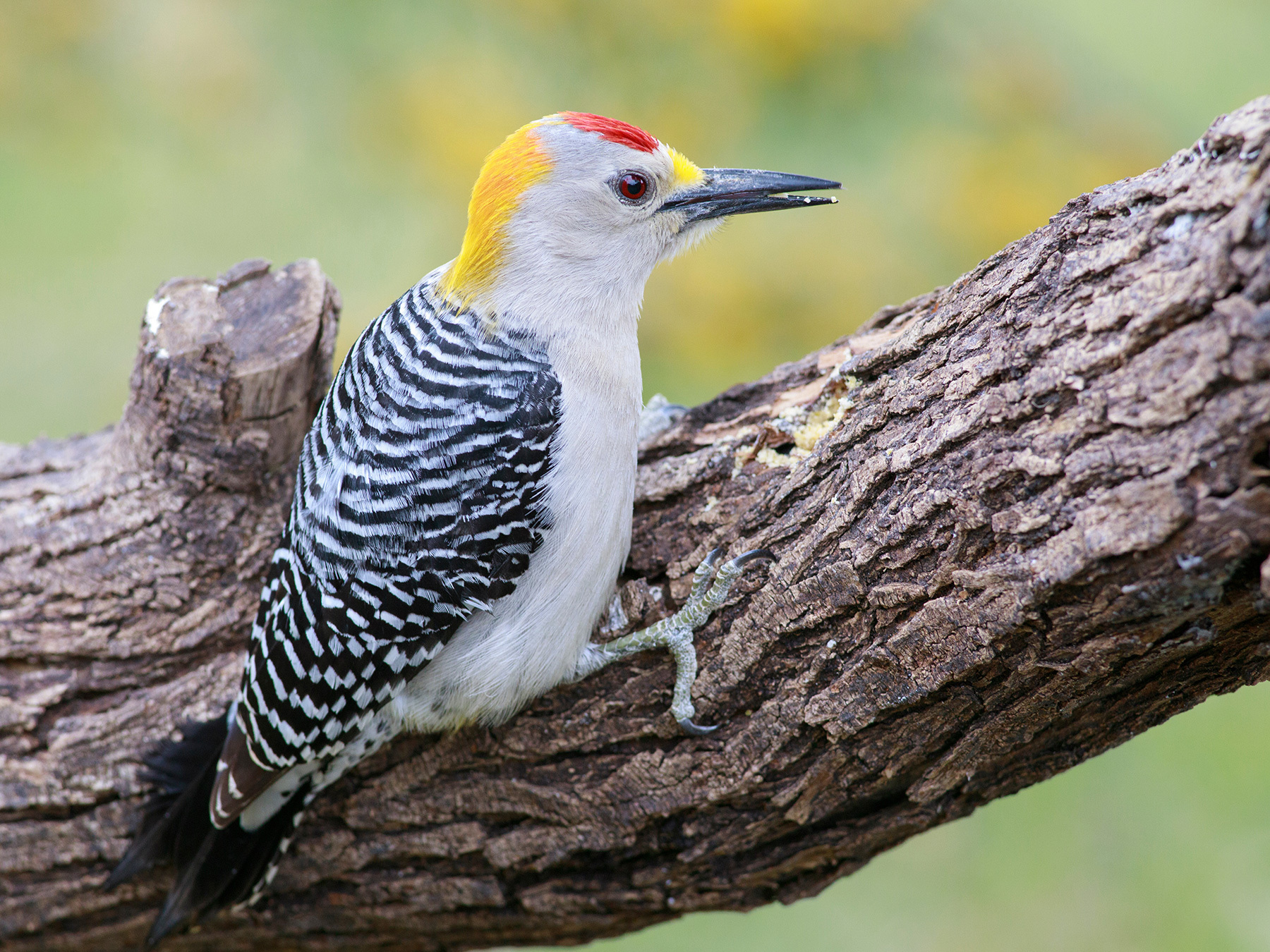
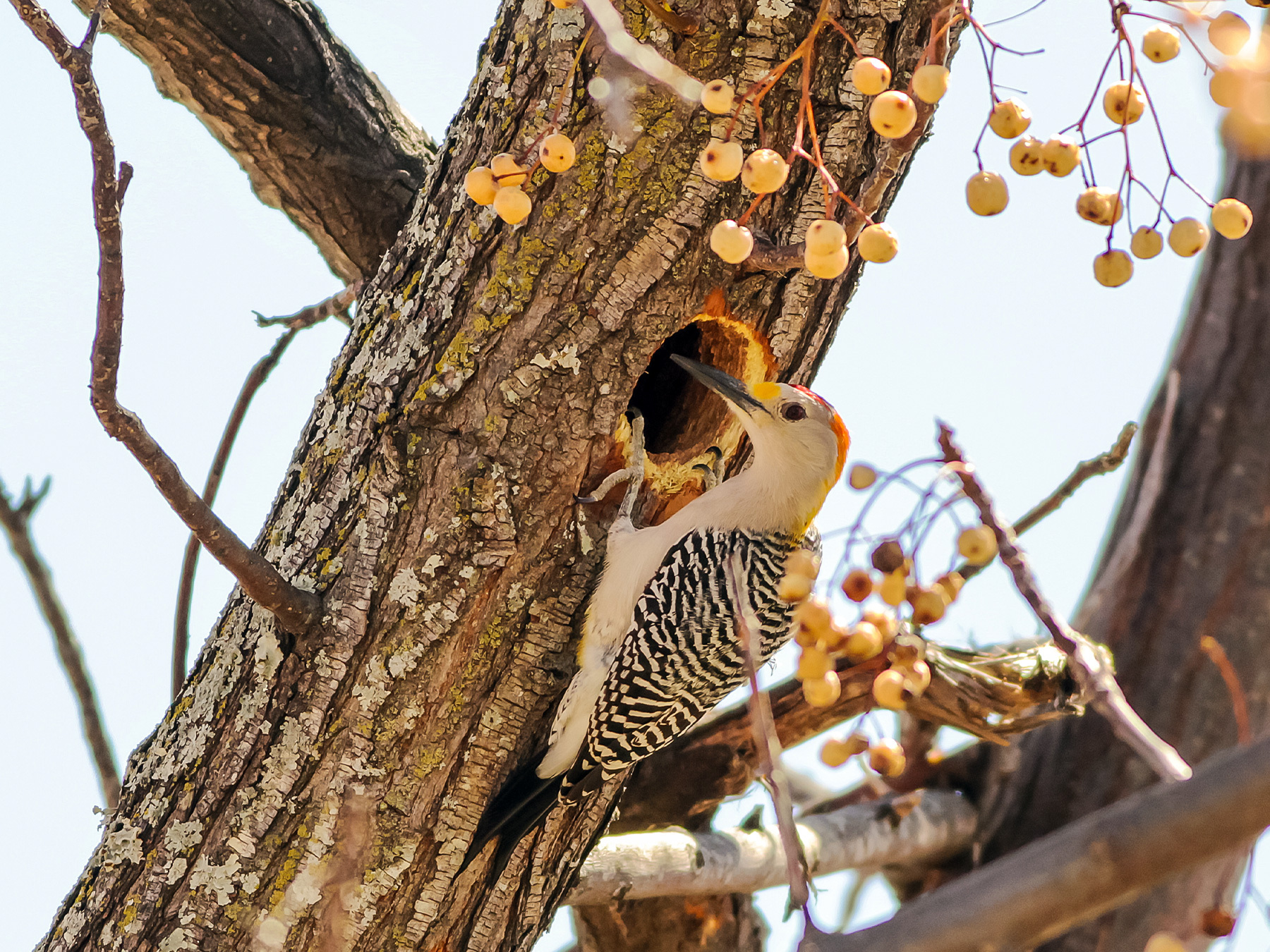
Despite their name, the golden front is not the most prominent feature of a golden-fronted woodpecker, with the largest expanse of golden-yellow feathers seen on the nape of both male and female birds. A small amount of yellow is also visible above the bill, and a less obvious yellowish tinge is present on the belly, but not easy to see in the field.
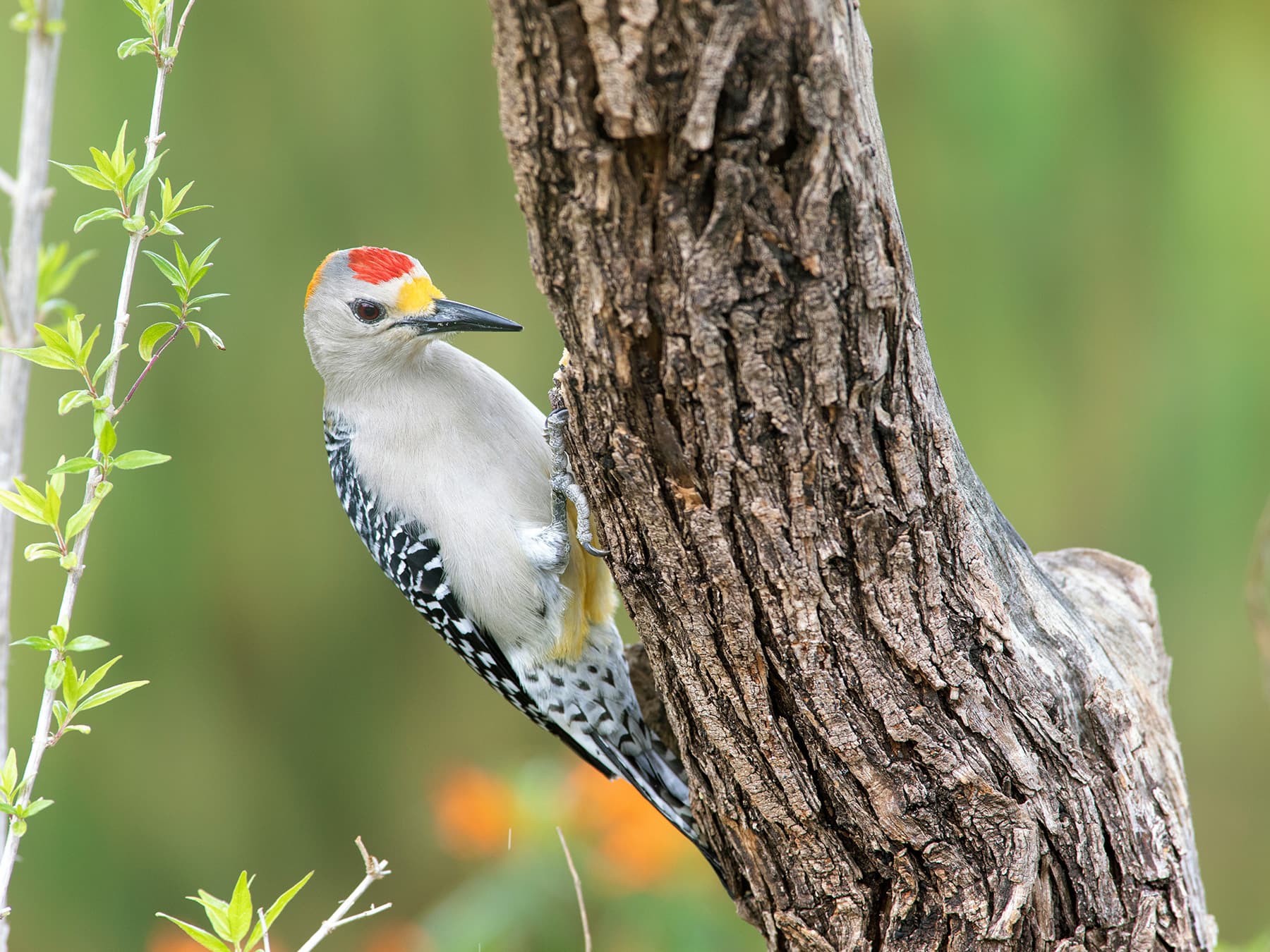
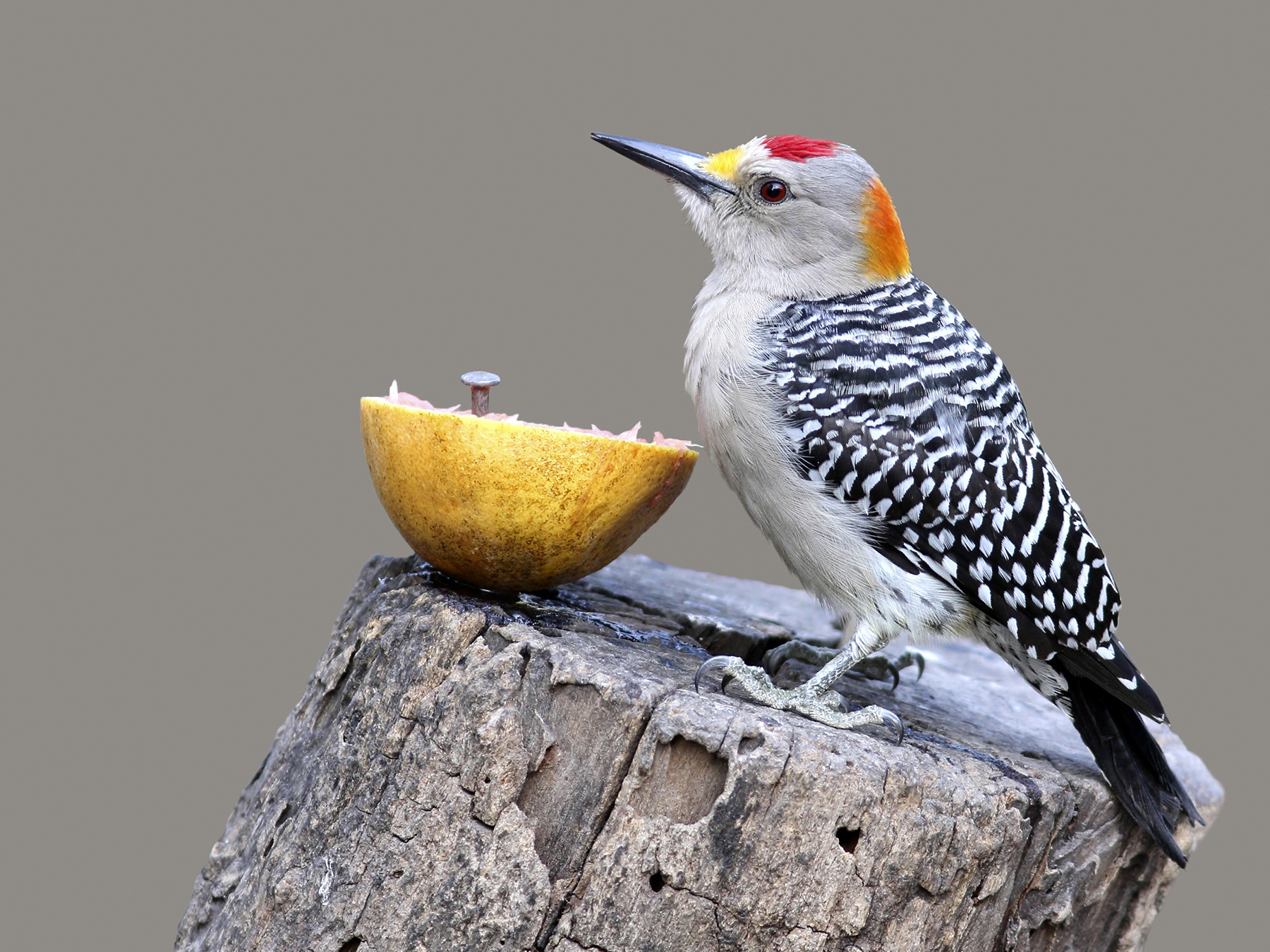
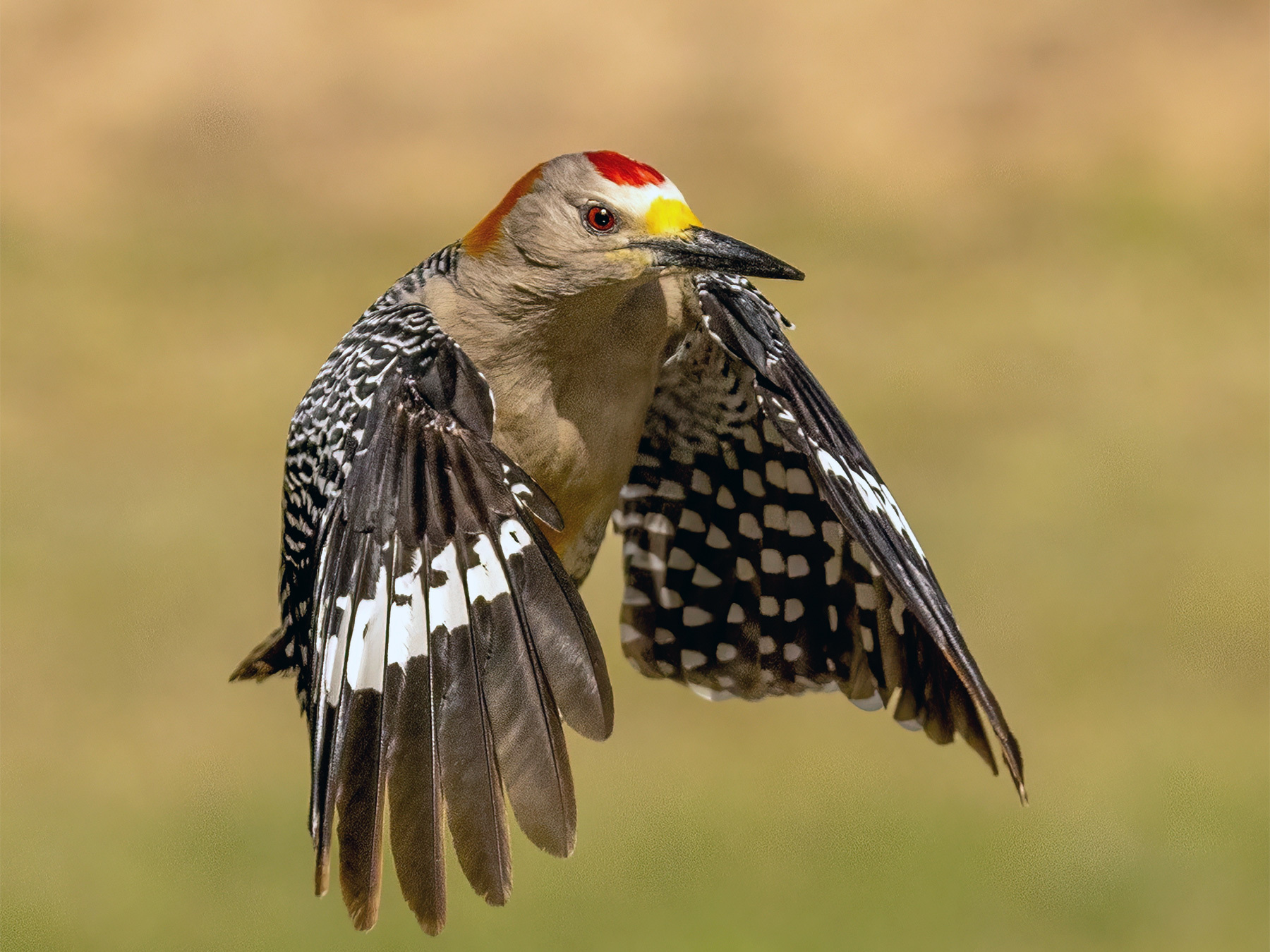
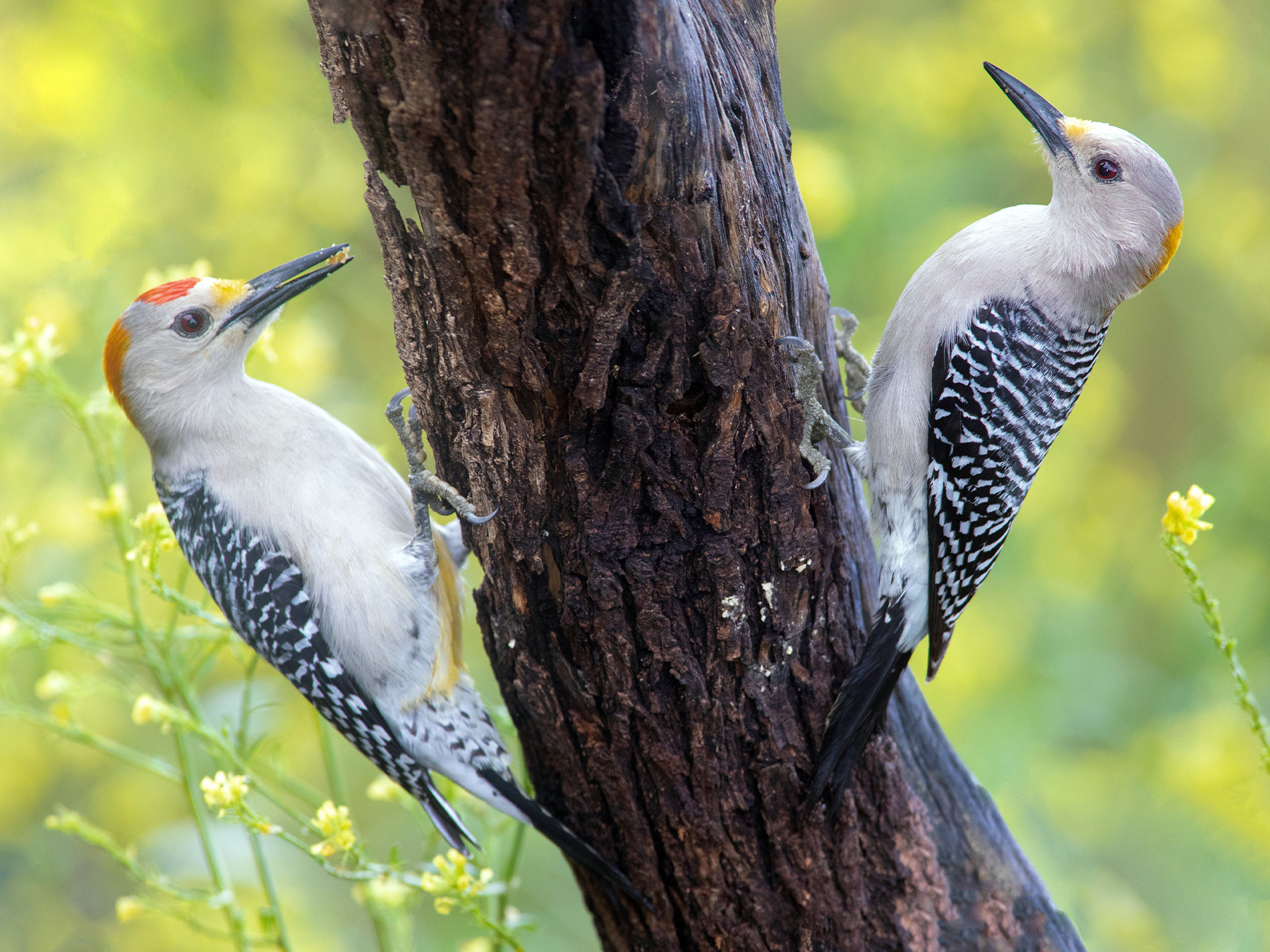
Males have a small red cap, with an otherwise plain gray-white face. Their back is heavily marked with narrow black and white barring, and the central feathers of the tail are solid black, with barred feathers at the edges. The white rump and white wing patches can be seen in flight. The breast and belly are also a buffy-white color, with some black spotting on the lower flanks.
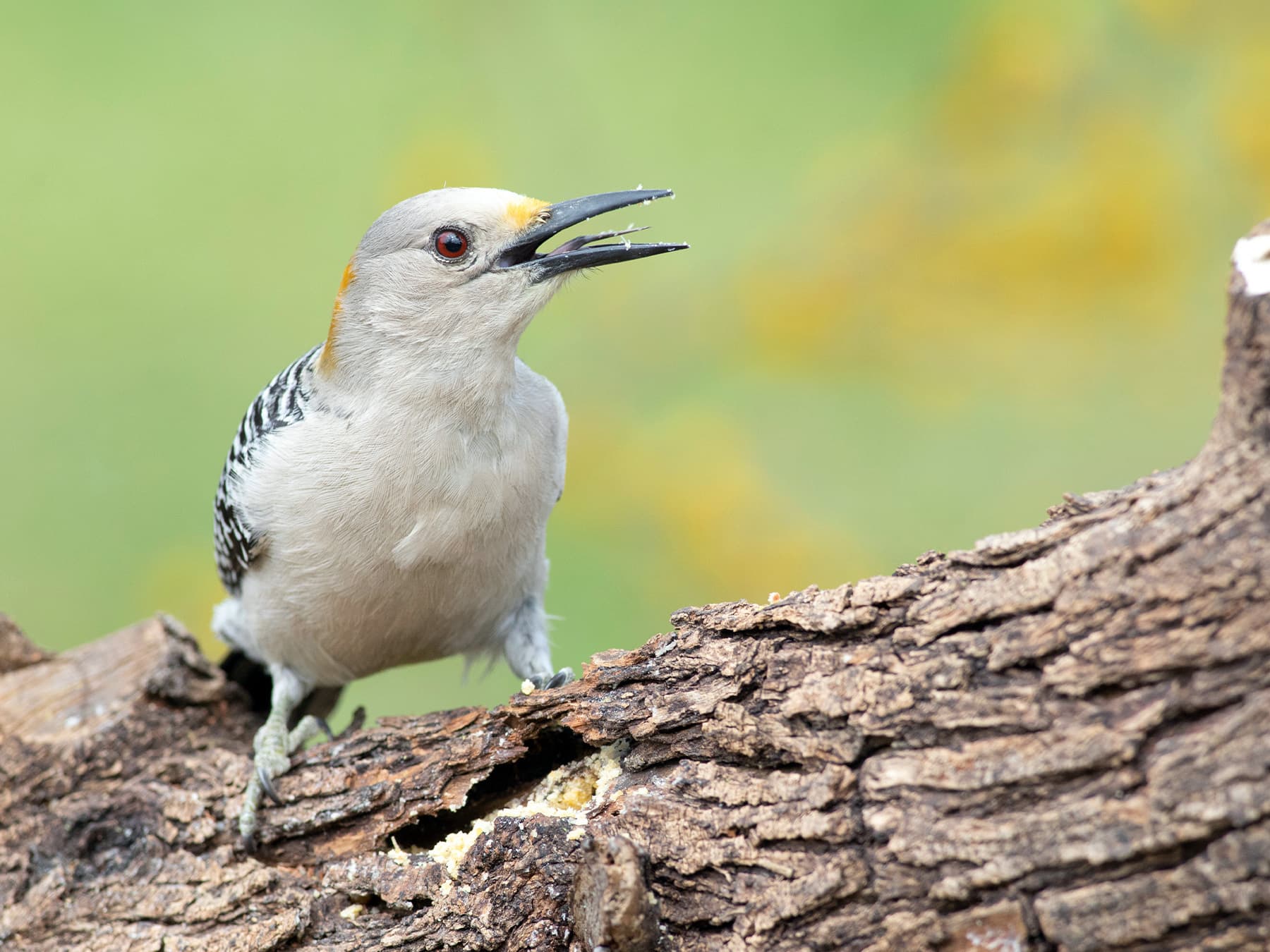
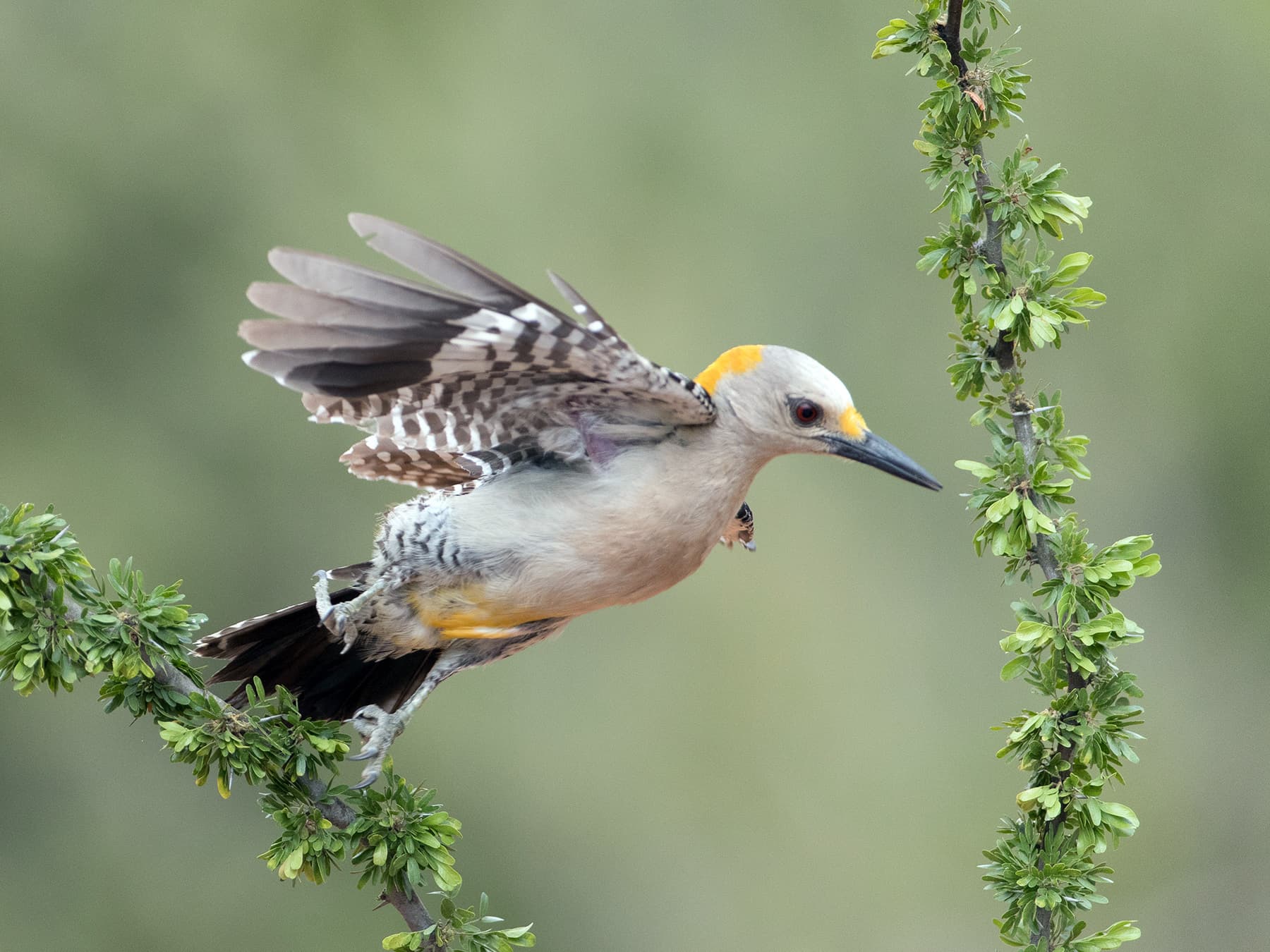
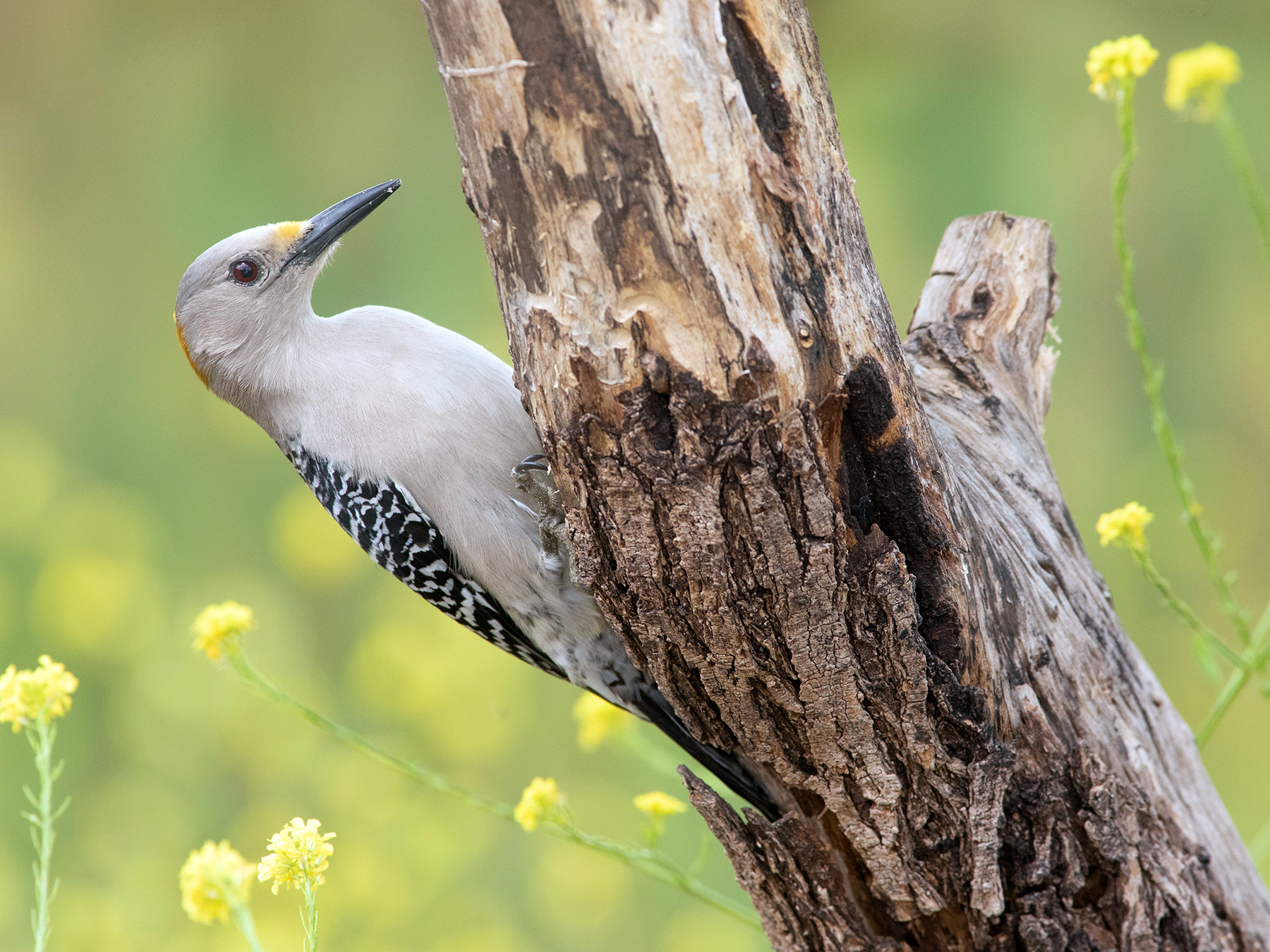
Female golden-fronted woodpeckers are similar to males, but they lack the red coloring on the crown, and their head is fully gray-white, with the exception of the yellow nape and yellow feathering above the bill, both of which are paler than in males.
Young golden-fronted woodpeckers are duller, with only muted shades of yellow on their nape and above the bill. The breast is finely streaked with darker markings, and they have a dusky brown cap.
How big are Golden-fronted Woodpeckers?
Golden-fronted woodpeckers are relatively large birds although there is a lot of variation in size between the smallest individuals and those at the top end of the size range. Males are marginally longer and heavier than females.
- Length: 22 cm to 26 cm (8.7 in to 10 in)
- Wingspan: 42 cm to 45 cm (16.5 in to 17.7 in)
- Weight: 65 g to 102 g (2.3 oz to 3.6 oz)
Its size
Adults- Length
- 21–26 cm
- Wingspan
- 43–48 cm
- Weight
- 65–90 g
Its song and calls
What sound does a Golden-fronted Woodpecker make?
Golden-fronted woodpeckers are by no means a quiet species and their loud calls are a key factor in drawing attention to their presence. A harsh, raspy ‘kek-kek-kek’ call, used as a warning signal, and a rolling churred contact call, are the most commonly heard vocalizations.
When and where to see it
OctoberIn season
Most recorded in October
- 1. Texas0.66%
- 2. Oklahomaunder 0.1%
Each dot is a county, state or province: the bigger and darker, the larger the bird’s share of that place’s bird records that month. Grey dots: no regular records. The ringed point is the centre of the bird’s records this month; the arrow shows how it moved since last month, and the dashed loop its path through the year. “Arrivals” colours places where it becomes regular this month (orange) or is in its last regular month (grey). GBIF eBird Observation Dataset, 2019–2024. Map data: Natural Earth, US Census Bureau; place centres © OpenStreetMap contributors.
In your area
See when the Golden-fronted Woodpecker is recorded in your county, state or province.
How often the Golden-fronted Woodpecker turns up in the United States through the year, from birdwatchers' records.
United States
Winter visitor · all year · most records in November
Show as a table
| Month | United States |
|---|---|
| January | 0.074% (regular) |
| February | 0.076% (regular) |
| March | 0.063% (regular) |
| April | 0.053% (regular) |
| May | 0.021% (regular) |
| June | 0.021% (regular) |
| July | 0.023% (regular) |
| August | 0.024% (regular) |
| September | 0.028% (regular) |
| October | 0.032% (regular) |
| November | 0.088% (regular) |
| December | 0.065% (regular) |
Worldwide: recorded regularly in 7 countries
Countries where it was recorded in at least 3 of the 6 years 2019–2024. Linked countries have their own bird list.
North America (7)
- Belize
- El Salvador
- Guatemala
- Honduras
- Mexico
- Nicaragua
- United States
Data: EOD – eBird Observation Dataset (Cornell Lab of Ornithology), accessed via GBIF.org, CC BY 4.0. Records from 2019–2024, aggregated and filtered by Birdfact. How these lists are made
What is the habitat of a Golden-fronted Woodpecker?
Golden-fronted woodpeckers’ preferred environments include dry woodlands, mesquite brushlands, and pecan groves. They are commonly found in woodlands that line streams and rivers, and in wide stretches of scrubland vegetation.
What is the range of a Golden-fronted Woodpecker?
In the US, golden-fronted woodpeckers are found in the extreme south of Oklahoma, through western and southern Texas into eastern Mexico. To the south, their range extends through eastern Central America, with a presence in Belize, Guatemala, Honduras, El Salvador, and as far as Nicaragua.
Where do Golden-fronted Woodpeckers live?
According to data from the Christmas Bird Count and Breeding Bird Survey, the highest concentrations of golden-fronted woodpeckers are found in the deep south of Texas, particularly in the Rio Grande Valley region.
How rare are Golden-fronted Woodpeckers?
In much of southern Texas, golden-fronted woodpeckers are considered a common and widespread woodpecker, and their noisy calls and colorful plumage make them easy to spot and identify. Little data exists on populations in Mexico and further south.
Where can you see Golden-fronted Woodpeckers in the US?
Texas and Oklahoma are the only two US states with established golden-fronted woodpecker populations, the vast majority of these are in western Texas, and their range expands across the border into a small area of southern Oklahoma.
Within this range, woodland habitats – especially dry brushlands and semiopen landscapes – and suburban parks offer a chance of a sighting, particularly early in the morning when they are at their most active and can be heard calling and drumming.
Rare sightings have been recorded in New Mexico, as well as occasional accidental vagrants as far north as Michigan and as far east as Florida.
Where can you see Golden-fronted Woodpeckers in Canada?
Golden-fronted woodpeckers are a southern species and no sightings have ever been reported in Canada, not even as way off-course vagrants.
Migration
Do Golden-fronted Woodpeckers migrate?
Golden-fronted woodpeckers are not a migratory species and remain in the same territories all year round.
Are Golden-fronted Woodpeckers native to the US?
The west of Texas and a tiny portion of southern Oklahoma are the only two US states that have resident golden-fronted woodpeckers. This range has expanded significantly since the 1950s: the species was recorded in Oklahoma in 1954.
The global population extends southwards into Mexico and further into Central America.
Tips for seeing it
- Listen for their loud, rolling calls to locate them in wooded areas
- Look for their distinctive golden forehead and barred back pattern
- Check palm trees and utility poles, which they often use for nesting
- Observe their foraging behavior on tree trunks and branches
What it eats
What do Golden-fronted Woodpeckers eat?
The Golden-fronted woodpecker’s diet is not limited to insects and includes a range of fruits, nuts, and seeds. Foraging for invertebrates and their larvae, mainly ants, beetles, moths, grasshoppers, and spiders, takes place by probing and gleaning from tree trunks and branches and also pecking on the ground.
Pecans, acorns, corn, and bananas are eaten in fall and winter, and berries (chiefly hackberry, soapberry, and wolfberry), citrus fruits, persimmon, and prickly pear cactus fruits are popular in spring and summer. Golden-fronted woodpeckers have also been noted to eat eggs stolen from other birds’ nests.
What do Golden-fronted Woodpecker chicks eat?
A mixed diet is fed to young golden-fronted woodpeckers, consisting of both invertebrates (cicadas, grasshoppers and ants) and plant matter (lotebush and agarita berries).
Nesting and breeding
Where do Golden-fronted Woodpeckers nest?
Nest cavities are chiseled out high in the trunks of mesquite, pecan, or oak, most often between 2 m and 9 m (7 ft and 30 ft) above ground.
Chambers are regularly reused in subsequent seasons and are cleaned out by the pair in between broods. Nest boxes may also occasionally be used.
When do Golden-fronted Woodpeckers nest?
Pairs can form at any time during the year, although an increase in drumming that is associated with courtship and pair formation/strengthening of pair bonds is heard in February.
It takes on average between 6 and 12 days to drill out a cavity, and eggs follow, usually between March and May, reaching a peak in April. Incubation lasts for between 12 and 14 days and is shared between males and females, with males brooding overnight.
What do Golden-fronted Woodpecker eggs look like?
Gold-fronted woodpeckers’ eggs are plain, glossy white, with no exterior patterns. Eggs measure 25 mm by 19 mm (1 in by 0.7 in), and a typical clutch contains 4 or 5 eggs, although sometimes larger broods, with up to 7 chicks, may be raised.
Do Golden-fronted Woodpeckers mate for life?
Long-term pairings for golden-fronted woodpeckers are not uncommon; pairs form and are monogamous during the breeding season, with many pairs remaining closely associated even once they have finished raising young.
One to two broods per season are most common in Texas, although further south, in Guatemala three broods may also be successfully raised.
Behaviour
Are Golden-fronted Woodpeckers aggressive?
Rather than being outwardly aggressive, golden-fronted woodpeckers are capable of hostile reactions when their territory is invaded.
When they sense that their nest site is under threat, they will display aggressive posturing and will likely lunge at the approaching bird. Golden-fronted woodpeckers maintain territories all year round, for feeding as well as for breeding.
Where do Golden-fronted Woodpeckers sleep at night?
Solitary roosting spots are found each night in trees, sometimes in cavities, or sometimes against the trunk or in high branches. During incubation and early brooding, males remain in the nest cavity overnight.
Lifespan and predators
How long do Golden-fronted Woodpeckers live?
The oldest recorded individual golden-fronted woodpecker was identified to be 5 years and 11 months. Breeding occurs for the first time at the age of one and is thought to be annual.
What are the predators of Golden-fronted Woodpeckers?
The most documented predator of golden-fronted woodpeckers is the Aplomado falcon. Hawks also prey on adult birds and rat snakes have been observed to attack nests. Golden-fronted woodpeckers face competition for their nest cavities from European starlings, eastern bluebirds and house sparrows.
Are Golden-fronted Woodpeckers protected?
The Migratory Bird Treaty Act of 1918 protects golden-fronted woodpeckers from being knowingly killed, injured, captured, or traded for sale. The law also ensures that their eggs, feathers, nest site, and chicks are safe from harm.
Are Golden-fronted Woodpeckers endangered?
Golden-fronted woodpeckers are not listed as vulnerable or threatened and are rated as a species of least concern globally. They have adapted to survive well in close proximity to humans and there are no major threats to their natural habitats.
Conservation
While the Golden-fronted Woodpecker is currently listed as Least Concern, habitat loss due to deforestation and urbanization poses a potential threat. Conservation efforts focus on preserving their woodland habitats and maintaining suitable nesting sites in urban areas.
More photos
8 photos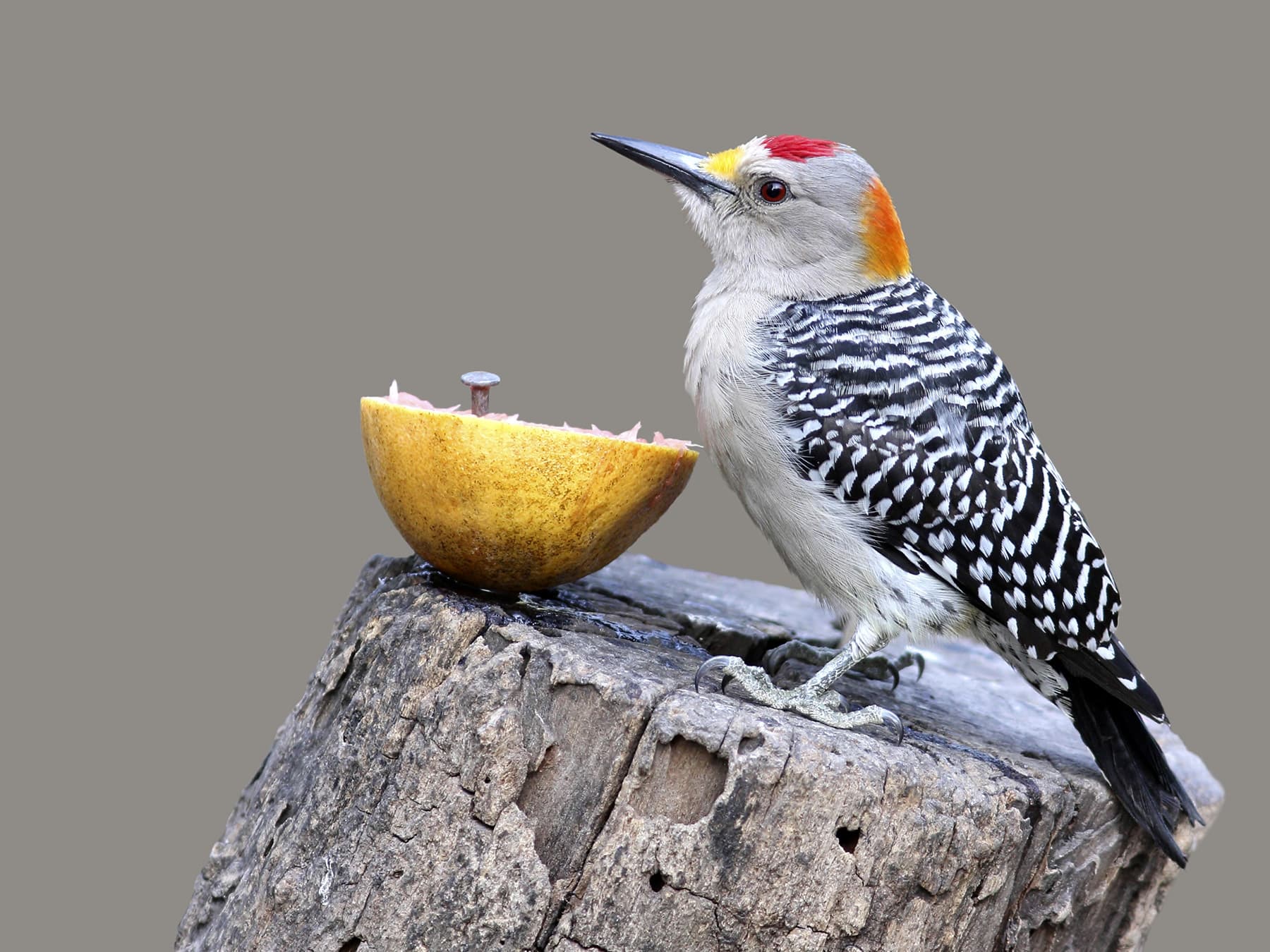 Golden-fronted Woodpecker Male
 Golden-fronted Woodpecker Female
 Female Golden-fronted Woodpecker
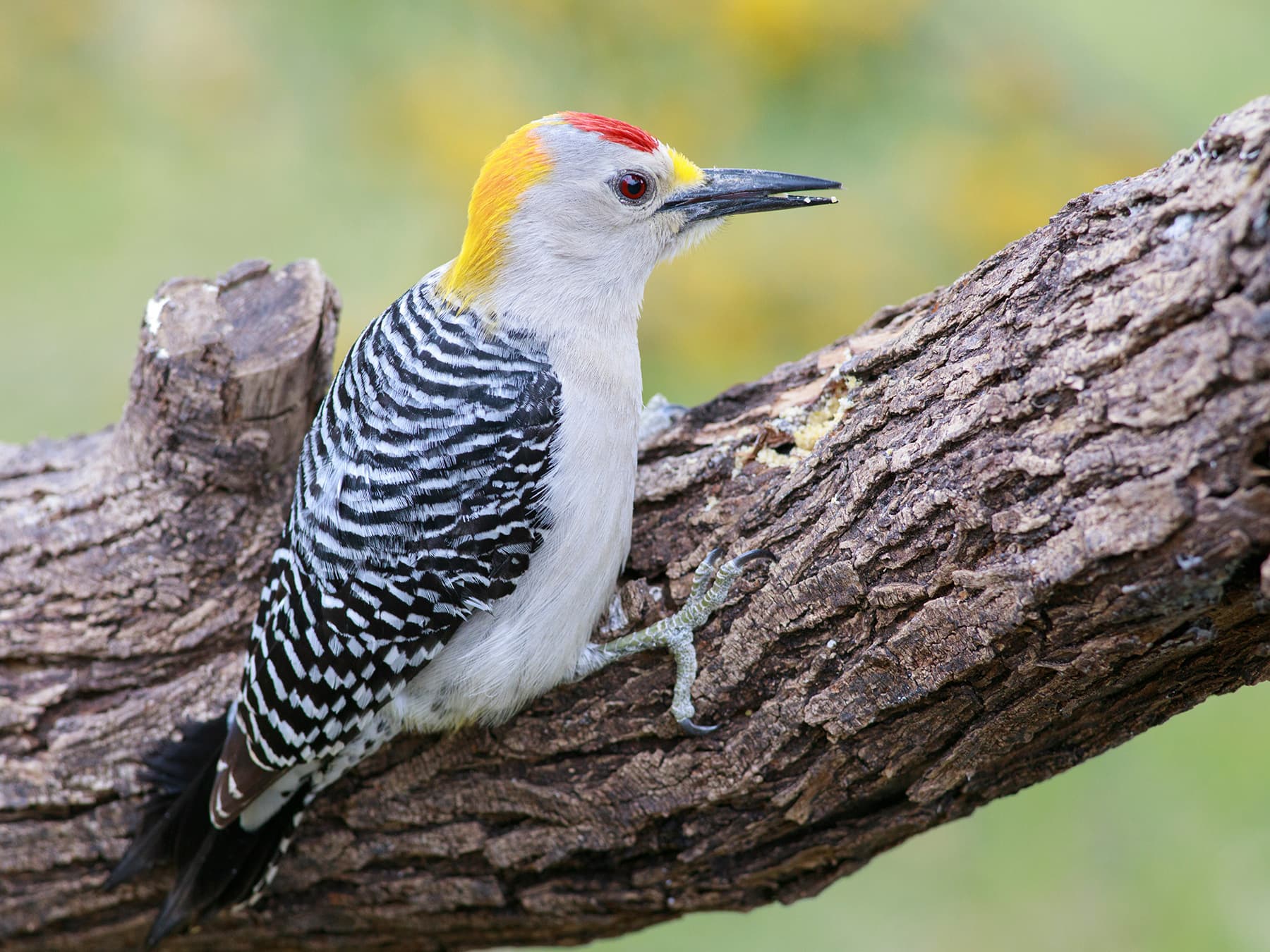 Golden-fronted Woodpecker feeding on the branch of a tree
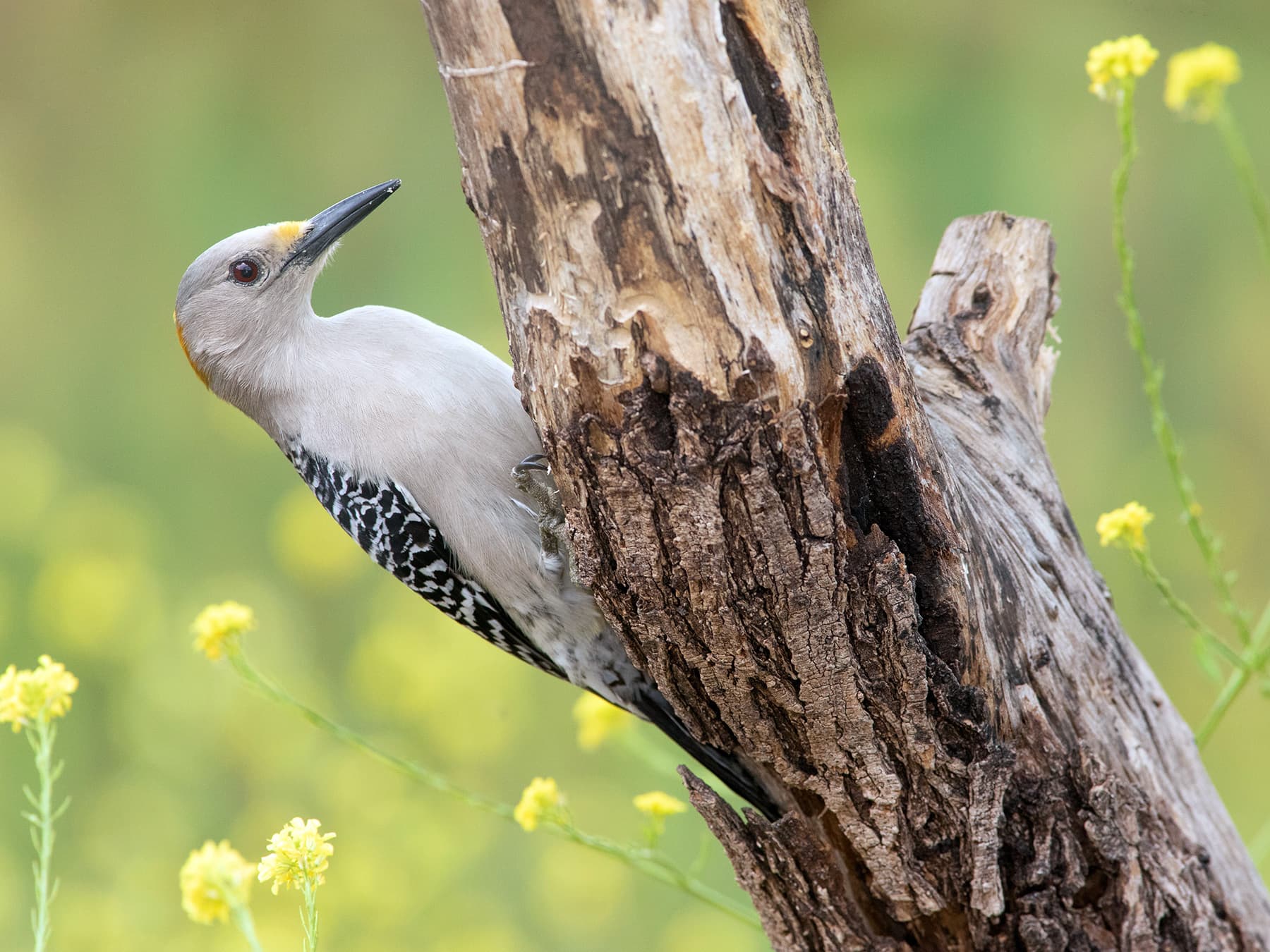 Female Golden-fronted Woodpecker perched on a tree trunk looking for insects
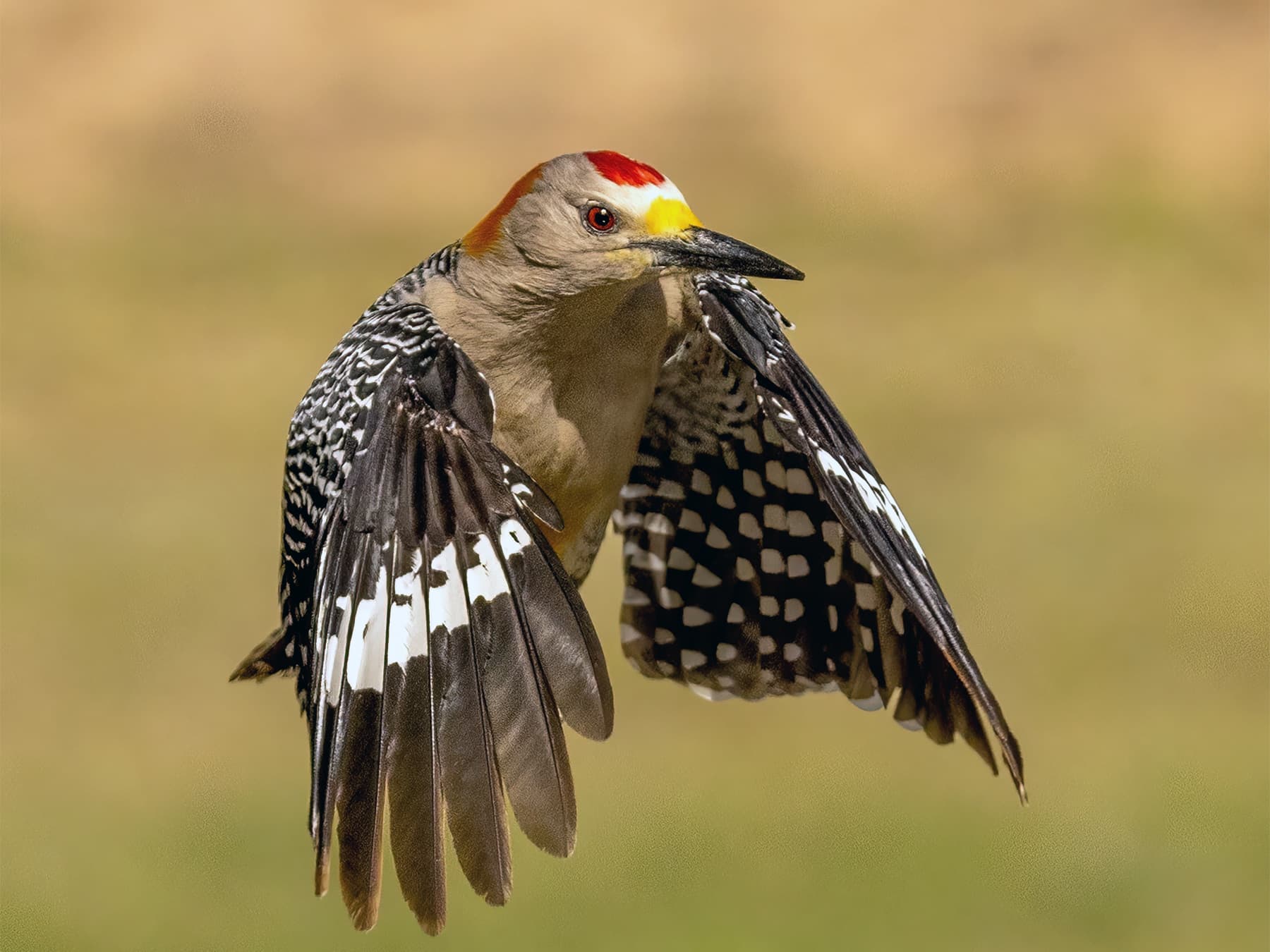 Golden-fronted Woodpecker in-flight
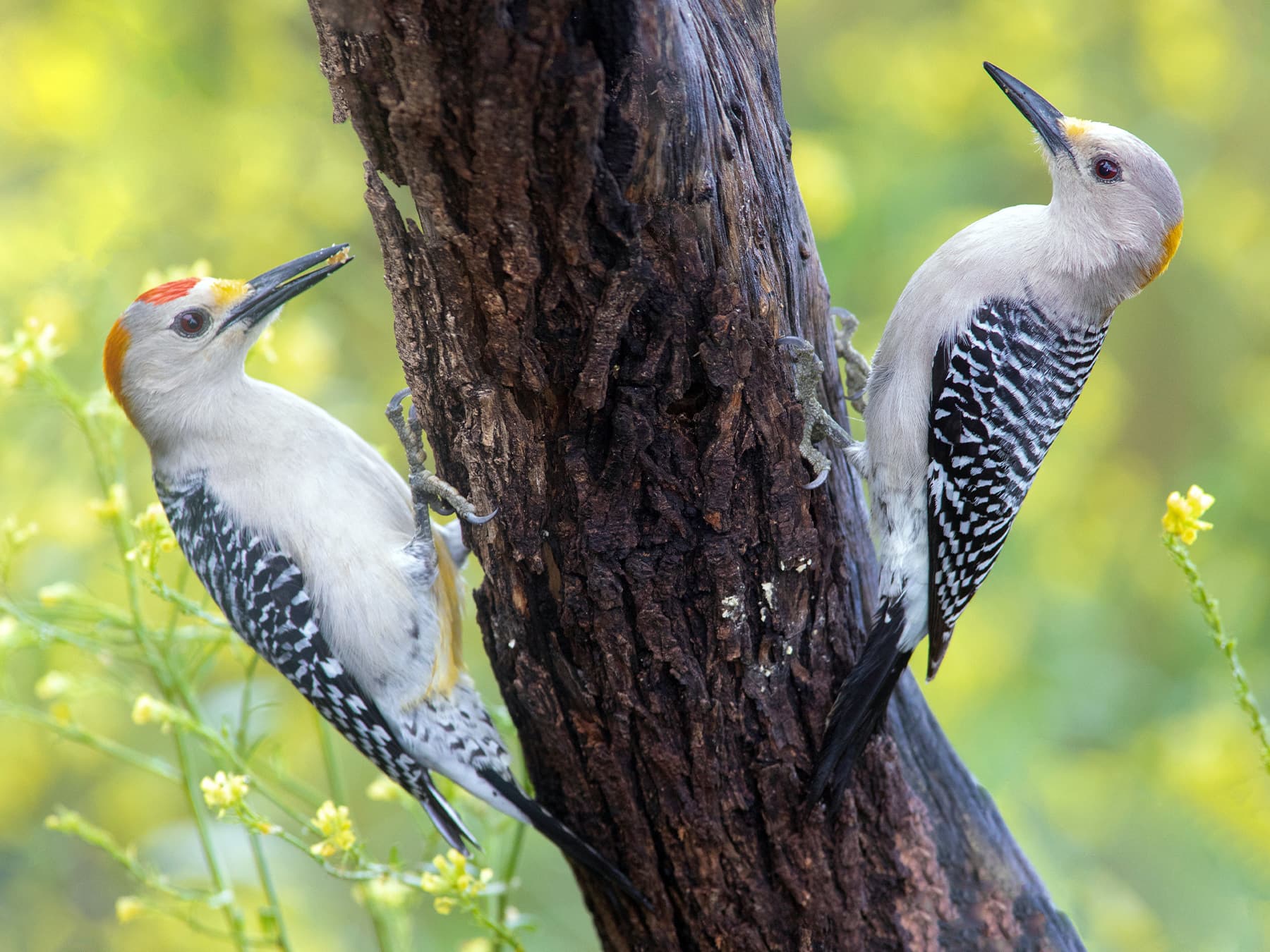 Gold-fronted Woodpecker Male (left) and Female (right)
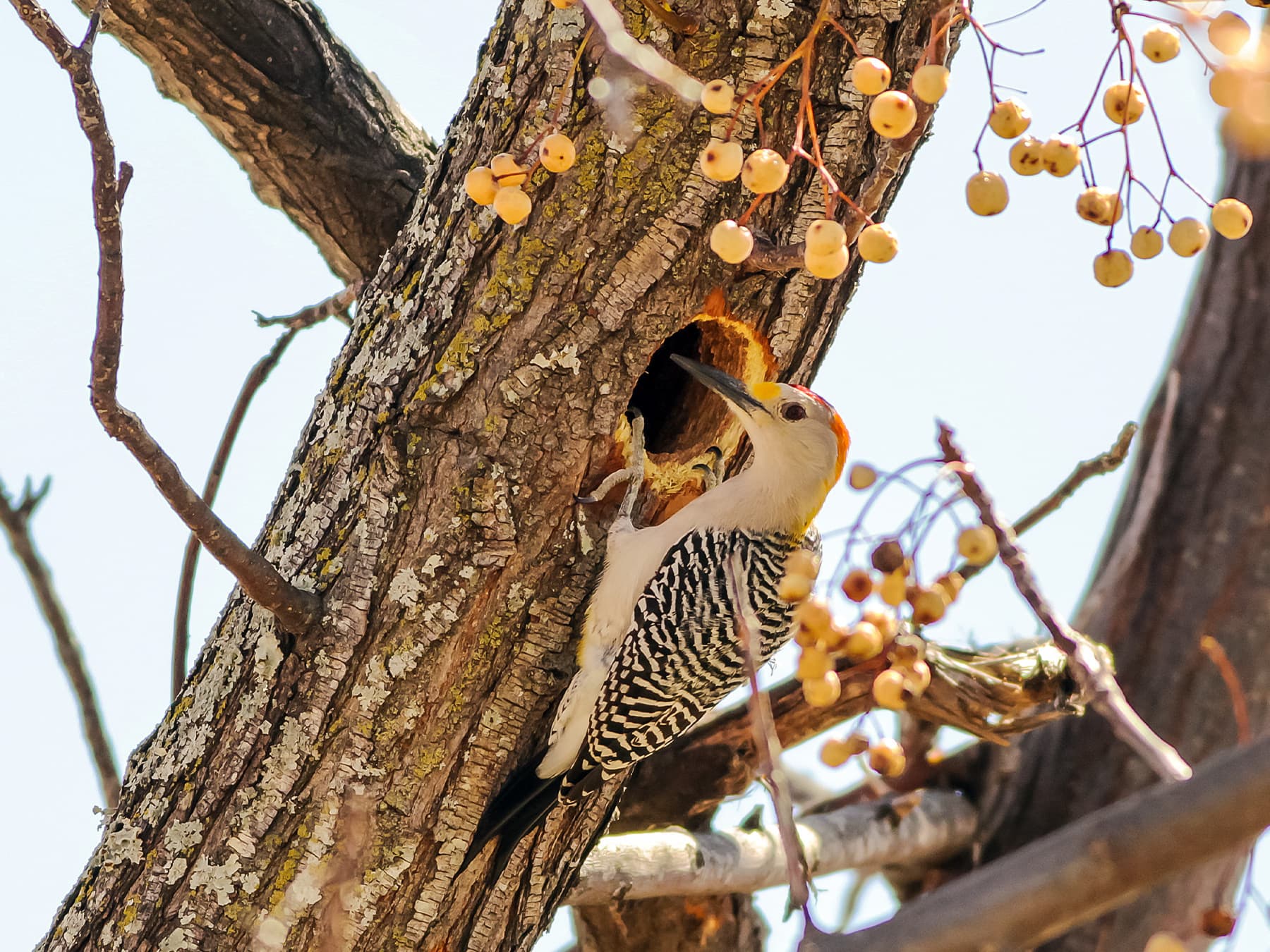 Gold-fronted Woodpecker drilling out a nest cavity
Quick facts
- Length
- 21–26 cm
- Wingspan
- 43–48 cm
- Weight
- 65–90 g
- Lifespan
- 5–8 years
- Family
- Woodpeckers
- Migration
- Resident
- Global status (IUCN)
- Least Concern
- World population
- 5,300,000 mature individuals
- Population trend
- Stable
- Also called
- Golden-fronted Flicker
- Scientific name
- Melanerpes aurifrons
Questions
6What attracts Golden-fronted Woodpeckers?
Bathing in small, shallow pools is a frequently observed behavior of golden-fronted woodpeckers, so providing shallow dishes topped up with fresh water will be welcomed. Insect-rich land and a variety of fruit trees and bushes are ideal, as well as dead trees for nesting and branches for perching.
What trees do Golden-fronted Woodpeckers prefer?
Trees favored as nesting spots for golden-fronted woodpeckers include mesquite, pecan, oak, hackberry, cottonwood, cedar elm, Mexican ash, and anacua.
Do Golden-fronted Woodpeckers harm trees?
Golden-fronted woodpeckers do create large holes in tree trunks, utility poles, and fence posts. They excavate cavities in both live and dead trees, but if the tree is healthy, no significant damage will be done, and they are beneficial in local ecosystems, keeping insect populations under control and indirectly providing shelter for other species to nest in.
Do Golden-fronted Woodpeckers go to bird feeders?
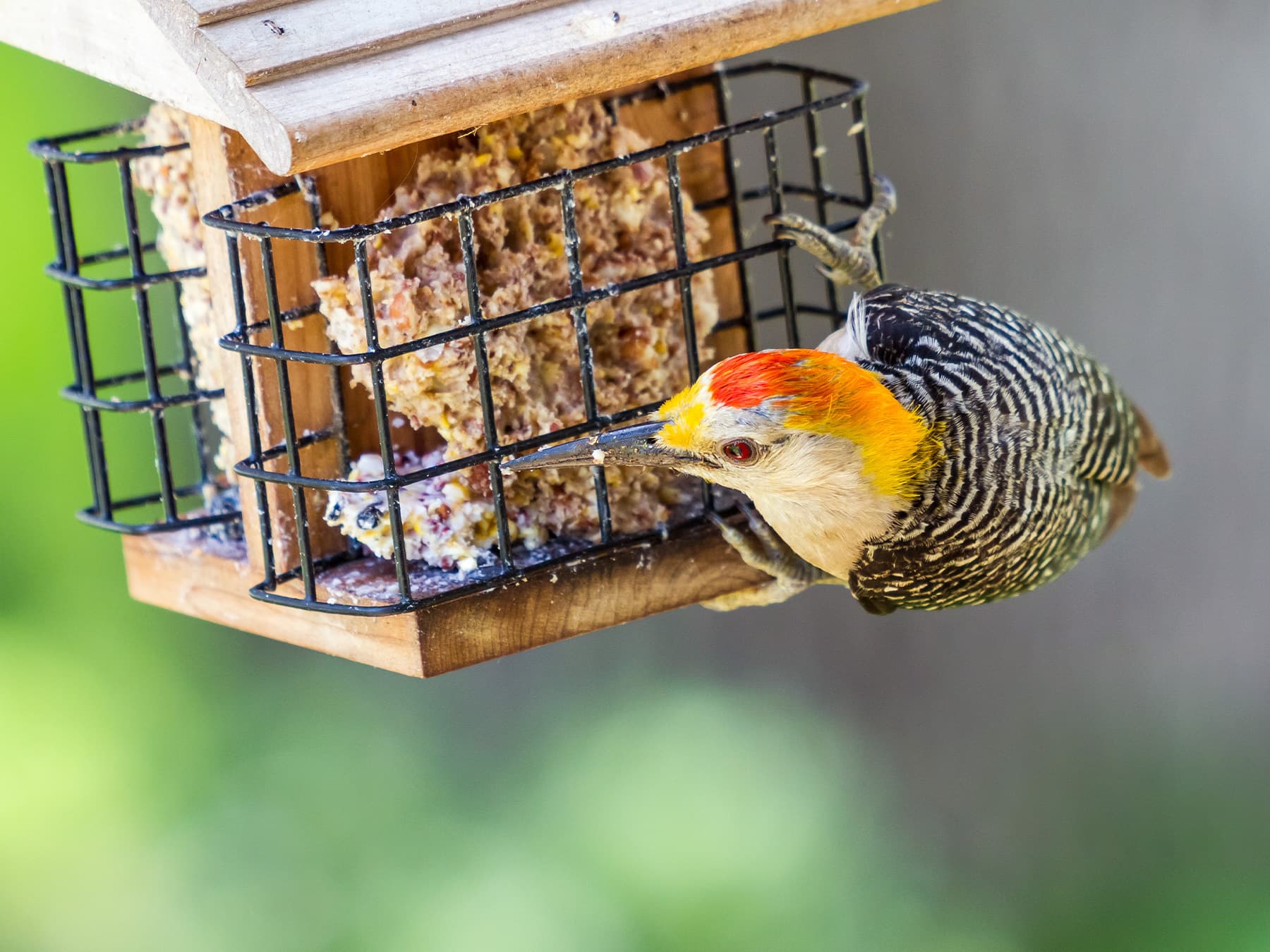
In urban areas, golden-fronted woodpeckers are keen visitors to backyard feeders, where they are particularly fond of pecans, sunflower seeds, corn, peanuts, bananas, and citrus fruits.
What is the difference between a red-bellied woodpecker and a Golden-fronted Woodpecker?
The main difference between red-bellied and golden-fronted woodpeckers is the head coloring: male red-bellied woodpeckers have a solid red forehead that extends to the nape, while in golden-fronted males, the small red cap sits on an otherwise white head, with a clear golden patch above the bill and on the nape.
Females are similar, but in red-bellied woodpeckers the patch on the rear of their head is red, and in golden-fronted woodpeckers it is yellow.
Red-bellied woodpeckers have a far wider range that extends across much of the eastern United States. Golden-fronted woodpeckers are found in a much smaller area and are only present in a very small region of Oklahoma and across larger parts of Texas.
What are the characteristics of a Golden-fronted Woodpecker?
The most notable characteristic of a golden-fronted woodpecker is the vibrant gold-orange nape patch, as well as the yellow feathering around the bill, and, in males, the scarlet cap. Their bodies are heavily barred with black and white, their tail is solid black, and they have a white nape that is visible in flight.
Sources
3- 1BirdLife International. 2016. Melanerpes aurifrons. The IUCN Red List of Threatened Species 2016: e.T22680862A92883010. Source (opens in a new tab)
- 2Breeding Bird Survey and/or Christmas Bird Count: Butcher and Niven (2007)
- 3Partners in Flight (2019)

Checked by
Nathan Cope, founder and editor
Nathan founded Birdfact and leads its writers and contributors in the UK, the US and Canada. He has watched and studied birds for more than ten years, and checks every article and species guide before it’s published.