
Gila Woodpecker
Saguaro Woodpecker · Melanerpes uropygialis
By the Birdfact teamChecked by Nathan Cope
On this page13 sections
How to recognise it
What do Gila Woodpeckers look like
Gila Woodpeckers are attractive birds with bold, contrasting plumage. Unlike most species in their family, they are not predominantly black and white.
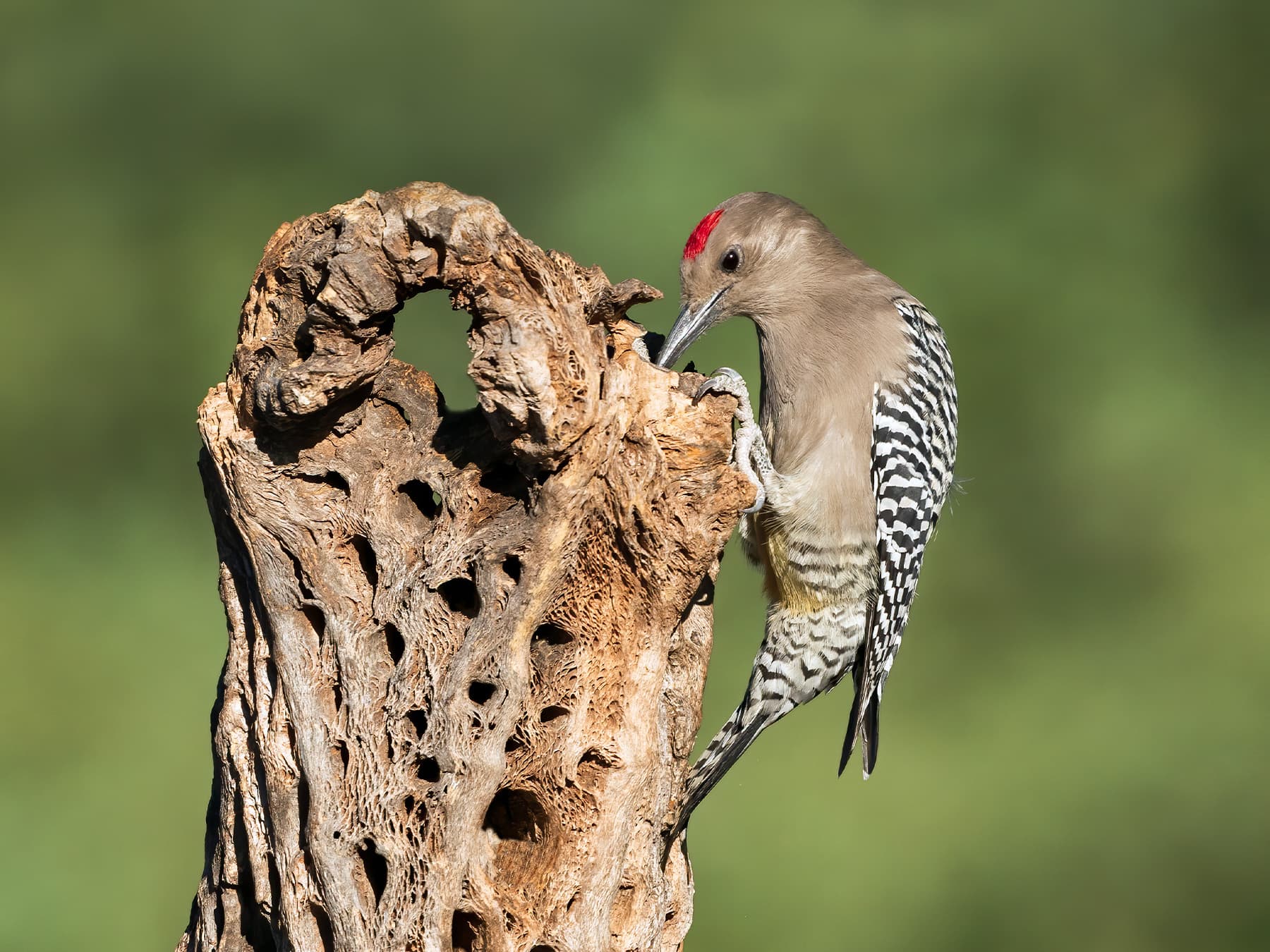
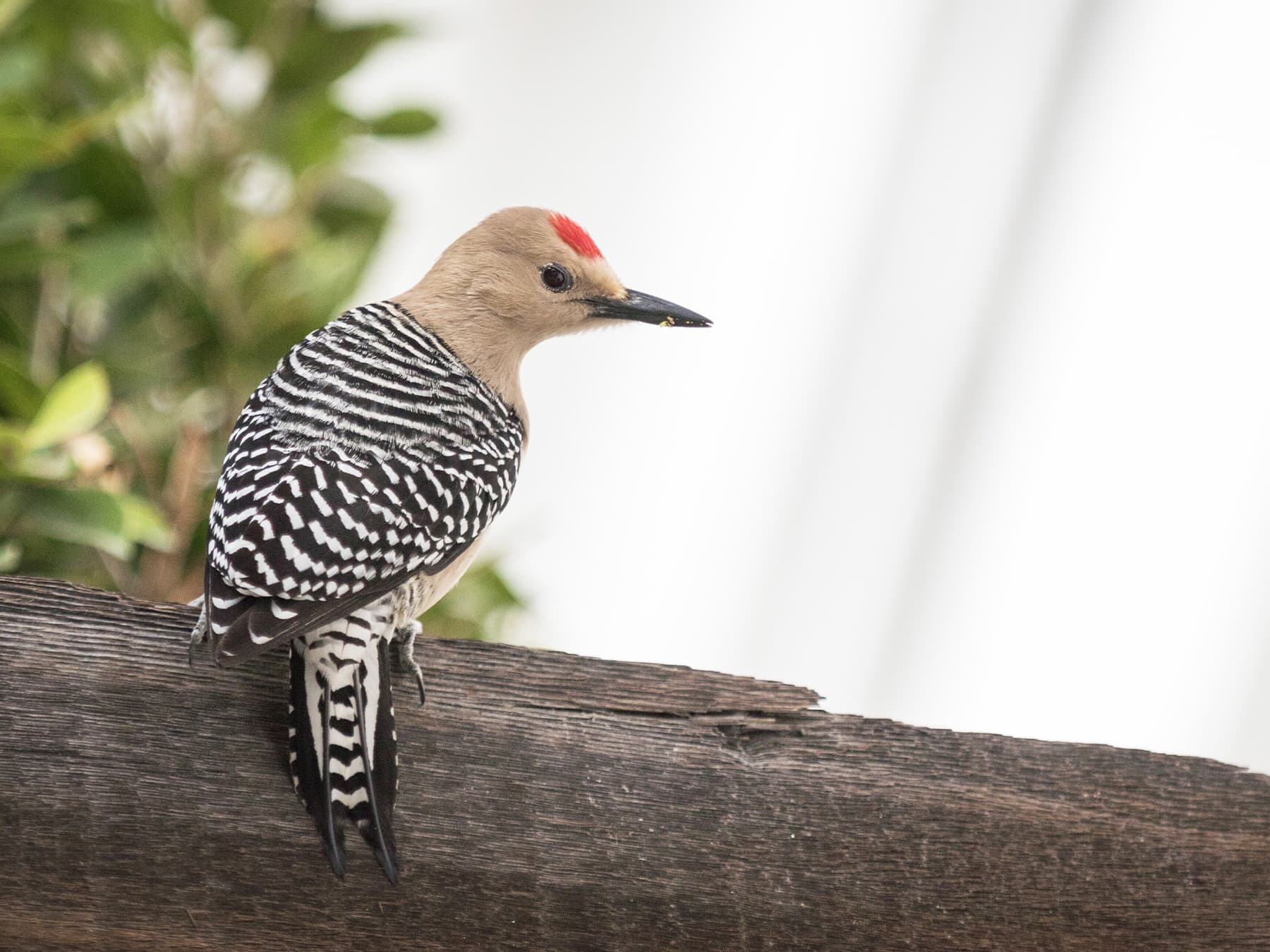
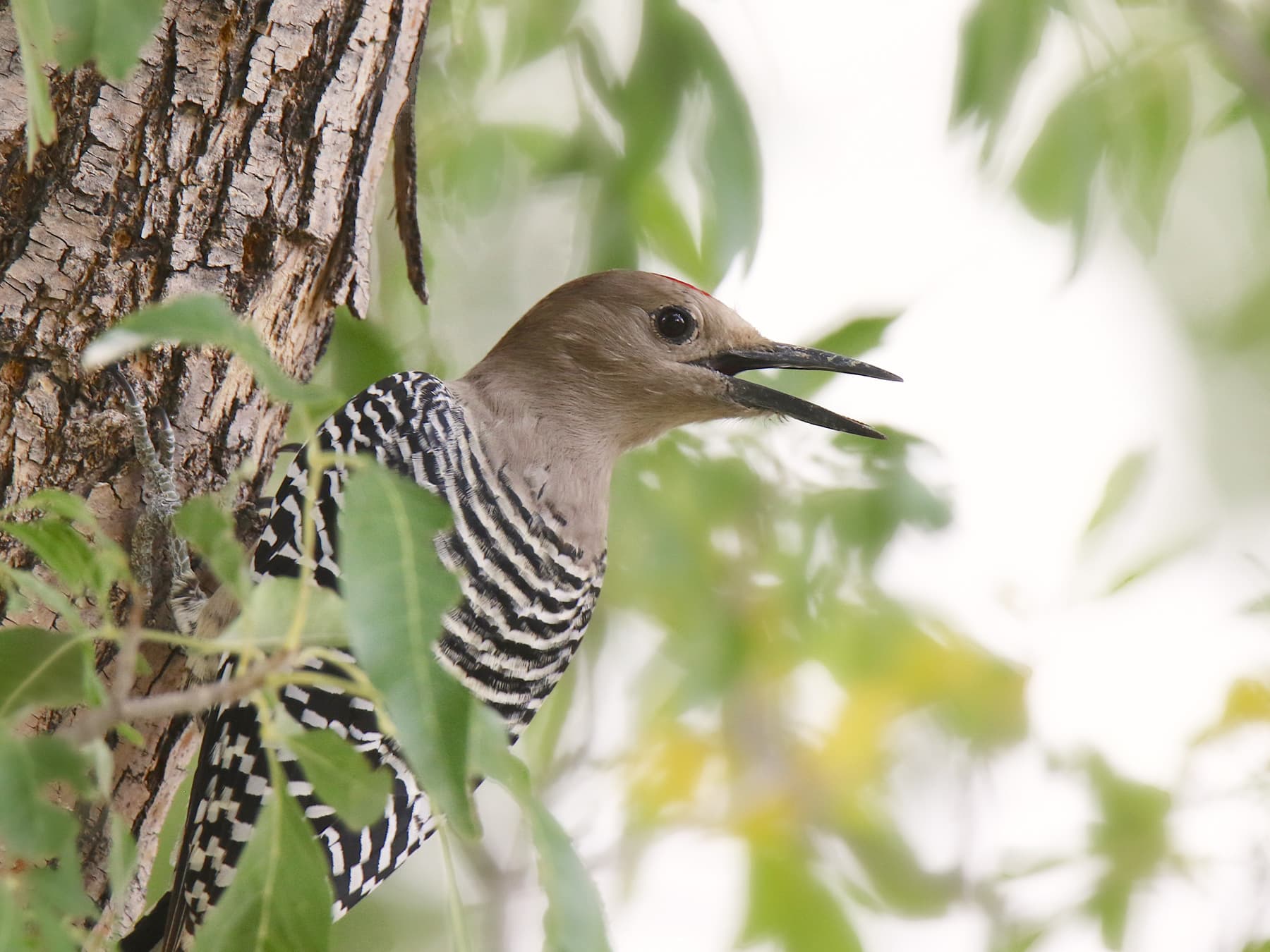
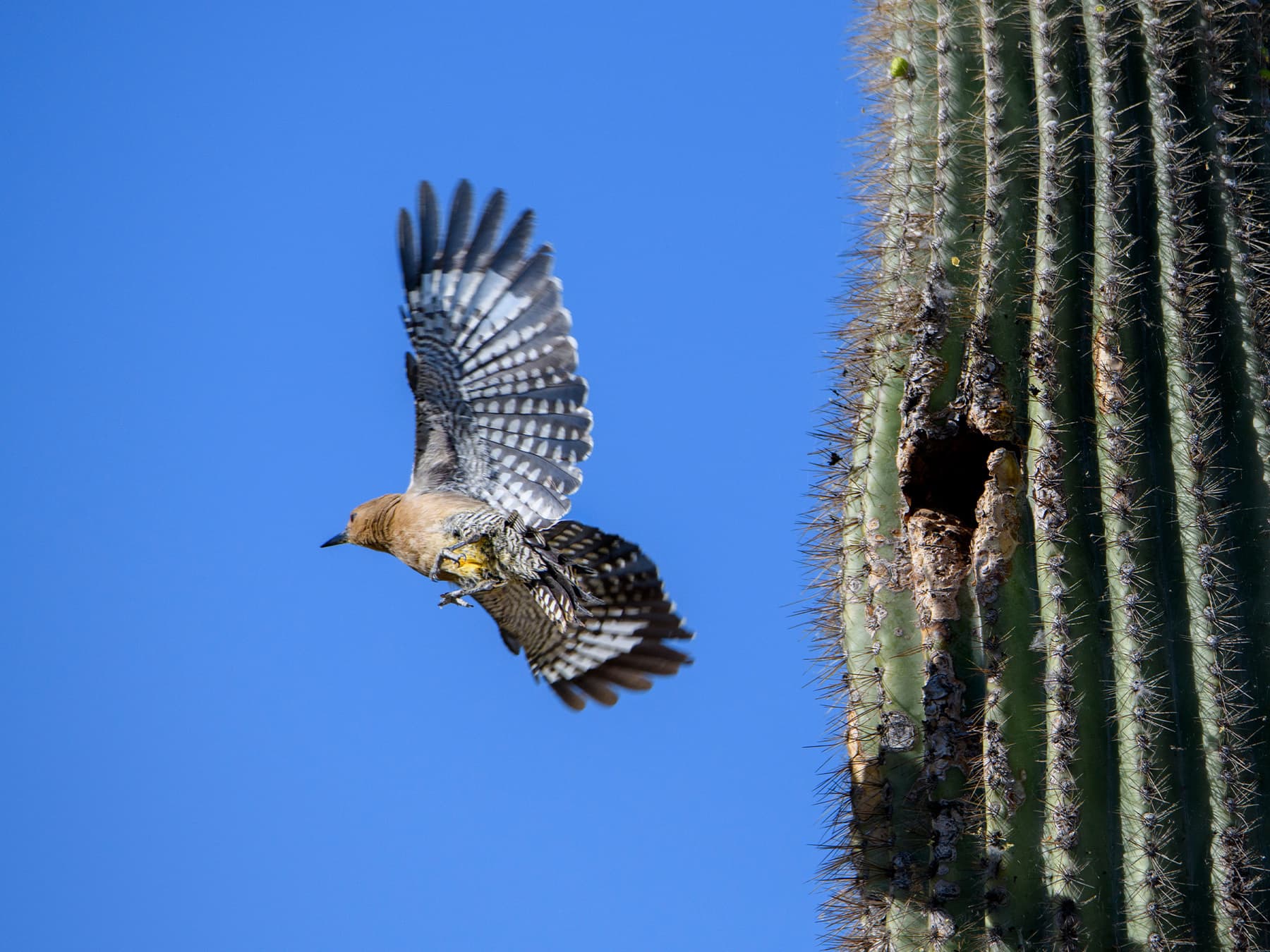
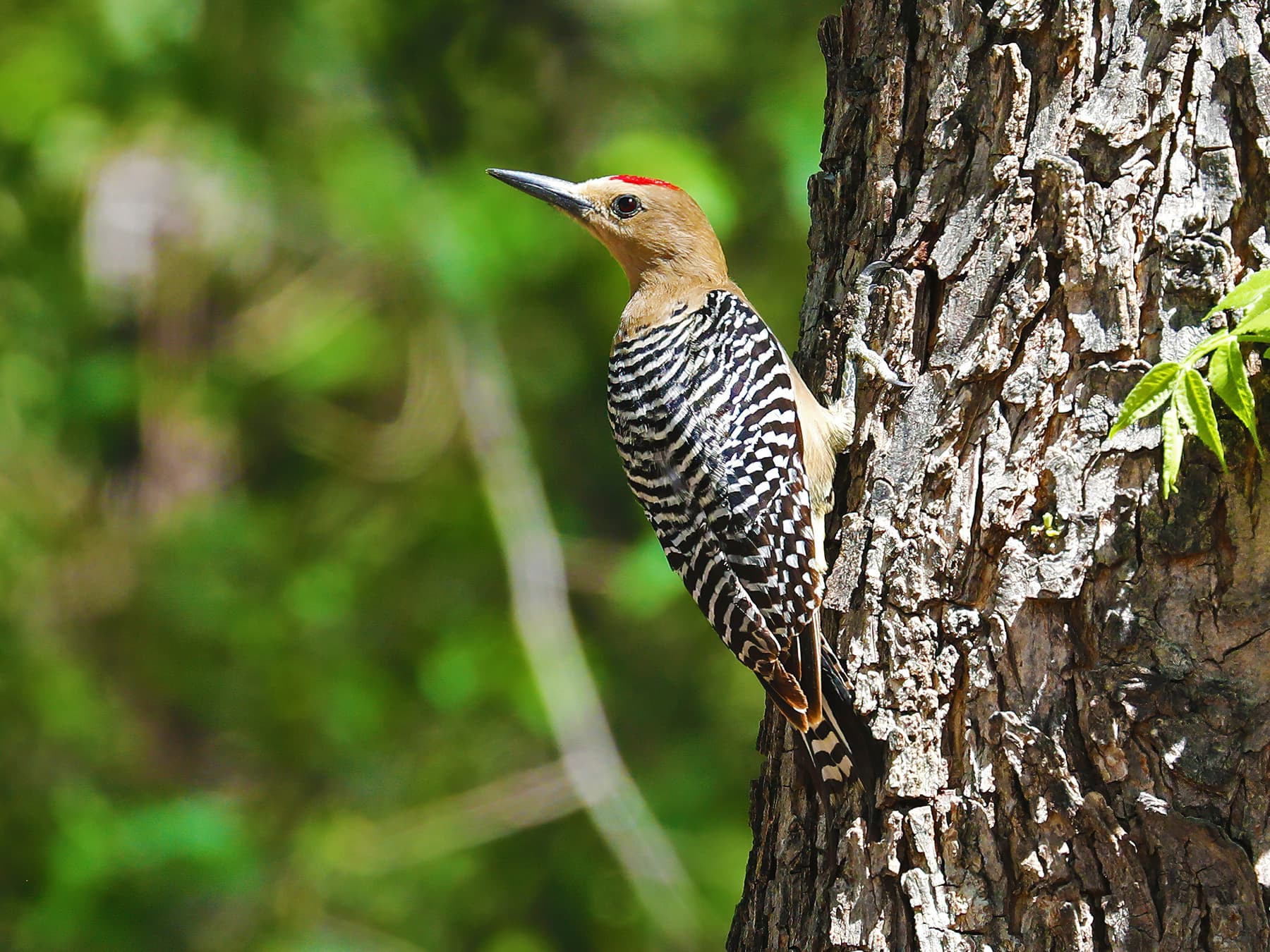
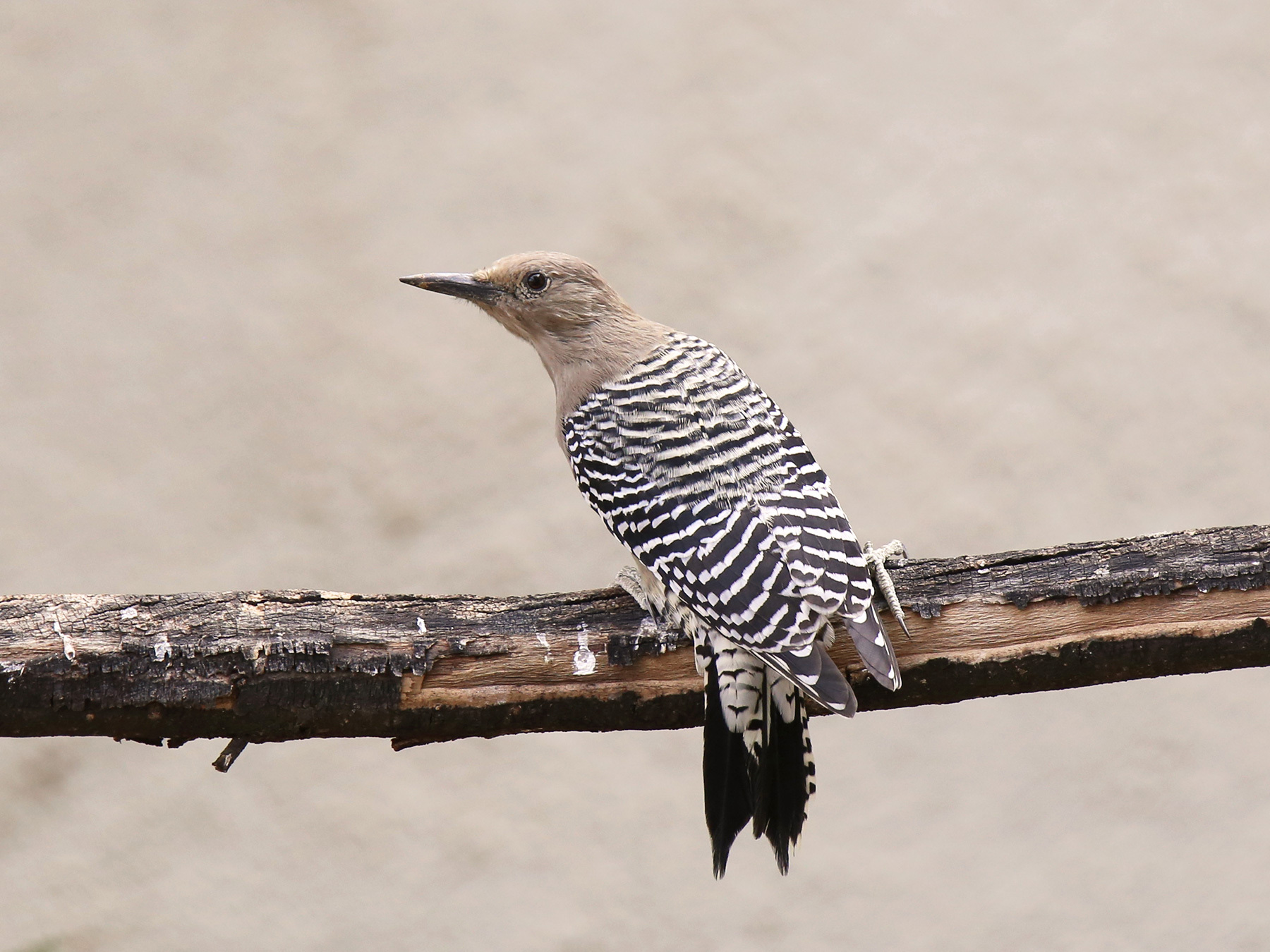
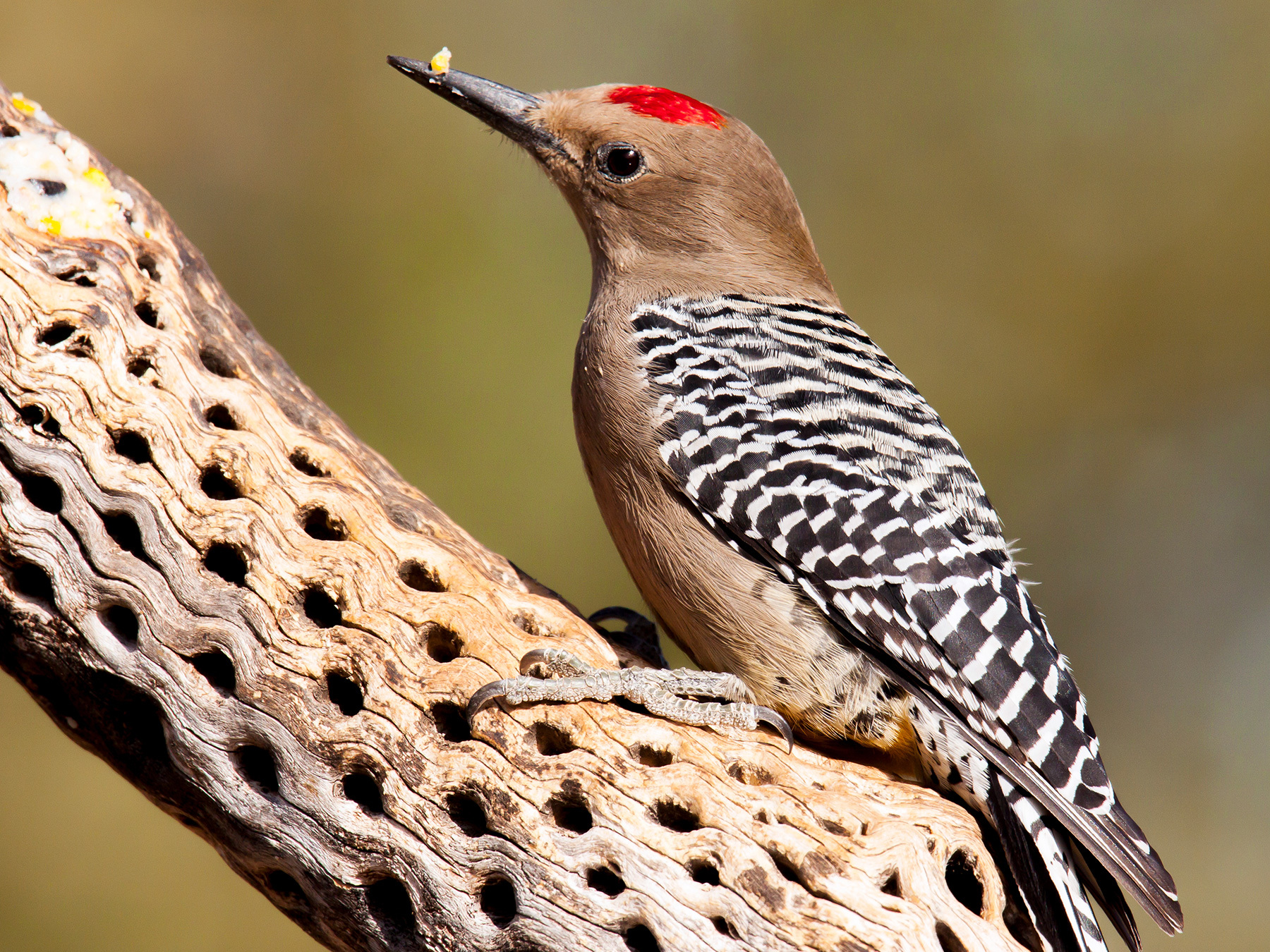
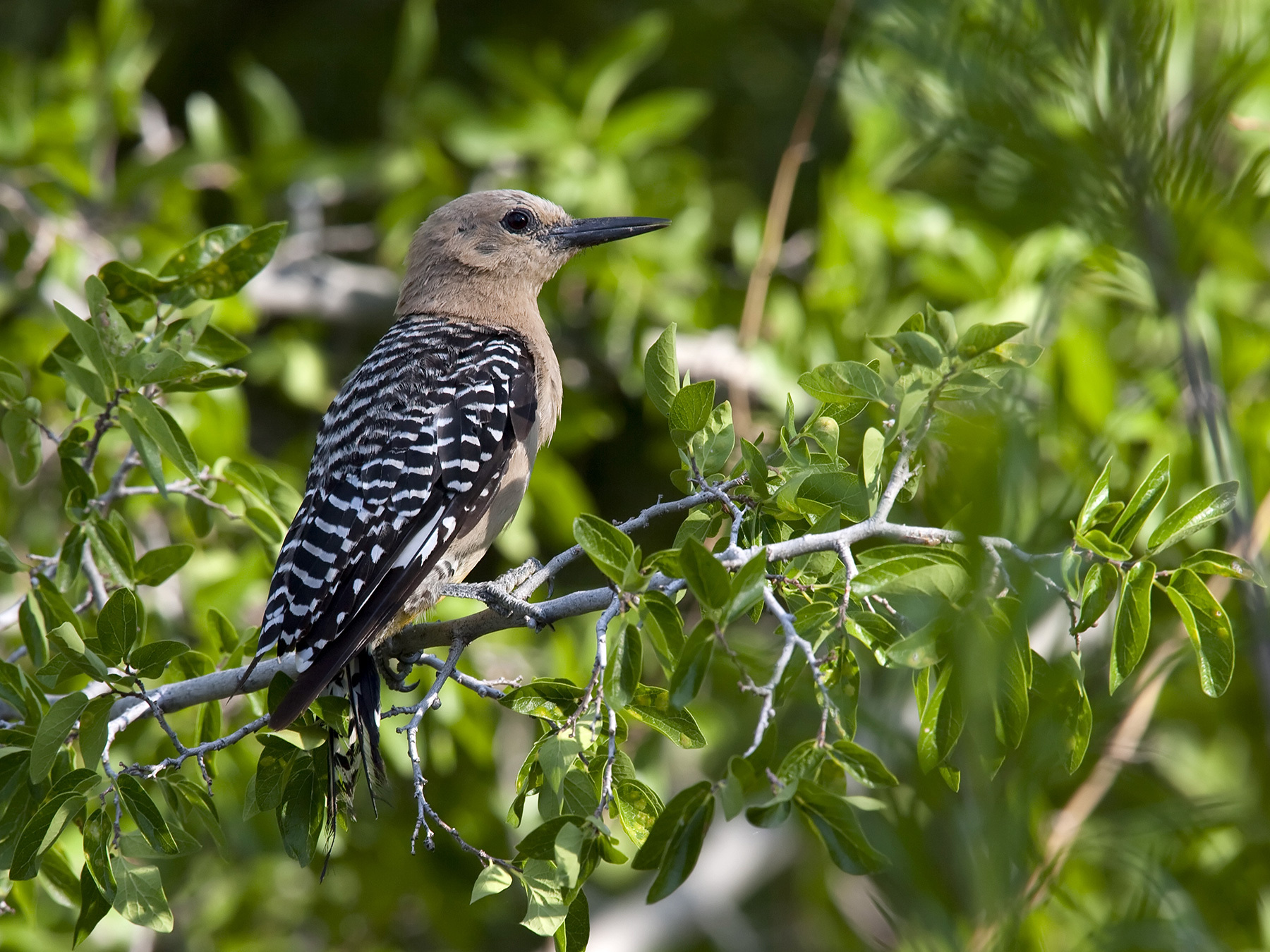
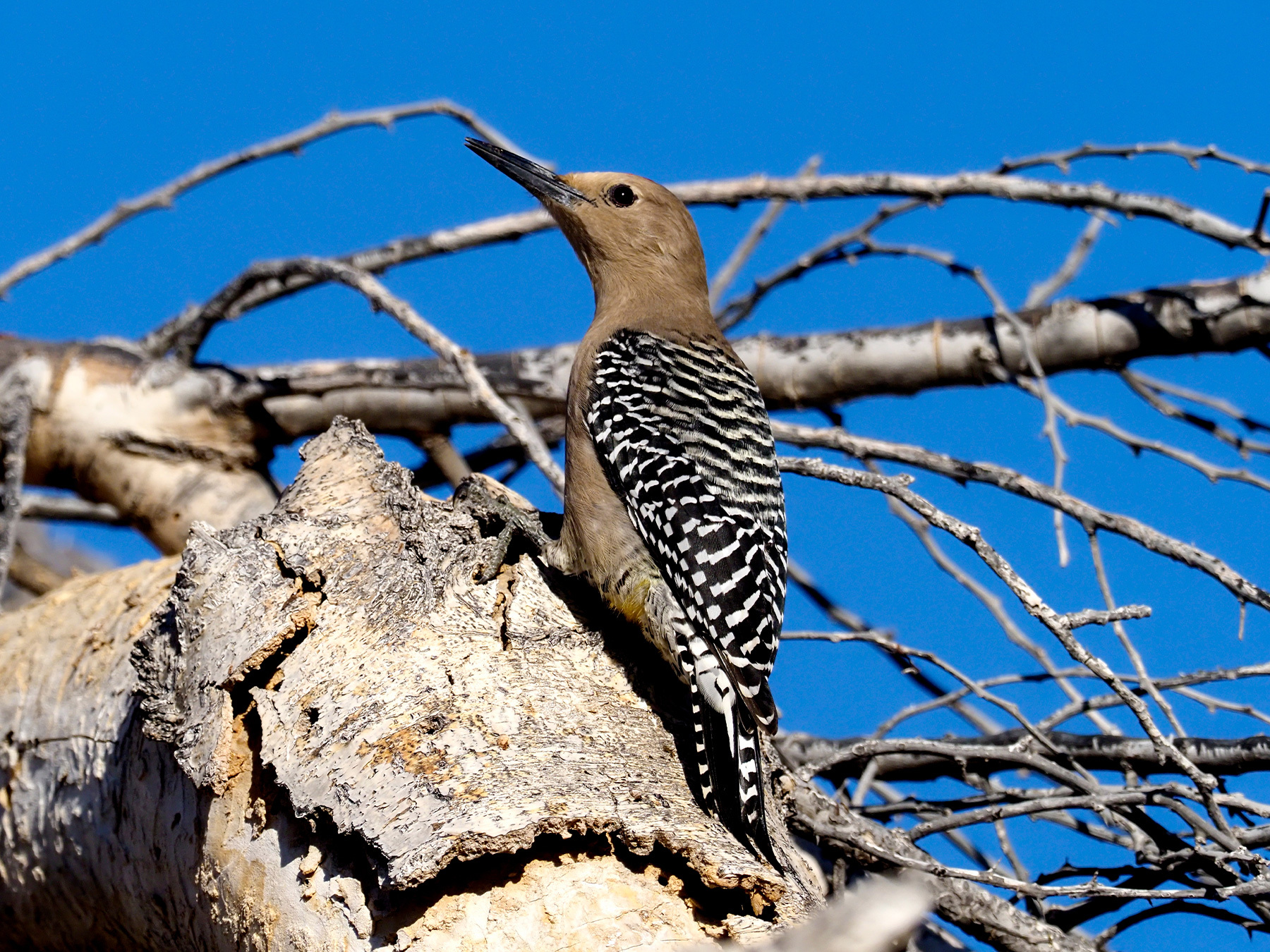
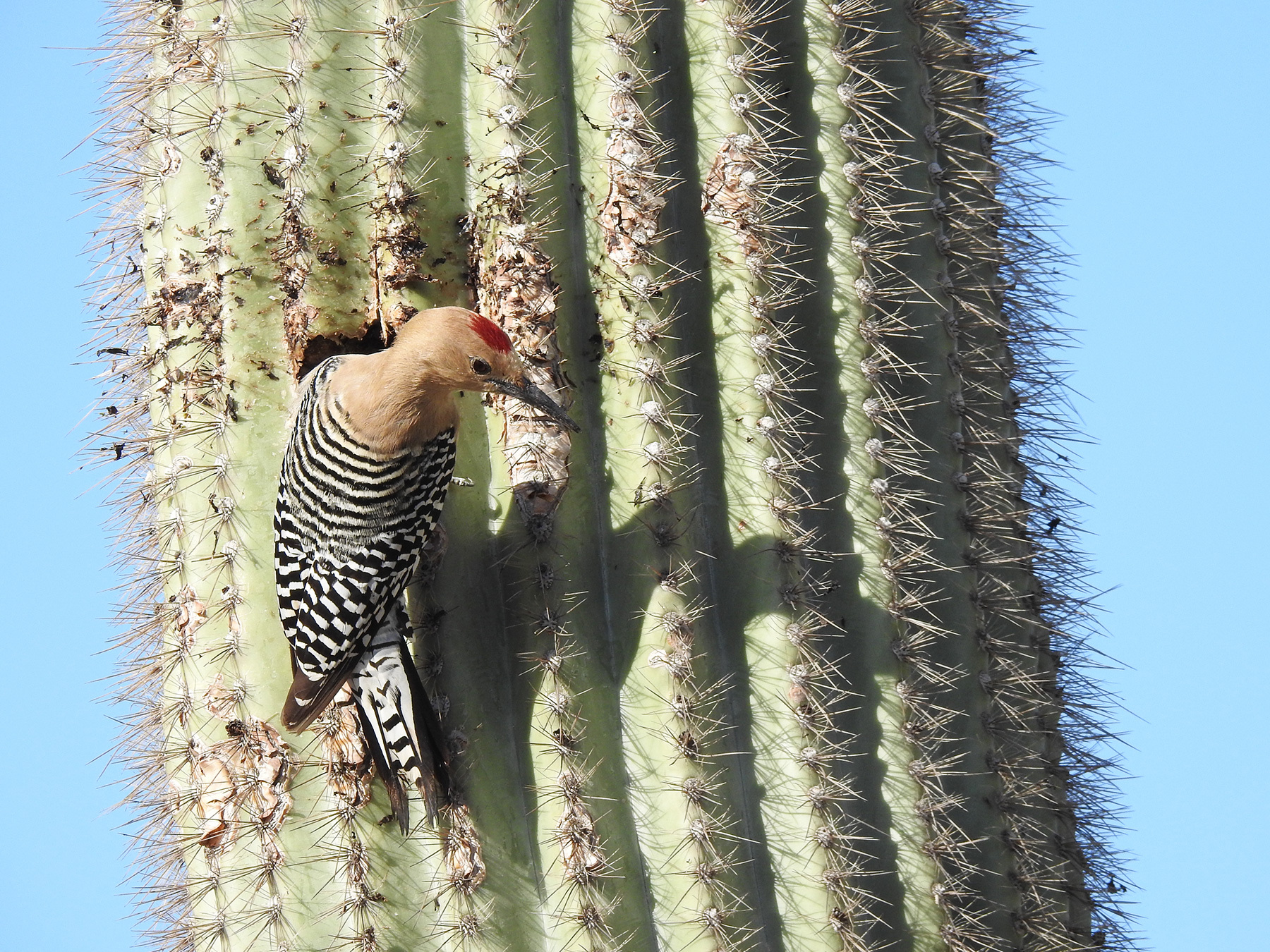
Adult Gila Woodpeckers have uniform tan-brown underparts, heads, and necks. Their wings and back are black with conspicuous white barring. Prominent white markings are visible on the ends of each wing in flight. Their bill and eyes are black, and their legs and feet are dark blueish or greenish.
Females are very similar to males, although they have all-brown heads, whereas males have a small but distinct red crown. Juveniles are similar to adults, although generally duller.
You’re unlikely to confuse the Gila Woodpecker for any other species in Arizona, but their range does overlap with the Golden-fronted Woodpecker (M. aurifrons) in Central Mexico. That species has orange and yellow head markings and paler grayish underparts. Flickers (Colaptes spp.) have a similar color but are much larger and have spotted underparts, brown backs, and colorful wings in flight.
How big are Gila Woodpeckers
Gila Woodpeckers are a medium-sized species similar in size to the widespread Hairy Woodpecker.
Length
Most adults measure 8 to 10 inches or 22 to 25 centimeters long. Males and females are similar in size.
Weight
Their weight ranges between about 1¾ and 2¾ ounces or 50 to 80 grams.
Wingspan
Adults have a 16 to 17-inch wingspan (40 - 43 cm).
Its size
Adults- Length
- 20–25 cm
- Wingspan
- 40–43 cm
- Weight
- 60–85 g
Its song and calls
What sound does a Gila Woodpecker make?
Gila Woodpeckers are noisy birds that call and drum to communicate. Typical calls by both males and females include repeated yipping and a rolling ‘churr-churr-churr.’
When and where to see it
OctoberHere all year
Most recorded in October
- 1. Arizona2.7%
- 2. New Mexicounder 0.1%
- 3. Californiaunder 0.1%
Each dot is a county, state or province: the bigger and darker, the larger the bird’s share of that place’s bird records that month. Grey dots: no regular records. The ringed point is the centre of the bird’s records this month; the arrow shows how it moved since last month, and the dashed loop its path through the year. “Arrivals” colours places where it becomes regular this month (orange) or is in its last regular month (grey). GBIF eBird Observation Dataset, 2019–2024. Map data: Natural Earth, US Census Bureau; place centres © OpenStreetMap contributors.
In your area
See when the Gila Woodpecker is recorded in your county, state or province.
How often the Gila Woodpecker turns up in the United States through the year, from birdwatchers' records.
United States
Resident · all year · most records in March
Show as a table
| Month | United States |
|---|---|
| January | 0.12% (regular) |
| February | 0.12% (regular) |
| March | 0.12% (regular) |
| April | 0.077% (regular) |
| May | 0.045% (regular) |
| June | 0.045% (regular) |
| July | 0.066% (regular) |
| August | 0.095% (regular) |
| September | 0.069% (regular) |
| October | 0.082% (regular) |
| November | 0.11% (regular) |
| December | 0.12% (regular) |
Worldwide: recorded regularly in 2 countries
Countries where it was recorded in at least 3 of the 6 years 2019–2024. Linked countries have their own bird list.
North America (2)
Data: EOD – eBird Observation Dataset (Cornell Lab of Ornithology), accessed via GBIF.org, CC BY 4.0. Records from 2019–2024, aggregated and filtered by Birdfact. How these lists are made
What is the habitat of a Gila Woodpecker?
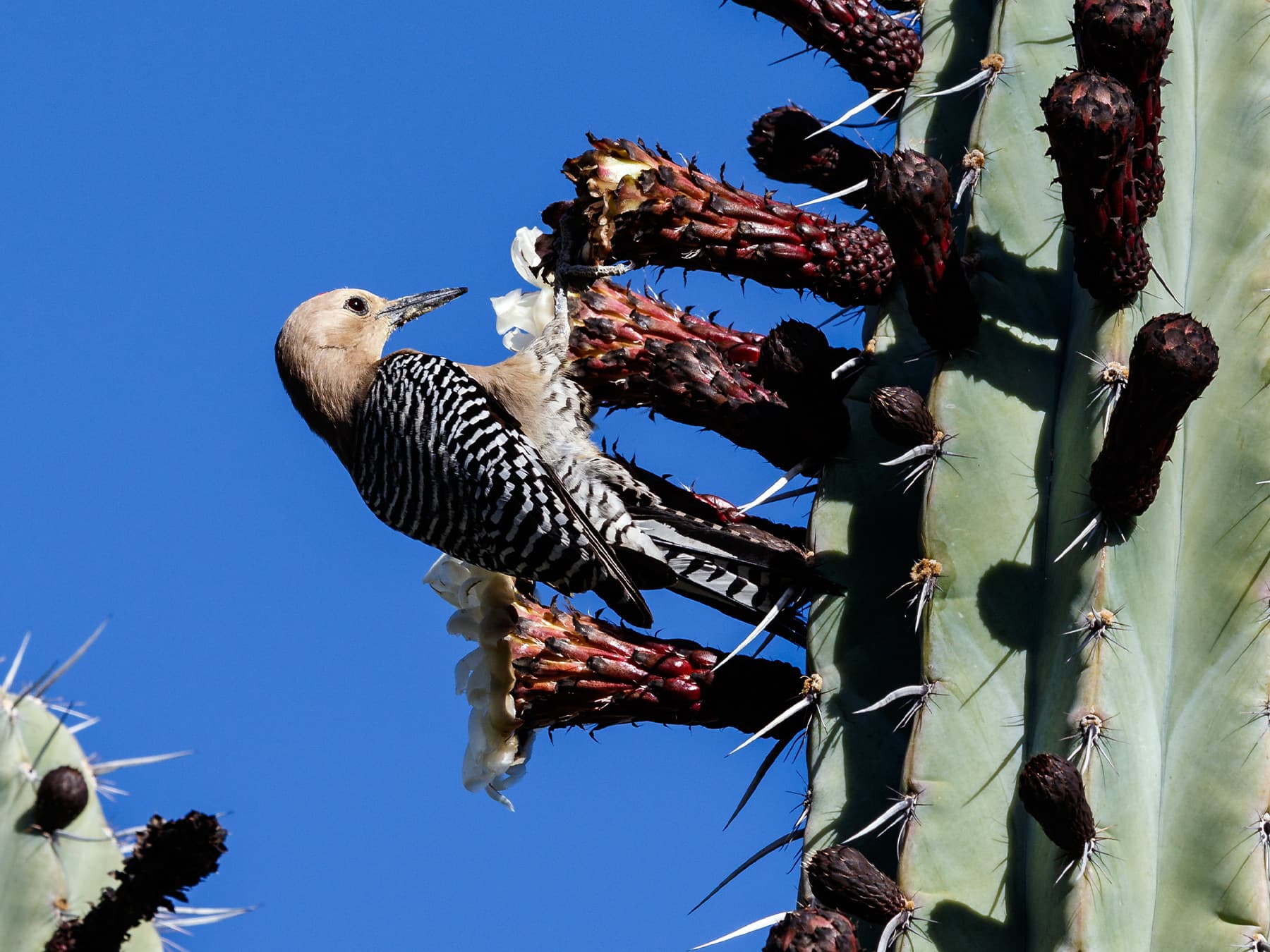
Gila Woodpeckers are desert birds. They are closely associated with the giant saguaro cactus but also visit suburban areas and wooded water courses.
What is the range of a Gila Woodpecker?
Gila Woodpeckers are restricted to North America. Most of their range falls within western Mexico, although they also occur in the Southwest of the United States. They are widespread in Southern Arizona and occur marginally in neighboring California and New Mexico.
Where do Gila Woodpeckers live?
Gila Woodpeckers are most at home among the spines of the Saguaro cactus (Carnegiea gigantea), a giant species that can reach 40 feet tall. They will also forage among other trees and plants or catch prey down on the ground.
How rare are Gila Woodpeckers?
Gila Woodpeckers are common in suitable habitats, although they have a very restricted range in the United States.
Where can you see Gila Woodpeckers in the US?
Arizona is the best place to see Gila Woodpeckers in the United States. The Saguaro National Park is a great place to spot them, although they are widespread in the Sonoran Desert.
Migration
Do Gila Woodpeckers migrate?
Gila Woodpeckers are non-migratory, although some birds make short seasonal movements in the winter. You can usually find these birds in suitable habitats at any time of the year.
Are Gila Woodpeckers native to the US?
Gila Woodpeckers are native to the United States, although most of their range lies to the south in Mexico.
Tips for seeing it
- Look for Gila Woodpeckers near saguaro cacti in desert areas
- Listen for their distinctive 'churr' call, which can help locate them
- Observe palm trees and wooden structures in urban areas, as they often nest in these
- Watch for their undulating flight pattern, typical of woodpeckers
What it eats
What do Gila Woodpeckers eat?
Gila Woodpeckers are omnivores that eat a variety of plant and animal foods, including:
- Insects
- Worms
- Bird eggs and hatchlings
- Fruits and berries
- Suet and other birdfeeder offerings
What do Gila Woodpecker chicks eat?
Gila Woodpecker chicks eat similar foods to their parents, including insects and fruits. The young are ready to leave the nest after about a month but will be fed by their parents for much longer.
Nesting and breeding
Where do Gila Woodpeckers nest?
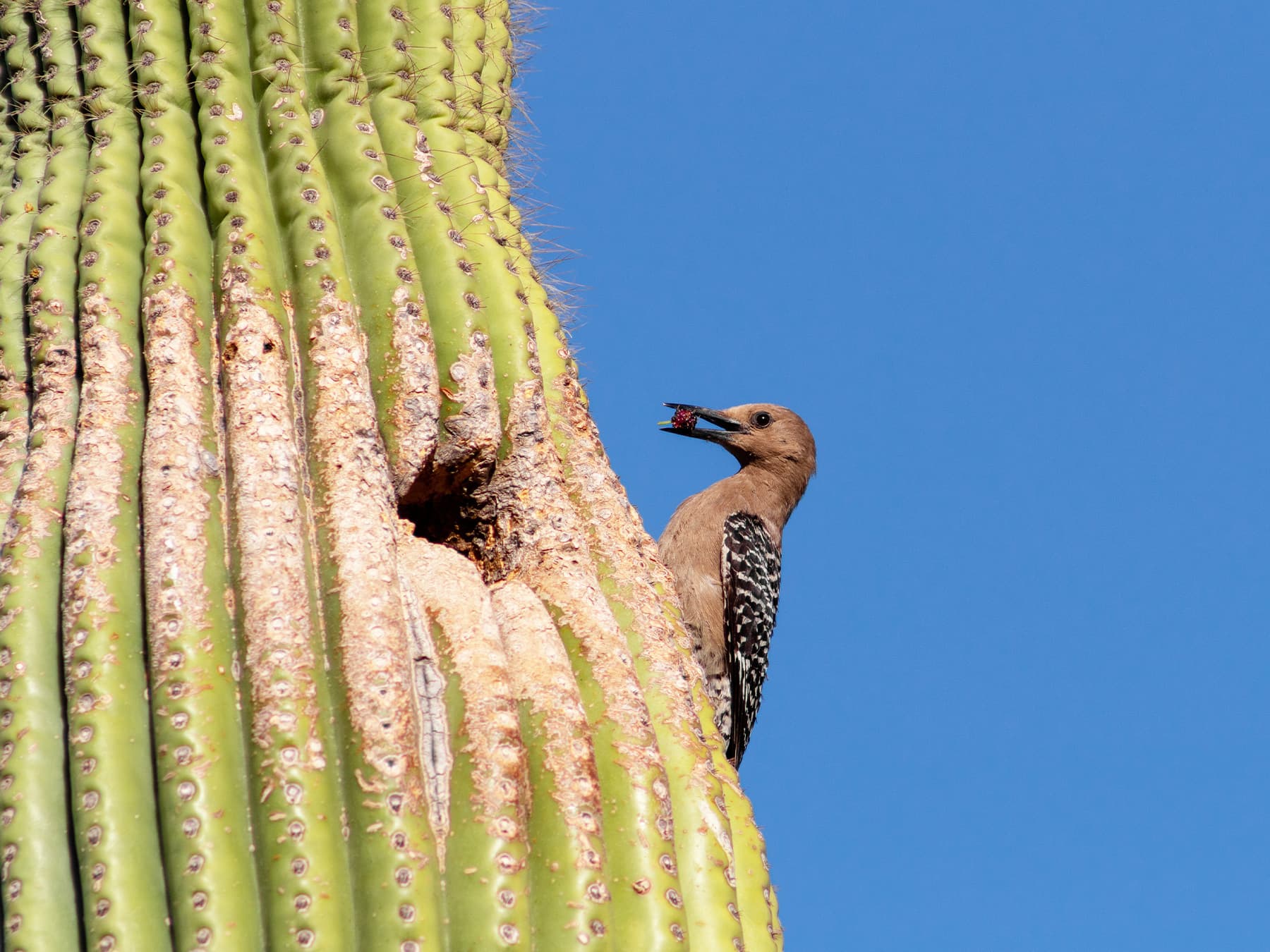
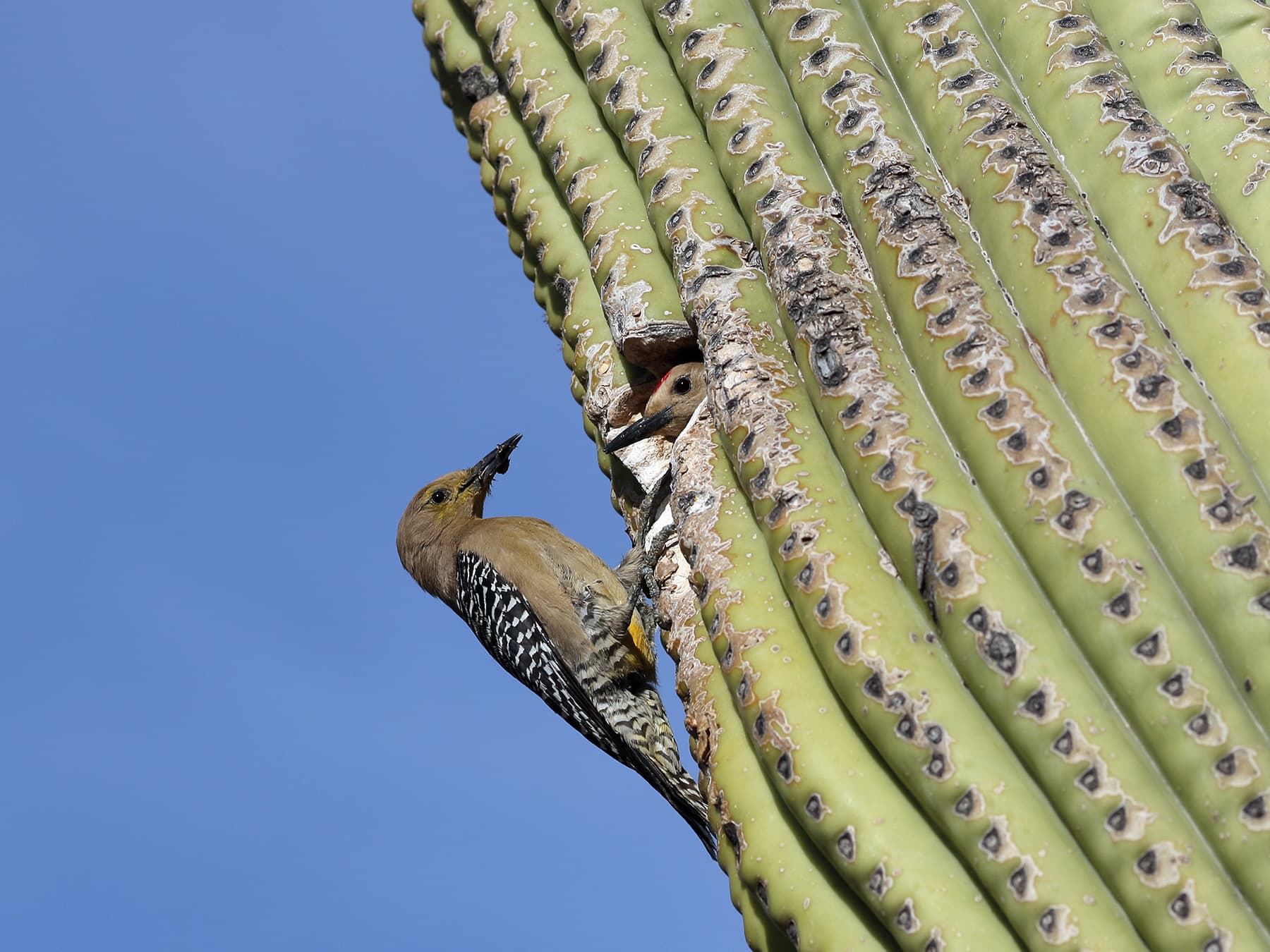
Gila Woodpeckers typically nest in the stem of the saguaro cactus, although they will also use other species like mesquites (Prosopis) and cottonwoods (Populus). A paired male and female will work together to excavate a foot-long chamber with a two-inch entrance hole, usually high above the ground.
When do Gila Woodpeckers nest?
Gila Woodpeckers breed in the spring and summer. Their nesting season runs from April to August, and pairs may have a second or even third brood in good years.
What do Gila Woodpecker eggs look like?
Gila Woodpeckers lay three to six plain white eggs, each measuring about an inch long and three-quarters of an inch across (25 x 19 mm).
Behaviour
Are Gila Woodpeckers aggressive?
Gila Woodpeckers are highly aggressive when nesting and do not tolerate other birds near their nest. Males are particularly protective and will chase and attack many other species of birds, as well as their own kind.
Where do Gila Woodpeckers sleep at night?
Gila Woodpeckers roost in cavities that they excavate in cacti and trees.
Lifespan and predators
How long do Gila Woodpeckers live?
Gila Woodpeckers can live for about ten years in captivity. However, the oldest wild specimen on record lived for nearly eight years.
What are the predators of Gila Woodpeckers?
Little is known about the Gila Woodpecker’s predators. However, they are probably vulnerable to many desert carnivores, including birds of prey like hawks and owls, mammals like coyotes, and larger snakes.
Are Gila Woodpeckers protected?
Gila Woodpeckers are federally protected in the United States by the Migratory Bird Treaty Act.
Are Gila Woodpeckers endangered?
Gila Woodpeckers are not endangered as a species. Their population shows a stable trend, and they are assessed as ‘Least Concern’ on the IUCN Red List.
Conservation
While currently listed as Least Concern, Gila Woodpeckers face challenges from habitat loss due to urban development and agricultural expansion in their desert habitats.
Conservation efforts focus on preserving saguaro cactus forests and educating homeowners about the importance of maintaining native vegetation.
More photos
6 photos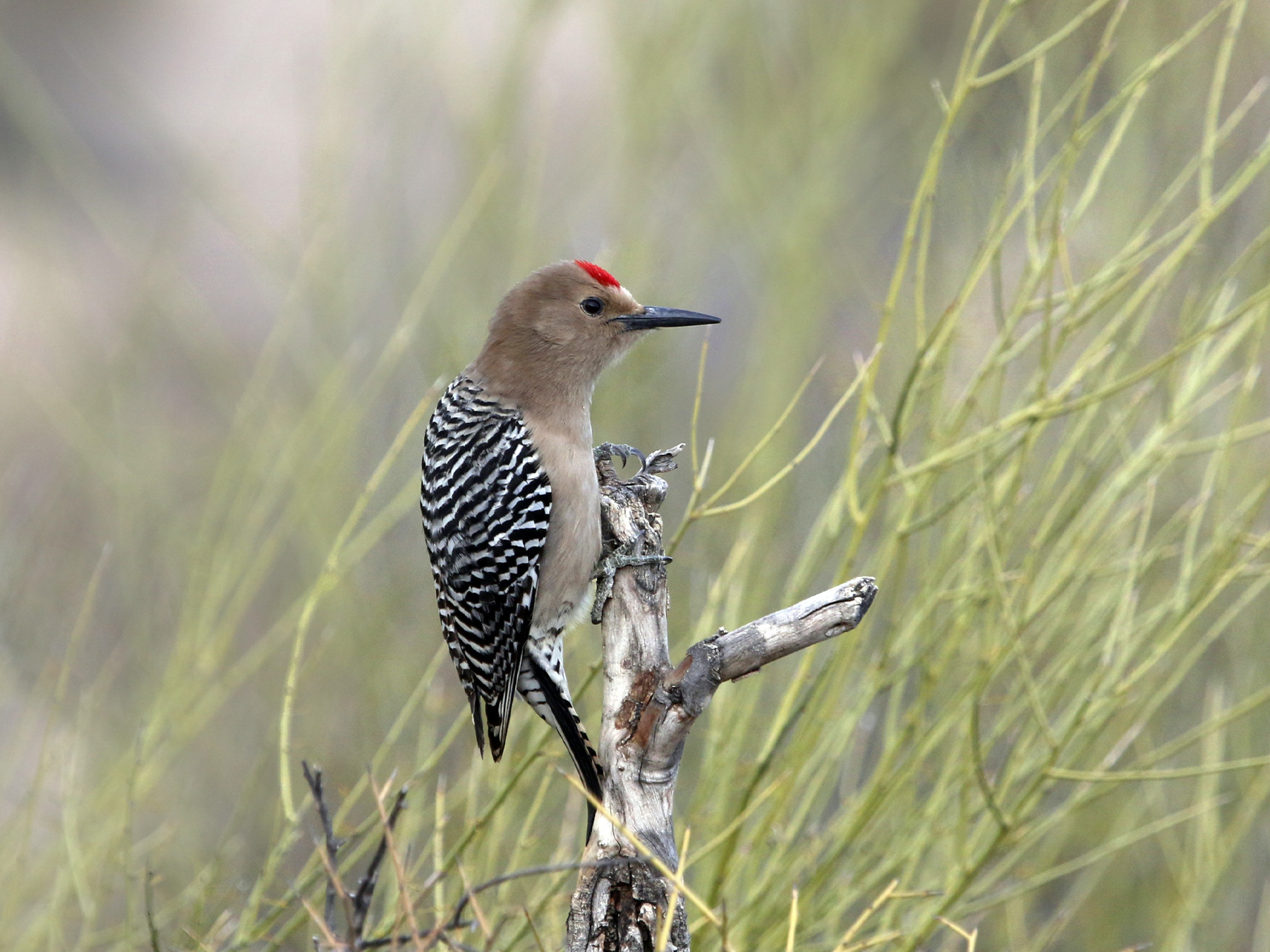
Quick facts
- Length
- 20–25 cm
- Wingspan
- 40–43 cm
- Weight
- 60–85 g
- Lifespan
- 5–8 years
- Family
- Woodpeckers
- Migration
- Resident
- Global status (IUCN)
- Least Concern
- World population
- 1,500,000 mature individuals
- Population trend
- Stable
- Also called
- Saguaro Woodpecker
- Scientific name
- Melanerpes uropygialis
Questions
6What attracts Gila Woodpeckers?
Gila Woodpeckers are attracted to desert areas with giant cacti that provide nesting and feeding habitat. Birdwatchers from towns and suburbs in their natural range can also encourage these birds by hanging out bird feeders or providing fresh water in a shallow bird bath.
What trees do Gila Woodpeckers prefer?
Trees are often scarce in their natural habitat, so Gila Woodpeckers are usually found around the massive saguaro cactus. However, they also forage and nest in mesquite trees, cottonwoods, and various other species in suburban areas.
Do Gila Woodpeckers harm trees?
Gila Woodpeckers do not usually cause serious damage to trees. In fact, these birds benefit the saguaro cactus by eating its fruits and spreading the seeds.
Do Gila Woodpeckers go to bird feeders?
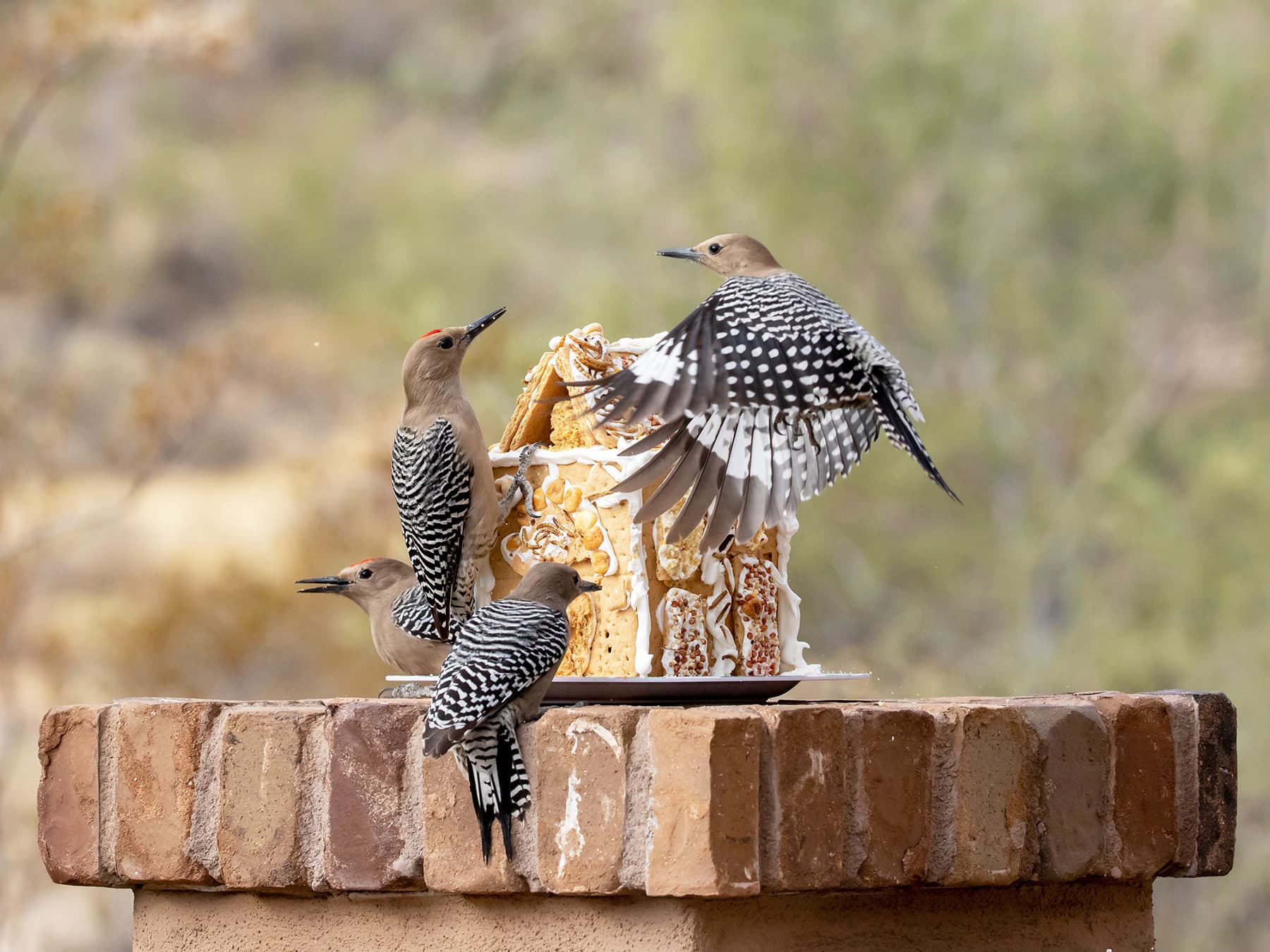
Gila Woodpeckers will visit birdfeeders in their range. They will take corn and suet and even enjoy the occasional drink of nectar.
Do Gila Woodpeckers drink from hummingbird feeders?
Gila Woodpeckers are known to have a sweet tooth, and they often visit hummingbird nectar feeders with designs that they can cling to.
What is the difference between a Gila Woodpecker and a flicker?
Gila Woodpeckers are from the Melanerpes genus, a medium-sized group with other well-known species like the Red-headed Woodpecker and the Red-bellied Woodpecker. Flickers are similar-looking but unrelated birds from the Colaptes genus.
Sources
3- 1BirdLife International. 2016. Melanerpes uropygialis. The IUCN Red List of Threatened Species 2016: e.T22680853A92882402. Source (opens in a new tab)
- 2Breeding Bird Survey and/or Christmas Bird Count: Butcher and Niven (2007)
- 3Partners in Flight (2019)

Checked by
Nathan Cope, founder and editor
Nathan founded Birdfact and leads its writers and contributors in the UK, the US and Canada. He has watched and studied birds for more than ten years, and checks every article and species guide before it’s published.