


Fork-tailed Drongo
Common Drongo, African Drongo · Dicrurus adsimilis
By the Birdfact teamChecked by Nathan Cope
On this page11 sections
How to recognise it
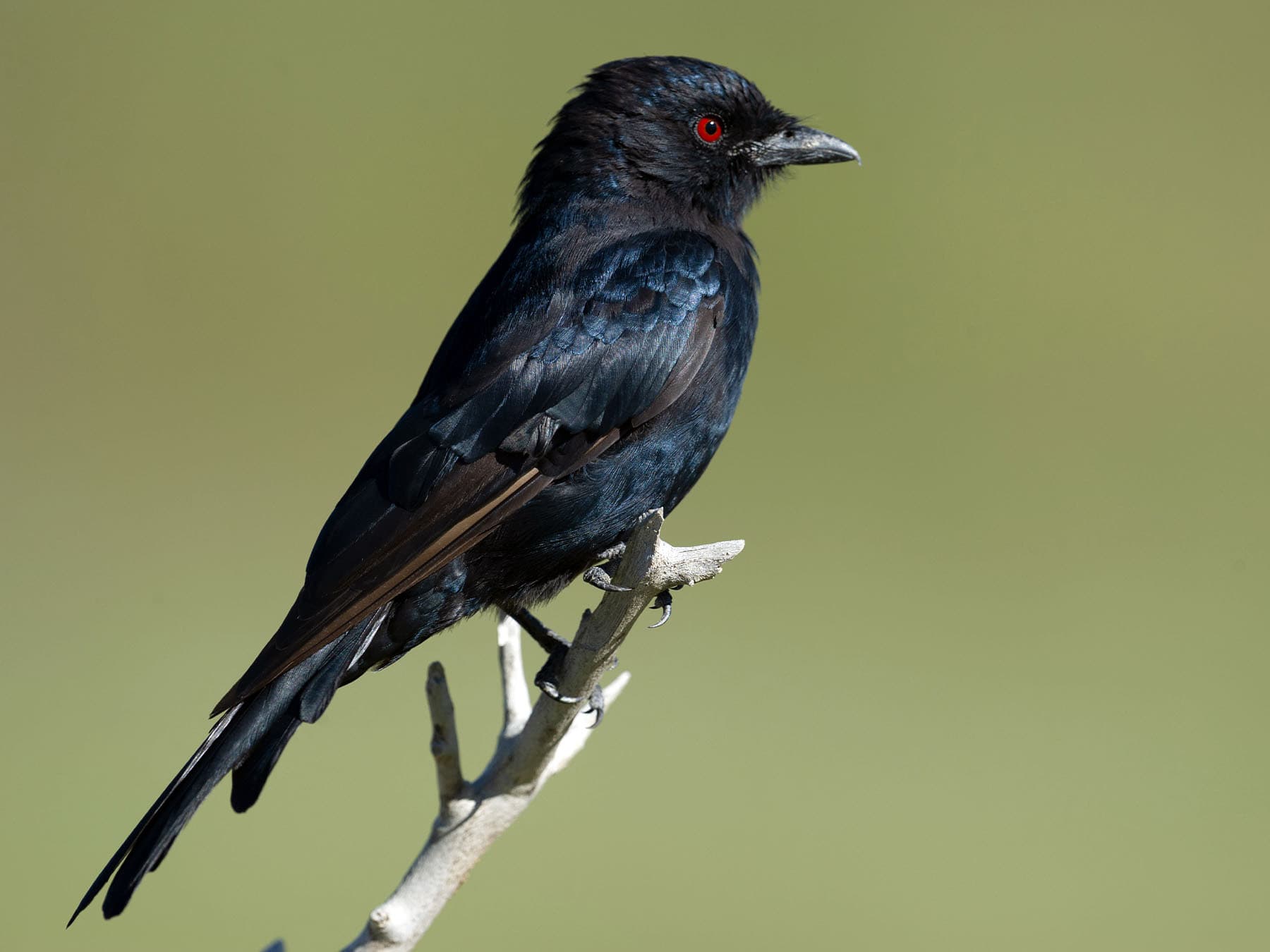
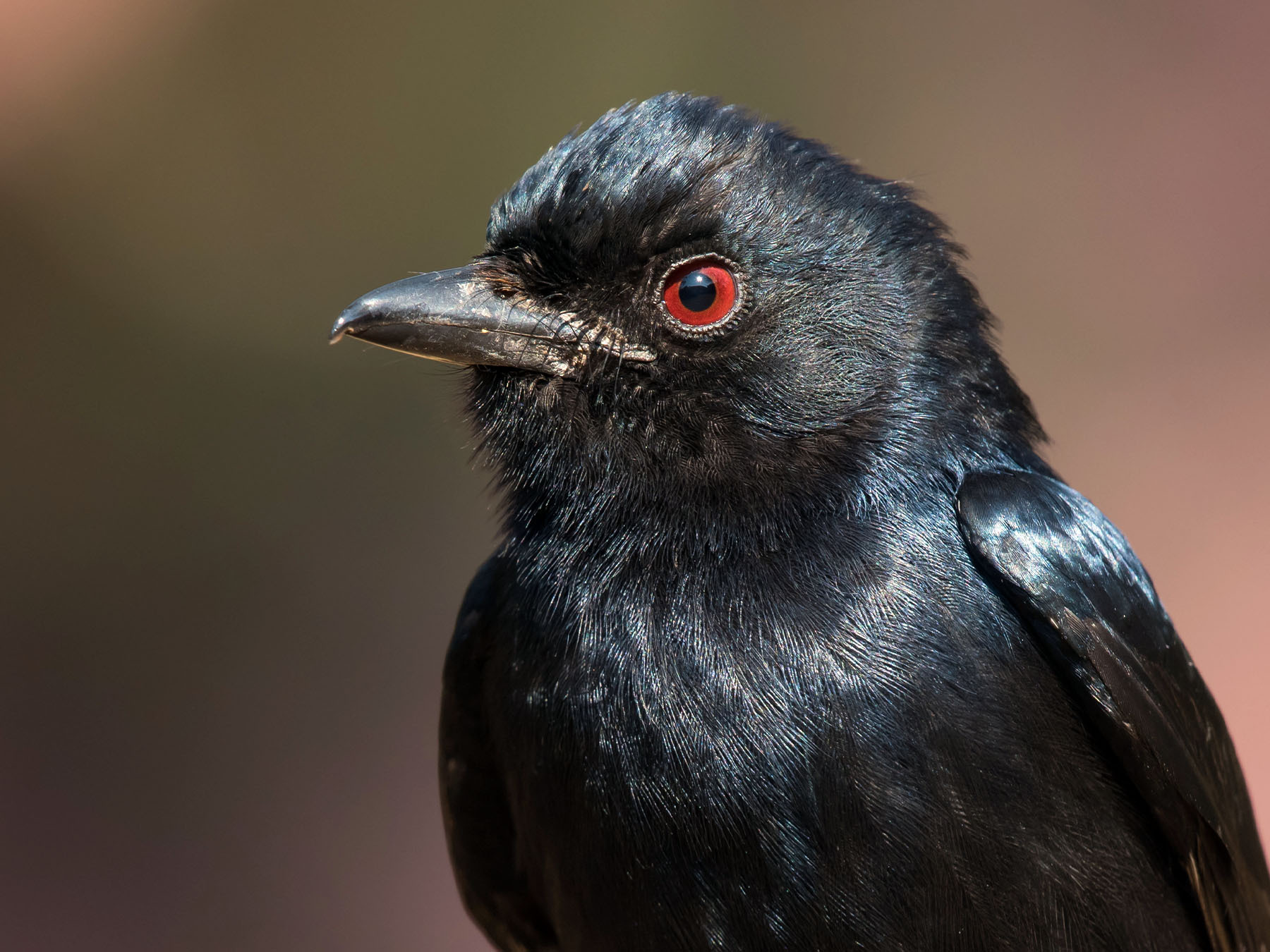
The Fork-tailed Drongo is a sleek, all-black bird with a distinctive, deeply forked tail. Its plumage has a glossy, iridescent sheen that can appear blue or green in certain lights. The eyes are bright red, contrasting sharply with the black feathers.
Both males and females look alike, with no significant seasonal changes in plumage. Juveniles are similar but duller, with brownish underparts and a less pronounced tail fork.
Its size
Adults- Length
- 23–26 cm
- Wingspan
- 35–41 cm
- Weight
- 40–50 g
Its song and calls
Fork-tailed Drongos are excellent vocal mimics with a wide repertoire of calls. Their natural voice includes harsh, scolding notes and melodious whistles.
They often imitate the alarm calls of other birds, which they use to scare away competitors from food sources. The typical call is a sharp 'kek-kek' or 'skeer-skeer'.
- Song0:00 / 1:02
Recorded in South Africa
David Watts (teacher) / David Watts · Wikimedia Commons · CC BY 4.0
- Call0:00 / 0:28
When and where to see it
The Fork-tailed Drongo is not recorded regularly in the UK, Ireland, the United States or Canada.
Worldwide: recorded regularly in 31 countries
Countries where it was recorded in at least 3 of the 6 years 2019–2024. Linked countries have their own bird list.
Data: EOD – eBird Observation Dataset (Cornell Lab of Ornithology), accessed via GBIF.org, CC BY 4.0. Records from 2019–2024, aggregated and filtered by Birdfact. How these lists are made
Tips for seeing it
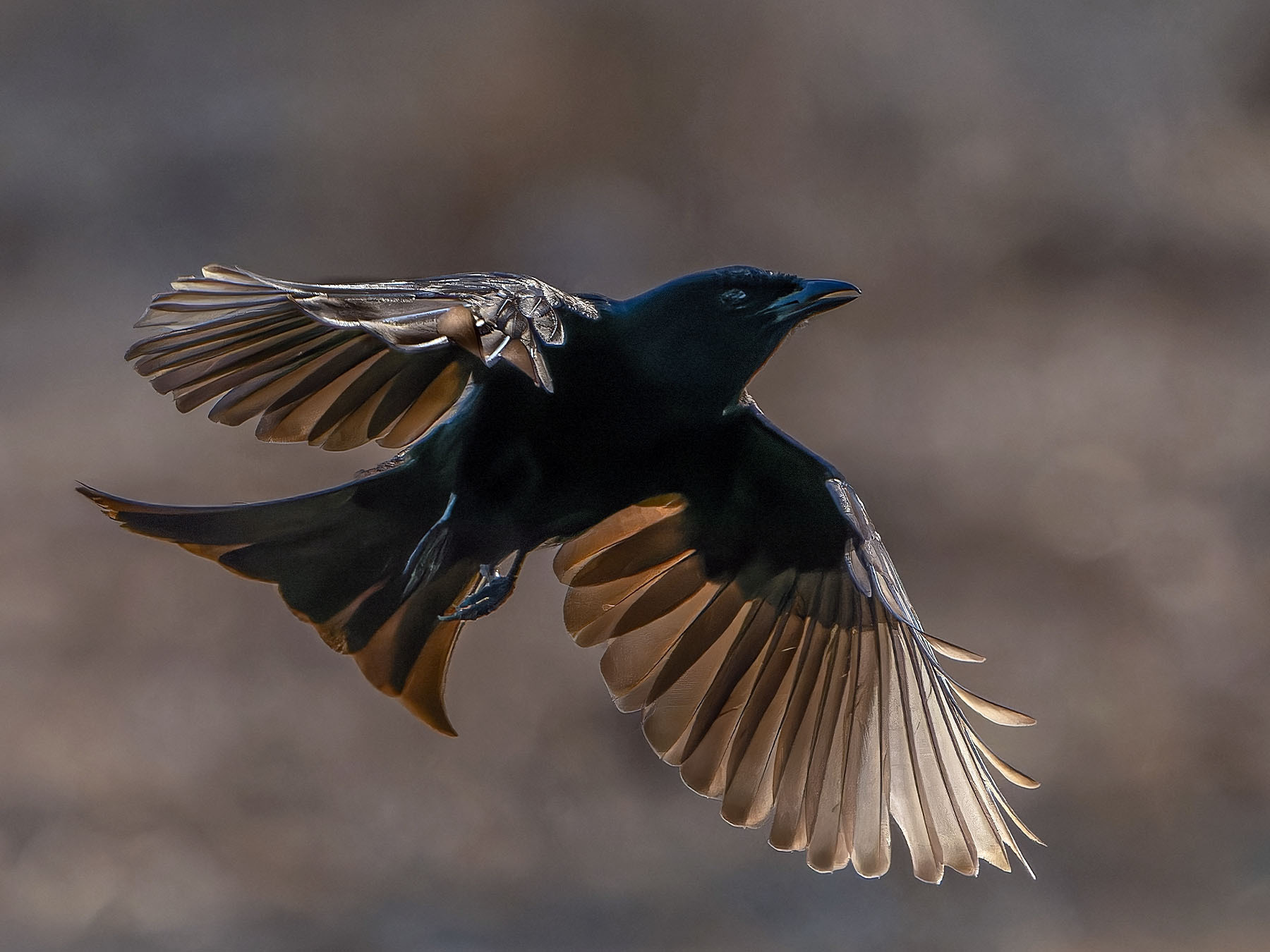
- Look for their distinctive forked tail in flight
- Listen for their varied calls, including mimicry of other birds
- Watch for their habit of perching prominently on exposed branches
- Observe their aggressive behaviour towards larger birds
What it eats
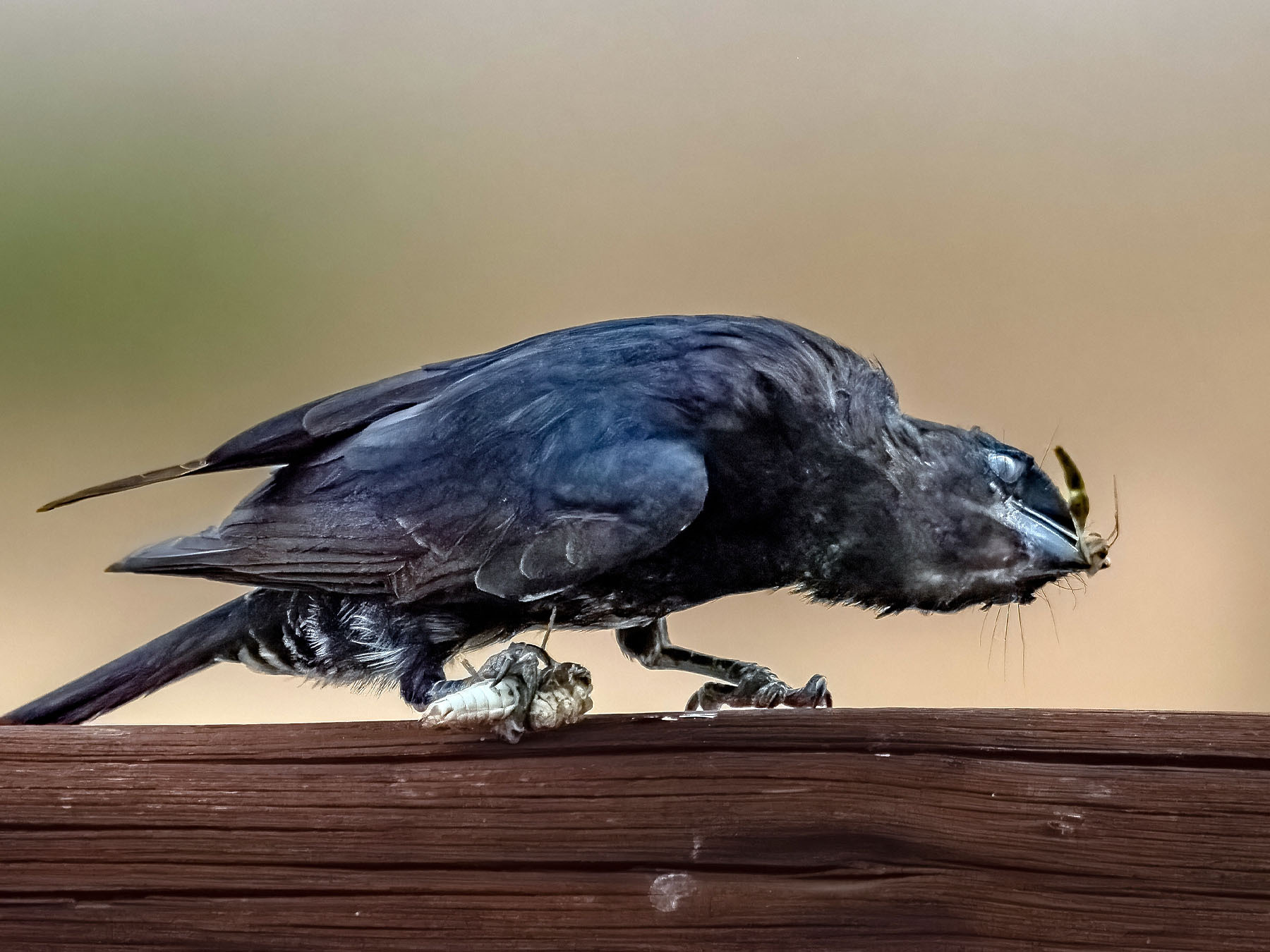
Fork-tailed Drongos are primarily insectivorous, feeding on a wide variety of flying insects. They catch prey on the wing or by sallying from a perch.
These birds are also known to follow larger animals, catching insects disturbed by their movement.
Nesting and breeding
Fork-tailed Drongos form monogamous pairs and breed during the wet season, which varies across their range. They engage in aerial displays and vocalisations during courtship.
The nest is a shallow, cup-shaped structure made of twigs and spider webs, typically placed in the fork of a tree branch. Females lay 2-4 eggs, which are pale cream or pinkish with reddish-brown spots.
Both parents incubate the eggs for about 16-17 days. The chicks fledge after approximately 16-20 days but remain dependent on the parents for several weeks after leaving the nest.
Behaviour
Fork-tailed Drongos are known for their aggressive behaviour and fearless nature. They often mob larger birds and even mammals to protect their territory.
These birds are also skilled aerial acrobats, catching insects on the wing with impressive agility.
Conservation
The Fork-tailed Drongo is listed as Least Concern by the IUCN due to its large range and stable population. However, like many birds, it faces threats from habitat loss in some areas.
Conservation efforts focus on preserving its woodland and savannah habitats.
More photos
4 photos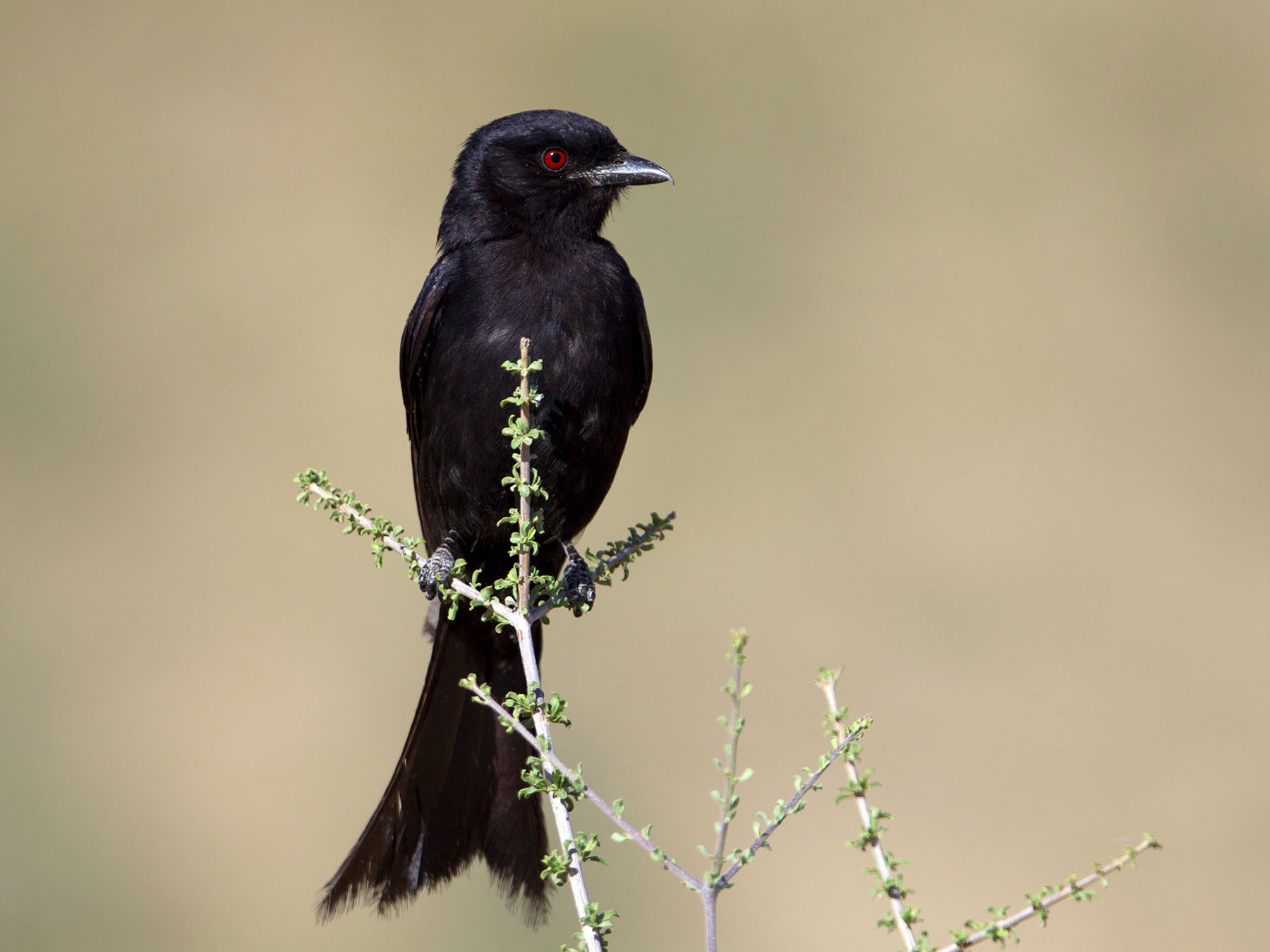
Quick facts
- Length
- 23–26 cm
- Wingspan
- 35–41 cm
- Weight
- 40–50 g
- Lifespan
- 6–12 years
- Family
- Drongos
- Migration
- Resident
- Global status (IUCN)
- Least Concern
- World population
- Not quantified, but considered large
- Population trend
- Stable
- Also called
- Common Drongo, African Drongo
- Scientific name
- Dicrurus adsimilis
Sources
4- 1Oldest recorded trapped bird was 7 years, so thought to live longer
- 2BirdLife International. 2024. Dicrurus adsimilis. The IUCN Red List of Threatened Species 2024: e.T103710902A263855757. Source (opens in a new tab)
- 3BirdLife International. 2024. Dicrurus adsimilis. The IUCN Red List of Threatened Species 2024: e.T103710902A263855757. Source (opens in a new tab)
- 4Hall and Moreau 1970, Roberts 1993, Zimmerman et al. 1996, Borrow and Demey 2001, Stevenson and Fanshawe 2002

Checked by
Nathan Cope, founder and editor
Nathan founded Birdfact and leads its writers and contributors in the UK, the US and Canada. He has watched and studied birds for more than ten years, and checks every article and species guide before it’s published.