
Fairy Pitta
Pitta nympha
By the Birdfact teamChecked by Nathan Cope
On this page11 sections
How to recognise it
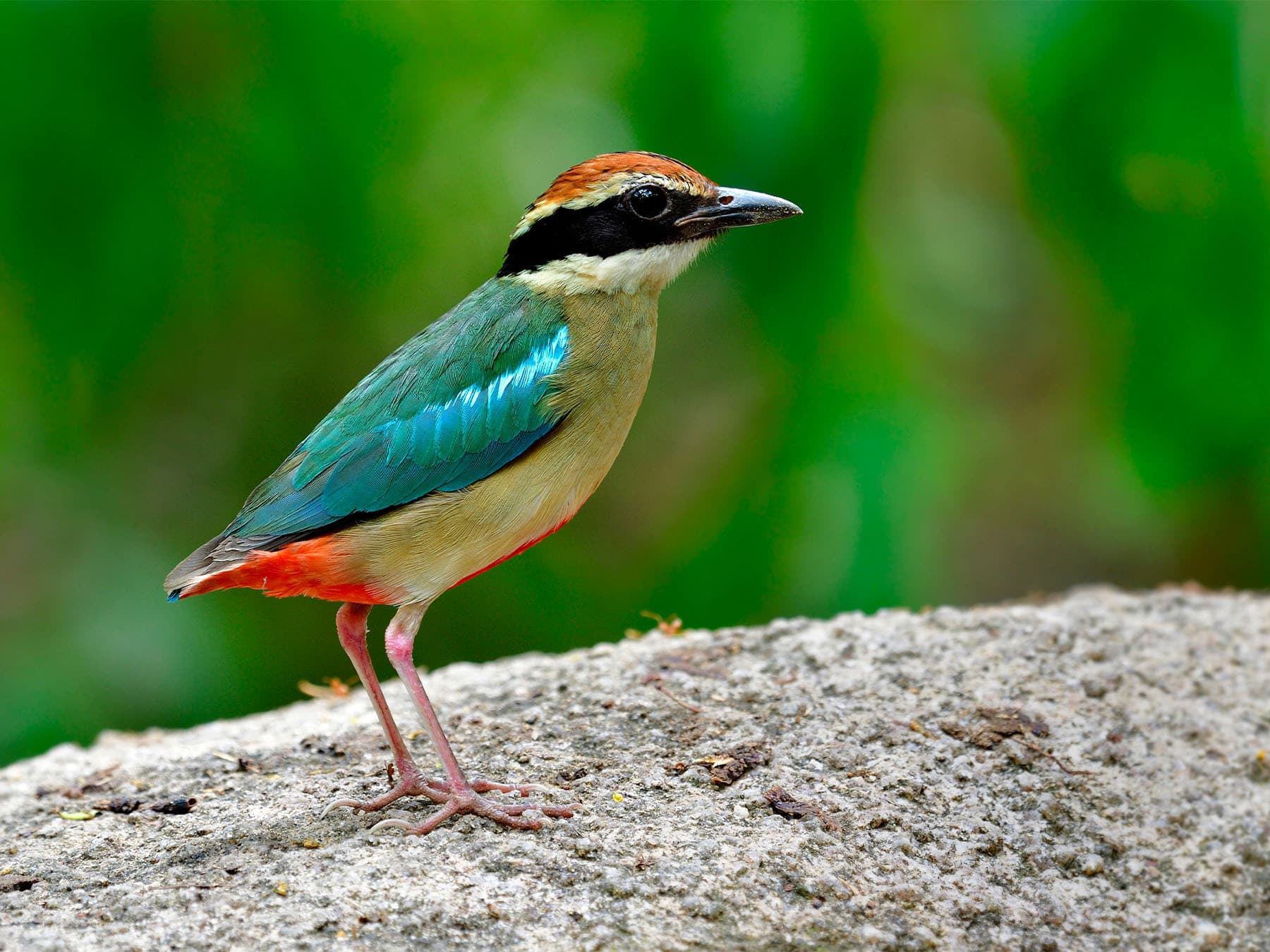
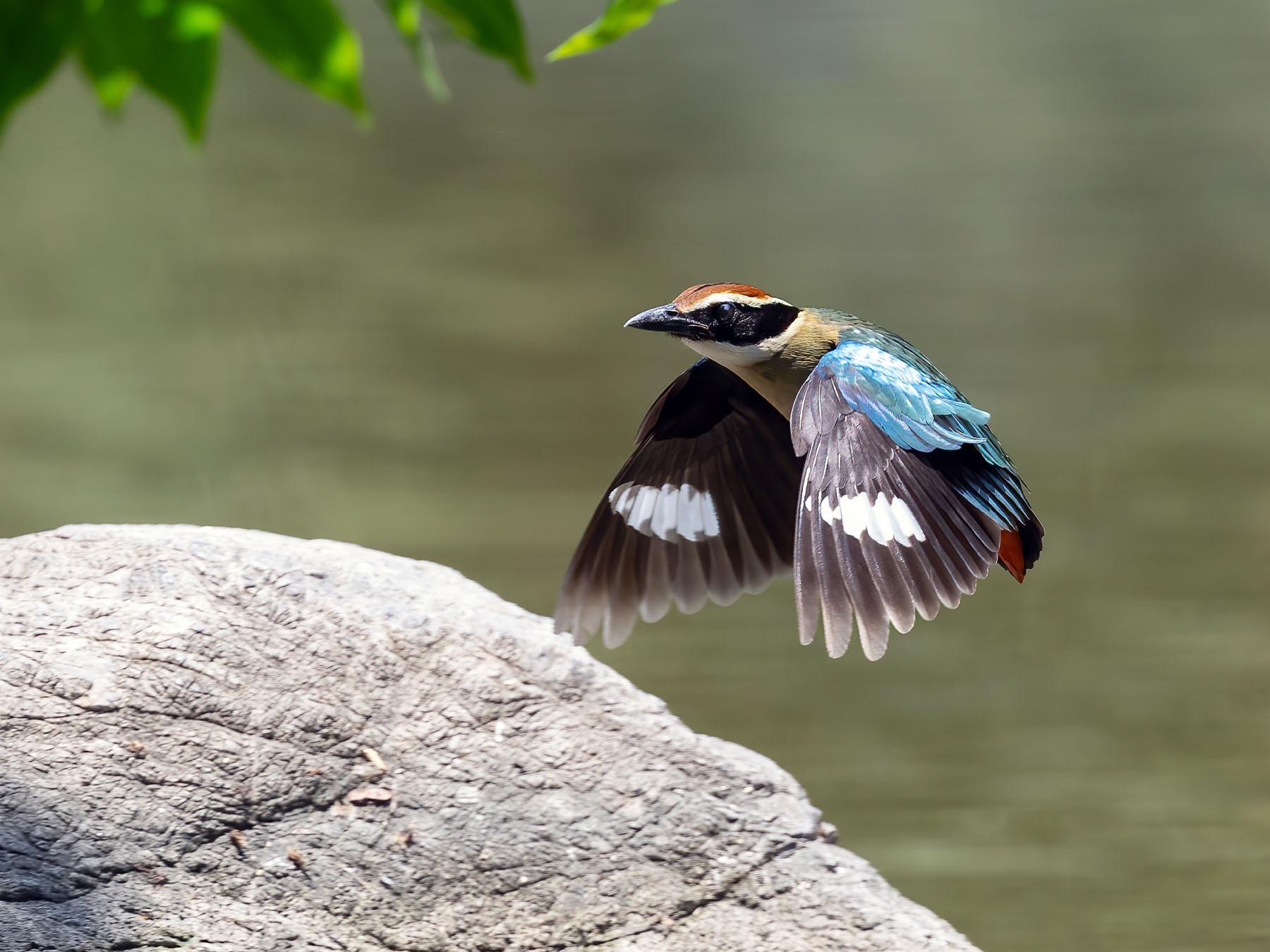
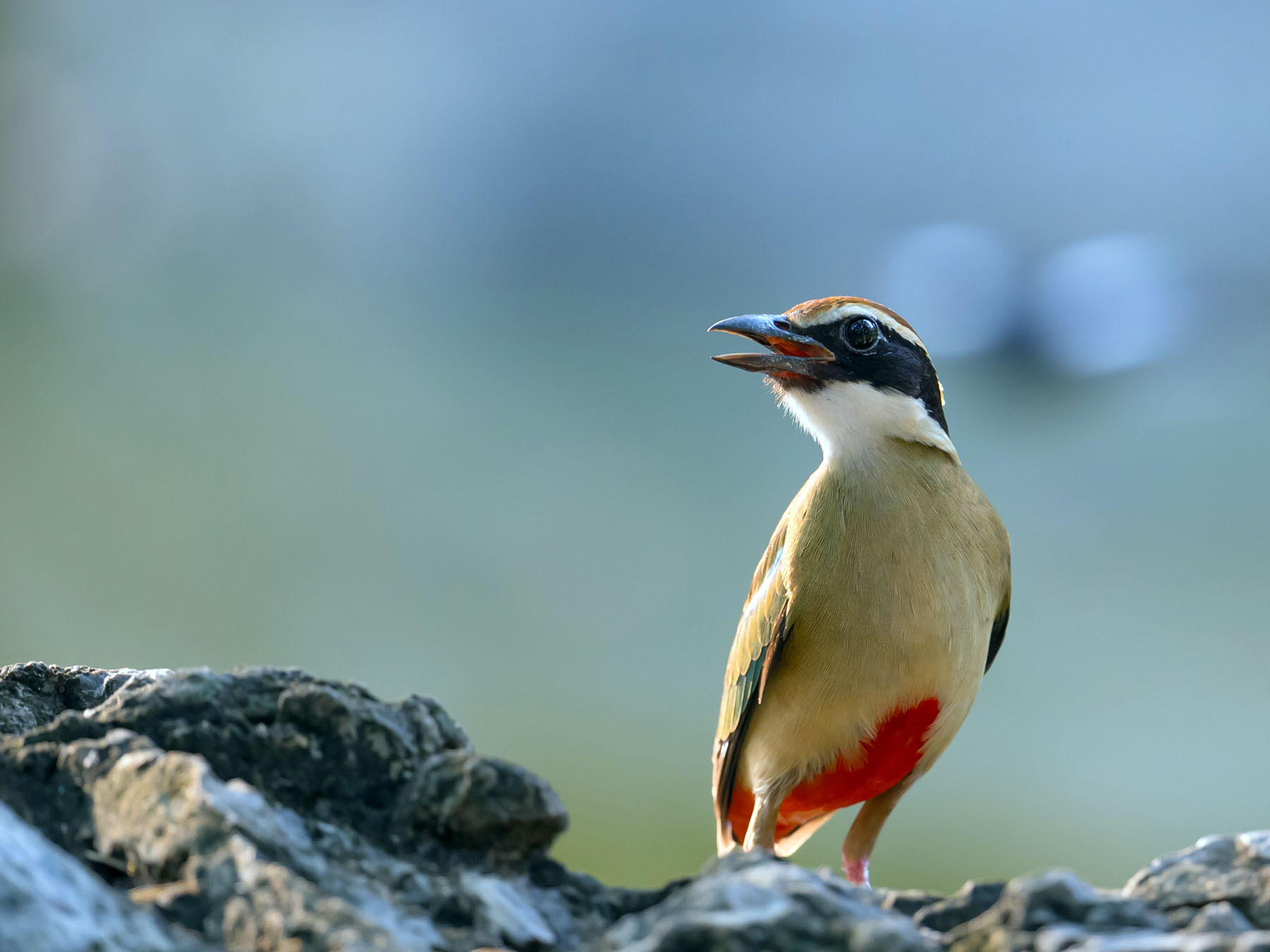
The Fairy Pitta is a strikingly colourful bird with a green back, blue wings, and a chestnut-brown crown. Its underparts are buff, with a distinctive red lower belly and undertail coverts.
The throat and cheeks are white, and it has a dark black mask extending across the face, with a white stripe above. The tail is short and dark green, with a cobalt-blue tip.
Both sexes have similar plumage, making them difficult to distinguish in the field. Juveniles resemble adults but have duller colours and less defined markings.
Its size
Adults- Length
- 16–19 cm
- Wingspan
- 30–35 cm
- Weight
- 40–60 g
Its song and calls
The Fairy Pitta's call is a clear, whistled 'qwee-qwee-qwee' or 'kweek-kweek-kweek', often repeated in series.
During the breeding season, males produce a more elaborate song, a melodious series of whistles and trills that can last for several seconds.
When and where to see it
The Fairy Pitta is not recorded regularly in the UK, Ireland, the United States or Canada.
Worldwide: recorded regularly in 7 countries
Countries where it was recorded in at least 3 of the 6 years 2019–2024. Linked countries have their own bird list.
Data: EOD – eBird Observation Dataset (Cornell Lab of Ornithology), accessed via GBIF.org, CC BY 4.0. Records from 2019–2024, aggregated and filtered by Birdfact. How these lists are made
Tips for seeing it
- Listen for their distinctive 'qwee-qwee-qwee' call in dense forests
- Look for movement on the forest floor, especially in areas with thick leaf litter
- Visit known breeding sites during early morning or late afternoon
- Be patient and quiet, as these birds are shy and easily startled
What it eats
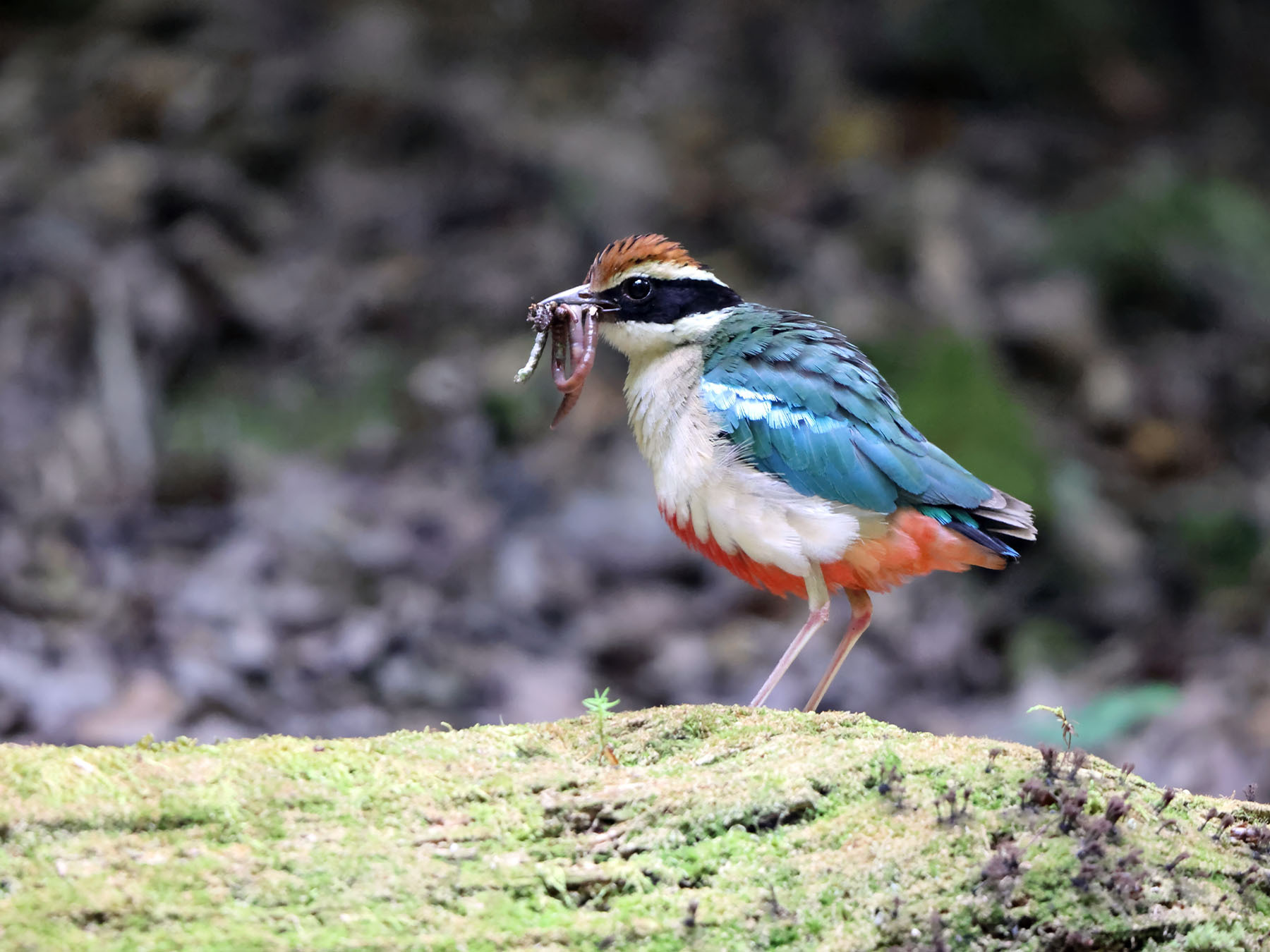
Fairy Pittas primarily feed on insects and other small invertebrates. They forage on the forest floor, using their strong bills to turn over leaves and dig in soft soil. Their diet includes earthworms, beetles, ants, and occasionally small lizards or frogs.
Nesting and breeding
Breeding occurs from May to July. Fairy Pittas form monogamous pairs and engage in courtship displays that include wing-flicking and tail-fanning. Males often sing from exposed perches to attract mates and defend territories.
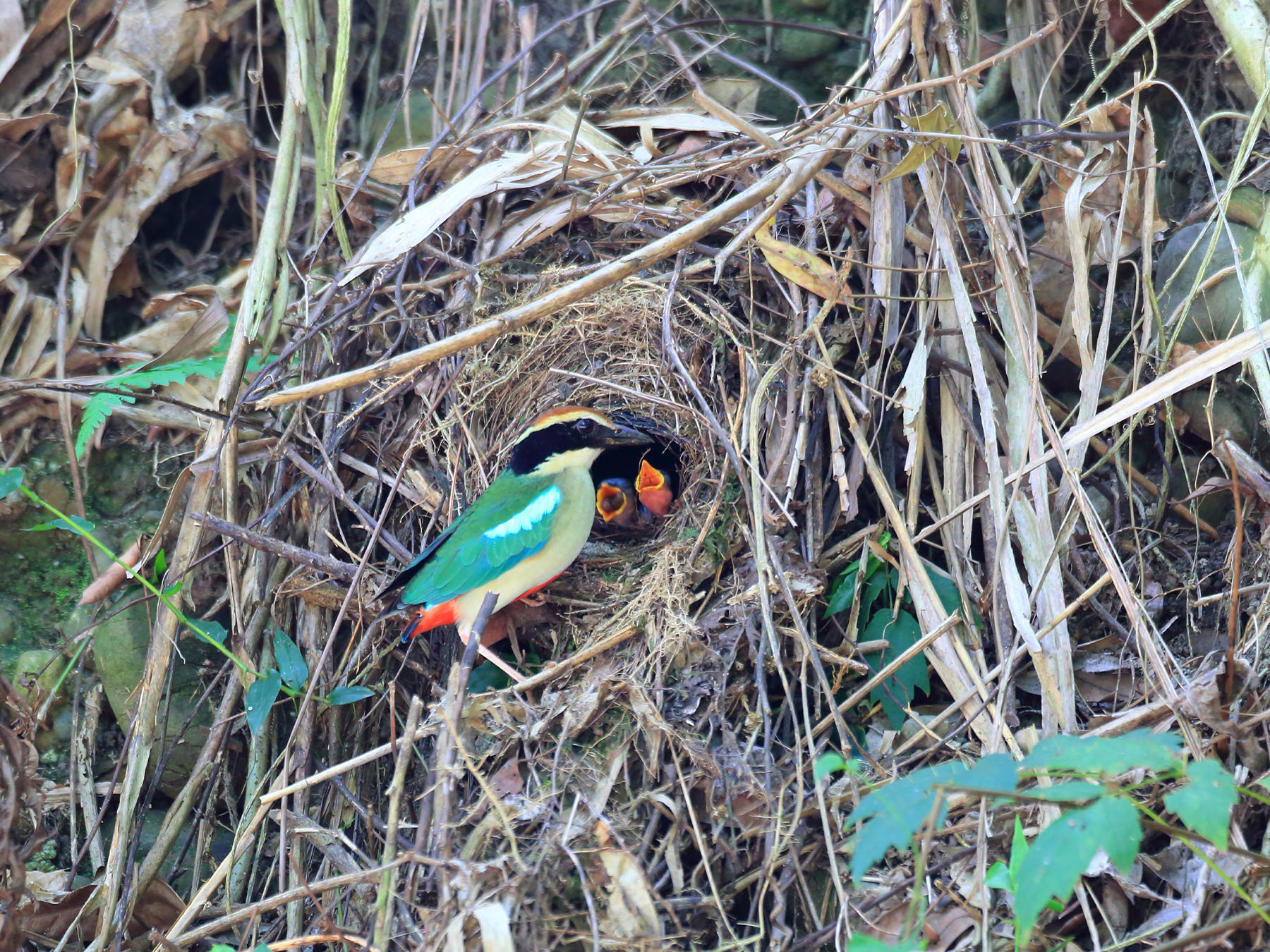
Nests are bulky, dome-shaped structures made of twigs, leaves, and moss, typically placed low in trees or shrubs. Females lay 4-6 glossy white eggs with dark speckles.
Both parents incubate the eggs for about 14-15 days. Chicks fledge after approximately 14 days but remain dependent on their parents for several weeks after that.
Behaviour
Fairy Pittas are secretive and elusive, spending much of their time on the forest floor. They hop and run quickly when foraging, using their strong bills to probe leaf litter for insects.
During the breeding season, males become more vocal and may engage in territorial displays, fanning their tails and wings.
Conservation
The Fairy Pitta is classified as Vulnerable due to ongoing habitat loss and fragmentation. Deforestation in both breeding and wintering grounds poses a significant threat.
Conservation efforts focus on protecting remaining forest habitats and raising awareness about the species' plight.
More photos
5 photos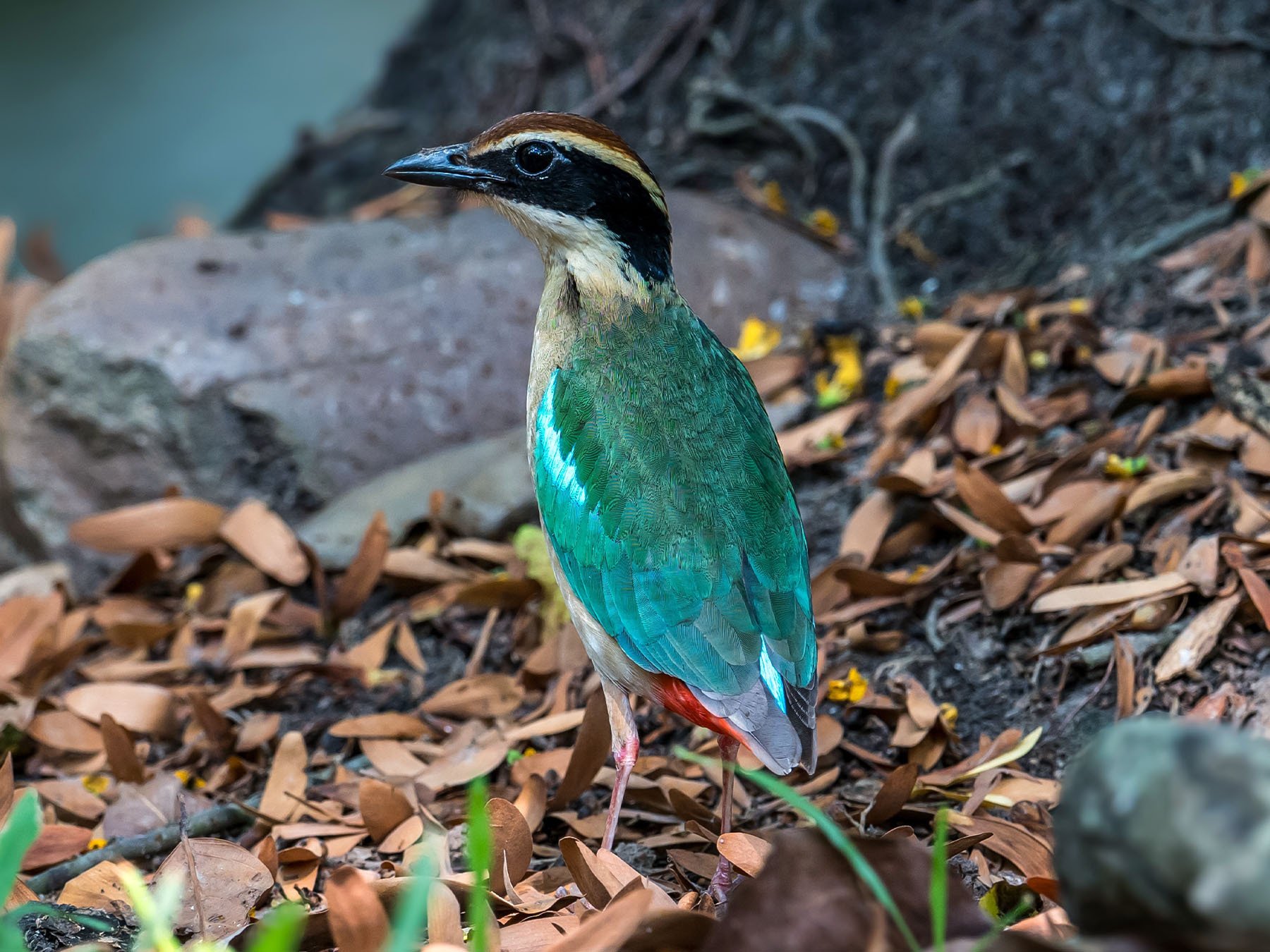
Quick facts
- Length
- 16–19 cm
- Wingspan
- 30–35 cm
- Weight
- 40–60 g
- Lifespan
- 3–8 years
- Family
- Pittas
- Migration
- Long-distance Migrant
- Global status (IUCN)
- Vulnerable
- World population
- 1,500 - 7,000 mature individuals
- Population trend
- Decreasing
- Scientific name
- Pitta nympha
Sources
4- 1BirdLife International. 2017. Pitta nympha (amended version of 2016 assessment). The IUCN Red List of Threatened Species 2017: e.T22698684A116880779. Source (opens in a new tab)
- 2Kuan-Chieh Hung in litt. (2014)
- 3BirdLife International. 2017. Pitta nympha (amended version of 2016 assessment). The IUCN Red List of Threatened Species 2017: e.T22698684A116880779. Source (opens in a new tab)
- 4Lifespan is a rough estimate based on other Pittas

Checked by
Nathan Cope, founder and editor
Nathan founded Birdfact and leads its writers and contributors in the UK, the US and Canada. He has watched and studied birds for more than ten years, and checks every article and species guide before it’s published.