


Eastern Yellow Robin
Yellow Robin · Eopsaltria australis
By the Birdfact teamChecked by Nathan Cope
On this page11 sections
How to recognise it
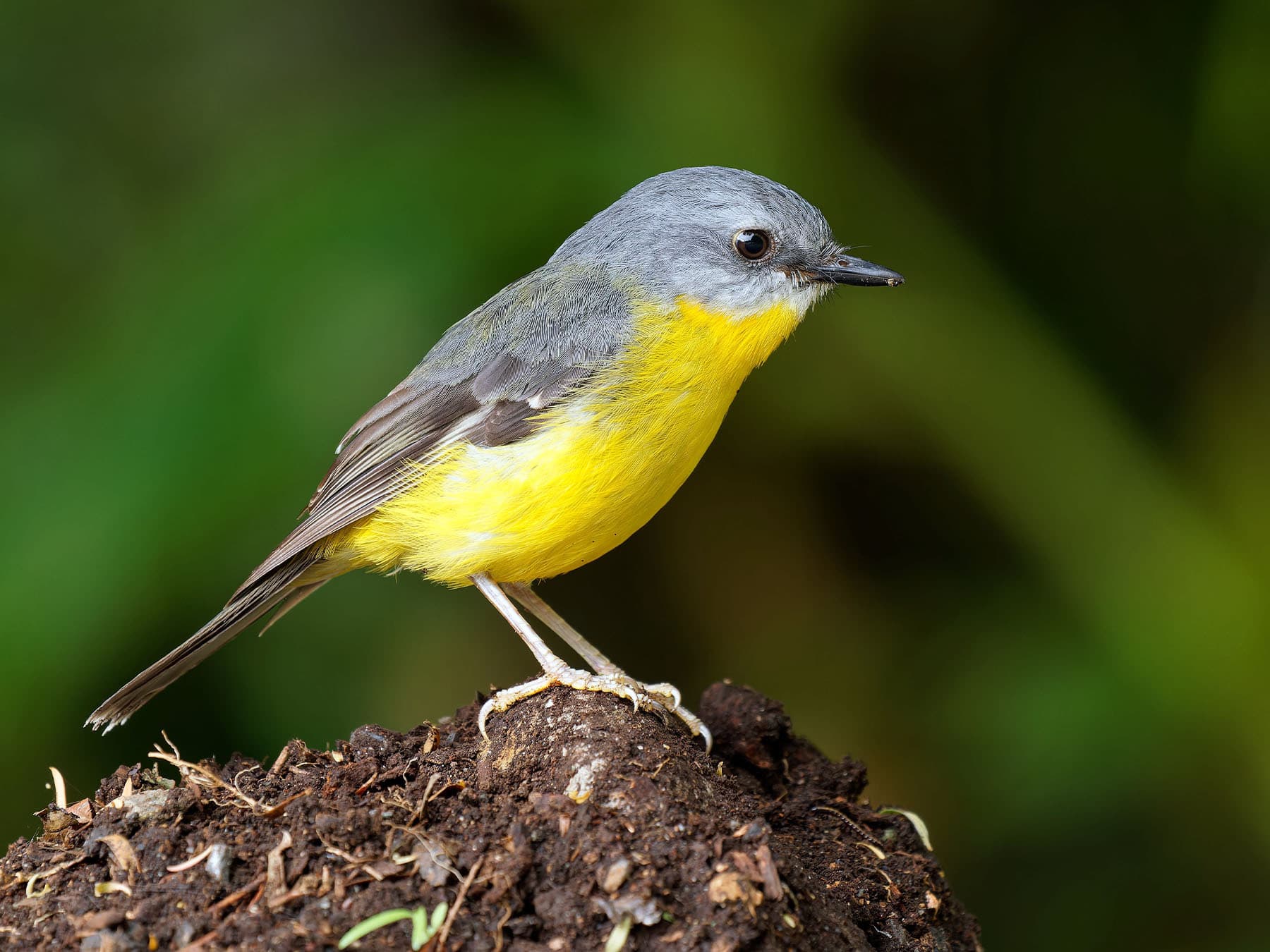
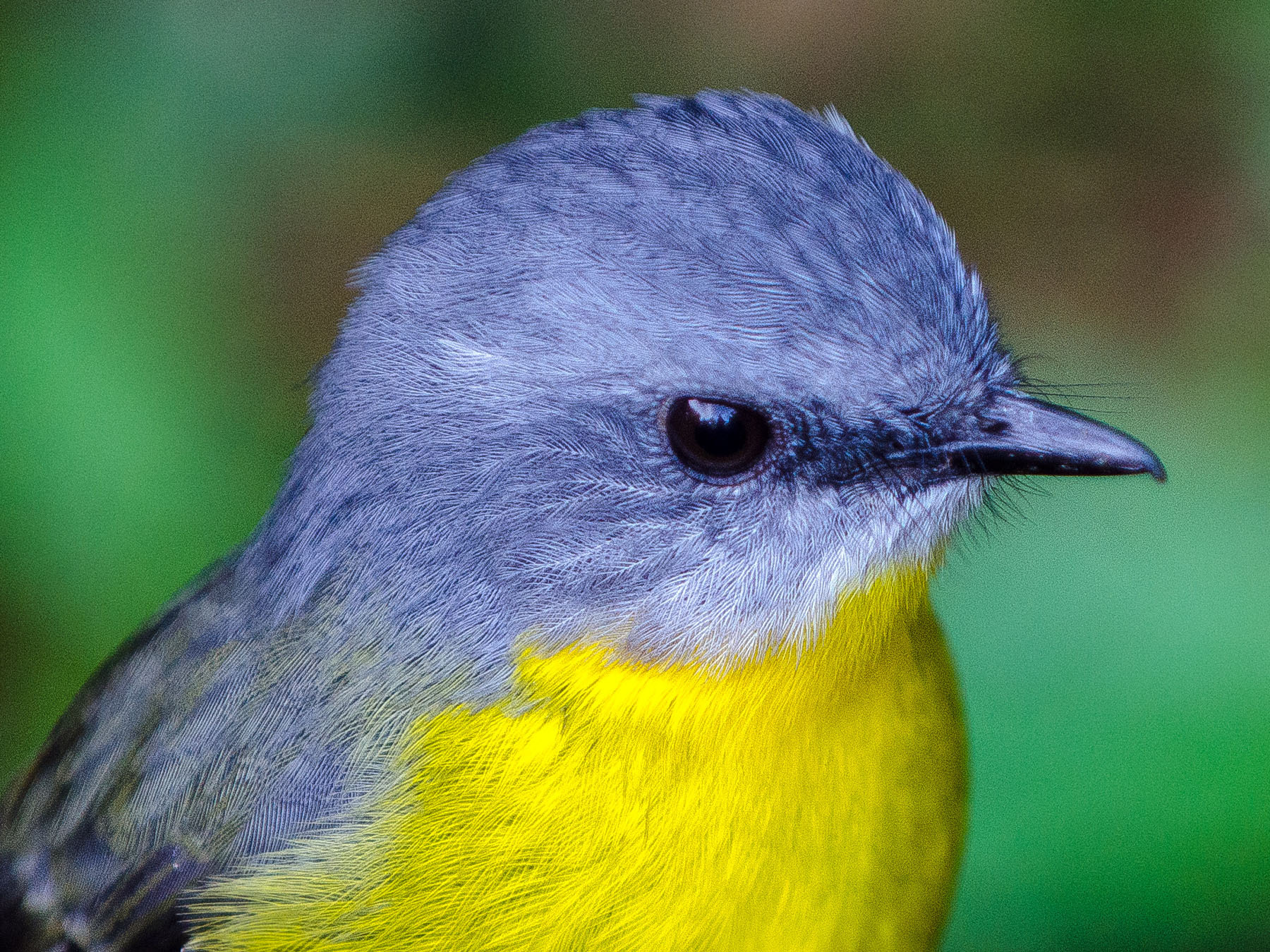
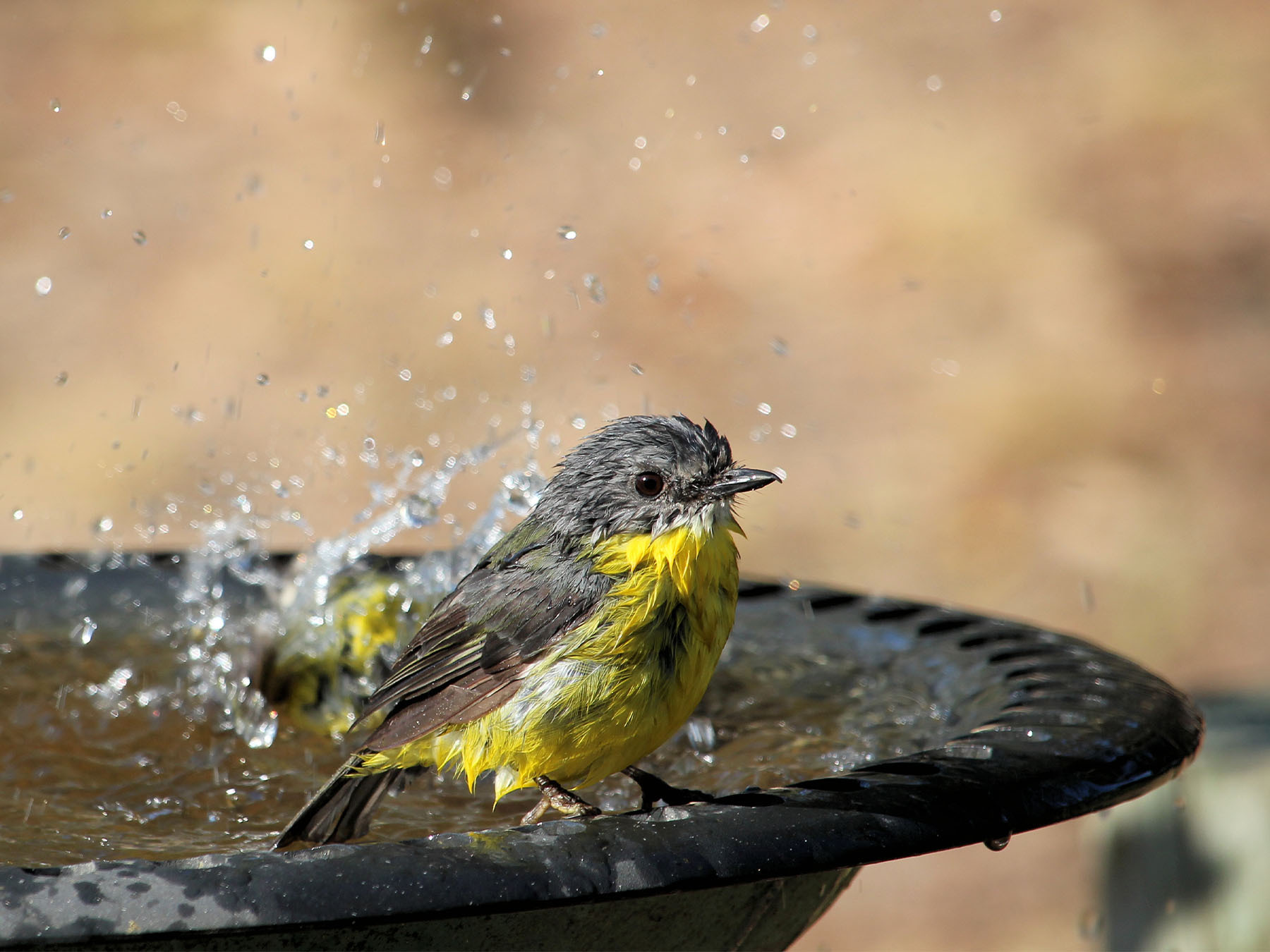
The Eastern Yellow Robin is a small, plump bird with a distinctive bright yellow underside and rump. Its upper parts are olive-grey, with a white throat and a dark grey tail. The bird has large, dark eyes and a black bill.
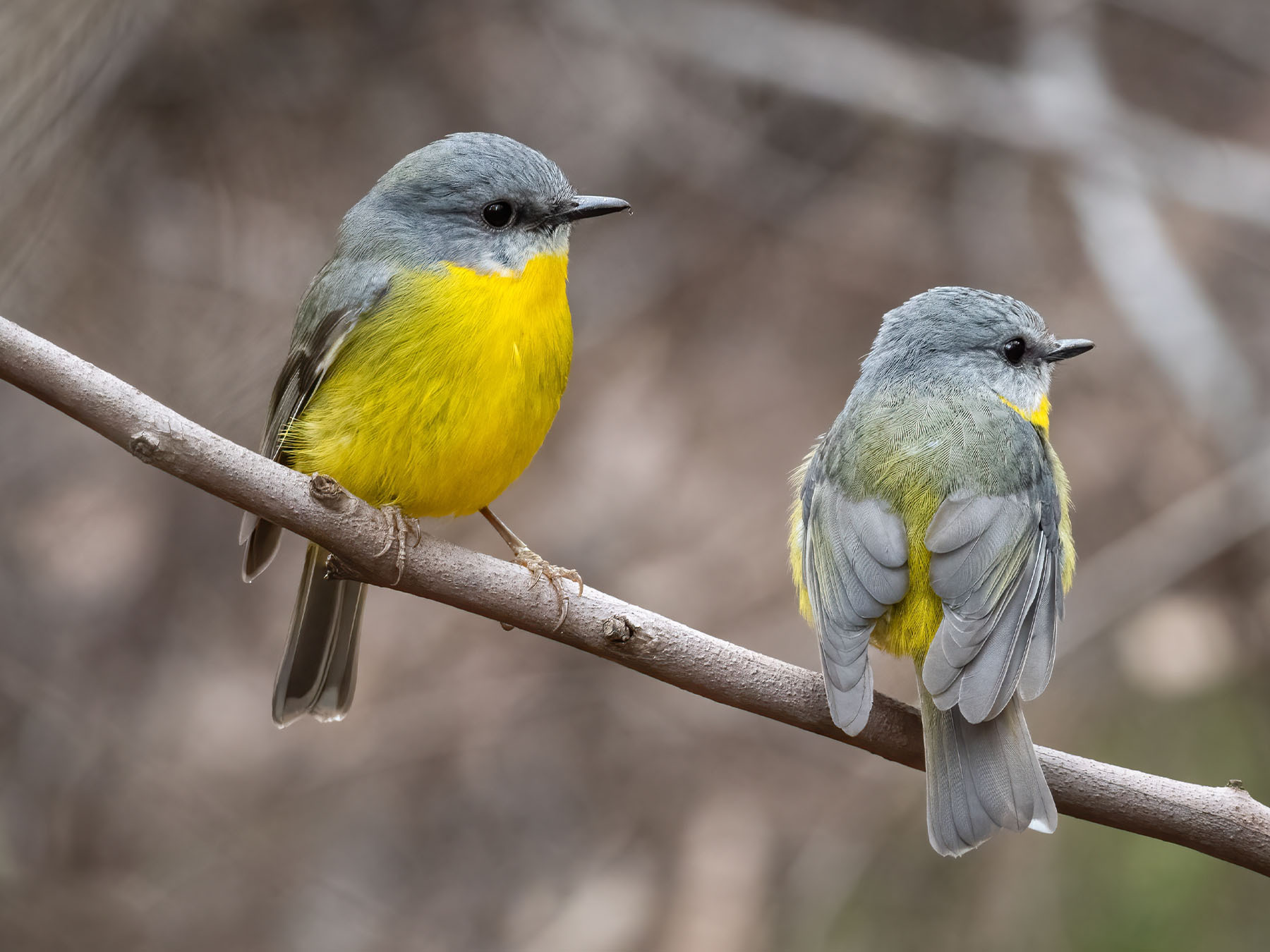
Both males and females share similar plumage, making them difficult to distinguish visually. Juveniles resemble adults but may have slightly duller colouration and faint streaking on the breast.
Its size
Adults- Length
- 15–16 cm
- Wingspan
- 18–25 cm
- Weight
- 20–25 g
Its song and calls
The Eastern Yellow Robin has a varied vocal repertoire. Its most common call is a clear, piping 'chop chop' or 'pip-pip-pip'.
During the breeding season, males produce a soft, warbling song. They also use a range of quiet, twittering notes for communication between pairs and family groups.
- Song and calls0:00 / 1:15
Recorded in New South Wales, Australia · November 2018
When and where to see it
The Eastern Yellow Robin is not recorded regularly in the UK, Ireland, the United States or Canada.
Worldwide: recorded regularly in 1 country
Countries where it was recorded in at least 3 of the 6 years 2019–2024. Linked countries have their own bird list.
Oceania (1)
Data: EOD – eBird Observation Dataset (Cornell Lab of Ornithology), accessed via GBIF.org, CC BY 4.0. Records from 2019–2024, aggregated and filtered by Birdfact. How these lists are made
Tips for seeing it
- Look for their bright yellow underparts against tree trunks
- Listen for their piping 'chop chop' call
- Observe their characteristic sideways perching on vertical surfaces
- Search in the understory of forests and woodlands
- Visit Australian national parks in eastern and southeastern regions
What it eats
Eastern Yellow Robins are primarily insectivorous, feeding on a variety of arthropods, including beetles, moths, and spiders. They also consume small lizards and worms.
These birds often forage on the ground, using their keen eyesight to spot prey from low perches.
Nesting and breeding
Eastern Yellow Robins typically breed between July and January. Pairs form strong, monogamous bonds and often remain together for multiple breeding seasons. They construct neat, cup-shaped nests using bark strips, grasses, and spider webs.
Nests are usually placed in the fork of a tree or shrub, well-concealed by foliage. The female lays 2-3 pale green or blue eggs with brown speckles. Both parents contribute to nest building and egg incubation.
Incubation lasts about 14 days, with nestlings fledging after another 14 days. Parents continue to care for fledglings for several weeks after they leave the nest.
Behaviour
Eastern Yellow Robins are known for their 'pounce and return' foraging technique. They perch sideways on tree trunks, scanning the ground for prey before swooping down to catch it.
They are generally sedentary and territorial, often seen in pairs or small family groups.
Conservation
While currently listed as Least Concern, the Eastern Yellow Robin is threatened by habitat fragmentation and loss due to urban development and agriculture.
Conservation efforts focus on preserving and connecting woodland habitats to maintain healthy populations.
More photos
4 photos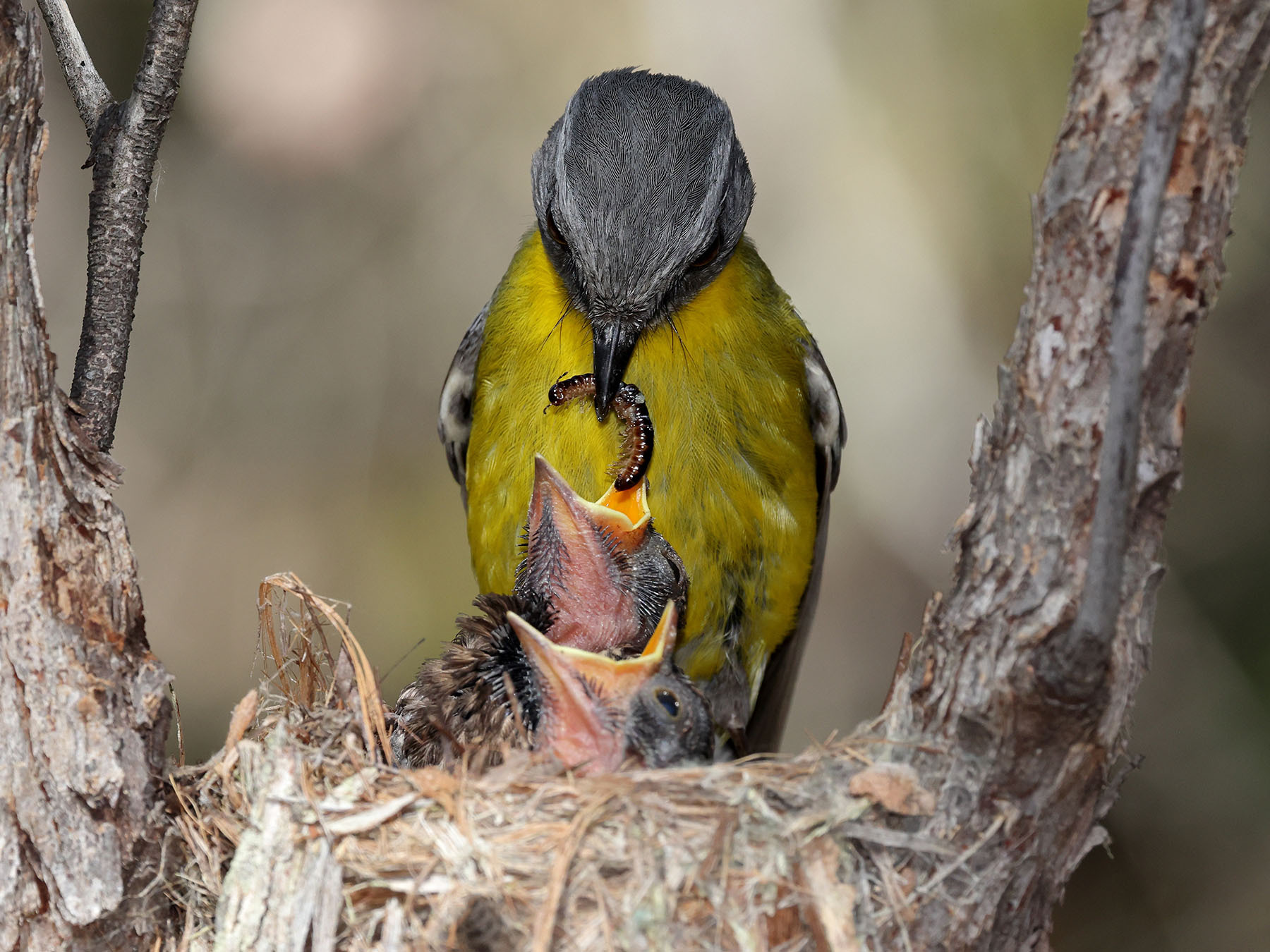
Quick facts
- Length
- 15–16 cm
- Wingspan
- 18–25 cm
- Weight
- 20–25 g
- Lifespan
- 5–10 years · oldest recorded 14.7 years
- Family
- Australasian Robins
- Migration
- Resident
- Global status (IUCN)
- Least Concern
- World population
- Not quantified, but common throughout its range
- Population trend
- Increasing
- Also called
- Yellow Robin
- Scientific name
- Eopsaltria australis
Sources
4- 1BirdLife International. 2024. Eopsaltria australis. The IUCN Red List of Threatened Species 2024: e.T22704849A254005548. Source (opens in a new tab)
- 2del Hoyo et al. (2007)
- 3Flegg and Madge (1995)
- 4ABBBS - Australian Bird and Bat Banding Scheme Source (opens in a new tab)

Checked by
Nathan Cope, founder and editor
Nathan founded Birdfact and leads its writers and contributors in the UK, the US and Canada. He has watched and studied birds for more than ten years, and checks every article and species guide before it’s published.