


Desert Finch
Desert Rosefinch, Lichtenstein's Desert Finch · Rhodospiza obsoleta
By the Birdfact teamChecked by Nathan Cope
On this page11 sections
How to recognise it
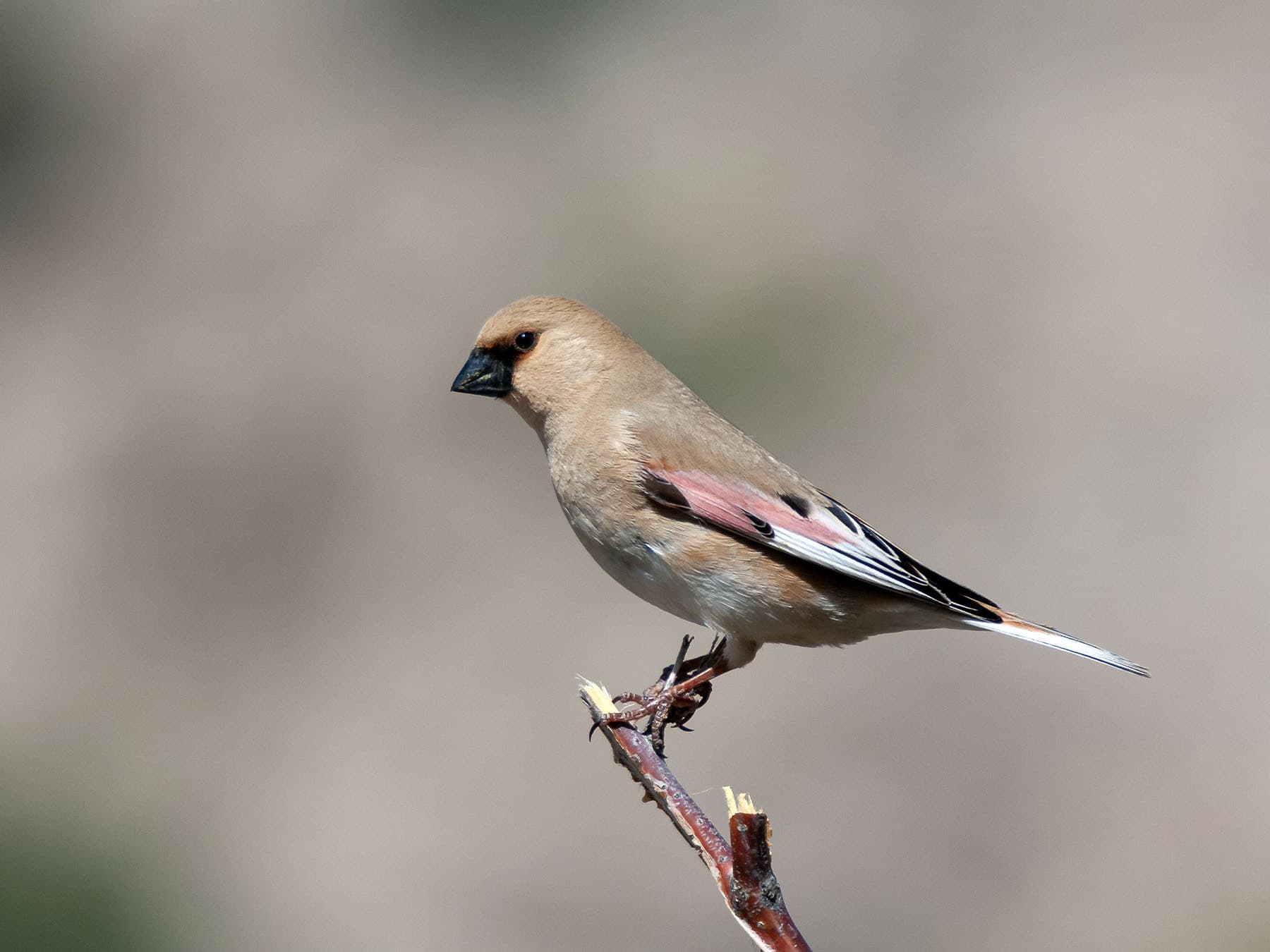
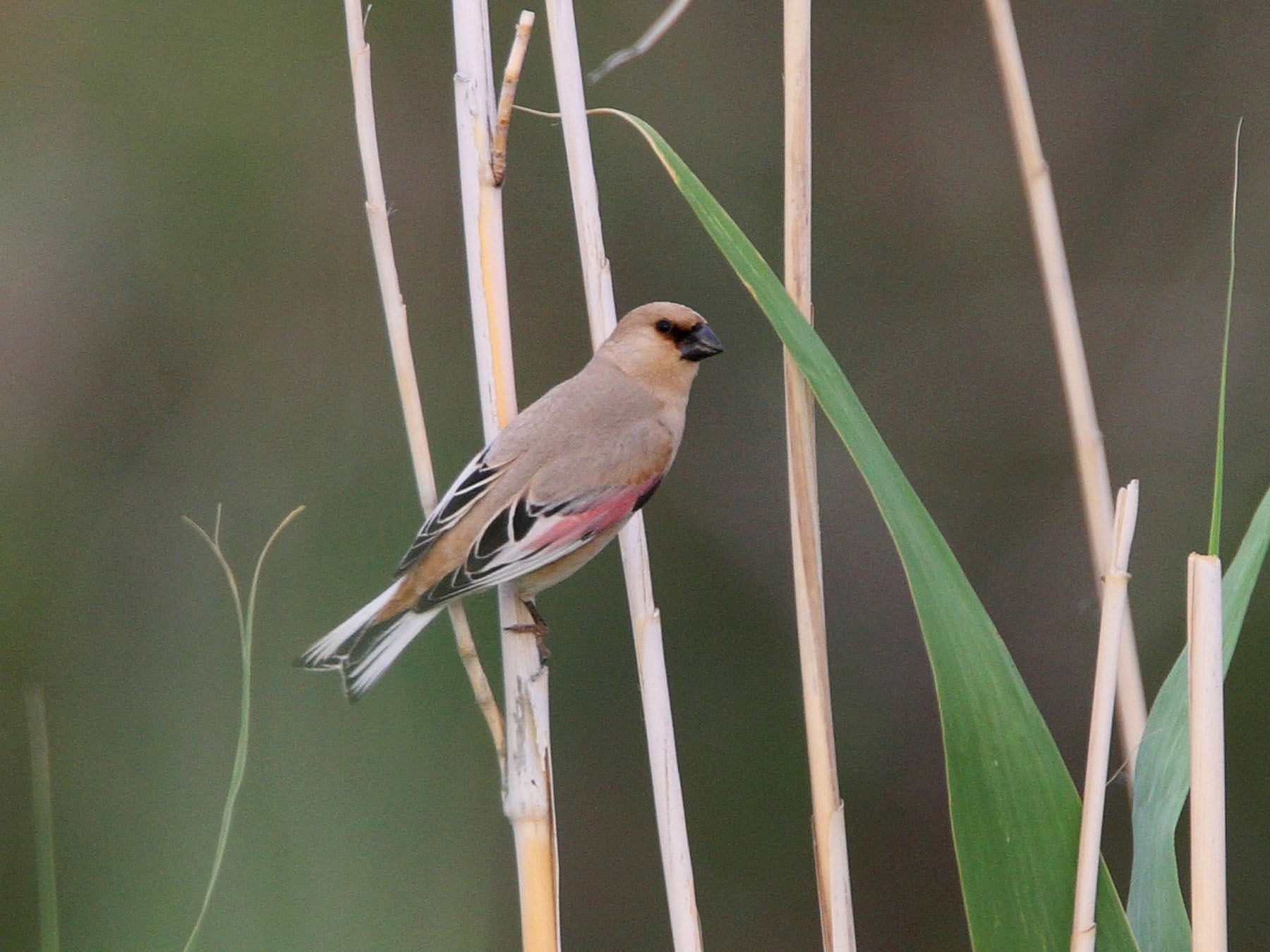
The Desert Finch is a small, sturdy bird with distinctive pink-tinged plumage in males. Its body is primarily light sandy brown, with darker streaks on the back and pink-edged wings. The rump may show a rosy pink wash, particularly vibrant during the breeding season.
Females lack the pink tinge and are duller overall and more uniformly brown. Both sexes have a thick, dark bill and a noticeable white wing bar, especially prominent in flight. The tail is also black.
Juveniles are similar to females, with duller brown wings and straw-yellow bills with dusky tips.
Its size
Adults- Length
- 13–14 cm
- Wingspan
- 24–26 cm
- Weight
- 18–22 g
Its song and calls
The Desert Finch's song is a pleasant, warbling melody, often described as a series of sweet, rolling notes. Their call is a soft, metallic 'tink' or 'pink', reminiscent of a tiny bell.
During courtship, males produce more elaborate and continuous songs, sometimes incorporating mimicry of other bird species.
When and where to see it
The Desert Finch is not recorded regularly in the UK, Ireland, the United States or Canada.
Worldwide: recorded regularly in 14 countries
Countries where it was recorded in at least 3 of the 6 years 2019–2024. Linked countries have their own bird list.
Asia (14)
- Armenia
- Azerbaijan
- China
- Iran
- Iraq
- Israel
- Jordan
- Kazakhstan
- Kuwait
- Mongolia
- Palestinian Territories
- Saudi Arabia
- Turkey
- Uzbekistan
Data: EOD – eBird Observation Dataset (Cornell Lab of Ornithology), accessed via GBIF.org, CC BY 4.0. Records from 2019–2024, aggregated and filtered by Birdfact. How these lists are made
Tips for seeing it
- Look for Desert Finches in arid, open habitats with scattered vegetation
- Listen for their melodious, warbling song, often delivered from a prominent perch
- Observe their distinctive white wing bars during flight
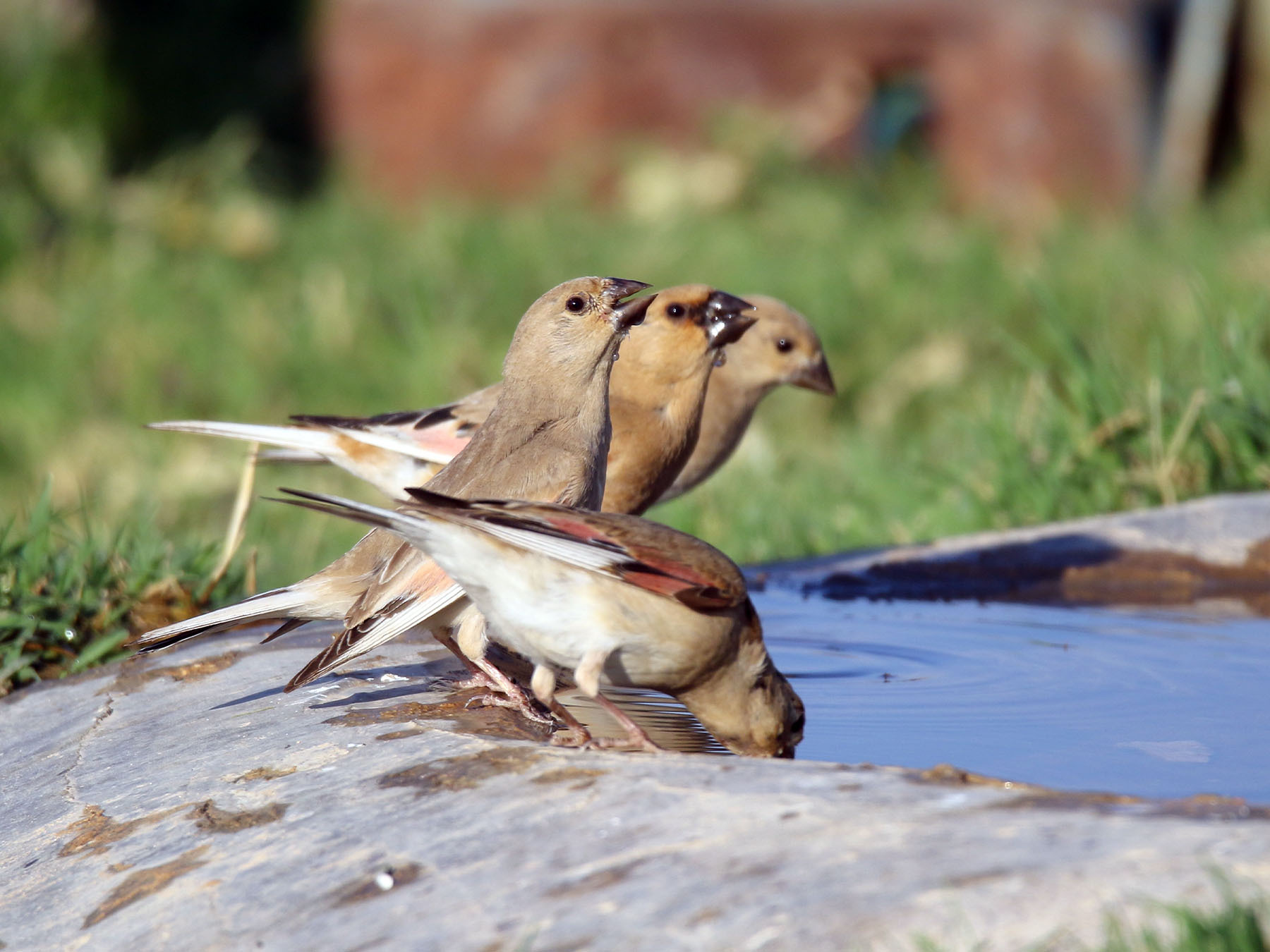
- Visit desert oases or areas with water sources, where they often gather to drink
What it eats
The Desert Finch primarily feeds on seeds from various desert plants, including grasses and herbs. They supplement their diet with small insects, especially during the breeding season.
These birds are well-adapted to arid conditions and can survive on minimal water intake, often obtaining moisture from their food.
Nesting and breeding
Breeding season for Desert Finches typically occurs from March to July. Males perform elaborate courtship displays, including aerial manoeuvres and melodious singing, to attract females.
Nests are cup-shaped structures built in low bushes or rocky crevices, using grass, twigs, and plant fibres lined with softer materials like feathers or animal hair. Females lay 3-5 pale blue eggs with dark speckles.
Incubation lasts about 12-14 days and is primarily carried out by the female. Both parents feed the nestlings, who fledge after approximately 14-16 days but remain dependent on their parents for several more weeks.
Behaviour
Desert Finches are social birds, often seen in small flocks outside the breeding season. They have a characteristic bouncy flight pattern, alternating between rapid wing beats and brief glides.
When foraging, they hop along the ground, picking seeds with their strong beaks, and occasionally engage in aerial displays during courtship.
Conservation
While the Desert Finch is currently listed as Least Concern, it faces localised threats from habitat degradation due to overgrazing and climate change.
Conservation efforts focus on preserving arid ecosystems and maintaining water sources in desert regions to support this and other desert-dwelling species.
More photos
3 photos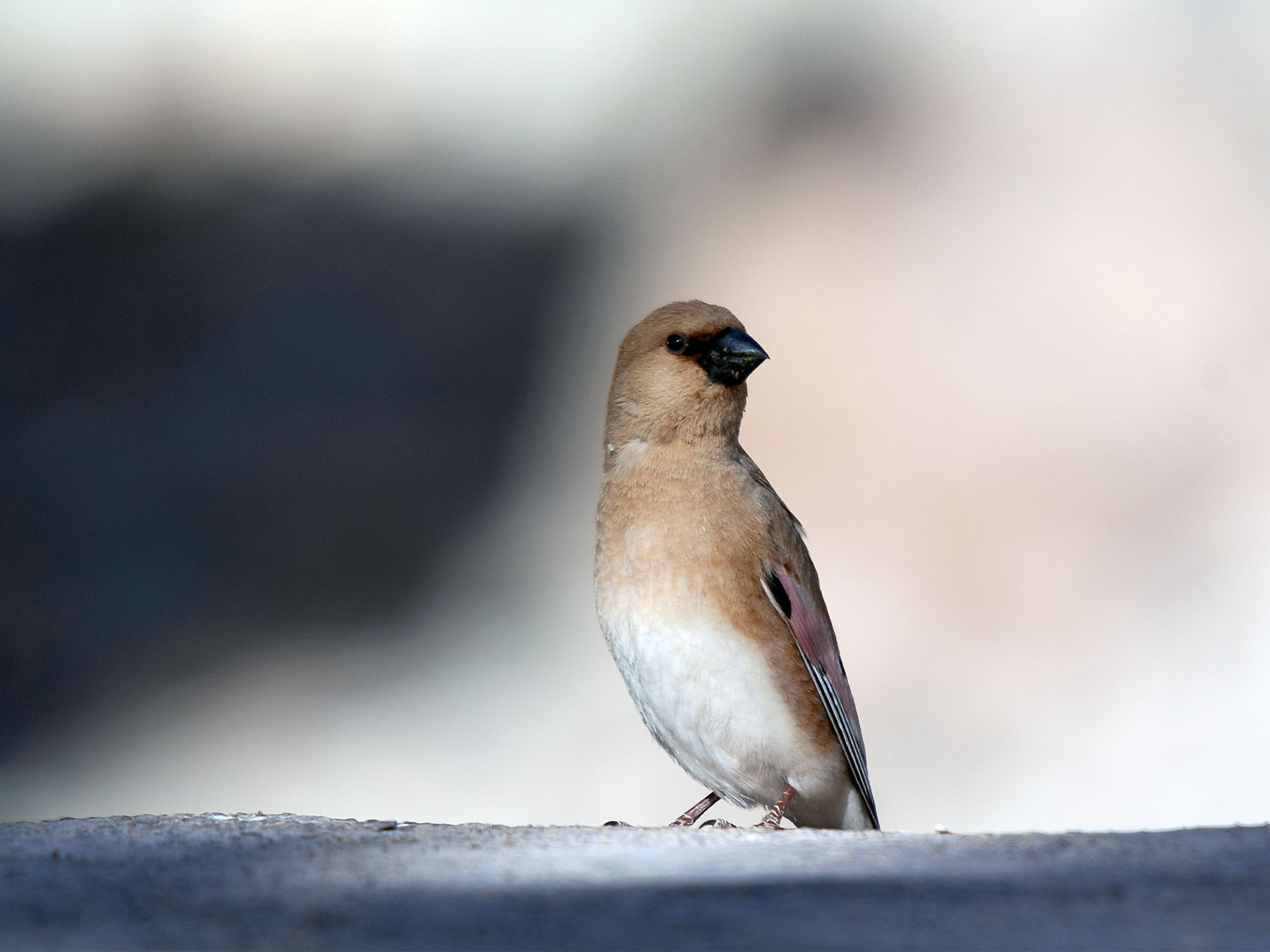
Quick facts
- Length
- 13–14 cm
- Wingspan
- 24–26 cm
- Weight
- 18–22 g
- Lifespan
- 5–8 years
- Family
- Finches
- Migration
- Partial migrant
- Global status (IUCN)
- Least Concern
- World population
- Not quantified, but considered common to locally common or erratic
- Population trend
- Stable
- Also called
- Desert Rosefinch, Lichtenstein's Desert Finch
- Scientific name
- Rhodospiza obsoleta
Sources
3- 1Rough range estimate based on similar finches
- 2BirdLife International. 2016. Rhodospiza obsoleta. The IUCN Red List of Threatened Species 2016: e.T22720532A88509707. Source (opens in a new tab)
- 3BirdLife International. 2016. Rhodospiza obsoleta. The IUCN Red List of Threatened Species 2016: e.T22720532A88509707. Source (opens in a new tab)

Checked by
Nathan Cope, founder and editor
Nathan founded Birdfact and leads its writers and contributors in the UK, the US and Canada. He has watched and studied birds for more than ten years, and checks every article and species guide before it’s published.