
Damara Tern
Damara Sea Swallow · Sternula balaenarum
By the Birdfact teamChecked by Nathan Cope
On this page11 sections
How to recognise it
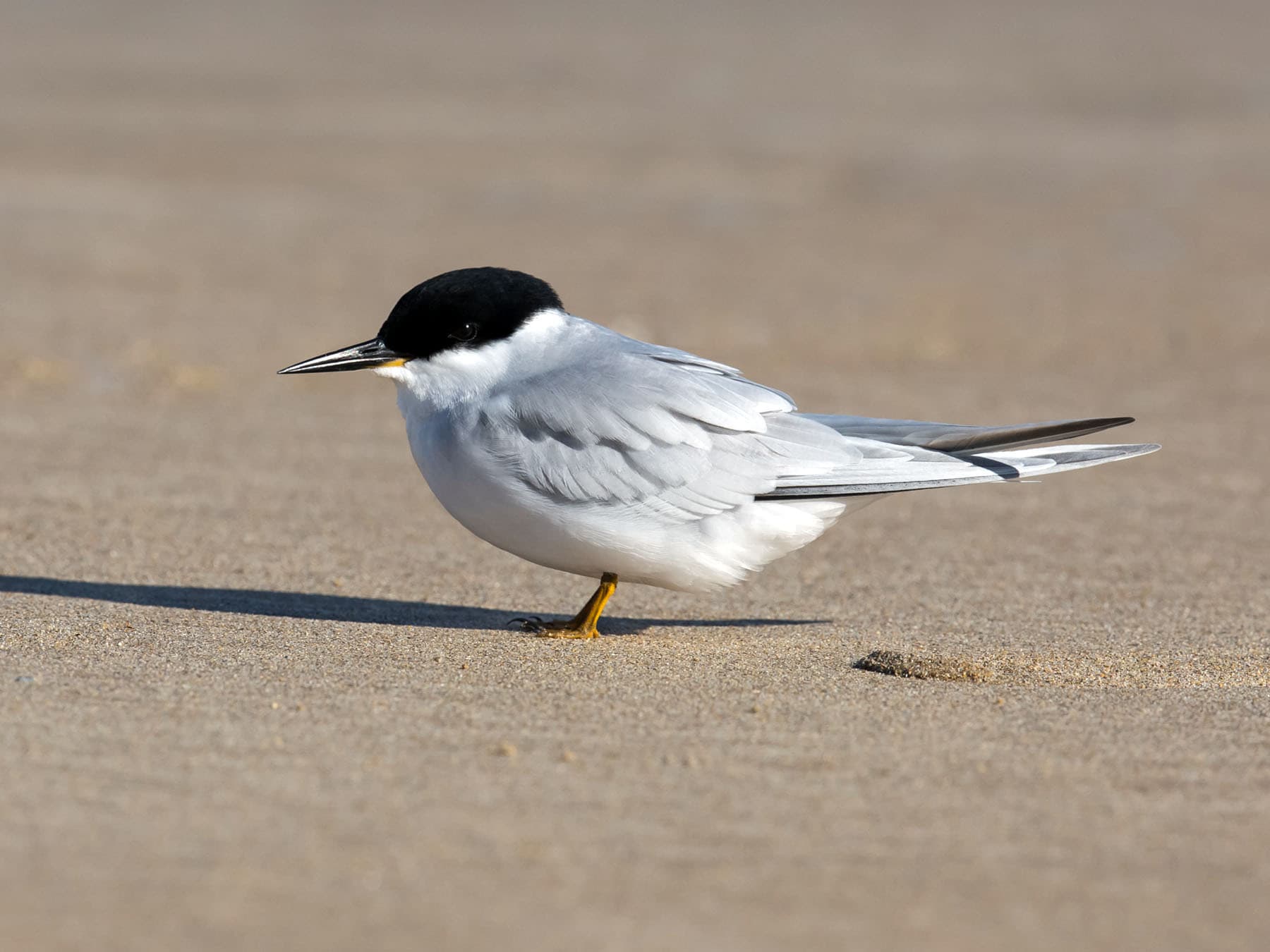
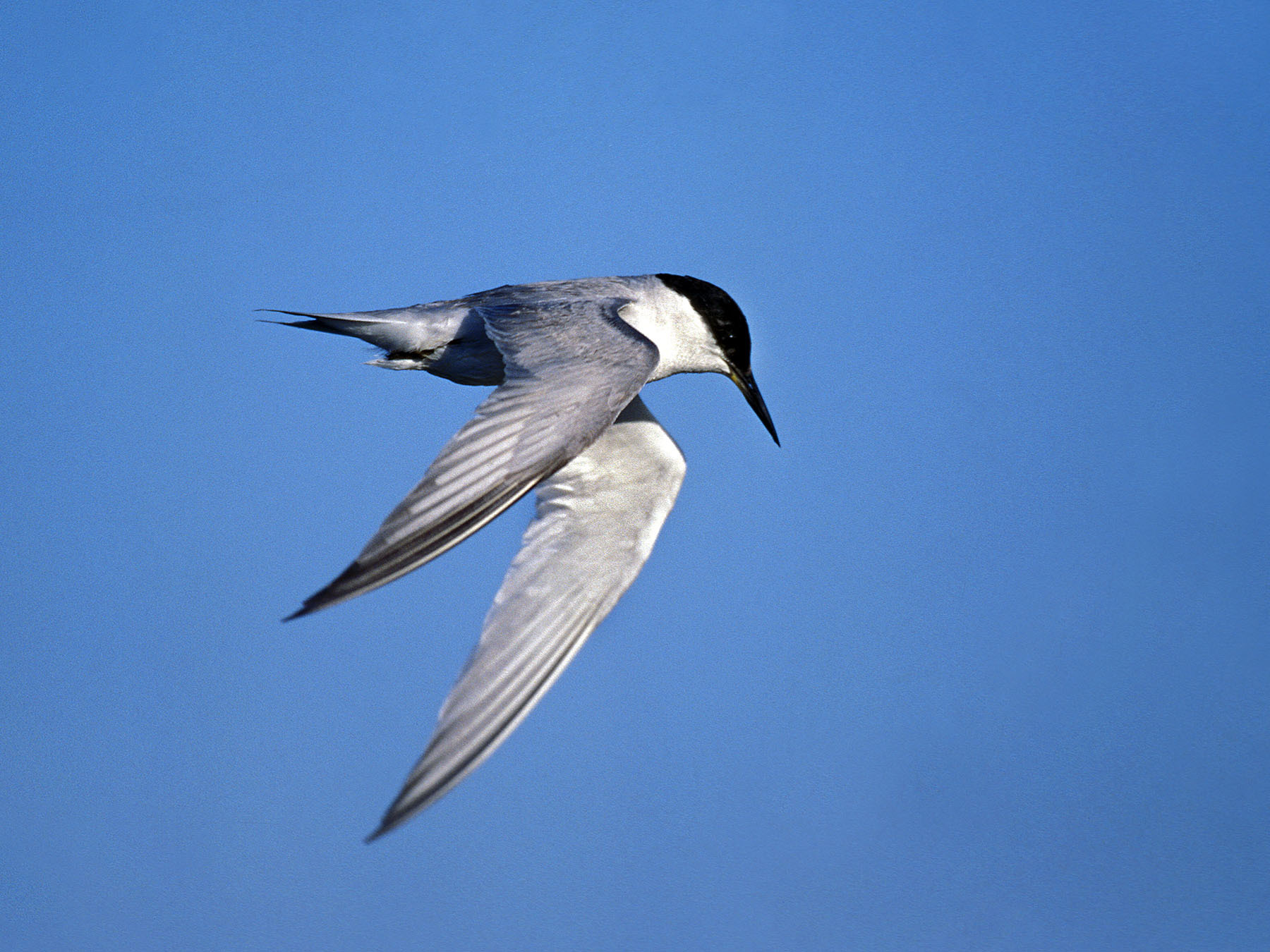
The Damara Tern is a small, slender seabird with pale grey upperparts and white underparts. Its distinctive features include a black cap and a slender black bill.
During breeding season, the black cap extends to include the forehead, while in non-breeding season, the forehead becomes white, and the crown becomes mottled grey and black. The legs range from yellowish to dusky in colour.
Juveniles have buff-coloured crowns with a dark band through the eye and across the nape, along with grey flight feathers and brown wing coverts marked with dark edges. Both sexes look similar, with no significant differences in plumage or size between males and females.
Its size
Adults- Length
- 22–24 cm
- Wingspan
- 46–51 cm
- Weight
- 40–55 g
Its song and calls
Damara Terns have a distinctive, high-pitched call often described as a sharp 'kik-kik' or 'krrrit'.
During the breeding season, their vocalisations become more varied and frequent, including softer purring sounds used in courtship. Their alarm call is a rapid series of harsh, grating notes.
When and where to see it
The Damara Tern is not recorded regularly in the UK, Ireland, the United States or Canada.
Worldwide: recorded regularly in 5 countries
Countries where it was recorded in at least 3 of the 6 years 2019–2024. Linked countries have their own bird list.
Africa (5)
- Angola
- Gabon
- Mozambique
- Namibia
- South Africa
Data: EOD – eBird Observation Dataset (Cornell Lab of Ornithology), accessed via GBIF.org, CC BY 4.0. Records from 2019–2024, aggregated and filtered by Birdfact. How these lists are made
Tips for seeing it
- Look for Damara Terns along sandy beaches and coastal lagoons
- Observe their distinctive plunge-diving behaviour for fish
- Listen for their sharp, high-pitched 'kik-kik' calls
- Visit known breeding sites during the southern hemisphere summer (October to March)
What it eats
Damara Terns primarily feed on small fish, particularly sardines and anchovies. They also consume small crustaceans and occasionally insects.
These agile birds catch their prey by plunge-diving from heights of up to 10 meters, entering the water with precision to snatch fish near the surface.
Nesting and breeding
Breeding occurs from October to March, coinciding with the southern hemisphere summer. Damara Terns form monogamous pairs and engage in elaborate courtship displays, including aerial acrobatics and fish-offering rituals.
Nests are simple scrapes in the sand, often located in sparsely vegetated areas near the high tide line. The female typically lays a single egg, which is well-camouflaged with its speckled appearance.
Both parents share incubation duties for about 22 days. Chicks are precocial and can leave the nest within days of hatching, but remain dependent on their parents for food for several weeks.
Behaviour
Damara Terns are typically solitary or found in small groups when foraging. They hunt by plunge-diving into shallow waters, often hovering briefly before diving.
During the breeding season, they become more social, forming loose colonies and engaging in aerial displays to attract mates.
Conservation
The Damara Tern is classified as Least Concern, although it has a small population and limited breeding range. Major threats include coastal development, human disturbance at nesting sites, and predation by introduced species.
Conservation efforts focus on protecting breeding habitats and raising awareness among coastal communities.
More photos
2 photos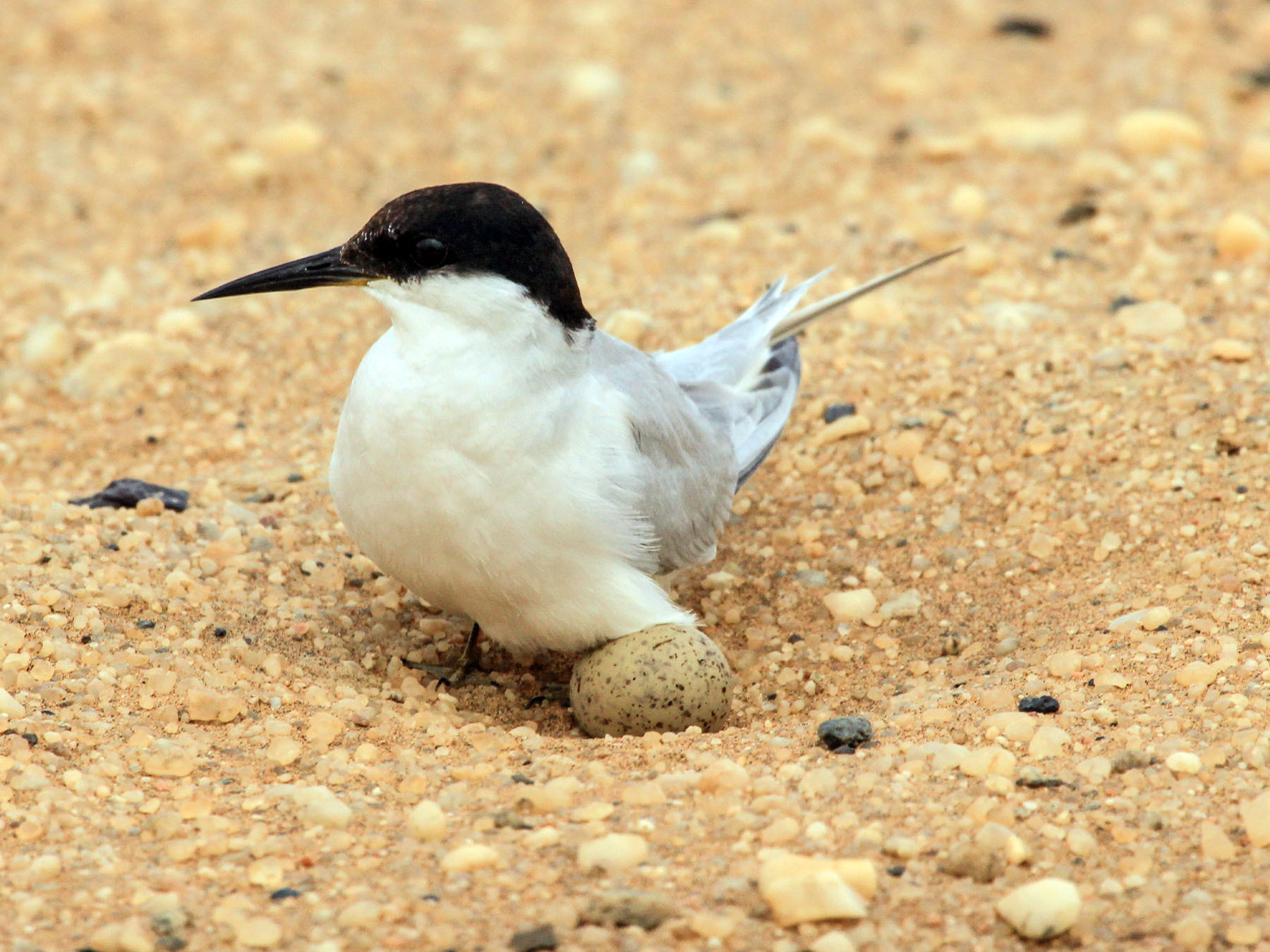
Quick facts
- Length
- 22–24 cm
- Wingspan
- 46–51 cm
- Weight
- 40–55 g
- Lifespan
- 10–15 years
- Family
- Gulls & Terns
- Migration
- Long-distance Migrant
- Global status (IUCN)
- Least Concern
- World population
- 2,200 - 5,700 mature individuals
- Population trend
- Decreasing
- Also called
- Damara Sea Swallow
- Scientific name
- Sternula balaenarum
Sources
3- 1BirdLife International. 2021. Sternula balaenarum. The IUCN Red List of Threatened Species 2021: e.T22694699A179473845. Source (opens in a new tab)
- 2Wetlands International (2021)
- 3Hagen and Wanless (2015)

Checked by
Nathan Cope, founder and editor
Nathan founded Birdfact and leads its writers and contributors in the UK, the US and Canada. He has watched and studied birds for more than ten years, and checks every article and species guide before it’s published.