


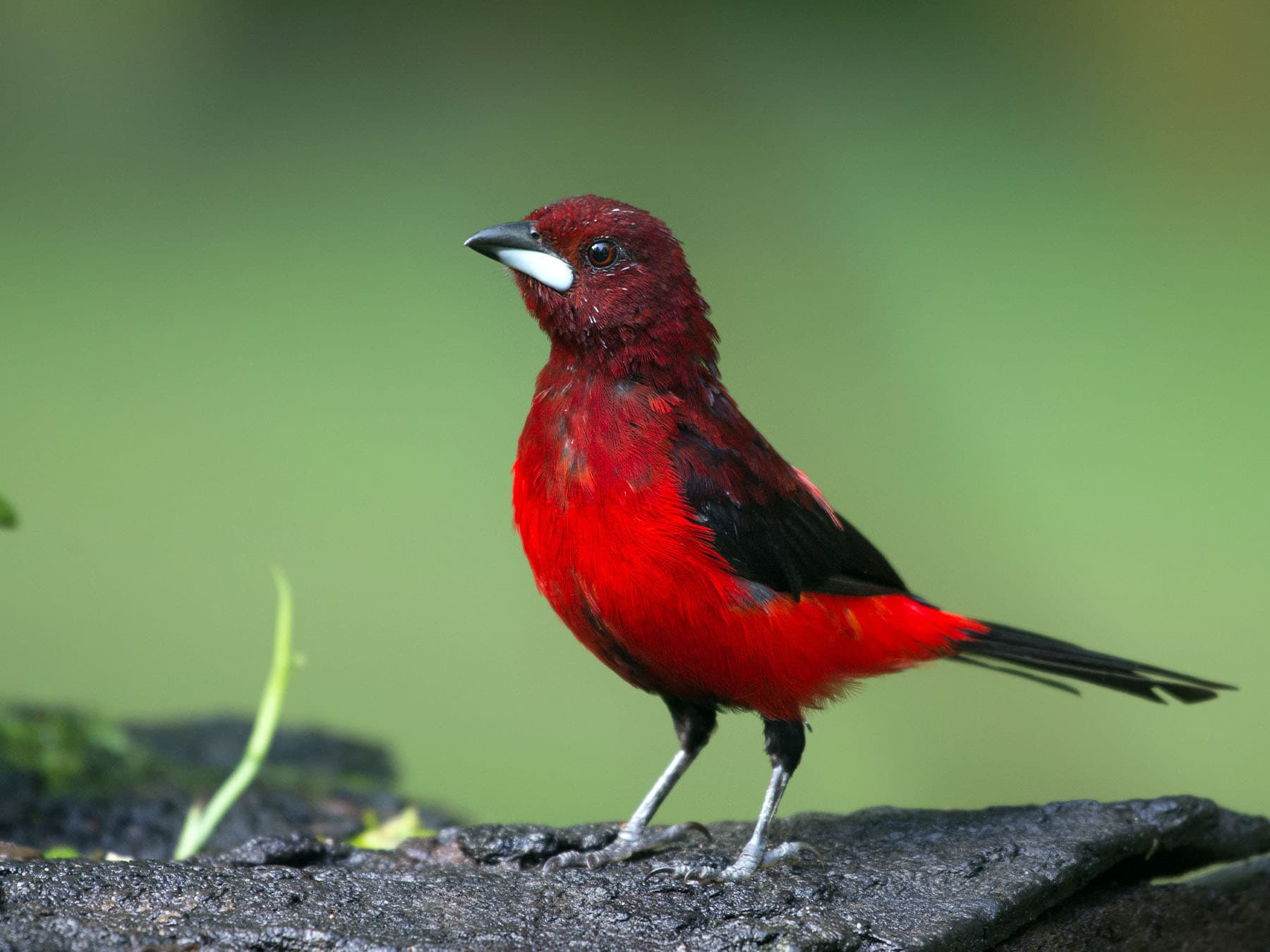
Crimson-backed Tanager
Crimson-backed Flame-rumped Tanager · Ramphocelus dimidiatus
By the Birdfact teamChecked by Nathan Cope
On this page11 sections
How to recognise it
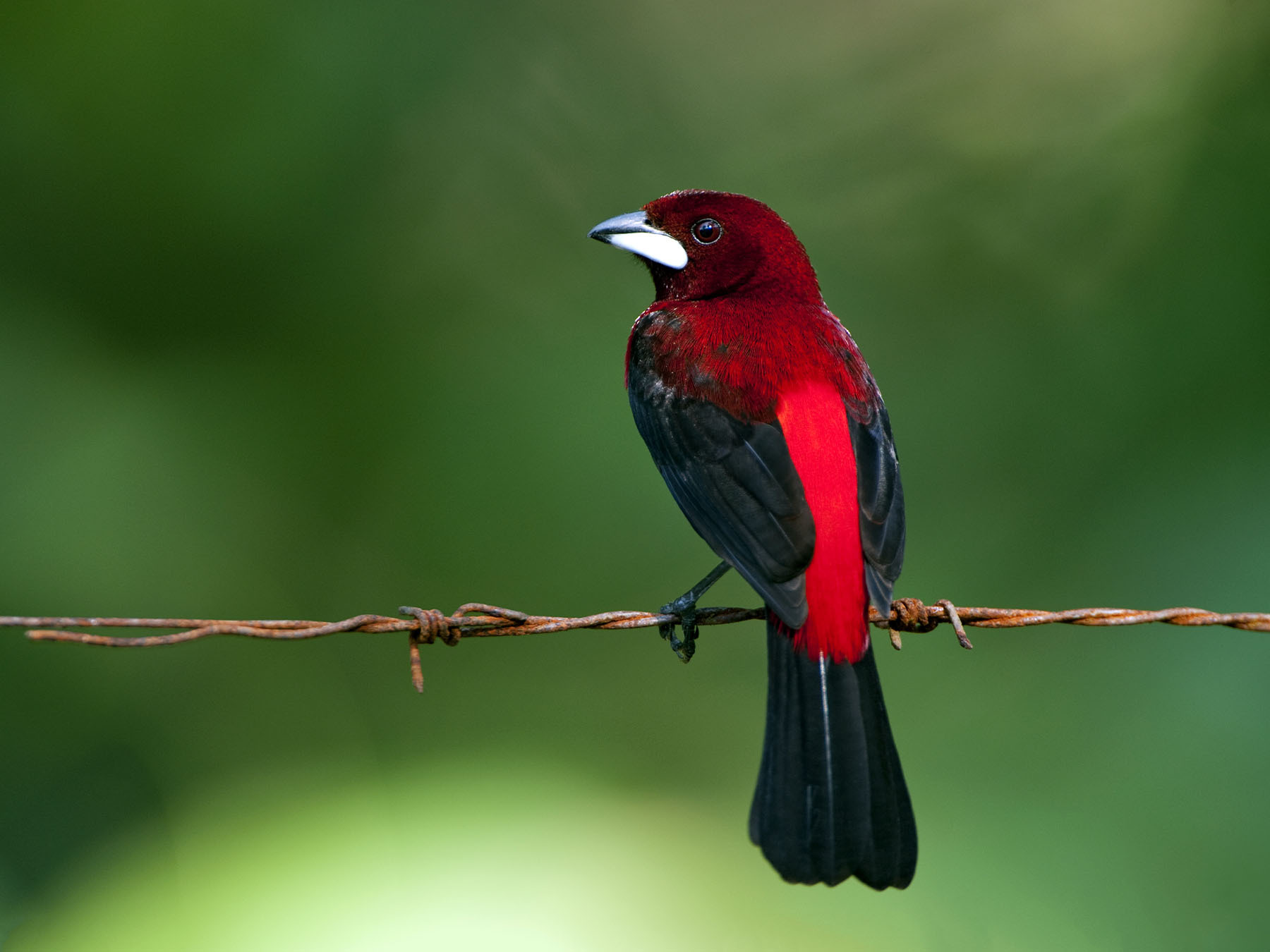
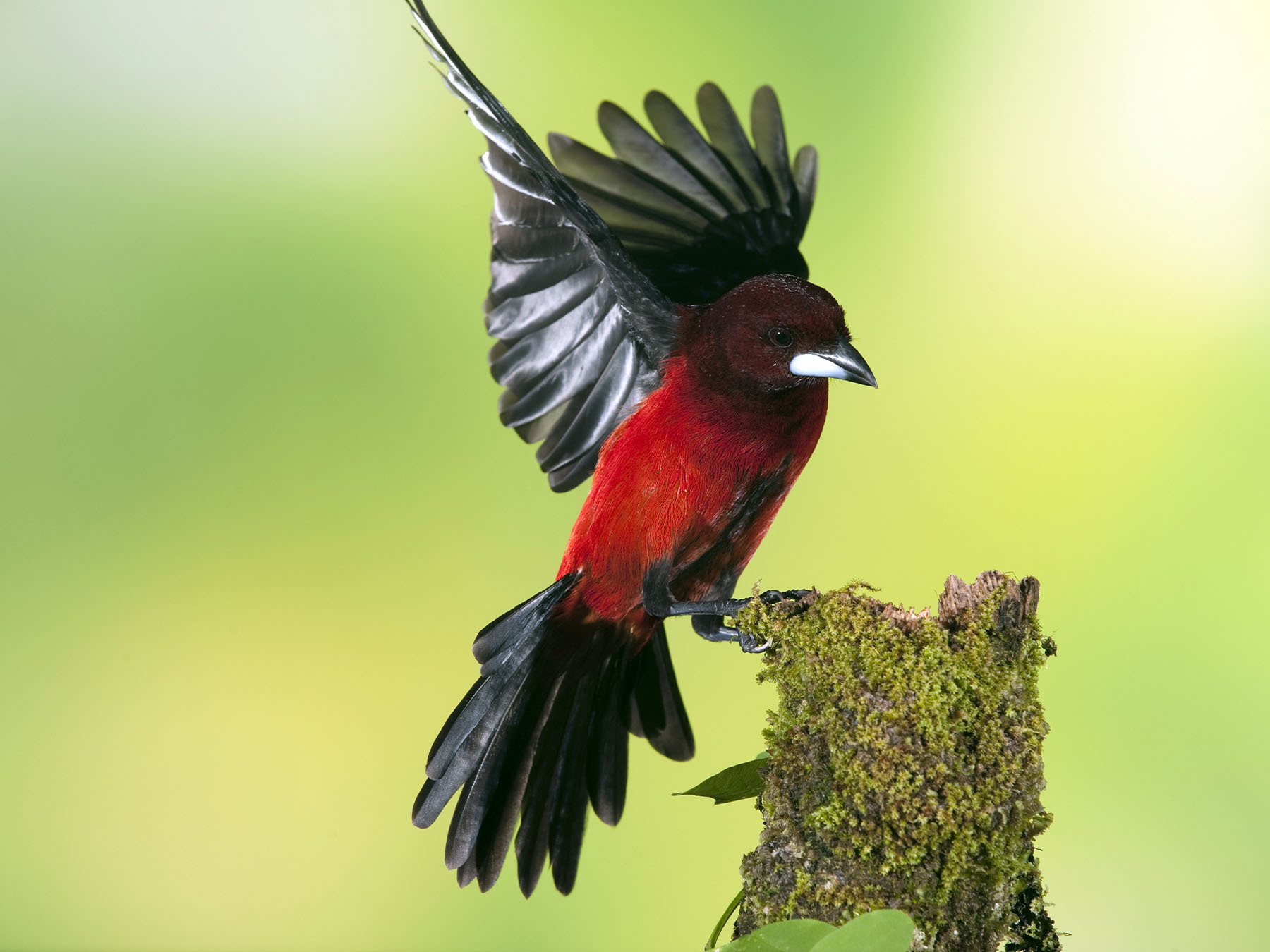
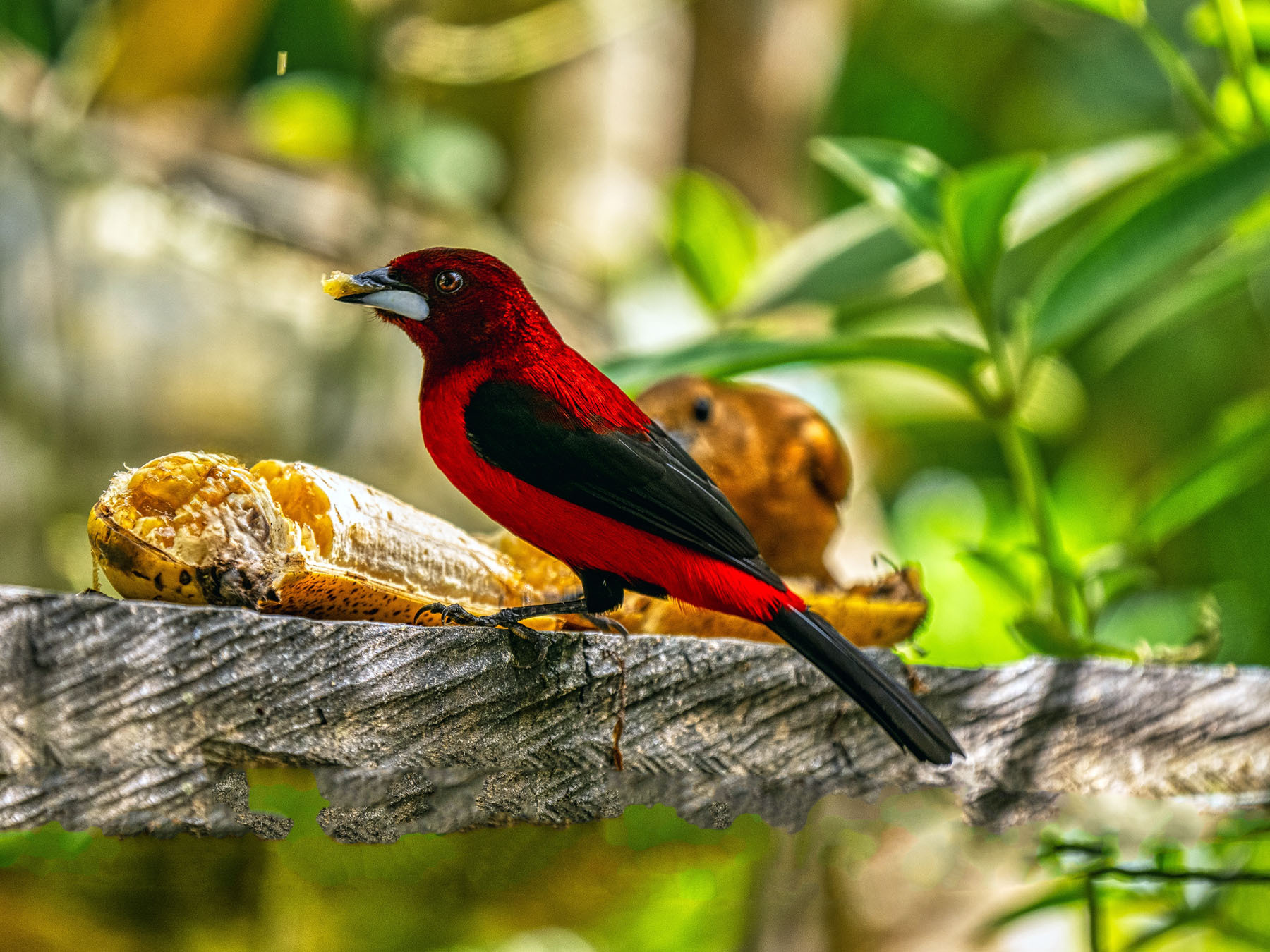
The Crimson-backed Tanager is a striking small bird with vibrant plumage. Males display a brilliant crimson back, rump, and underparts, contrasting sharply with their black wings, tail, and head. The silvery sheen on their throat adds a distinctive touch.
Females are less vivid, with a reddish-brown back and rump and duller underparts. Juveniles resemble females but have an even more subdued colouration, gradually developing adult plumage over time.
Its size
Adults- Length
- 16–18 cm
- Wingspan
- 25–28 cm
- Weight
- 28–35 g
Its song and calls
The Crimson-backed Tanager's vocal repertoire includes a variety of high-pitched calls. Their most common vocalisation is a sharp, metallic 'tsip' or 'tseep' often repeated in quick succession.
During courtship, males produce a series of warbling notes, creating a simple yet melodious song that sounds like 'tsee-tsee-tsurr-tsurr'.
When and where to see it
The Crimson-backed Tanager is not recorded regularly in the UK, Ireland, the United States or Canada.
Worldwide: recorded regularly in 4 countries
Countries where it was recorded in at least 3 of the 6 years 2019–2024. Linked countries have their own bird list.
Data: EOD – eBird Observation Dataset (Cornell Lab of Ornithology), accessed via GBIF.org, CC BY 4.0. Records from 2019–2024, aggregated and filtered by Birdfact. How these lists are made
Tips for seeing it
- Look for flashes of bright red in the mid-canopy of forests and woodland edges
- Listen for their distinctive, high-pitched 'tsip' calls
- Observe fruiting trees, where these tanagers often gather to feed
- Watch for their characteristic hopping movement along branches
What it eats
The Crimson-backed Tanager primarily feeds on a variety of fruits, particularly berries and small drupes. They supplement their diet with insects and spiders, especially during the breeding season when protein-rich food is crucial for nestling development.
These birds often forage in mixed-species flocks.
Nesting and breeding
Breeding season for Crimson-backed Tanagers typically occurs during the rainy season, which varies across their range. Pairs engage in courtship displays involving wing-fluttering and chasing flights.
The female constructs a cup-shaped nest using plant fibres, leaves, and spider webs, usually placed in the fork of a tree or shrub. The clutch typically consists of 2-3 pale blue or greenish eggs with dark speckles.
Incubation lasts about 12-14 days, primarily by the female. Both parents participate in feeding the nestlings, which fledge after approximately 12-14 days, but remain dependent on the parents for several weeks after that.
Behaviour
Crimson-backed Tanagers are often seen in pairs or small groups, actively foraging in the mid to lower levels of trees and shrubs. They hop along branches, plucking fruits and insects with quick, precise movements.
These birds are known for their bold and curious nature, sometimes approaching human observers in their habitat.
Conservation
While the Crimson-backed Tanager is currently listed as Least Concern, it faces localised threats from habitat loss due to deforestation in parts of its range.
Conservation efforts focus on preserving tropical forest habitats and promoting sustainable land-use practices in areas where these birds occur.
More photos
4 photos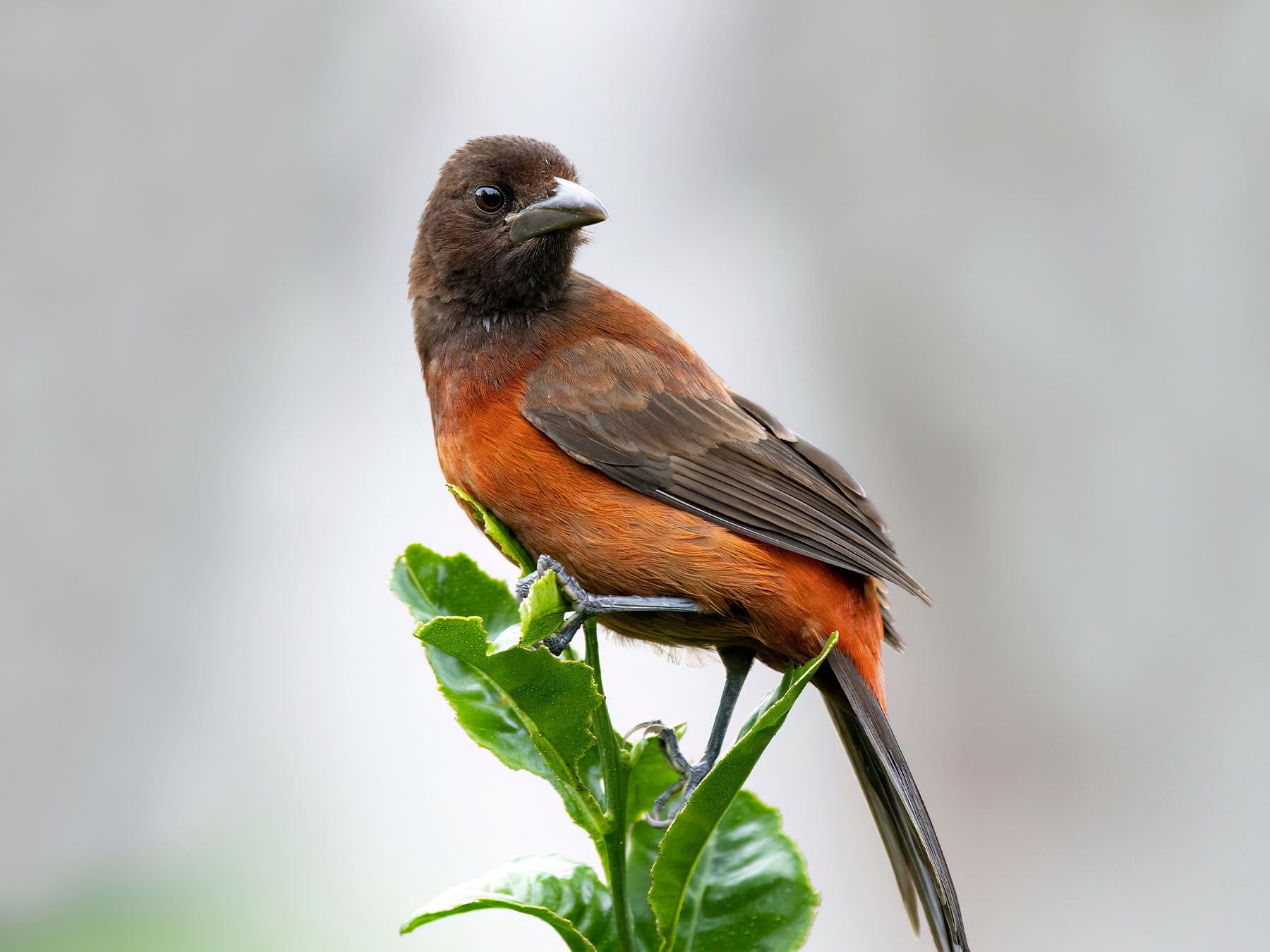
Quick facts
- Length
- 16–18 cm
- Wingspan
- 25–28 cm
- Weight
- 28–35 g
- Lifespan
- 5–8 years
- Family
- Tanagers
- Migration
- Resident
- Global status (IUCN)
- Least Concern
- World population
- 500,000 - 4,999,999 mature individuals
- Population trend
- Stable
- Also called
- Crimson-backed Flame-rumped Tanager
- Scientific name
- Ramphocelus dimidiatus
Sources
3- 1BirdLife International. 2021. Ramphocelus dimidiatus. The IUCN Red List of Threatened Species 2021: e.T22722500A167762422. Source (opens in a new tab)
- 2Partners in Flight (2019)
- 3Partners in Flight (2019)

Checked by
Nathan Cope, founder and editor
Nathan founded Birdfact and leads its writers and contributors in the UK, the US and Canada. He has watched and studied birds for more than ten years, and checks every article and species guide before it’s published.