


Crag Martin
Eurasian Crag Martin · Ptyonoprogne rupestris
By the Birdfact teamChecked by Nathan Cope
On this page11 sections
How to recognise it
What do crag martins look like?
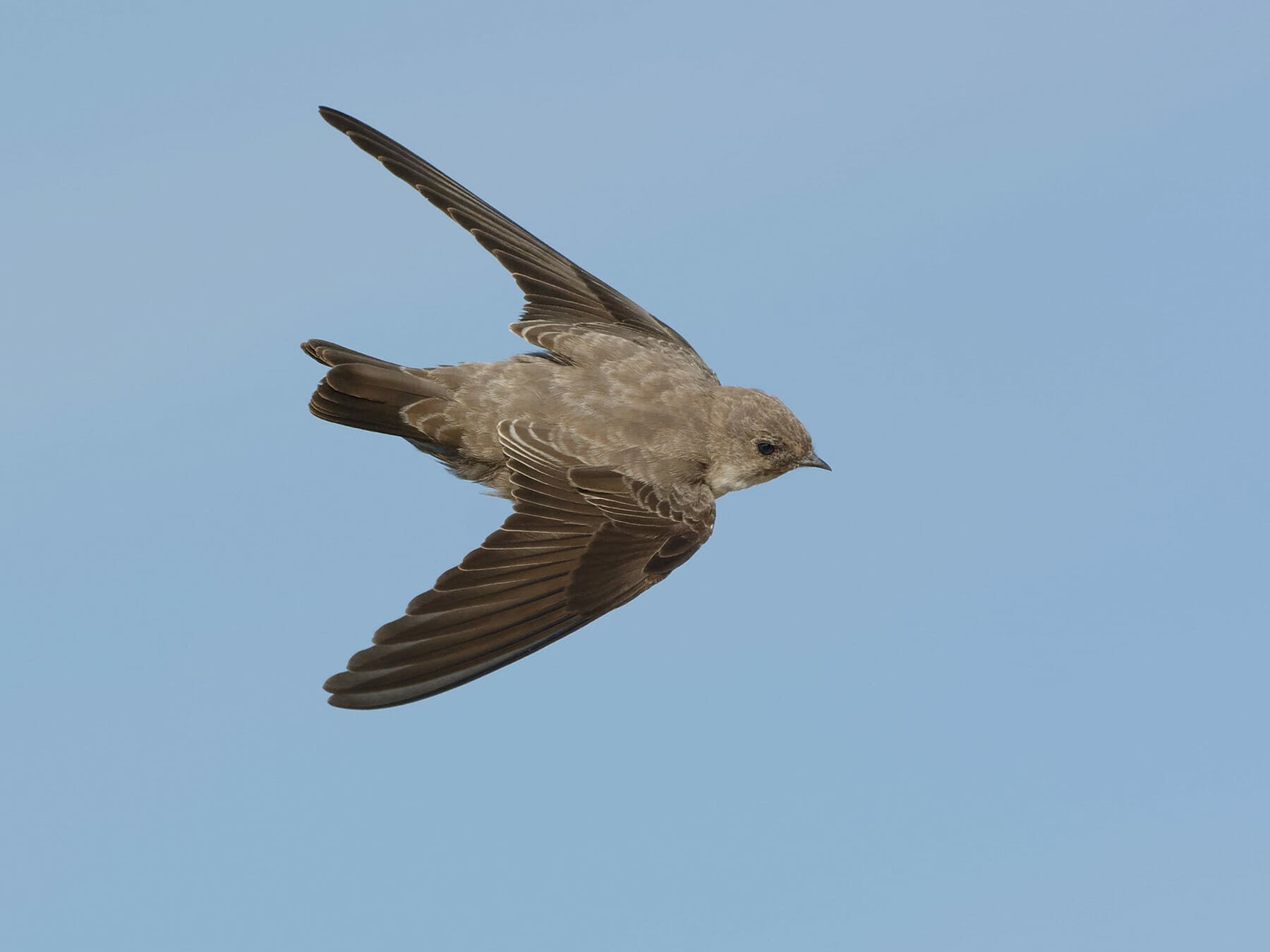
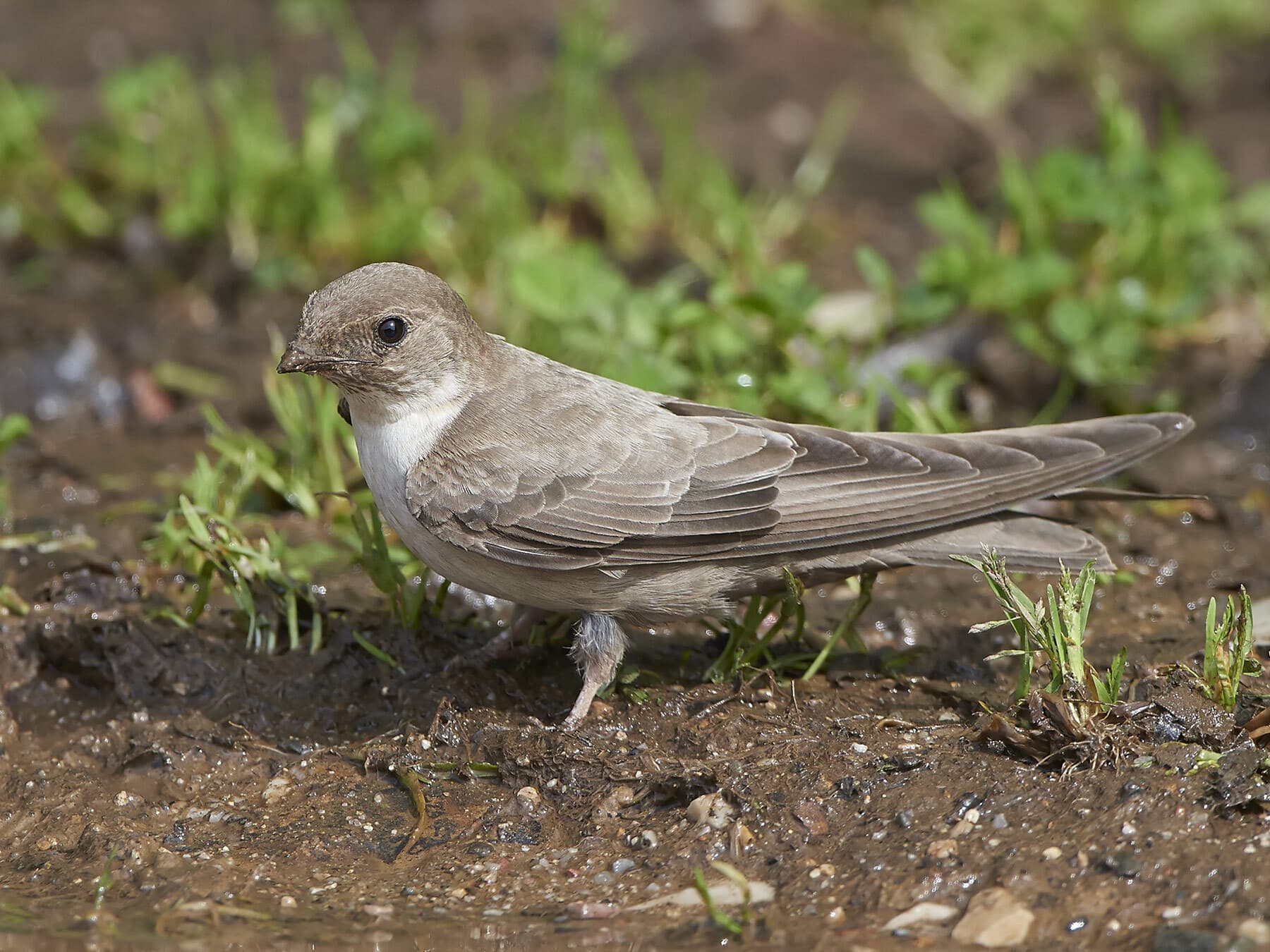
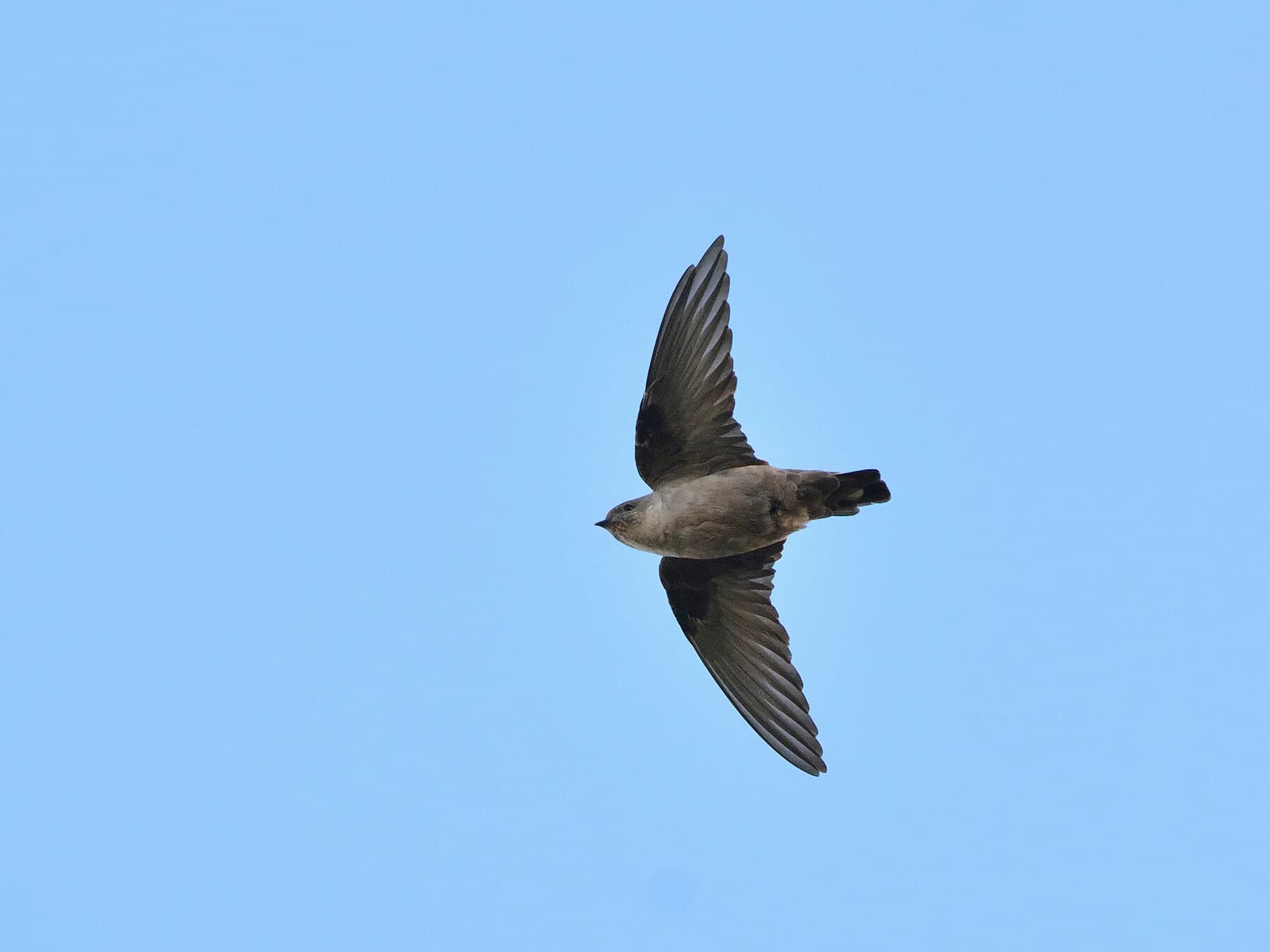
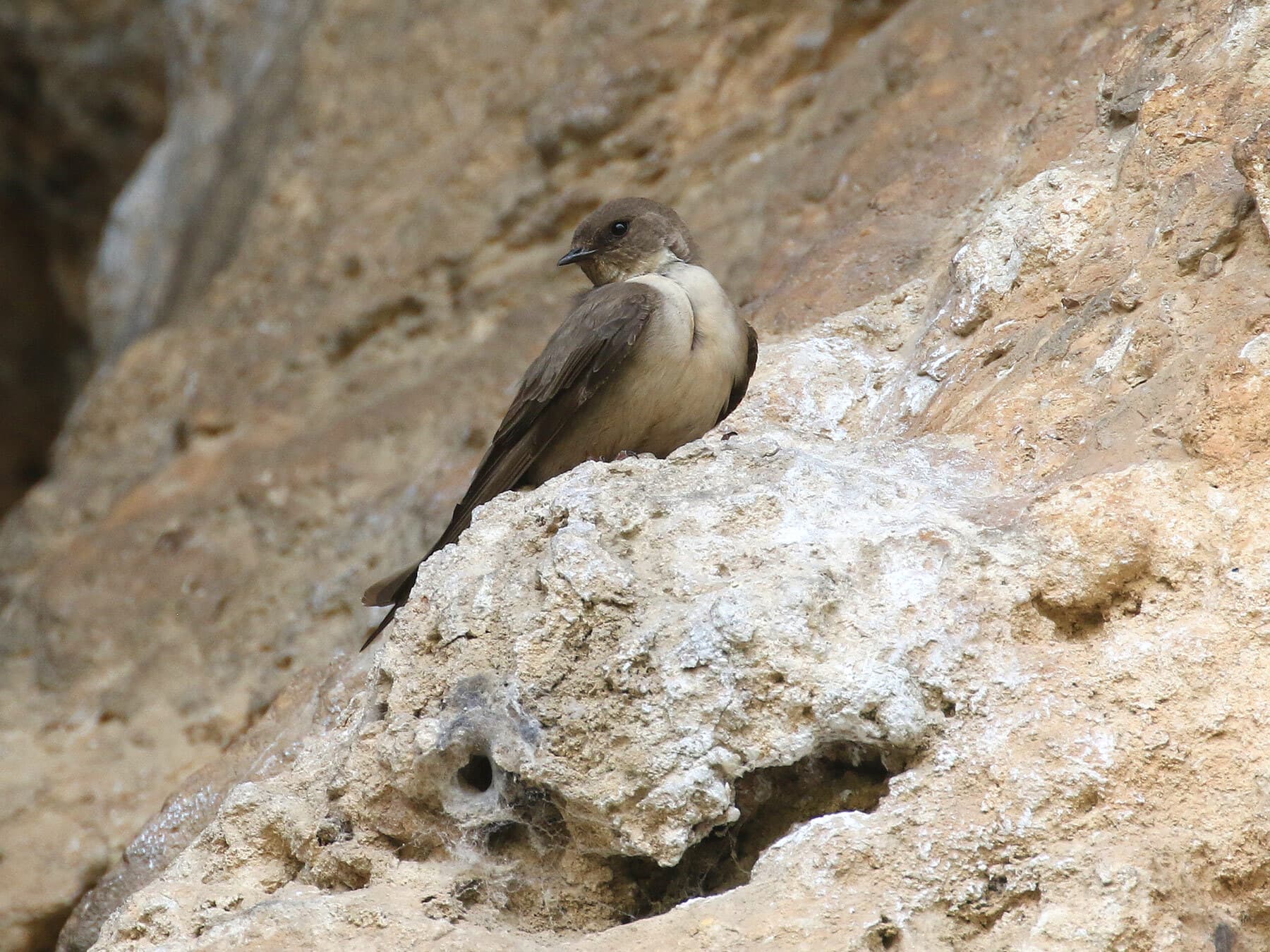
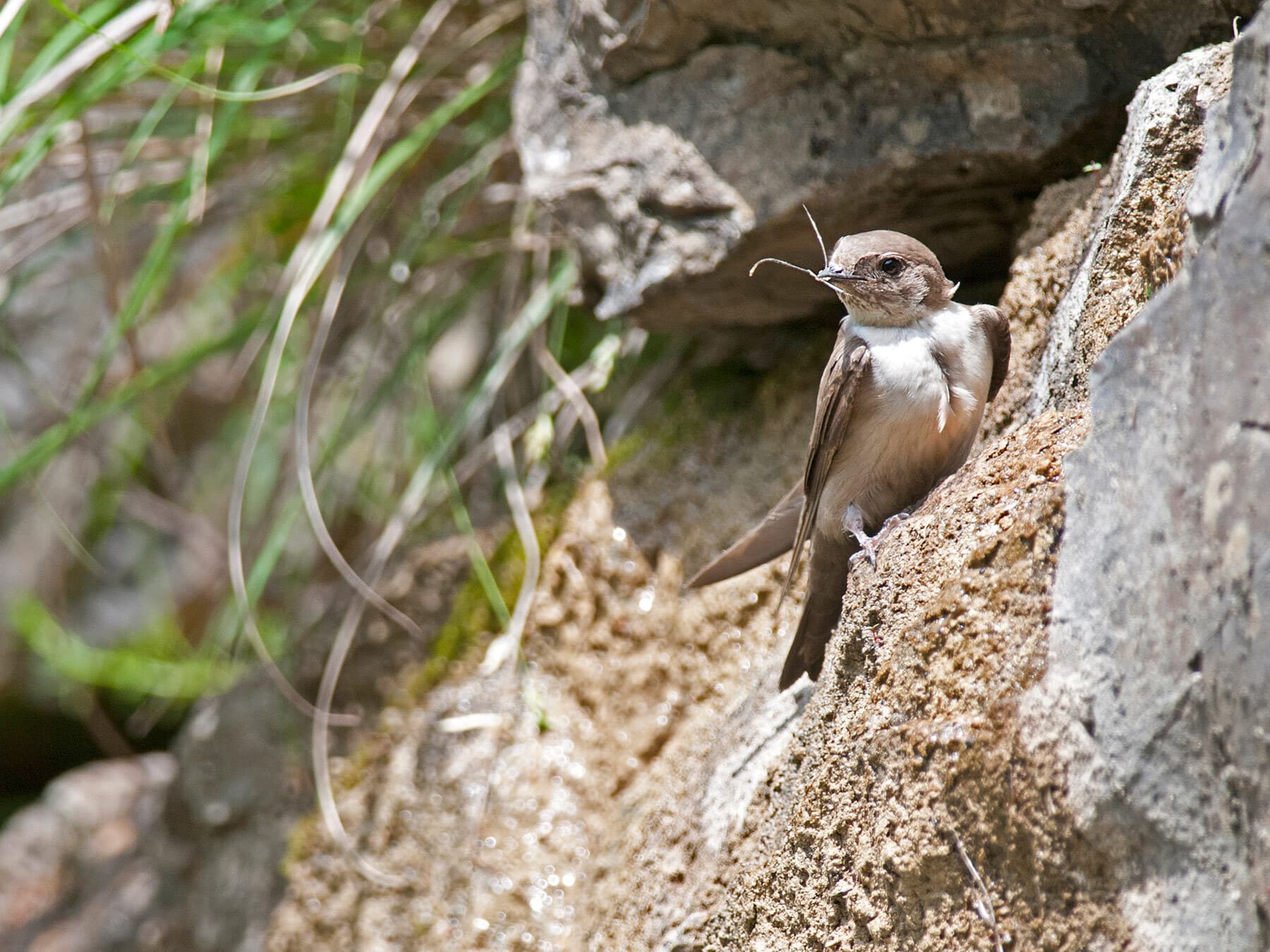
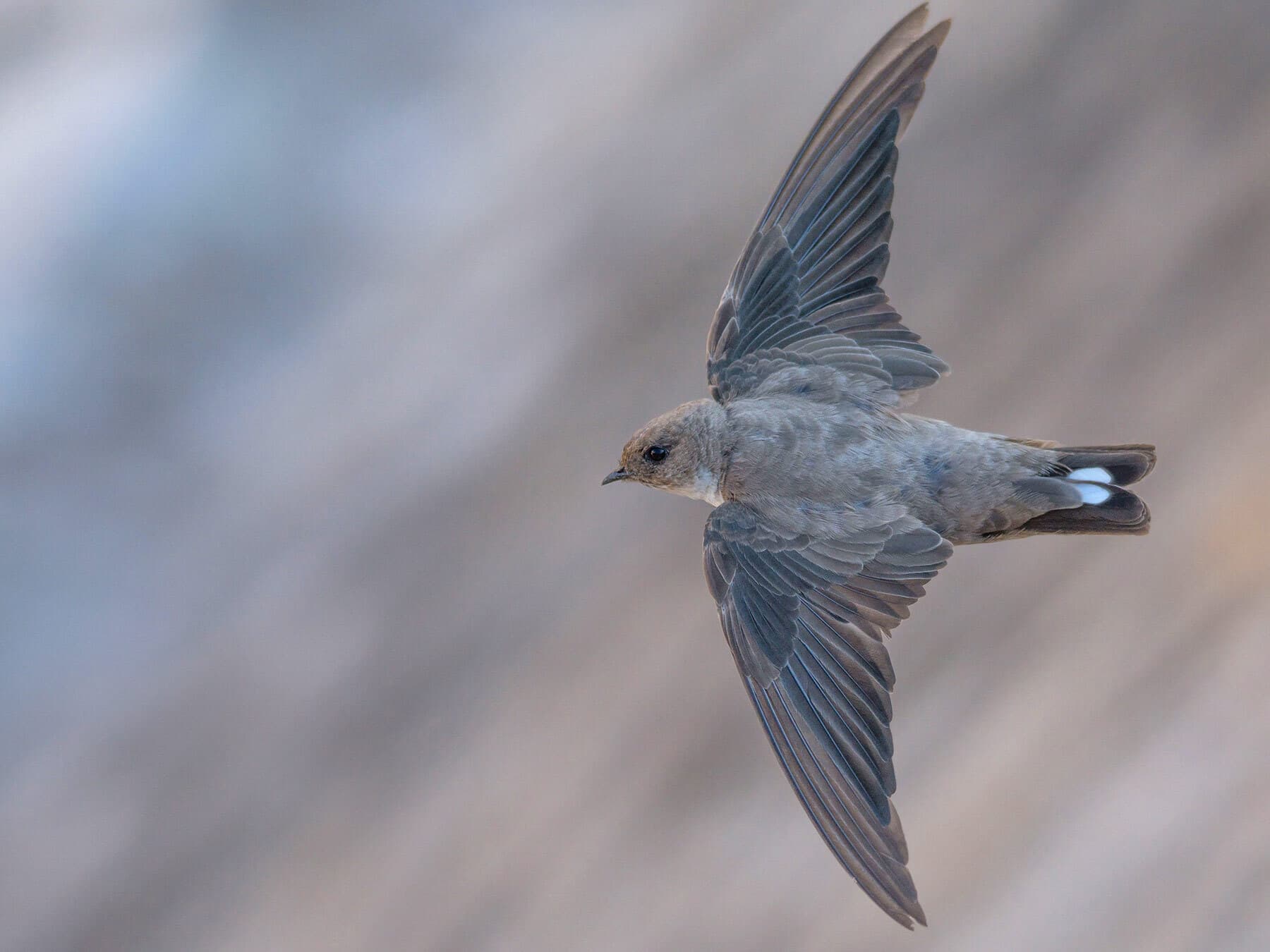
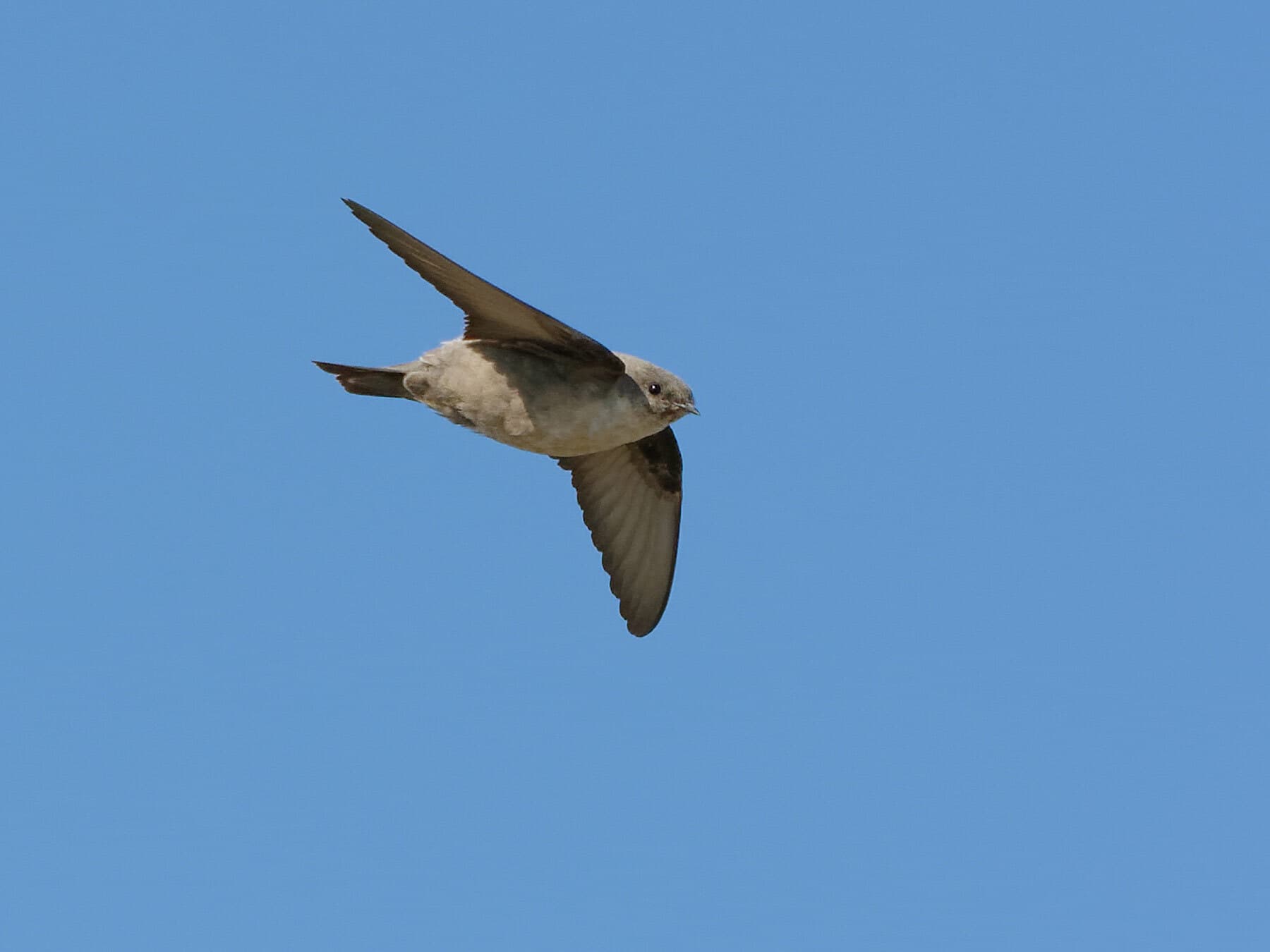
The Eurasian crag martin is a broad, compact aerial bird that in flight resembles the house martin. It has light greyish-brown upperparts, with paler underparts. Crag martins’ tails are short and square, and have white patches on all but the outermost tail feathers. The edges of the underside of the wings and tail are tipped with black.
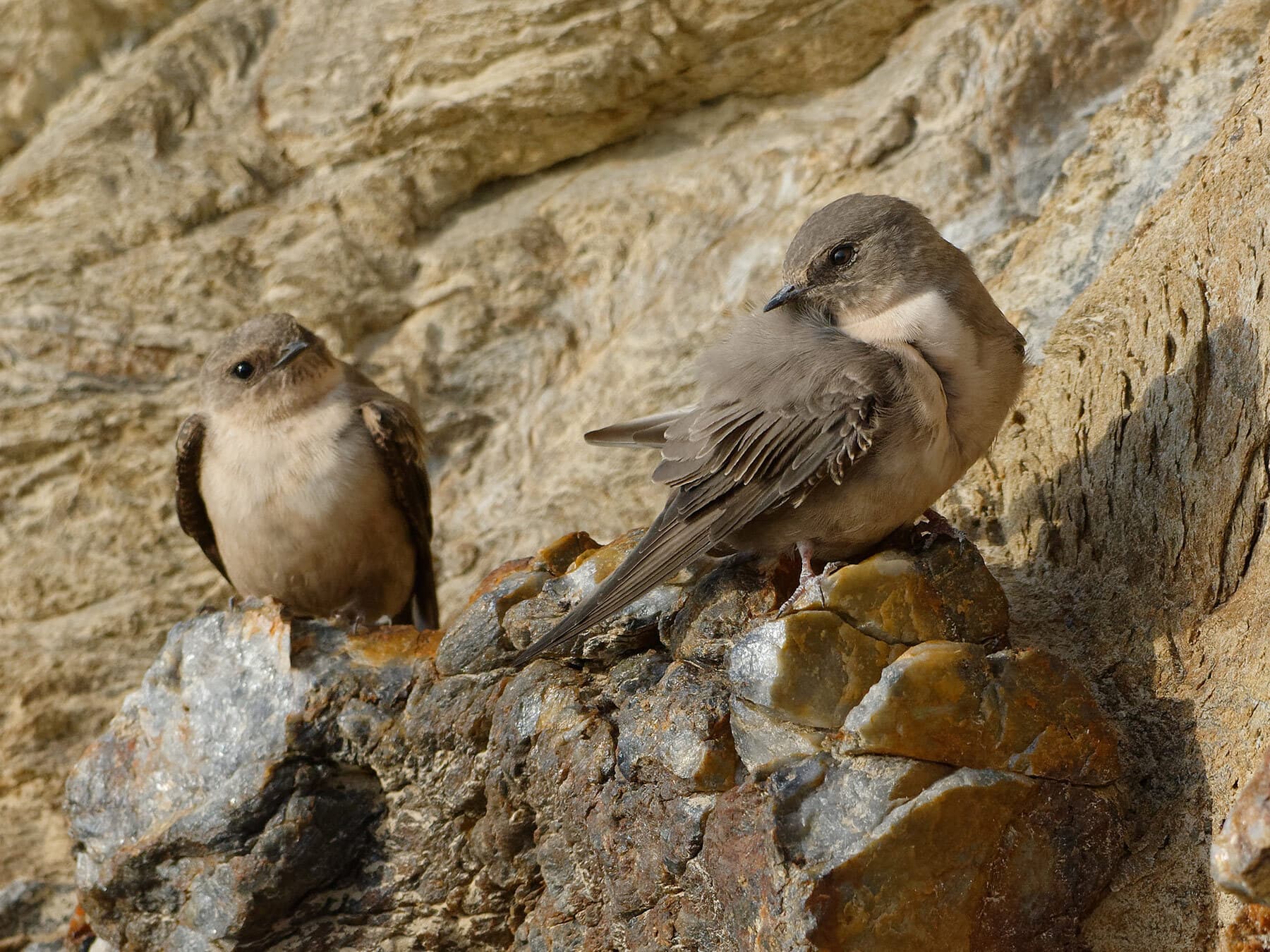
Female and male crag martins are alike in size and appearance. Both have brown eyes, small black bill, and brownish-pink legs.
Juveniles’ head feathers have buff-brown tips, and their upperparts and wing edges are a mottled shade of grey-brown.
How big are crag martins?
Crag martins are roughly the same size as house martins, and slightly smaller than swallows. They fall within the average measurement range below:
- Length: 12cm to 15cm (4.7–5.9 in)
- Wingspan: 32cm to 34.5cm (12.6–13.6 in)
- Weight: 23g (0.8 oz)
Its size
Adults- Length
- 14–15 cm
- Wingspan
- 32–34 cm
- Weight
- 20–32 g
Its song and calls
What sound does a crag martin make?
Crag martins make a number of distinct calls and vocalisations. These include an aggressive, whirring call when defending nests, a hard ‘chrrt’ contact call, and a gentler, twittering song.
Why are they called crag martins?
Crag martins take their name from the steep, rugged cliff faces on which they frequently nest. Crags are particularly rough, rocky cliffs, which make an ideal habitat for nesting crag martins.
- Song0:00 / 1:14
Recorded in Jura, Switzerland · March 2025
- Call0:00 / 0:26
Recorded in Wallis, Switzerland · August 2020
When and where to see it
The Crag Martin is not recorded regularly in the UK, Ireland, the United States or Canada.
United Kingdom: recorded in 2 of the 6 years. Too few years to count as a regular visitor.
Worldwide: recorded regularly in 49 countries
Countries where it was recorded in at least 3 of the 6 years 2019–2024. Linked countries have their own bird list.
Europe (22)
- Albania
- Andorra
- Austria
- Bosnia & Herzegovina
- Bulgaria
- Croatia
- France
- Germany
- Gibraltar
- Greece
- Italy
- Liechtenstein
- Monaco
- Montenegro
- North Macedonia
- Portugal
- Romania
- Russia
- Serbia
- Slovenia
- Spain
- Switzerland
Asia (23)
- Afghanistan
- Armenia
- Azerbaijan
- Bhutan
- China
- Cyprus
- Georgia
- India
- Iran
- Israel
- Jordan
- Kazakhstan
- Kyrgyzstan
- Lebanon
- Mongolia
- Nepal
- Oman
- Pakistan
- Palestinian Territories
- Saudi Arabia
- Tajikistan
- Turkey
- Uzbekistan
Data: EOD – eBird Observation Dataset (Cornell Lab of Ornithology), accessed via GBIF.org, CC BY 4.0. Records from 2019–2024, aggregated and filtered by Birdfact. How these lists are made
What is the habitat of a crag martin?
Natural habitats of crag martins include mountains, crags, cliff faces, and rocky uplands. Banks of steep gorges and alpine valleys provide abundant foraging opportunities for bugs and insects.
Crag martins have become well adapted to areas with increasing human development, and make their homes underneath motorway bridges and high up on the sides of buildings.
What is the range of a crag martin?
Crag martins are found across Mediterranean Europe and North Africa all year round. Breeding populations spend summers in parts of southern Asia, before returning to the Middle East and India in winter months.
Where do crag martins live?
There are notable populations of crag martins in Spain, Portugal, Morocco, Greece, Turkey, and the countries of the Balkan Peninsula. Coastal regions offer the best sources of both habitat and food.
How rare are crag martins?
In the UK, crag martins are incredibly rare visitors, with only scattered sightings ever having been recorded. In their native habitat of southern Europe, they are widespread birds and a common sight over high ground and urban settings.
A winter roost at Gorham’s Cave in Gibraltar attracts up to 20,000 birds, estimated to be around 3 percent of the entire European population of crag martins.
Where to see crag martins in the UK
Crag martins are extremely rare visitors to the UK, with only a dozen or so recorded and verified sightings to date. Individuals have on occasion been spotted in the Orkney Islands, the Isles of Scilly, and East Sussex.
Migration
Do crag martins migrate?
Some Eurasian crag martins migrate, while others are resident birds and remain in their breeding territories all year round. Resident populations can be found in the Iberian peninsula, across Italy, Greece, the Balkan peninsula and into Turkey, and on the North African coasts of Morocco and parts of Egypt.
Large post-breeding roosts form in Gibraltar each winter, with up to 2,000 birds.
Eastern populations of crag martins breed across Asia, and return to wintering grounds in the Middle East and North Africa each year.
Tips for seeing it
- Look for Crag Martins near rocky cliffs, gorges, and tall buildings
- Observe their distinctive flight pattern: swift with frequent glides
- Listen for their soft, twittering calls during flight
- Check for white spots on the tail when the bird is perched or in flight
- In the UK, search for them at coastal cliffs in southern England during the summer months
What it eats
What do crag martins eat?
Flies and small beetles are the main source of food for crag martins. Spiders, butterflies, moths, and bugs are also eaten. Crag martins frequently fly over alpine meadows and streams in search of food, as an abundant supply of insects can be found there.
What do baby crag martins eat?
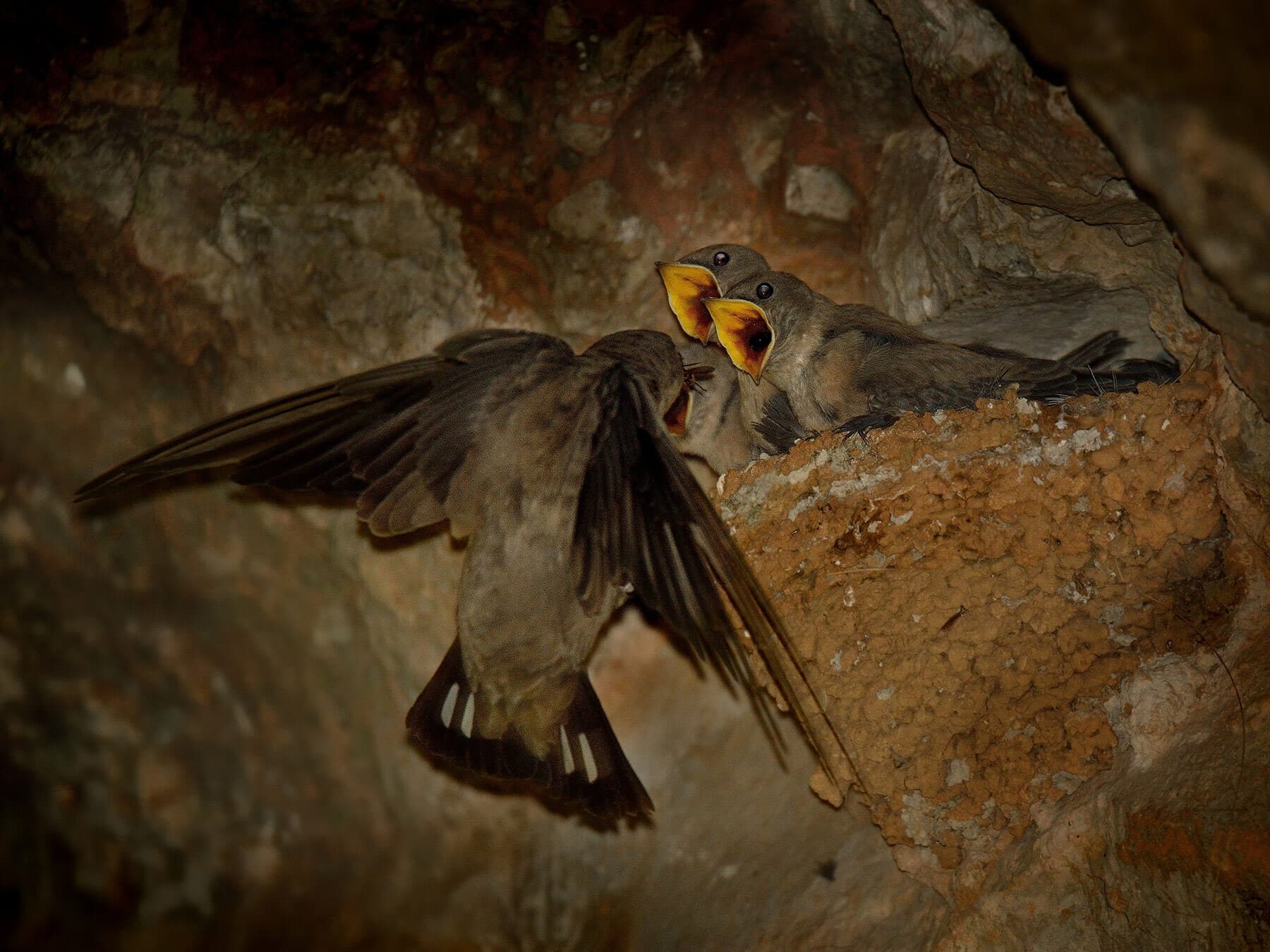
Feeding baby crag martins is an intensive job, shared between both parents. Baby birds need to be fed every two to five minutes, and are brought tiny flying insects that are caught in close proximity to the nest site.
Nesting and breeding
Where do crag martins nest?
Male and female crag martins work together to build their nests, with the intricate open half-cup nest being constructed over a period of 9 to 20 days. Mud pellets are crafted together to build the structure, which is then lined with grass and feathers.
Common sites for nest construction include cliff overhangs and crevices, sheltered sides of houses and churches, and underneath bridges.
Nests are usually located between 6 and 20 m (20 and 66 ft) off the ground, and may be reused for a second brood by the same pair in the same year or by other birds in subsequent breeding seasons.
What do crag martin eggs look like?
Crag martins lay between 2 and 5 eggs in a clutch. Eggs are white, and are streaked with buff-brown blotches. They are elliptical in shape and measure around 20.2 by 14.0 mm (0.80 by 0.55 in) and weigh a tiny 2.08 g (0.073 oz).
What is the incubation period for crag martin eggs?
Crag martins incubate their eggs for between 13 and 17 days. Young crag martins remain in the nest for 24 to 27 days before they are ready to fledge, after which they continue to be fed and supported by their parents for between two and three more weeks. Up to two broods can be raised in a year.
Do crag martins mate for life?
Crag martins typically pair for a single breeding season only and it would be highly unlikely for the same male and female to pair up again in subsequent years.
Behaviour
Are crag martins aggressive?
Crag martins are aggressively territorial over their nesting sites and will actively defend their eggs against anything they perceive as a threat. They sometimes breed in loose colonies on cliff faces with nests around 30 m (100 ft) apart, but have a reputation as fierce defenders of their nest when other birds approach.
Lifespan and predators
How long do crag martins live?
Despite being such a widespread bird species across southern Europe, little data is available about the lifespan of Eurasian crag martins. A related species, the pale crag martin, has a lifespan of up to 2 years in the wild.
What are the predators of crag martins?
Crag martins are frequently caught in flight by birds of prey including hobbies, falcons, kestrels, and sparrowhawks. Jays, crows, and ravens may attack nest sites on cliff faces.
Are crag martins protected?
Crag martins are safeguarded under EU legislation in the form of the Birds Directive, which was introduced in 1979 to protect all wild European bird species.
Are crag martins endangered?
Crag martins are not classified as endangered and are ranked as a species of least concern by the IUCN. They are widespread and fairly common across Mediterranean Europe. There are an estimated 1.2 to 2.2 million Eurasian crag martins resident in Europe, Africa and Asia.
Conservation
The Crag Martin is currently listed as Least Concern by the IUCN. Its population appears stable across much of its range, benefiting from human structures for nesting. However, local declines may occur due to habitat loss or climate change impacts on insect populations, their primary food source.
Quick facts
- Length
- 14–15 cm
- Wingspan
- 32–34 cm
- Weight
- 20–32 g
- Lifespan
- 4–8 years
- Family
- Swallows & Martins
- Migration
- Partial migrant
- Global status (IUCN)
- Least Concern
- World population
- 1,200,000 - 2,299,999 mature individuals
- Population trend
- Stable
- Also called
- Eurasian Crag Martin
- Scientific name
- Ptyonoprogne rupestris
Sources
3- 1BirdLife International. 2017. Ptyonoprogne rupestris (amended version of 2016 assessment). The IUCN Red List of Threatened Species 2017: e.T22712216A118840565. Source (opens in a new tab)
- 2EBCC (2015)
- 3BirdLife International. 2017. Ptyonoprogne rupestris (amended version of 2016 assessment). The IUCN Red List of Threatened Species 2017: e.T22712216A118840565. Source (opens in a new tab)

Checked by
Nathan Cope, founder and editor
Nathan founded Birdfact and leads its writers and contributors in the UK, the US and Canada. He has watched and studied birds for more than ten years, and checks every article and species guide before it’s published.