


Cattle Tyrant
Cattle Tyrant Flycatcher · Machetornis rixosa
By the Birdfact teamChecked by Nathan Cope
On this page11 sections
How to recognise it
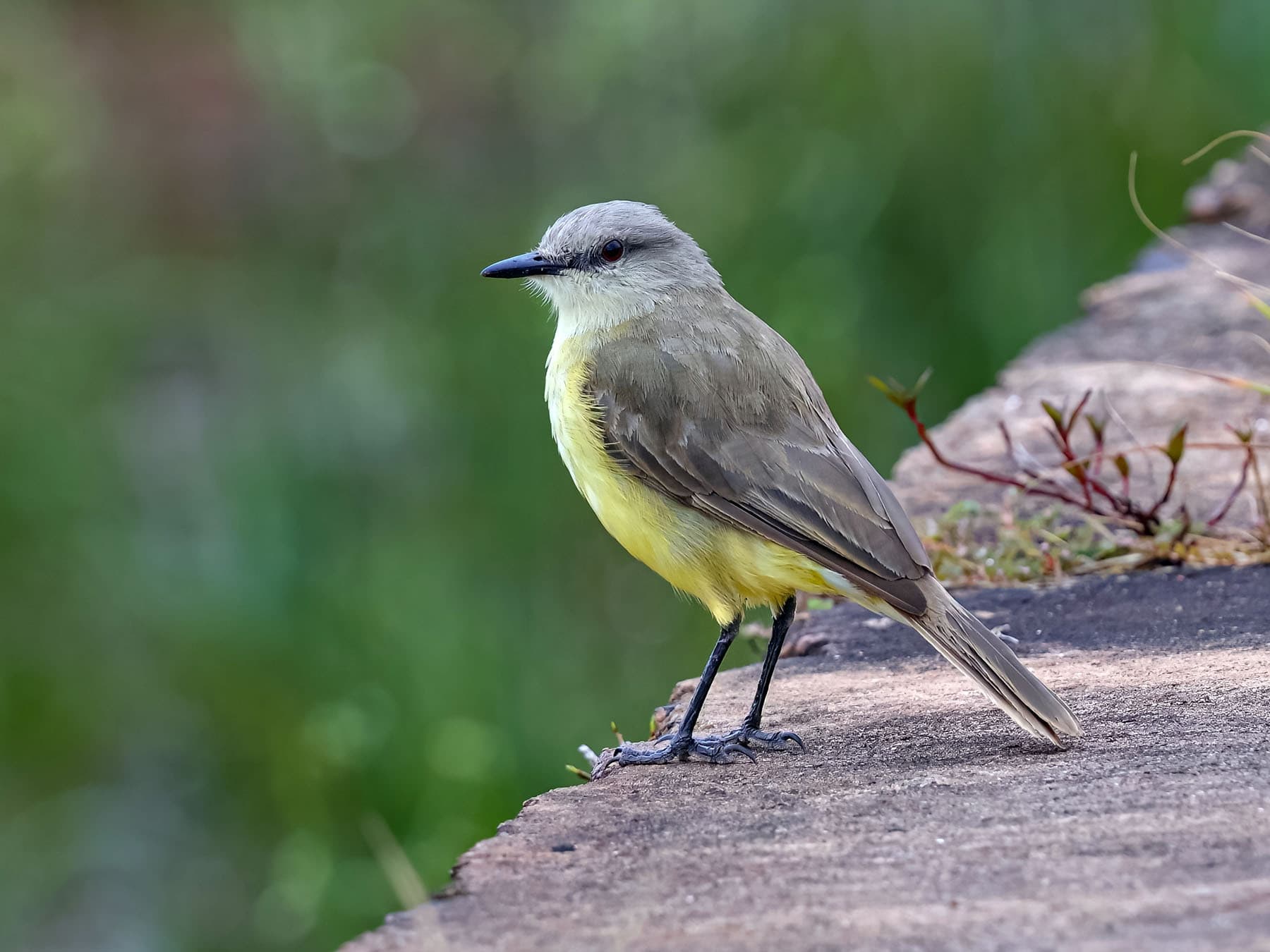
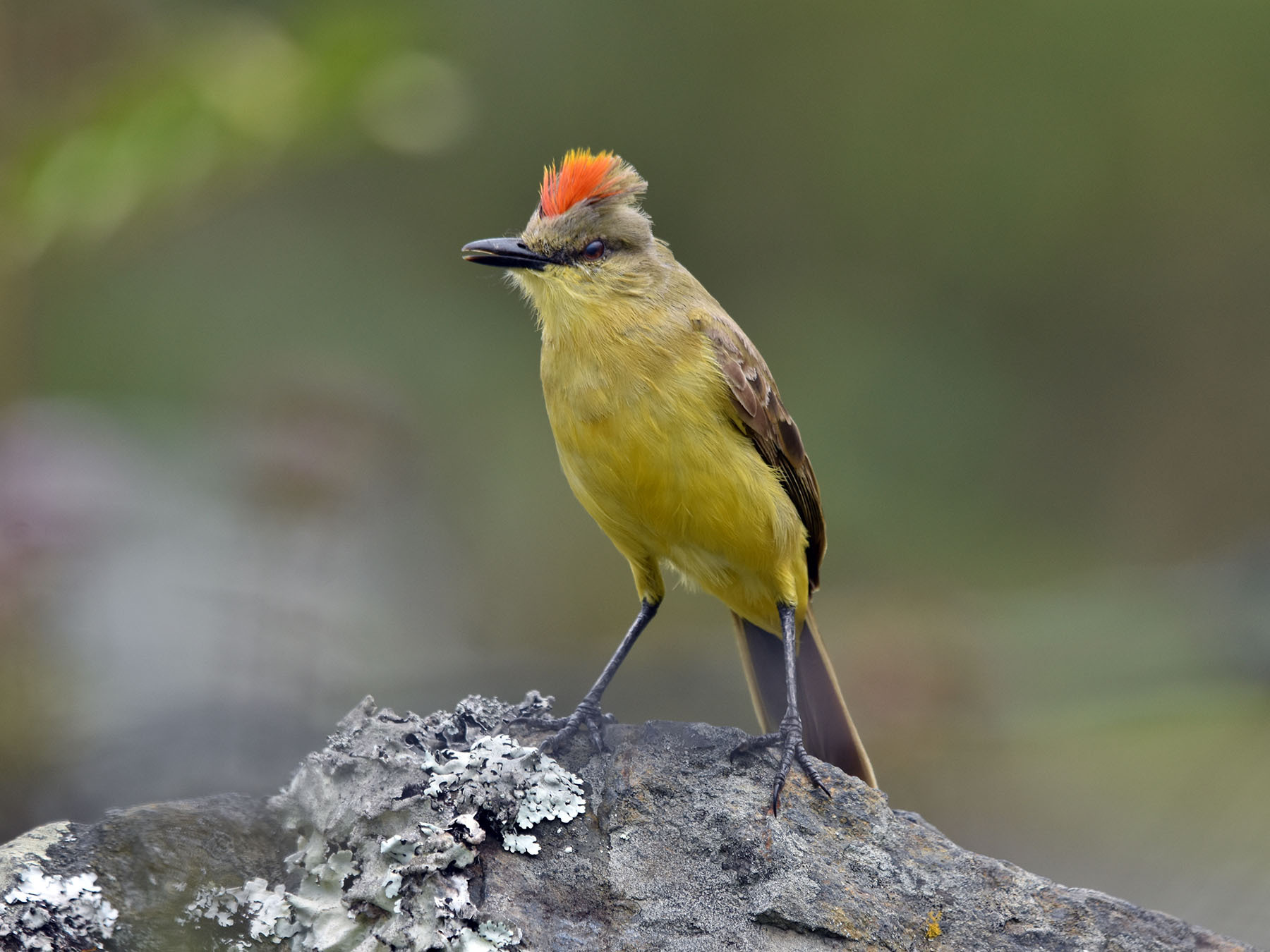
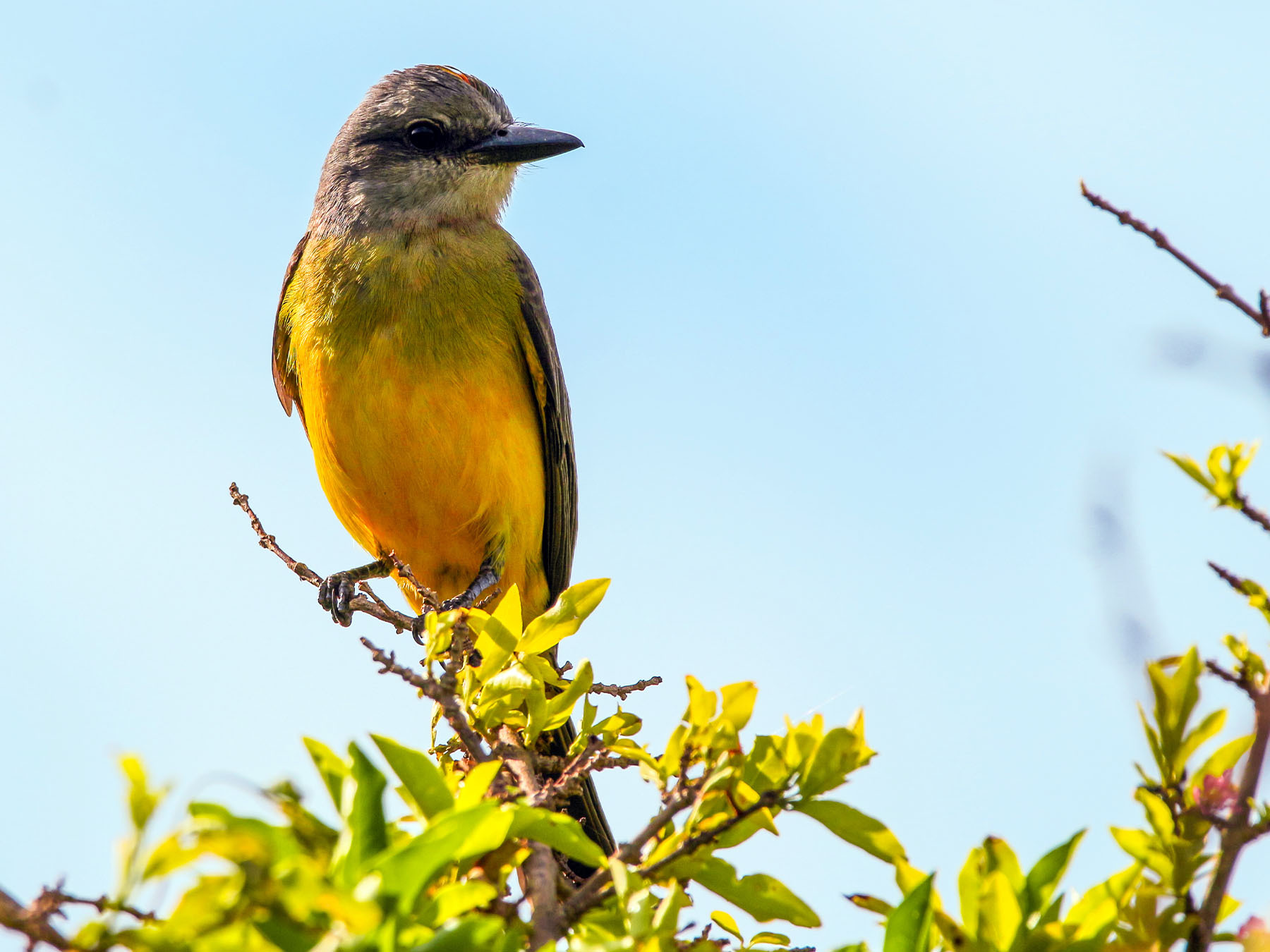
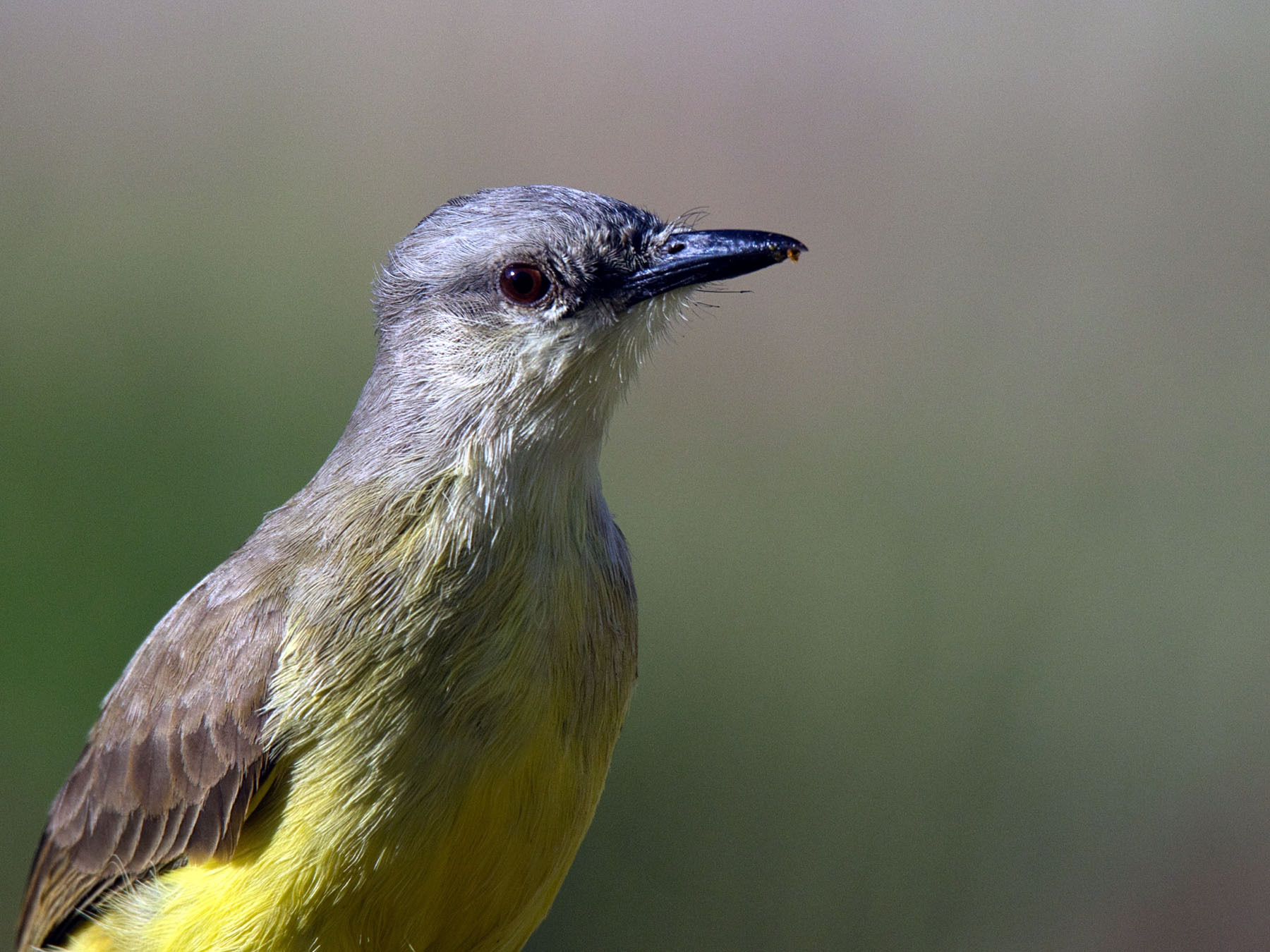
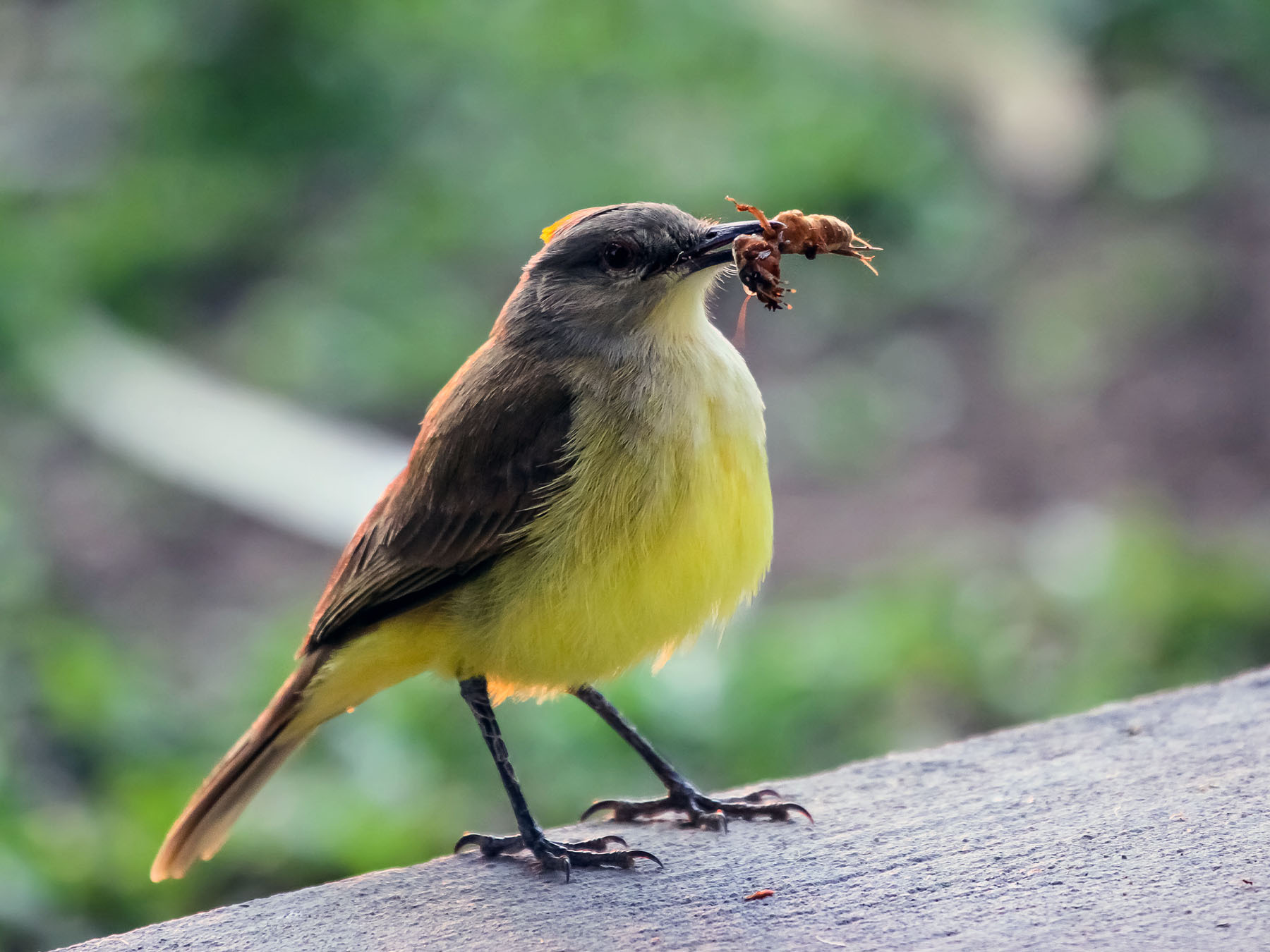
The Cattle Tyrant is a small flycatcher with distinctive colouring. Its upper parts are pale olive-brown to sandy brown, while the underparts are bright yellow. The head is brownish-grey with a concealed scarlet-orange crown patch and a thin dark stripe through the eye. The throat is whitish, and the bill is thin and black.
Males and females look very similar, though females may show a buffier throat and chest, and some may lack the orange crown patch. Juvenile appearances aren't well documented in current research.
Its size
Adults- Length
- 19–21 cm
- Wingspan
- 33–35 cm
- Weight
- 40–50 g
Its song and calls
The Cattle Tyrant has a distinctive vocalisation, characterised by a sharp, repetitive 'kip-kip-kip' or 'tzip-tzip-tzip' call. This sound is often heard as the bird perches or during short flights.
They may also produce a softer, chattering sound when interacting with other birds or potential threats.
When and where to see it
The Cattle Tyrant is not recorded regularly in the UK, Ireland, the United States or Canada.
United States: recorded in 2 of the 6 years. Too few years to count as a regular visitor.
Worldwide: recorded regularly in 10 countries
Countries where it was recorded in at least 3 of the 6 years 2019–2024. Linked countries have their own bird list.
Data: EOD – eBird Observation Dataset (Cornell Lab of Ornithology), accessed via GBIF.org, CC BY 4.0. Records from 2019–2024, aggregated and filtered by Birdfact. How these lists are made
Tips for seeing it
- Look for Cattle Tyrants in open grasslands and pastures with grazing livestock
- Observe their distinctive behaviour of perching on cattle or running on the ground
- Listen for their sharp, repetitive calls, which can help locate them in open areas
- Watch for their quick, darting flights as they chase insects
What it eats
Cattle Tyrants primarily feed on insects, including flies, grasshoppers, and beetles. They often catch prey disturbed by grazing livestock, snatching insects from the air or plucking them from the ground.
This bird's diet may also include small reptiles and amphibians when available.
Nesting and breeding
Breeding season for Cattle Tyrants typically occurs during the spring and summer months. Pairs form monogamous bonds and work together to build their nests.
Nests are usually constructed in trees or shrubs, often near grazing areas. They are cup-shaped structures made of grass, twigs, and other plant materials. Females typically lay 3-4 eggs, which are white or cream-coloured with brown spots.
Both parents share incubation duties, which last about 14-16 days. After hatching, the nestlings are cared for by both parents and fledge after approximately 14-16 days.
Behaviour
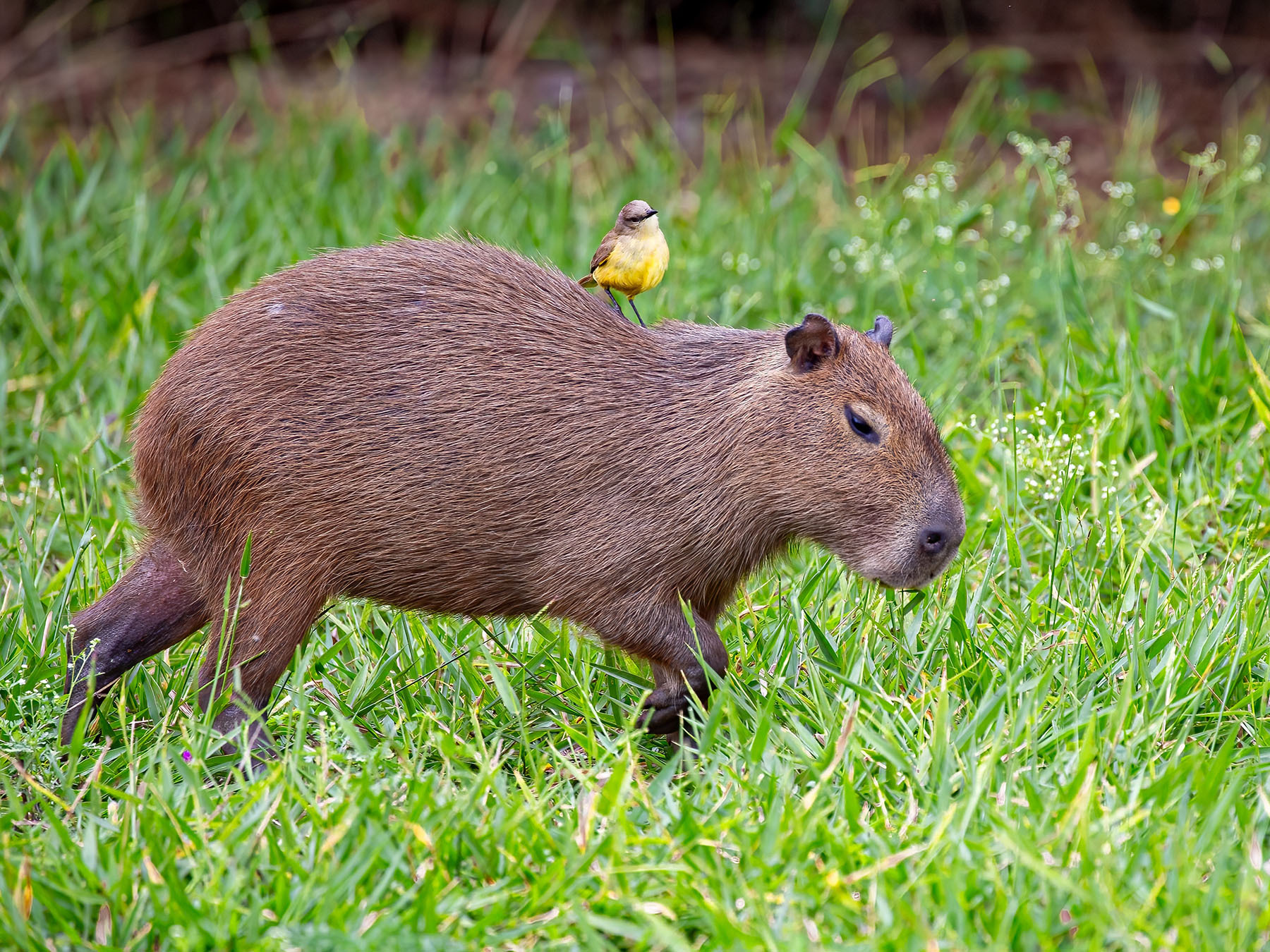
Cattle Tyrants are known for their close association with livestock, often perching on the backs of cattle or following them closely. They exhibit a bold and active foraging style, frequently running on the ground to catch insects disturbed by grazing animals.
These birds are generally solitary or found in pairs, rarely forming large flocks.
Conservation
The Cattle Tyrant is currently listed as Least Concern by the IUCN. Its population is stable and may even be expanding due to deforestation and the spread of cattle ranching in South America.
However, sustainable land management practices are crucial for maintaining their habitat in the long term.
More photos
6 photos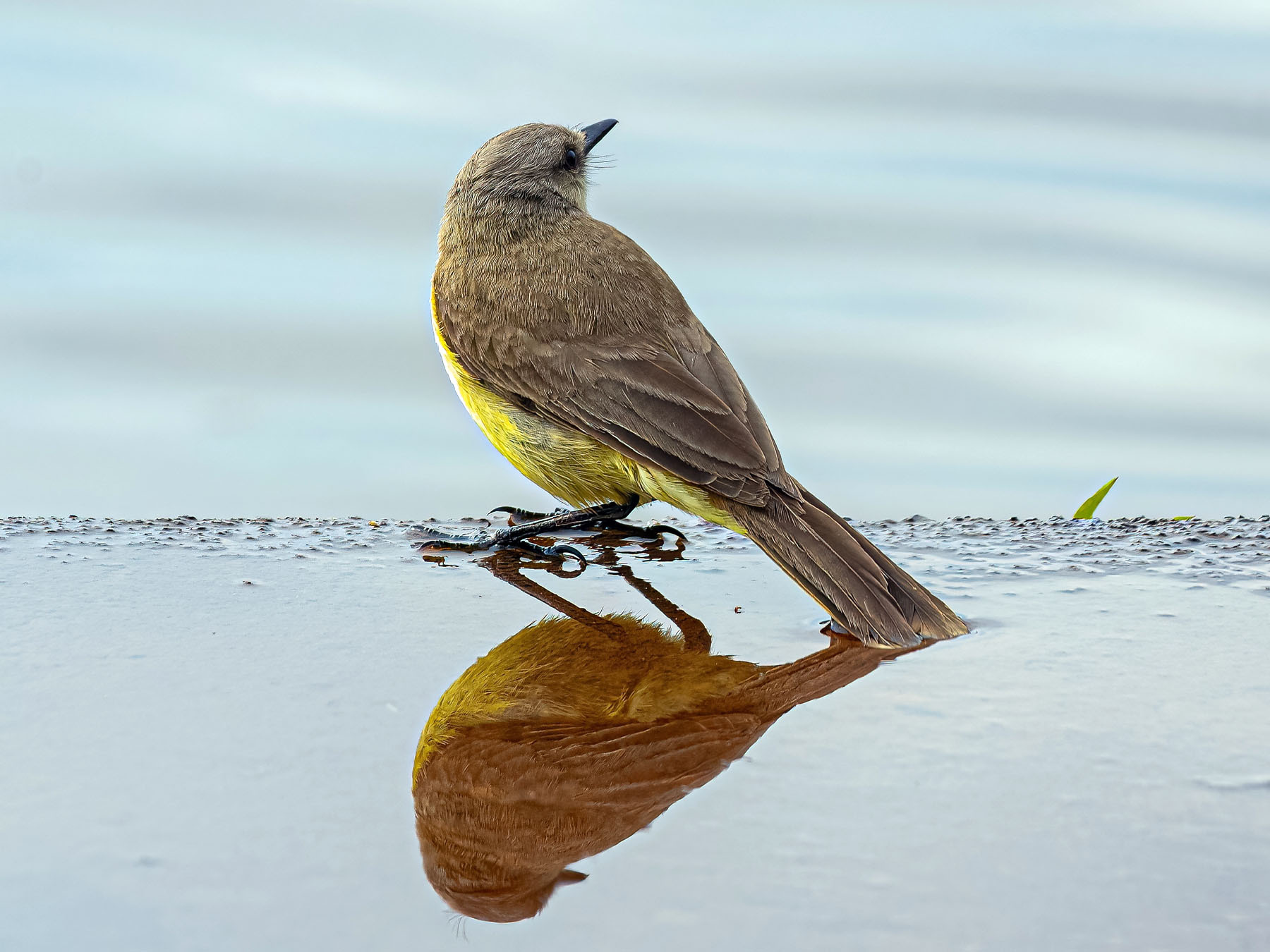
Quick facts
- Length
- 19–21 cm
- Wingspan
- 33–35 cm
- Weight
- 40–50 g
- Family
- Tyrant Flycatchers
- Migration
- Resident
- Global status (IUCN)
- Least Concern
- World population
- 50,000,000 mature individuals
- Population trend
- Stable
- Also called
- Cattle Tyrant Flycatcher
- Scientific name
- Machetornis rixosa
Sources
3- 1BirdLife International. 2021. Machetornis rixosa. The IUCN Red List of Threatened Species 2021: e.T22700321A137976958. Source (opens in a new tab)
- 2Partners in Flight (2019)
- 3Partners in Flight (2019)

Checked by
Nathan Cope, founder and editor
Nathan founded Birdfact and leads its writers and contributors in the UK, the US and Canada. He has watched and studied birds for more than ten years, and checks every article and species guide before it’s published.