


Cape Sparrow
Mossie · Passer melanurus
By the Birdfact teamChecked by Nathan Cope
On this page11 sections
How to recognise it
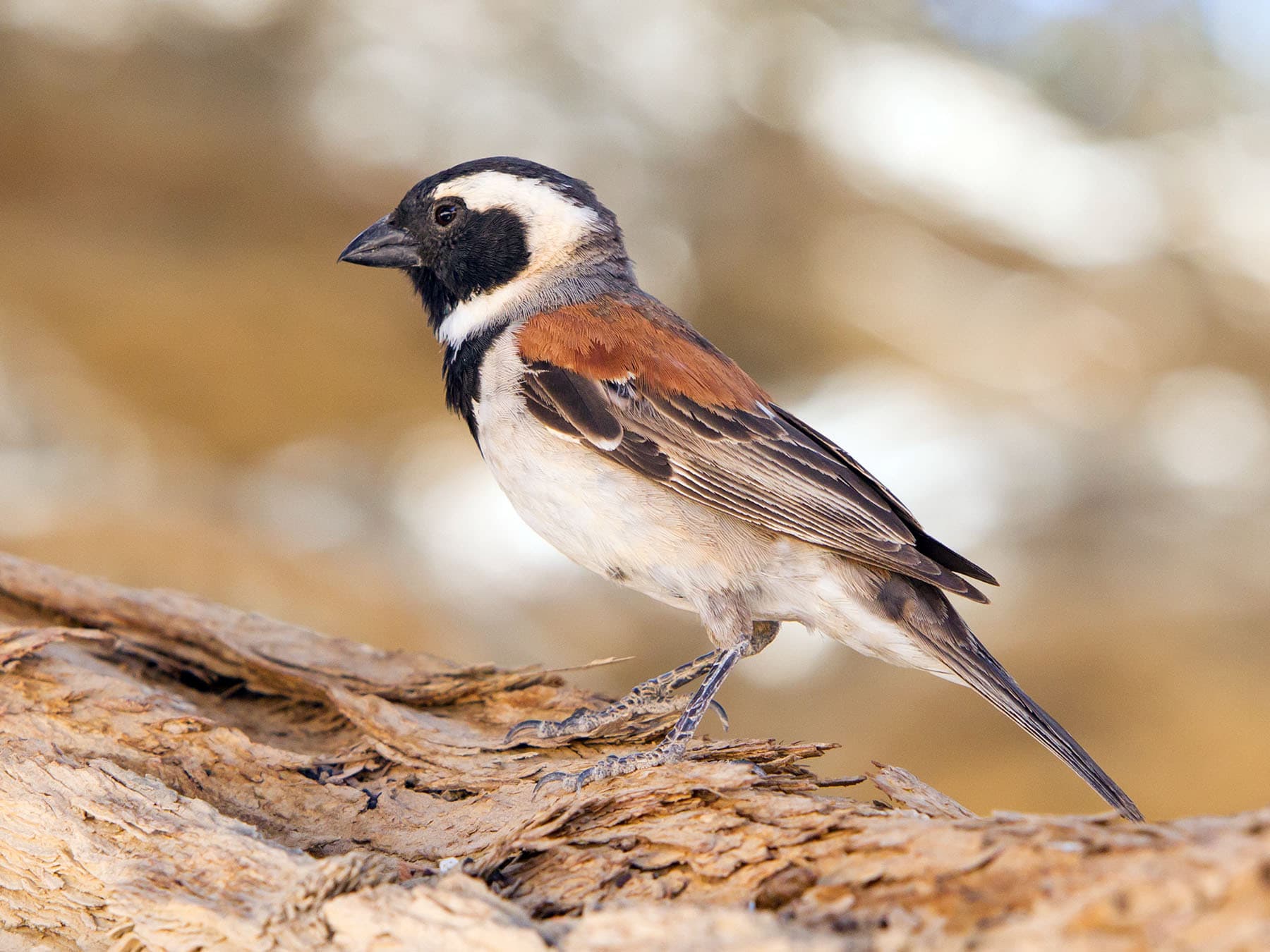
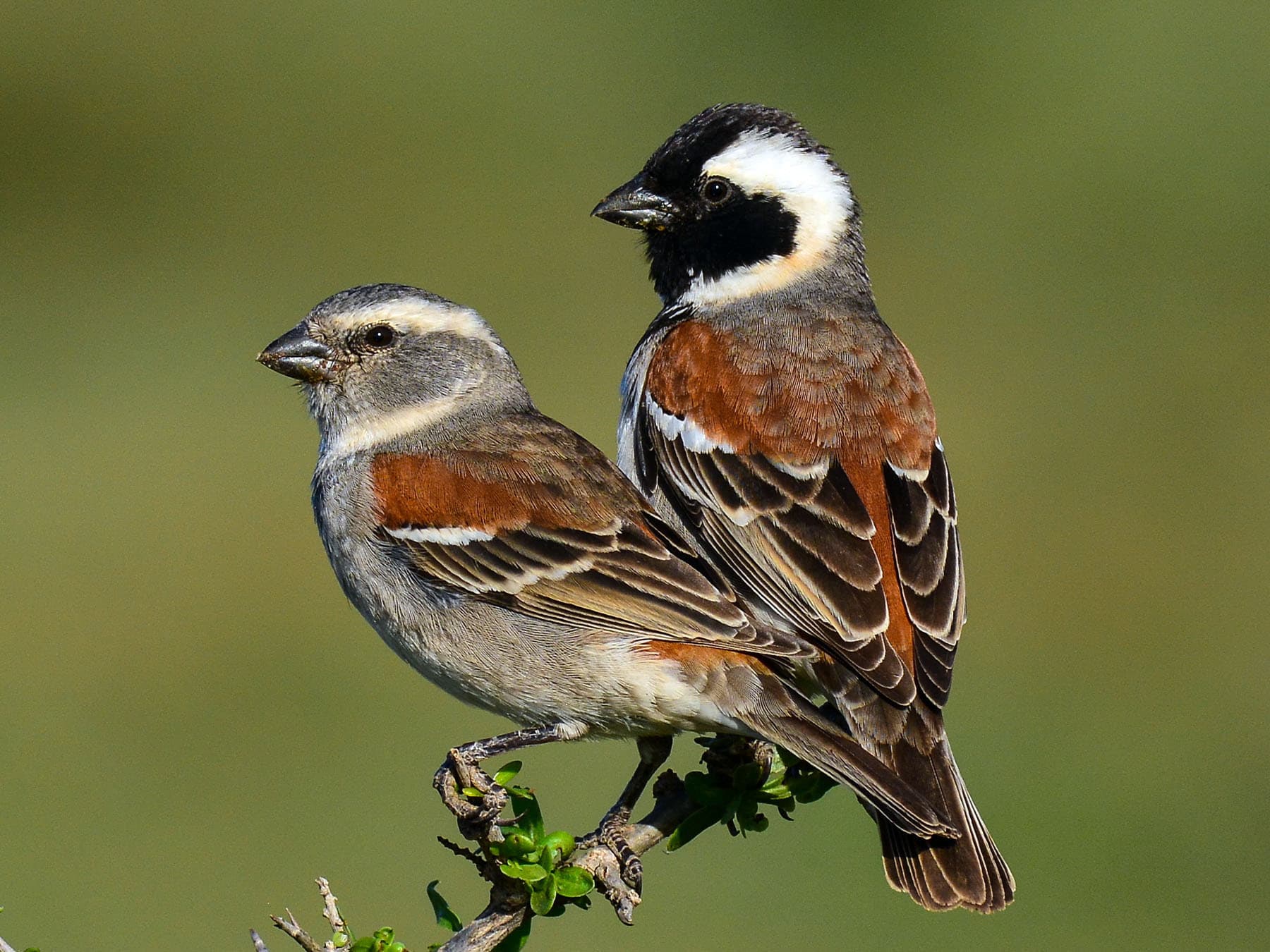
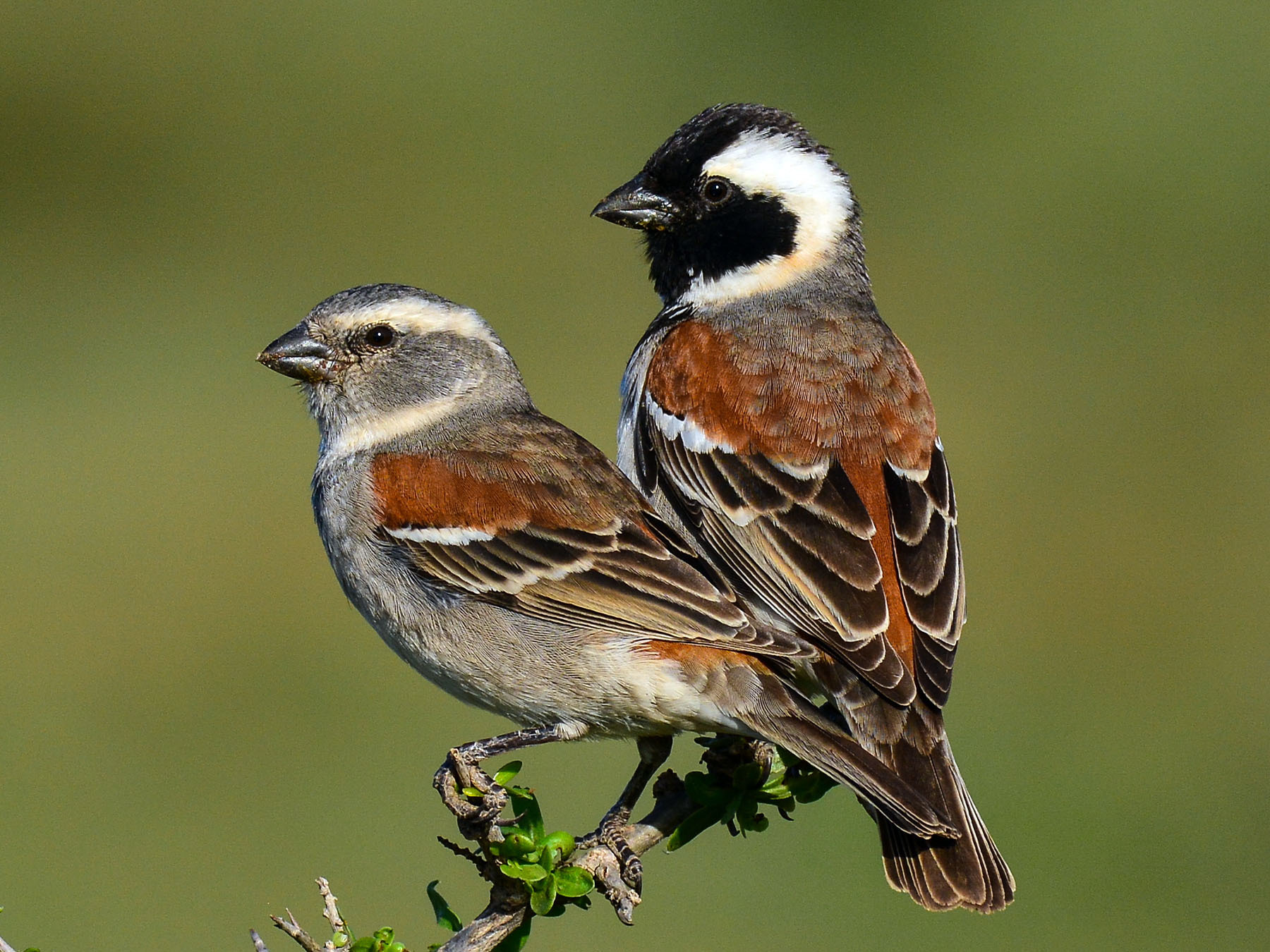
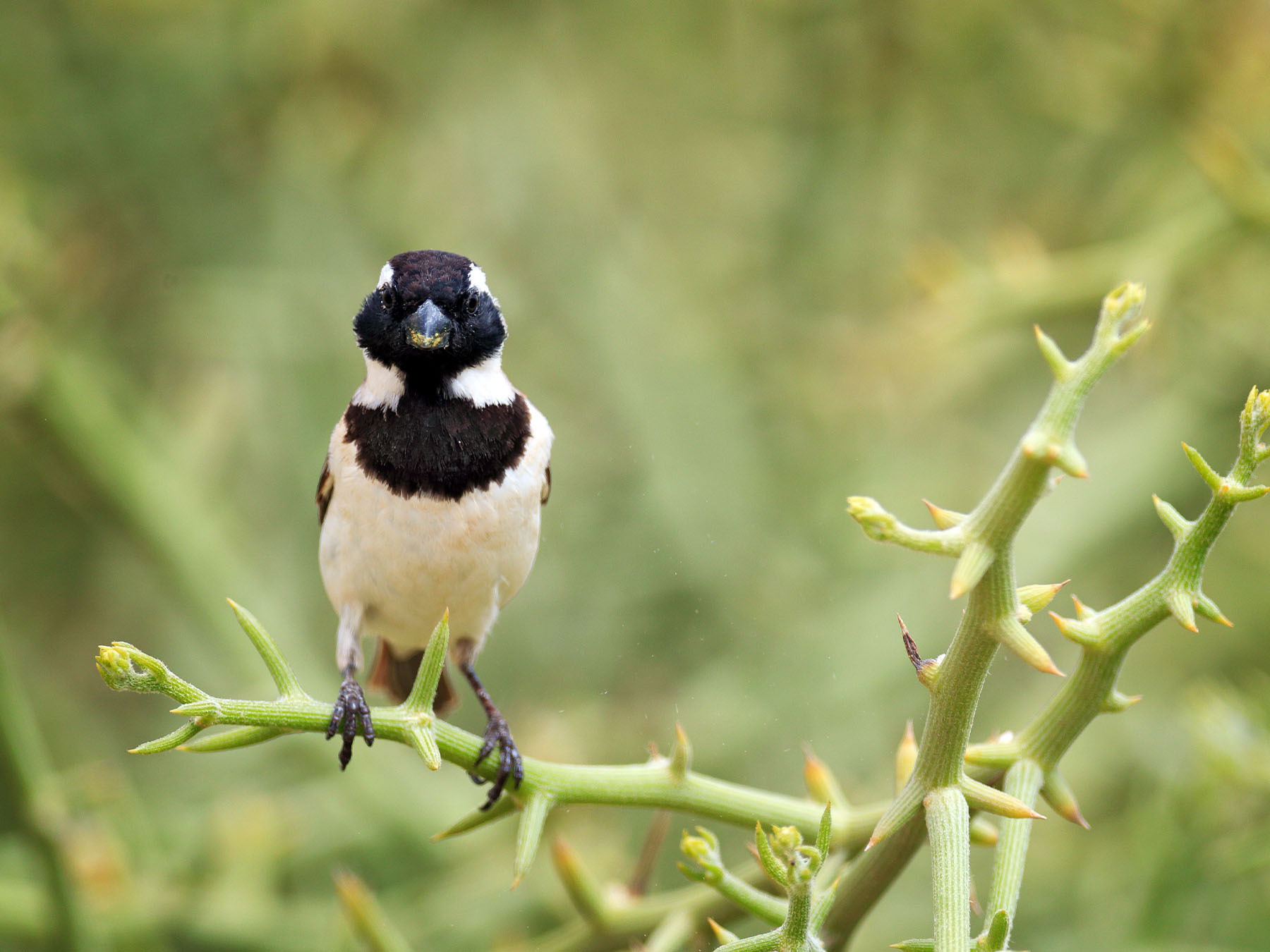
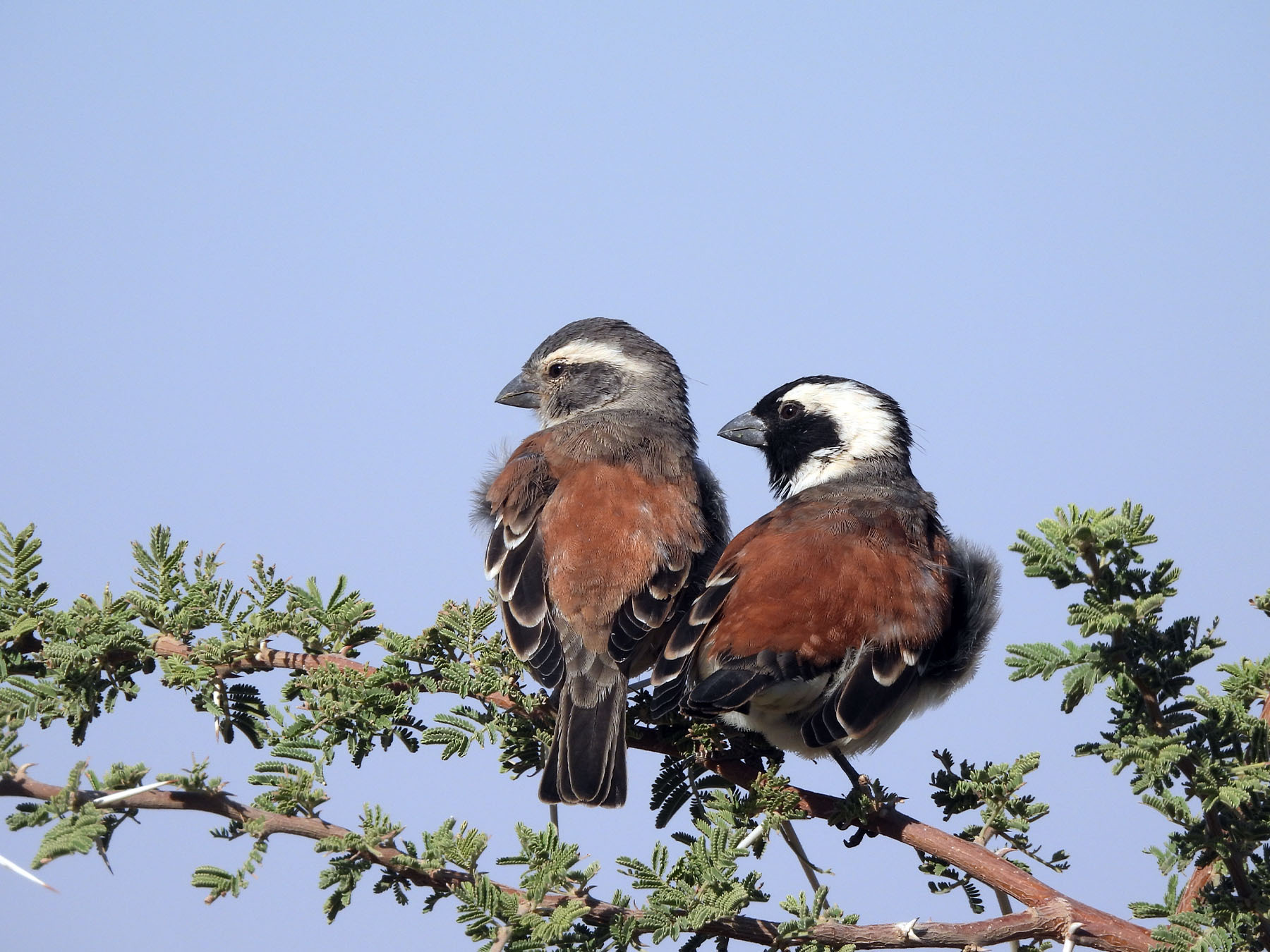
The Cape Sparrow is a small, stocky bird with a distinctive appearance. Males have black heads with striking white crescent markings that curve from the eye to the nape. Their backs are rich chestnut-coloured, while their underparts are pale grey to white.
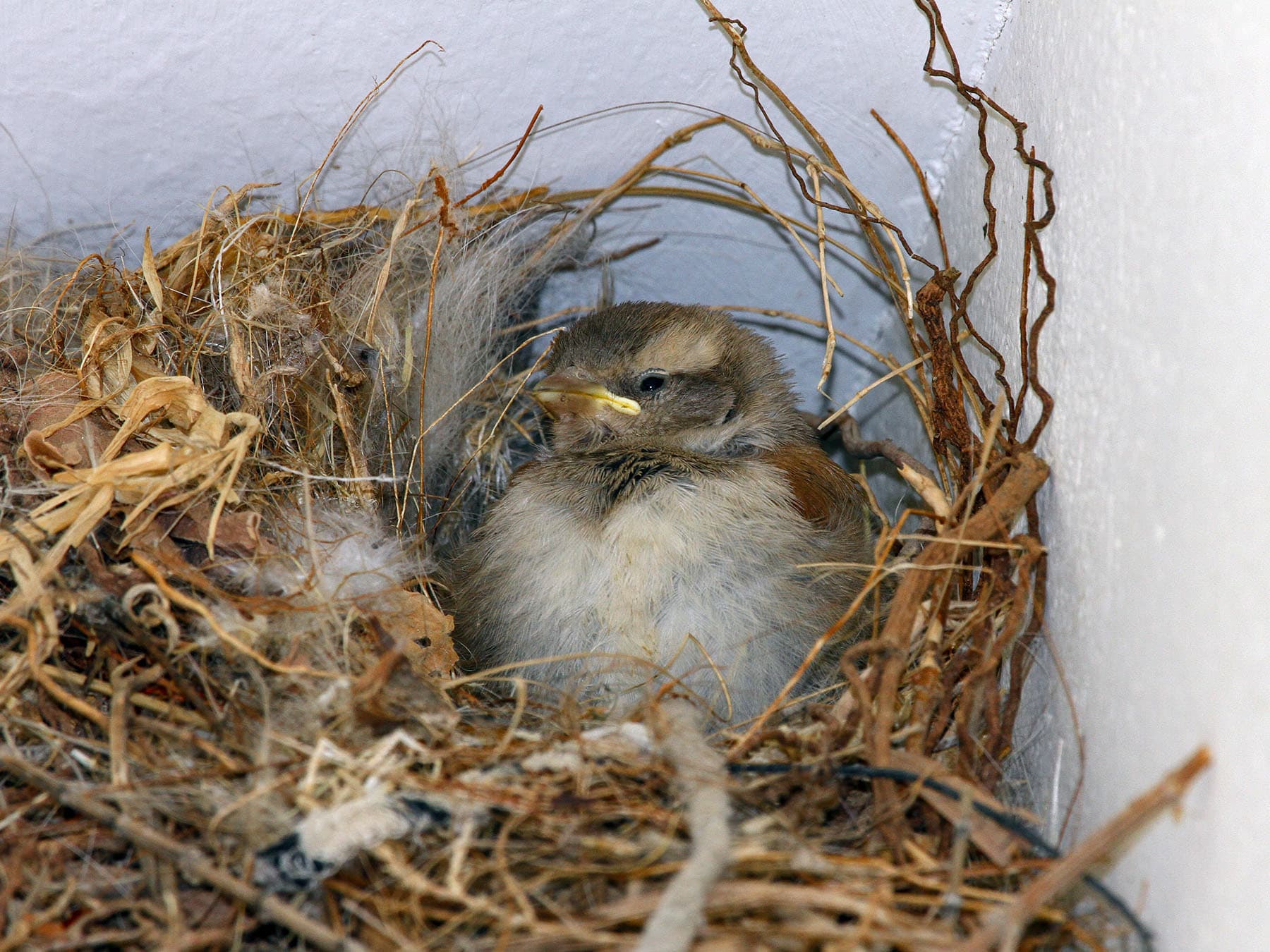
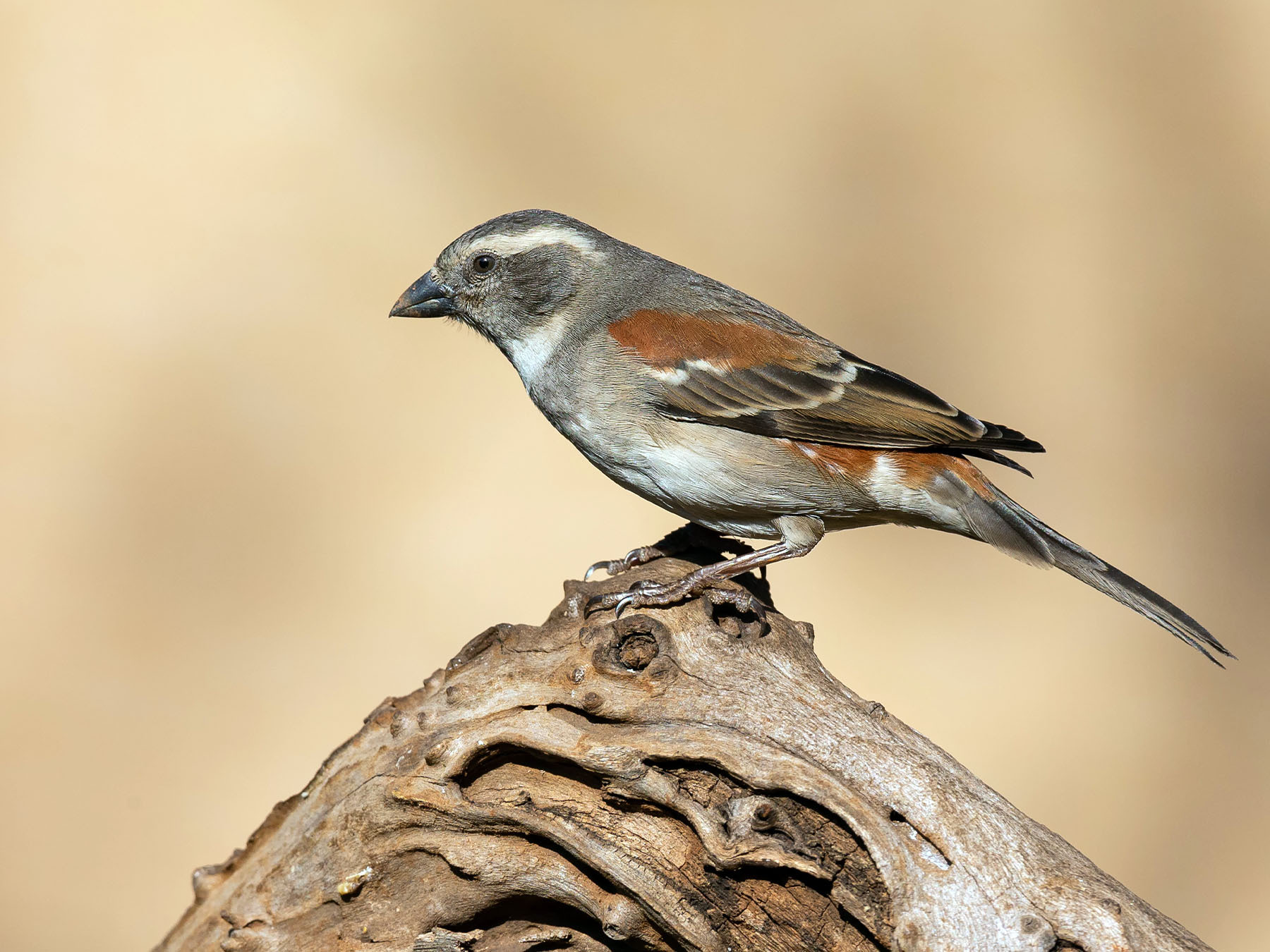
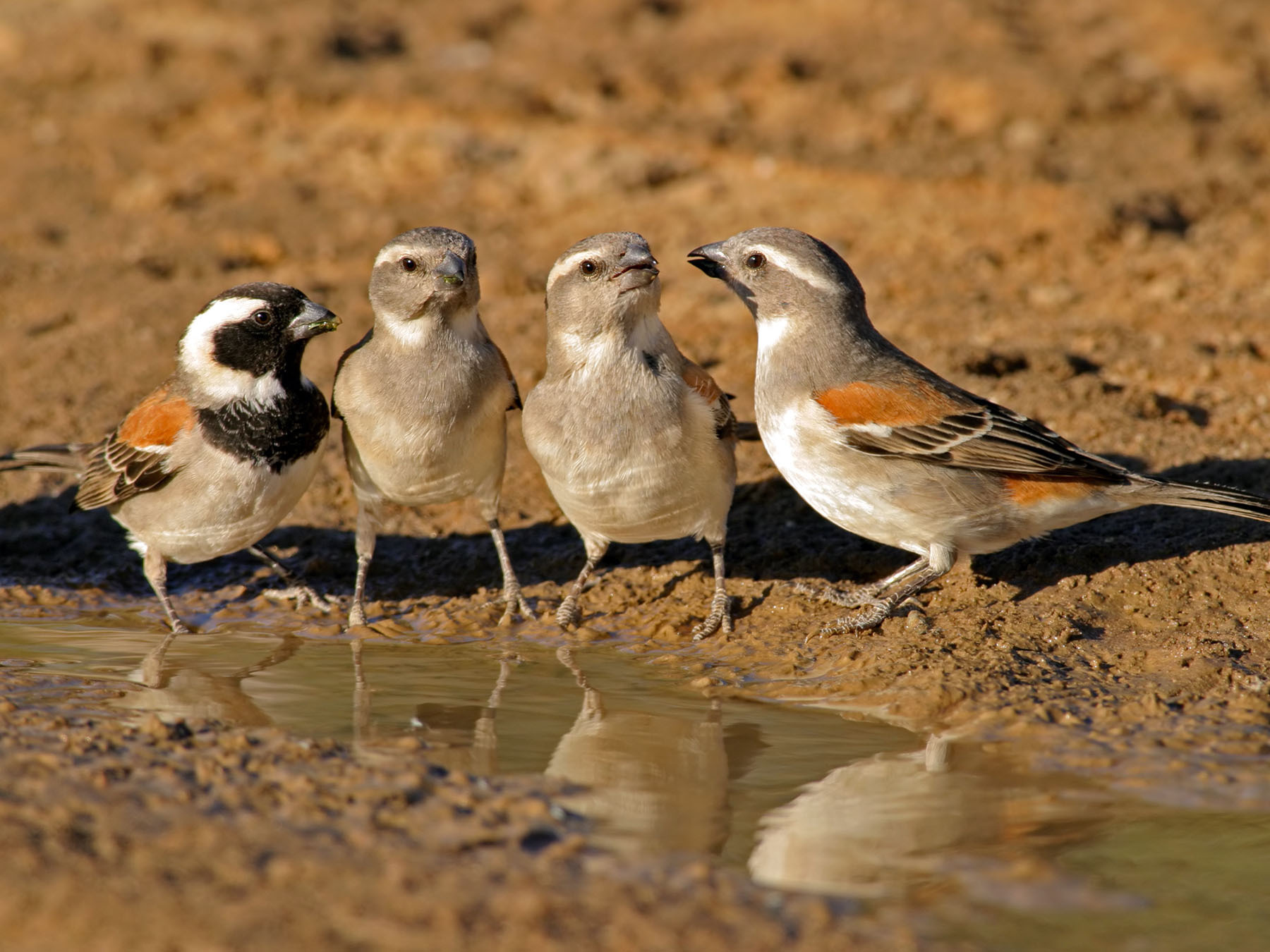
Females show a similar pattern but are more subdued, with grey replacing the male's black areas and duller chestnut colouring. Both sexes have a horn-coloured bill that turns black during the breeding season and dark brown legs. Juveniles resemble females in appearance.
Its size
Adults- Length
- 14–16 cm
- Wingspan
- 22–25 cm
- Weight
- 17–38 g
Its song and calls
Cape Sparrows have a variety of vocalisations, with their most common call being a cheerful, chirping 'cheep-cheep' or 'chirrup'.
During courtship, males produce a more complex, warbling song. When alarmed, they emit a sharp, high-pitched 'chink' sound.
When and where to see it
The Cape Sparrow is not recorded regularly in the UK, Ireland, the United States or Canada.
Worldwide: recorded regularly in 5 countries
Countries where it was recorded in at least 3 of the 6 years 2019–2024. Linked countries have their own bird list.
Africa (5)
- Angola
- Botswana
- Lesotho
- Namibia
- South Africa
Data: EOD – eBird Observation Dataset (Cornell Lab of Ornithology), accessed via GBIF.org, CC BY 4.0. Records from 2019–2024, aggregated and filtered by Birdfact. How these lists are made
Tips for seeing it
- Look for Cape Sparrows in open habitats near human settlements
- Listen for their cheerful chirping, especially in the early morning
- Observe feeders or areas with scattered seeds to spot these ground-feeding birds
- Watch for their distinctive black and white head pattern (in males) for easy identification
What it eats
Cape Sparrows are primarily granivorous, feeding on a variety of seeds from grasses and weeds. They supplement their diet with insects, especially during the breeding season when protein-rich food is crucial for nestlings.
These adaptable birds also readily visit bird feeders in urban and suburban areas.
Nesting and breeding
Cape Sparrows breed throughout the year, with peak activity during the rainy season. Males construct nests to attract females, often in tree cavities, buildings, or dense bushes.
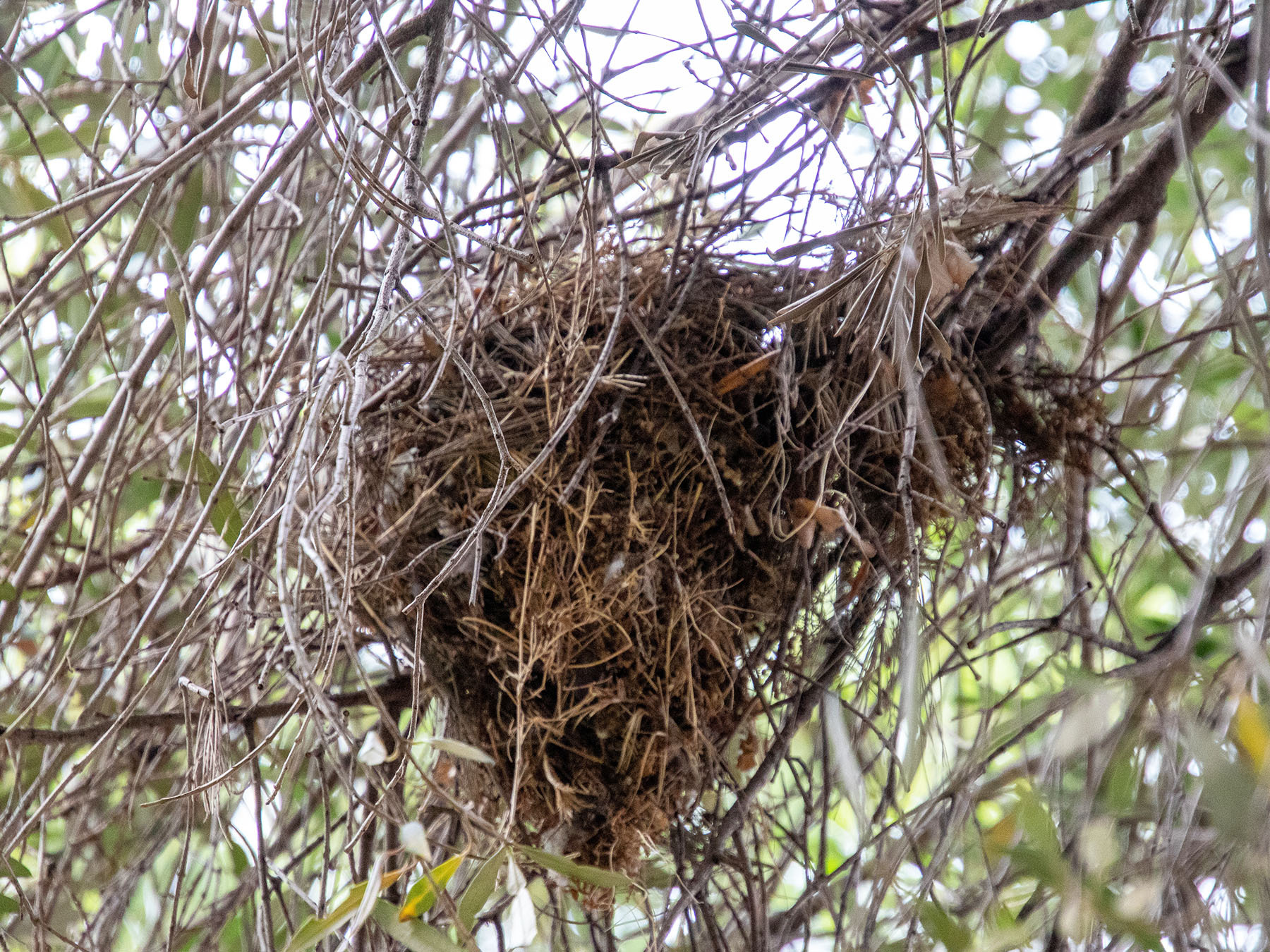
The nest is a large, untidy structure made of grass, twigs, and other plant material, lined with softer materials like feathers. Females typically lay 3-5 eggs, which are pale blue or greenish-white with brown speckles.
Both parents incubate the eggs for about 12-14 days. After hatching, nestlings are fed by both parents and fledge after approximately 14-16 days.
Behaviour
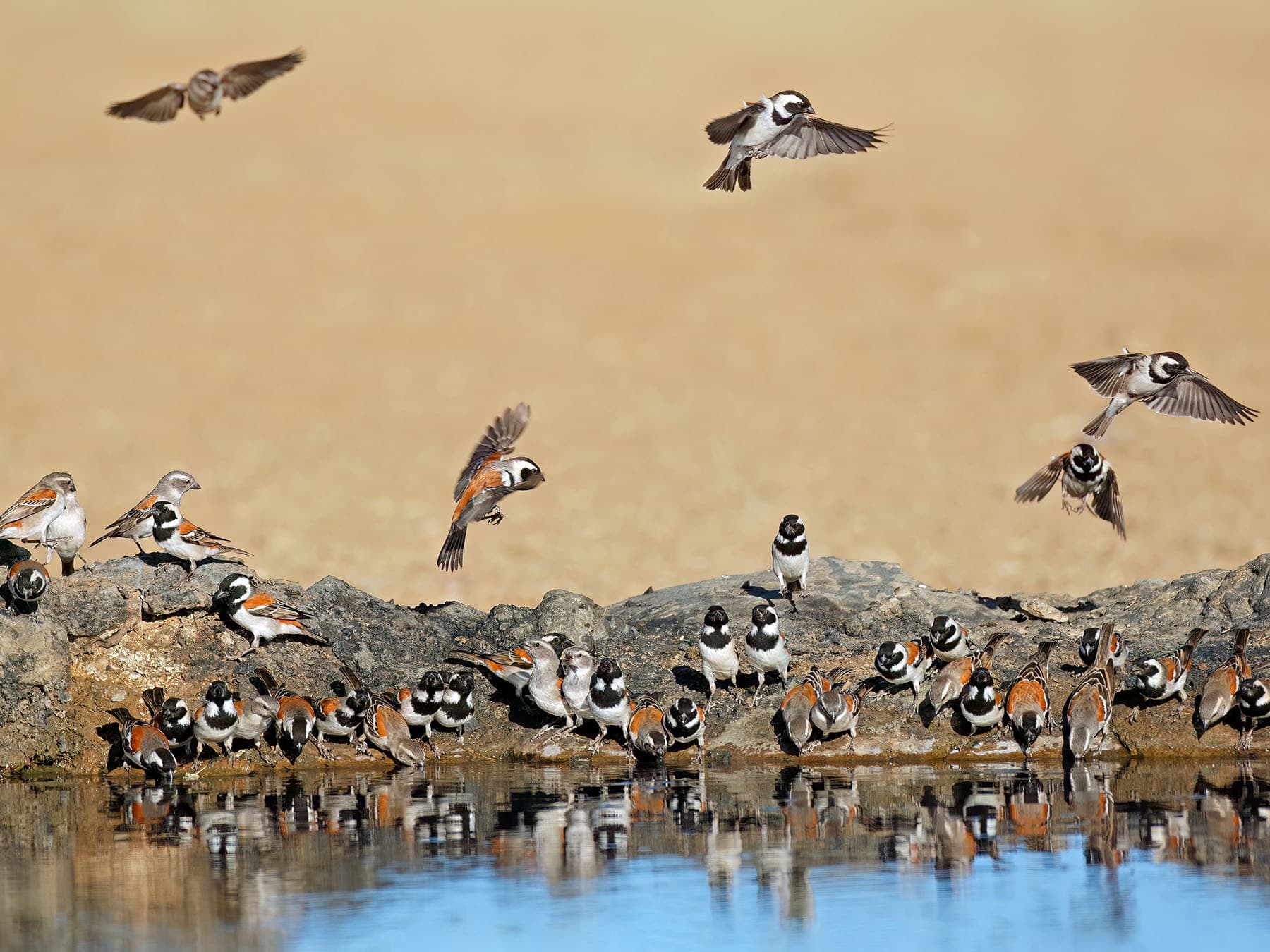
Cape Sparrows are social birds, often seen in small flocks or pairs. They are ground feeders, hopping and scratching for seeds and insects.
During the breeding season, males become territorial and perform elaborate courtship displays, puffing up their feathers and chirping loudly to attract females.
Conservation
The Cape Sparrow is currently listed as Least Concern by the IUCN. Its adaptability to human-modified environments has allowed it to maintain stable populations across its range. However, like many bird species, it faces challenges from habitat loss and climate change.
More photos
8 photos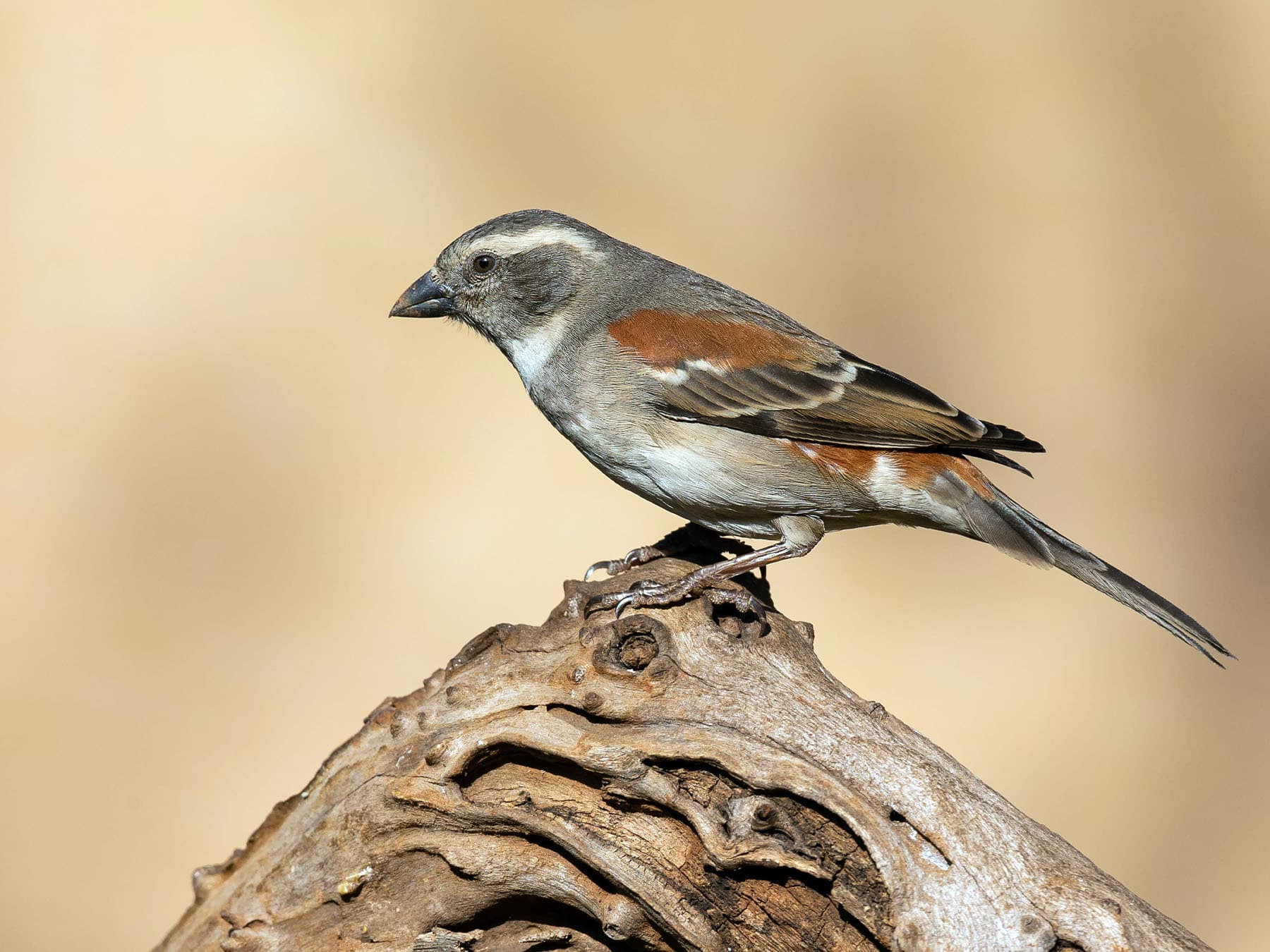 Female Cape Sparrow
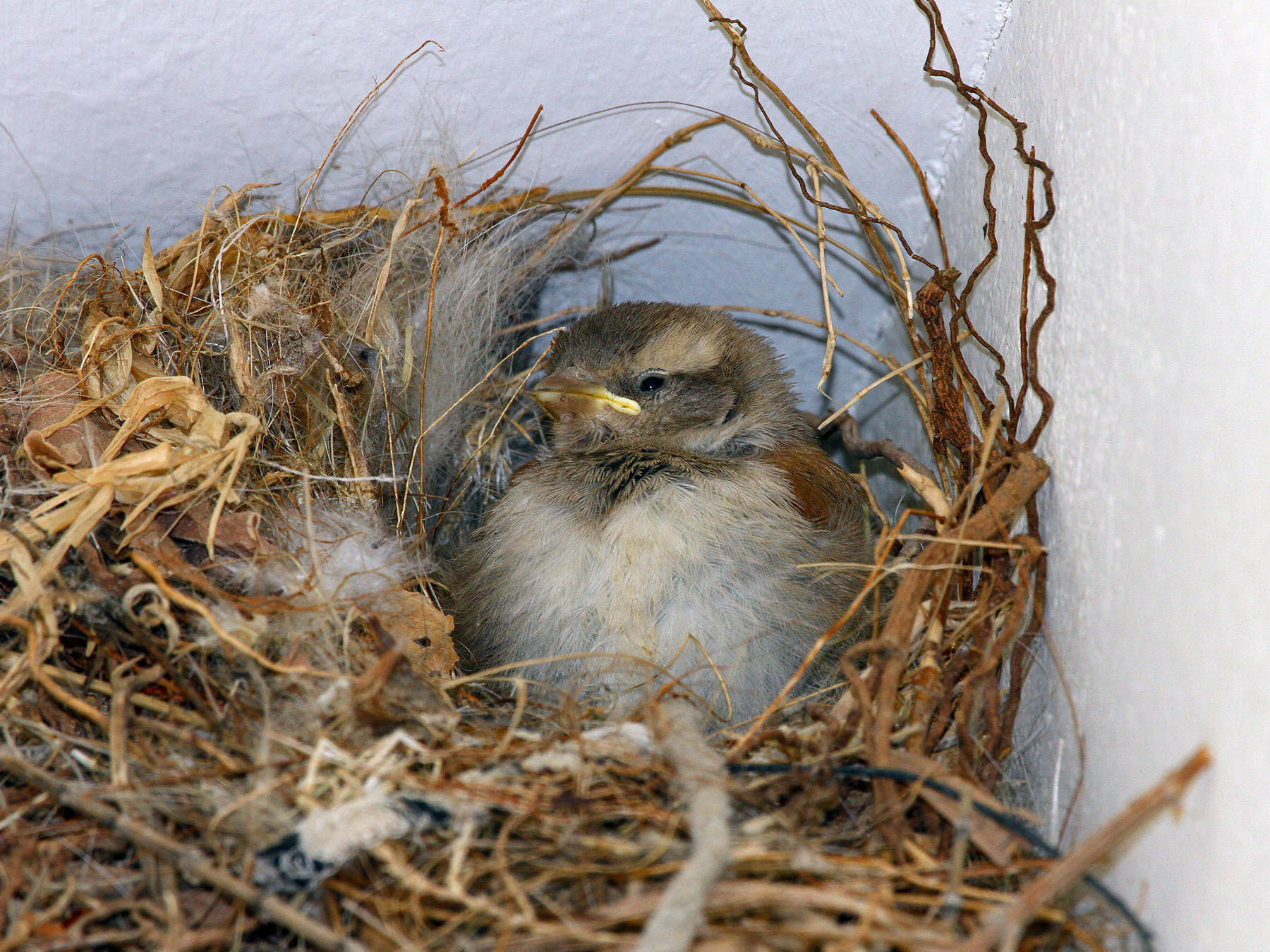
 Juvenile Cape Sparrow in nest
 Pair of Cape Sparrows - female (left) and male (right)
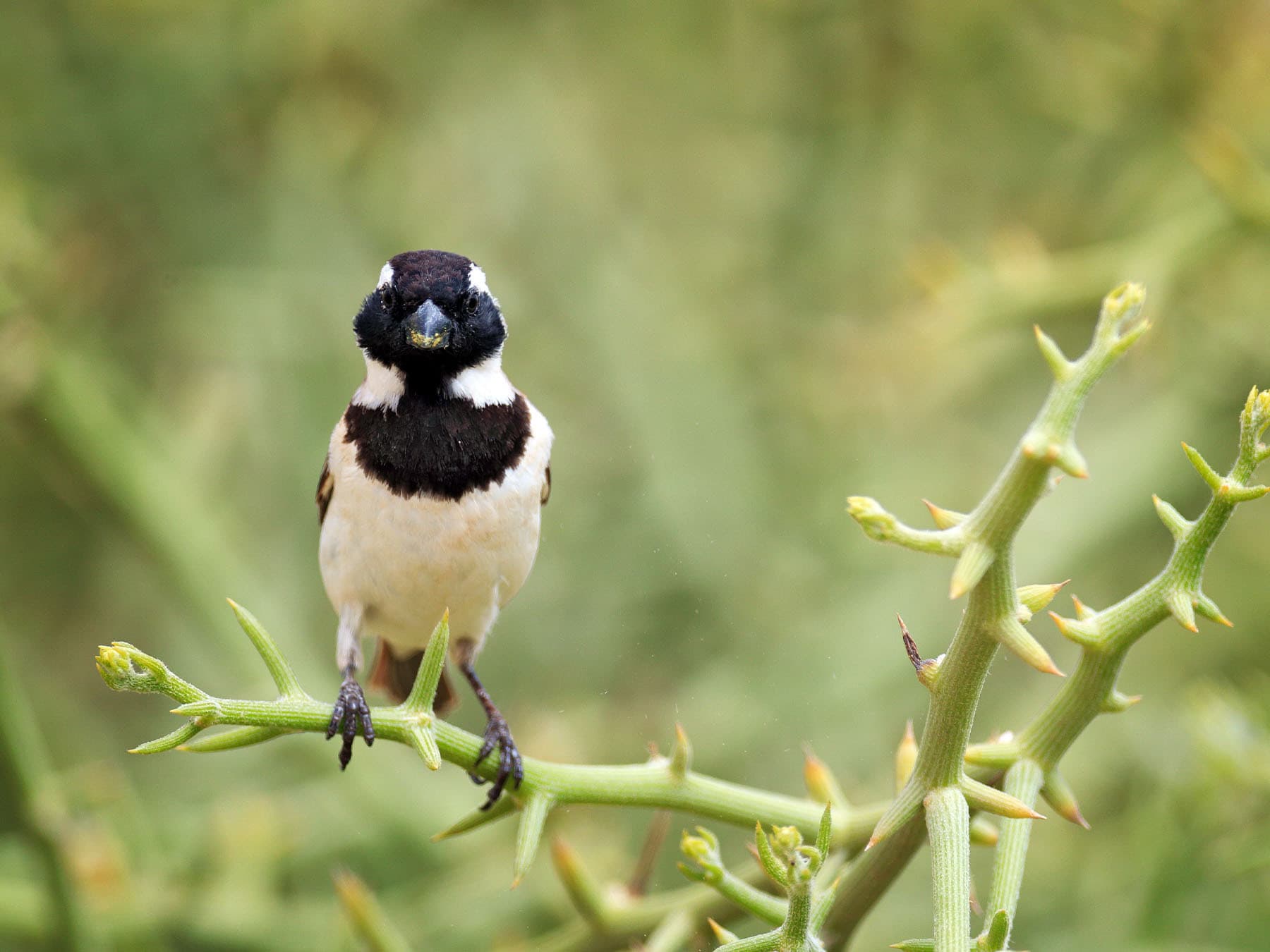 Cape Sparrow perching in a bush
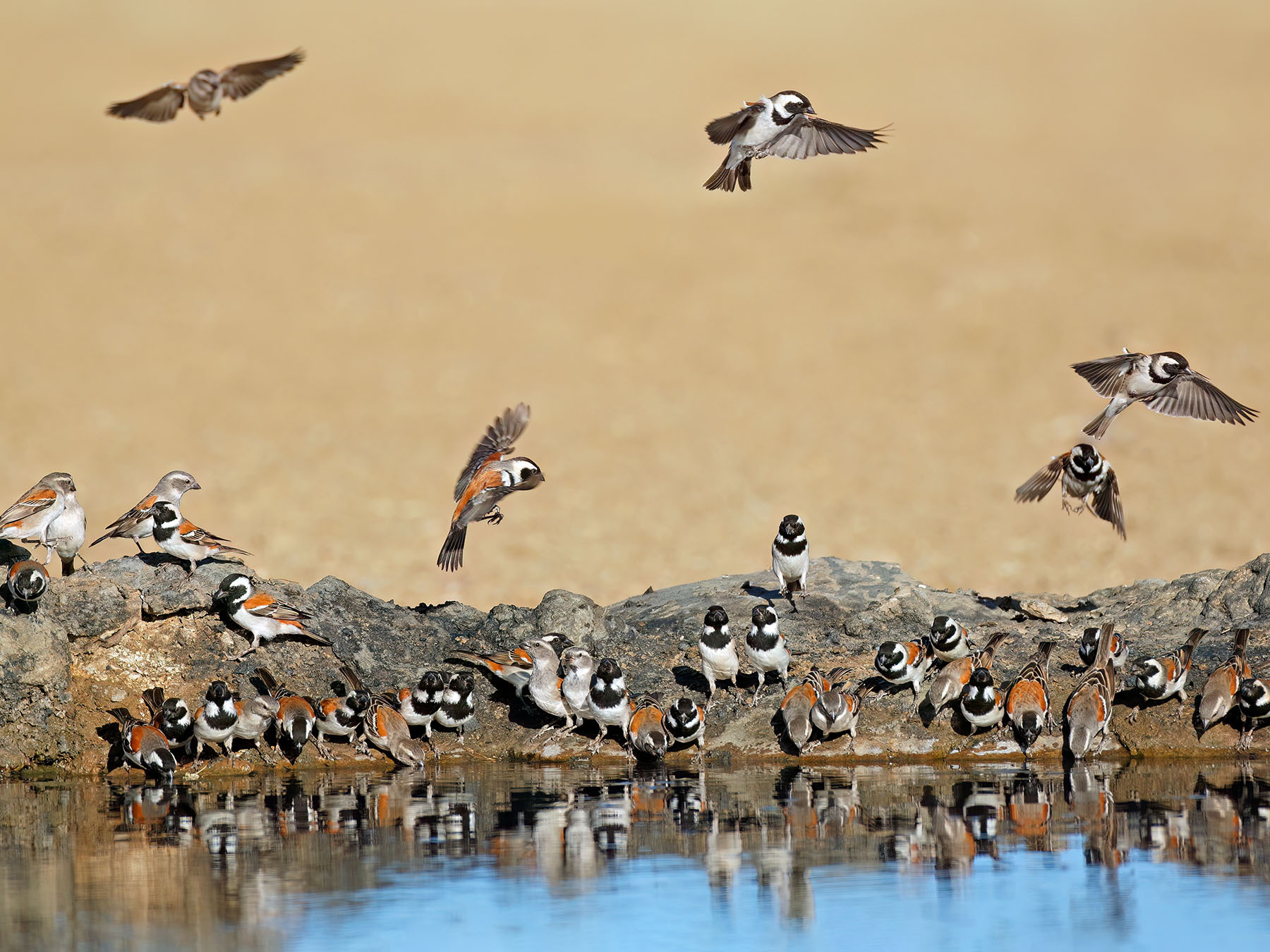
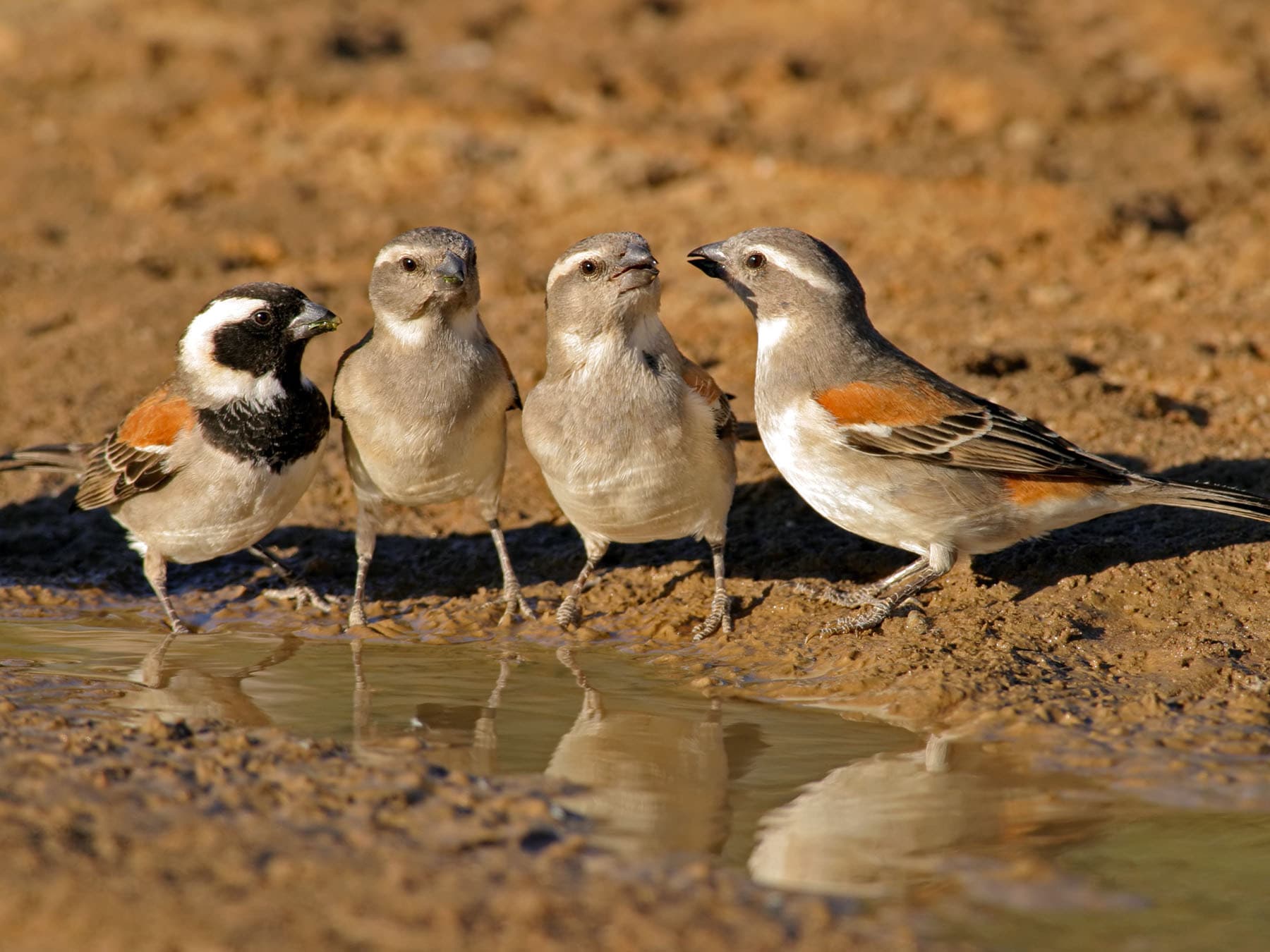 Group of Cape Sparrows at a watering hole
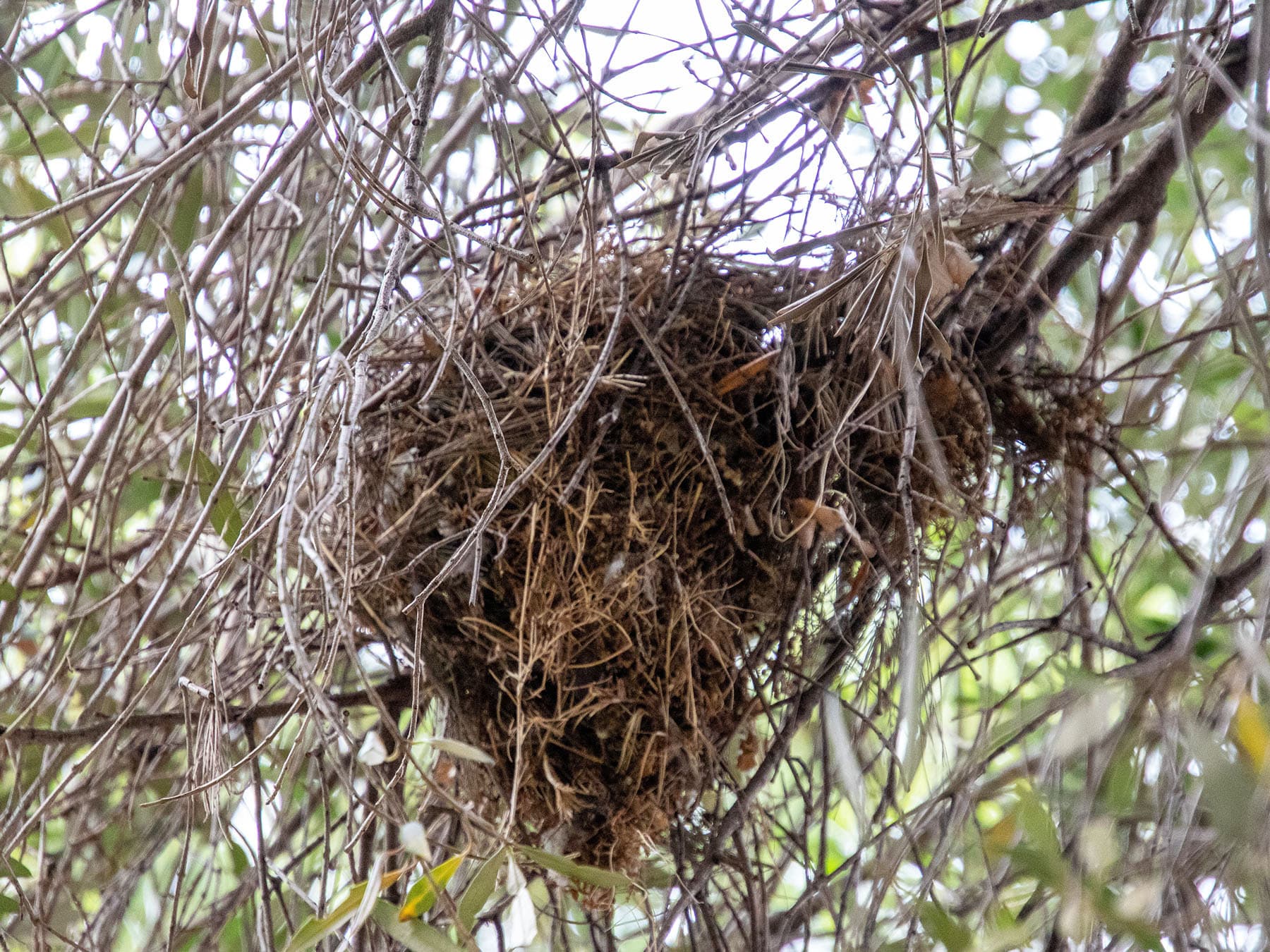 Nest of a Cape Sparrow in an urban garden
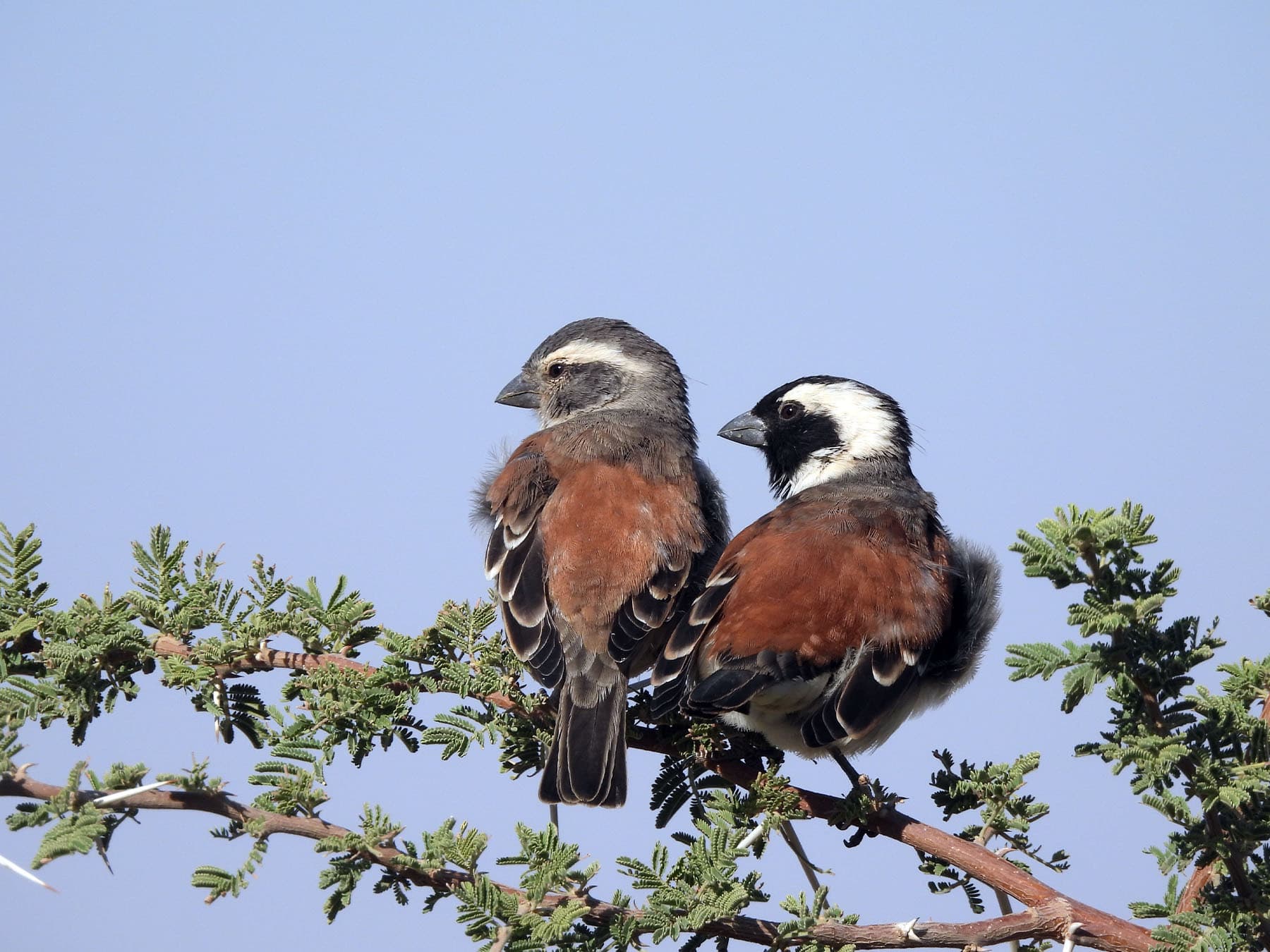 Cape Sparrows Female (left) and Male (right) in tree top
 Flock of Cape Sparrows in natural habitat
Quick facts
- Length
- 14–16 cm
- Wingspan
- 22–25 cm
- Weight
- 17–38 g
- Lifespan
- 1–2 years
- Family
- Old World Sparrows
- Migration
- Resident
- Global status (IUCN)
- Least Concern
- World population
- Not quantified, but described as common or locally very common
- Population trend
- Stable
- Also called
- Mossie
- Scientific name
- Passer melanurus
Sources
4- 1BirdLife International. 2024. Passer melanurus. The IUCN Red List of Threatened Species 2024: e.T22718225A263949186. Source (opens in a new tab)
- 2BirdLife International. 2024. Passer melanurus. The IUCN Red List of Threatened Species 2024: e.T22718225A263949186. Source (opens in a new tab)
- 3Clement (1999)
- 4Dean, W. R. J. LIFE EXPECTANCY OF THE CAPE SPARROW. Ostrich, 49(1), 16–20. (1978) Source (opens in a new tab)

Checked by
Nathan Cope, founder and editor
Nathan founded Birdfact and leads its writers and contributors in the UK, the US and Canada. He has watched and studied birds for more than ten years, and checks every article and species guide before it’s published.