


California Gnatcatcher
Coastal California Gnatcatcher · Polioptila californica
By the Birdfact teamChecked by Nathan Cope
On this page11 sections
How to recognise it
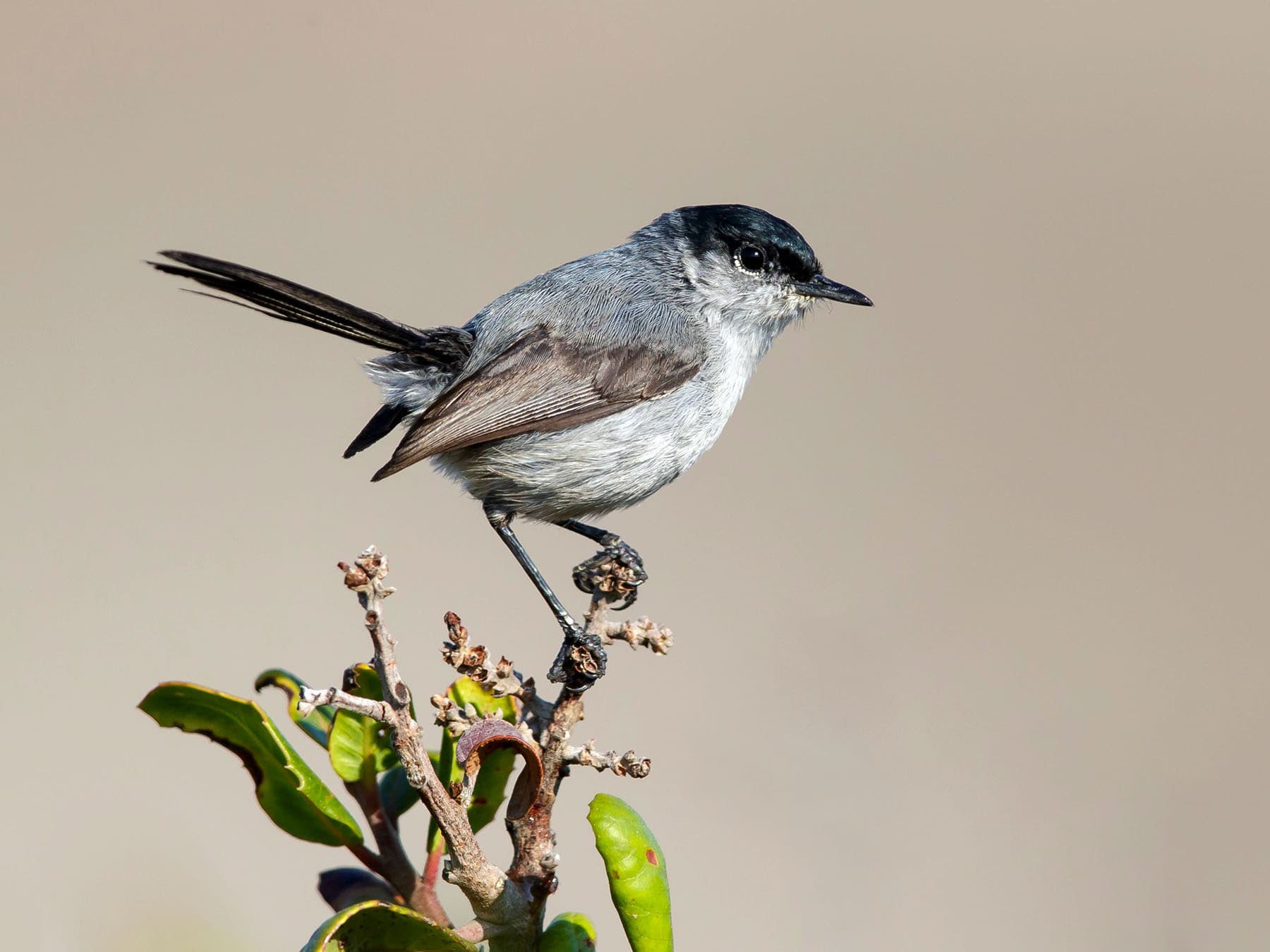
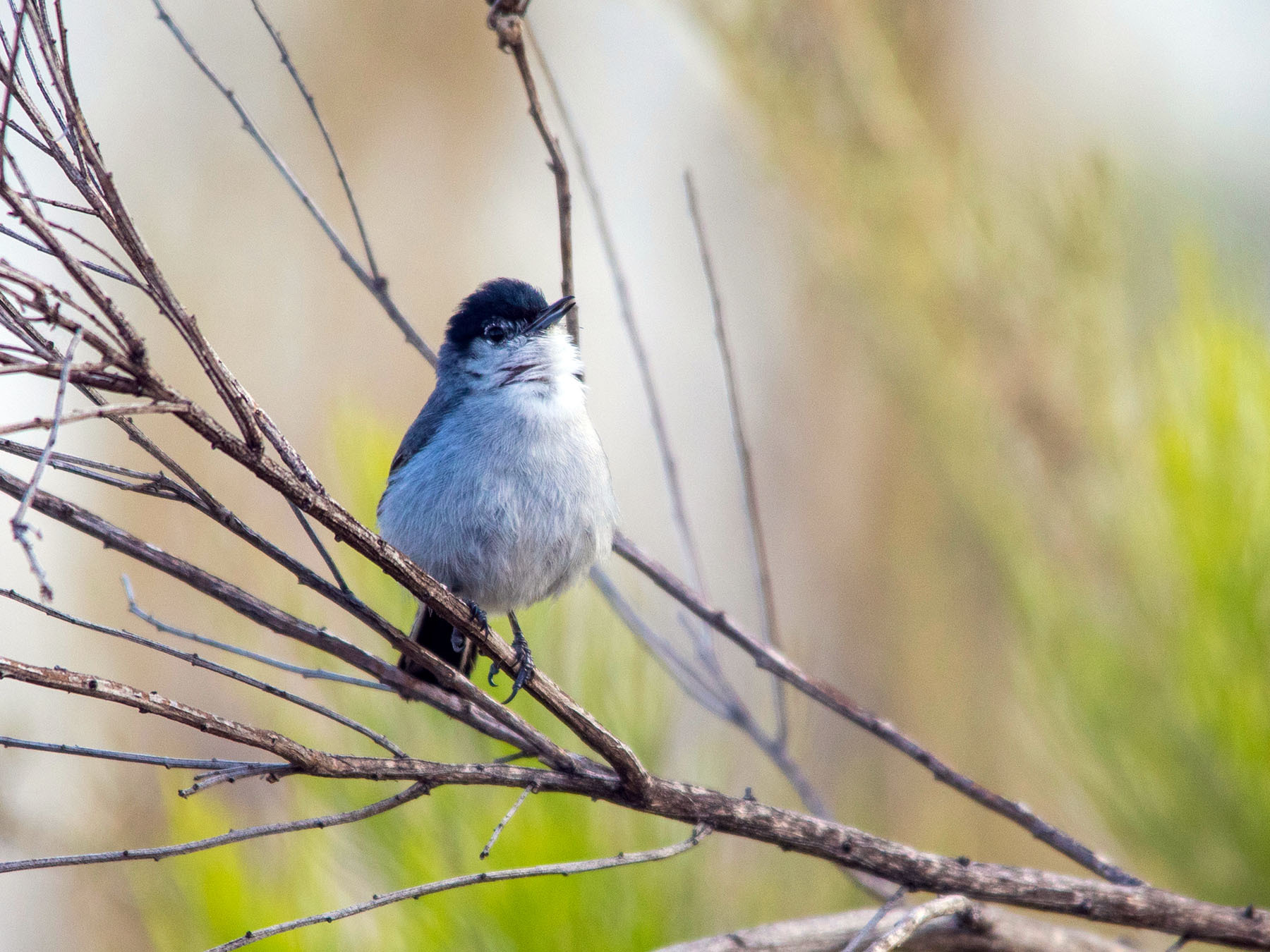
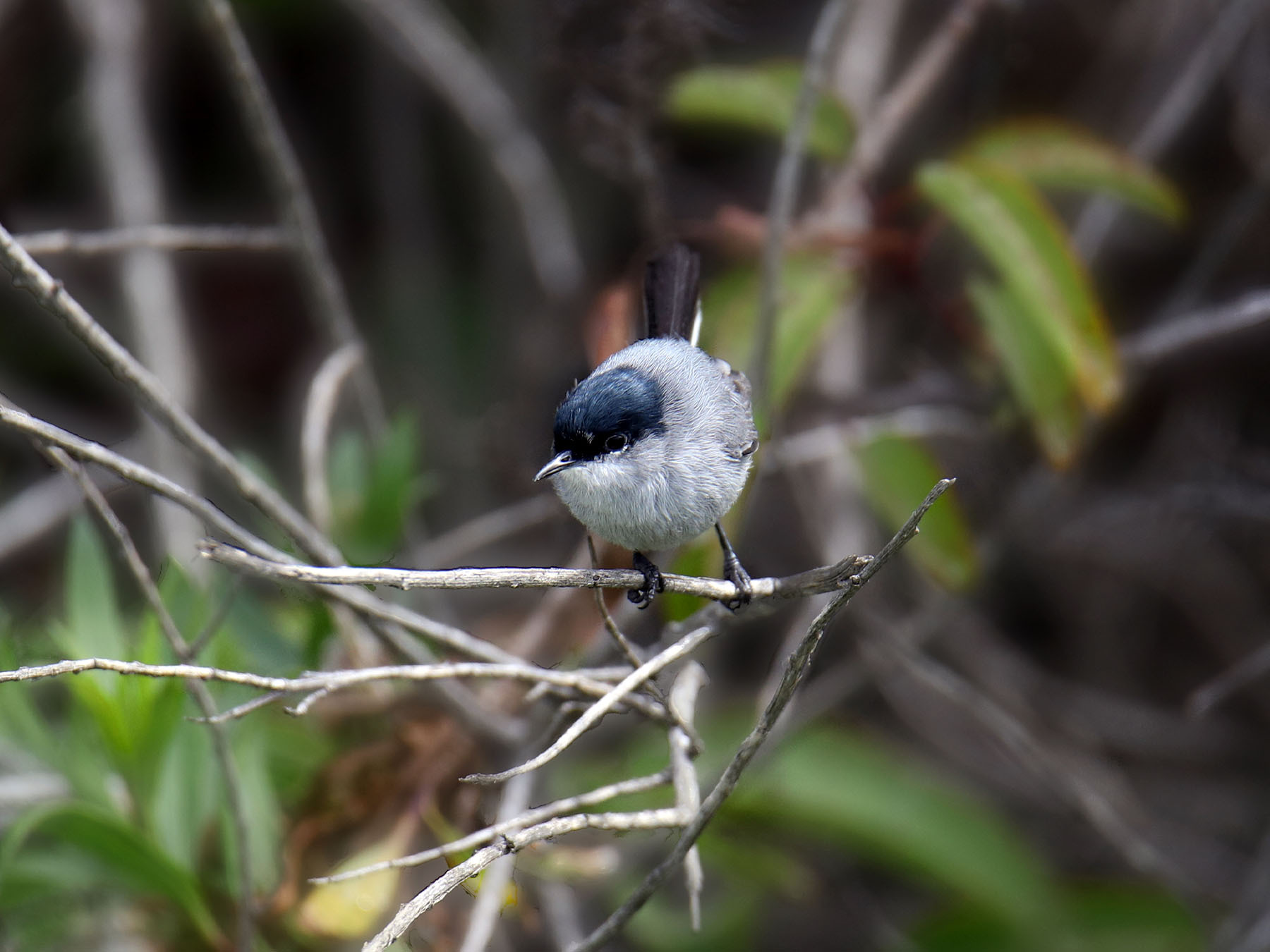
The California Gnatcatcher is a small, long-tailed songbird with grey plumage that varies in shade across its range. Males display a distinctive black cap during the breeding season, while their body features grey plumage with a brownish tinge.
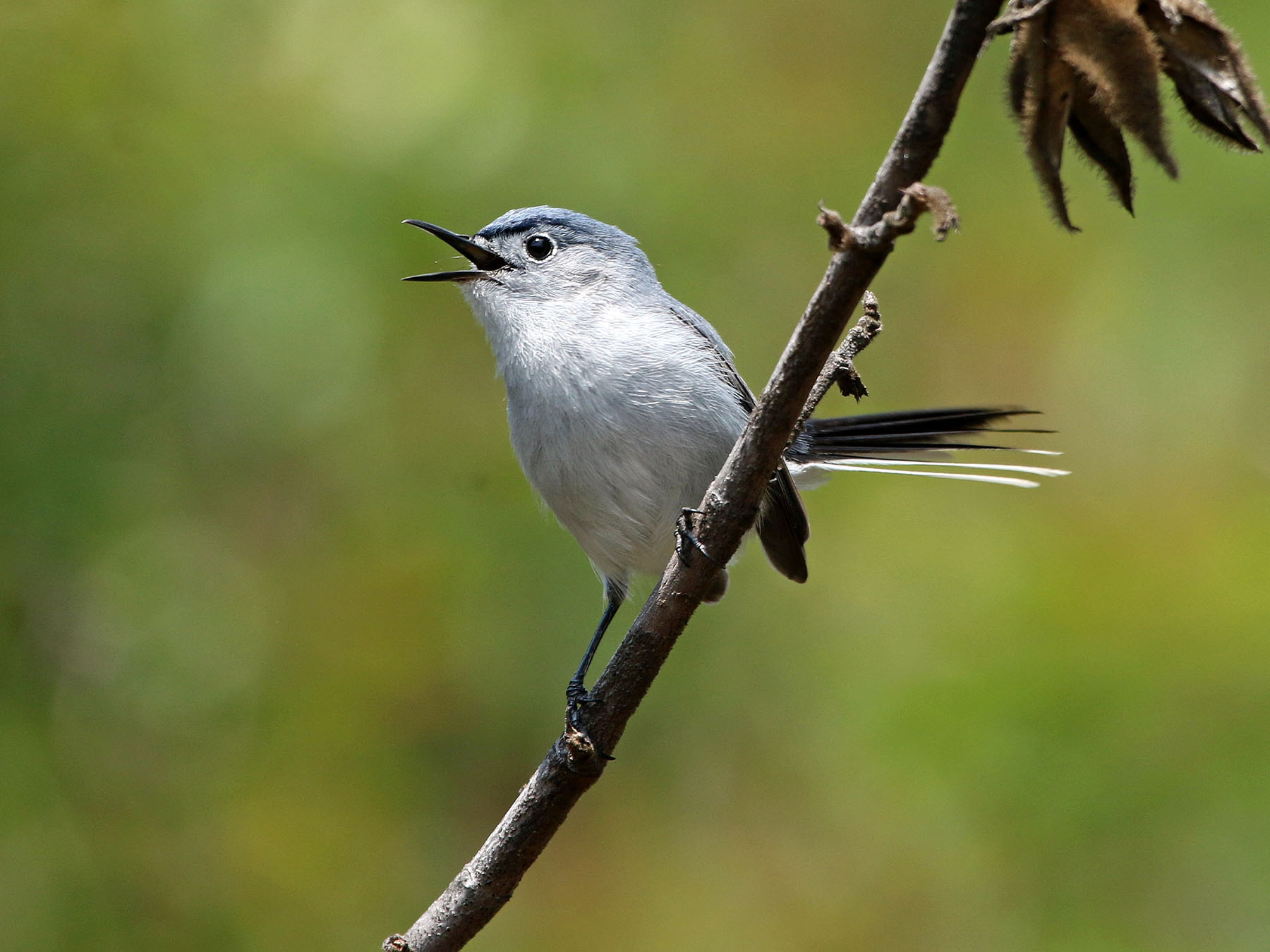
Females are similar but lack the black cap and show more brown coloring, particularly on their backs and underparts. Both sexes have a thin bill and a white eye-ring, though this is less distinct in breeding males.
Its size
Adults- Length
- 9.5–10.6 cm
- Wingspan
- 14–16 cm
- Weight
- 5–7 g
Its song and calls
The California Gnatcatcher's most distinctive vocalization is a soft, mewing call often described as a kitten-like "meeew." This call is used for contact between pairs and to signal alarm.
During the breeding season, males produce a thin, rising whistle as part of their courtship display.
When and where to see it
How often the California Gnatcatcher turns up in the United States through the year, from birdwatchers' records.
United States
Resident · all year · most records in December
Show as a table
| Month | United States |
|---|---|
| January | 0.006% (regular) |
| February | 0.006% (regular) |
| March | 0.005% (regular) |
| April | 0.003% (regular) |
| May | 0.002% (regular) |
| June | 0.005% (regular) |
| July | 0.007% (regular) |
| August | 0.007% (regular) |
| September | 0.006% (regular) |
| October | 0.006% (regular) |
| November | 0.007% (regular) |
| December | 0.008% (regular) |
Worldwide: recorded regularly in 2 countries
Countries where it was recorded in at least 3 of the 6 years 2019–2024. Linked countries have their own bird list.
North America (2)
Data: EOD – eBird Observation Dataset (Cornell Lab of Ornithology), accessed via GBIF.org, CC BY 4.0. Records from 2019–2024, aggregated and filtered by Birdfact. How these lists are made
Tips for seeing it
- Look for their distinctive tail-flicking behavior in coastal sage scrub habitats.
- Listen for their kitten-like mewing call, which is often the easiest way to locate them.
- Observe early morning when they are most active and vocal.
- Use binoculars to spot their white eye-ring and thin bill.
What it eats
California Gnatcatchers primarily feed on small arthropods, with a preference for insects and spiders. They glean prey from foliage while moving through shrubs and occasionally catch flying insects. Their diet may include small berries during certain seasons.
Nesting and breeding
California Gnatcatchers form monogamous pairs and begin breeding in late February to early March. Males perform courtship displays, including singing and presenting nesting material to females.
Nests are small, cup-shaped structures made of grasses, plant fibers, and spider webs, typically placed in dense shrubs about 1 meter above the ground. Females lay 3-5 pale blue to white eggs with reddish-brown spots.
Both parents incubate the eggs for about 14 days and care for the nestlings. Young fledge after 10-15 days but may remain with parents for several weeks.
Behaviour
California Gnatcatchers are active foragers, constantly moving through vegetation in search of insects. They often flit their long tails while hopping between branches.
These birds are typically seen in pairs, maintaining year-round territories and exhibiting strong pair bonds.
Conservation
The California Gnatcatcher is listed as Least Concern by the IUCN and faces significant threats due to habitat loss from urban development and fragmentation of coastal sage scrub ecosystems.
Conservation efforts focus on protecting and restoring their specialized habitat, with several areas designated as critical habitat under the U.S. Endangered Species Act.
More photos
4 photos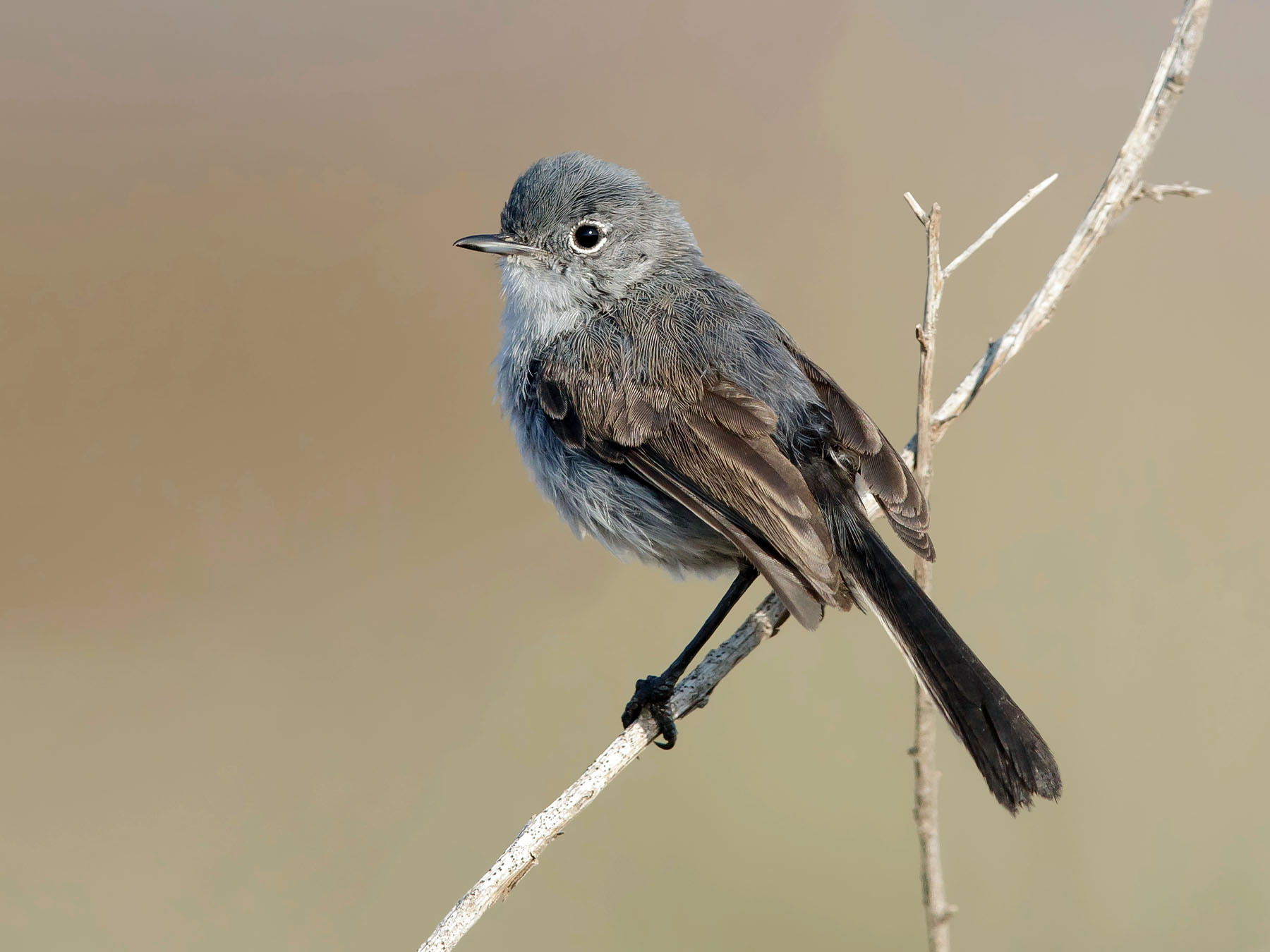
Quick facts
- Length
- 9.5–10.6 cm
- Wingspan
- 14–16 cm
- Weight
- 5–7 g
- Lifespan
- 3–5 years · oldest recorded 8 years
- Family
- Gnatcatchers
- Migration
- Resident
- Global status (IUCN)
- Least Concern
- World population
- 80,000 mature individuals
- Population trend
- Decreasing
- Also called
- Coastal California Gnatcatcher
- Scientific name
- Polioptila californica
Sources
3- 1BirdLife International. 2021. Polioptila californica. The IUCN Red List of Threatened Species 2021: e.T22711585A139563279. Source (opens in a new tab)
- 2Partners in Flight (2019)
- 3Partners in Flight (2019) Source (opens in a new tab)

Checked by
Nathan Cope, founder and editor
Nathan founded Birdfact and leads its writers and contributors in the UK, the US and Canada. He has watched and studied birds for more than ten years, and checks every article and species guide before it’s published.