


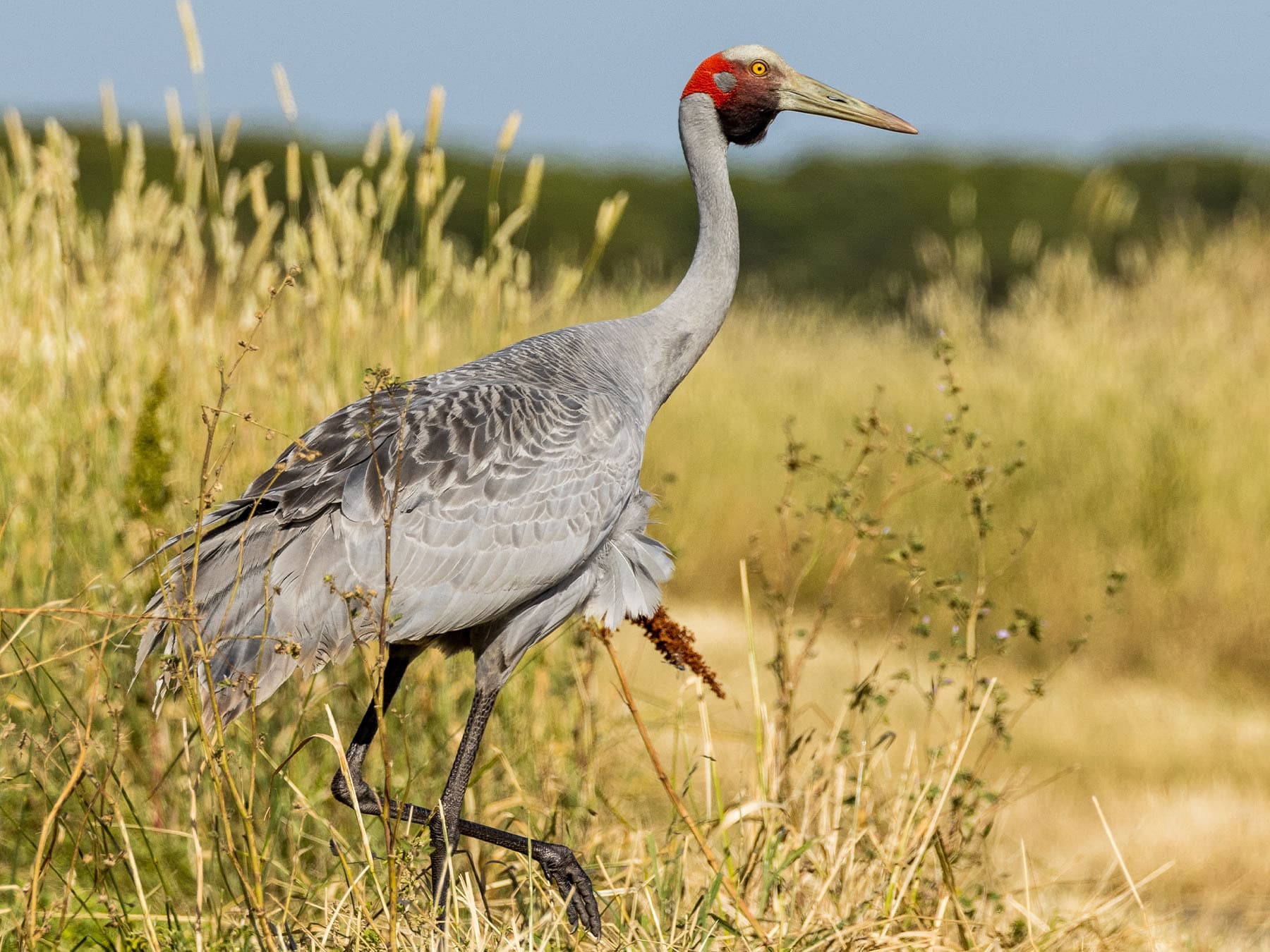
Brolga
Australian Crane · Antigone rubicunda
By the Birdfact teamChecked by Nathan Cope
On this page12 sections
How to recognise it
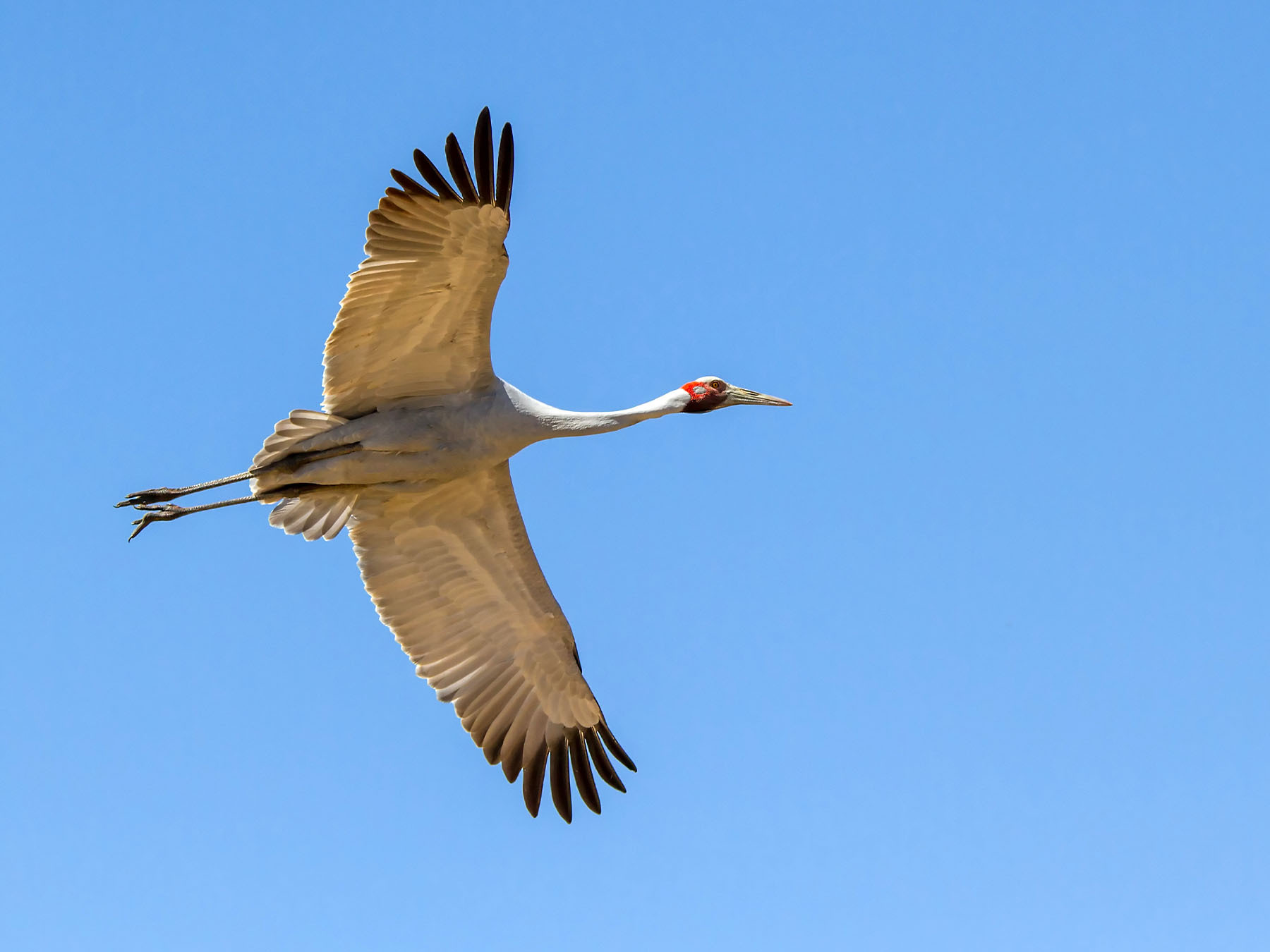
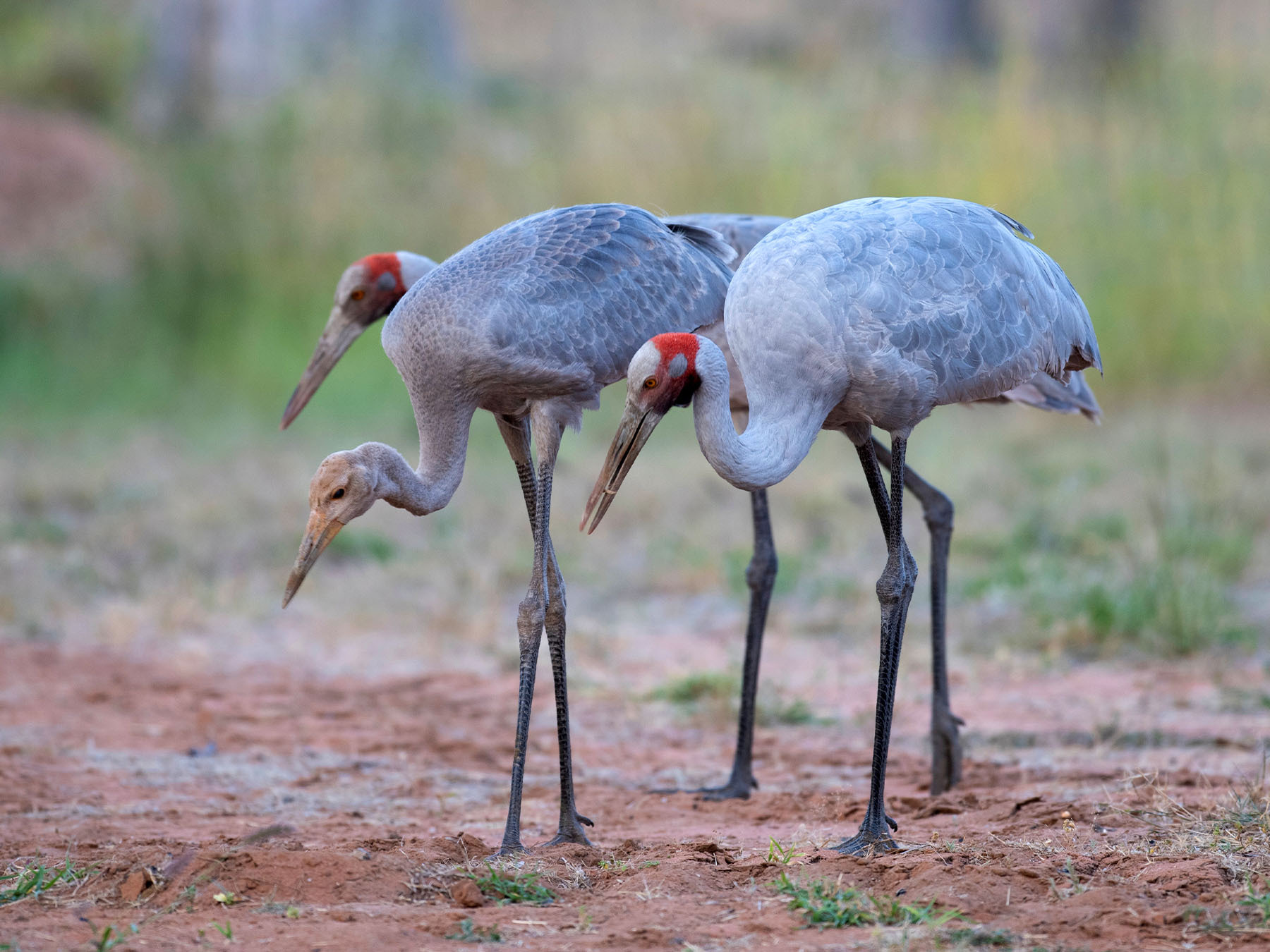
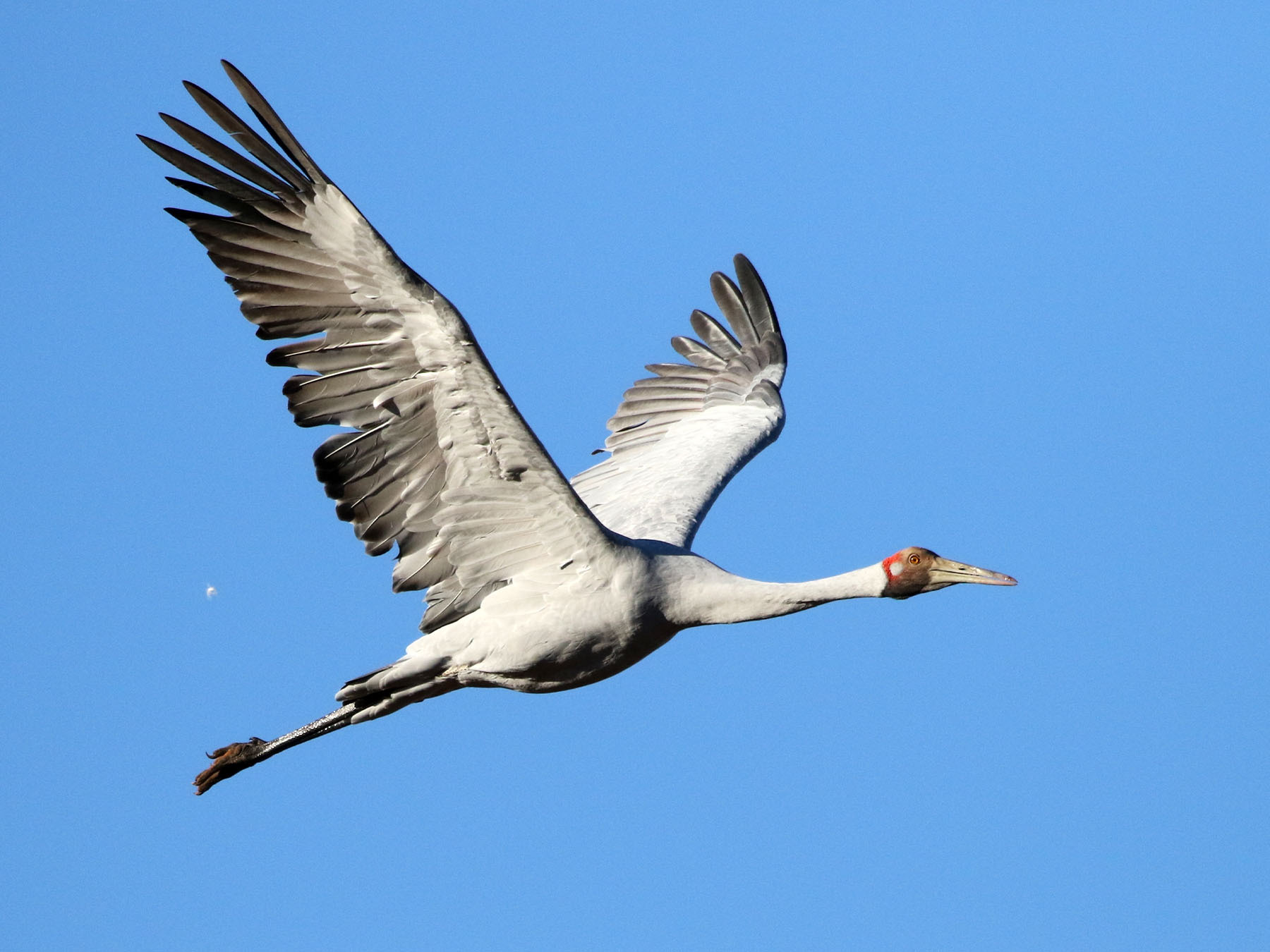
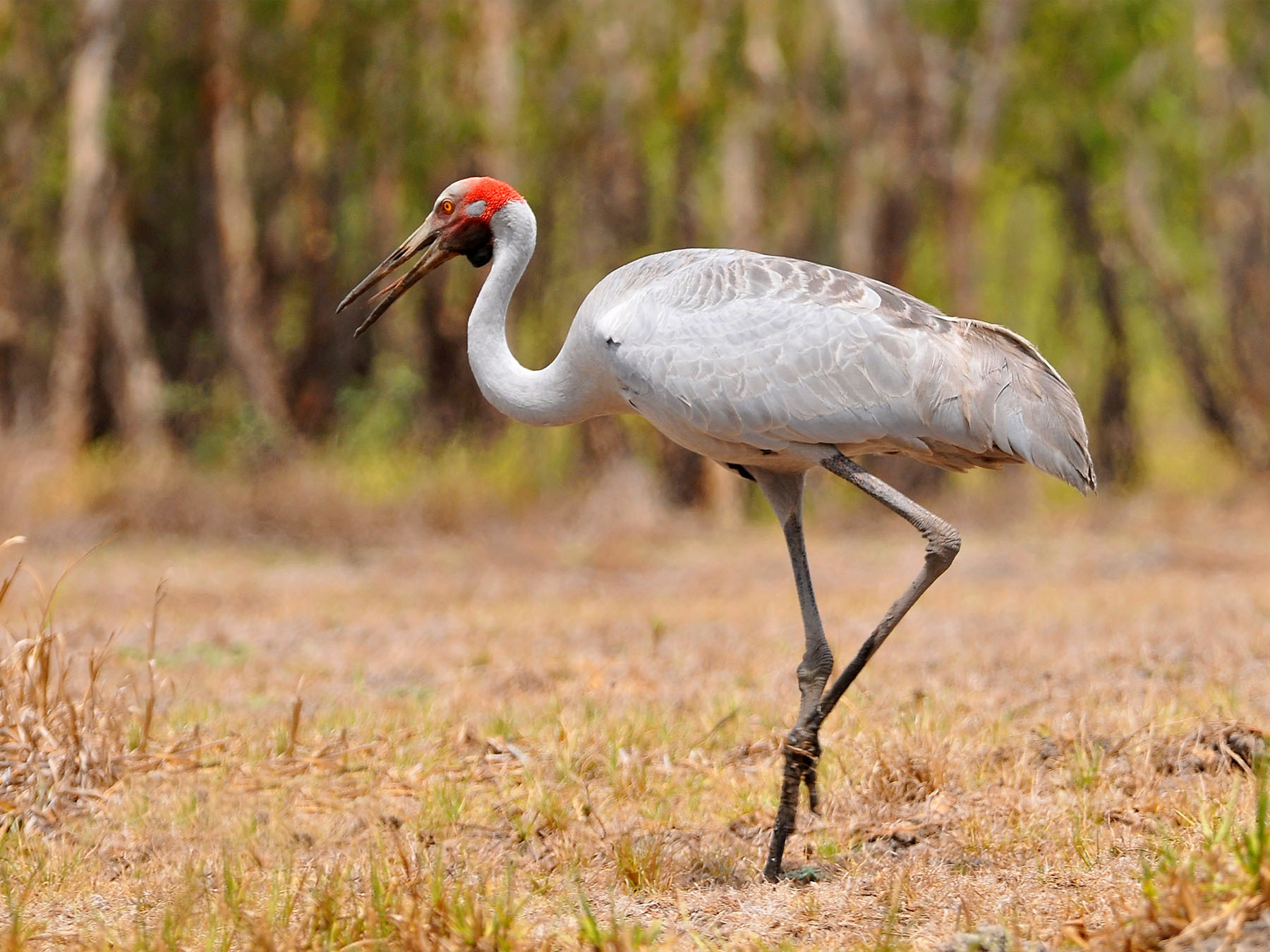
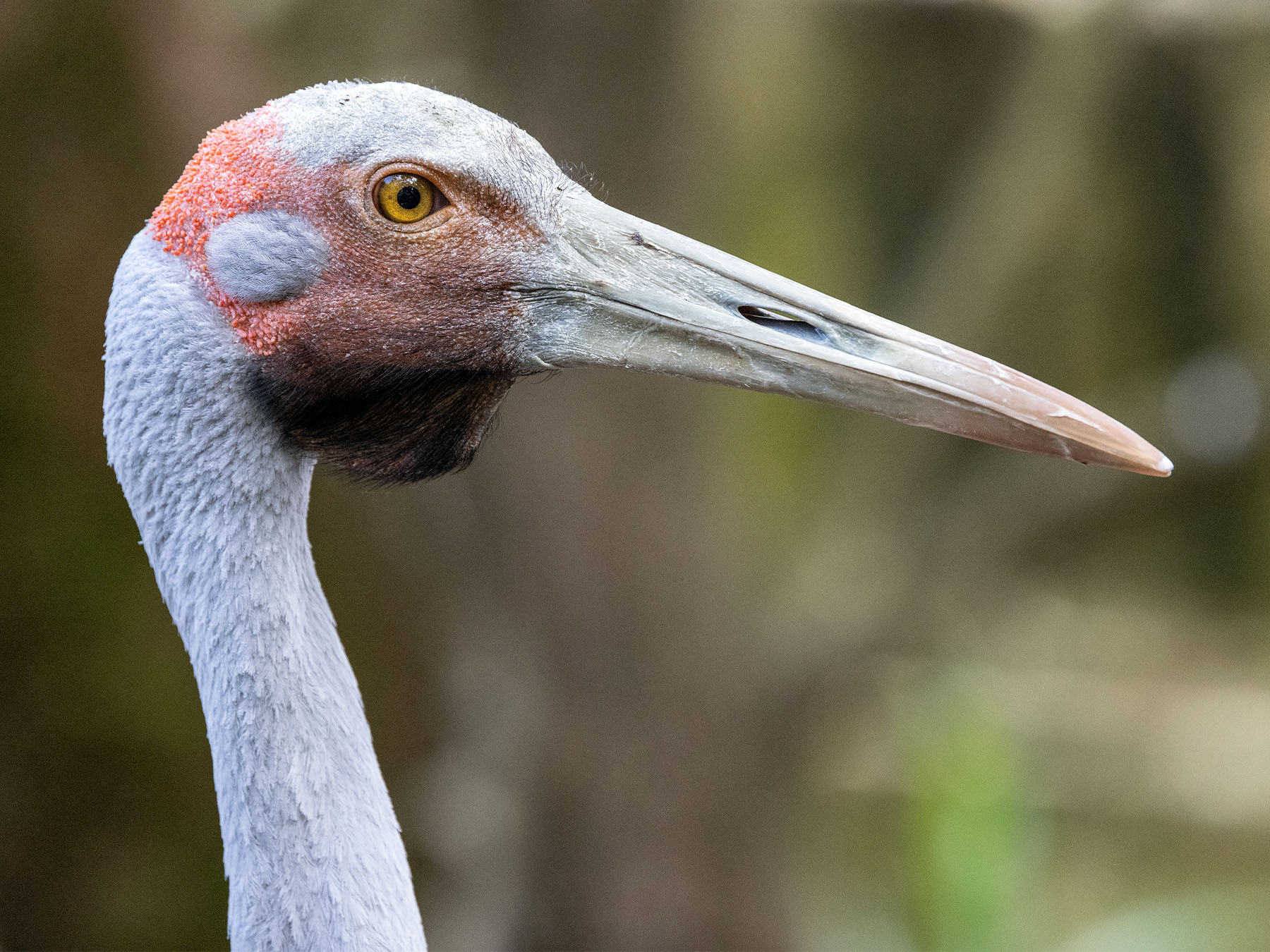
The Brolga is a tall, stately crane with predominantly grey plumage. Its long neck, slender legs, and distinctive red patch on the back of its head make it easily identifiable. The bird's wingspan can reach an impressive 2.4 meters.
Both males and females look similar. Juveniles are duller in colour and lack the vibrant red patch until they reach maturity.
Its size
Adults- Length
- 100–140 cm
- Wingspan
- 180–240 cm
- Weight
- 4700–8700 g
Its song and calls
The Brolga's call is a loud, trumpeting sound that can be heard from great distances. Their vocalisations include a variety of bugling and purring notes, often described as 'kar-roo, kar-roo'.
During courtship displays, pairs engage in synchronised calling, creating a haunting duet across the landscape.
When and where to see it
The Brolga is not recorded regularly in the UK, Ireland, the United States or Canada.
Worldwide: recorded regularly in 1 country
Countries where it was recorded in at least 3 of the 6 years 2019–2024. Linked countries have their own bird list.
Oceania (1)
Data: EOD – eBird Observation Dataset (Cornell Lab of Ornithology), accessed via GBIF.org, CC BY 4.0. Records from 2019–2024, aggregated and filtered by Birdfact. How these lists are made
Tips for seeing it
- Look for Brolgas in open wetlands, shallow marshes, and grassy plains.
- Listen for their distinctive trumpeting call, especially during breeding season.
- Observe early morning or late afternoon when they are most active.
- Use a spotting scope to watch their fascinating courtship dances from a distance.
- In Australia, visit known habitats like Kakadu National Park or the Gulf Country region.
What it eats
Brolgas are omnivorous, eating plant matter, insects, and small vertebrates. They use their long bills to dig for tubers and roots in wetlands and consume crops like cereal grains and peanuts when foraging in agricultural areas.
Nesting and breeding
Brolgas form monogamous pairs and engage in elaborate courtship rituals, including synchronised dancing and calling. The breeding season varies by region but typically occurs during the wet season in northern Australia.
Nests are constructed on slightly raised mounds in shallow water or on dry ground near water. They are simple platforms of grasses and sedges. Females usually lay two eggs, which are pale olive to cream in colour with brown markings.
Both parents incubate the eggs for about 32 days. Chicks are precocial and can leave the nest within 24 hours of hatching. They remain with their parents for up to 11 months, learning essential survival skills.
Behaviour
Brolgas are known for their spectacular courtship displays, involving elaborate dances with intricate steps, wing-flapping, and loud trumpeting calls. They are often seen foraging in shallow waters, using their bills to probe for food.
Highly social, Brolgas typically gather in pairs or small family groups, occasionally forming large flocks in favourable habitats.
Conservation
While listed as Least Concern globally, Brolgas face localised threats from habitat loss due to agricultural expansion and water management practices.
Conservation efforts focus on protecting and restoring wetland habitats, particularly in southern Australia, where populations have declined.
Similar birds
Often mistaken for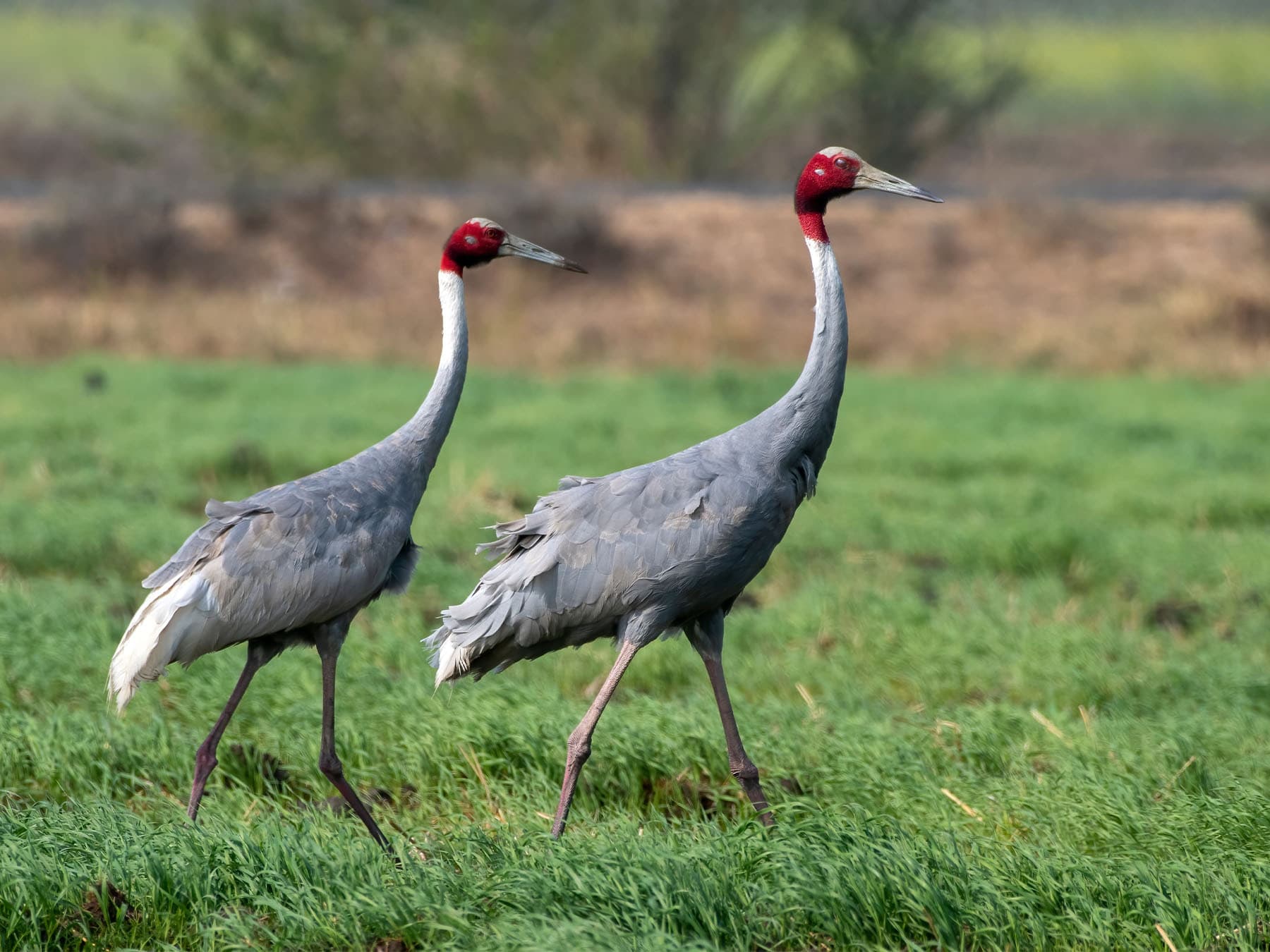
More photos
6 photos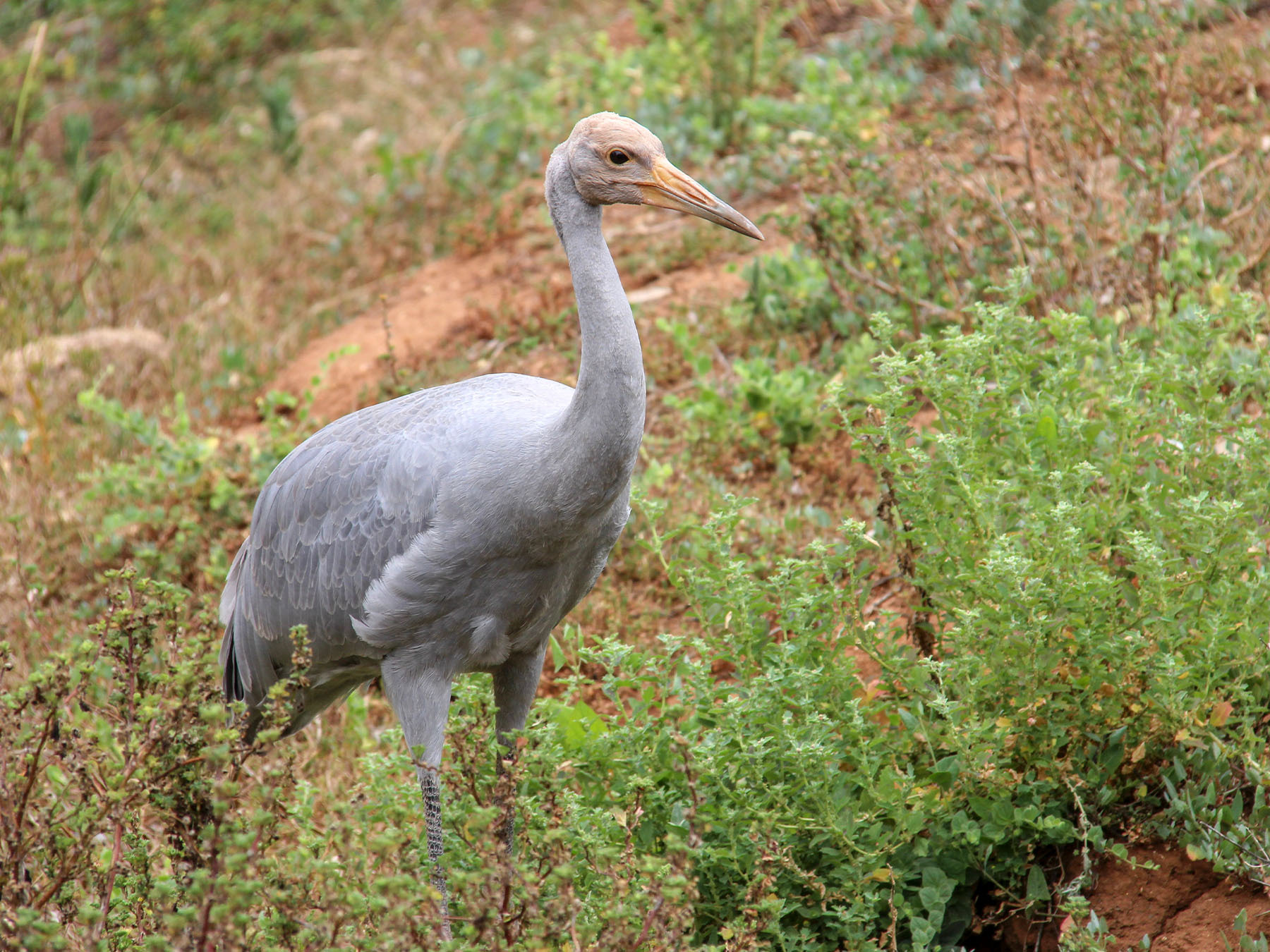
Quick facts
- Length
- 100–140 cm
- Wingspan
- 180–240 cm
- Weight
- 4700–8700 g
- Lifespan
- 20–30 years · oldest recorded 33 years
- Family
- Cranes
- Migration
- Partial migrant
- Global status (IUCN)
- Least Concern
- World population
- 20,000 - 100,000 mature individuals
- Population trend
- Population decreasing due to habitat loss and changes
- Also called
- Australian Crane
- Scientific name
- Antigone rubicunda
Sources
3- 1BirdLife International. 2016. Antigone rubicunda. The IUCN Red List of Threatened Species 2016: e.T22692067A93335916. Source (opens in a new tab)
- 2Wetlands International (2006)
- 3Flower, Furter notes on the duration of life in animals. IV. Birds, Proc Zool Soc London, Ser. A:195-235 (1938)

Checked by
Nathan Cope, founder and editor
Nathan founded Birdfact and leads its writers and contributors in the UK, the US and Canada. He has watched and studied birds for more than ten years, and checks every article and species guide before it’s published.