


Brazilian Merganser
Pato-mergulhão · Mergus octosetaceus
By the Birdfact teamChecked by Nathan Cope
On this page11 sections
How to recognise it
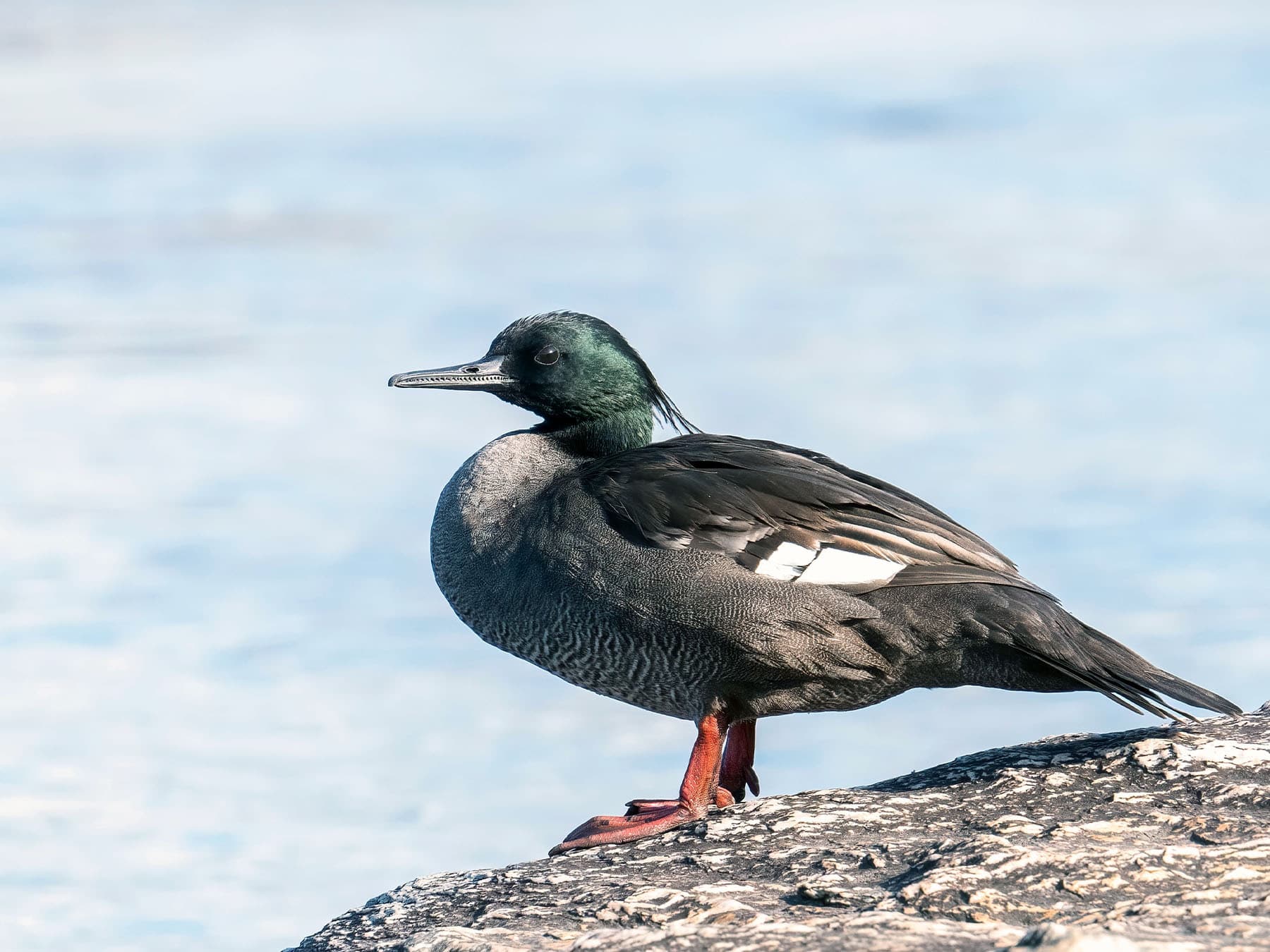
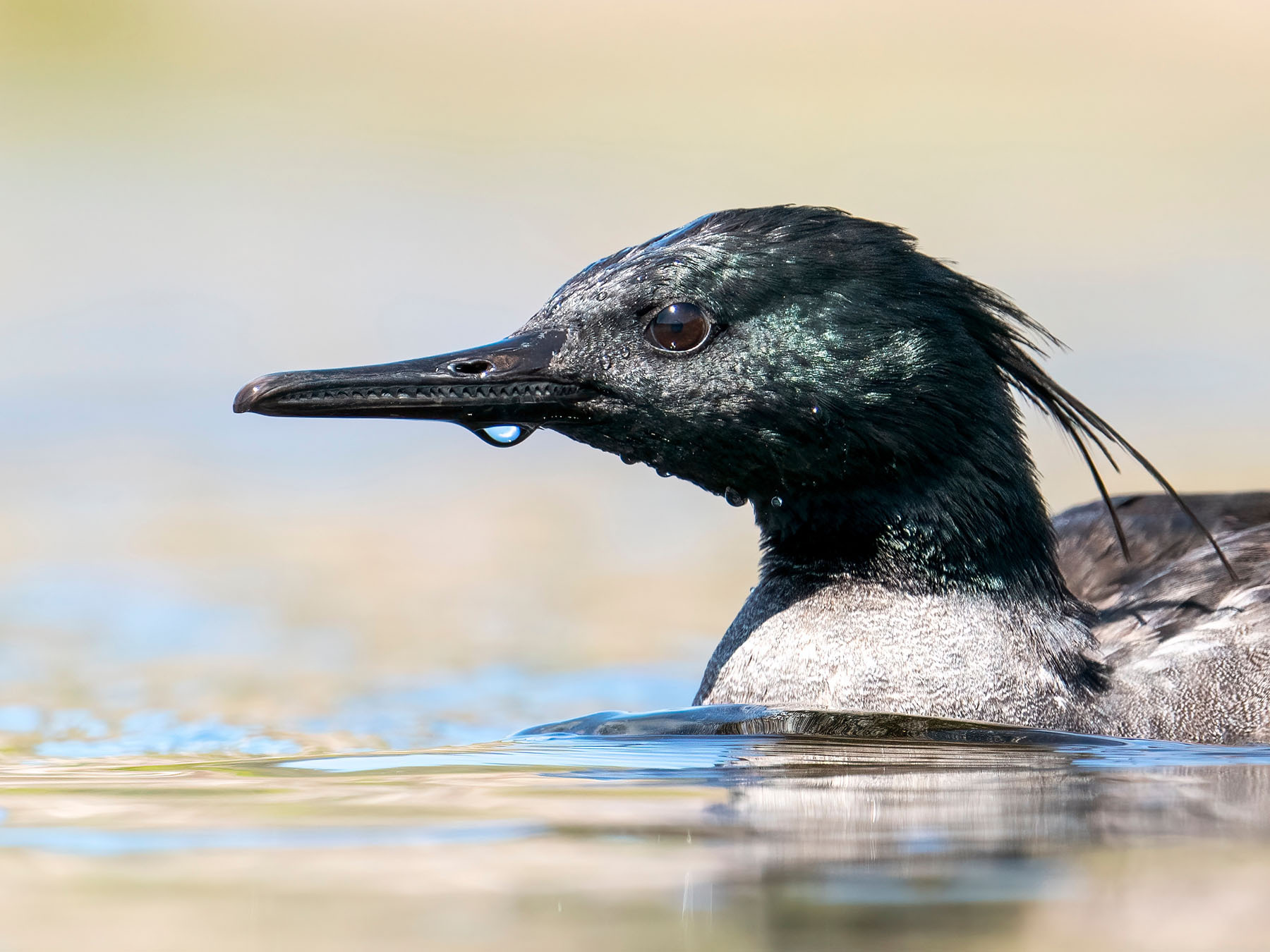
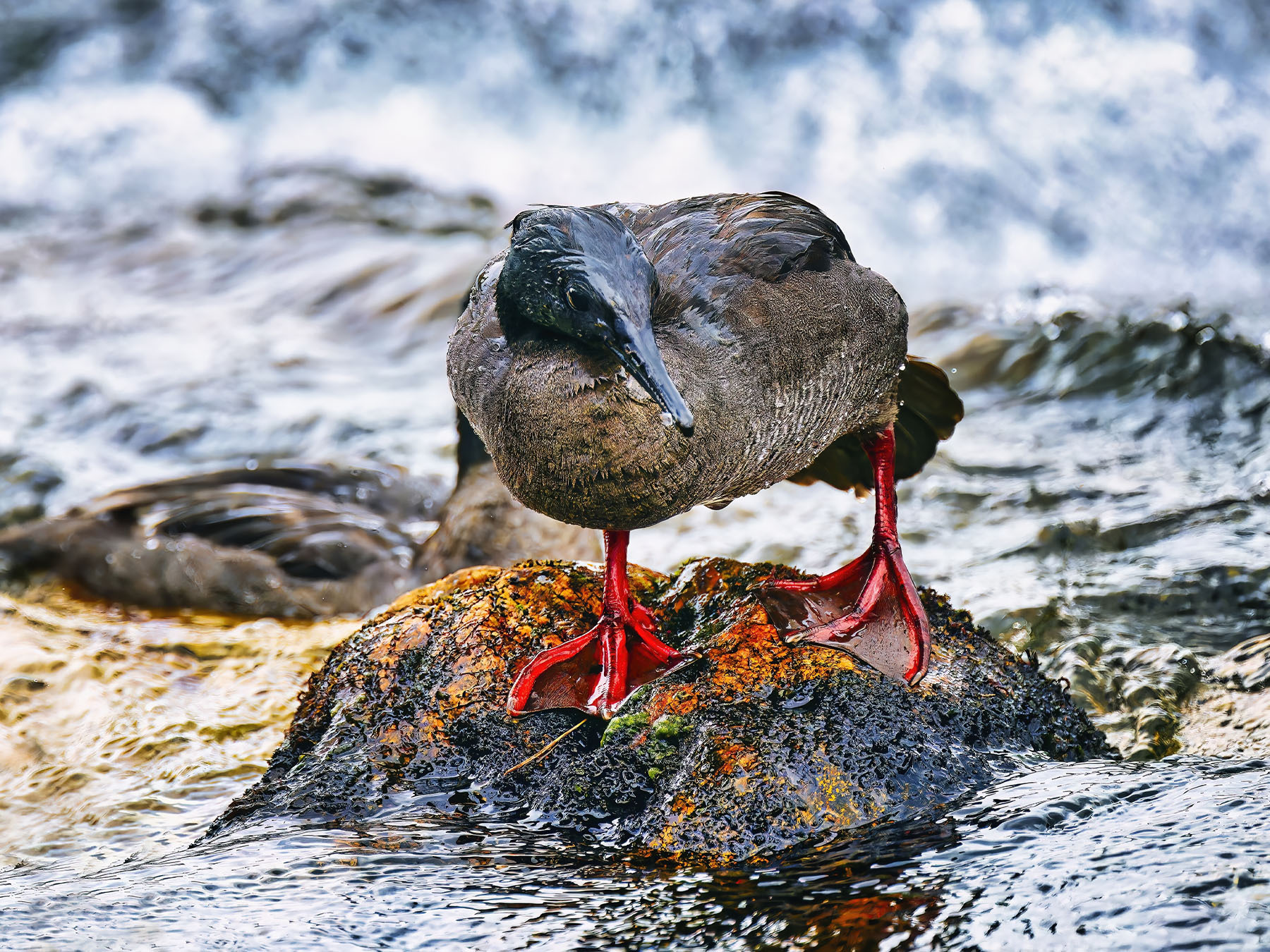
The Brazilian Merganser is a medium-sized duck with a distinctive long, thin, serrated black bill. Its head and upper neck are dark green with a long, shaggy crest. The body is predominantly dark brown above and pale grey below, with darker striping that fades towards the belly.
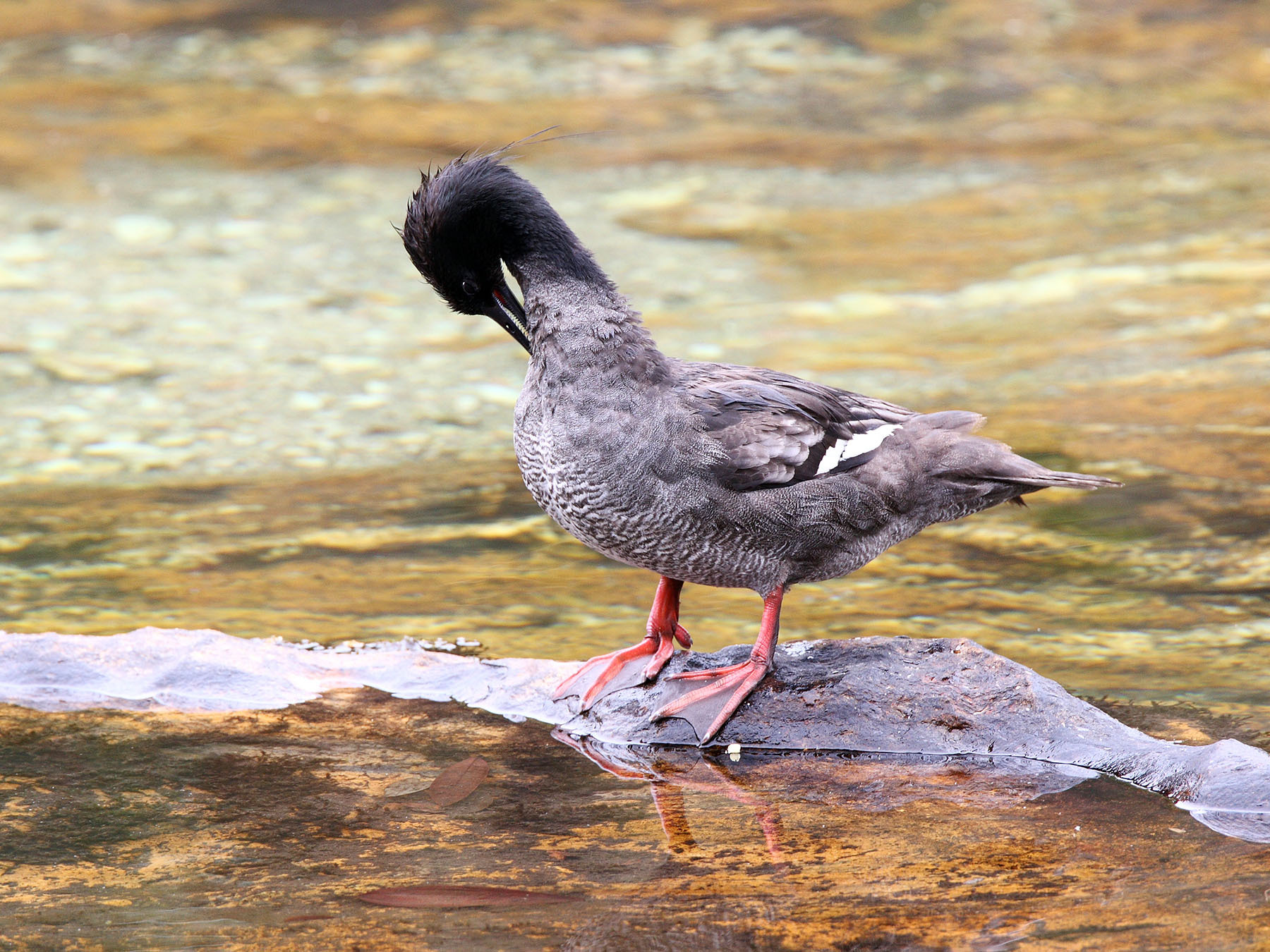
Males have a more prominent crest and a larger white wing patch than females. Juveniles resemble females but have a duller plumage and a less developed crest.
Its size
Adults- Length
- 49–56 cm
- Wingspan
- 70–80 cm
- Weight
- 700–1100 g
Its song and calls
Brazilian Mergansers are generally quiet birds. Their vocalisations include soft, low whistles and quiet grunts.
During courtship, males produce a series of low, nasal 'rreck-rreck' calls. Alarm calls consist of sharp, high-pitched whistles, often given when disturbed.
When and where to see it
The Brazilian Merganser is not recorded regularly in the UK, Ireland, the United States or Canada.
Worldwide: recorded regularly in 1 country
Countries where it was recorded in at least 3 of the 6 years 2019–2024. Linked countries have their own bird list.
South America (1)
Data: EOD – eBird Observation Dataset (Cornell Lab of Ornithology), accessed via GBIF.org, CC BY 4.0. Records from 2019–2024, aggregated and filtered by Birdfact. How these lists are made
Tips for seeing it
- Look for them along fast-flowing, clear rivers with rocky bottoms
- Observe early morning or late afternoon when they are most active
- Listen for their soft, low whistling calls
- Be patient and quiet, as they are easily startled
What it eats
Brazilian Mergansers primarily feed on small fish, which they catch by diving and pursuing underwater. They also consume aquatic insects, crustaceans, and molluscs.
Their serrated bills are specially adapted for gripping slippery prey in fast-flowing water.
Nesting and breeding
Brazilian Mergansers form monogamous pairs and breed during the dry season, typically from June to August. They nest in natural cavities in trees or rocky crevices near water, often reusing the same site year after year.
The female lays 2-6 cream-coloured eggs in a nest lined with down. Incubation lasts about 32 days, performed solely by the female while the male guards the territory.
After hatching, both parents care for the ducklings, which can swim and dive shortly after birth. The young remain with their parents for several months, learning essential survival skills.
Behaviour
Brazilian Mergansers are excellent swimmers and divers, using their specialised bills to catch fish underwater. They are typically seen in pairs or small family groups, maintaining strong pair bonds throughout the year. These birds are shy and wary, often fleeing at the first sign of disturbance.
Conservation
The Brazilian Merganser is critically endangered due to habitat loss, water pollution, and dam construction.
Conservation efforts focus on protecting remaining habitats, reducing water pollution, and implementing captive breeding programs to boost wild populations.
More photos
4 photos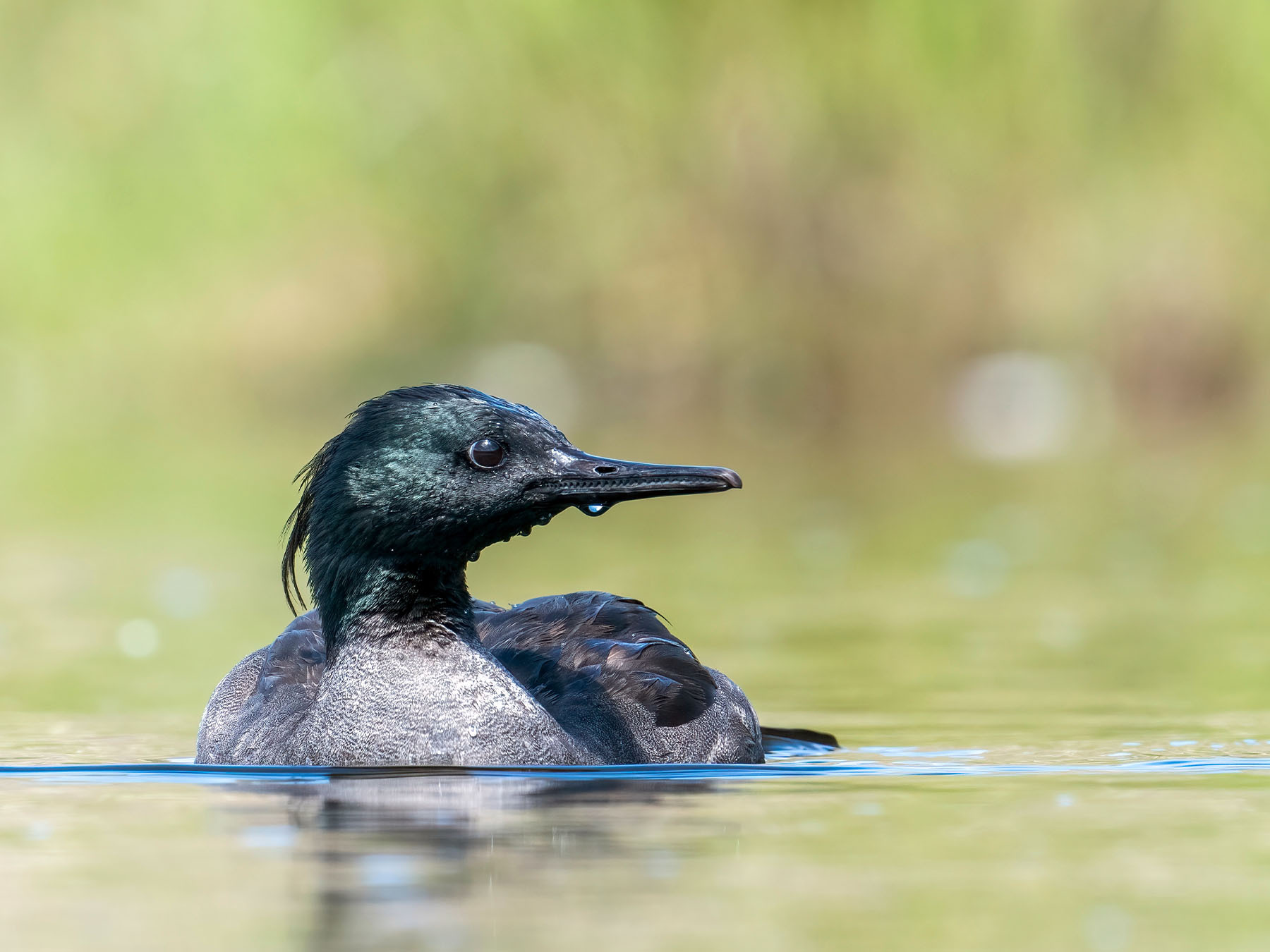
Quick facts
- Length
- 49–56 cm
- Wingspan
- 70–80 cm
- Weight
- 700–1100 g
- Family
- Ducks, Geese & Swans
- Migration
- Resident
- Global status (IUCN)
- Critically Endangered
- World population
- 50 - 249 mature individuals
- Population trend
- Decreasing
- Also called
- Pato-mergulhão
- Scientific name
- Mergus octosetaceus
Sources
3- 1BirdLife International. 2019. Mergus octosetaceus. The IUCN Red List of Threatened Species 2019: e.T22680482A143756439. Source (opens in a new tab)
- 2BirdLife International. 2019. Mergus octosetaceus. The IUCN Red List of Threatened Species 2019: e.T22680482A143756439. Source (opens in a new tab)
- 3BirdLife International. 2019. Mergus octosetaceus. The IUCN Red List of Threatened Species 2019: e.T22680482A143756439. Source (opens in a new tab)

Checked by
Nathan Cope, founder and editor
Nathan founded Birdfact and leads its writers and contributors in the UK, the US and Canada. He has watched and studied birds for more than ten years, and checks every article and species guide before it’s published.