


Blue-naped Mousebird
Blue-naped Coly · Urocolius macrourus
By the Birdfact teamChecked by Nathan Cope
On this page11 sections
How to recognise it
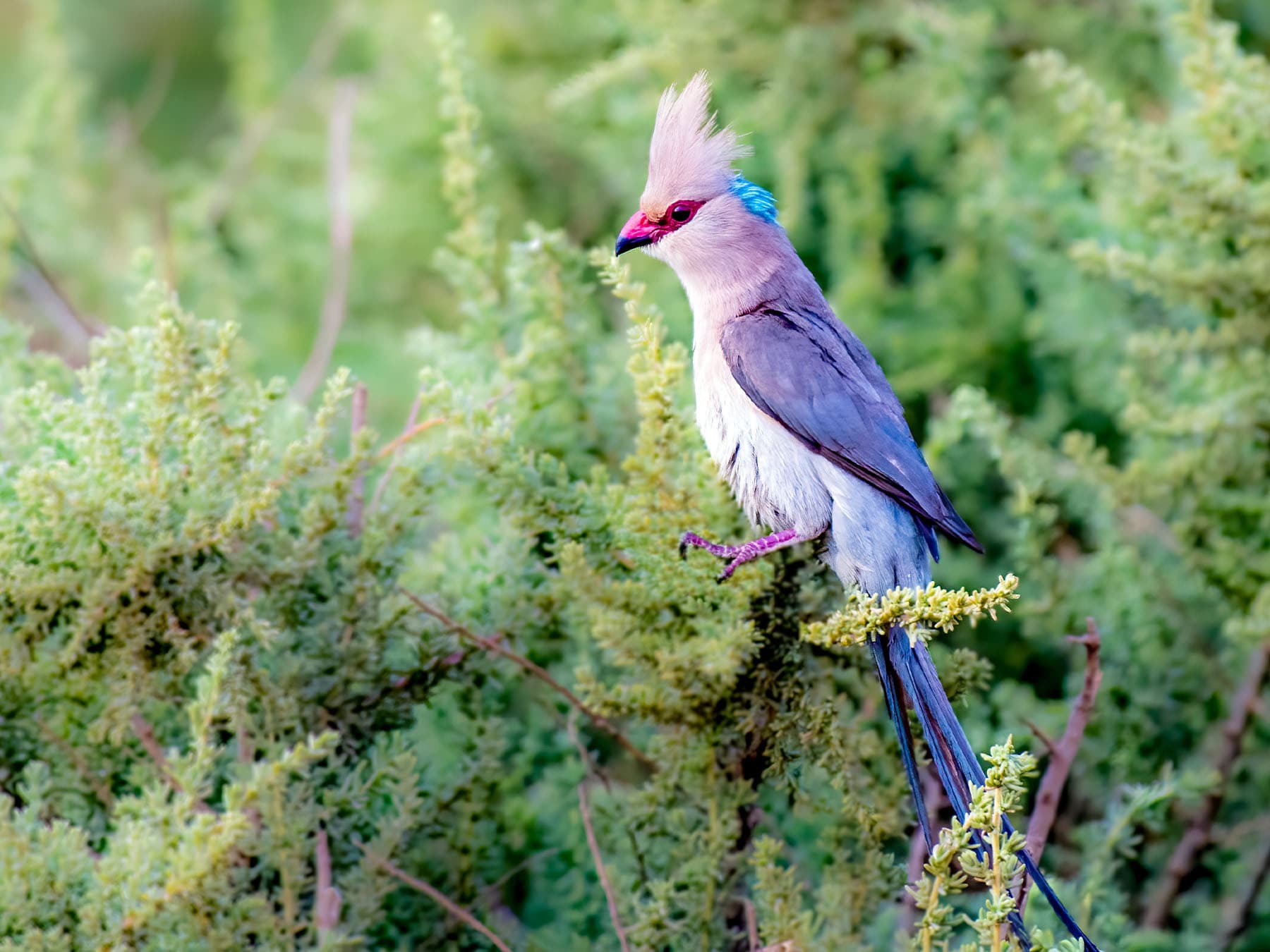
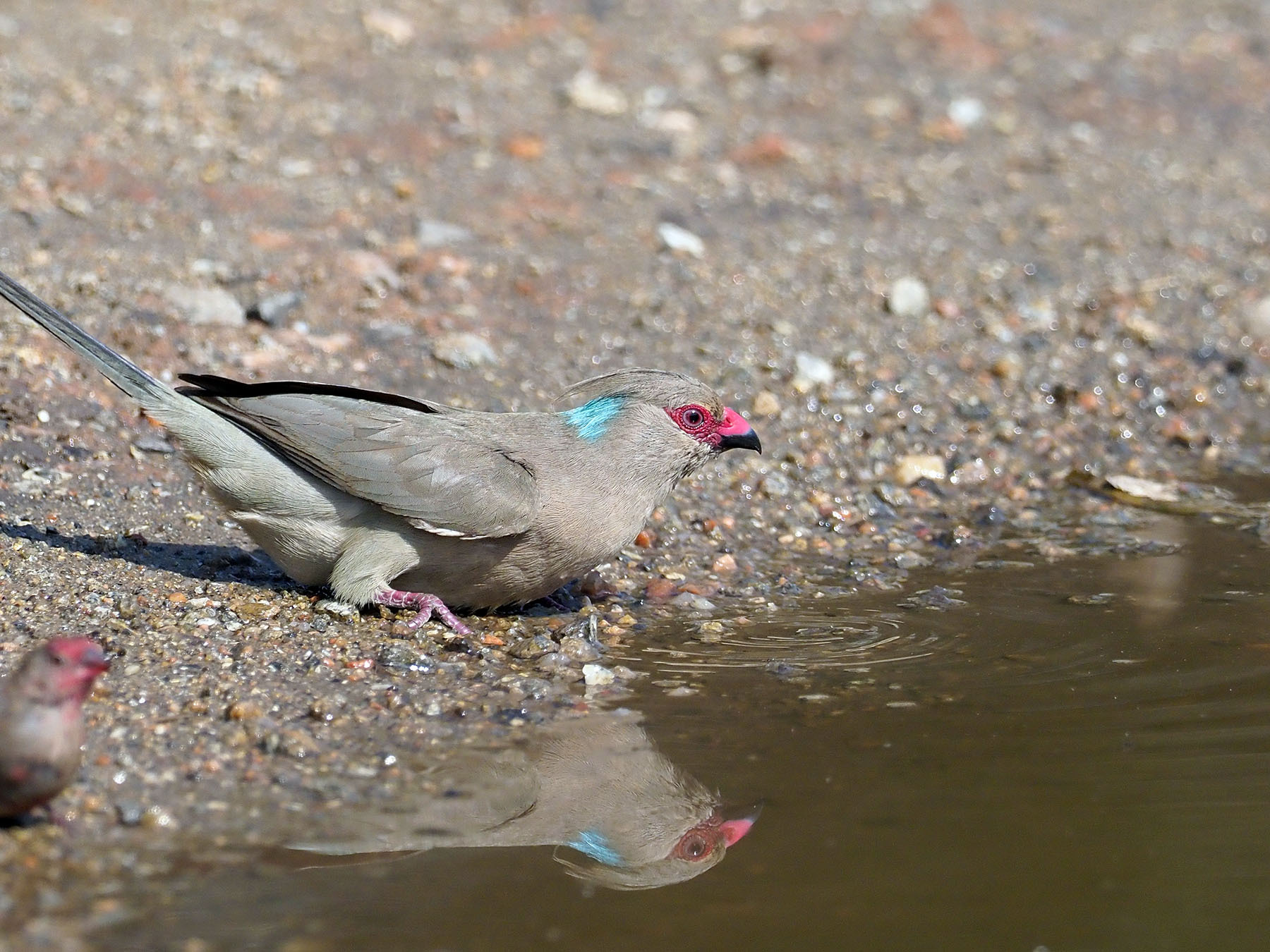
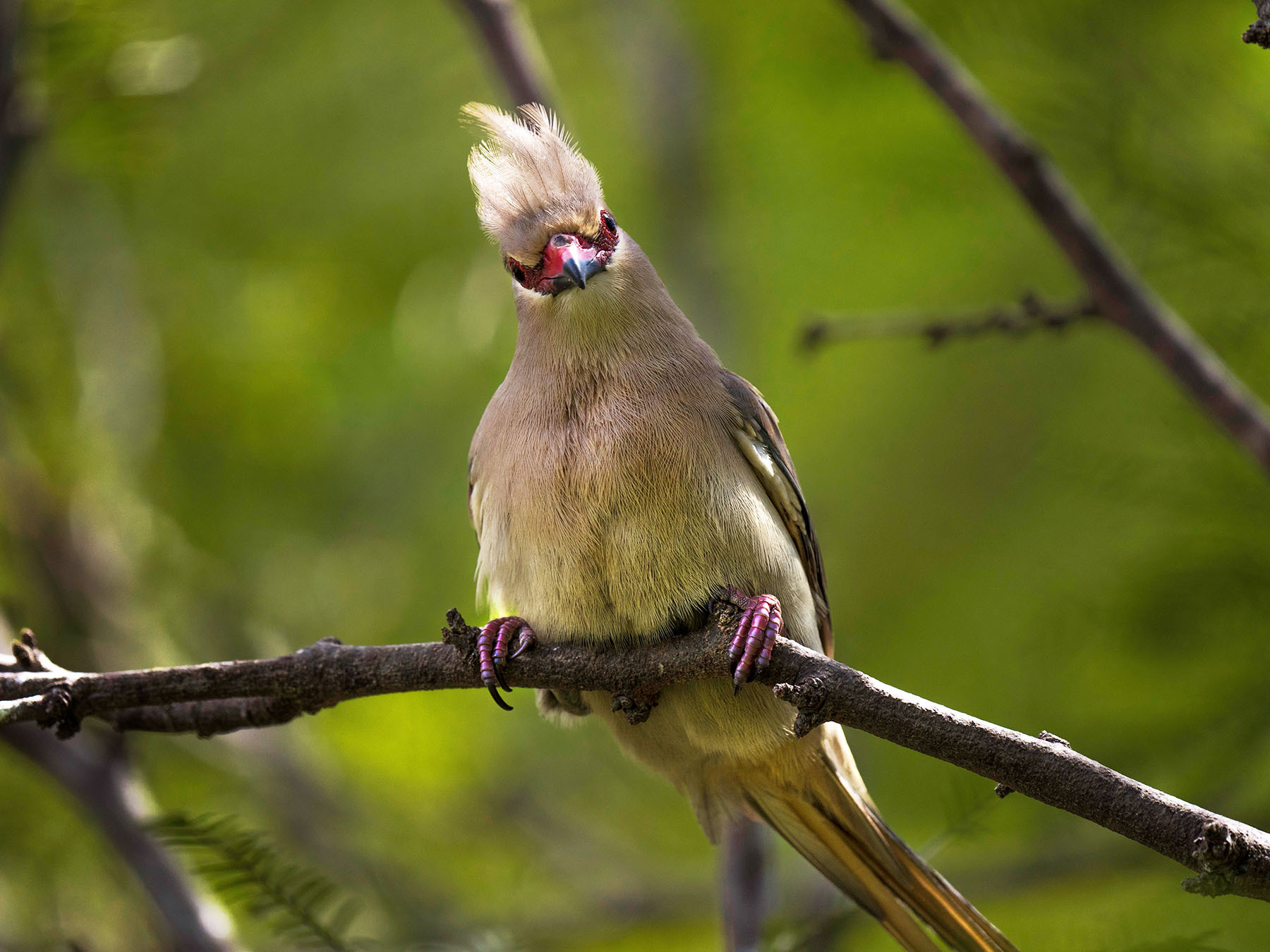
The Blue-naped Mousebird is a slender, long-tailed bird with predominantly grey-brown plumage. Its most distinctive feature is a bright turquoise-blue patch on the nape, contrasting with its otherwise muted colouration. The tail, which makes up about two-thirds of its total length, is graduated and often held vertically.
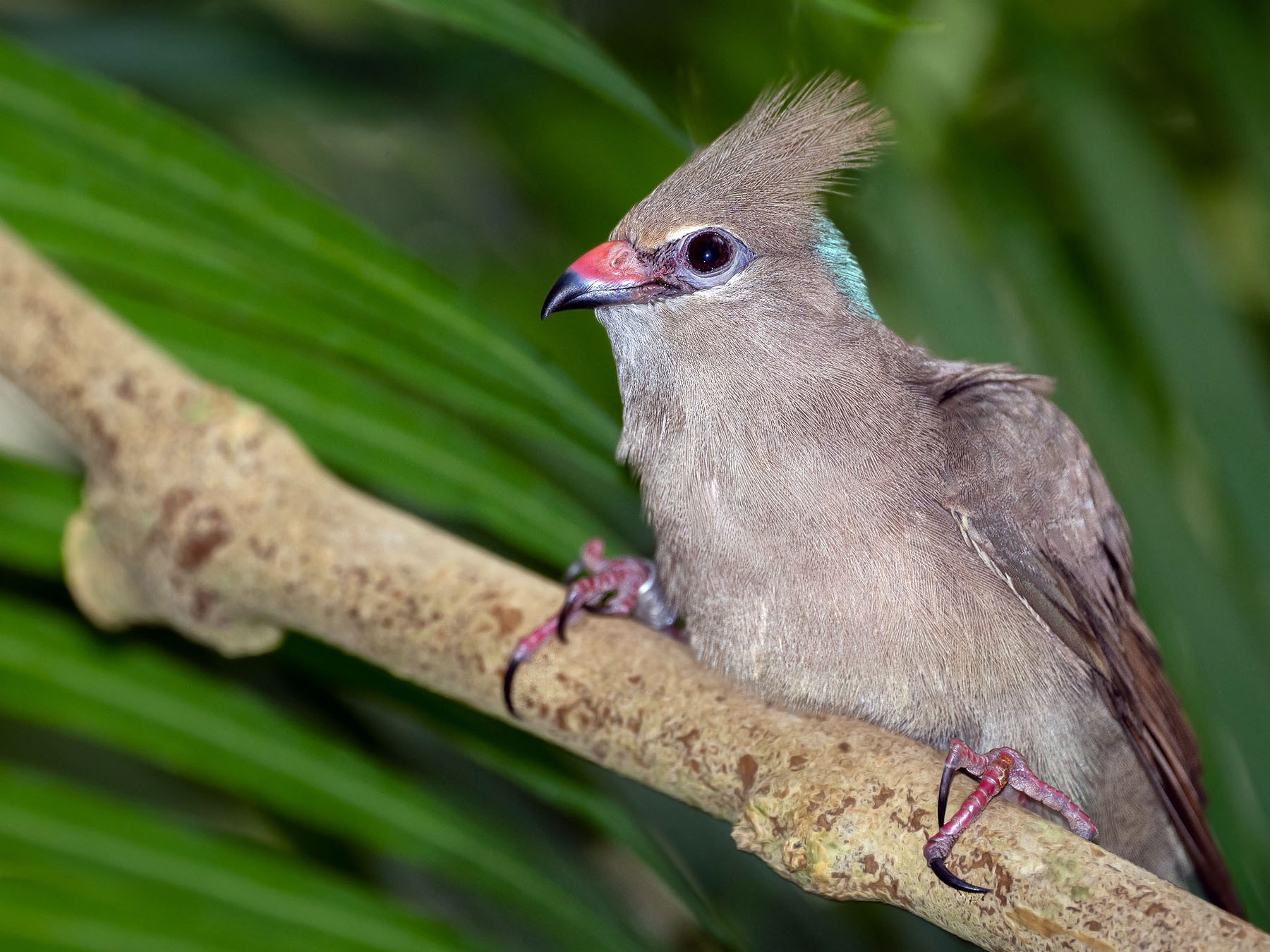
Both sexes look similar, with a slight crest on the head and crimson-red skin around the eyes. Juveniles resemble adults but lack the blue nape patch and have pinker facial skin.
Its size
Adults- Length
- 33–36 cm
- Wingspan
- 25–30 cm
- Weight
- 34–65 g
Its song and calls
Blue-naped Mousebirds are vocal birds, frequently communicating with soft, high-pitched twittering calls. Their vocalisations include a distinctive 'tseee-tseee-tseee' sound, often given in flight or when perched.
During feeding or social interactions, they produce a variety of chirps and trills, creating a constant chatter within their groups.
When and where to see it
The Blue-naped Mousebird is not recorded regularly in the UK, Ireland, the United States or Canada.
Worldwide: recorded regularly in 14 countries
Countries where it was recorded in at least 3 of the 6 years 2019–2024. Linked countries have their own bird list.
Data: EOD – eBird Observation Dataset (Cornell Lab of Ornithology), accessed via GBIF.org, CC BY 4.0. Records from 2019–2024, aggregated and filtered by Birdfact. How these lists are made
Tips for seeing it
- Look for small groups moving through trees and shrubs
- Listen for their distinctive, high-pitched twittering calls
- Observe their unique crawling behaviour and acrobatic feeding postures
- Watch for the flash of blue on their napes when they turn their heads
What it eats
Blue-naped Mousebirds are primarily herbivorous, feeding on a variety of fruits, berries, leaves, and buds. They show a particular fondness for figs and have been known to cause damage to fruit crops.
Their diet is supplemented with insects, especially during the breeding season when protein requirements are higher.
Nesting and breeding
Breeding occurs year-round, with peaks during the rainy seasons. Blue-naped Mousebirds form monogamous pairs and engage in mutual preening as part of their courtship ritual. They construct cup-shaped nests using plant material, often placed in dense foliage for concealment.
Females typically lay 2-4 eggs, which are white with brown speckles. Both parents share incubation duties, which last about 11-12 days. The eggs hatch asynchronously, meaning chicks in the same nest can be at different stages of development.
Nestlings are altricial, born naked and helpless. They fledge after approximately 17-18 days but remain dependent on their parents for several weeks afterwards, often returning to the nest to roost.
Behaviour
Blue-naped Mousebirds are highly social, often seen in small groups of 6-20 individuals. They move through vegetation with a mouse-like crawling motion, using their strong feet and stiff tail feathers for support.
These birds are known for their unique ability to hang upside down while feeding, demonstrating remarkable agility in trees and shrubs.
Conservation
The Blue-naped Mousebird is currently listed as Least Concern by the IUCN. Its wide distribution and adaptability to various habitats contribute to its stable population.
However, local declines may occur due to habitat loss in some areas, particularly where savanna and woodland are converted for agriculture.
More photos
4 photos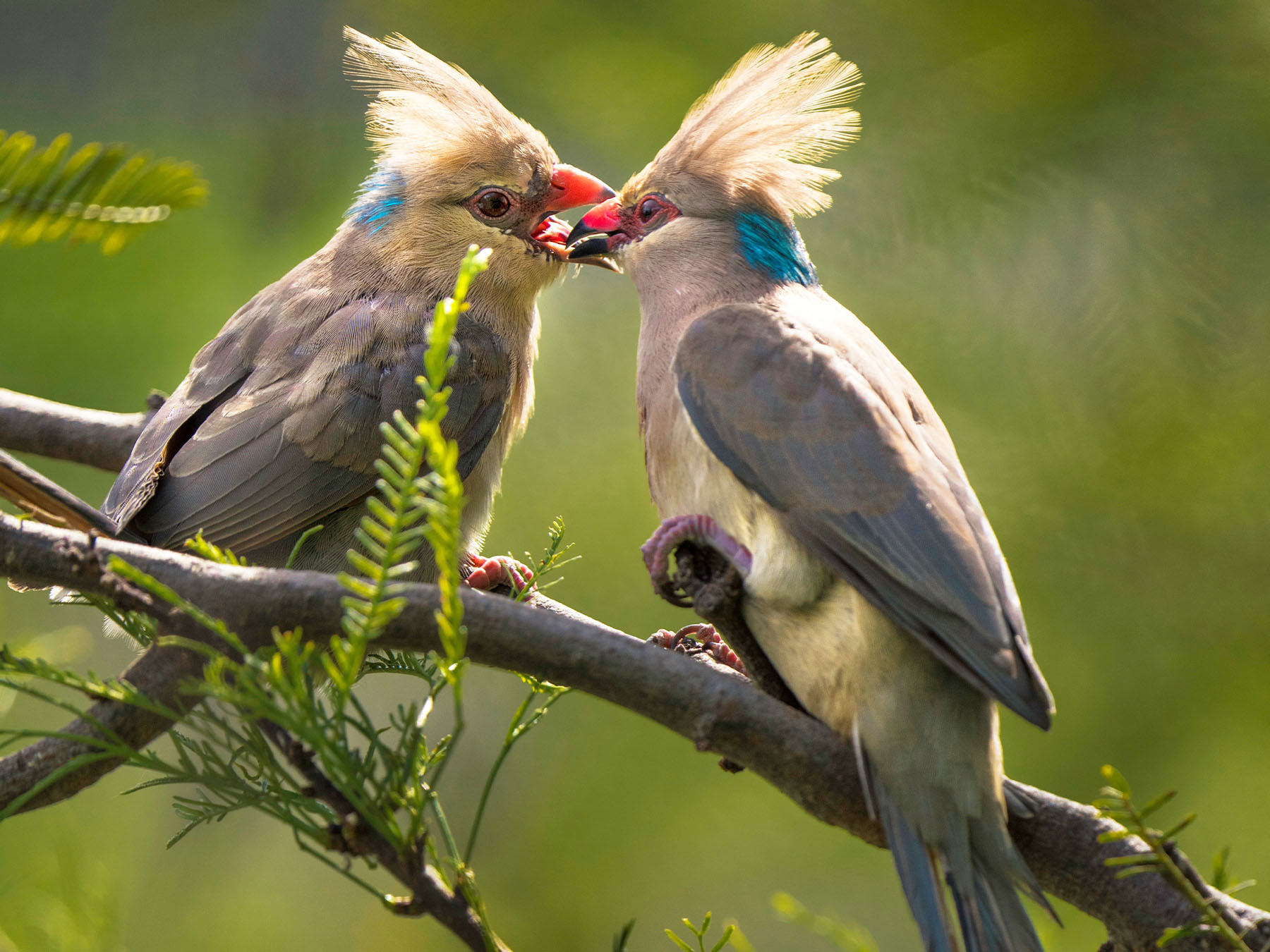
Quick facts
- Length
- 33–36 cm
- Wingspan
- 25–30 cm
- Weight
- 34–65 g
- Lifespan
- 7–10 years · oldest recorded 16 years
- Family
- Mousebirds
- Migration
- Resident
- Global status (IUCN)
- Least Concern
- World population
- Not quantified, but reported to be widespread and common
- Population trend
- Decreasing
- Also called
- Blue-naped Coly
- Scientific name
- Urocolius macrourus
Sources
3- 1BirdLife International. 2024. Urocolius macrourus. The IUCN Red List of Threatened Species 2024: e.T22683792A263670912. Source (opens in a new tab)
- 2del Hoyo et al. (2001)
- 3del Hoyo et al. (2001)

Checked by
Nathan Cope, founder and editor
Nathan founded Birdfact and leads its writers and contributors in the UK, the US and Canada. He has watched and studied birds for more than ten years, and checks every article and species guide before it’s published.