


Blue-footed Booby
Blue-foot, Blue-footed Gannet · Sula nebouxii
By the Birdfact teamChecked by Nathan Cope
On this page11 sections
How to recognise it
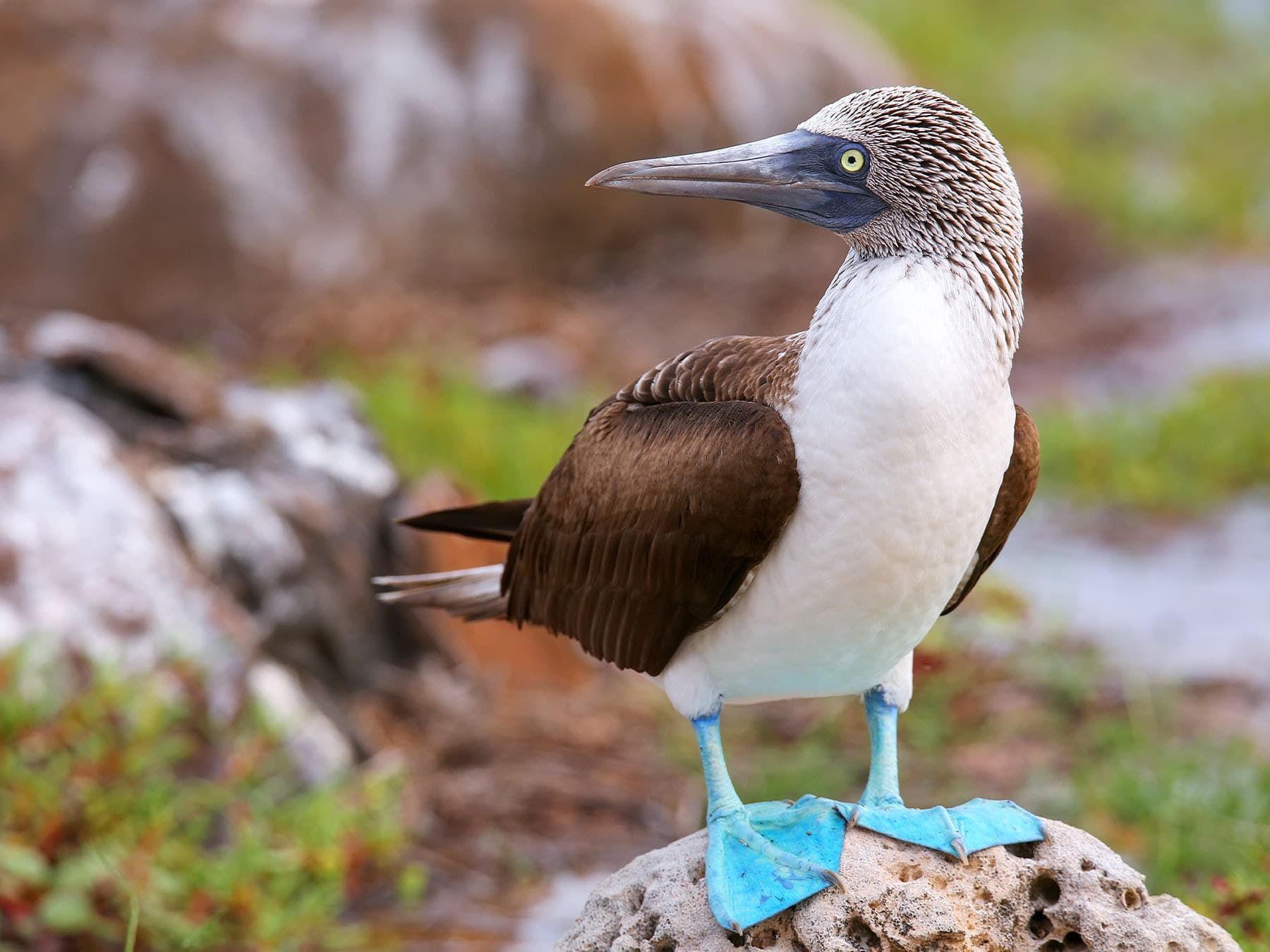
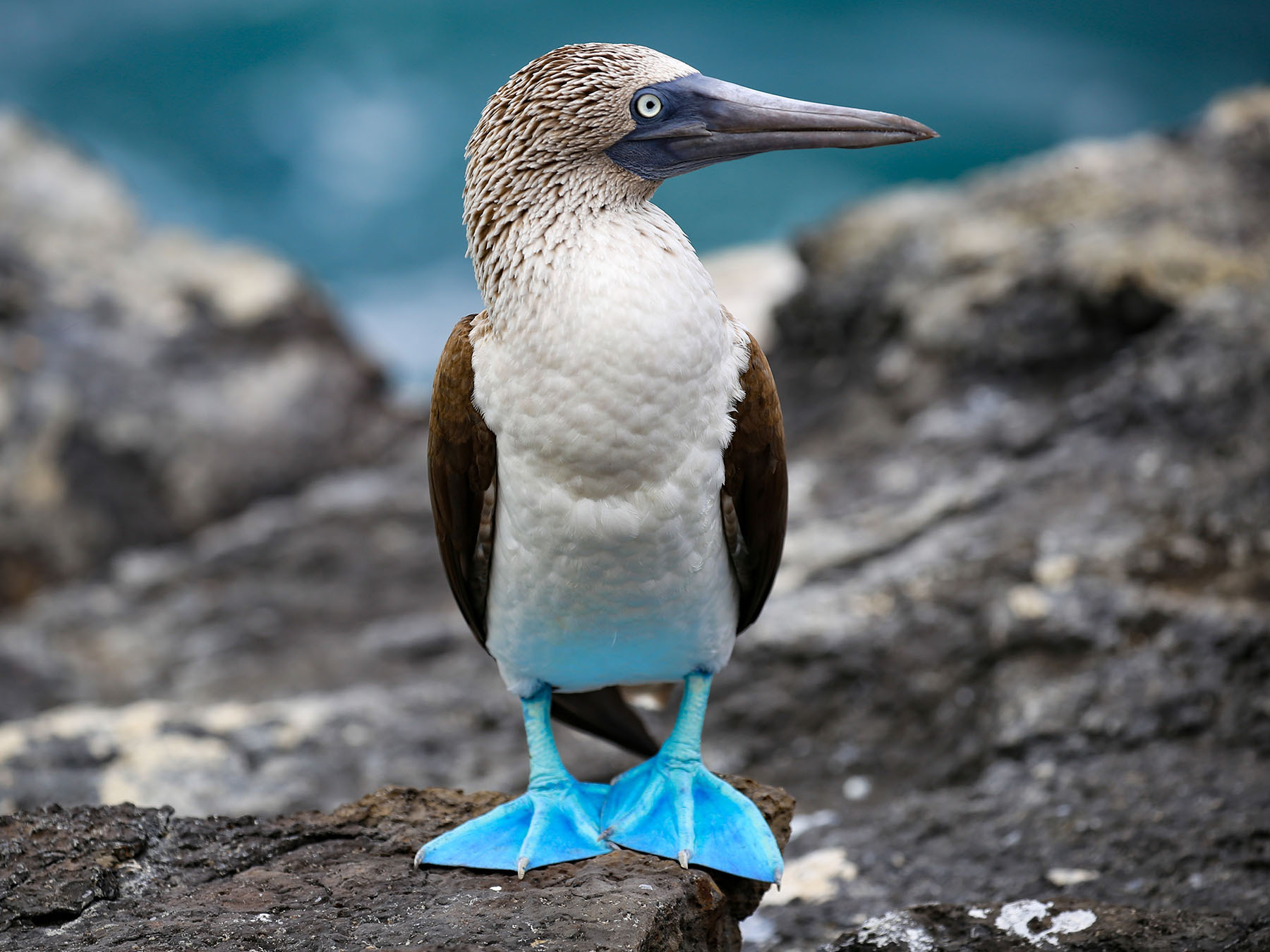
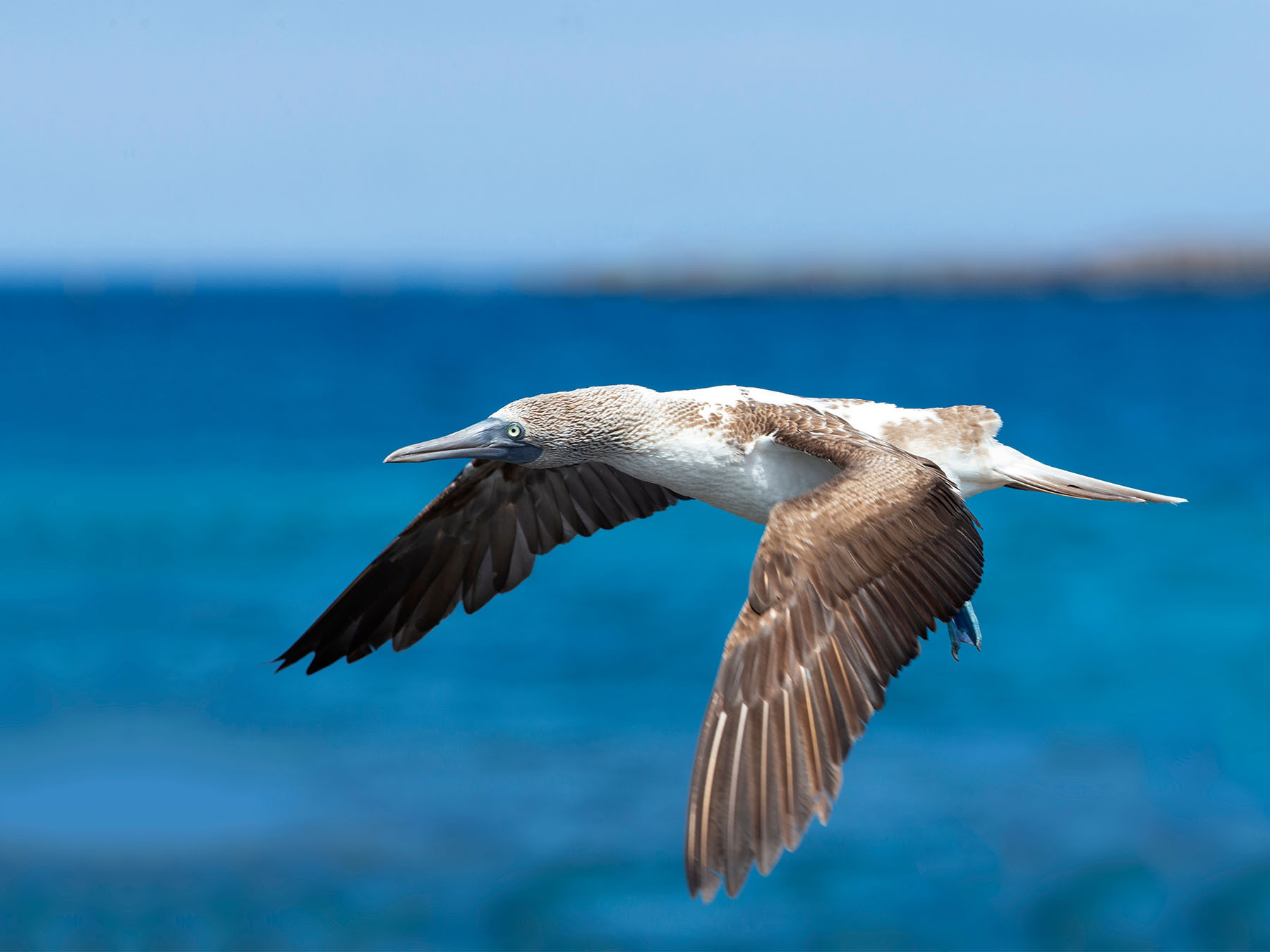
The Blue-footed Booby is a striking seabird with a distinctive appearance. Adults have a brown head, neck, and upper parts, contrasting sharply with their white underparts. Their most notable feature is their bright blue feet, which can vary in shade from turquoise to sky blue.
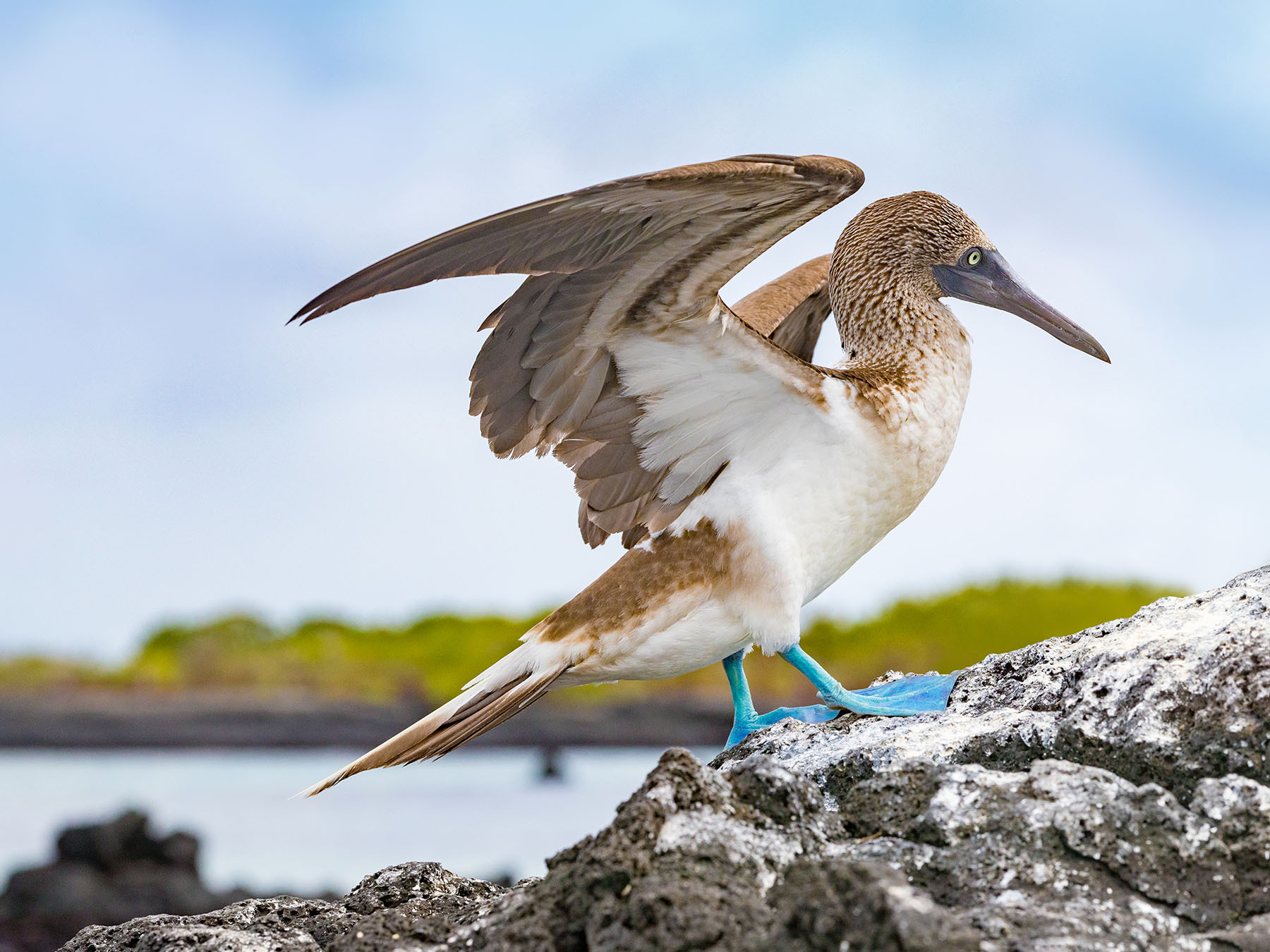
Males and females are similar in appearance, but females are slightly larger with bigger pupils. Juveniles have a more muted plumage, with brownish-grey feet that gradually turn blue as they mature. The birds' beaks are long, pointed, and bluish-grey in colour.
Its size
Adults- Length
- 76–84 cm
- Wingspan
- 152–160 cm
- Weight
- 1200–1800 g
Its song and calls
Blue-footed Boobies are generally quiet at sea but become more vocal during breeding. Their calls include a variety of whistles, grunts, and honking sounds.
Males produce a distinctive whistle during courtship, often described as a high-pitched 'whee-whee' or 'wh-aaaah'. Females respond with a deeper, hoarser call.
When and where to see it
The Blue-footed Booby is not recorded regularly in the UK, Ireland, the United States or Canada.
United States: recorded in 6 of the 6 years. Too few years to count as a regular visitor.
Worldwide: recorded regularly in 8 countries
Countries where it was recorded in at least 3 of the 6 years 2019–2024. Linked countries have their own bird list.
North America (5)
- Costa Rica
- Honduras
- Mexico
- Nicaragua
- Panama
South America (3)
- Colombia
- Ecuador
- Peru
Data: EOD – eBird Observation Dataset (Cornell Lab of Ornithology), accessed via GBIF.org, CC BY 4.0. Records from 2019–2024, aggregated and filtered by Birdfact. How these lists are made
Tips for seeing it
- Look for Blue-footed Boobies along rocky coastlines and islands in the eastern Pacific.
- Observe their distinctive plunge-diving behaviour from coastal viewpoints.
- Visit during the breeding season to witness their famous courtship dance.
- Bring binoculars to appreciate the details of their blue feet and facial features.
- Respect their nesting areas and maintain a safe distance to avoid disturbing the birds.
What it eats
Blue-footed Boobies primarily feed on small fish such as anchovies, sardines, and mackerel. They are opportunistic hunters, using their excellent eyesight to spot prey from the air before executing their precise plunge dives.
Occasionally, they also consume squid and other small marine creatures.
Nesting and breeding
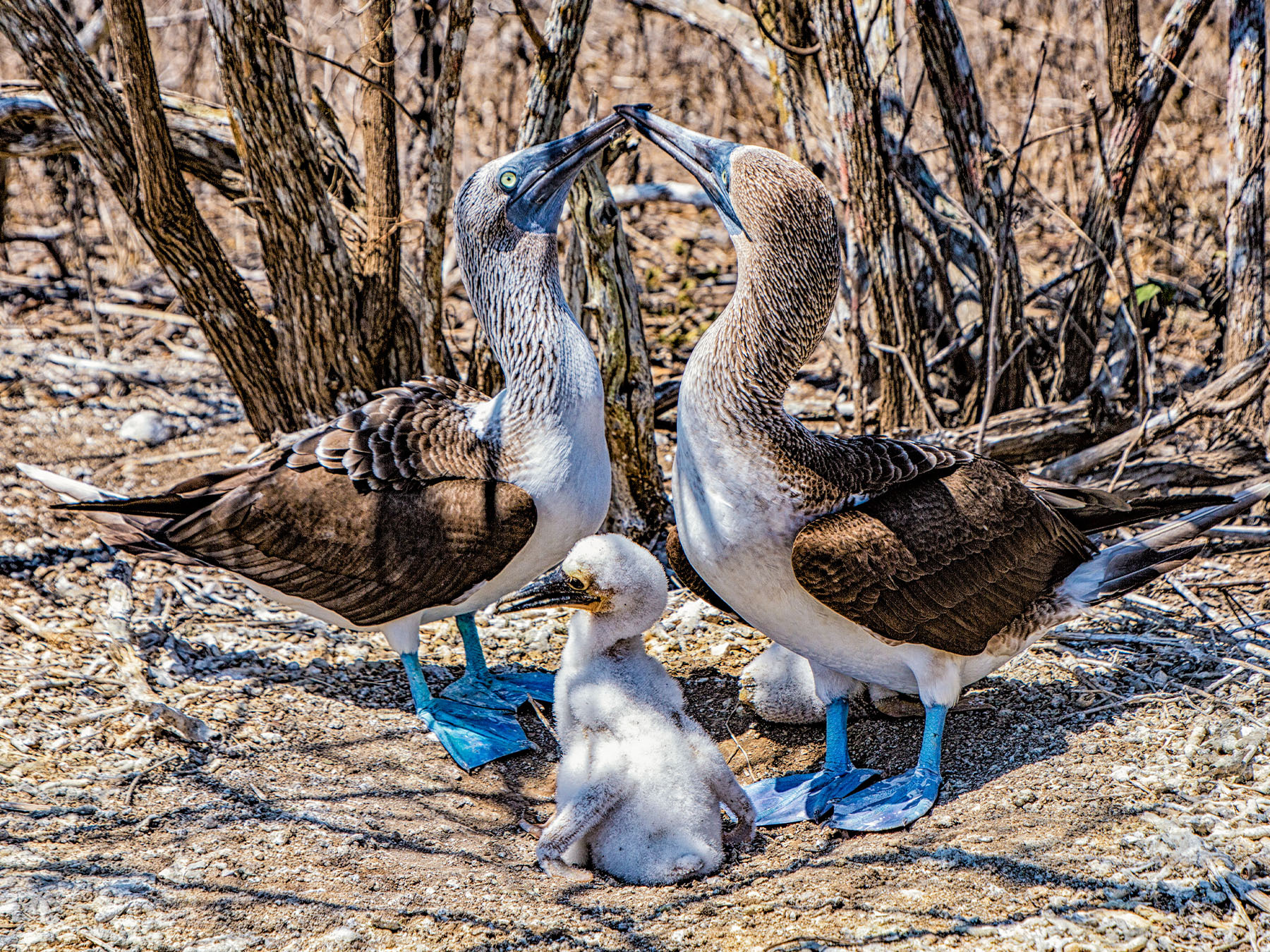
Blue-footed Boobies typically breed year-round, with peak activity varying by location. Courtship involves elaborate ritualised displays, including the male's famous foot-lifting dance and sky-pointing with their beaks.
Nests are simple scrapes on the ground, often on flat or gently sloping areas near cliff edges. Females usually lay 2-3 chalky blue eggs. Both parents share incubation duties, carefully shielding the eggs with their webbed feet.
Incubation lasts about 41-45 days. Chicks are born naked but quickly develop white down. They fledge after about 102 days but may continue to be fed by their parents for several months after leaving the nest.
Behaviour
Blue-footed Boobies are renowned for their spectacular plunge-diving behaviour. They soar high above the water, then fold their wings back and dive straight down at speeds up to 60 mph to catch fish.
On land, they are known for their comical mating dance, where males lift their blue feet high and strut to impress females.
Conservation
While currently listed as Least Concern by the IUCN, Blue-footed Boobies face threats from overfishing, which reduces their food supply, and climate change, which affects ocean temperatures and fish distribution.
Conservation efforts focus on protecting their breeding colonies and maintaining healthy marine ecosystems.
More photos
5 photos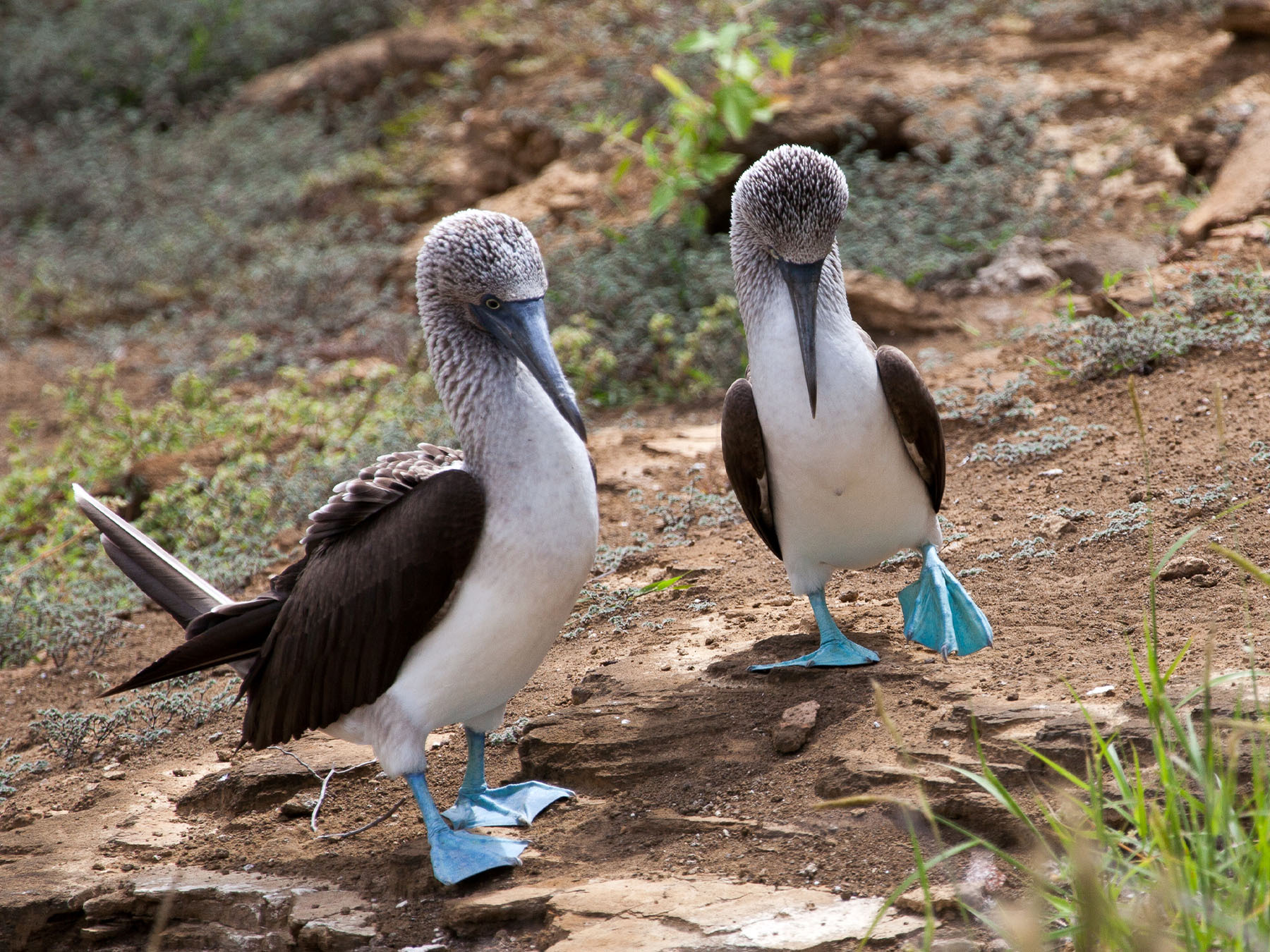
Quick facts
- Length
- 76–84 cm
- Wingspan
- 152–160 cm
- Weight
- 1200–1800 g
- Lifespan
- 17 years · oldest recorded 18 years
- Family
- Gannets & Boobies
- Migration
- Resident
- Global status (IUCN)
- Least Concern
- World population
- 90,000 mature individuals
- Population trend
- Population decreasing due to overfishing and climate change
- Also called
- Blue-foot, Blue-footed Gannet
- Scientific name
- Sula nebouxii
Sources
4- 1BirdLife International. 2021. Sula nebouxii. The IUCN Red List of Threatened Species 2021: e.T22696683A168988087. Source (opens in a new tab)
- 2BirdLife International. 2021. Sula nebouxii. The IUCN Red List of Threatened Species 2021: e.T22696683A168988087. Source (opens in a new tab)
- 3Partners in Flight Source (opens in a new tab)
- 4John Terres, The Audubon Society Encyclopedia of North American Birds (1980)

Checked by
Nathan Cope, founder and editor
Nathan founded Birdfact and leads its writers and contributors in the UK, the US and Canada. He has watched and studied birds for more than ten years, and checks every article and species guide before it’s published.