


Black Eagle
Asian Black Eagle · Ictinaetus malaiensis
By the Birdfact teamChecked by Nathan Cope
On this page11 sections
How to recognise it
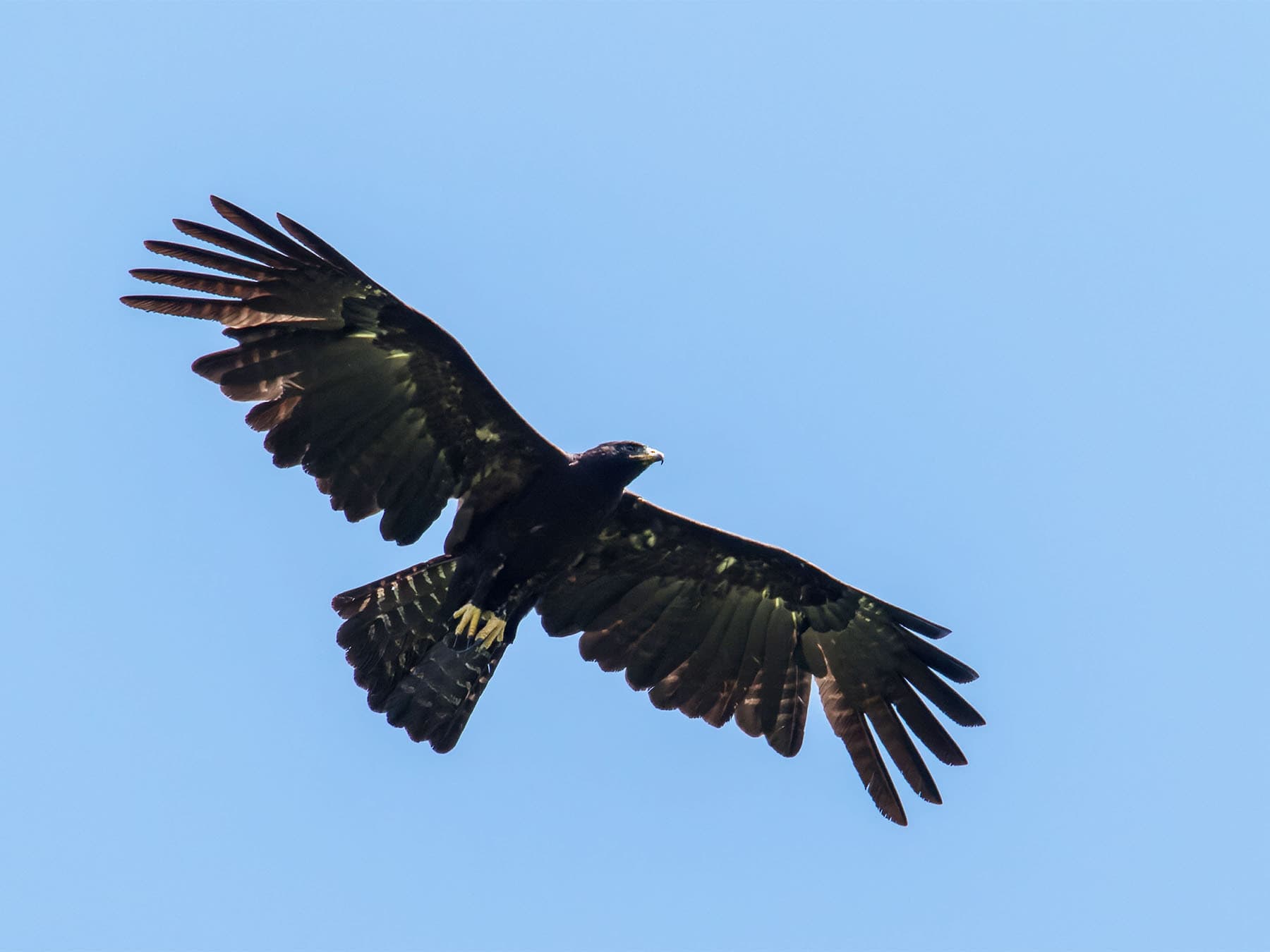
The Black Eagle is a striking raptor with predominantly dark plumage, ranging from deep brown to black. Its large size, broad paddle-shaped wings, and distinctive tail barring are key identifying features. The tail is relatively long, contrary to what was stated.
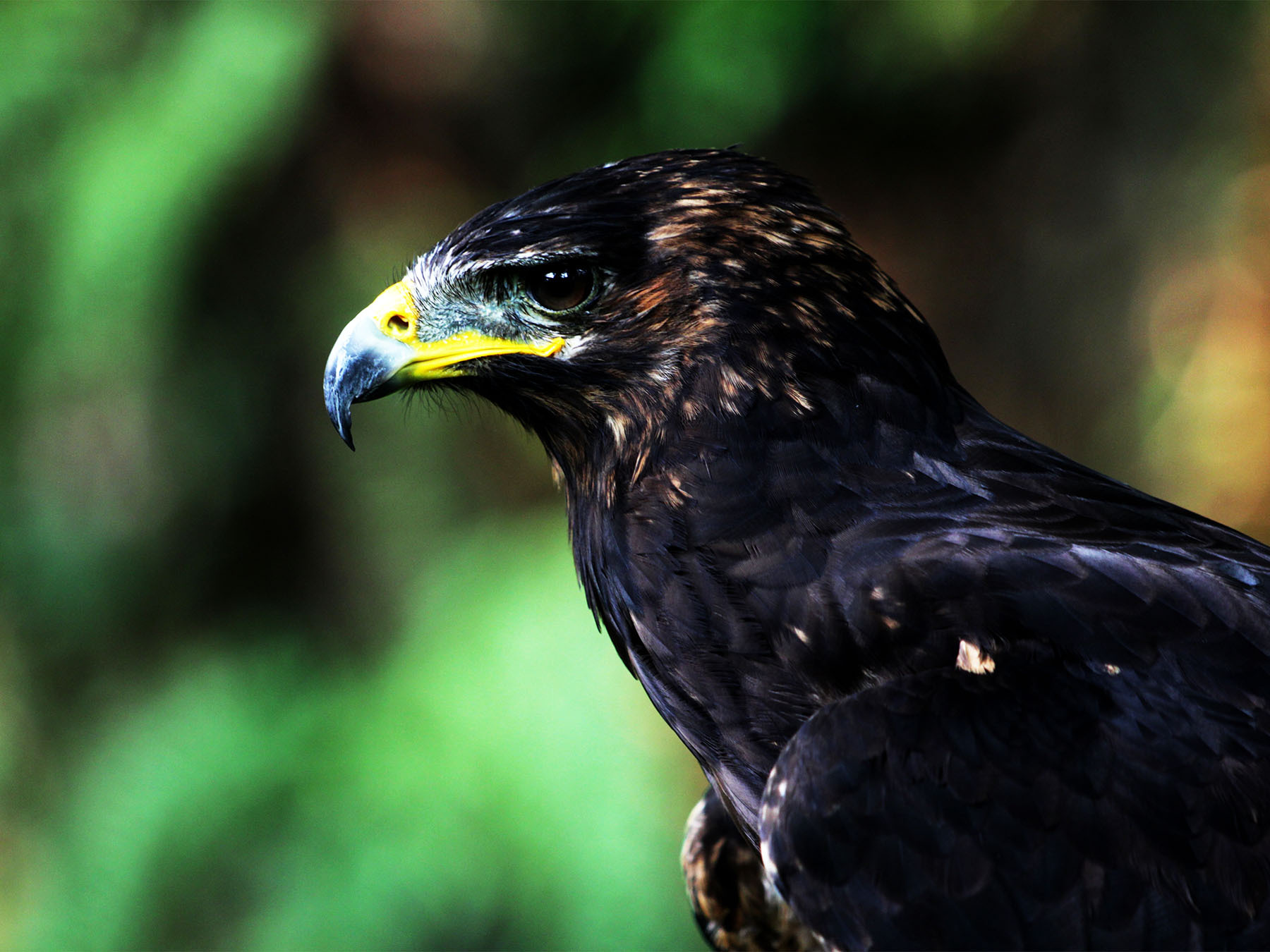
Adults have dark brown eyes and yellow cere, contrasting with their dark plumage. Juveniles are similar but show more brown tones and pale streaking on the head, neck, and underparts. There is little variation between subspecies, though they differ slightly in size.
Its size
Adults- Length
- 65–80 cm
- Wingspan
- 148–182 cm
- Weight
- 1000–1600 g
Its song and calls
Black Eagles are generally quiet but become more vocal during the breeding season. Their calls include a high-pitched, drawn-out whistle, often described as 'kleeee-ow'.
They also produce a series of quick, sharp whistles when alarmed or during territorial displays.
When and where to see it
The Black Eagle is not recorded regularly in the UK, Ireland, the United States or Canada.
Worldwide: recorded regularly in 14 countries
Countries where it was recorded in at least 3 of the 6 years 2019–2024. Linked countries have their own bird list.
Data: EOD – eBird Observation Dataset (Cornell Lab of Ornithology), accessed via GBIF.org, CC BY 4.0. Records from 2019–2024, aggregated and filtered by Birdfact. How these lists are made
Tips for seeing it
- Look for Black Eagles soaring above forested hills and mountains
- Observe their distinctive silhouette with broad wings and short tail
- Listen for their high-pitched, whistling calls during the breeding season
- Watch for their low, gliding flight pattern over the forest canopy
What it eats
Black Eagles are skilled hunters, primarily targeting small to medium-sized arboreal mammals. Their diet includes squirrels, flying squirrels, and occasionally small primates. They also prey on birds, reptiles, and amphibians.
Their specialised hunting technique allows them to snatch prey directly from trees.
Nesting and breeding
Black Eagles form monogamous pairs and engage in aerial displays during courtship. The breeding season varies across their range but often coincides with the dry season preceding the monsoons.
Nests are large platforms of sticks, typically placed high in tall trees on forested slopes. The female usually lays a single egg, which is white with reddish-brown markings.
Both parents participate in incubation, which lasts about 45 days. The nestling period is prolonged, with the young eagle remaining in the nest for approximately 70 to 80 days before fledging.
Behaviour
Black Eagles are known for their graceful soaring flight, often gliding along hillsides and forest edges. They are typically solitary or seen in pairs.
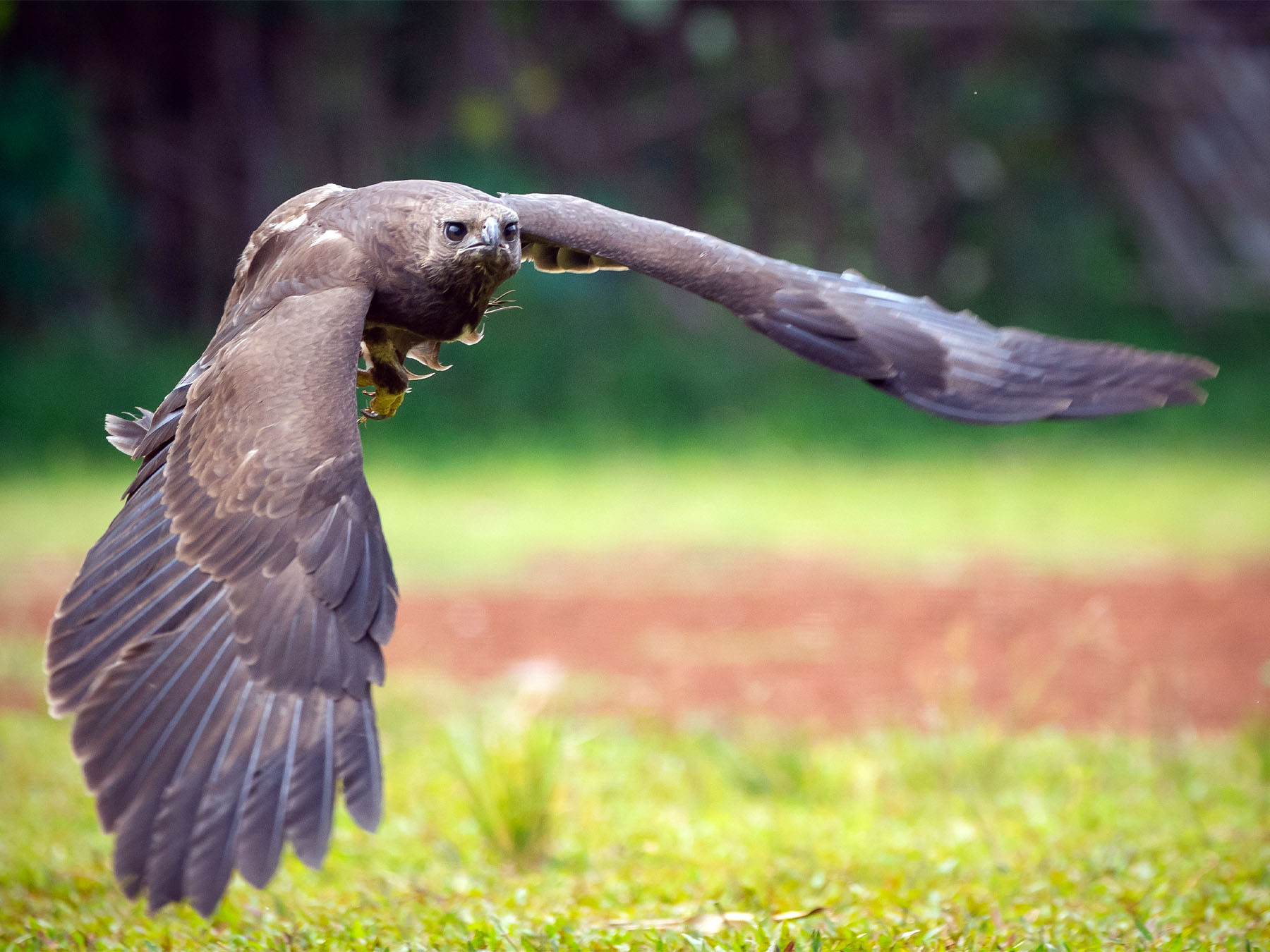
These birds exhibit a unique hunting technique: They fly low over the forest canopy and snatch prey from treetops or the ground with their powerful talons.
Conservation
While the Black Eagle is currently listed as Least Concern by the IUCN, it faces threats from habitat loss due to deforestation and agricultural expansion.
Conservation efforts focus on protecting large tracts of forest within its range, particularly in mountainous areas where the species is most prevalent.
More photos
3 photos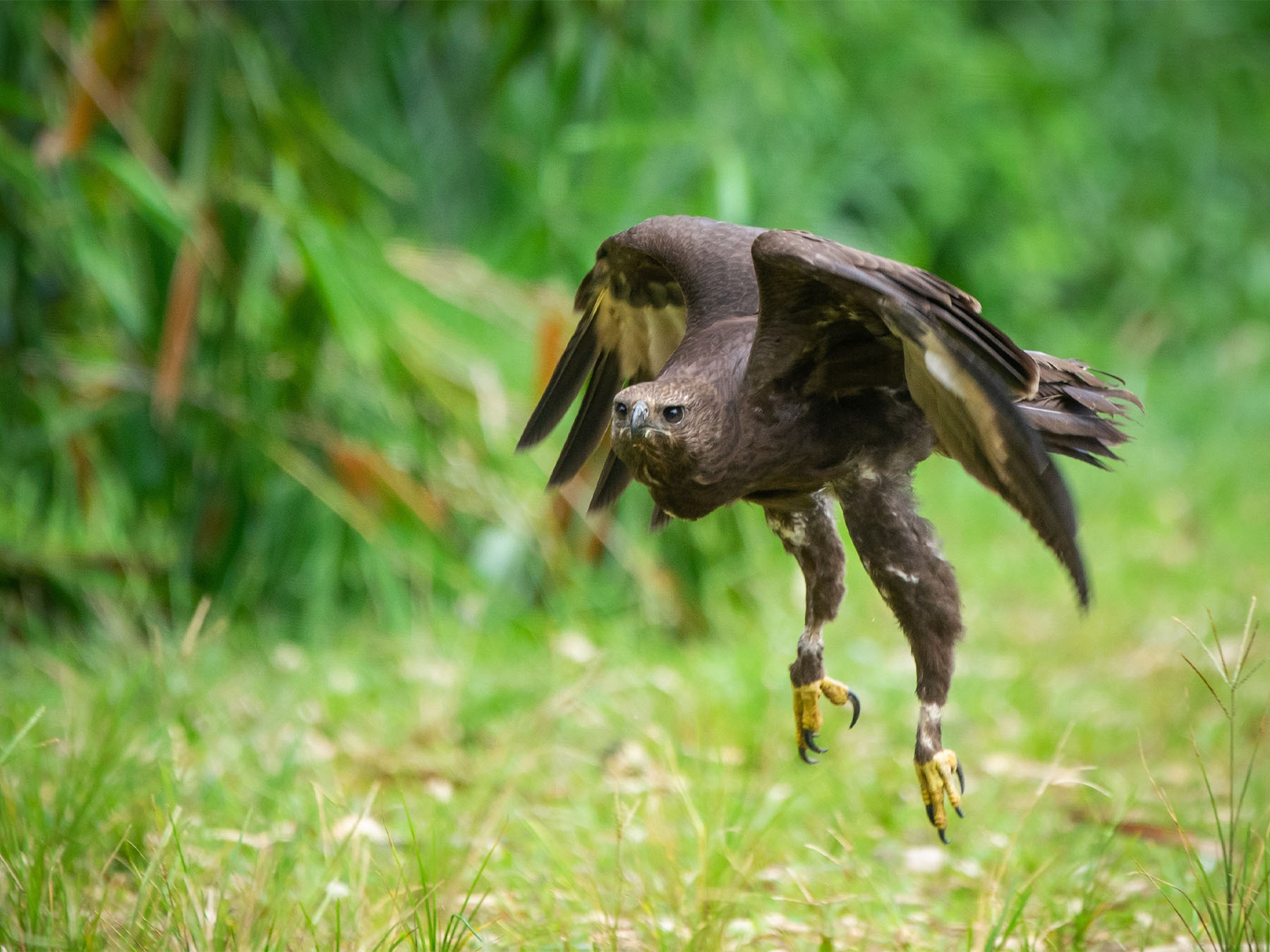
Quick facts
- Length
- 65–80 cm
- Wingspan
- 148–182 cm
- Weight
- 1000–1600 g
- Lifespan
- 20–30 years
- Family
- Hawks & Eagles
- Migration
- Resident
- Global status (IUCN)
- Least Concern
- World population
- 10,000 mature individuals
- Population trend
- Decreasing
- Also called
- Asian Black Eagle
- Scientific name
- Ictinaetus malaiensis
Sources
3- 1BirdLife International. 2024. Ictinaetus malaiensis. The IUCN Red List of Threatened Species 2024: e.T22696019A264016068. Source (opens in a new tab)
- 2BirdLife International. 2024. Ictinaetus malaiensis. The IUCN Red List of Threatened Species 2024: e.T22696019A264016068. Source (opens in a new tab)
- 3Ferguson-Lees et al. (2001)

Checked by
Nathan Cope, founder and editor
Nathan founded Birdfact and leads its writers and contributors in the UK, the US and Canada. He has watched and studied birds for more than ten years, and checks every article and species guide before it’s published.