


Black-bellied Tern
Sterna acuticauda
By the Birdfact teamChecked by Nathan Cope
On this page11 sections
How to recognise it
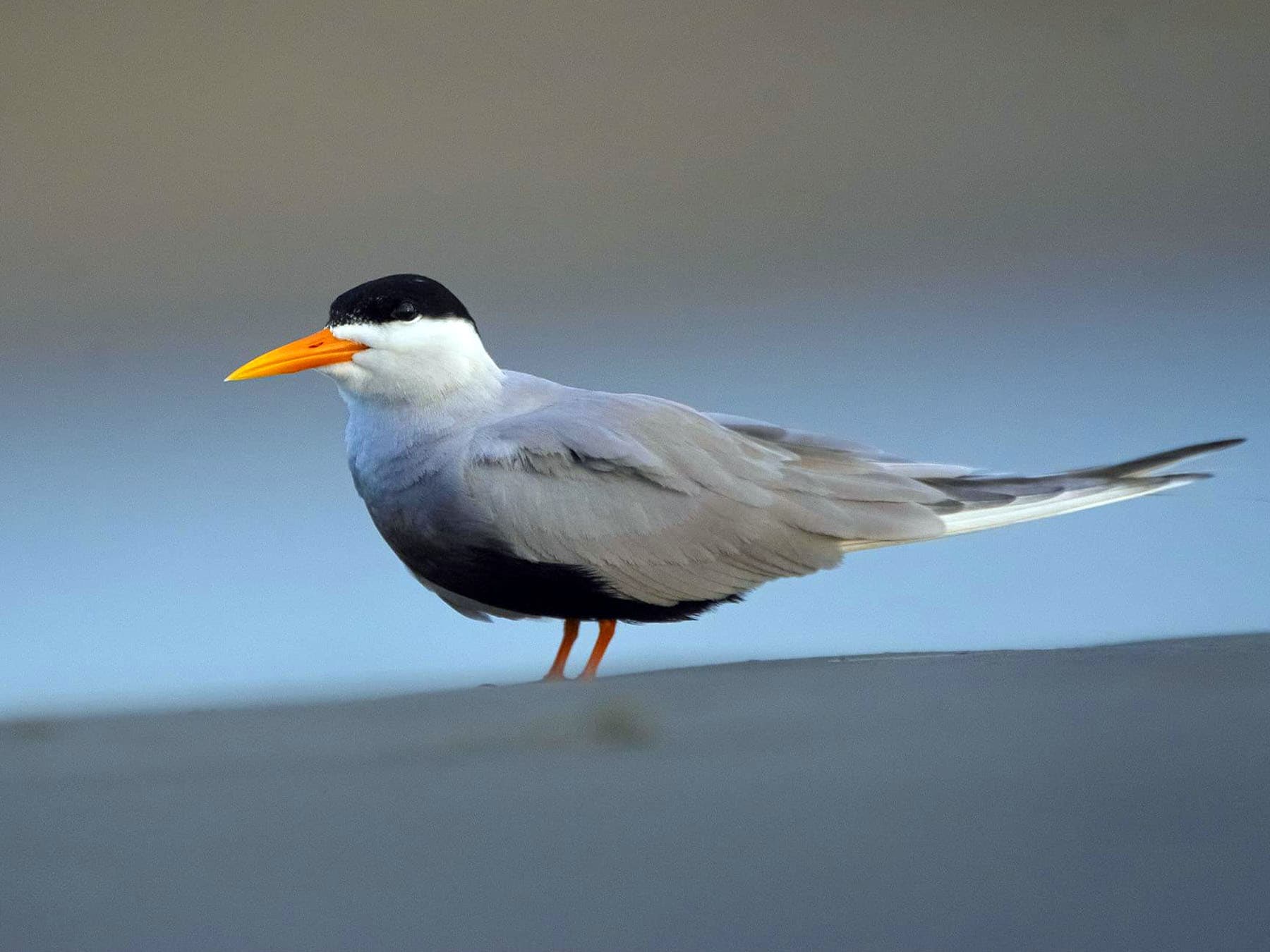
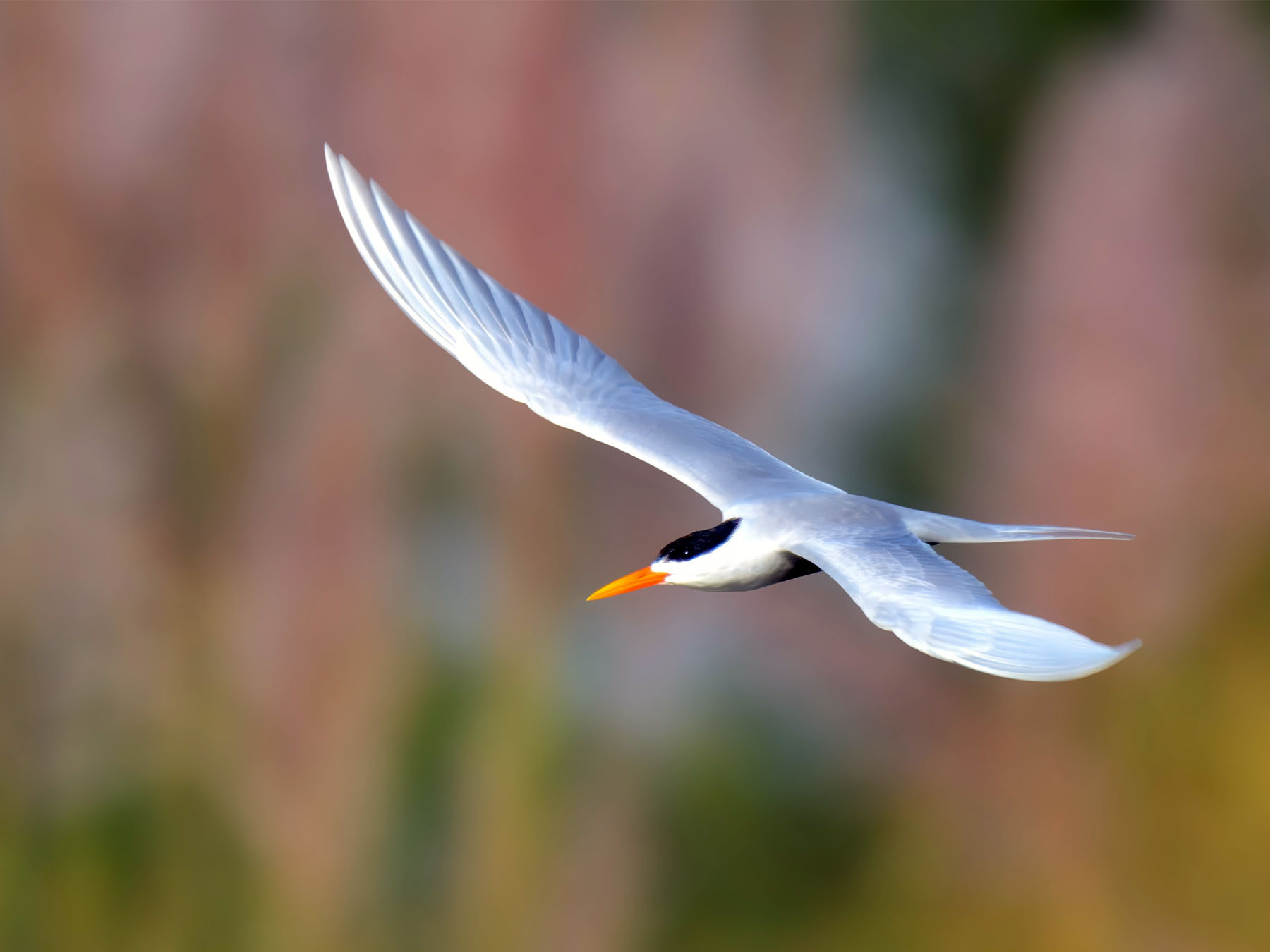
The Black-bellied Tern is a medium-sized tern with distinctive colouration. In breeding plumage, it has a black cap and belly, contrasting with its pale grey upperparts, white throat, and darker grey wings. The bill is yellow-orange, and the legs are reddish-orange. The underwings show a striking white pattern with a darker band across the flight feathers.
Non-breeding adults have a white forehead (streaked with black), belly, and a black band behind the eye. The bill develops a black tip during this period. Juveniles can be distinguished by their reddish bill base and blackish feet, along with darker markings than similar species.
Its size
Adults- Length
- 32–35 cm
- Wingspan
- 64–68 cm
- Weight
- 90–150 g
Its song and calls
The Black-bellied Tern's call is a harsh, grating 'kree-ah' or 'kik-kik'. During the breeding season, they become more vocal, producing a series of rapid, high-pitched notes that sound like 'ki-ki-ki-ki'. When alarmed, they emit a sharp, piercing 'keeya' call.
When and where to see it
The Black-bellied Tern is not recorded regularly in the UK, Ireland, the United States or Canada.
Worldwide: recorded regularly in 2 countries
Countries where it was recorded in at least 3 of the 6 years 2019–2024. Linked countries have their own bird list.
Data: EOD – eBird Observation Dataset (Cornell Lab of Ornithology), accessed via GBIF.org, CC BY 4.0. Records from 2019–2024, aggregated and filtered by Birdfact. How these lists are made
Tips for seeing it
- Look for Black-bellied Terns near large rivers, lakes, and coastal areas
- Observe their distinctive low flight and hovering behaviour over water
- Listen for their harsh, grating calls during breeding season
- Watch for their unique plunge-diving feeding technique
What it eats
Black-bellied Terns primarily feed on small fish, which they catch by plunge-diving into water. They also consume aquatic insects, crustaceans, and occasionally small amphibians.
These terns often follow fishing boats to catch discarded fish or those stirred up by nets.
Nesting and breeding
Breeding occurs primarily during the dry season when river levels are low. Black-bellied Terns form monogamous pairs and nest in small colonies, often with other tern species. They select sandy or rocky islands in rivers or lakes for nesting.
Nests are simple scrapes in the ground, sometimes lined with small pebbles. The female typically lays 2-3 eggs, which are pale buff with dark brown spots. Both parents share incubation duties.
Incubation lasts about 21-22 days, and chicks fledge after 25-30 days. Parents continue to care for the young for several weeks after fledging.
Behaviour
Black-bellied Terns are often seen flying low over water, scanning for prey. They hover briefly before plunge-diving to catch fish.
These terns are generally social, forming small flocks during non-breeding seasons and often associating with other tern species at roosting sites.
Conservation
The Black-bellied Tern is classified as Endangered due to rapid population decline. Major threats include habitat loss, water pollution, and disturbance of nesting sites.
Conservation efforts focus on protecting riverine habitats and raising awareness among local communities about the importance of these birds.
More photos
2 photos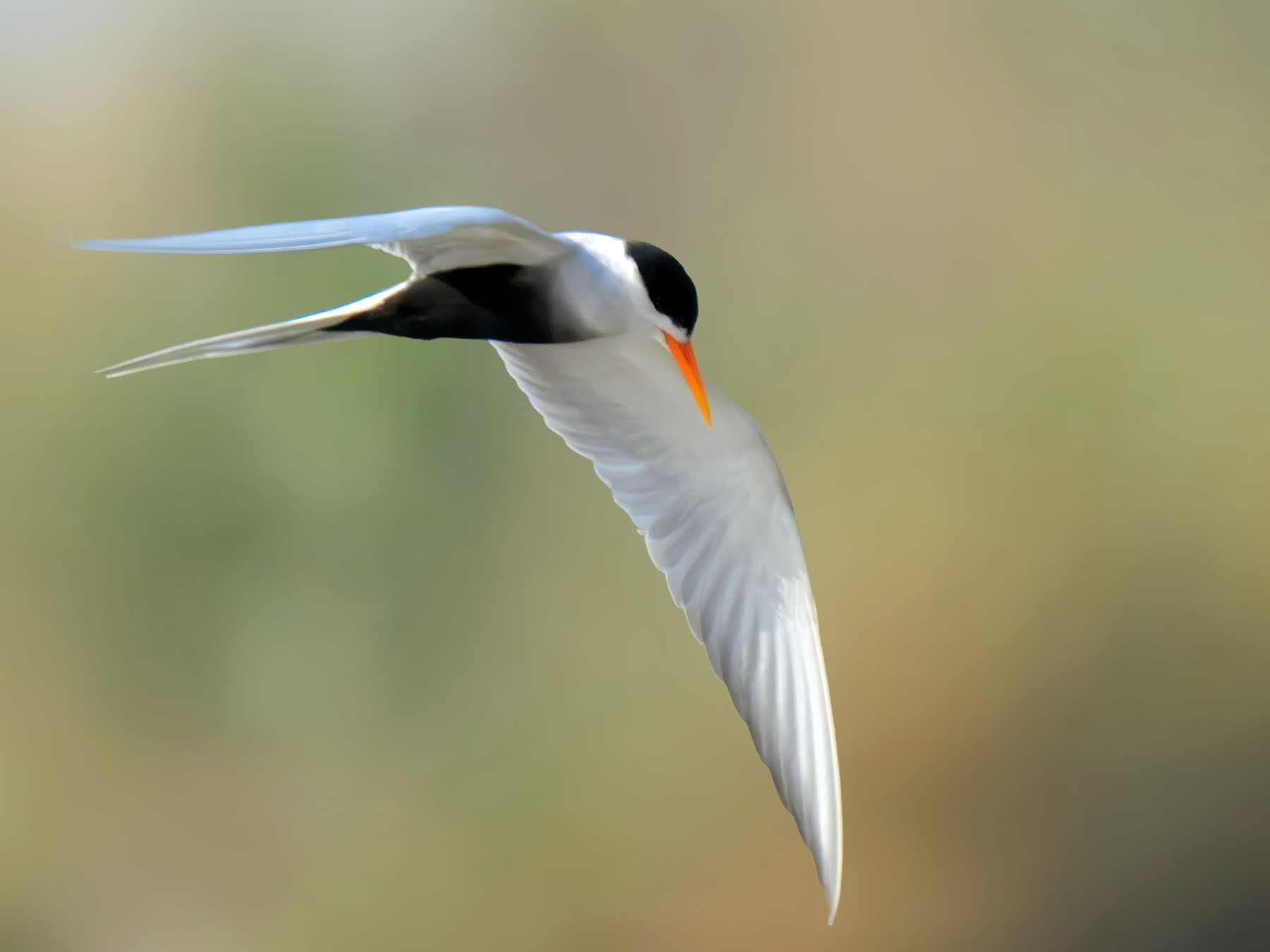
Quick facts
- Length
- 32–35 cm
- Wingspan
- 64–68 cm
- Weight
- 90–150 g
- Family
- Gulls & Terns
- Migration
- Partial migrant
- Global status (IUCN)
- Endangered
- World population
- 800 - 1,600 mature individuals
- Population trend
- Decreasing
- Scientific name
- Sterna acuticauda
Sources
3- 1BirdLife International. 2022. Sterna acuticauda. The IUCN Red List of Threatened Species 2022: e.T22694711A207933556. Source (opens in a new tab)
- 2BirdLife International. 2022. Sterna acuticauda. The IUCN Red List of Threatened Species 2022: e.T22694711A207933556. Source (opens in a new tab)
- 3BirdLife International. 2022. Sterna acuticauda. The IUCN Red List of Threatened Species 2022: e.T22694711A207933556. Source (opens in a new tab)

Checked by
Nathan Cope, founder and editor
Nathan founded Birdfact and leads its writers and contributors in the UK, the US and Canada. He has watched and studied birds for more than ten years, and checks every article and species guide before it’s published.