


Bee Hummingbird
Zunzuncito, Helena Hummingbird · Mellisuga helenae
By the Birdfact teamChecked by Nathan Cope
On this page11 sections
How to recognise it
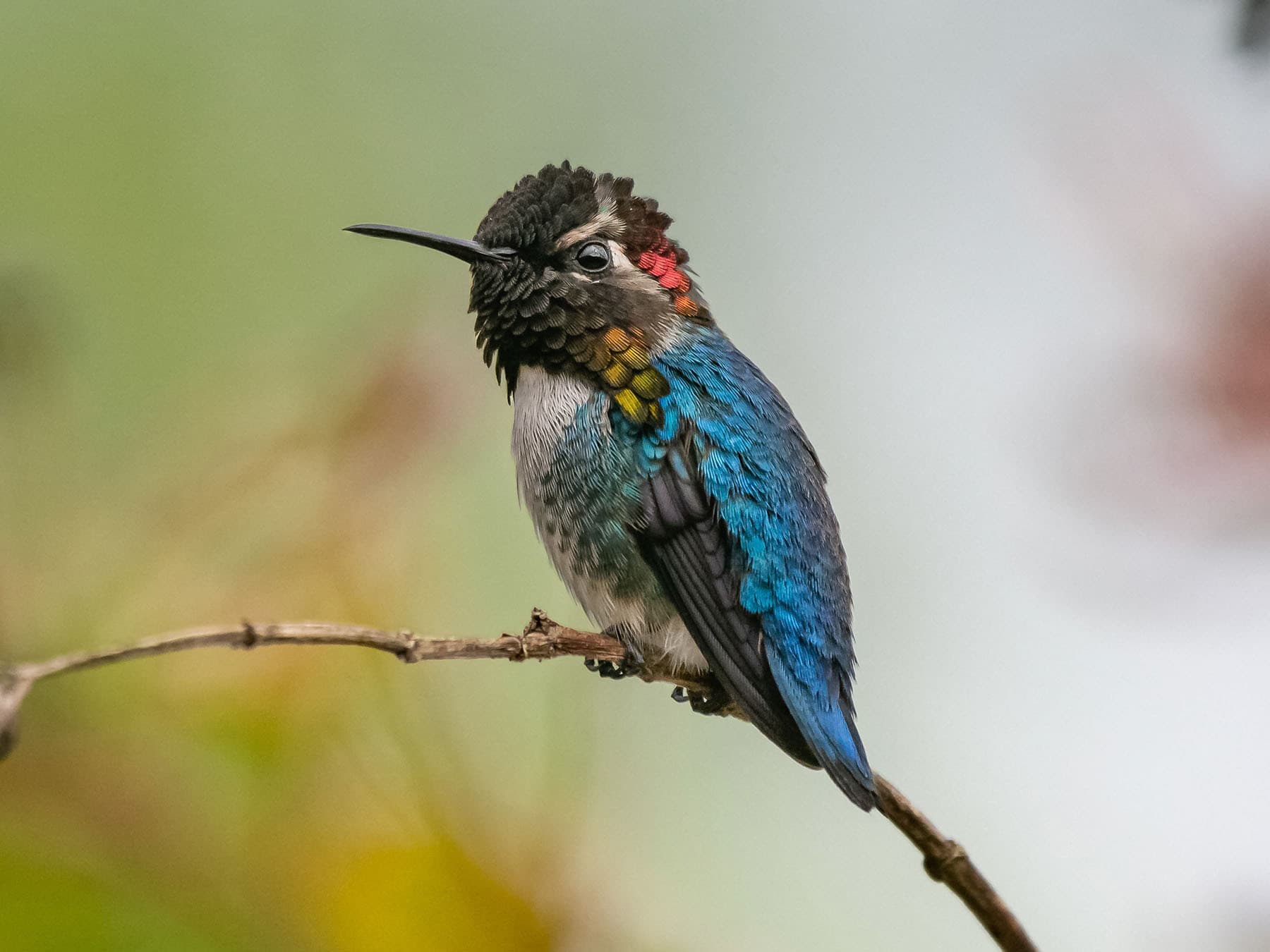
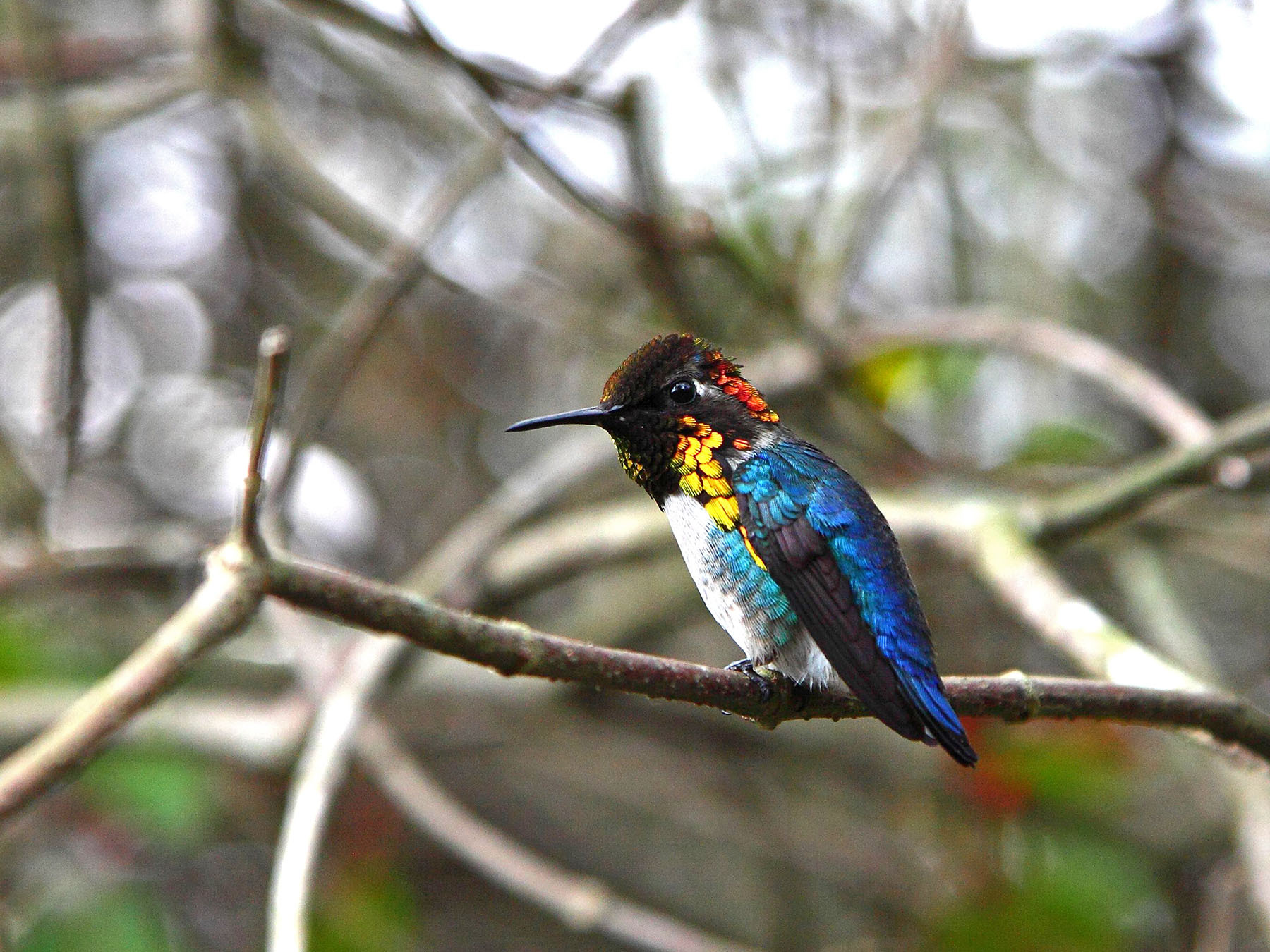
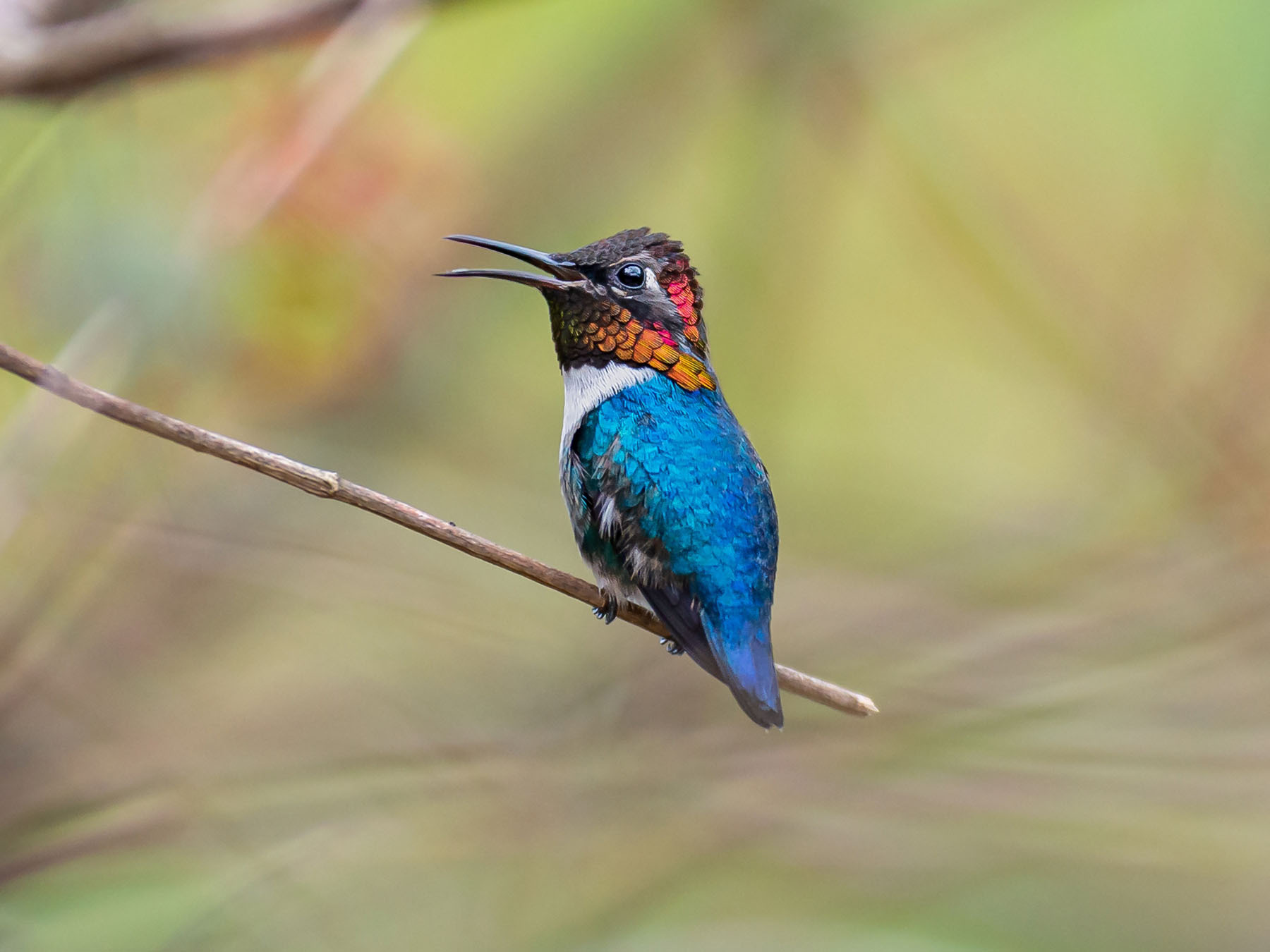
The Bee Hummingbird is the world's smallest bird, measuring a mere 5-6.1 cm in length. Males in breeding plumage display brilliant iridescent plumage, with a fiery red-pink gorget, bluish upper parts, and a grey-white underside. Their tiny size and jewel-like colors make them truly distinctive.
Females are slightly larger but less colorful, and similar to non-breeding males, with a green back, pale grey underparts, and white-tipped tail feathers. Both sexes have a short, straight black bill and pink feet, perfectly adapted for their diminutive size.
While similar to the more common Cuban Emerald hummingbird, females can be distinguished by their smaller size, shorter tail, and whiter underparts.
Its size
Adults- Length
- 5–6.1 cm
- Wingspan
- 3.2–4.3 cm
- Weight
- 1.6–2.6 g
Its song and calls
Bee Hummingbirds produce high-pitched, squeaky vocalizations that sound remarkably like insect buzzes. Their calls include a soft, repeated 'tsip-tsip-tsip' and a more intense 'tik-tik-tik' when agitated.
During courtship, males emit a distinctive buzzing sound, like a bumblebee, with their wings, giving them their name.
When and where to see it
The Bee Hummingbird is not recorded regularly in the UK, Ireland, the United States or Canada.
Worldwide: recorded regularly in 1 country
Countries where it was recorded in at least 3 of the 6 years 2019–2024. Linked countries have their own bird list.
North America (1)
- Cuba
Data: EOD – eBird Observation Dataset (Cornell Lab of Ornithology), accessed via GBIF.org, CC BY 4.0. Records from 2019–2024, aggregated and filtered by Birdfact. How these lists are made
Tips for seeing it
- Look for tiny, fast-moving birds near flowering plants
- Listen for their high-pitched, mouse-like squeaks
- Observe nectar feeders in gardens within their range
- Use binoculars to spot their distinctive iridescent plumage
- Visit Cuban nature reserves for the best chance of sightings
What it eats
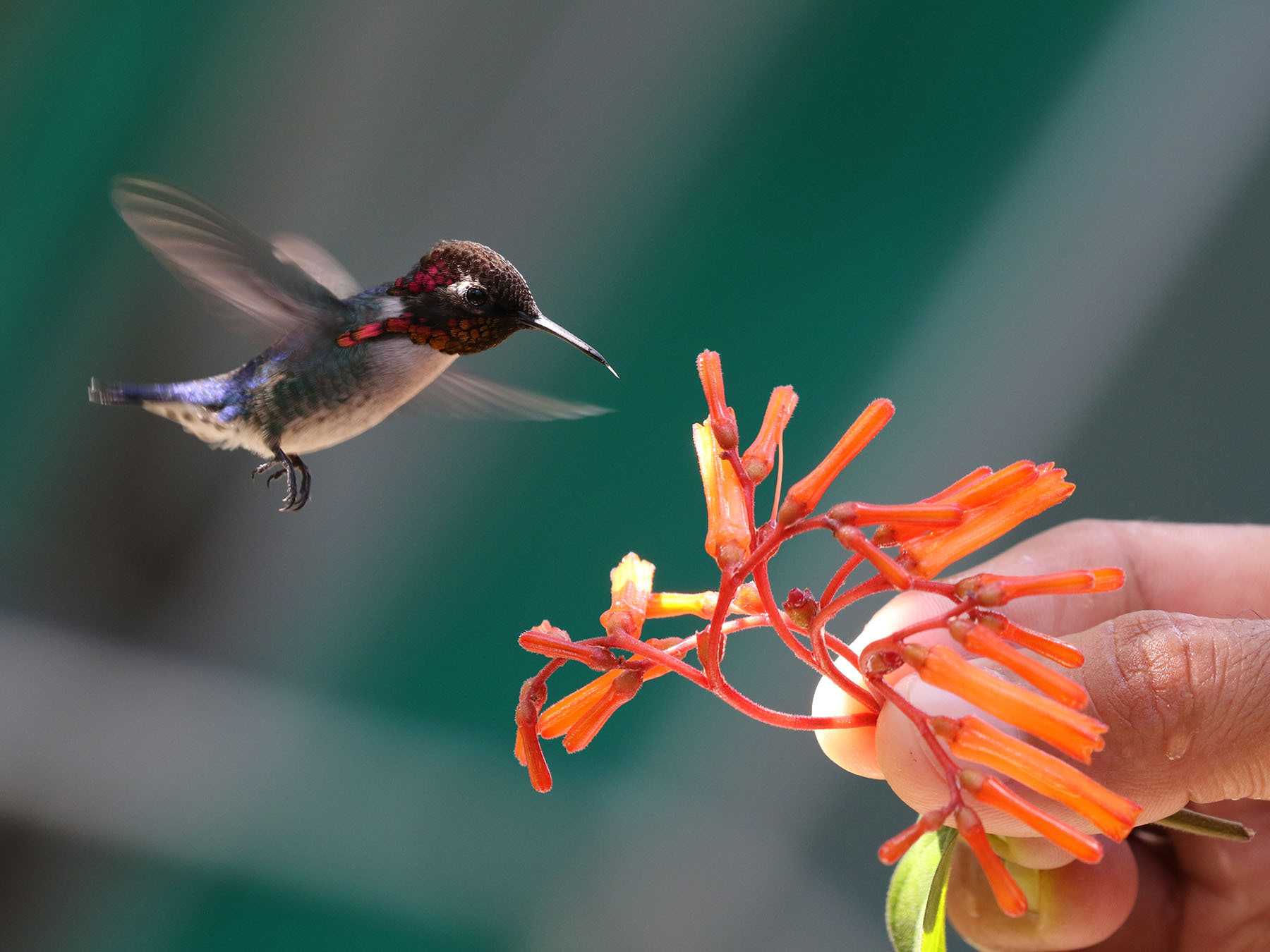
Bee Hummingbirds primarily feed on nectar from a variety of small flowers, particularly those of lianas, vines, and epiphytes. They supplement their diet with tiny insects and spiders, which provide essential proteins.
They feed on nectar from a variety of native Cuban plants, including hibiscus, aloe, and mangrove flowers. Interestingly, chicks will even catch tiny insects that come within reach of their nest.
Their long, extendable tongues allow them to reach nectar deep within flower corollas.
Nesting and breeding
Breeding occurs mainly from March to June. Males perform elaborate courtship displays, flying in U-shaped patterns to attract females. Once paired, the female takes sole responsibility for nesting and chick-rearing.
Nests are tiny cups about 3 cm wide, constructed from plant fibers, cobwebs, and lichen on thin twigs or leaves. Females typically lay two white eggs, each about the size of a coffee bean.
Incubation lasts 21-22 days, and chicks fledge after around 18 days. The wide ranges in incubation and fledging periods reflect the limited data available and potential environmental influences.
Behaviour
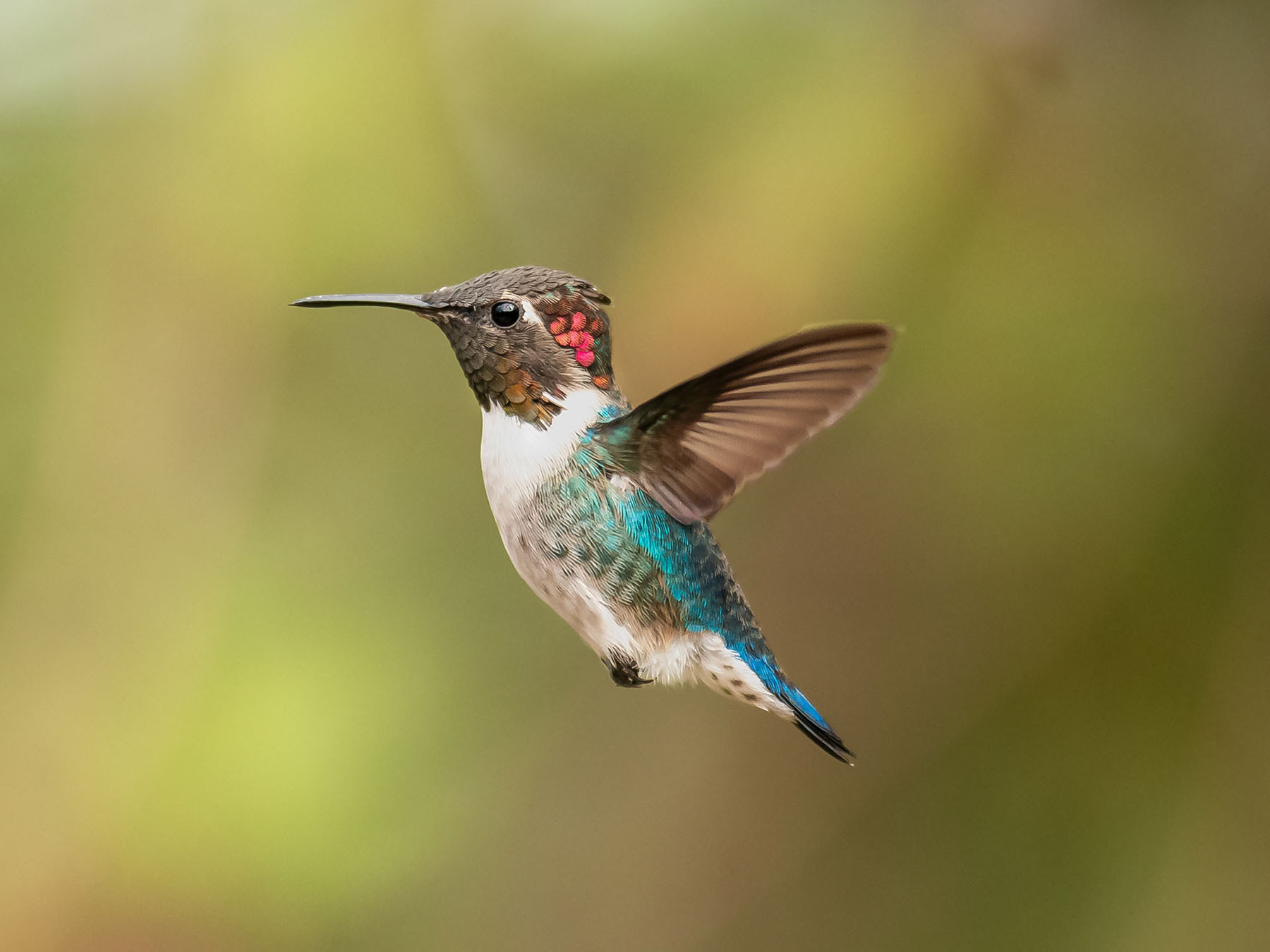
Bee Hummingbirds exhibit remarkable agility, capable of beating their wings up to 80 times per second during normal flight and up to 200 times per second during courtship displays.
They are solitary birds, fiercely defending their feeding territories from other hummingbirds. During courtship, males perform impressive aerial displays, flying up to 25 meters before diving at high speed.
Conservation
The Bee Hummingbird is classified as Near Threatened due to habitat loss and fragmentation. Conservation efforts focus on protecting and restoring their native forest habitats in Cuba.
Climate change poses an additional threat, potentially affecting the timing and availability of nectar sources crucial for their survival.
More photos
5 photos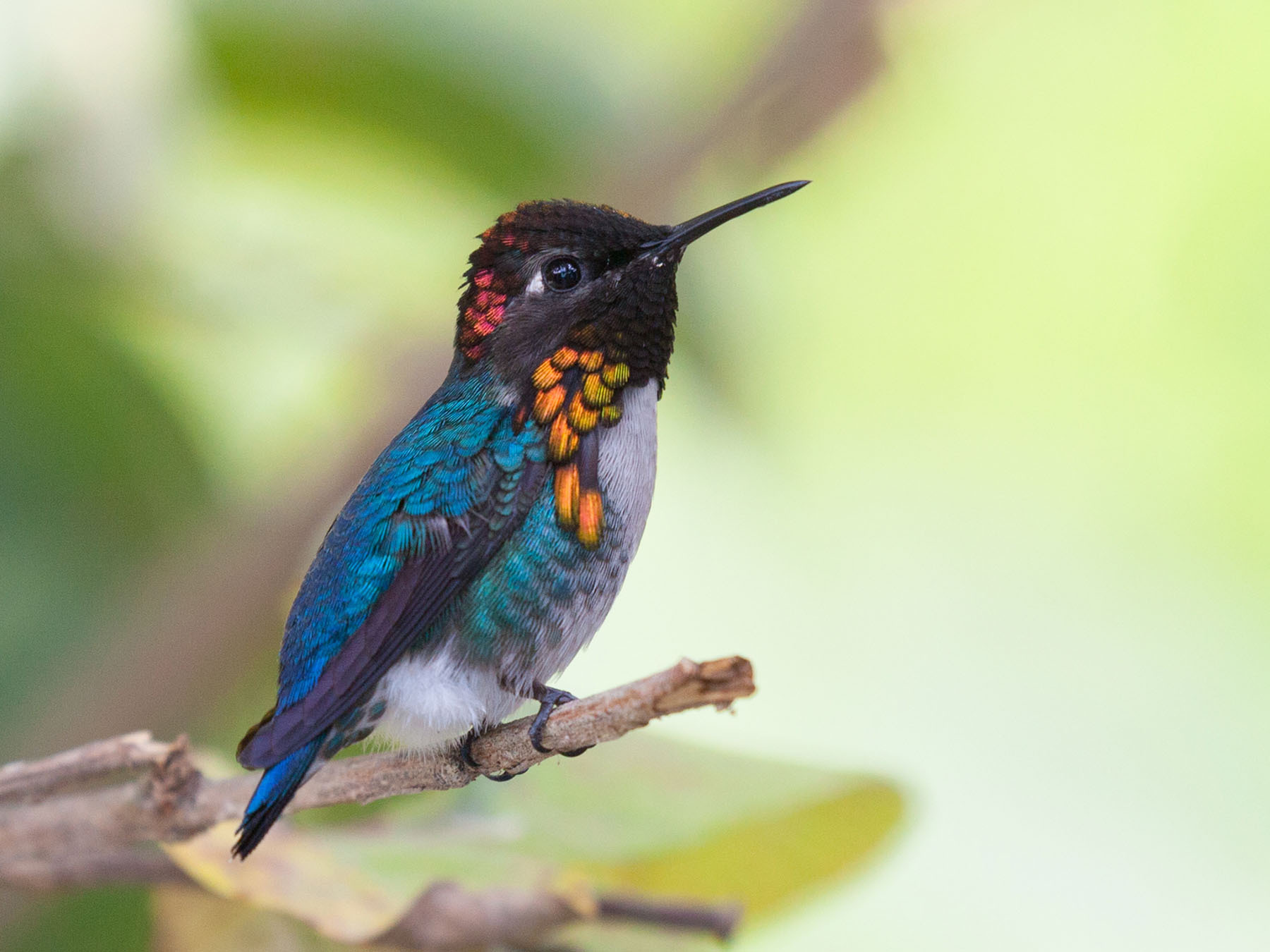
Quick facts
- Length
- 5–6.1 cm
- Wingspan
- 3.2–4.3 cm
- Weight
- 1.6–2.6 g
- Lifespan
- 7–10 years
- Family
- Hummingbirds
- Migration
- Resident
- Global status (IUCN)
- Near Threatened
- World population
- 22,000 - 66,000 mature individuals
- Population trend
- Decreasing
- Also called
- Zunzuncito, Helena Hummingbird
- Scientific name
- Mellisuga helenae
Sources
3- 1BirdLife International. 2021. Mellisuga helenae. The IUCN Red List of Threatened Species 2021: e.T22688214A178593744. Source (opens in a new tab)
- 2BirdLife International. 2021. Mellisuga helenae. The IUCN Red List of Threatened Species 2021: e.T22688214A178593744. Source (opens in a new tab)
- 3BirdLife International. 2021. Mellisuga helenae. The IUCN Red List of Threatened Species 2021: e.T22688214A178593744. Source (opens in a new tab)

Checked by
Nathan Cope, founder and editor
Nathan founded Birdfact and leads its writers and contributors in the UK, the US and Canada. He has watched and studied birds for more than ten years, and checks every article and species guide before it’s published.