


Bearded Barbet
Pogonornis dubius
By the Birdfact teamChecked by Nathan Cope
On this page11 sections
How to recognise it
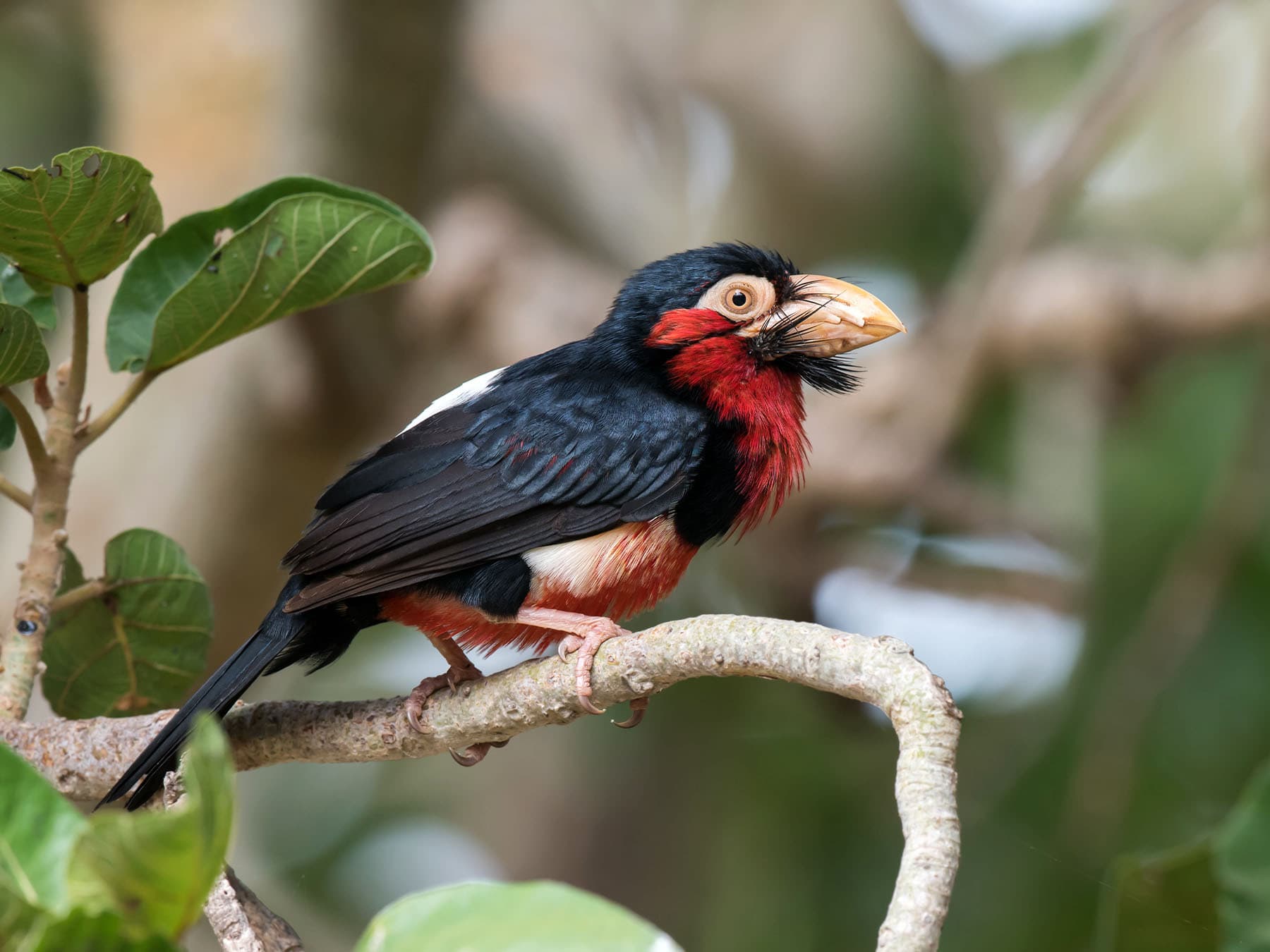
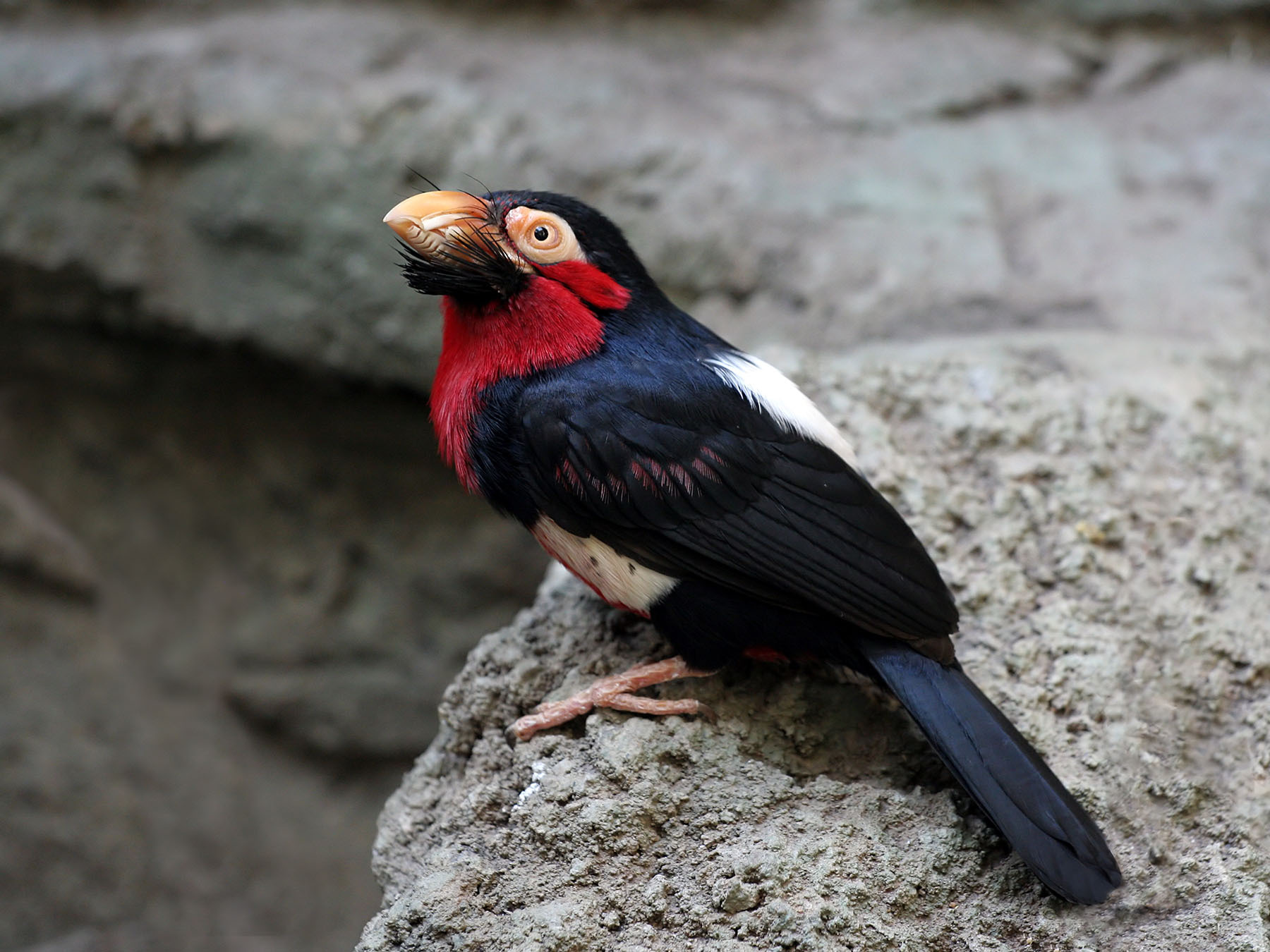
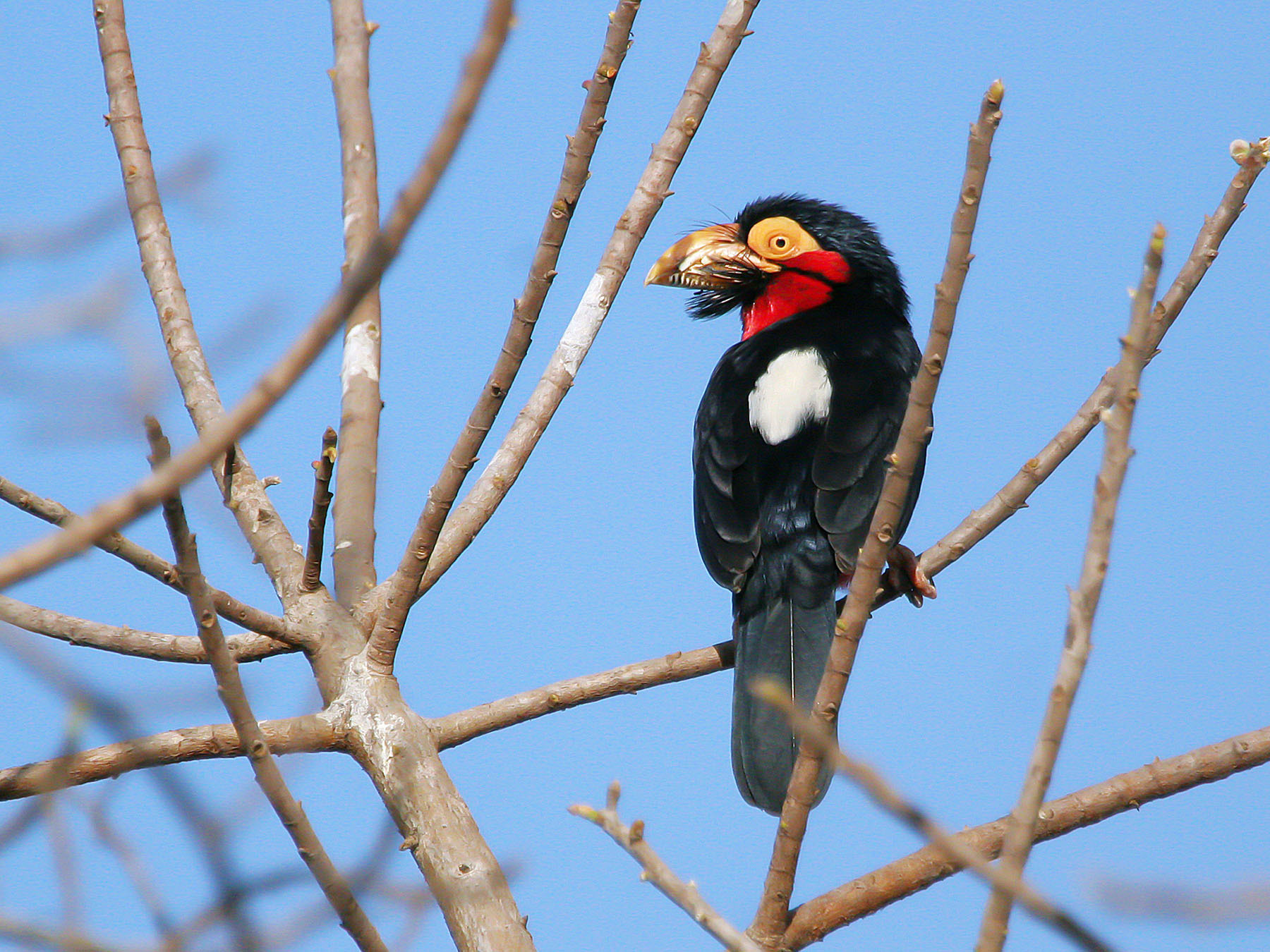
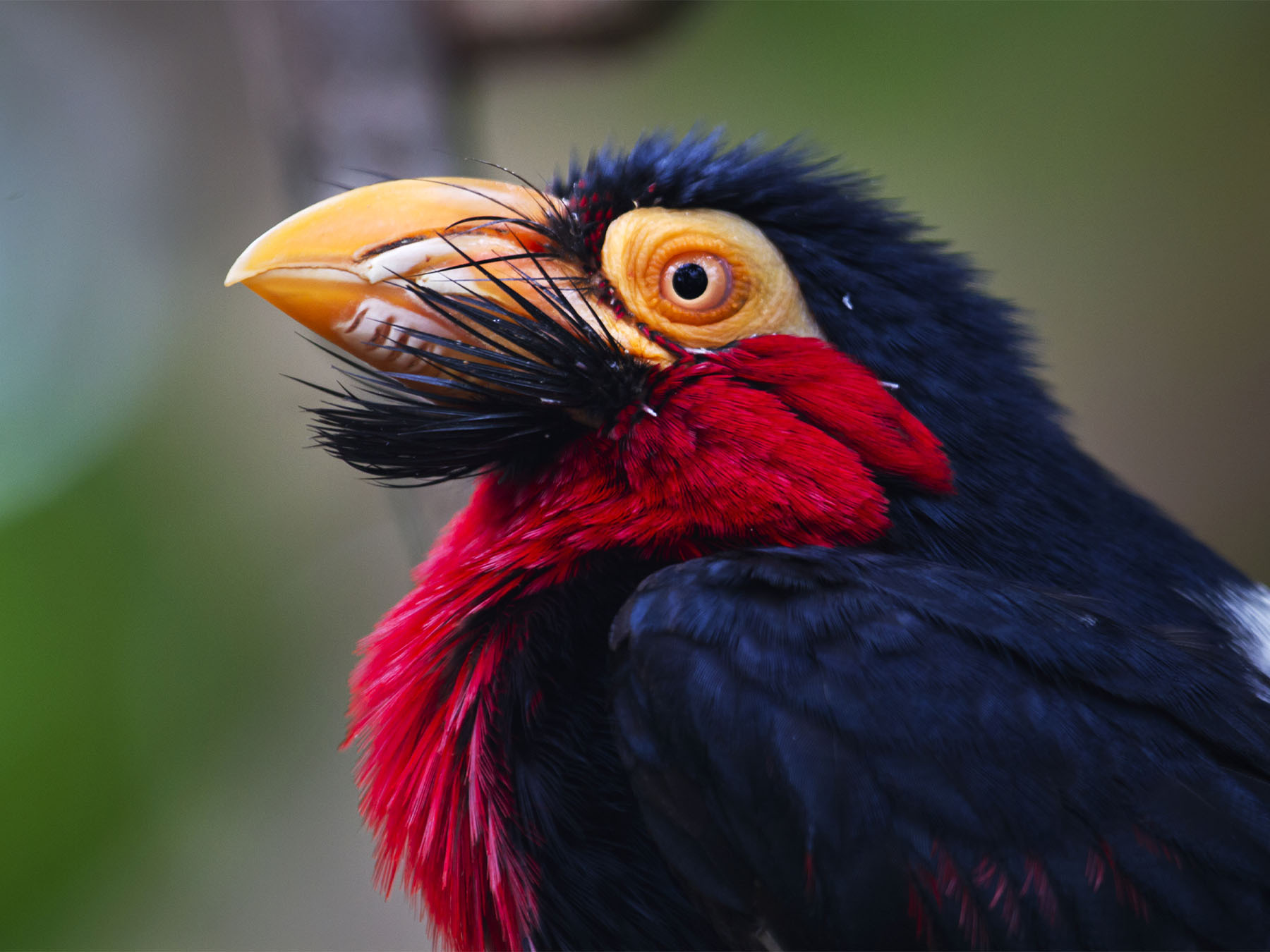
The Bearded Barbet is a striking bird with a distinctive red face, throat, and upper breast contrasting sharply with its black body. Its large, pale grey bill is fringed by stiff bristles, giving it a 'bearded' appearance. The wings feature yellow spots, while the vent area is white.
Both males and females share this vibrant coloration, making them indistinguishable in the field. Juveniles have a duller plumage, gradually acquiring adult colors as they mature.
Its size
Adults- Length
- 23–25 cm
- Wingspan
- 35–40 cm
- Weight
- 70–90 g
Its song and calls
When and where to see it
The Bearded Barbet is not recorded regularly in the UK, Ireland, the United States or Canada.
Worldwide: recorded regularly in 10 countries
Countries where it was recorded in at least 3 of the 6 years 2019–2024. Linked countries have their own bird list.
Africa (10)
- Benin
- Burkina Faso
- Cameroon
- Côte d’Ivoire
- Gambia
- Ghana
- Guinea
- Guinea-Bissau
- Nigeria
- Senegal
Data: EOD – eBird Observation Dataset (Cornell Lab of Ornithology), accessed via GBIF.org, CC BY 4.0. Records from 2019–2024, aggregated and filtered by Birdfact. How these lists are made
Tips for seeing it
- Look for them perched prominently on treetops in open woodlands
- Listen for their distinctive, repetitive 'poo-poo-poo' call
- Observe fruiting trees, where they often feed in small groups
- Check dead trees for nesting cavities, which they frequently excavate
What it eats
Nesting and breeding
Breeding season for Bearded Barbets typically coincides with the onset of the rainy season, varying across their range. Pairs form strong bonds and often remain together year-round.
Nests are excavated in dead trees or branches, with both partners contributing to the construction. The cavity is usually 20-30 cm deep, with a circular entrance about 5 cm in diameter.
Females lay 2-4 white eggs, which both parents incubate for about 13-15 days. Chicks fledge after approximately 27-30 days, and their parents continue to feed them for several weeks after they leave the nest.
Behaviour
Bearded Barbets are often seen perched conspicuously at the top of trees, scanning for fruit or insects. They are social birds, frequently found in small groups or pairs. Their strong bills are used for feeding and excavating nesting cavities in dead trees, showcasing their carpentry skills.
Conservation
More photos
4 photos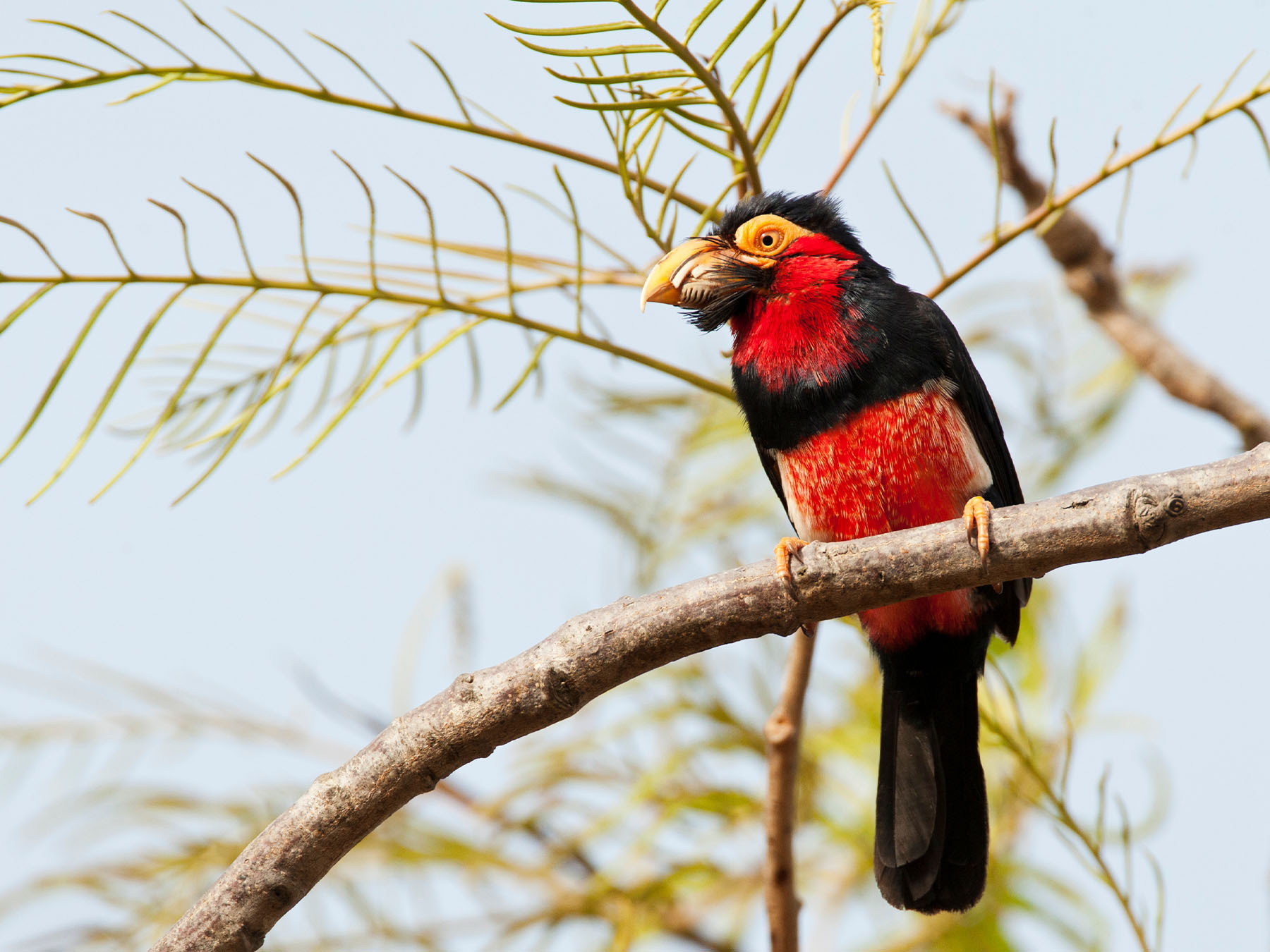
Quick facts
- Length
- 23–25 cm
- Wingspan
- 35–40 cm
- Weight
- 70–90 g
- Lifespan
- 10–15 years
- Family
- African Barbets
- Migration
- Resident
- Global status (IUCN)
- Least Concern
- World population
- Unknown
- Population trend
- Population currently stable, but could be affected by habitat changes
- Scientific name
- Pogonornis dubius
Sources
1- 1BirdLife International. 2016. Pogonornis dubius. The IUCN Red List of Threatened Species 2016: e.T22681865A92923694. Source (opens in a new tab)

Checked by
Nathan Cope, founder and editor
Nathan founded Birdfact and leads its writers and contributors in the UK, the US and Canada. He has watched and studied birds for more than ten years, and checks every article and species guide before it’s published.