
Arizona Woodpecker
Picoides arizonae
By the Birdfact teamChecked by Nathan Cope
On this page13 sections
How to recognise it
What do Arizona Woodpeckers look like?
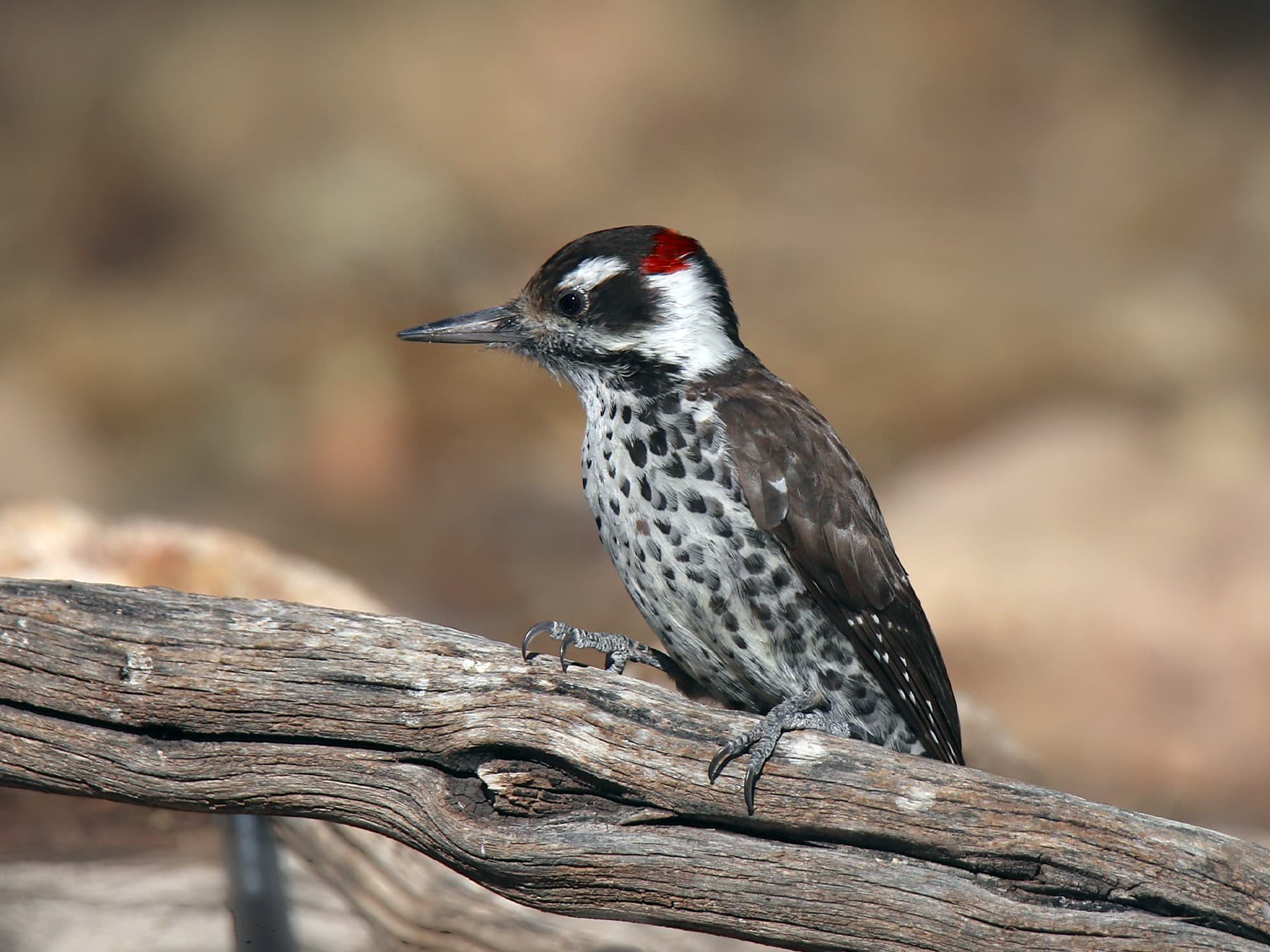
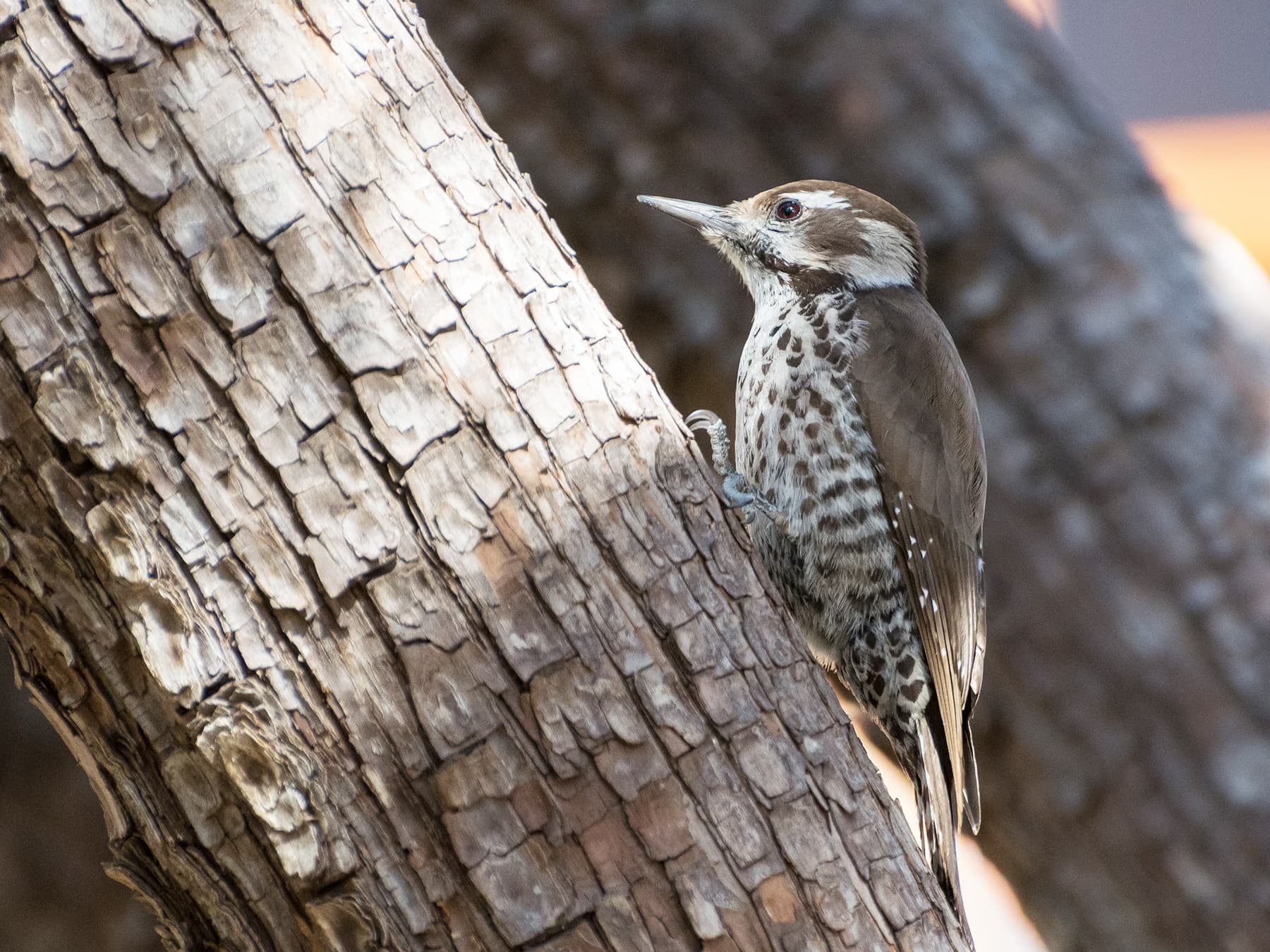
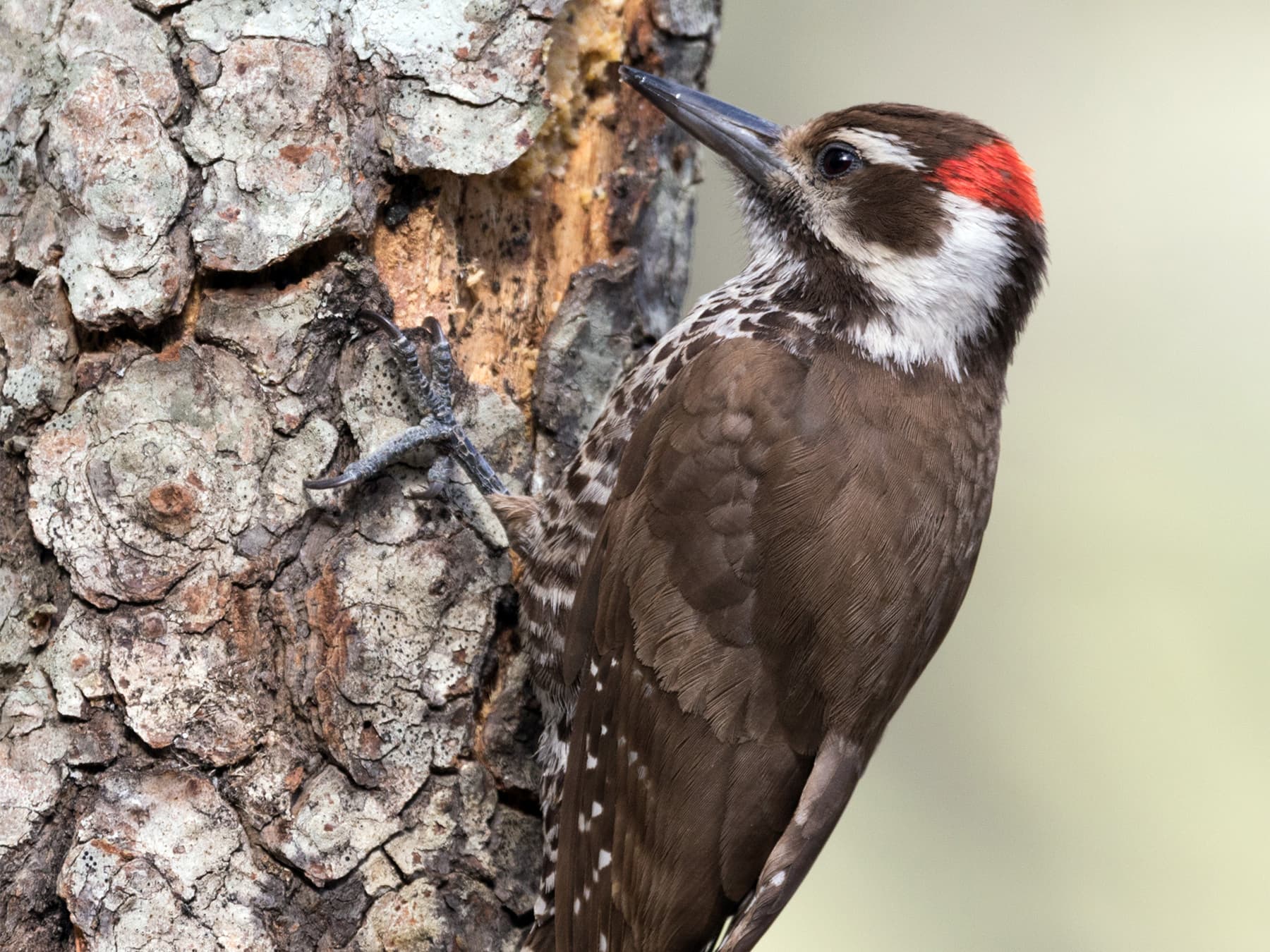
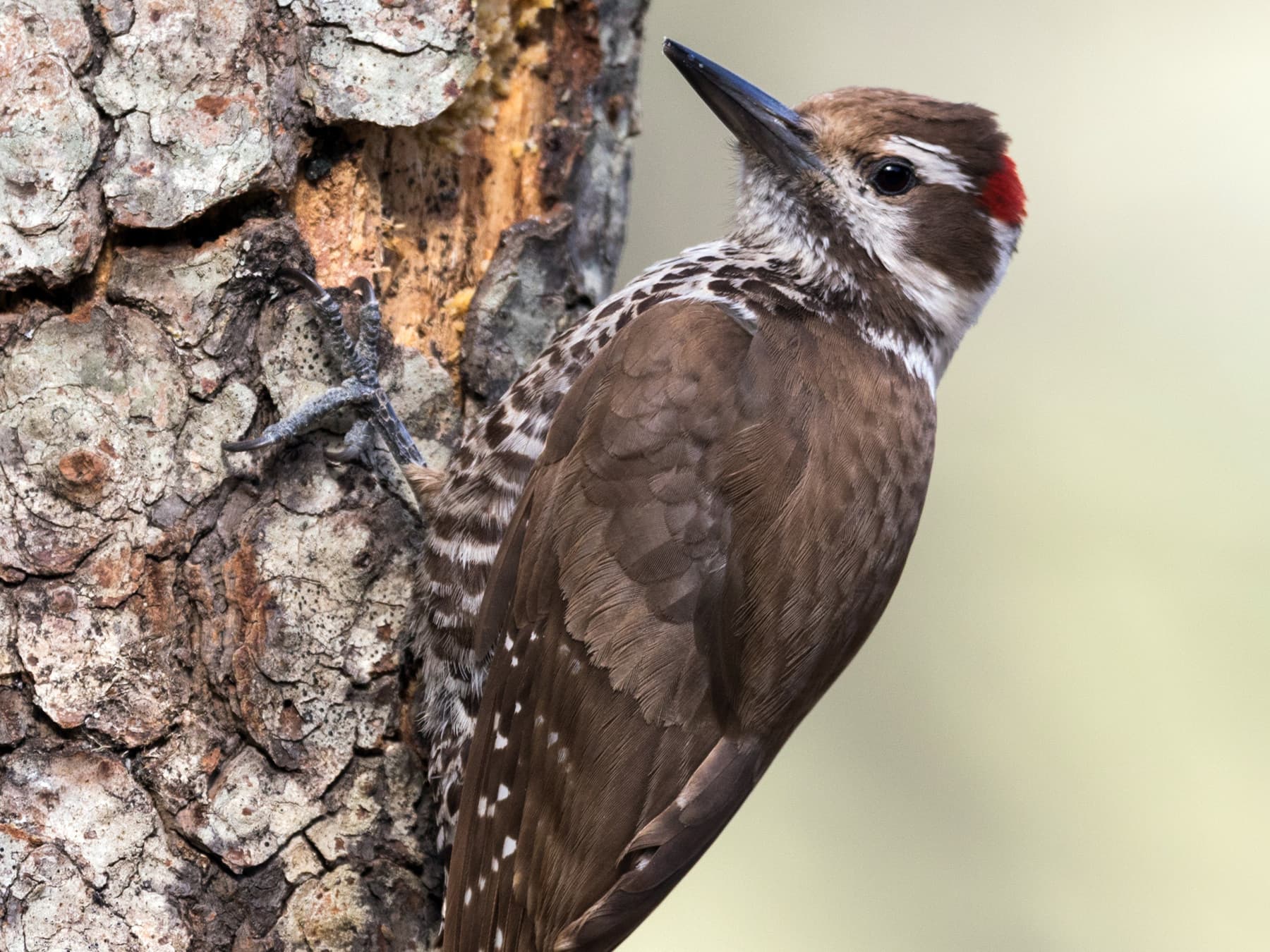
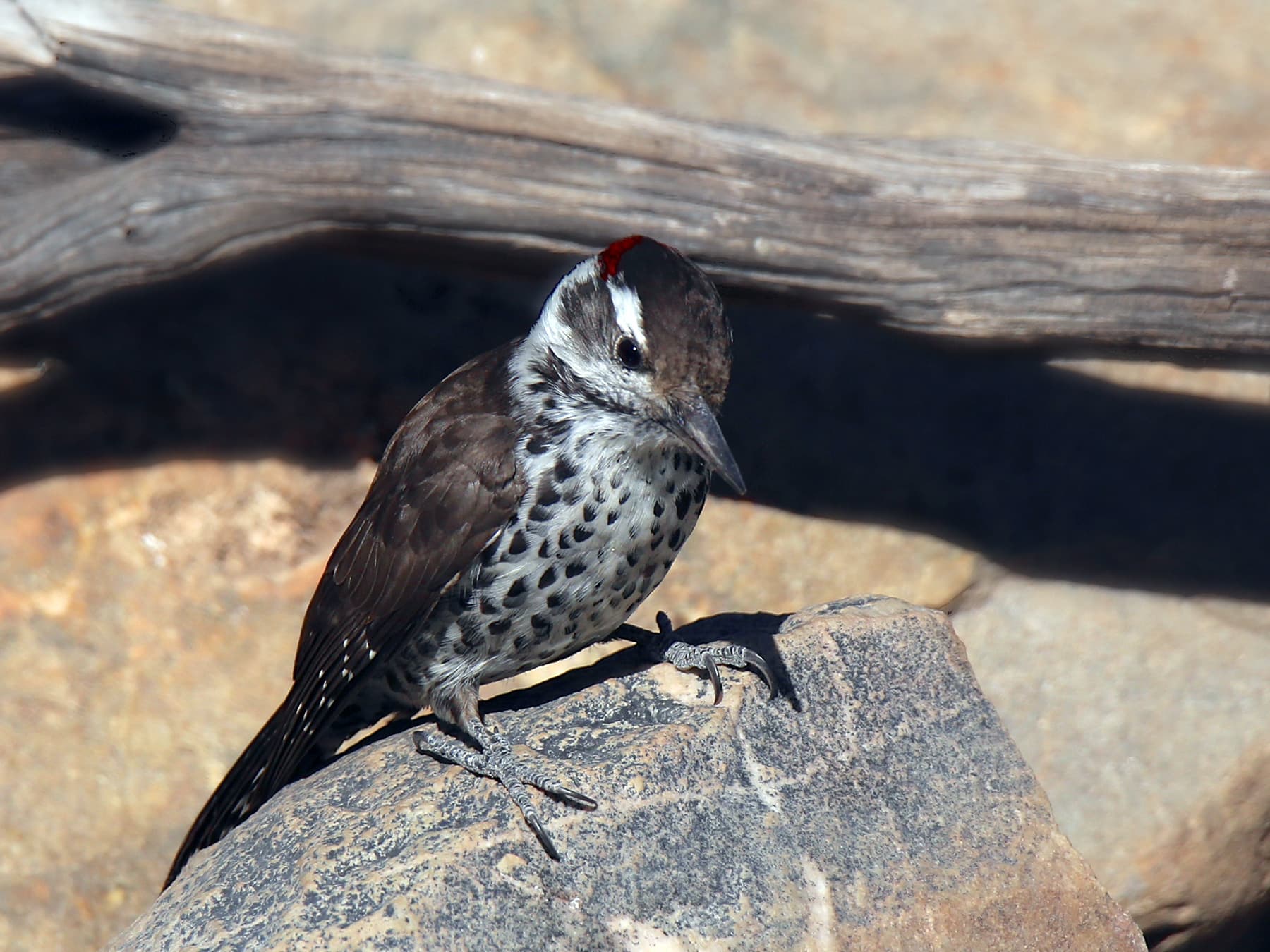
North America’s only woodpecker species with mostly brown plumage, with a solid chocolate-brown back, nape, wings, tail, and rump. Narrow white wing bars are present and can be seen most clearly in flight, and barred brown and white markings edge the outer tail feathers.
Brown also features heavily on the face and underparts of an Arizona woodpecker. A brown forehead, cheek, and mustache stripe are punctuated by white eye and cheek stripes and white patches on the sides of the head. Males have a small, but clearly visible red patch on the back of their head.
The Arizona woodpecker’s throat, breast, belly, and flanks are white, dotted heavily with brown spots. Their feet are gray, and their bill, which has a chisel-like tip, is blackish-gray, and longer in males than females.
Female Arizona woodpeckers closely resemble males, although they do not have the red patch that is seen in males.
Juvenile Arizona woodpeckers’ upperparts are brown like an adult’s, although underparts have less-defined, smaller markings and are more gray than white. Both sexes have red markings on the head, although those of young females are not as bright and fade as adulthood approaches.
How big are Arizona Woodpeckers?
One of North America’s smallest woodpecker species, the Arizona woodpecker is slightly larger than a downy woodpecker and is similar in size to two other species found in the southern United States, the Nuttall’s and ladder-backed woodpeckers. Males and females are roughly the same size and weight.
- Length: 18 cm to 20 cm ( 7.1 in to 7.9 in)
- Wingspan: 36 cm (14.2 in)
- Weight: 34 g to 51 g (1.2 oz to 1.8 oz)
Its size
Adults- Length
- 19–21 cm
- Wingspan
- 33–36 cm
- Weight
- 40–60 g
Its song and calls
What sound does an Arizona Woodpecker make?
Calls made by an Arizona woodpecker include a single hoarse ‘peek’, similar to the call of a hairy woodpecker but higher in pitch. Rattled notes can be heard when disturbed but generally, Arizona woodpeckers are a relatively silent species and even during the nesting period, any noise is muted.
Drumming is also used as a form of communication between pairs and is commonly heard in the morning during breeding.
When and where to see it
How often the Arizona Woodpecker turns up in the United States through the year, from birdwatchers' records.
United States
Resident · all year · most records in August
Show as a table
| Month | United States |
|---|---|
| January | 0.008% (regular) |
| February | 0.007% (regular) |
| March | 0.009% (regular) |
| April | 0.010% (regular) |
| May | 0.008% (regular) |
| June | 0.007% (regular) |
| July | 0.010% (regular) |
| August | 0.017% (regular) |
| September | 0.005% (regular) |
| October | 0.004% (regular) |
| November | 0.006% (regular) |
| December | 0.006% (regular) |
Worldwide: recorded regularly in 2 countries
Countries where it was recorded in at least 3 of the 6 years 2019–2024. Linked countries have their own bird list.
North America (2)
Data: EOD – eBird Observation Dataset (Cornell Lab of Ornithology), accessed via GBIF.org, CC BY 4.0. Records from 2019–2024, aggregated and filtered by Birdfact. How these lists are made
What is the habitat of an Arizona Woodpecker?
Preferred habitats of Arizona woodpeckers include remote pine, oak, and sycamore woodlands, usually on mountain slopes and foothills at altitudes of between 1500 m and 1700 m (4900 ft to 5500 ft) in the United States.
Woodlands of the Sierra Madre Occidental in Mexico, are a popular choice, and in Mexico as a whole, they nest on forested slopes as low as around 900 m and up to 2400 m (3000 ft and 8000 ft).
What is the range of an Arizona Woodpecker?
The mountainous regions of the extreme southwest of New Mexico and southeast Arizona form the northern limits of the range of Arizona woodpeckers. Southwards, the range extends through northwest Mexico, following the mountainous terrain of the Sierra Madre Occidental as far south as the state of Michoacán.
Where do Arizona Woodpeckers live?
The global population of Arizona woodpeckers is estimated at around 200,000 individuals, with only around 5,000 of these resident in the United States. The vast majority of the species numbers are found in Mexico.
How rare are Arizona Woodpeckers?
Arizona woodpeckers are one of the rarest North American woodpeckers to spot in the US, with only around 5,000 resident birds, restricted to rather remote montane forest habitats. They are particularly quiet during the breeding period, which makes them even harder to detect.
Further south, in Mexico, they are more widespread and prevalent, and chances of a sighting do increase, although their preferred nesting sites at relatively high altitudes do not overlap much with populated or settled areas.
Where can you see Arizona Woodpeckers in the US?
Arizona woodpeckers are only found in a limited region of the US, in mixed pine-oak woods in the southeastern corner of the state of Arizona and in a small region across the state border into the southwest corner of New Mexico.
In New Mexico, they are present in the Peloncillo and Animas mountains of Hidalgo County, while in Arizona, sightings occur in the Baboquivari, Santa Catalina, and Pinaleno mountain ranges.
Migration
Do Arizona Woodpeckers migrate?
Although migration does not typically occur in this species, some Arizona woodpeckers may briefly relocate post-breeding to lower altitudes during winter months, before returning upland again in spring.
Are Arizona Woodpeckers native to the US?
Established breeding locations of Arizona woodpeckers in the US are limited to the states of Arizona and New Mexico, where the species is a year-round resident.
Tips for seeing it
- Look for them in pine-oak forests of southeastern Arizona and southwestern New Mexico
- Listen for their distinctive 'pit-pit' call or rapid drumming on tree trunks
- Observe dead trees or snags where they often forage for insects
- Watch for their characteristic hitching movement up tree trunks
What it eats
What do Arizona Woodpeckers eat?
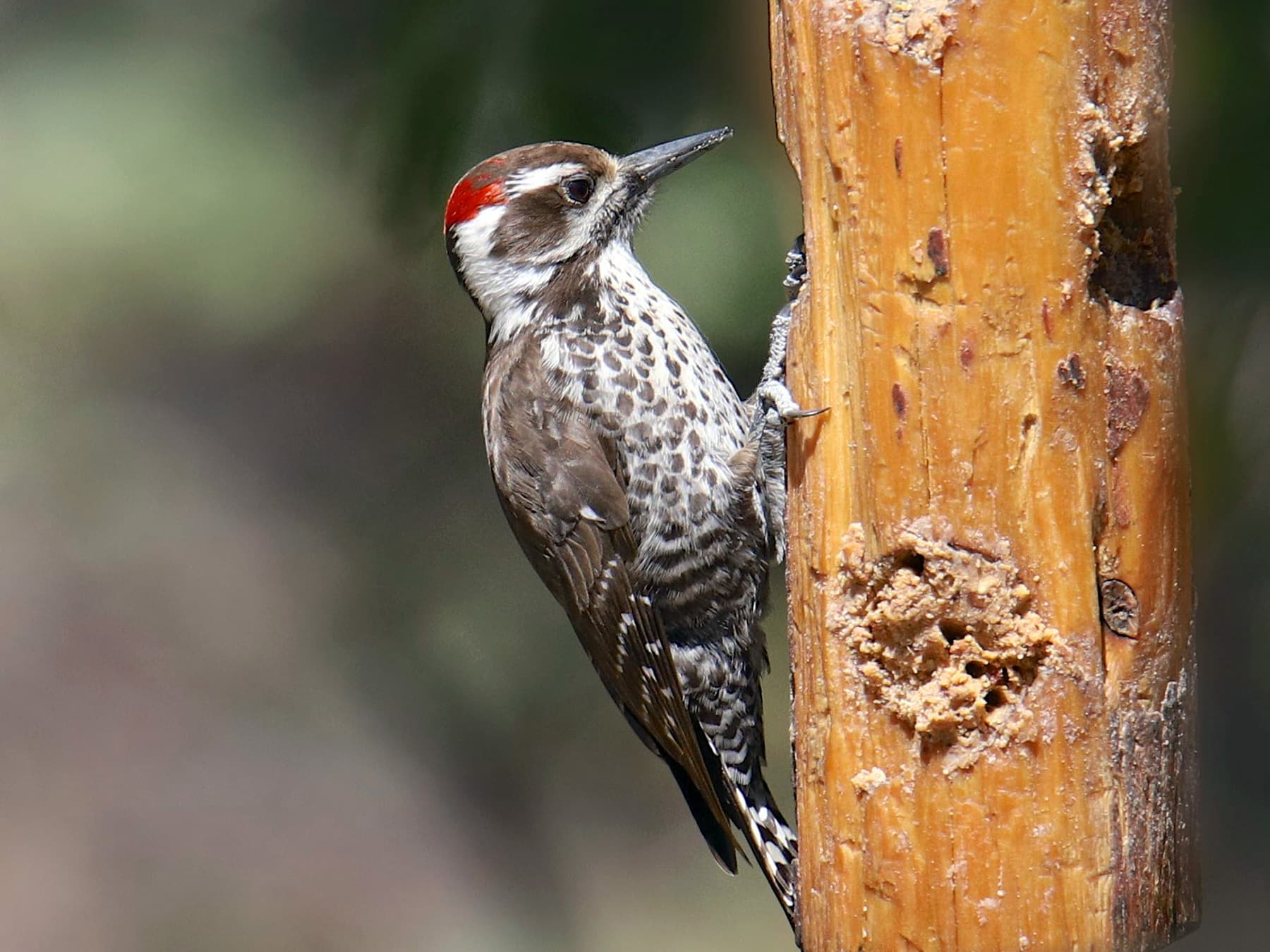
The mixed diet of Arizona woodpeckers consists of both insects and plant-based based foods, with beetles and their larvae and acorns being well represented. Ants and fruit are also eaten, and insects are gleaned from the trunks of trees, or picked from beneath the bark that they flake off using their chisel-tipped bills.
What do Arizona Woodpecker chicks eat?
Young Arizona woodpeckers are fed on the larvae of wood-boring beetles by their parents, with males taking a larger share of the feeding duties. Smaller invertebrates are also fed, including ants and spiders.
Nesting and breeding
Where do Arizona Woodpeckers nest?
As with all woodpecker species, Arizona woodpeckers are cavity nesters, excavating their own nest chambers in conifers, oaks, sycamores, or maples, usually between 4.6 m and 6.1 m (15 ft to 20 ft) above ground level. Nests are not usually reused in subsequent seasons.
From the limited observations we have available, males are seen to excavate, and it’s unknown whether females also take an active role in chiseling out their chambers. Nest hollows, which are usually created in dead wood or dying limbs or branches, are unlined and no additional nesting material is added.
When do Arizona Woodpeckers nest?
Pairs form or reunite from March to May, with the earliest nest-building activity seen from April onwards. Eggs are laid in late April to May, with incubation lasting up to around 14 days. More precise information about how incubation is shared between the sexes is unavailable, due to the remote nesting locations and secretive behavior during the breeding period.
What do Arizona Woodpecker eggs look like?
Between 2 and 4 white eggs are laid per clutch, and in a typical season, only one brood will be raised. Eggs have no markings on the shell and measure 24 mm by 17 mm (0.9 in by 0.7 in).
Do Arizona Woodpeckers mate for life?
During the breeding season, pairs are monogamous but do not appear to associate particularly closely. Once young have been raised, they are mostly spotted alone, although may be seen foraging in mixed-species flocks. Early in spring, pairs form again, and it’s not uncommon for former pairs to reunite if both birds have survived the winter.
Behaviour
Are Arizona Woodpeckers aggressive?
Some aggression is shown around the nest site when intruding birds are confronted by the territory occupant, with hostile displays and posturing used to see off any threats. Arizona woodpeckers use vocalizations, including a ‘wicka-wicka’ call to drive away intruders, as well as head-bobbing, tail-fanning, and wing-flapping.
Once breeding is complete, Arizona woodpeckers are frequently seen in mixed-species foraging flocks, where common companions are chickadees and nuthatches.
Where do Arizona Woodpeckers sleep at night?
Overnight roosting cavities are excavated by Arizona woodpeckers and used all year round by single birds for shelter from the weather and from potential predators.
Lifespan and predators
How long do Arizona Woodpeckers live?
Arizona woodpeckers are known to breed for the first time at one year of age. Little data is available for the average maximum lifespan for this species, although estimates of up to 16 years are thought to be accurate, based on the similar hairy woodpecker.
What are the predators of Arizona Woodpeckers?
Common predators of Arizona woodpeckers are thought to be birds of prey, especially Cooper’s hawks, sharp-shinned hawks, northern goshawks, and peregrine falcons.
Are Arizona Woodpeckers protected?
In the United States, the Migratory Bird Treaty Act of 1918 offers protection to Arizona woodpeckers against being killed, injured, captured, or sold. This protection extends to their eggs, nests, young and feathers.
Are Arizona Woodpeckers endangered?
The US Forest Service that covers New Mexico and Arizona has classified Arizona woodpeckers as a sensitive species due to concerns over habitat loss and low population numbers. On a wider scale, they are rated as a species of least concern, with some moderate declines recorded.
Conservation
While currently listed as Least Concern, the Arizona Woodpecker faces potential threats from habitat loss due to deforestation and climate change.
Conservation efforts focus on protecting and managing the pine-oak woodlands crucial to this species' survival, particularly in the sky island ecosystems of the southwestern United States.
More photos
2 photos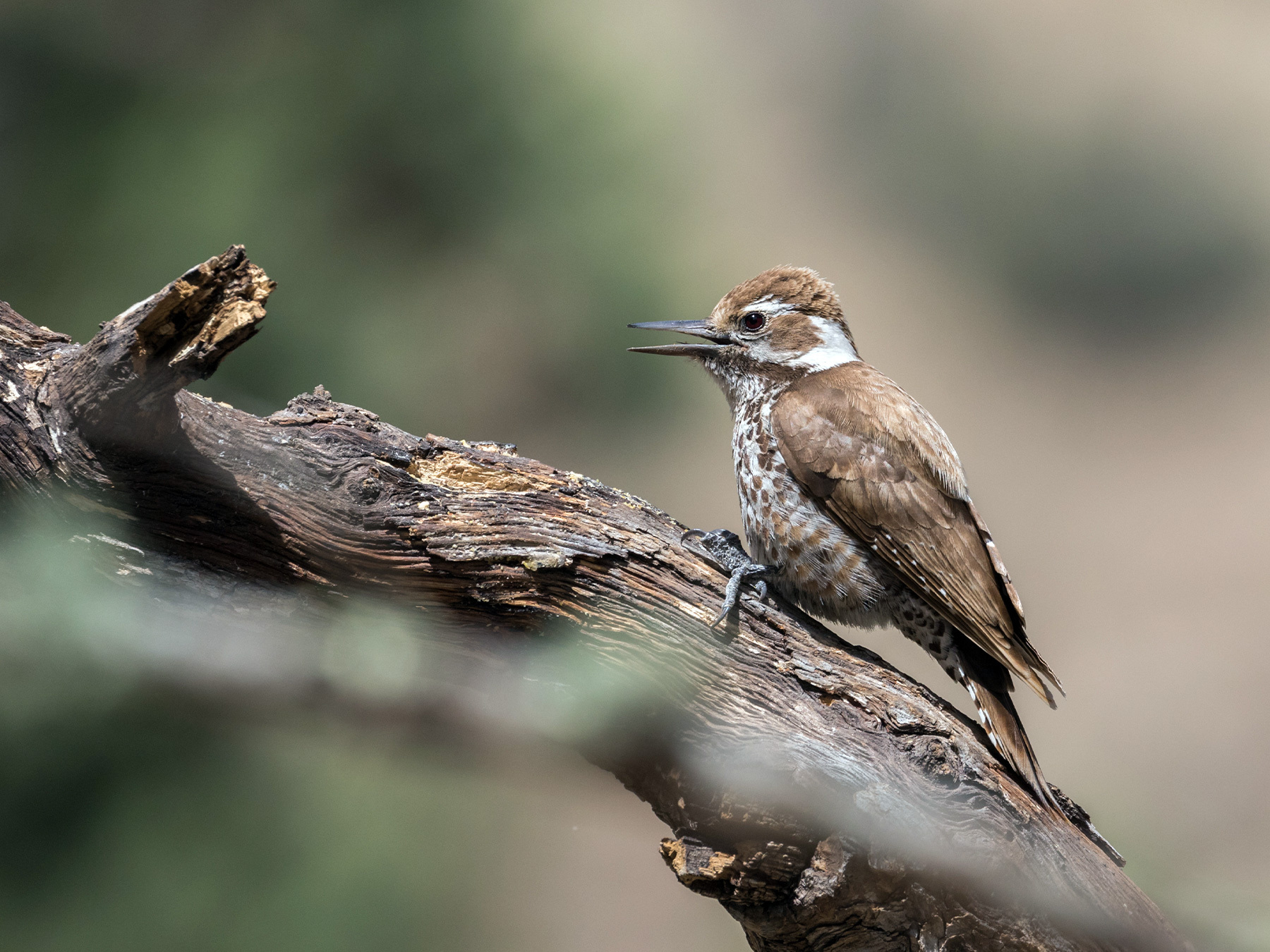
Quick facts
- Length
- 19–21 cm
- Wingspan
- 33–36 cm
- Weight
- 40–60 g
- Lifespan
- 5–8 years · oldest recorded 16 years
- Family
- Woodpeckers
- Migration
- Resident
- Global status (IUCN)
- Least Concern
- World population
- 200,000 mature individuals
- Population trend
- Decreasing
- Scientific name
- Picoides arizonae
Questions
4What attracts Arizona Woodpeckers?
Preserving the habitat of Arizona woodpeckers is the most positive action that can be taken, and they will thrive in areas where dead wood snags are allowed to remain in place without being disturbed.
What trees do Arizona Woodpeckers prefer?
Pine, oak, and sycamore woodlands appear to be favorite nesting and foraging spots for Arizona woodpeckers. Pine species that are especially popular include Apache pine, Chihuahua pine, and ponderosa pine. Walnuts in riverside landscapes are also frequently used, and foraging also takes place among cypresses, maples, willows, and junipers.
Do Arizona Woodpeckers harm trees?
Arizona woodpeckers usually chip away at areas of dead wood when constructing their nest chambers. Structural damage to a tree is usually minimal, with the benefits of woodpeckers outweighing any negatives. The presence of Arizona woodpeckers helps control populations of wood-boring beetles, termites, and carpenter bees.
Do Arizona Woodpeckers go to bird feeders?
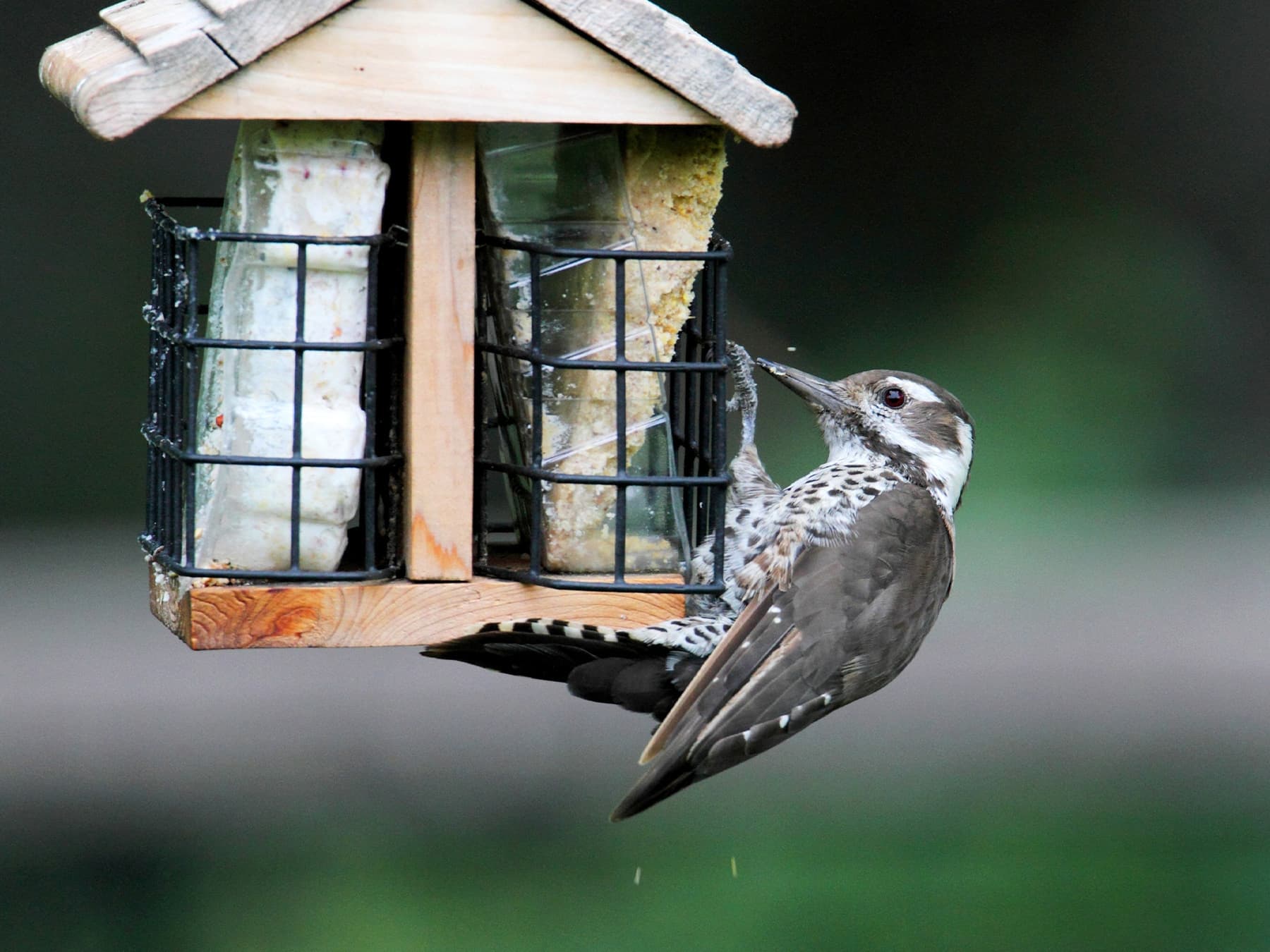
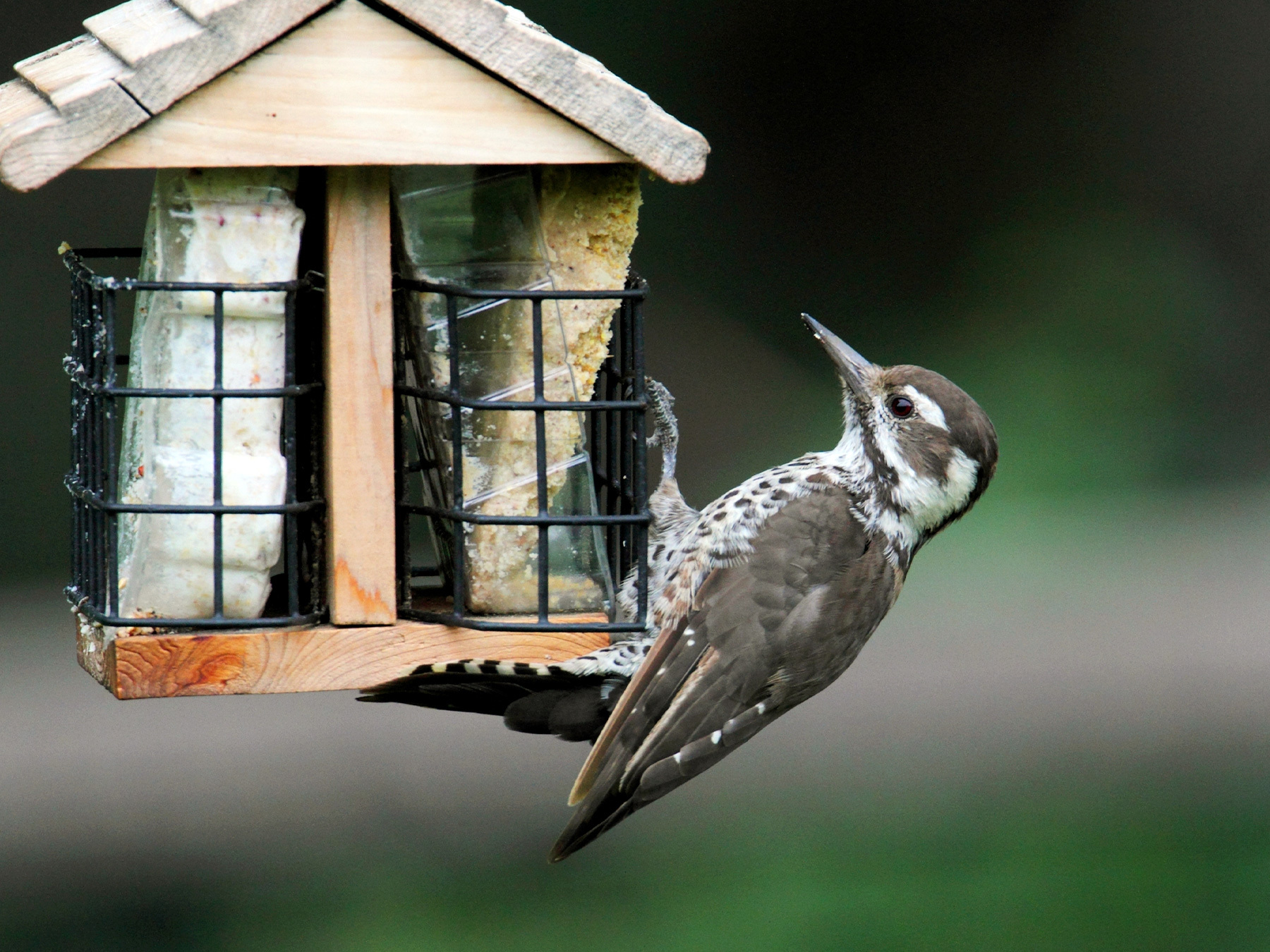
In backyards located within the foothills of the mid-elevation ranges in southeastern Arizona and southwestern New Mexico, opportunistic Arizona woodpeckers may occasionally visit bird feeders and are particularly drawn to suet logs and suet cakes.
Sources
3- 1BirdLife International. 2020. Leuconotopicus arizonae. The IUCN Red List of Threatened Species 2020: e.T22729044A141045072. Source (opens in a new tab)
- 2BirdLife International. 2020. Leuconotopicus arizonae. The IUCN Red List of Threatened Species 2020: e.T22729044A141045072. Source (opens in a new tab)
- 3Partners in Flight (2022) Source (opens in a new tab)

Checked by
Nathan Cope, founder and editor
Nathan founded Birdfact and leads its writers and contributors in the UK, the US and Canada. He has watched and studied birds for more than ten years, and checks every article and species guide before it’s published.