From the Journal
Do Ducks Mate For Life? (Complete Guide)
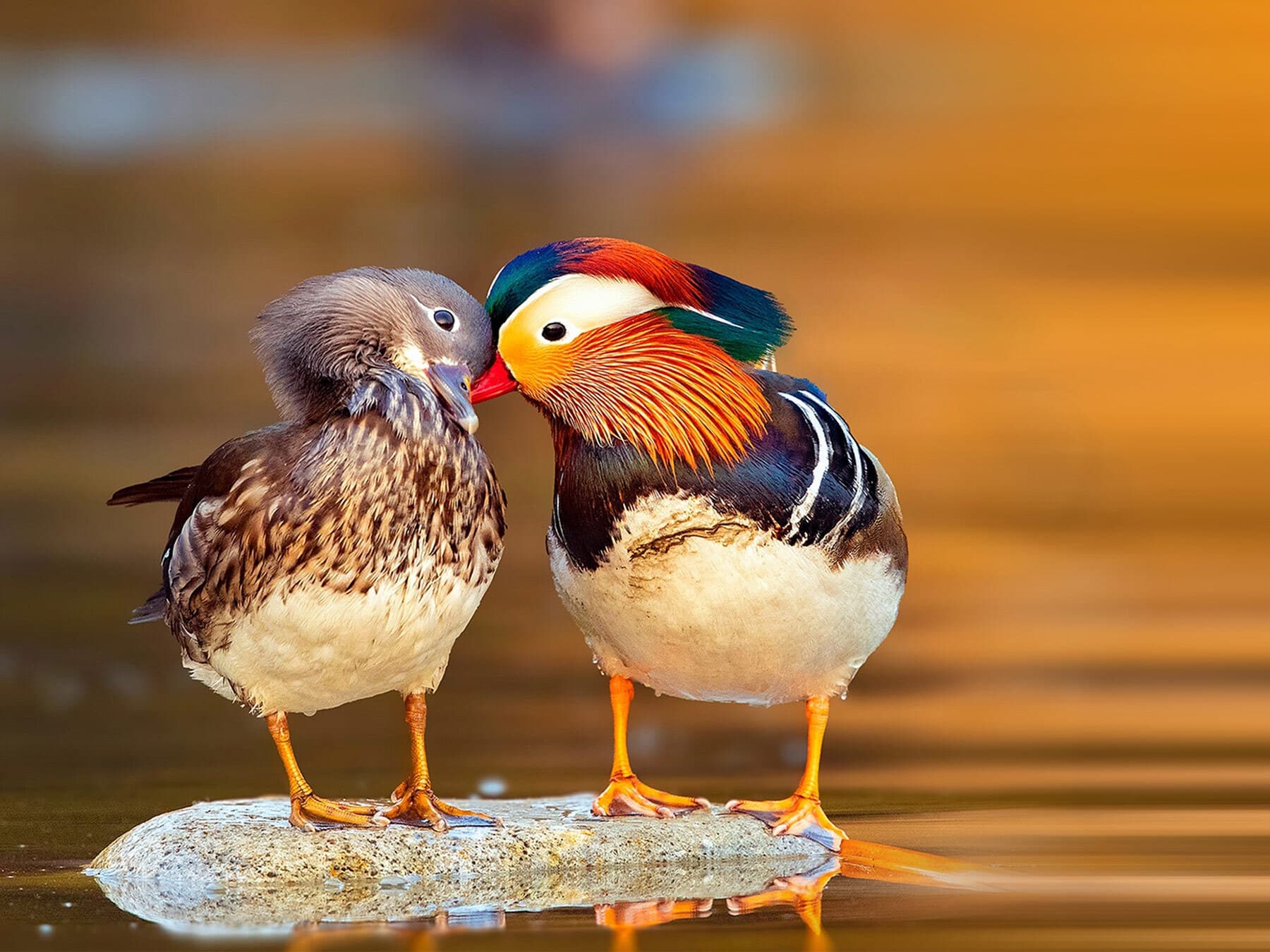
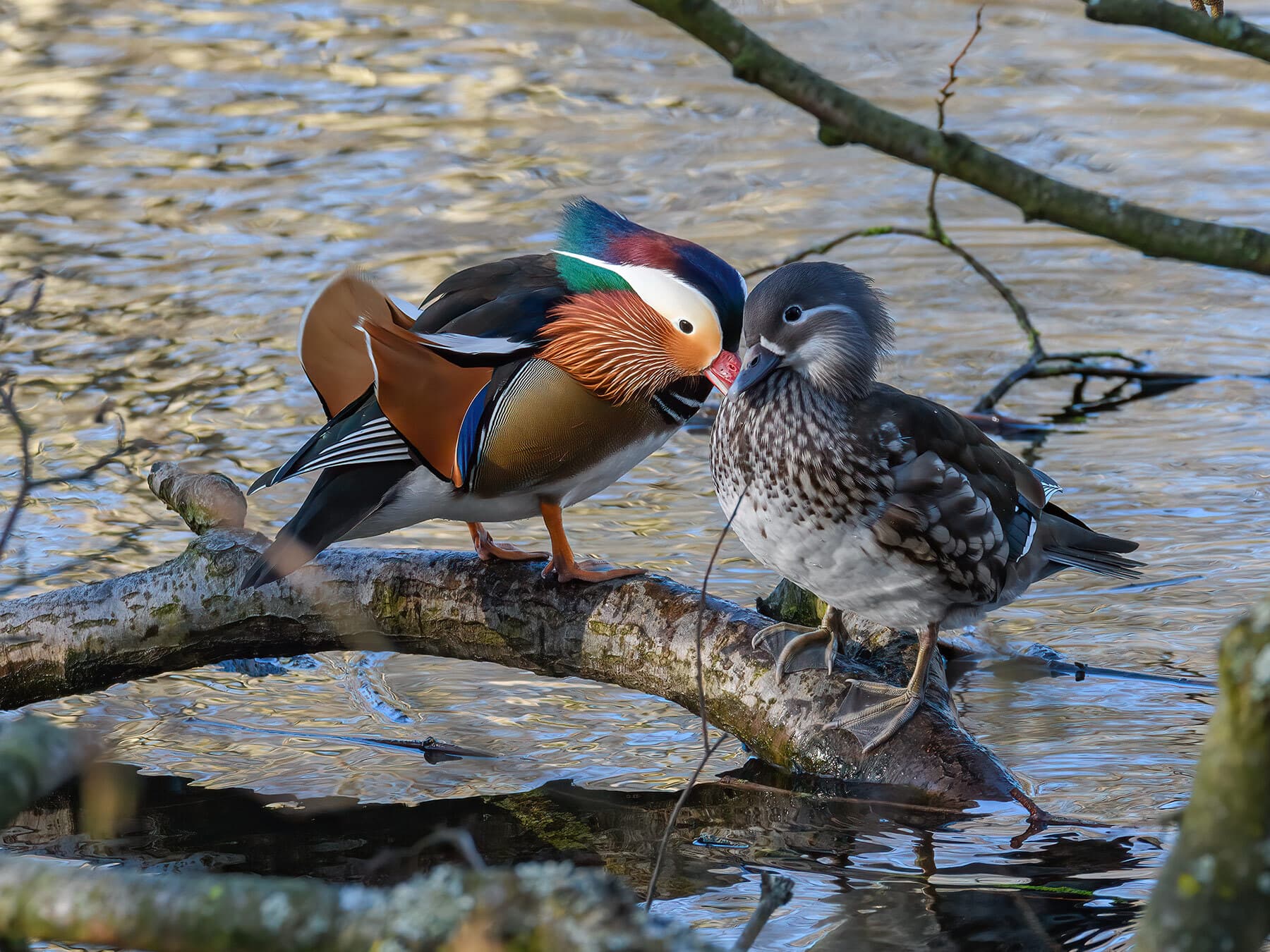
It’s a cute thought, right? Drake meets duck, they breed, raise ducklings, and live happily ever after. But is this the case in reality? Do ducks mate for life? Read on to find out more about the fascinating courtship and mating rituals of ducks.
Rather than mating for life, most duck species are what is known as ‘seasonal monogamists,’ which means they pair up ahead of the breeding season and then choose a different mate the following year. Raising ducklings is typically undertaken by females alone, with males playing no active role.
Unlike geese and swans, many species of which do remain bonded for their entire lives, ducks do not generally form long-term pair bonds that last beyond a single breeding season. Pairs will form ahead of breeding and display a strong connection towards each other, but the following season, the likelihood is that they will breed with an entirely different mate.
Some exceptions do occur, but these are in the minority. Re-pairing has been noted in certain species, where bonded males and females meet up when they arrive at their overwintering grounds and find each other again when they return to their spring breeding grounds, but such occurrences are not widespread across all duck species.
Keep reading to find out more about the breeding habits of ducks, what happens when a duck suddenly dies leaving its mate without a partner, and how even the act of mating itself can be a perilous business for female ducks.
Do all duck species mate for life?
Mating for life is the exception rather than the rule for duck species. Around 44 percent of waterfowl species do mate for life, but these are typically swans and geese.
While some observations of re-pairing in subsequent years have been reported, this is limited to a handful of duck species that practice philopatry (habitually returning to the same breeding and wintering grounds each year).
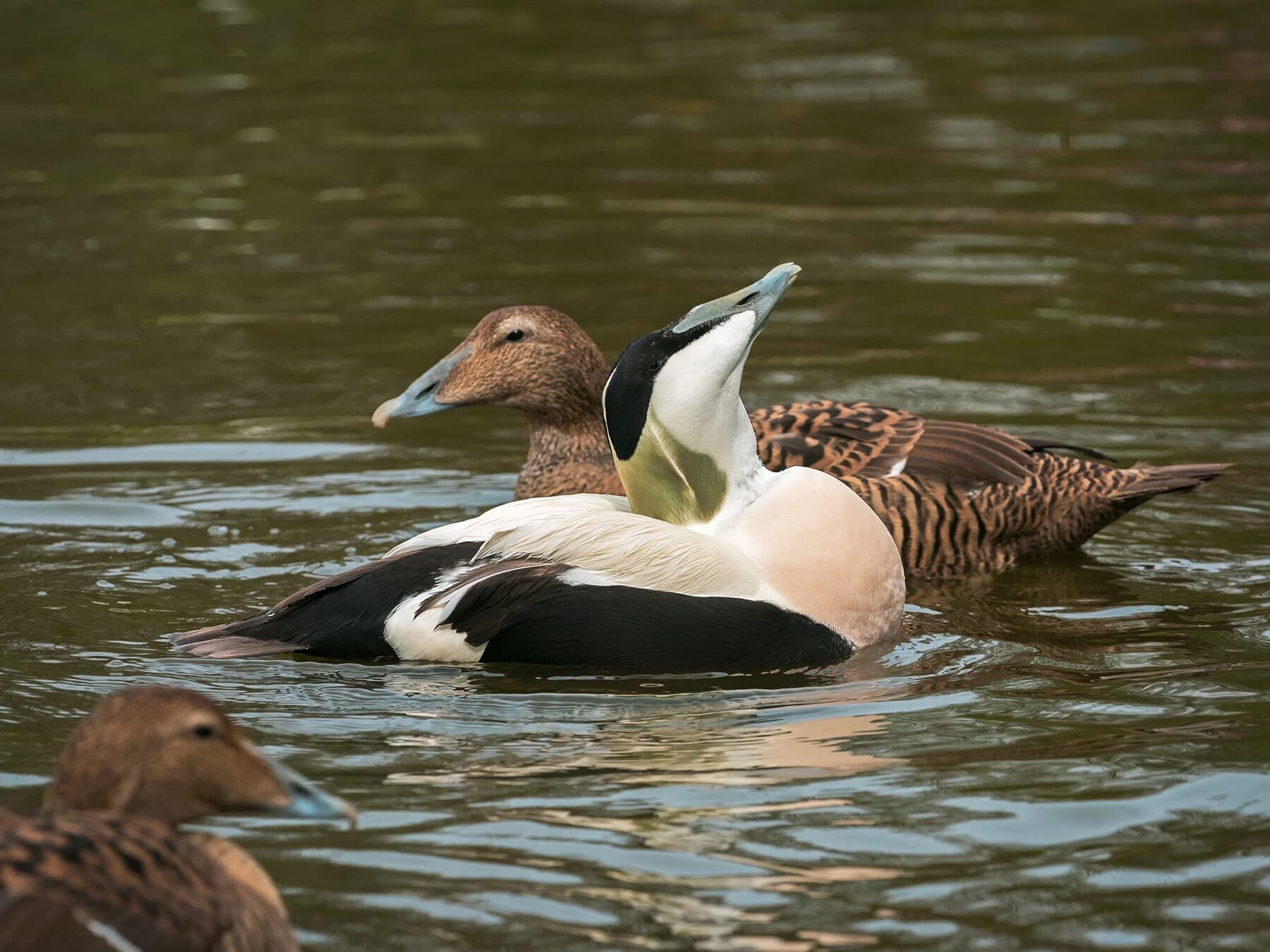
Where ducks visit the same wintering grounds each year and return to their previous breeding grounds, re-pairing may occasionally occur, when a previously bonded pair recognizes each other and reunites. This has been observed on occasion in harlequin ducks, goldeneyes, eiders, buffleheads, and long-tailed ducks.
The majority of dabbling, diving, and sea ducks do not mate for life or re-pair, instead changing their mate each new breeding season.
Strong bonds form between males and females during courtship, breeding and nesting, but once the eggs hatch, the males play no active role in raising the ducklings.
Many males leave the breeding grounds altogether, while those who do remain may serve as fierce defenders of their partners when other males approach, but do not have any attachment to or responsibility for their young.
Got a photo of a bird you can't identify?
Upload a photo and find out what it is in seconds — no account needed
Identify a Bird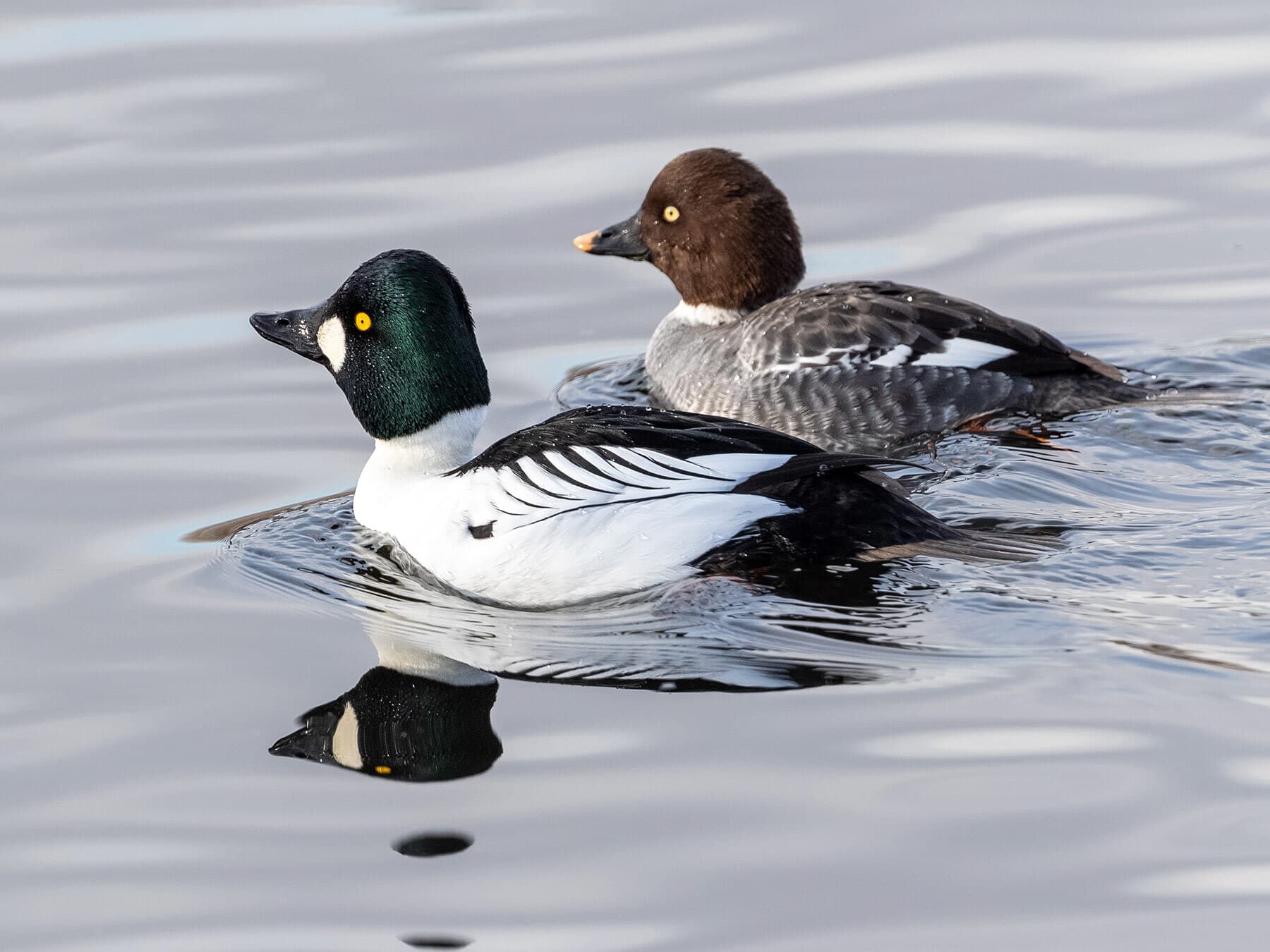
How do ducks attract a mate?
For many ducks, a pair bond will form while they are still at their wintering grounds, between the months of December and March.
Other pairs will couple-up during their spring migration. A range of courtship rituals, which vary from species to species, are performed by the male, hoping to be chosen by the female.
A female duck picks her mate on the basis of the brightest and most colorful plumage, loudest whistling call, and most impressive arrangement of feathers during what can sometimes be rather elaborate rituals and routines..
The typical steps followed during duck courtship and ultimately mating are as follows:
- Head bobbing: This is the initial stage in the courtship ritual, seen in both males and females. Pairs will swim close together bobbing their heads up and down rhythmically. This behavior indicates that both ducks are interested in pairing up.
- Flat-backing: A female duck indicates she is ready for mating by flattening her back and stretching out her neck on the surface of the water, and swimming towards her chosen mate.
- Copulation: The male mounts the female from behind, gripping onto her neck feathers with his beak to steady his balance, inadvertently pushing her into the water. If there is resistance by the female, it can appear to be a frantic, forced event, accompanied by lots of quacking, flapping, and posturing.
- Whistle-grunt: During this split-second display, the male male rises out of the water, and emits a loud whistle sound. This may then be followed by a short, loud grunt.
- Victory lap: Once copulation is complete, the male dismounts, and it’s not uncommon for the drake to undertake a ‘victory lap’, swimming in a circle around his female mate.
What happens when a duck mate dies?
If a female duck’s male mate dies early in the breeding season, she will quickly find another mate and breeding and nesting will go ahead uninterrupted.
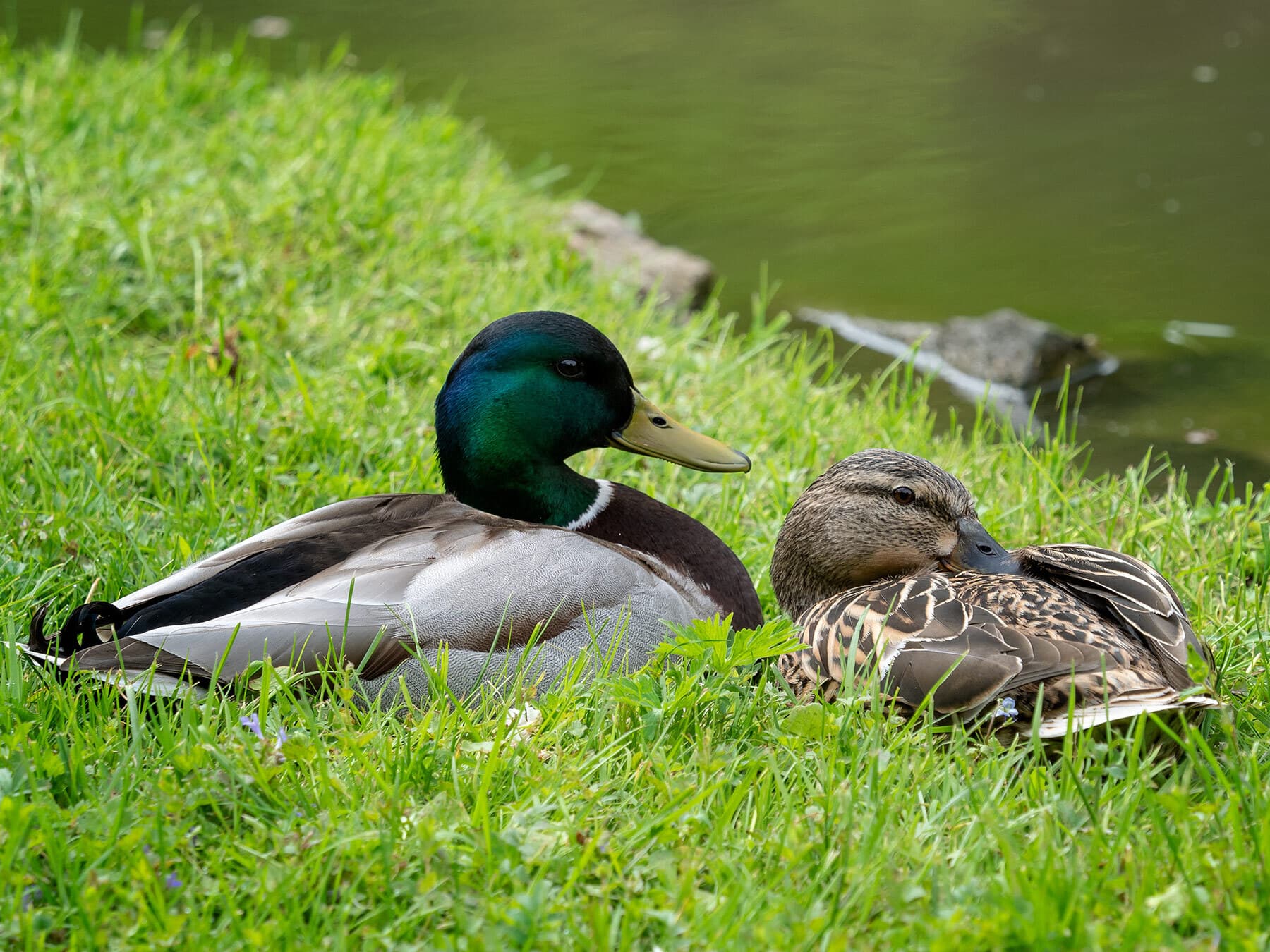
For many duck species, particularly notable in mallards, males significantly outnumber females, and there will be no shortage of drakes willing to step in if a female suddenly finds herself alone.
Do ducks mourn the loss of a mate?
Reports exist that claim that ducks do grieve the loss of a mate, particularly observed in domestic ducks that are kept in enclosures together and observed in greater depth than their wild counterparts.
What could be conceived as mourning, may in fact simply be confusion at the sudden disappearance of a mate, while some researchers claim that if the death was witnessed by the surviving partner, it may have a longer-term effect on how a duck may react to the loss of a mate.
Do female ducks mate with each other?
Female ducks may engage in aggressive territorial displays with other females that may resemble courtship rituals seen between male and female pairs.
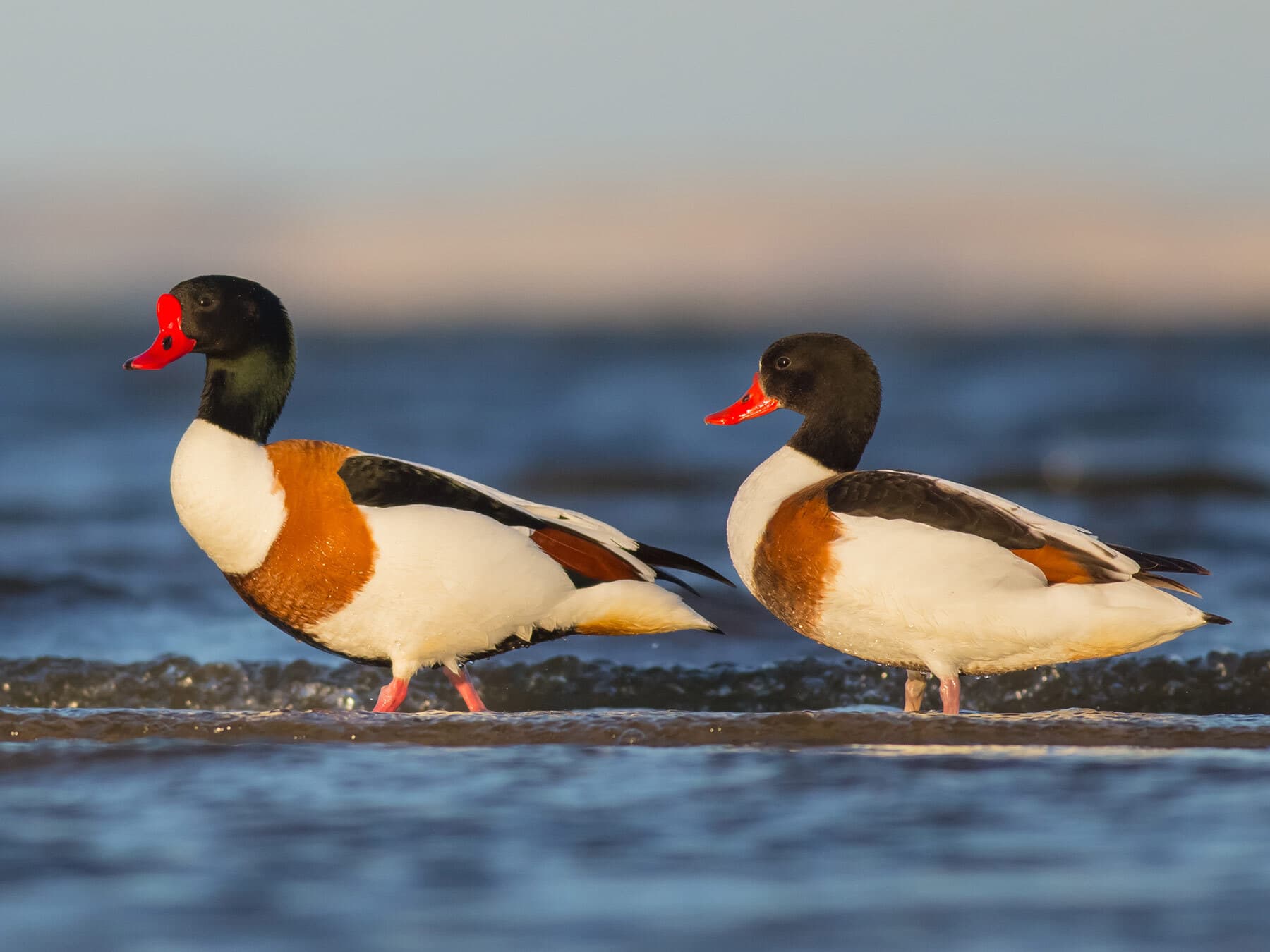
Evidence does exist of female-female and male-male duck pairs in the wild, in certain shelduck and grebe species, wood ducks, scaup and others.
Several anecdotal reports from breeders of domestic ducks also claim their females do engage in amorous behavior with one another. Any eggs that may be laid will not be fertilized.
Why do male ducks drown female ducks?
One particularly stark reality of duck reproductive behavior is the statistic that drowning during mating is a leading cause of death in female ducks that have reached breeding age.
While this may be distressing to read about - and even more so to witness first hand, it is important to avoid attributing human morals and emotions to the natural, instinctive behavior of these wild birds.
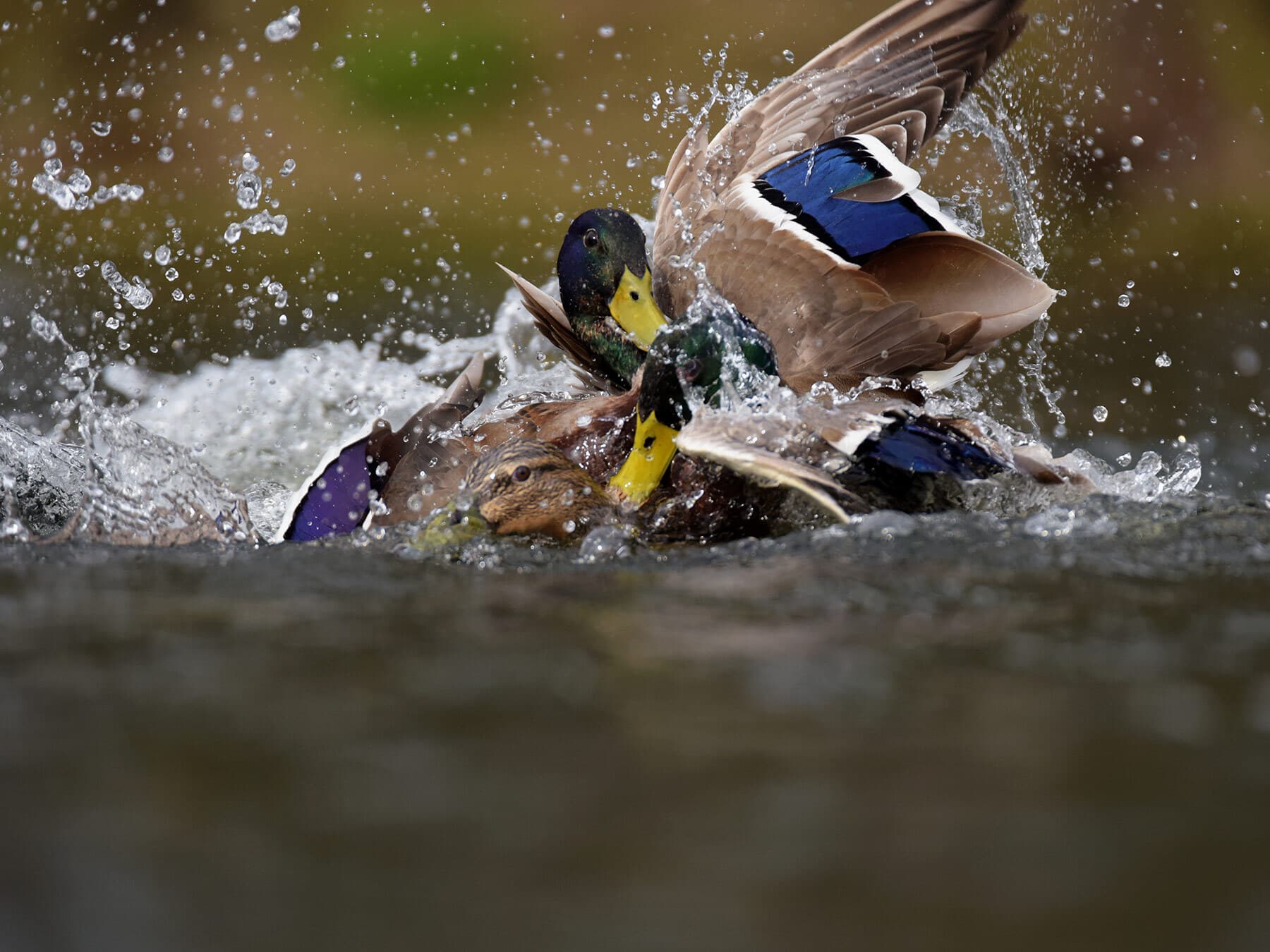
Forced copulation is a common issue in wild waterfowl, and is particularly associated with mallards. In mallard populations, males considerably outnumber females, resulting in a large number of unmated drakes, which possess an innate urge to reproduce.
In an instinctive act driven by this necessity to breed, male ducks will pursue females - even those who are part of bonded pairs - and forced mating. As duck mating generally happens on water rather than land, drowning is a very real risk, as the force of the male pushes the female’s back down into the water on mounting.
The intention of the male duck is not to drown the female, but death and injuries do happen, particularly when several aggressive males are pursuing the same female.
Identify Any Bird Instantly
- Upload a photo from your phone or camera
- Get an instant AI identification
- Ask follow-up questions about the bird
Monthly Birds in Your Area
- Personalised for your location
- Seasonal tips and garden advice
- Updated every month with new species
Related Articles
Baby Ducks (Ducklings): Complete Guide with Pictures
Where Do Ducks Sleep? (Location + Behavior)
How Long Do Ducks Live? An In-depth Guide of Duck Lifespan
What Are Ducks’ Feet Called? A Guide to Understanding Webbed Feet
Palmate Feet Design: Ducks have palmate feet, a common type of webbed foot among aquatic birds, where the three front toes are connected by webbing, while the small, raised back toe is separate. This design is efficient for swimming and is found in ducks, gulls, terns, swans, and geese.Swimming and Steering Functionality: The webbed feet enable ducks to swim effectively, with the toes spreading apart to push through the water forcefully and then closing for the next stroke. These feet also act as a rudder for steering, essential for navigating in water.Adaptation to Habitat and Behavior: Dabbling ducks, like mallards, have centrally placed legs for easy walking on land, while diving ducks, like pochards, have legs set far back, aiding in swimming and diving but making land movement more challenging. Ducks also use their feet for taking off from and landing on water.Thermoregulation: Ducks possess a 'counter-current heat exchange system' in their legs to maintain body temperature, allowing them to withstand cold conditions and spend time in icy waters. This feature, along with the talons, color, and size of their feet, can also help in identifying different duck species.
What Do Ducks Eat? (Full Diet, Feeding, Habits + Behavior)